ทวีตที่ปักหมุด
Matt Robbry🦎
4.7K posts

Matt Robbry🦎
@MattRobBry
All human beings are born free & equal in dignity & rights, endowed with reason & conscience & should act towards one another in a spirit of brotherhood.
Kent England ~ Perth Australia เข้าร่วม Mart 2023
251 กำลังติดตาม91 ผู้ติดตาม

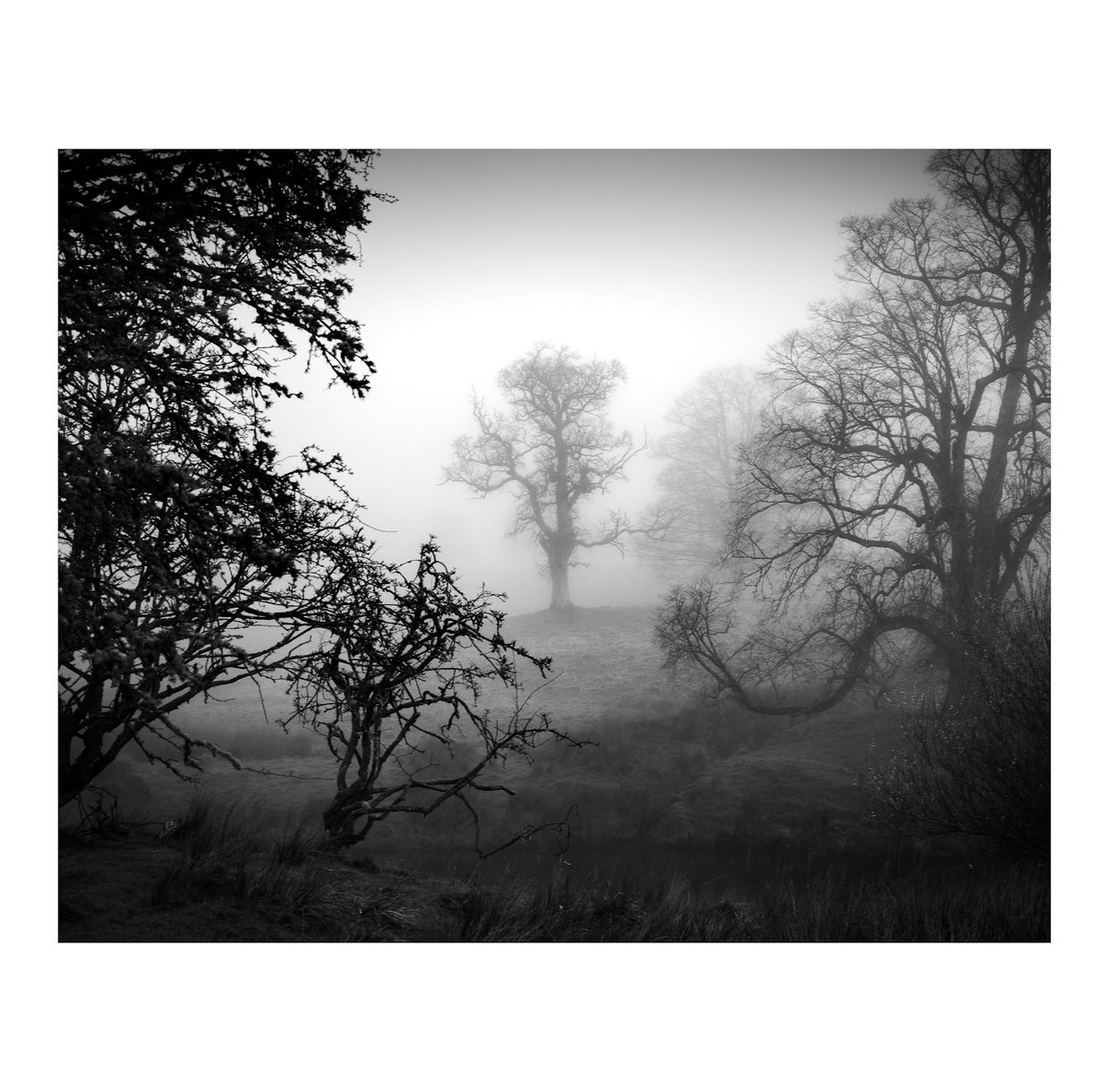
@ShutrRelease Loving the misty clarity of this picture, Dylan. 🥰
English

I felt as if this tree in the distance was waving at me. In a, 'hey! Over here! Can you see me?' kind of way.
Anyway, lovely conditions the other morning on the Stirling plains.
#Scotland
#Photography

English

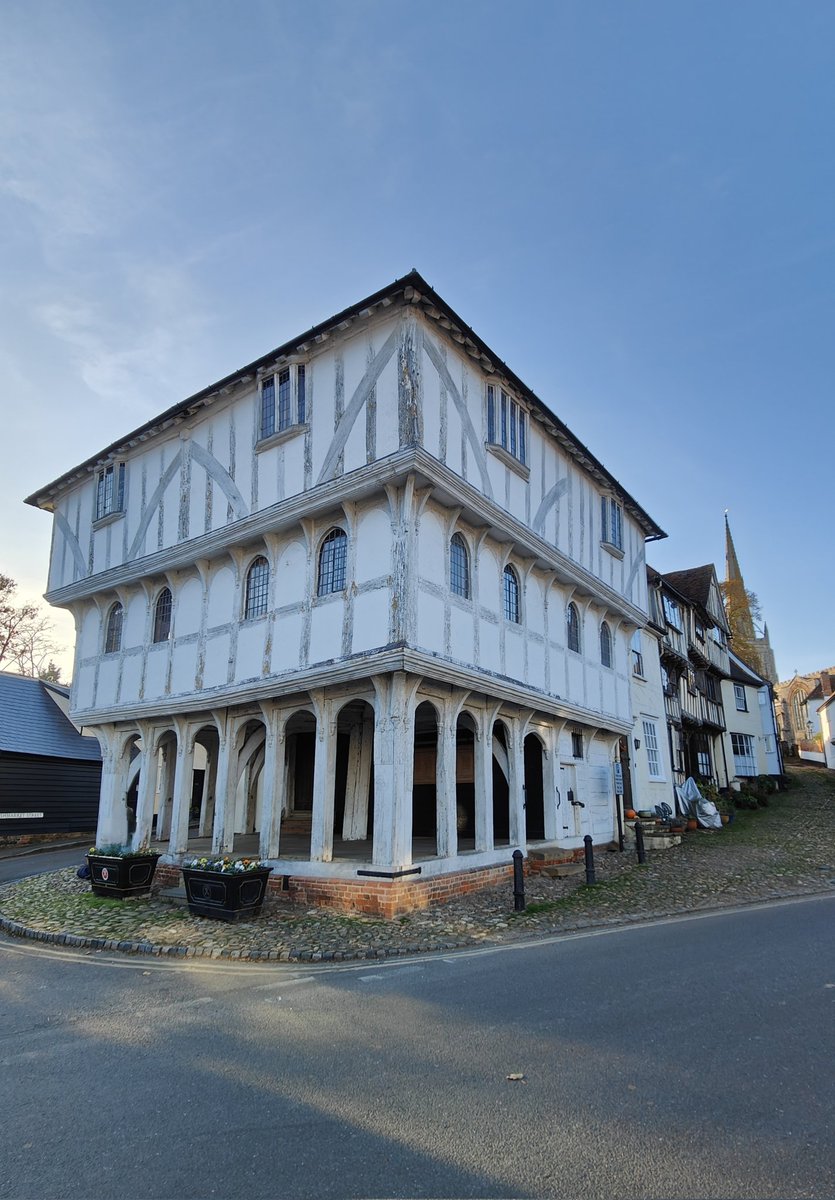
@MattRobBry I think you'll find it was determined by the original plot of land. Wealth grew and so did the building but there was only room to go up. It happens in a lot of East Anglian buildings.
English

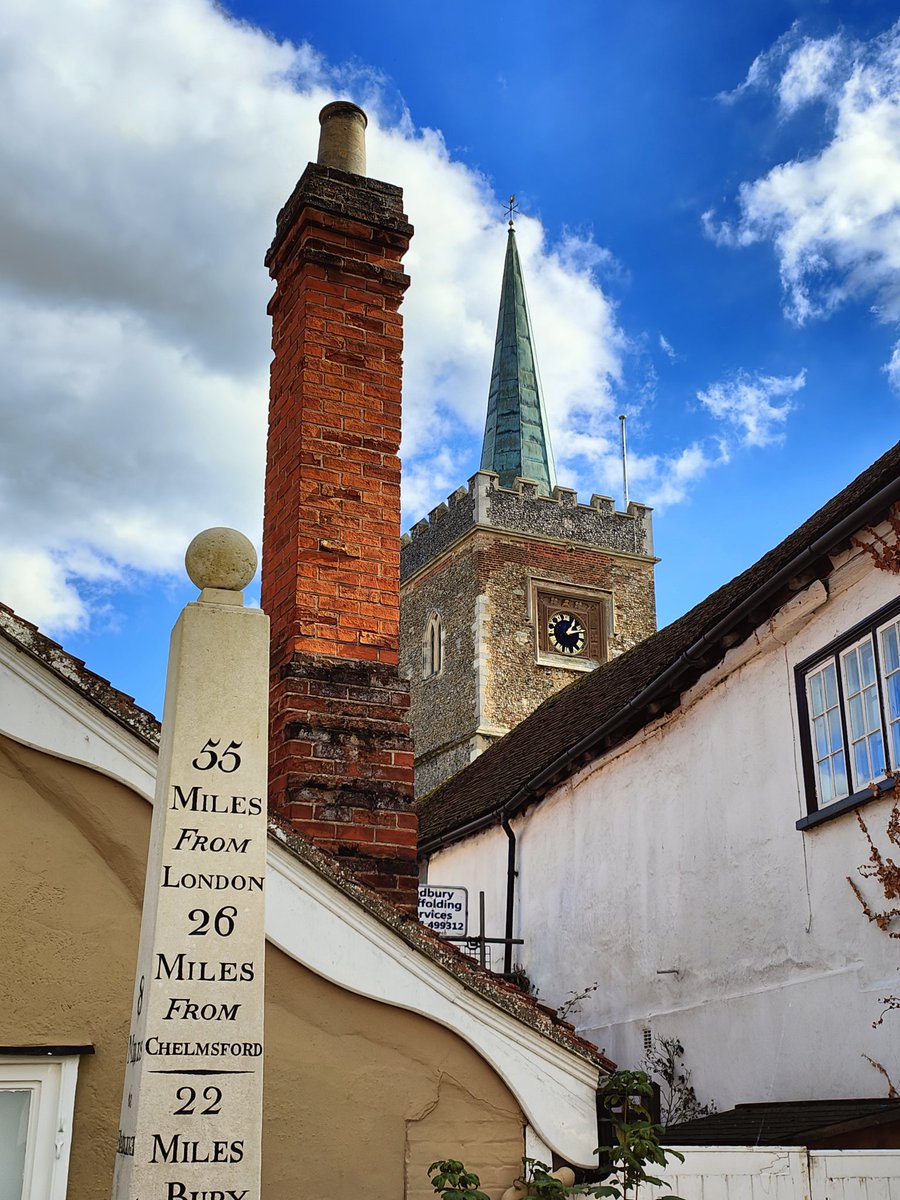
@Matedwards7 I too love Suffolk; I have a cousin who lives in the village of Chevington near Bury St. Edmunds. 🥰
English

@NiallHarbison Thanks for your honesty.
Thanks for sharing.
And thanks for all the good you do.
Take care mate. 🤗
English

My confidence and self worth haven’t been great lately and I just wanted to say thats ok so other people who suffer with depression or anxiety know that it’s ok to feel like that.
I’m CEO of Happy Doggo and most people in positions like mine have to hide stuff like this. Most people in all positions In life do actually. It’s really hard to admit you don’t feel the best about yourself. That’s why I just write it down as I feel because maybe it’ll help someone.
Between our team, partners and everything wrapped up in what I do there are probably 100+ people who rely on me. Add in social media, donors and everything else and that’s a massive happy facade to keep up.
I’ve learnt though that it’s ok to say you are not ok. At the moment I’m going through the motions. Still working hard and trying my best but I feel a bit worthless. No self worth at all. I also have imposter syndrome. I know I can jus read the comments here or look at the dogs saved and I should be happy but it doesn’t bring me anything. I look in the mirror at the moment and can’t even really look at myself. No particular reason or spark for this. As people who suffer know it just comes in a dark wave like a fog.
I could easily share some happy dog photos and smile and pretend I felt amazing. But I’d rather be honest and try to help others. I have untold amounts of support and good luck that many of you dont. So if you're feeling down or a little rough right now, that's okay because so am I, and it's absolutely fine to say that.
Have a lovely weekend and be kind to each other ❤️

English

@BarssFreddie Direct quote from my wife, although I hasten to add that she didn’t follow through with the ‘Glasgow kiss!’
English

@BarssFreddie Aye, “Has your ma got a sewing machine? Tell her to stitch that!” 🤣
English

@MattRobBry I think it was a " Glasgow Kiss " Giraffe style Matt {head butt) .😊
English

@Matedwards7 If that’s a portrait of your wife, she looks nothing like I’d imagined. 😉
English

@Matedwards7 Looks especially good with the the blue skies above. 🌞
English

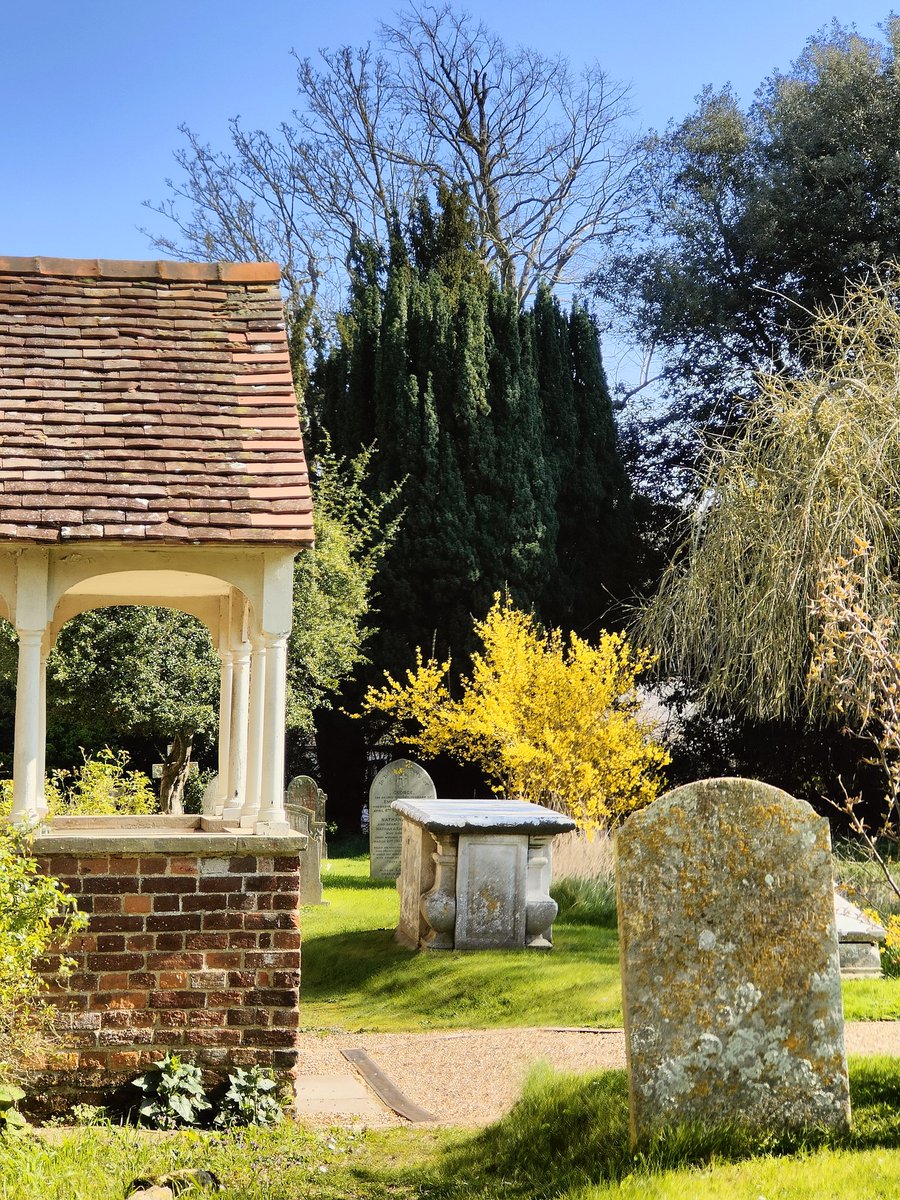
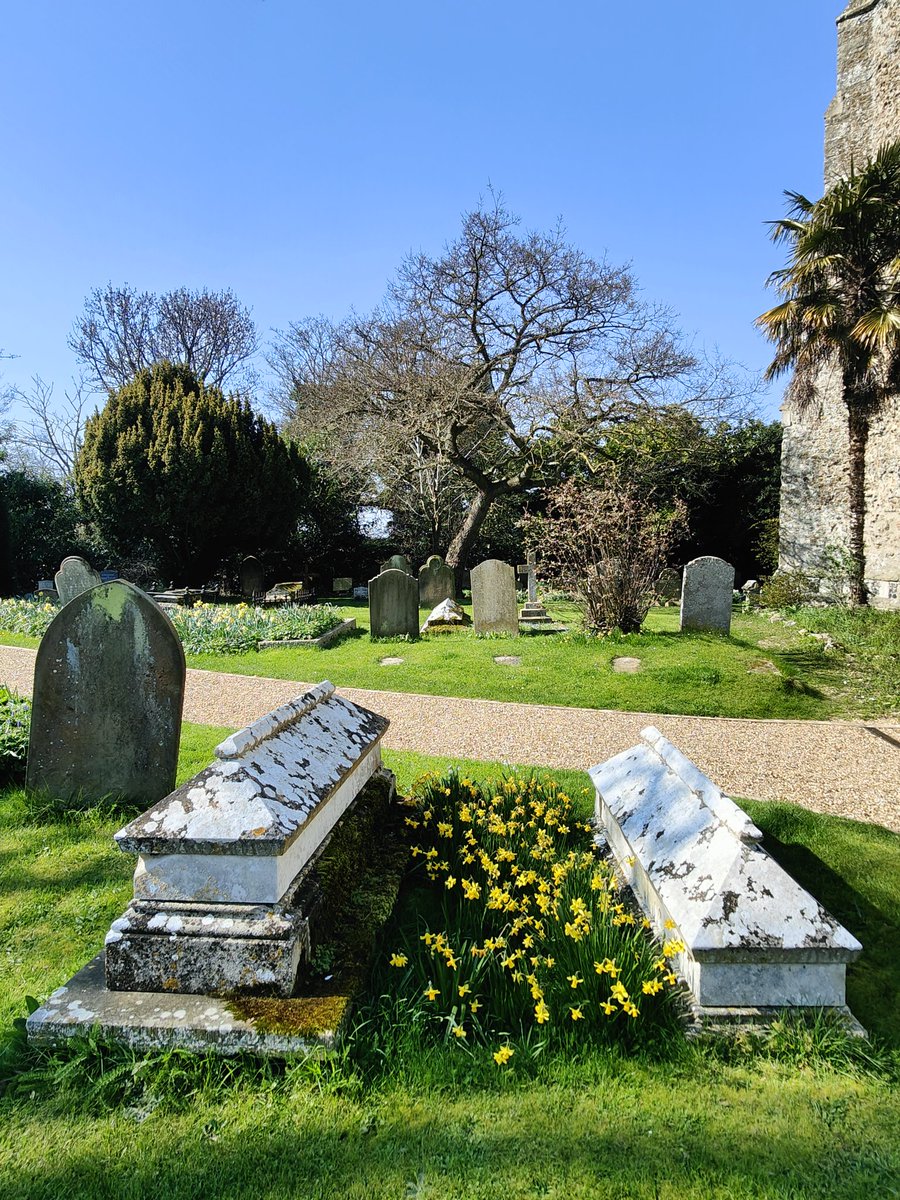
Cycled over to St Edmunds Church at East Mersea on the other side of the island. I really like the churchyard at this time of year.
#Essex


English

@TulipHeather I just love the simple, honest beauty of this picture. Thanks for sharing. 🥰
English

@philip_ciwf @pondsntrees “People speak sometimes about the "bestial" cruelty of man, but that is terribly unjust and offensive to beasts, no animal could ever be so cruel as a man, so artfully, so artistically cruel.”
~ Fyodor Dostoyevsky
English

If this is real, it is absolutely sickening - what we do to our fellow species is #wicked #cruel & utterly #shameful
ViralRush ⚡@tweetciiiim
A crab climbs out of its tray in a Japanese supermarket where seafood is often kept alive for freshness.
English

@SamaHoole It seems to me that, were the world left to the stewardship of its indigenous peoples: North American tribes, Inuit, Australian Aborigines, the many tribes of Africa etc, all of whom lived symbiotic, sustainable lives, the world would be in an entirely better position now.
English

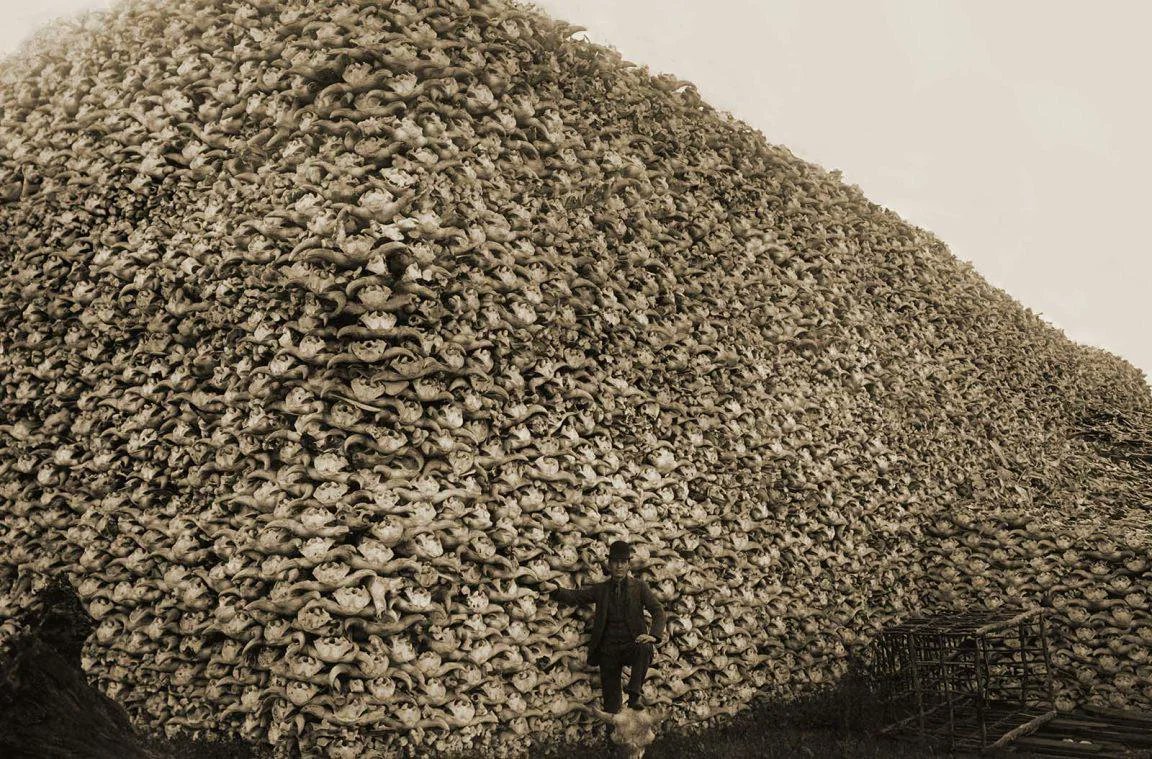
There were sixty million of them.
That is not a round number invented for rhetorical effect. That is the estimate based on historical accounts, trading post records, early naturalist surveys, and the archaeological evidence of a grassland ecosystem that had been shaped, managed, and sustained by their presence for approximately ten thousand years.
Sixty million bison, moving in herds so vast that 19th century travellers reported watching them pass for days without the column ending. The sound carried for miles. The ground vibrated. Early European explorers described riding to the top of a rise on the Great Plains and looking out at a sea of brown moving in all directions to the horizon, beyond which more was coming.
These animals were not incidentally present on the Great Plains.
They were the mechanism that made the Great Plains what they were.
A bison herd moving across shortgrass prairie does something very specific. It grazes heavily, pulling the top of the grass. It aerates the compacted soil with hooves that break the surface crust and create small depressions, bison wallows, that collect rainwater and become micro-habitats for hundreds of species. It deposits dung that feeds a cascade of organisms from beetles to birds. It rolls in the disturbed soil, dispersing seeds in its coat across miles of subsequent travel. It moves on.
This last part is crucial. The herd moves on.
The grass it grazed comes back stronger. The roots, some of which extend twelve feet into the soil, deeper than the roots of any arable crop: draw carbon from the atmosphere and hold the topsoil together against drought and wind with a grip that the Great Plains had developed over millions of years of exactly this relationship.
The Plains Indians who lived within this system understood it with the intimacy of people whose survival depended on it. They followed the herds. They took what they needed. They used every part of every animal: hide, bone, fat, organ, sinew, horn, dung, in a closed-loop material economy that generated essentially no waste. The calves born each year exceeded the animals taken by human hunters by a margin that kept the population stable at sixty million.
This was a functioning ecological system that had been maintained in sustainable equilibrium for thousands of years.
Then, in approximately thirty years, it was gone.
The US Army did not accidentally allow this to happen. They planned it. General Philip Sheridan stated it openly: the hunters were doing more to "settle the vexed Indian question" than the entire military had managed in thirty years of direct combat. Every dead bison was a step toward starving the Plains nations into submission. Columbus Delano, Secretary of the Interior, articulated the logic without apology: "Every buffalo dead is an Indian gone."
The hunters came. The railways came. Tourists shot bison from train windows. The carcasses were left to rot, stripped only of the hide and the tongue. Within thirty years, sixty million animals had been reduced to approximately three hundred.
The Plains grasslands, stripped of the animal that had managed them for ten millennia, began to change. The deep-rooted perennial grasses that had anchored the soil slowly gave way to annual species less able to hold topsoil under drought conditions. Settlers ploughed what remained. Monoculture wheat replaced the native grassland complex.
In the 1930s, the topsoil of the Great Plains blew away.
The dust clouds reached Washington DC.
The Army had solved the Indian question.
It had also, by removing the ruminant that maintained the grassland, created the conditions for one of the worst agricultural collapses in American history.
The sixty million bison were not causing the planet to overheat.
The sixty million bison were the planet's solution to the problem we have since made considerably worse.
They're doing their best to make the same mistake again with cattle.

English

@NiallHarbison I wonder if he sometimes remembers his previous life and thinks to himself, ‘Well, not all humans are the same; how lucky was I to have been rescued by some great ones?’ ❤️
English

@SamaHoole An added benefit of the likes of Gerald:
Buitengebieden@buitengebieden
Best friends.. 😊
English

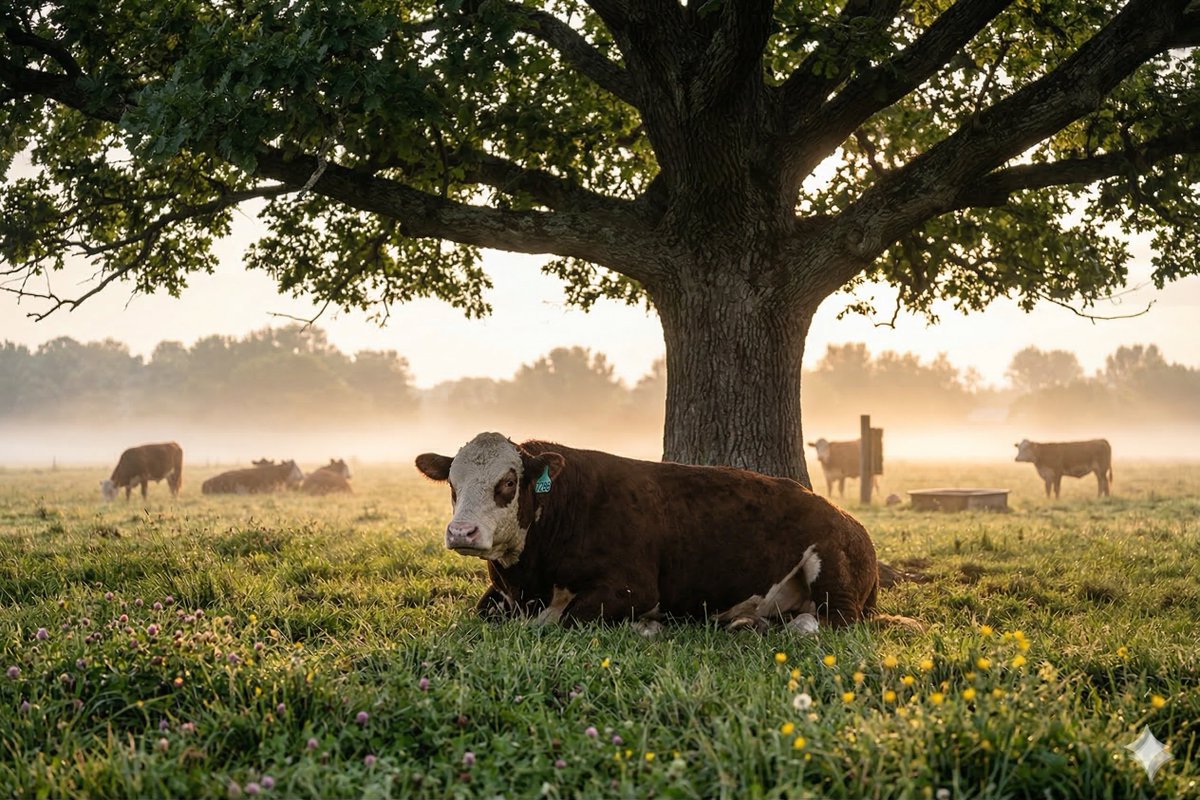
Let's check in on Gerald, whose burps are ending the world.
6:02am - Gerald exhaled. Methane entered the atmosphere. The methane came from Gerald's rumen, where specialised microorganisms had been converting grass into usable energy since approximately 4am. The carbon in that methane came from the grass. The grass pulled the carbon from the atmosphere two weeks ago via photosynthesis. The methane will break down, via standard hydroxyl radical oxidation, in approximately twelve years. When it breaks down, the carbon returns to the atmosphere as CO2. The grass will absorb it. Gerald will eat the grass.
This is the biogenic carbon cycle. It has been running on British permanent pasture for ten thousand years. The carbon in it is not new. It was in the atmosphere before Gerald. It will be in the atmosphere after Gerald. Gerald is not adding to it. Gerald is circulating it.
This matters for one specific reason.
Methane is a warming gas. But it only accumulates if there are more and more sources producing it. A stable herd produces a stable methane load. A stable methane load does not increase the atmospheric methane concentration. A methane load that doesn't increase doesn't increase warming.
The UK cattle herd has not increased.
The UK cattle herd is smaller than it was thirty years ago. In 1990 there were approximately 11.9 million beef and dairy cattle in Britain. Today: approximately 9.5 million. The herd is smaller. The methane burden from British cattle is lower than it was when you were at school.
Gerald is not new methane. Gerald is not more methane. Gerald is a stable component of a system that has been in equilibrium for longer than the dietary guidelines have existed.
And then there's the other thing the report didn't mention.
The permanent pasture under Gerald's feet has been sequestering carbon for four years of Gerald's occupancy and decades before him. The soil under British permanent grassland holds more carbon per hectare than almost any other land use in the country. Every cow pat buried by dung beetles is carbon going into the ground. Every root system that Gerald's grazing stimulates is carbon going deeper. The net picture, across Gerald's 40 acres of permanent pasture, is one of a field improving its carbon stock year on year while cycling the same atmospheric carbon it has always cycled.
Gerald burped at 6:02am.
The field is richer for it.
The sky will survive the burp.
The methodology is the problem, not Gerald.

English

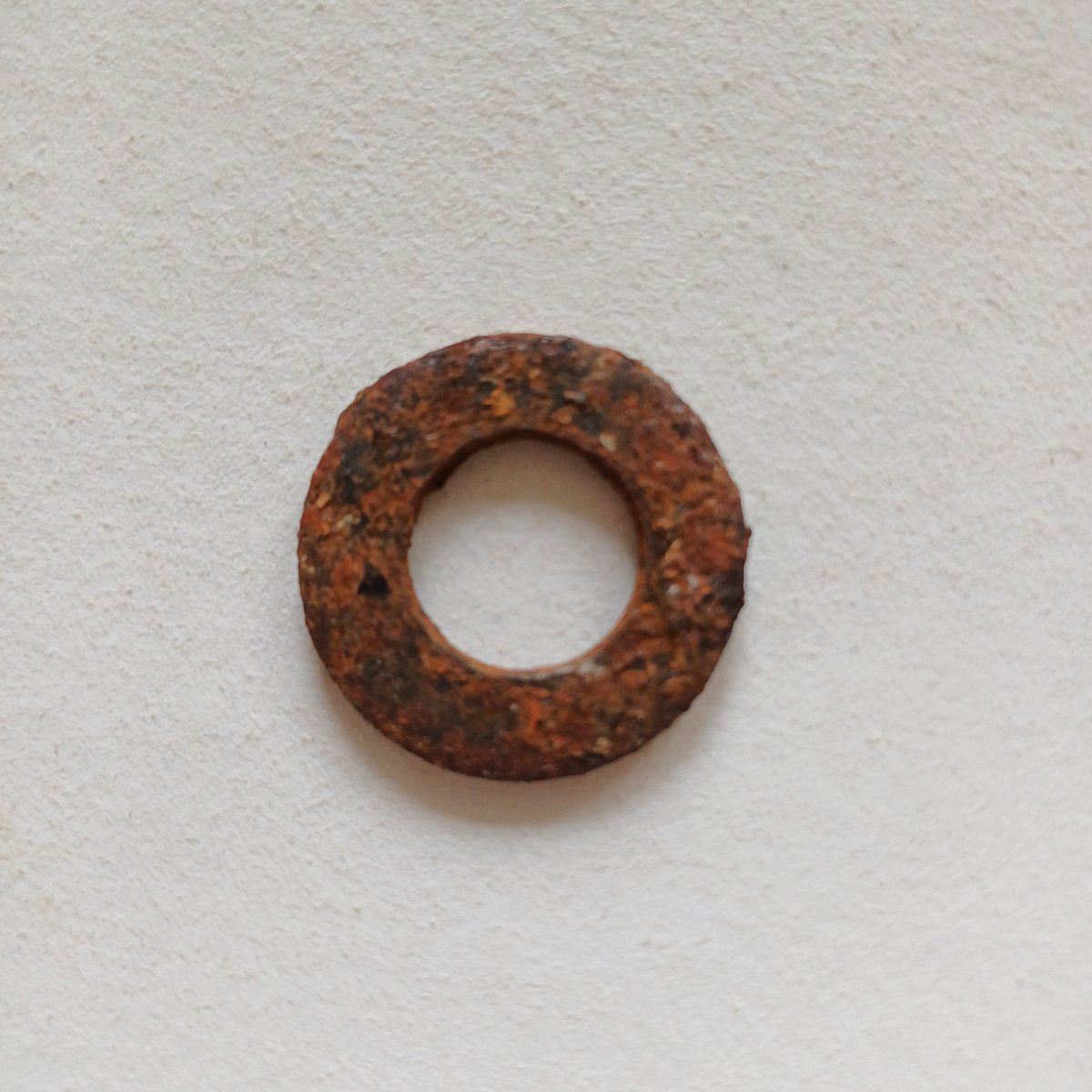
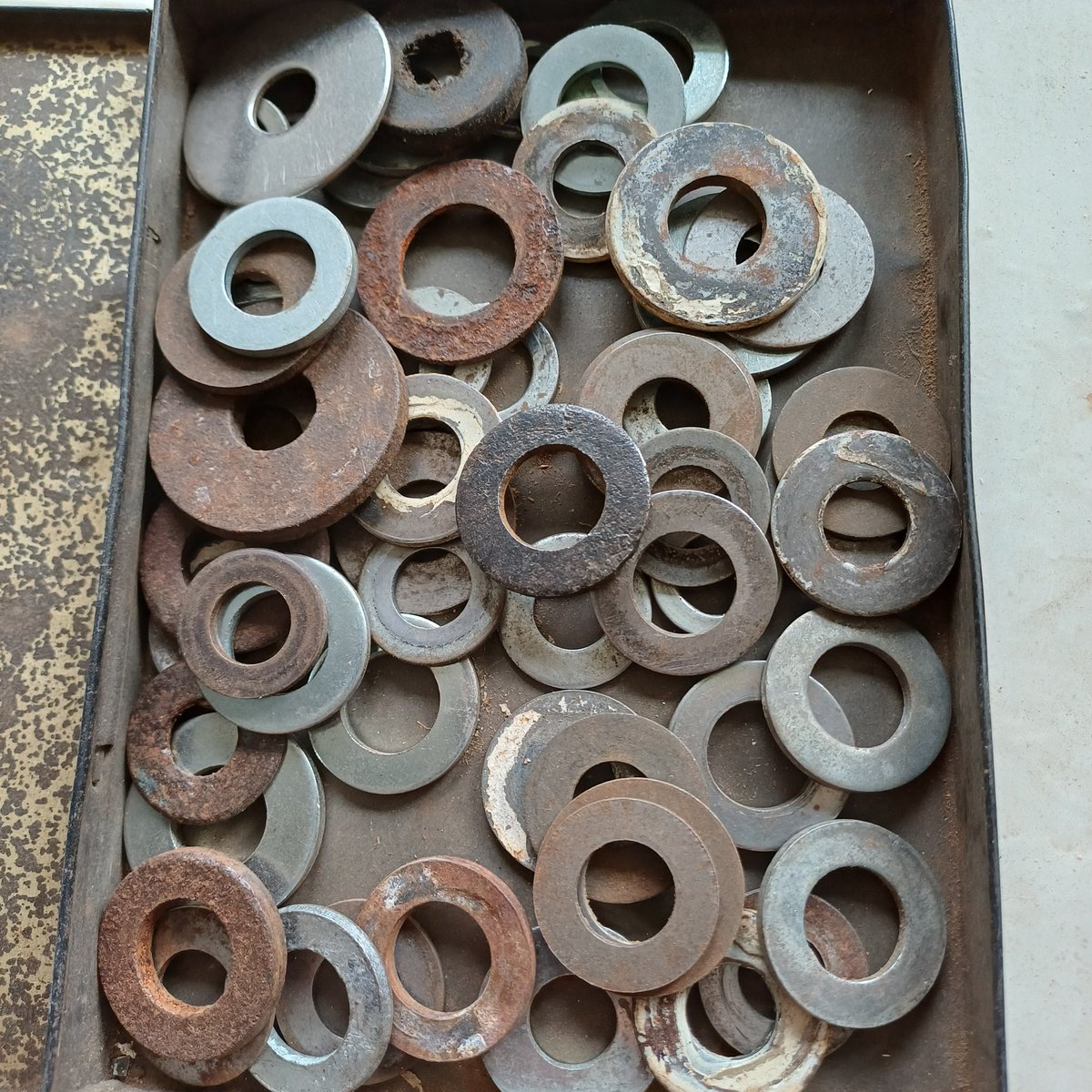
Think road kill, well ...
This is 'street salvage'
Picked up on my walk to the workshop this morning.
I use these washers to take up the slack between door knobs.
I may not be able to save the planet, but it all helps in a tiny way.
Reclaim Restore Re-use Recycle #TheDoorRestorer


English

@MattRobBry weekends only Matt 😉ooh la la . ooh you are awful !
English

@StoryScotland As one of those people who’ve had that experience, I can certainly say it’s one of a kind. Wonder what Bonnie Prince Charlie would make of it?🤔
English