
ทวีตที่ปักหมุด

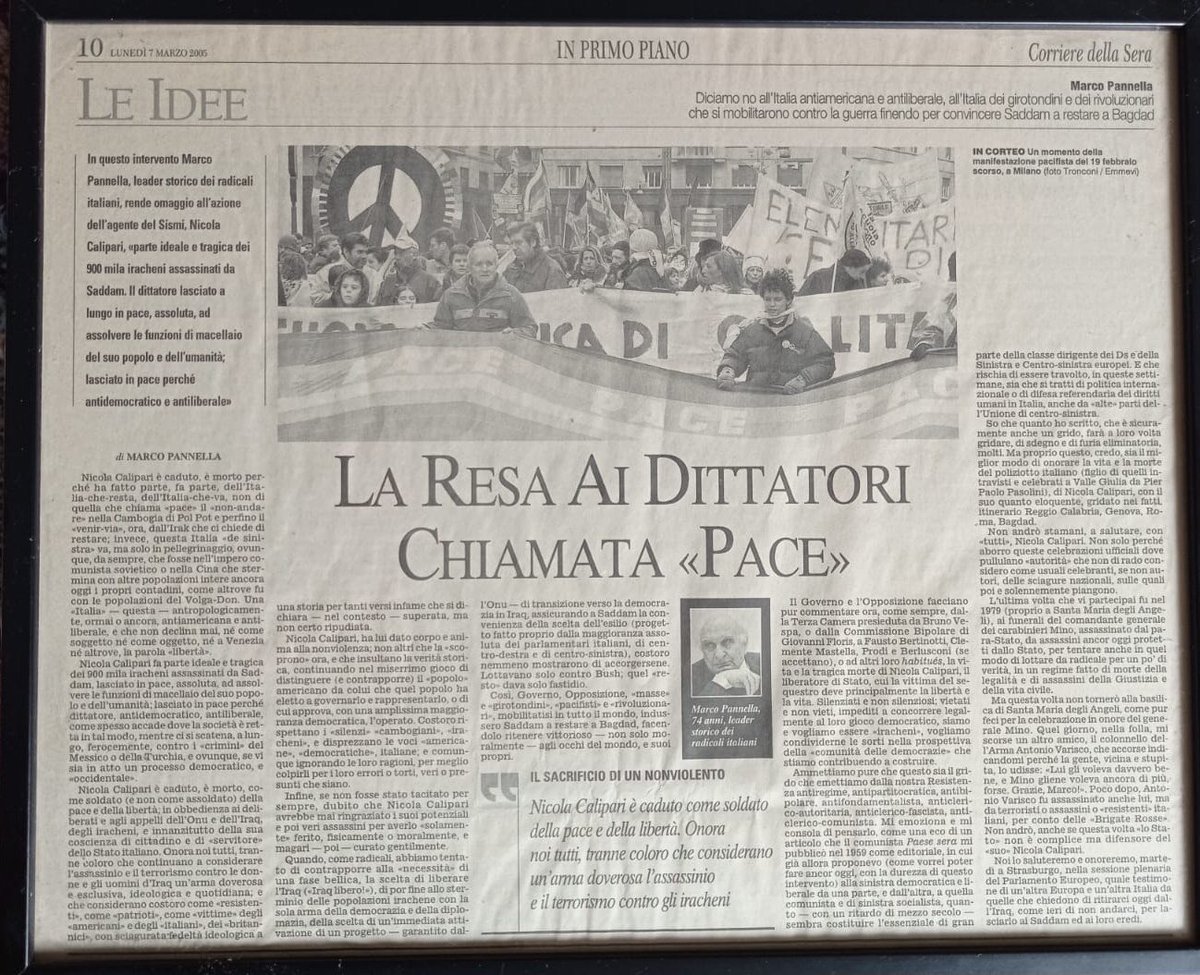
“La resa ai dittatori chiamata ‘Pace’” @Corriere 7 marzo 2005, @MarcoPannella, unico politico italiano presente, l’anno successivo, al funerale di #AnnaPolitkovskaja a Mosca.
Io per sicurezza l’ho incorniciato.
Italiano
Matteo Angioli
8.5K posts

@Matteo_Angioli
Secretary general of the Global Committee for the Rule of Law - Marco Pannella @GlobalCRL; advisor to Sen. Giulio Terzi








MORE | The Russian command likely hoped that Russian advances in the Hulyaipole direction would complement Russian advances near Orikhiv, which would in turn enable Russian forces to advance toward Orikhiv from the east and west and later enable advances toward Zaporizhzhia City itself. ISW assessed in early December 2025 that the 5th CAA’s tactical breakthrough north and northeast of Hulyaipole could enable Russian forces to achieve operational successes in both the Hulyaipole and Orikhiv directions. The Russian military command indicated on December 29 that it intended to join the Orikhiv and Hulyaipole directions in order to advance on Zaporizhzhia City. Russian forces began making relatively fast gains in the Hulyaipole and Oleksandrivka directions in late October and early November 2025. The Russian military command likely hoped to exploit those advances to enable a Russian assault of Orikhiv from the east and west, which would allow Russian forces to outflank Ukraine’s well-fortified defensive lines in Zaporizhia Oblast that run east to west rather than trying to advance using frontal assaults from the south. Ukraine’s counterattacks in the Hulyaipole and Oleksandrivka directions in late January greatly complicated Russian plans to advance rapidly to Orikhiv and then Zaporizhzhia City from the east. Russian forces are thus facing a far more difficult battlefield situation in southern Ukraine in early March than they did at the start of 2026. Ukrainian forces have tied up Russian forces in the Hulyaipole and Oleksandrivka directions, and Russian forces have had to rapidly adapt to communication and command and control (C2) problems resulting from the February 1 Starlink block. Ukraine’s counterattacks have prevented Russian forces from fortifying the positions that they advanced to in the fall of 2025. Ukrainian forces' success resulted in part from the fact that Russian forces did not follow up advances made through Russian infiltration tactics by consolidating their newly held positions. Infiltration tactics rely on the Russian infantry to infiltrate into Ukrainian rear areas, accumulate, and consolidate in the new frontline positions, but Russian forces appear to have tried to continue their advances without adequately consolidating, thereby enabling Ukrainian counterattacks. Ukrainian forces’ ability to take advantage of these Russian mistakes has likely deprived Russian forces of the starting offensive positions from which they intend to launch a summer offensive with the unrealistic goal of reaching Zaporizhzhia city. The counterattacks in southern Ukraine are also having strategic effects in other parts of the theater. The Russian military command recently redeployed elements to the neighboring Hulyaipole and Oleksandrivka directions and would likely struggle to further reinforce Russian elements in the western Zaporizhia direction without denuding Kherson. The Russian command risks vulnerabilities in other areas of the theater should it redeploy forces to the southern part of the theater, moreover, since Russian forces in all directions are struggling to advance and, in Kupyansk in particular, even to hold their ground.
“È una svolta storica”, dice il Maestro Li dopo l'espulsione dall'Italia degli agenti della repressione cinese. Il dissidente cinese residente a Milano racconta la campagna di repressione contro di lui. Di @GiuliaPompili ilfoglio.it/esteri/2026/03…
Ukrainian forces continue to liberate territory in southern Ukraine. ISW has observed evidence to assess that Ukrainian forces have liberated 244 square kilometers in the Hulyaipole and Oleksandrivka directions since January 1, 2026, while Russian forces seized 115 square kilometers in the same period. ISW’s mapping methodology may underestimate Ukrainian advances. Recent reports and geolocated footage indicate that Ukrainian forces have made significant gains south of the Vovcha River in the area southwest, south, and southeast of Oleksandrivka and west of the Haichur River in areas north of Hulyaipole. Communications disruptions and the thinly held nature of Russian lines likely facilitated recent Ukrainian gains. Ukrainian forces exploited the February 1 blocking of Starlink that disrupted Russian communications and command and control (C2) to launch the counterattacks in the Oleksandrivka and Hulyaipole directions. The recent Ukrainian gains could force the Russian Eastern Grouping of Forces command to choose between prioritizing offensive efforts west of Hulyaipole or protecting Russian ground lines of communications (GLOCs) toward Hulyaipole from Ukrainian counterattacks from the north.