Miserable🧈Fly

19K posts

Miserable🧈Fly banner
Miserable🧈Fly

Miserable🧈Fly

@MiserableFly4

GME squeeze Jan 2021, Reddit is a controlled psyop. Self made Shillionaire! 🛌🛁🚀 $TEDDY 🦋 Not Financial Advice

เข้าร่วม Haziran 2012
938 กำลังติดตาม581 ผู้ติดตาม
ทวีตที่ปักหมุด
Miserable🧈Fly
Miserable🧈Fly@MiserableFly4·
$BBBY $GME
QME
2
5
37
19.8K
Miserable🧈Fly รีทวีตแล้ว
Ben Rickert
Ben Rickert@Ben__Rickert·
We are in the middle of a liquidity event similar to 2008.
English
22
37
450
11.1K
Miserable🧈Fly รีทวีตแล้ว
Collin Rugg
Collin Rugg@CollinRugg·
JUST IN: Elon Musk calls for the overhaul of agencies like the SEC & calls for the punishment of people at these agencies who abuse their power for political reasons. Good, let's do this for all 3-letter agencies. The comment from Musk came on X in response to the news that the SEC is suing Musk in relation to his Twitter stock purchase. The SEC clearly has it out for Musk as they're forcing him to testify. While responding to @MarioNawfal on X, Musk gave it a 100% probability that agencies like the SEC will be overhauled. "A comprehensive overhaul of these agencies is sorely needed, along with a commission to take punitive action against those individuals who have abused their regulatory power for personal and political gain." "Can’t wait for this to happen... I estimate the probability at 100%." I can't wait either 🔥
English
925
5.2K
19.1K
1.6M
Miserable🧈Fly
Miserable🧈Fly@MiserableFly4·
@ryancohen you plan on posting a photo you took with Buffett within the next year? 😉🏴‍☠️😏
English
0
0
4
115
Cassandra Unchained
Cassandra Unchained@michaeljburry·
@InterstellarUAP It is almost inconceivable how profoundly mentally ill one must be to believe this stuff. Reality is everywhere at the same time. Deal with it.
English
11
0
52
3.1K
Interstellar
Interstellar@InterstellarUAP·
🚨 Simulation Theory: The Double Slit Experiment proves particles act like waves until observed then they snap into particles. What if our reality only "renders" when we're looking, just like a video game optimizing resources? Check out this episode from The Why Files breaking it down, tying it to Simulation Theory. Are we in a sim? This could be the key to unlocking the true nature of existence! The Why Files video did a great job on explaining the Double Slit Experiment & Simulation Theory What do YOU think—real or rendered? Drop your thoughts below!
English
1.8K
5.3K
32K
46.6M
Miserable🧈Fly รีทวีตแล้ว
Charlie Kirk
Charlie Kirk@charliekirk11·
Rep. Thomas Massie will play a major role on a new House subcommittee investigating the weaponization of the FBI and the intel community. I asked him if he fears for his personal safety. Hear his incredible reply:
English
110
1.1K
4.6K
705.2K
Miserable🧈Fly รีทวีตแล้ว
beyond-mythos
beyond-mythos@beyond_mythos·
ZXX
0
1
2
409
Miserable🧈Fly รีทวีตแล้ว
Jack Posobiec
Jack Posobiec@JackPosobiec·
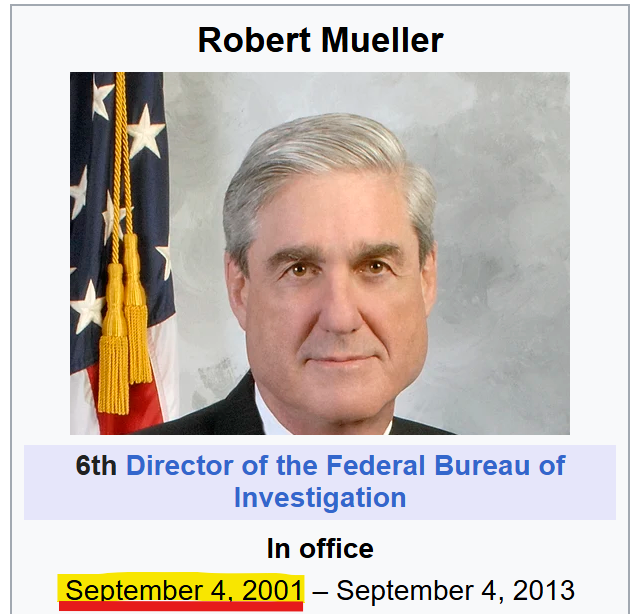
In 2005, Jeffrey Epstein was under an 11-month FBI investigation 40 underage girls alleged Epstein assaulted them After Epstein gave information to the FBI, federal charges were dropped Who was head of the FBI then? Robert Mueller
English
445
12K
41.5K
413.4K
Miserable🧈Fly รีทวีตแล้ว
Being Libertarian
Being Libertarian@beinlibertarian·
Being Libertarian tweet media
ZXX
36
417
2.9K
30.7K
Miserable🧈Fly รีทวีตแล้ว
Jack Posobiec
Jack Posobiec@JackPosobiec·
Did You Know: The 28 Pages show that two 9/11 hijackers tied to Saudi intelligence rented a room from an FBI informant in California before the 2001 attacks The Director of the FBI kept this covered up for years His name? Robert Mueller
English
604
14.9K
48K
1.2M
Miserable🧈Fly รีทวีตแล้ว
Mike Benz
Mike Benz@MikeBenzCyber·
Bob Mueller ran the cover-up for the CIA during the BCCI scandal (BCCI was the CIA money-laundering bank where Osama Bin Laden held multiple accounts), then from 1998-2001 Mueller ran the NorCal DOJ while 4 9/11 hijackers were active there, then 1 week b4 9/11 he became FBI head
Mike Benz tweet media
Jack Posobiec@JackPosobiec

Did You Know: The 28 Pages show that two 9/11 hijackers tied to Saudi intelligence rented a room from an FBI informant in California before the 2001 attacks The Director of the FBI kept this covered up for years His name? Robert Mueller

English
376
6.6K
18.2K
815.2K
Miserable🧈Fly รีทวีตแล้ว
The Lightbringer
The Lightbringer@Lightbring33r·
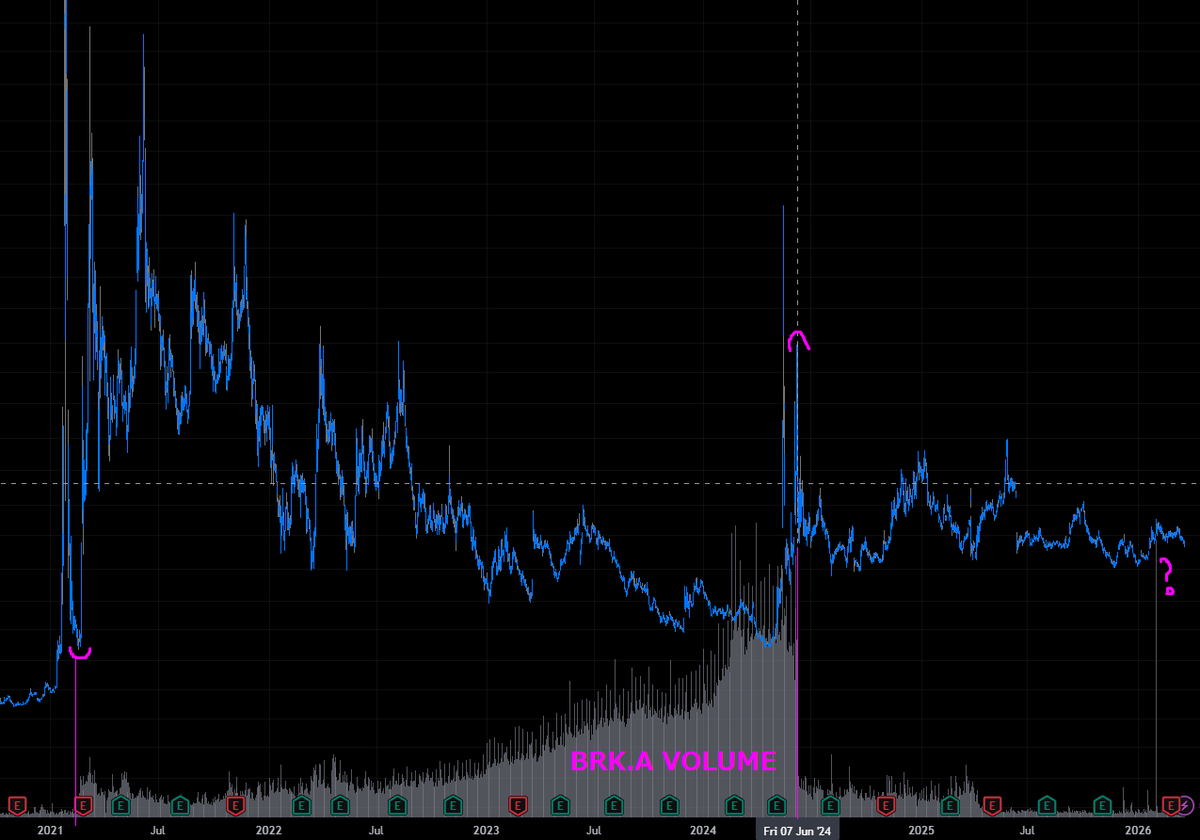
still don't know why Berkshire Hathaway's Volume has been ramping up since Feb 2021 when $GME started officially it's looping cycles. And you can see a trend where the lower GameStop goes, the higher the volume on $BRK.A And then when @TheRoaringKitty had the live stream on June 7th that volume totally disappeared. That's kinda strange! @michaeljburry right? Also, look at that mega spike out of nowhere that's when Michael Burry posted his substack article about GameStop. hihi haha hehe
The Lightbringer tweet media
English
8
19
217
12.2K
beyond-mythos
beyond-mythos@beyond_mythos·
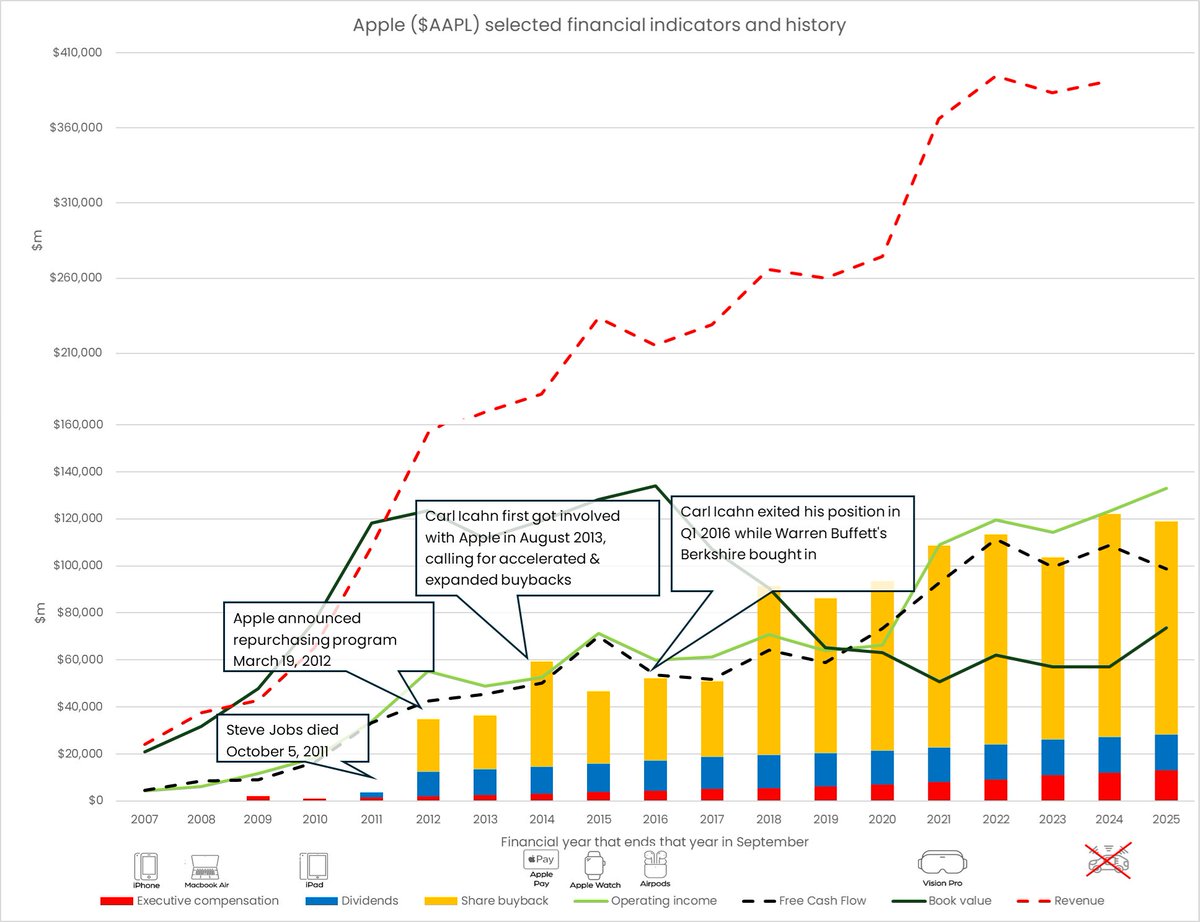
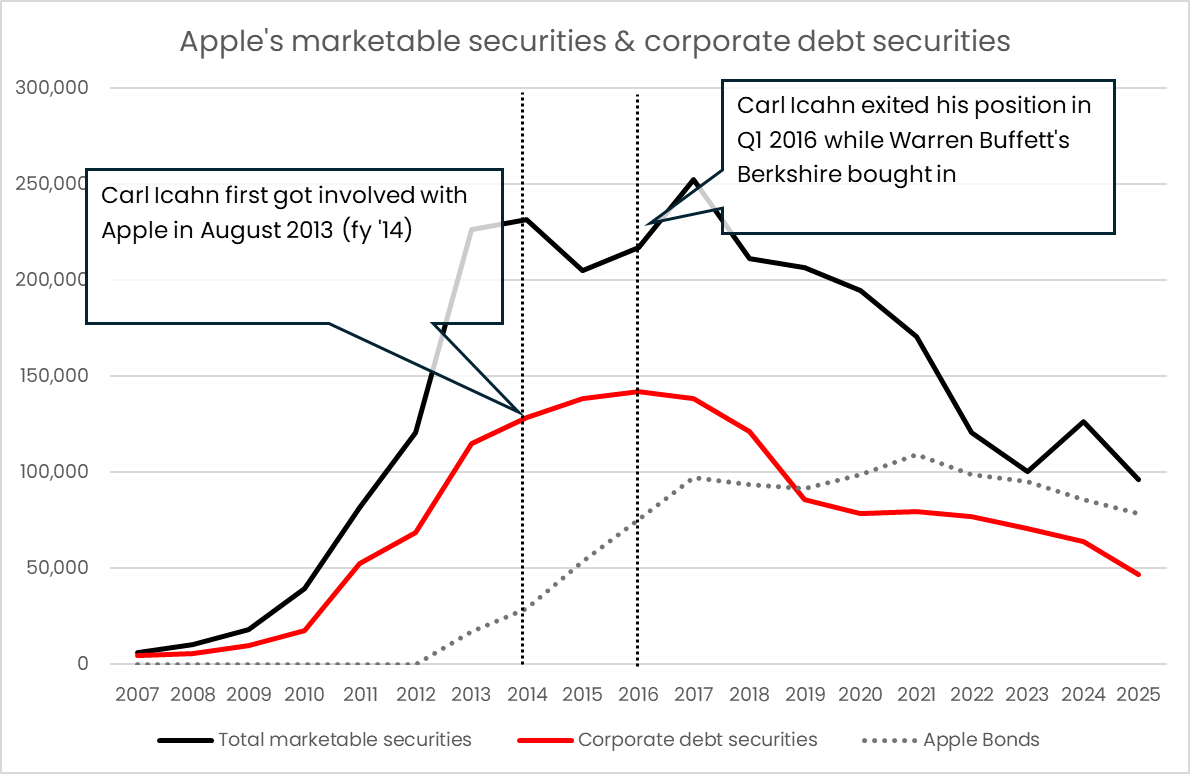
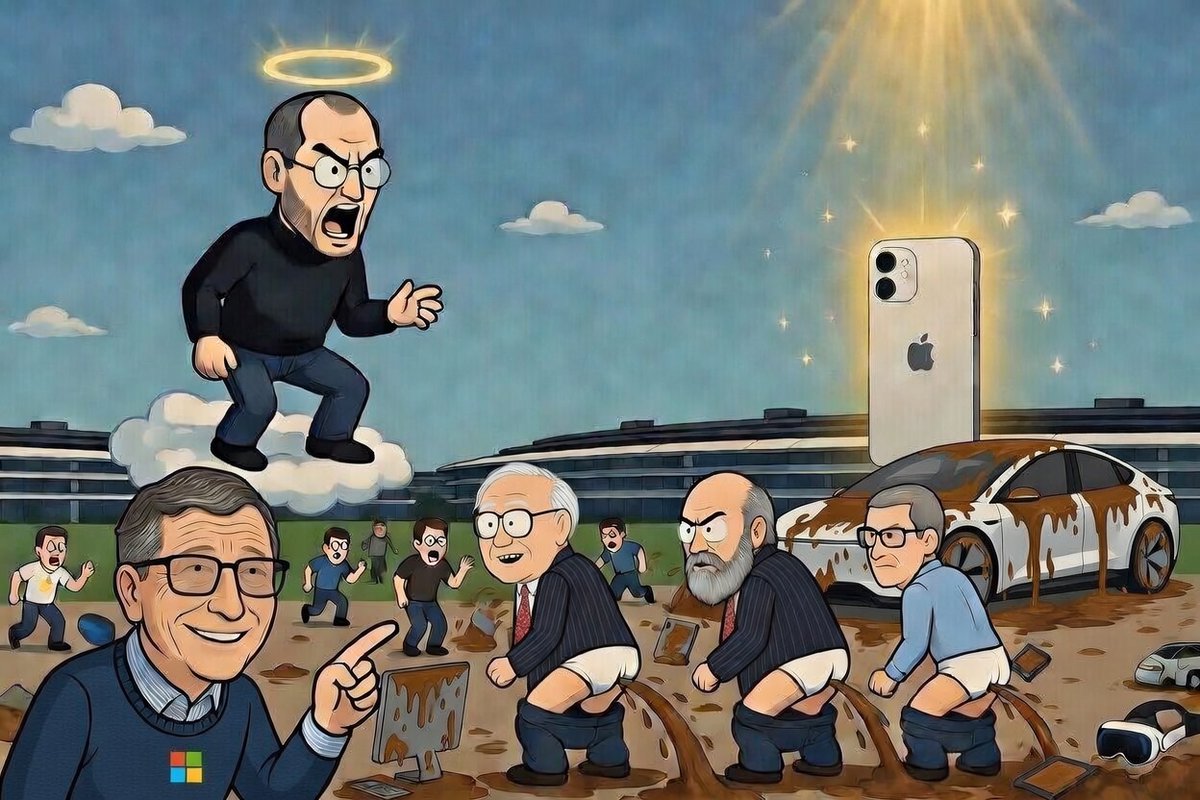
** Naked short thesis interlude Indeed, as I said, it looks a bit like GameStop (x.com/beyond_mythos/…). Michael Burry argued that the short interest is not really a big deal. I argued here that he is wrong and the short interest is massive (x.com/beyond_mythos/…). The SEC report on GameStop showed us one more thing: a rising price in correlation with hype for the company increases demand massively. As we have seen, the price rose with crazy volume without any significant shorts buying back. We can therefore assume, it is hard to actually buy back shorts for a great company, where people believe in its future. Why sell a stock when you see fiat money is inflating fast? On the other hand gamification like with Robinhood probably leads to way more irrational day trading. But in total if the price drops, people buy, if the price rises, people buy. Assuming Bill Gates' short position on Tesla is higher than the currently talked about 1%, maybe even higher 100% (voting I did on that matter: x.com/beyond_mythos/…), you may get a feeling how difficult it is to buy back those shorts. Especially, when people have a prediction derived from Elon's pay package where the stock may go. Or Ryan's compensation package in the case of GameStop. Probably people need suffering to sell, like hiked interest rates and product prices during the covid induced economic downturn. Or one could arrive at the idea of unrealized gains taxes. If we now assume Apple was indeed massively naked shorted ('97-'00 and '04-'09) which would have increased the real total shares outstanding by several multiples, this would speculatively imply a massive hidden liability. We talked about statistics to see good shorting periods and four categories of companies in the Puppet Master DD (x.com/beyond_mythos/…): A (future bankruptcy) B (future major stock price decline) C (flat stock price with swings) D (steadily appreciating; don't short) Looking at the meteoric rise of Walmart to a world monopoly power without surprisingly any regulatory scrutiny, we could ask if indeed Warren Buffett stood behind Walmart's success and the failure of its competitors. Could he also influence the regulatory of stock clearing? If we just assume an entity had enough influence about regulators to let Walmart become a monopoly, we could also ask whether an entity would be able to force different regulatory rules for brokerages. Like enforcing margins or not. Maybe the same entity. This could be an explanation why Walmart was such a good short and while nearly everyone expected it to come down during the 2008 financial crisis, its share price went up. If his entity could now influence regulators to enforce margin for some shorts but not for all, this entity would have a tremendously good negotiation position. On the other hand, this entity could keep on naked shorting, increasing the real total shares outstanding without having to worry, ever. As long as controlling the regulators bureaucracy. This entity's bank would not care what category the company is (A-D). Let us formulate this as hypothesis and assume Wells Fargo was the vehicle. This is pure speculation, but maybe we can collect evidence for it. [Hypothesis] #3 Apple was massively naked shorted from probably several entities, while Wells Fargo was somehow protected from regulatory oversight. This is pure speculation. If this hypothesis is right, we can apply it to the company’s major share buybacks. To be fair, there is no public evidence proving massive naked shorting of Apple - official short interest always remained low. This remains a speculative thesis. ** Apple's $834b share buyback ('12-'25) Apple's share buyback ($834b) is the largest of all companies in history. It consumed roughly 76% of free cash flow in this period to repurchase 42% of Apple's stock. Adding dividends ($193b) and total stock based compensation ($94b) this even exceeds 100% of free cash flow. I cannot imagine Steve Jobs agreeing to this and maybe I am not the only one here. [Pic 5: Selected financial indicators and history for Apple] Remember when we just talked about the buying behaviour of investors of great companies as seen with GameStop? Why would anyone sell their Apple shares who doesn't have to - even for a temporary premium - knowing that each remaining share is more valuable after the buyback? Assuming hypothesis #3 is true, you could always sell naked shorts into the share buyback. That could potentially mean that hundreds of billion of Apple's shareholder money was paid to Wells Fargo, issuing new naked shorts. This hypothesis might be wrong, but it might be one of the reasons why Ryan Cohen invested into Wells Fargo and tried to get a board seat in 2018. What is also very interesting is that the first buyback was announced March 19, 2012 (apple.com/newsroom/2012/…) - five months after Steve's death. I cannot imagine Steve would have bought back a single share. Interestingly, the stock didn't really dip after Steve's death, thus we cannot assume it was an emergency action of Tim to stabilize things. We could ask the question though, whether investors pressured him to do the buy backs if he wanted to stay CEO. We just don't know why he did that. His compensation for 2011 was already at insane $100m. With all we have seen, let me quote Tim's reasoning: "We have used some of our cash to make great investments in our business through increased research and development, acquisitions, new retail store openings, strategic prepayments and capital expenditures in our supply chain, and building out our infrastructure. You’ll see more of all of these in the future. Even with these investments, we can maintain a war chest for strategic opportunities and have plenty of cash to run our business. So we are going to initiate a dividend and share repurchase program [for three years]." ** Carl Icahn "having fun" at apple Carl Icahn first got involved with Apple in August 2013, calling for accelerated & expanded buybacks. Which Apple did. Just months earlier, on April 30, 2013, Apple had issued bonds (senior unsecured notes) for $17b and would yearly raise the amount very linearly until 2017 when they hit $97b. What is interesting in my opinion is that Apple had such strong free cash flow that the bonds would never have been needed if not for those massive buybacks using nearly all the free cash flow. From a 2012/2013 perspective it didn’t make sense to finance buybacks with debt. An opinion the Apple management didn’t share. We have seen buy backs financed by debt many times before with companies like old Bed Bath & Beyond, Big Lots, Macy's or Walgreens Boots Alliance. But Apple is not a company like those. Tesla never bought back a single share. Granted, also companies like IBM or Boeing did buybacks on debt. Apple’s single largest asset rapidly became marketable securities as of 2011 — already in place when Carl arrived. [Pic 6: Apple's marketable securities vs bonds] When Carl arrived, Apple had already bought $115b corporate debt securities out of $226b marketable securities. Both nearly the peak of those investments. Apple’s official explanation: offshore money that would be taxed if brought back. This may be true, or it may not be. Alternatively Apple could have been used for cheap financing for big banks like JPMorgan, Bank of America, Citigroup, Wells Fargo, Goldman Sachs or Morgan Stanley. But also for companies like Microsoft, Google, Meta, Amazon, Oracle or Verizon. Their effective portfolio yield was 0.8%–2.8% per year (based on Apple 10k's) while broad U.S. investment-grade corporate bond indices were at 3.5–4.5 % during 2011-2020. Apple explains it by extremely short duration securities, often under 3 years. As we can see, Apple wouldn't need any in any year, since their free cash flow remained super strong. Why keep those super short durations? It would be very interesting to see if Apple gave Wells Fargo cheap financing during any time, since Warren Buffett held it. Warren also started to invest in Bank of America in 2011, who also issued bonds at the time — not much though. The biggest time-matching deal, was the Verizon buyout of Vodafone's 45% stake in Verizon Wireless with $49b bond financing in September, 2013, while we find a $48b purchase of marketable securities in the exact quarter for Apple (sec.gov/Archives/edgar…). May just be coincidence, they turned over their company debt securities quite a lot. However, the frequent selling and purchasing may have been used as a cheap financing tool as part of a deal. We don't know. Maybe Ryan does. This did happen before Carl Icahn joined. What happened during his investment at Apple? This is speculation, but we can see the product problems, like inventory problems leading to extreme delivery times for the "PC killer" iPad, the "speed bump". Which Tim was certain would be only temporary, which it wasn't. Also the iMac doesn't really grow. Apple Pay, Watch are launched as well as the project for the Apple Car is started. Surely, Carl only cared for he share buybacks and not for the company interna. But from his position he could have influenced a big deal. After two years, Carl declares the raid over and someone interesting is joining Apple. Berkshire is buying in at the same time Carl Icahn is divesting. We can find nothing about former cooperation. They seem to be rivals. Why is Carl leaving Apple to Warren? ** Warren the passive investor; speculation "It’s far better to buy a wonderful company at a fair price than a fair company at a wonderful price. Charlie understood this early; I was a slow learner. But now, when buying companies or common stocks, we look for first-class businesses accompanied by first-class managements" (berkshirehathaway.com/letters/1989.h…). Okay? Apple was a great company, but look at what happened! Let us put on the "Buffett bullshit filter" and assume Warren has bad intentions. Either Tim Cook is just unfit for the job and Warren didn't do anything about it or Warren made sure Tim makes decisions leading to exactly this situation. How could he neglect innovation this much and pull resources to projects with moving extreme goalposts? Either one, it tells us Warren is the wrong owner of Apple. And Tim is either unfit, which is unlikely as Steve chose him or had sold his morals. For roughly $1.2b as of today (secform4.com/insider-tradin…). How can I make such a statement for the most profitable company in history? Because in the long run its only about innovation. It would have looked awkward if Warren Buffett had invested earlier, as best friend of Bill Gates since 1991 and Microsoft obviously profiting from Apple’s post-Jobs failures, especially with the PC killer iPad or iMac stagnation and in combination the Windows competitor macOS. Yet, here we are and it looks like all strings lead again to the Puppet Master bullshit Buffett. 2017 Buffet was asked if he was a passive investor in Apple. He replied: "Oh yeah, totally, totally" (cnbc.com/2017/02/27/bil…). Yet, Apple didn't execute on any of Steve's vision nor release any innovation. Was he really this passive? All that's left is a great brand with a still great phone. If Warren orchestrated Sears demise and Walmart's rise, maybe he also tried to help Bill with attacking the Apple stock in '97-'00 and '04-'08. Shorting it through Wells Fargo. Shorting the total shares outstanding multiple times over. What if Warren even asked Carl to go into the company and implement some changes? Carl crushed Blockbuster, why not some parts of Apple? What if they deployed Corporate Termites (x.com/beyond_mythos/…) eating all Apple products from the inside? Only leaving the iPhone and Apple Services alive. Blasting more than 100% of Apple's amazing free cash flow into share buybacks and an executive compensation that is nearly the size of their yearly stagnant dividends. Potentially, buying back shares as naked shorts from Warren's bank Wells Fargo, while still using Apple's marketable securities literally as cheap bank for its investments. If this money would have been used for dividends, shorts would have to pay up a lot. Especially if someone had shorted the company multiple times over. It is a lot more dangerous to short a company you don't have control over the inside, like shorting Sears, knowing Eddie would crush it, is safe. Shorting Apple when you control Tim Cook with the current setup probably too. Does Warren Buffett actually own the biggest short position in Apple? Thinking one step further, theoretically, Apple could be in a dangerous position very quickly. Caused by its reliance on the iPhone and even most of the services relying on it and their high corporate debt securities. If the iPhone struggles like the iPad did and the high rated corporate debt securities suddenly turn to junk, caused by a black swan event this could go bad pretty quickly. [Pic 7: short quality table] While the share buybacks combined with naked shorts are potentially one sources for up to $834b, naked shorts as percentage of the value traded is an even more interesting one. The value traded since 2010 is $32 trillion. Trillion with a T. Followed by Nvidia with $30 trillion, Microsoft with $16 trillion and Google with $11 trillion. As we see the same pattern already in 2013 before Icahn even invested we can speculate Warren and Bill Gates already indirectly controlled Apple's faith. Failing products, buybacks, debt financing and their corporate debt security portfolio. Was this all coincidence or did someone already plan what should happen after Steve's death? A long-term plan like we saw with Sears, Kmart and Walmart? This sounds so sad and crazy. Is Warren really the biggest value destructor of several generations, the Puppet Master of Corporate Termites? He had a reason to short it in the '90s and 00's to help Bill Gates, he saw the value in it after Steve's death. We don’t have proof. But looking at the evidence this is a perspective which should be looked at closer. [Pic 8: Apple's shit show] In summary we will form our last hypothesis: [Hypothesis] #4: Apple was massively naked shorted by Warren Buffett and Bill Gates, trying to kill it in the ’90s and ’00s, later taking massive profits off shorting the company’s buybacks and its high stock demand, hollowing the company from the inside and narrowing it down to the iPhone. And a potential explanation why Ryan invested in Wells Fargo and Apple. ** The end? I had a paragraph here about Laurene, because her picture with Ghislaine Maxwell is too odd. But I decided to remove it. Look her story up if you want and also who did the liver transplantation of Jobs in 2009 and what happened after. I don't know. I feel like this might be unjust to Laurene and on the other hand it feels too bad to me right now. Someone should probably do a biography of Bill Gates. ** Ryan's posts about Apple Scott Adams said that you see reality through filters and those filters have two goals: making you happy and predicting the future. The filter applied here, the "Buffett bullshit filter", may predict the future, but it certainly doesn't make anyone happy, right? Still it might turn out as a necessary filter to adjust what is leading to great harm. With all what we saw in this post, maybe Ryan's posts about Apple make total sense since they were through and after shareholders granted Apples executive compensation on March 4, 2022 (sec.gov/Archives/edgar…). * March 2, 2022: "The apple doesn’t fall far from the tree" (x.com/ryancohen/stat…) * April 22, 2022: "New iPhone ad @Apple" (x.com/ryancohen/stat…) * April 28, 2022: "What should Apple make next?" (x.com/ryancohen/stat…) * June 15, 2022: "Apple pie and ice cream make me happy" (x.com/ryancohen/stat…) And maybe a hint to their failed product line-up: * Feb 15, 2024: "I predict the next iPhone will be called iPhone 16 🔮" (x.com/ryancohen/stat…) I agree to the two people who voted for Ryan had the same intend with Apple and Wells Fargo (x.com/beyond_mythos/…). He probably wanted to stop the bullshit, get rid of the Corporate Termites and make the company innovative and great again. As he didn't get the board seat at Wells Fargo in 2018 and probably didn't come far with Apple, I think Ryan figured that he needed a smaller company to succeed. At the same time Warren knew this guy wouldn't stop and also had time to prepare against Ryan's next move. GameStop!
beyond-mythos tweet mediabeyond-mythos tweet mediabeyond-mythos tweet mediabeyond-mythos tweet media
beyond-mythos@beyond_mythos

A discussion and deeper dive into Michael Burry's "Foundations: The Big Short Squeeze" from 12/16/25 This is not financial advice; do your own research; I am actually retarded This post is only for a very few. This is for those who want to understand the legends of activist investing like Carl Icahn (@Carl_C_Icahn), Ryan Cohen (@RyanCohen), Michael J. Burry (@michaeljburry) or godlike analysists like Morgen Hatton (@MorgenHatton). For those who are interested in discussing market and accounting mechanics, for putting first principal thinking over mainstream believe and who are willing to work hard (and read through my mess). Further this post will not be as easy to digest as Jake's posts or even charmingly inviting to repost in a britisch slang, nor will I ever charge a penny for it like Burry. The real value comes from applied knowledge. From actual usefulness. TL;DR: We'll propose a model to evaluate morals based on financial metrics and more clearly define overpaid executives, overpaid activists et cetera; we'll counterargue Burry's view on naked shorts, short interest, big sneeze to show the nature of $GME as nuclear bomb rather than table lighter; we'll evaluate every action activists proposed for $GME and its outcome; we'll define a set of actions as bullshit and as thought experiment adjust the company's financials, introducing "operating income bs adjusted"; we'll suggest the application on scale --- Topics --- * Acknowledgement * grouping activist investors and executives * outside perspective (short interest, big sneeze, naked shorts) * inside perspective (activist investors) * inside perspective (operating income bs adjusted) * wrapping up --- Acknowledgement --- I really enjoyed Burry posting about his days with $GME. I love thinking back at the time and I am grateful that he invested. I am also grateful for what Keith Gill did back then. I most probably wouldn't be here without both of them. If it wasn't for those two guys, I probably wouldn't have invested into GameStop, wouldn't have learned about Ryan Cohen, Bill Pulte, Ramez Khan Hussain LongDong Jamali, the team, all you amazing people and I never would have invested this much work (and money) into understanding financial markets, price discovery, dark pools, naked shorting, financial instruments, activist investment, asset displacement by overpaid consultants and overpaid executives. I would have been unaware what really happens to companies right in my neighborhood, at the scale of things, at least to the extend I am now and partly trying to share with you. I would probably not have collected first hand experience watching overpaid consultants and executives retarded work, going unnoticed for so many. There were many along the way I am grateful to have met, but without Burry, without Keith and of curse without Ryan Cohen, this would not have happened. Thank you guys from the bottom of my heart. I also want to thank your wife who has a handsome, charming boyfriend with a well trained body. First we'll take a quick detour into morals and ethics before we discuss Burry's points. --- grouping activist investors and executives --- A way to group activist investors, executives and maybe people in general maybe by their morals, derived by their financial track record. While this will not be a black or white relationship, with the length of the track record observable, we can put someone in a group someone with more or less certainty. I suggest the following three groups: 1. Strong morals: profits of the individual equals relativ to all long-term shareholders (and society) * E.g. Ryan Cohen who doesn't even takes a salary, invested his own money and thus profits %-age wise the same as every other shareholder. * E.g. Elon Musk who's pay package is totally related to company combined with stock performance, he doesn't earn something if shareholders don't but will earn %-wise more than all other shareholders (not in absolut terms though). 2. Average morals: profits of the individual are (far) above all long-term shareholders (and society) * E.g. Activist investors greenmailing a company * E.g. The average CEO of a long-term good or medium performing company 3. No morals: profits of the individual are inversely correlated to losses of shareholders * E.g. Overpaid executives earning a lot of money, directly or indirectly via 3rd party deals, while running the company into the ground, tunneling out assets, tricking financial statements and communicating not in an open and honest way * E.g. Macellum with a track record of at least 6 companies (x.com/beyond_mythos/…) * E.g. Mithaq with a track record of at least 4 companies (x.com/beyond_mythos/…) Adding an ethical layer, for "no morals" this aligns pretty well with Ryan's thoughts that "[i]n general, when an executive gets paid millions of dollars and leaves a company in shambles, they should be forced to return the money" (x.com/ryancohen/stat…). While we could use this at scale and apply measurable criteria, we have to keep in mind that we can only evaluate what we are able to see. Profits sometimes may not come as direct related payment but come as gratitude, like someone giving you free, lifetime, unlimited Mayo-supply in return for a favor. Also true long-term shareholder value and societal impact, like equity on a balance sheet, may over time and with other information change or turn out to be off by a big factor. For better or for worse. Thus a person fitting seemingly into one group, might actually not, if we had full information. However, I'll leave you with some thoughts about criteria and might add to this later. 1. Strong morals: Personal profits ≤ 1-2% of total shareholder returns (TSR) over 5+ years, with compensation fully performance-tied (e.g., no base salary > industry median unless offset by equity grants vesting on long-term goals 2. Average morals: Personal profits 2-5x median shareholder returns, with some alignment (e.g., stock options) but clear extraction via high fixed pay or perks. 3. No Morals: High personal profits while total shareholder return is negative over 3+ years, or evidence of tunneling (e.g., Buybacks at peaks, board cronyism, illogical massive impairments, off-priced M&A or asset buys/sells, massive dilution, accounting tricks). For example, some time back I brought forward thoughts about when a share buyback could be viewed as rather good or bad: x.com/beyond_mythos/… That said, wouldn't it be interesting to estimate the probability of activist investors like Tiger, Hestia, Permit and Burry (Scion) being in one group or the other? --- outside perspective (short interest, big sneeze, naked shorts) --- We'll start with the outside from Burry's post (michaeljburry.substack.com/p/foundations-…), meaning statements about the short interest, the big sneeze and naked shorts. Interestingly, those who followed the journey at least since January 2021 will know how easy it is to disprove most of Burry's claims. Let us look at them one by one: 1. Naked Shorting in GME SI (140%) * Burry's view: Downplays; mostly legal layering (borrowing/relending). Naked not prime factor. States: "no shorts had to be naked for this to happen, and I am sure there were some, but naked short selling was not a prime factor." * Counter arguments: Massive naked shorts via synthetics/counterfeits for price suppression; fits cellar boxing (mechanics: x.com/beyond_mythos/…, $GME volume turnover graph: x.com/beyond_mythos/…). High FTDs/volume suggest naked over layering (statistical overview, sorted by buybacks: x.com/beyond_mythos/…). 2. 2021 Squeeze Cause/Nature: * Burry's view: Legal corner via retail call buying causing gamma squeeze; dealers hedged, layering broke. Not mainly short covering. * Counter arguments: No short covering/closing as seen with point 1. My opinion: price control via dark pools and naked shorts allowed an orchestrated squeeze after the 2021 inauguration of the Biden administration, taking away the buy button to discourage investors and a house hearing which lead to nothing (other than still giving me laughs thinking about that young boy from Bulgaria - the clips having been thoroughly deleted from Reddit - Kudos guys). 3. Post-2021 Short Status (Closed?) Burry's view: Exited pre-squeeze; implies unwound via covering (now GME SI at 16%) and warns of meme risks. * Counter arguments: Not closed; MuckeryMeter: 122%+ unclosed shorts since 2022 (x.com/beyond_mythos/…). SEC report notes unexplained SI drops (same source as MuckeryMeter). The sheer stunning change of the S3 SI (short interest) formular in coincidence with he short interest drop: * "Every short sale creates a "synthetic long" so the traditional float number in the SI % Float calc is wrong. It should include "synthetic longs", therefore there is never any stock with over 100% SI % Float which makes sense as you can't get 5 quarts of milk out of a gallon jug!" (January 28, 2021: x.com/ihors3/status/…) * "The SI % Float is the traditional calculation, the S3 SI % Float includes shares shorted in the denominator as every short sale creates a synthetic long that is also tradable in the market. Both the lender and buyer of the short sale can sell their stock at any time." (x.com/ihors3/status/…) @ihors3 is the first person I called "them" and "outstandingly retarded". 4. Key Problems in the Market/System Related to GME * Burry's view: Fragility from layering/synthetics; SEC ignores corners; GME as singularity ("There really can’t be another GME", January 29, 2021). * Counter arguments: Systemic corruption via naked shorts enabling "cellar boxing" (profiting from bankruptcies at expense of companies/employees); unfair design where individuals hold only "beneficial rights" (no true ownership/voting), brokers pocket 100% from counterfeits; widespread wrong prices in 100s of stocks due to FTDs/volume (x.com/beyond_mythos/…); interference (buy halts, FUD). Attic Boxing extends this to high-priced stocks (P/B >4) for bigger profits (x.com/beyond_mythos/…). I personally think there was and is naked shorting in $GME and in nearly all other securities as shown in my research, the number of new naked shorts for $GME is far bigger than the closed ones, the sneeze had nothing to do with shorts closing and the problem is not about layering, it is about systemic widespread fraud. Counter measures in my opinion are enforcing a naked shorting ban and ensuring fair price discovery by restricting dark pools. I am happy to discuss all the points, let me know what you think. Now that we have discussed the outside perspective and brought counter arguments, let us have a look at the inside perspective. --- inside perspective (activist investors) --- We will first look at what $GME activist proposed, discuss the results of their suggestions, then at what I found was going wrong inside of $GME and finally propose a new financial metric, called operating income bullshit adjusted (bs adjusted) which should be incorporated in the next IFRS. What was suggested (sec.gov/Archives/edgar… p. 31): 1. Tiger Management: Sell the noncore Tech Brands division 2. Hestia: Implement significant SG&A cost savings 3. Hestia, Burry: Repurchase shares 4. Permit and Hestia: Sell the 22-seat luxury Bombardier CL-604 private jet 5. Permit and Hestia: Add new directors with the ability to lead a turnaround effort 6. Permit and Hestia: Individual members of the Board should personally purchase shares Burry further focused on (from his latest post): 7. Sale of hard assets such as real estate, thinking of sale-leasebacks 8. He shows an email from 9/6/2019 where he says the company jet needs to go, this was already targeted under 4 on 7/22/2019 9. Burry shows a lot of items are on sale roughly 7/12/2019 10. Share volume to justify and see when a buyback is happening Let us go through those one by one: 1. Sale of Tech Brands division: GameStop did sell its second most profitable segment by profit margin and by absolute profits inflation adjusted for less than they had accumulated it as well as for 1.2x gross profit (and probably 3.7x operating income), which is unusually cheap by itself. This deal is clearly against the long-term or even short-term value for shareholders (x.com/beyond_mythos/…). 2. Nothing against cost savings, but probably they were the wrong thing here. We'll see why later. 3. In general I showed that of those companies buying back shares 60% had a negative return on those buy backs and half of all buy backs yielded -21% or worse (x.com/beyond_mythos/…). Thus, I am very skeptic when it comes to buy back, especially when they happen at highs. GameStop bought back shares for ~$200m in 2019, $2bn between 2009 and 2019. In January/February 2020 the market capitalization for GameStop was under $250m, showing a negative effect of the buyback from 2019. When Ryan wrote the $GME board in November 2020 the yield on all buy backs was -90% or losing $1.8bn cash, not adjusted for inflation. Not as bad as a deal compared to the Tech Brands division, because of lost cumulative profits, but resulting in a loss for the company and shareholders. 4. and 8. the jet was sold June 5, 2020, for net $8.6 million (sec.gov/Archives/edgar…). A really minor thing compared to 1 and 3. 5. Hestia elected Raul Fernandez, who now works with Larry Cheng at Volition Capital and Liz Dunn. I mean if Larry employs Raul that stands for itself, right? Further track record is Broadcom board from 2020-2024 (+303.32% $AVGO) and DXC Technology from 2020-present ( -20.71% $DXC). Liz works at Teneo from 2020-present which is private and 2024–present at Caleres (-65.28% $CAL). 03/19/20 three new directors were added which left when Ryan got elected. Thereafter, Fils-Aimé has a negative track record, Simon a mixed and Symancyk also a negative to mixed track record (x.com/beyond_mythos/…). Overall I am skeptical besides probably Raul. 6. Valid point that the board should have skin in the game. However, I always thought the owner should go or send a trusted person on a board, not someone on a board become an owner. 7. Yet, I am not convinced a long-term owner would ever use real estate sale-and-leaseback. Rather it seems to be a short term measure to boost current cash in exchange for future costs. 8. see 4. 9. GameStop was having fire-sales in August (see x.com/beyond_mythos/…) which led to massively declined inventory. If shelves are empty (see old Bed Bath and Beyond at the time) customers cannot shop and will probably visit the store less often because of bad experience. In my opinion the ridiculous fire-sale should have been evident by a simple search on X/Twitter at the time and should have been called out. 10. While it is good to keep track of the volume (see also my Volume Turnover research), Burry's focus on short term stock price and volume movement doesn't add to the long-term success of the company. However, he found one of the biggest diamonds out there. Thank you Michael Burry. From here we can summarize that the company would have been better off: * without the sale of Tech Brands at a "inflation adjusted" loss or at least a sale for fair value, * without the share buybacks, * long-term without any sale-and-leaseback, * without the fire-sales and inventory cuts and * without the massive impairments reasoned by projected sales declines (for Tech Brands) or by declining share price (see x.com/beyond_mythos/… and 10-Ks) --- inside perspective (operating income bs adjusted) --- As we have just identified a lot of things the company would have been better off without, now let us just pretend they didn't happen. As we are working with projections and assumptions, the actual results will not be exact, but the direction will give us an indication and we can argue from there. I call all of the things that happened above *bullshit*, therefore we will adjust the operating income as if the bullshit didn't happen. We get the "operating income (or EBIT) bs adjusted" which we will compare to the actual "operating income (or EBIT)", measured in absolute $ and as operating earnings yield. Operating earnings yield means how much $ operating income a company generates for each $ stock price. The higher the operating earnings yield the better. An operating earnings yield of 1 would mean that the company generates $1 operating income per $1 stock price. It is calculated with "operating earnings yield = operating income / market cap (*100 as percent)". Here come the assumptions: * Tech Brands never got sold and $199m operating income in 2018 and 2019 (in 2017 they generated $594m gross profit and GME SG&A dropped by 395 in 2018 reasoned by exactly this sale; 594-395 = 199) * Share buybacks didn't happen and their expenses are added to the operating income, while in return we assume no reduction in total shares outstanding to calculate the operating earnings yield * The price per share would still be the same, if we assume a lower share price and thus equal market capitalization, the operating earnings yield would be even higher (and better) * We remove the, in my opinion, not substantiated massive impairments and add them to the operating income Charting this looks like: (raw data in the replies) As an example here the calculation for 2019: * Operating income bs adjusted (383.70) = reported EBIT ($-399.60) + Tech Brands EBIT from 2017 [Tech Brands gross profit 2017 ($594m) - SG&A Tech Brands 2018 ($395m)] + impairments ($385.6m) + buyback expenditures ($198.7m) * The Tech Brands have some discrepancies in their reporting, 2017 figures where in my opinion worsened to make it look bad for an undervalued sales (e.g. 2017 shows $594m in gross profit see sec.gov/Archives/edgar…, while adjustment showed only $555.2m adding impairment which make it even appear loss-making, see sec.gov/Archives/edgar…), that's why I took SG&A from 2018 (which aligns with 2016). This might be wrong, but wouldn't change the outcome significantly (~$110m less in operating income over the whole period) Wow, the green bars and lines do look very much better than the red ones, right? Still the bar in 2019 is dropping and since we lost profit transparency per segment in 2019, we have to trust what they tell us, that is "[t]he increase in gross profit as a percentage of net sales was primarily due to a shift in product mix to higher margin products, driven by the decline in lower margin video game hardware sales, as well as lower promotional activity in the fiscal 2019 holiday season compared to the fiscal 2018 holiday season" (sec.gov/Archives/edgar…). Adding that the Tech Brands were technically sold at a loss when adding inflation and neglecting former impairments which led to the sales "profit", we could sum up the 2013 to 2019 operating income and subtract from the operating income bs adjusted, which gives us a difference of roughly $3.3bn (operating income of $1.3bn vs $4.6bn; ~$1.4-1.9bn from impairments, ~$0.4bn from Tech adj, ~$1.5bn from buybacks 2013-2019). Removing impairments the difference is $1.5bn - $1.9bn. That's the amount shareholders would have been better off with our bs adjusted actions. Not bad right? Should executives be liable for this amount? Hm. Okay, we didn't prove that our approach would have been definitely better, but we got a pretty strong feeling and basis for discussion at this point. Why did none of the activist investors bring those points? --- wrapping up --- If you were an owner, board member or executives how strong would you want your morals to be and what would it mean for your actions? Its easy to lose the path when big money comes your way. Stay in power, on the path of love, help others, be useful. For Michael Burry's post we can pretty much disprove or at least have pretty strong arguments why his outside view on naked shorts, the sneeze and the current short interest are rather wrong than right. We also see that the approach from Tiger, Hestia, Permit and Burry (Scion) on an inside perspective were rather harmful for long-term investors than not. I am not talking about morals at this point. Maybe they just didn't know any better and everyone should be given a chance to right their wrongs. Besides the discussion about the outside and inside perspective of $GME this post should be seen as guidepost, showing how to apply strong morals, how to spot short-termisn and evaluate damage done by overpaid consultants and executives. How to spot such behavior and counterargue. Today, I am sure only very, very few will read this post. But maybe, at some point in time, it can help to improve future long-term shareholder value, at scale. God bless you.
English
2
1
2
392
Miserable🧈Fly
Miserable🧈Fly@MiserableFly4·
@beyond_mythos Damn, this is the craziest shit. So much bigger than I could have suspected. Easy to see Trump declaring the “Golden Age” if blockchain destroys decades of naked shorting. Blows my mind. Nother great write up.🍻
English
0
0
1
28
Miserable🧈Fly รีทวีตแล้ว
beyond-mythos
beyond-mythos@beyond_mythos·
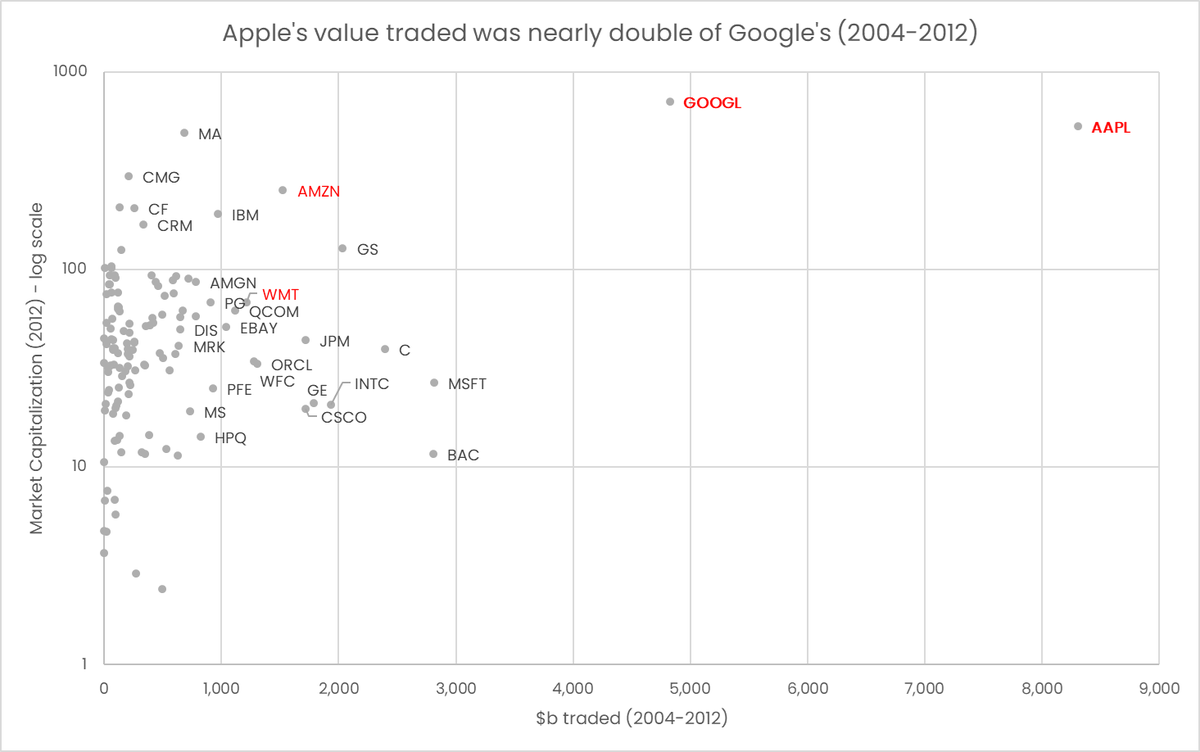
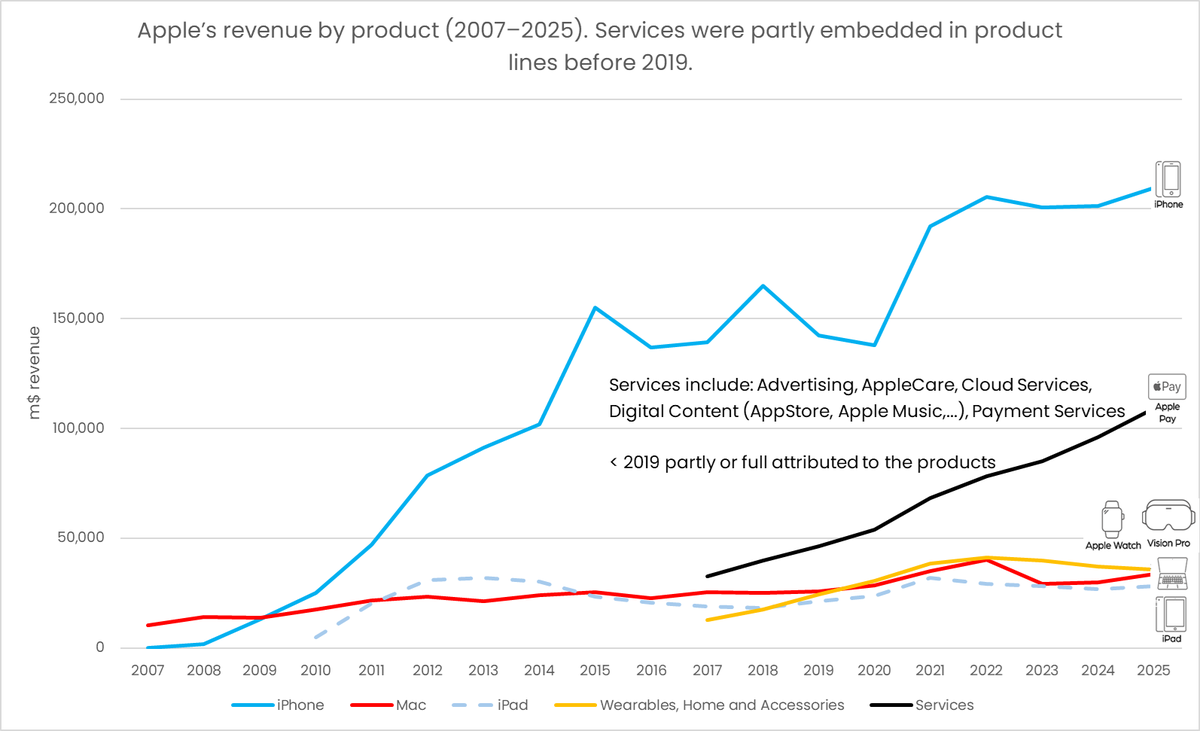
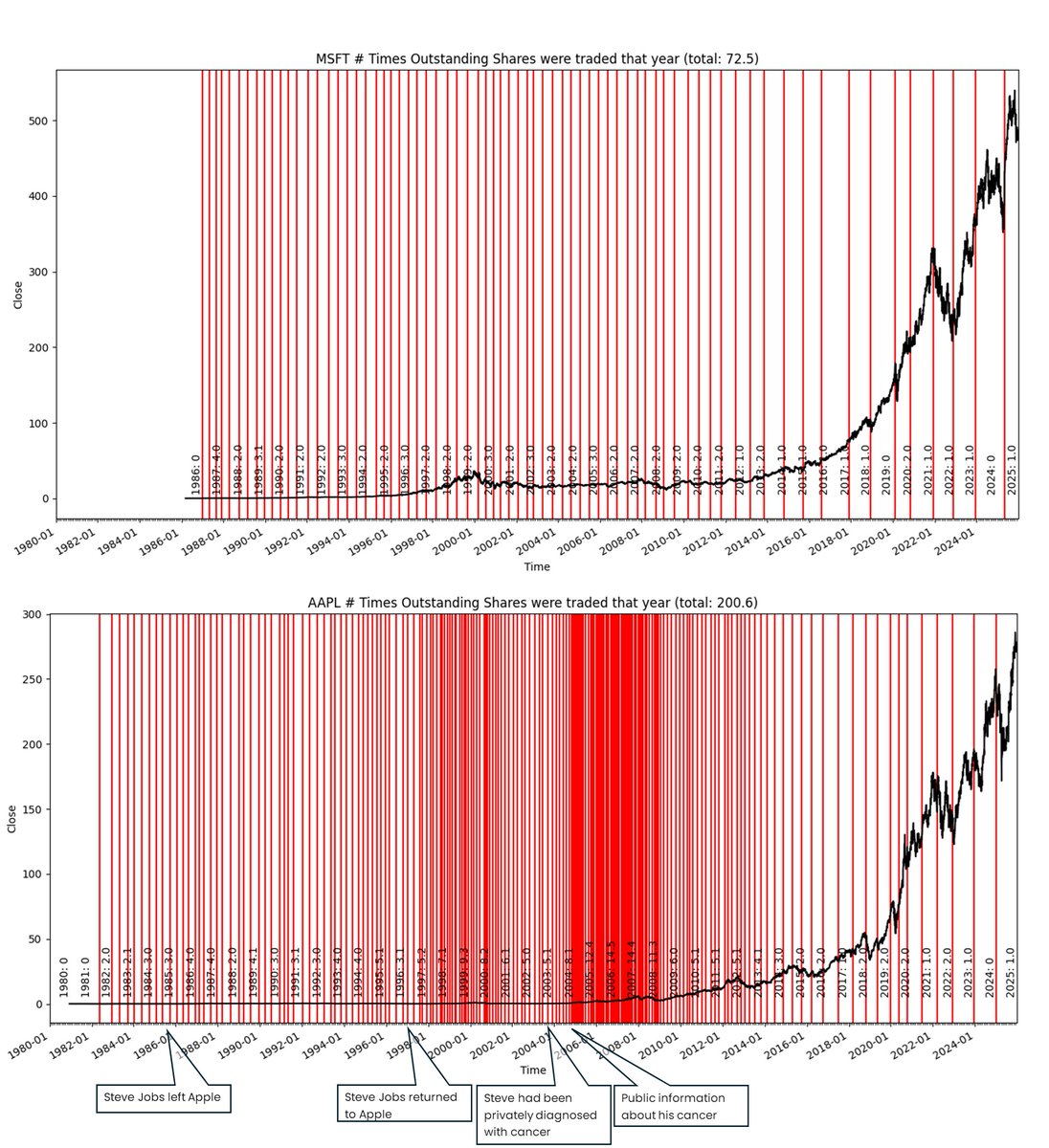
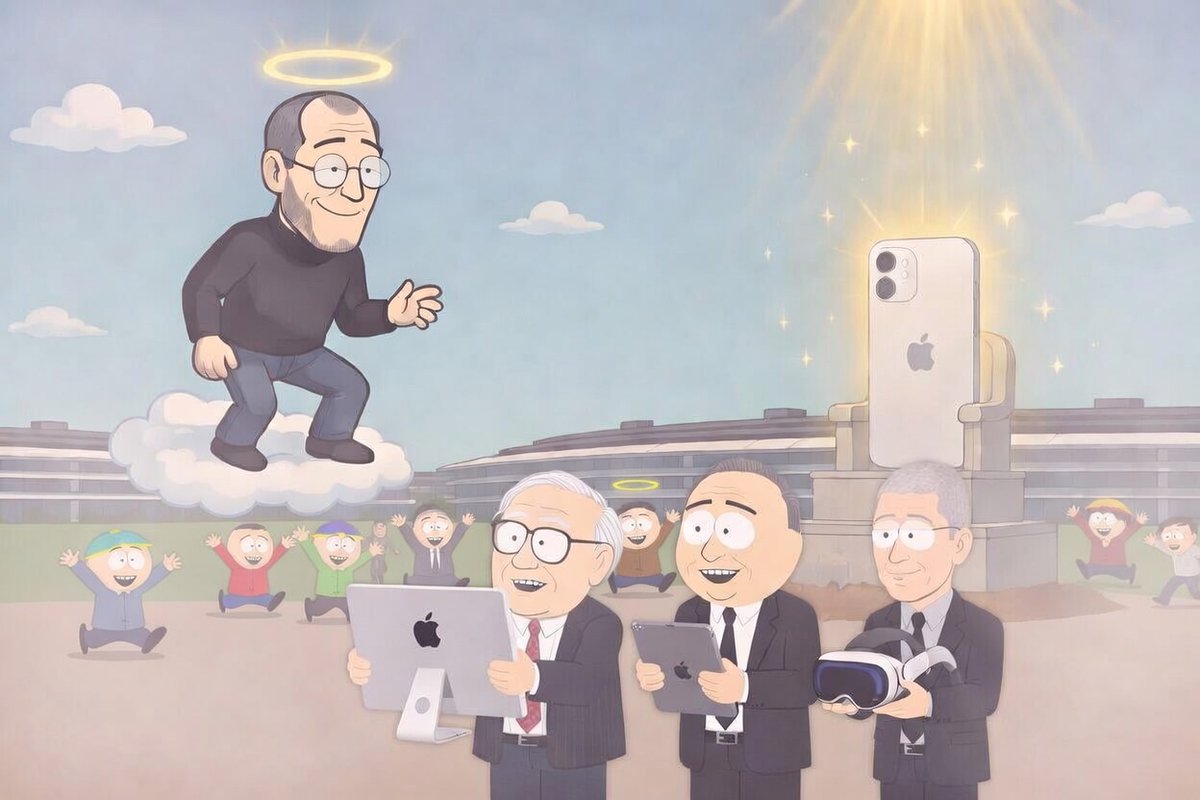
$AAPL – Why Ryan Cohen Went All-In on Apple in 2020: The Post-Jobs Stagnation Story (and What an Activist Could Still Do) [Pic 1: Heavenly Apple] This post offers a new way of seeing post-Jobs Apple, their products, financials and the stock market. In June 2020 we learn that Ryan Cohen "sunk virtually all of his new [$3.35b] fortune in [Apple and Wells Fargo]" (web.archive.org/web/2020060514…). Why? This is not financial advice; do your own research; this post contains speculation; I am far from an Apple expert and thus am happy when people build on this post and call out any factual error Topics: ** Intro ** 2011: Steve had built amazing innovations and the most valuable lifestyle brand by far - also at the stock market ** Apple products (2012-2016) ** Who actually benefited while innovation stalled? ** Apple products (2017-2025) ** Why Tim Cook rationally de-prioritized iPad, iMac, Vision Pro & the Car ** The Apple stock (1982-2011) in comparison to its competition and shorting speculation ** Naked short thesis interlude ** Apple's $834b share buyback ('12-'25) ** Warren the passive investor; speculation ** The end? ** What Ryan Cohen (or any activist) could still do ** Intro If you haven't read Walter Isaacson's biography on Steve Jobs yet, you should do it. It shows how valuable Steve was for the early era of personal computers, integrated design and user interfaces. While he was also depicted as regularly behaving like the biggest asshole one can imagine, he pushed things beyond their limits, often described as his "reality distortion field". The biography also shows his opinion about Bill Gates as an uncreative copycat. Thank God we had Steve. Without him things today would be even more unintuitive. I sometimes think about how things would look today if he was still around. I miss you Steve. I remember exactly the day he died. A friend told me, that's the end of Apple. The end for Apple stock. Because with Steve, its creativity and innovation had died. I wasn't sure at the time. I agree today. It wasn't the end for the stock though. Apple turned into the most profitable company on earth. We are up roughly +1,800% since Steve's way too early and statistically unlikely death. Statistically unlikely like Steve himself. A compound annual growth rate of 22.62% over 14.4 years - well, that's great but less than Eddie Lampert, right? Okay, okay, Eddie's was probably fake like I discussed in the Sears DD. When Ryan posted about Apple, he didn’t do so to signal GME. He posted because he saw the same thing I did: post-Jobs Apple became a cash-flow machine that stopped inventing the future. The stock soared on buybacks, not breakthroughs. This post explains why he bet everything on it in post-Chewy - and why that bet may have been more about the opportunity in stagnation than most realized. Let us do a quick time travel through the Apple history and go through their eras, starting when Steve came back to Apple in 1997: 1. iMac / Resurgence Era (1997–2000) 2. iPod, Apple stores & iTunes Era (2001–2006) 3. iPhone, iPad & AppStore Era (2007–2011) 4. Early post-Jobs Era with Apple Pay, Watch, AirPods (2012-2016) 5. Forgotten-Jobs Era; failed innovation (2012ff) ** 2011: Steve had built amazing innovations and the most valuable lifestyle brand by far - also at the stock market I really didn't care a lot for the Apple stock after Steve died. I didn't even buy stocks at the time. But let me show you the value traded with Apple stock and it will blow your mind. It was the most traded stock by value by far. From 2004 to 2012 its traded value was 8.3 trillion dollar, 70% more than Google, 200% more than Microsoft and 600% more than Walmart. [Pic 2: market cap vs value traded, which is volume * average price] This is because Steve was such a drug taking, barefoot walking, smelly, but insanely incredible genius. A genius without whom in my opinion Microsoft's interfaces would be even shittier than they are today and also Google and Tesla have built on Steve's genius. Steve didn't care for money, he cared for beauty and changing the world. If there was the opposite of overpaid executives at the time, this was Steve Jobs. Seemingly, all while on a people-level being a disloyal asshole genius. This extreme cultural obsession is exactly why post-Jobs Apple became such an irresistible cash-flow machine. The brand power and balance sheet were already world-class. The only question left was what Apple would invent next. ** Apple products (2012-2016) "If you do something and it turns out to be pretty good, then you should go and do something else wonderful" - Steve Jobs This mindset led Jobs to land one banger after the other. Toy Story, A bug's life, Monsters, iMac, iPod, iTunes, iPhone, iPad, AppStore, to list just a few. The most lasting commercial success surely was the iPhone. And we'll see that nothing else compared beside their service revenue growth. [Pic 3: Apple's revenue by product from 2007 to 2025] What is interesting is that the iMac and its variants and thus also the macOS never really lifted off, after their +40% in 2008. Was Steve still interested in the iMac or did he already mentally abandon it for other future products? In short, he remained committed but also saw their percentage-wise decline. He said that "PCs are going to be like trucks. They’re still going to be around, they’re still going to have a lot of value, but they’re going to be used by one out of X people" (youtube.com/watch?v=YfJ3Qx…). He saw the iPad taking over most of PCs work. After the iPad's steep rise it flattened in growth dramatically in 2013, even shrinking in 2014. Certainly, competition rose rapidly after the iPad's success. But so did the iPhone's competition. Was the market already saturated and were replacement cycles significantly longer than with the iPhone? Did Apple speed down on its innovation? Was Apples inventory management a big part of it, like Cook said and calling it a temporary speed bump on October 20, 2014 ("speed bob", web.archive.org/web/2014102205…)? Indeed he used the phrase speed bump already on August 26, 2014 (web.archive.org/web/2014082702…). Tim stays optimistic on January 27, 2015 ("I’m still very optimistic and bullish on iPad over the long run", sixcolors.com/post/2015/01/t…) and on April 27, 2015, where he added that the iPhone and Mac would be cannibalizing it (sixcolors.com/post/2015/04/t…). Tim himself called the iPad the optimal replacement for PCs. Like Steve had told us. That never happened. Looking into the deliveries in 2013 iPad shipments could take up to 8 weeks and were sometimes pushed back (appleinsider.com/articles/13/11…). We can assume a lot of potential customers weren't willing to wait this long and chose a competitor at the time, even when the iPad was the better product. And while I only could find praise from Jony Ive, the community and 3rd party developers talked about what they perceived as lack of commitment from Apple. * "As a developer, I see the iPad as a lost platform, which is heartbreaking." (Brent Simmons, January 12, 2017, sixcolors.com/post/2017/01/2…) * "I’m still not seeing a huge software commitment from Apple." (Christina Warren, source above) * "It doesn’t feel as though Apple has followed through on the iPad’s promise by driving its evolution more quickly" (Adam Engst, source above) Well, that's odd. Tim acknowledges the problem, sees big potential, yet it feels like Apple doesn't care. If you take the same report and read it with the iPhone as focus, you get the feeling that Apple cared very much for the iPhone instead. Either developers for the different platforms interpret "caring" differently, or Apple appeared to care less for what Tim called the PC replacement and what he was very bullish on. Now that would be a contradiction, right? To be fair, Tim Cook's ruthless focus on the iPhone and early services pivot delivered spectacular financial results. Apple became the most profitable company on earth. Warren Buffett would say a wonderful company. The question is whether that success came at the unnecessary expense of the rest of the hardware lineup. How about the iMac? "The Mac was almost entirely neglected this year", "[...] Apple’s neglect of its desktop lineup overshadows everything else Apple has done with the Mac.", "Hardware-wise, 2016 was an awful year for the Mac" (same source as above). Yet the iPhone and services kept compounding at breakneck speed. The strategy clearly worked financially, but at what long-term cost to the broader product portfolio? How do we square Tim acknowledging the problems year after year - inventory issues, cannibalization risks, huge long-term potential - while product development seemed to lag? In my own research (x.com/i/communities/… and from visiting companies in similar situations), I kept seeing the same pattern: flawed inventory management, stacked impairment risks, and resource decisions that looked contradicting and very short-sighted. It looked like there were literally always much better neglected actions available. Most insiders rationalized it as incompetence or bad luck. After checking dozens of cases, I suspect something more systematic was at play, though I could still be wrong. [Hypothesis] #1: After Steve’s death, Apple deliberately concentrated its best talent and capital on the iPhone (and later Services), allowing other hardware lines like the iPad and iMac to stagnate. The massive share-buyback program was chosen over heavy reinvestment in those categories. While it created a high cash flow path at the time, it lead to the stagnation Ryan Cohen appears to have noticed. ** Who actually benefited while innovation stalled? Let’s examine Hypothesis #1 by asking: which competitors benefited most from Apple's strategic choice to concentrate resources on the iPhone and Services instead of fully executing Steve's post-PC vision? The first company we see is Microsoft as they explicitly noted flat consumer PC sales and declining Windows revenue growth tied to tablets in 2011 (geekwire.com/2011/microsoft…). The Guardian estimated that tablets cost Microsoft $1b annually in lost profits and more (theguardian.com/technology/blo…). From Steve Jobs biography we heard that Gates was always trying to copy Apple in a way that Steve called him uncreative and said Bill had literally no taste. The MacOS market share grew roughly 30%+ in 2008 alone. And while Microsoft executives like Ballmer publicly dismissed the Macs they were privately accelerating consumer-focused changes, copying Mac GUI elements, ss had been happening for decades (successfulsoftware.net/2009/01/09/mac…). After Steve's death, we can observe Microsoft further copying, like Windows 8 being inspired by Apple's ecosystem and also Microsoft's pivot to cloud services (Azure) followed Steve's lead with the iCloud. The next company to profit would probably be Intel, as the iPad used Apple's ARM-based A-series chips, not Intel CPUs. Of course the traditional PC maker like HP, Lenovo and Dell gained a lot of breathing room. Dell was taken private by Michael Dell in 2013 for $24.4b (theguardian.com/technology/201…). He also invested in Eddie Lampert who has torn down Sears, see x.com/beyond_mythos/…). Remember Steve's comment about PCs being like trucks? If Steve would have realized this vision, they'd face disruption of their core business pretty fast. Steve Jobs disrupted entire industries. Because Apple did not fully realize his post-PC vision for the iPad and Mac, traditional PC makers (Microsoft, Intel, HP, Lenovo, Dell) continued to thrive longer than they otherwise might have. This is exactly the stagnation Ryan Cohen appears to have recognized. ** Apple products (2017-2025) Steve created remarkable products in every dimension. Neither the Apple Watch nor the AirPods, while good products, were able to move the needle the way Steve-era launches did. We’ve already seen that some of this may have been de-prioritization by Apple. Let’s now look at their biggest products in the last decade, beginning with the Apple Vision Pro. * Apple Vision To my surprise, Walter Isaacson said "Steve Jobs would love Apple's Vision Pro headset" (businessinsider.com/what-steve-job…). In my opinion this product contradicted what Steve thought a good product should be - in terms of weight, design and price. I totally agreed with Scott Galloway who asked in June 2023: "Can you imagine Steve Jobs wearing the Vision Pro ... ever?" (@profgalloway/isnt-that-spatial-34428622a8ab" target="_blank" rel="nofollow noopener">medium.com/@profgalloway/…). I just couldn't. Tim Urban ended his review the same way: "K can I take this thing off my face now?" (waitbutwhy.com/2024/02/vision…). Thus, in my view, it was probably rather likely to fail commercially - and it did (archive.li/aym6b). I would predict the same for the currently-in-development, cheaper, stripped down version, even if some analysists see potential for under $2k. I don't. I wondered where Jony Ive, Steve's "spiritual partner" in design for the iMac, iPod, iPhone, and iPad was at the time. Sure enough he left Apple in 2019, after having distanced himself since 2015 (#selection-487.0-487.62" target="_blank" rel="nofollow noopener">archive.li/beQ9d#selectio…). He didn't like that Tim Cook seemed to prioritize accountants over creative minds (archive.li/y3on0), and reports claimed that Tim rarely visited the design studios (mashable.com/article/jony-i…). Something Steve had done daily. Since Jony left, he is very quiet about Apple. There isn't a single comment from him about the Apple Vision. In May 2025 Ive's AI hardware startup IO which he started only a year earlier was acquired by OpenAI for $6.5b (forbes.com/sites/phoebeli…). [Future research] Ive's startup IO and the acquisition by OpenAI. Where we do have comments of Ive about is the Apple Car. * Apple Car (project Titan) I remember vividly investing in Tesla and being asked about the Apple Car. At the time I was worried that Apple with its vast resources could crush my investment. Over time I relaxed, because I couldn’t see any meaningful progress at Apple while Tesla advanced rapidly. Apple secretly started development in 2014 and canceled it in 2024 (techcrunch.com/2024/02/28/the…), after spending an estimated $10 billion+ and pulling engineers from other areas like the Apple Watch (macrumors.com/2024/02/28/app…). The project lead left in January 2016 after 16 years (wsj.com/articles/apple…). Jony Ive expressed displeasure with progress that same month, triggering an immediate hiring freeze that lasted over a year (appleinsider.com/articles/16/01…). The hiring freeze was lifted over a year later in August 2017. The timeframe and multiple pivots (electric, self driving or both or drive assist; pivots in 2016, 2021, 2022 and 2024) stood out as surprisingly unfocused. Comparing this with Tesla’s consistent direction, Apple’s approach looked disorganized. Looking at the full pattern - visible with the iPad, iMac and even more pronounced with the Apple Car and Apple Vision - we could form another hypothesis. [Hypothesis] #2: Apple’s management may have systematically de-prioritized non-iPhone hardware (iPad, iMac, Vision Pro, Car) in favor of the highest short term cash flow path - even if that meant not pursuing Steve's broader vision and successful innovation. To be fair again, this focus delivered spectacular financial results and turned Apple into the most profitable company on earth. The real question is whether the trade-off was worth it long-term. ** Why Tim Cook rationally de-prioritized iPad, iMac, Vision Pro & the Car There are numerous explanations why Apple underperformed in those categories, but I couldn’t find a single one that seriously considered hypothesis #2. Only a few months ago, I wouldn't either. Tim Cook was hand-picked by Steve Jobs as his heir. Maybe competition simply got tougher and Apple lost some magic while still trying hard. But what if they didn't even honestly try? But how can I say that? We already saw who profited on a product level from the de-prioritization. We saw Carl Icahn crushing Blockbuster 2004-2011 by simply not reintroducing its only reason for profitability, Blockbuster's late fees. He used the underperformance of the stores to justify their closure without any significant cash inflow from it, while real estate prices rocketed during the bubble 2004-2007. Potentially profiting as third-party profit-taker (x.com/i/status/20216…). We saw Eddie Lampert crushing the merged Sears and Kmart by unsustainable cost cutting and asset sell-offs, in who's light Walmart profited and grew to a monopoly power. All this while we could see that Warren Buffett indirectly told people to buy Walmart stock, which stood flat for one to even two decades, rising first as he had sold. Having created a massive shorting-opportunity which he could have used through Wells Fargo. And now while insiders have pulled over $90b, exited their board positions, the company overtaken by Amazon potentially, preparing Walmart's failure (x.com/beyond_mythos/…)? Again, interestingly, one of Eddie Lampert's investors was Michael Dell. But that would not happen with Apple, right? We find Carl and Warren at Apple, so maybe we have to take another look what actually happened. Again, to be fair, Apple became the most profitable company on earth. Maybe this perspective is wrong. ** The Apple stock (1982-2011) in comparison to its competition and shorting speculation The Steve Jobs biography turned into a bestseller immediately when it came out October 24, 2011 (edition.cnn.com/2011/11/03/tec…). I would have thought that a lot of shorts went in, but official reports don't show this (web.archive.org/web/2011101601…). Like Apple also wasn't included in the high short interest report when their volume turnover graph looked like $GME in 2013-2020 (x.com/beyond_mythos/…). All total shares outstanding traded roughly 57x during those 5 years. How would that work without shorts? If we compare Microsoft with Apple, we see that Microsoft's total shares outstanding are steadily traded between 0 and 2-3 times per year, while Apple's were traded up to 14.5 times per year. This could be explained by massive day trading but rather likely by shorts. We can see volume ramping up after Jobs return in 1997 as well as after his cancer became public. In total Apple traded its total shares outstanding 201 times while Microsoft did only 73 times. [Pic 4: volume turnover; times outstanding shares were traded each year; 1x traded marked by each red bar] We can see that those two stocks, while being in direct competition especially in the 90s and 00s traded fundamentally differently. There was much more demand for the Apple stock, but also much more supply. While the literature and also grok will tell you that this is totally normal, let us phrase it the following way. For every trade to happen, there must be someone to sell a share. On average every non-institutionally held share was sold every 7 trading days. Every single one. We can calculate this with: Blended average holding period: 252/14.5 = 17.4 trading days (trading days / volume turnover, maybe I should call it total share turnover) Institutional contribution: 0.6 x 0.47 = 0.28x (institutional percentage x avg institutional turnover; source: ici.org/pubfile_pdf/20…, p. 21 "annual turnover [..] by stock fund investors edged up to 47 percent") Retail turnover required: (14.5 - 0.28)/0.4 = 35.45x ((volume turnover - institutional contribution) / retail percentage) Retail/non-institutional holding period: 252/35.45 = 7.1 trading days (or ~10 calendar days) The average of all stocks was 79 trading days (calculated based on faculty.haas.berkeley.edu/odean/papers%2…). Microsoft was at 59 trading days. That's an order of magnitude difference to Apple. I fully see why there was so much demand for Apple. This was the time of the iPod, the iPhone, the MacBook Air. People were buying the stock and holding it because it was just getting better, putting it into retirement accounts because Steve was changing the world. Why would retail people on average sell every 7 days? Especially with a stock like Apple, where you see Steve creating wonderful, disruptive products? This doesn’t make sense to me. Can I be wrong? Of course.
YouTube video
YouTube
beyond-mythos tweet mediabeyond-mythos tweet mediabeyond-mythos tweet mediabeyond-mythos tweet media
English
1
2
5
631
Mike Benz
Mike Benz@MikeBenzCyber·
wow, Bob Mueller just died, that's crazy
English
422
103
1.9K
182.9K