Northern Lights Now

6.9K posts

Northern Lights Now banner
Northern Lights Now

Northern Lights Now

@NorthLightAlert

#Aurora predictions to help you see the #NorthernLights. Sharing #SpaceWx info & news. Current Storm Info⇒https://t.co/dJR7eC4rNS ⚡️ Support: https://t.co/GE1vVkWdES

Burlington, VT เข้าร่วม Ocak 2014
297 กำลังติดตาม43K ผู้ติดตาม
ทวีตที่ปักหมุด
Northern Lights Now
Northern Lights Now@NorthLightAlert·
Please consider following NLN & RT'ing to your followers who might be interested in seeing #aurora or #northernlights? Thx!
Northern Lights Now tweet media
English
30
152
296
0
Northern Lights Now รีทวีตแล้ว
Halo CME
Halo CME@halocme·
Today's solar eruption associated with an M1.9 flare in AR 14436. The coronal wave does not look like strongly driven in low altitudes; no type II radio burst in NOAA's report. But the eruption may be strong higher up. There is a chance of glancing Earth during 19-20 May.
English
2
44
152
5.1K
Northern Lights Now รีทวีตแล้ว
Jeremy Cruz
Jeremy Cruz@J_master_caster·
Green auroral arc on camera in northern Massachusetts! 9:50 PM #aurora #northernlights
Jeremy Cruz tweet media
English
2
6
50
8.2K
Northern Lights Now รีทวีตแล้ว
Nick Dewhirst
Nick Dewhirst@SEMichigan_Wx·
#aurora from northern Michigan right now!!
Nick Dewhirst tweet media
English
6
51
206
8.9K
Northern Lights Now รีทวีตแล้ว
Southern Skies
Southern Skies@NorthernSkies5·
Mission accomplished! Naked eye aurora australis and my 100th aurora show! #aurora
Southern Skies tweet media
English
12
28
191
8.2K
Northern Lights Now รีทวีตแล้ว
SolarHam
SolarHam@SolarHam·
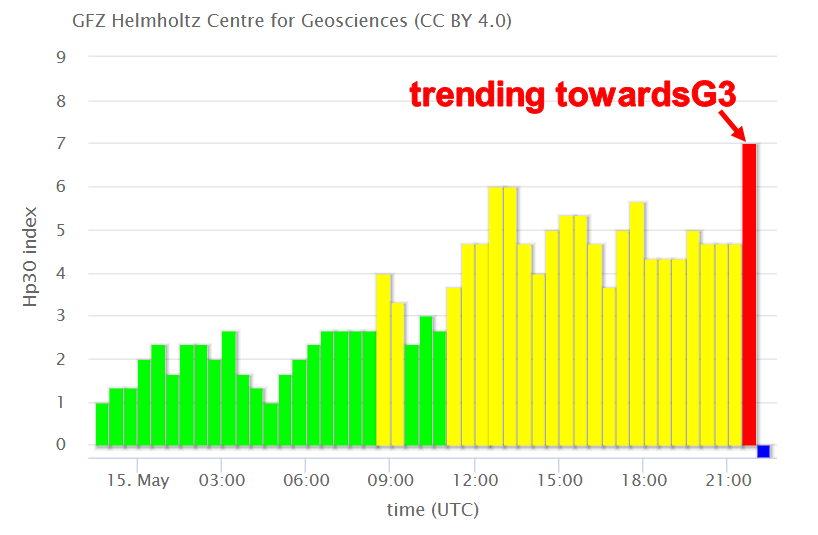
A moderate (G2) geomagnetic storm is currently in progress. Aurora sky watchers should remain alert once dark outside. SolarHam.com
SolarHam tweet media
English
1
66
231
7.3K
Northern Lights Now รีทวีตแล้ว
Dr. Tamitha Skov
Dr. Tamitha Skov@TamithaSkov·
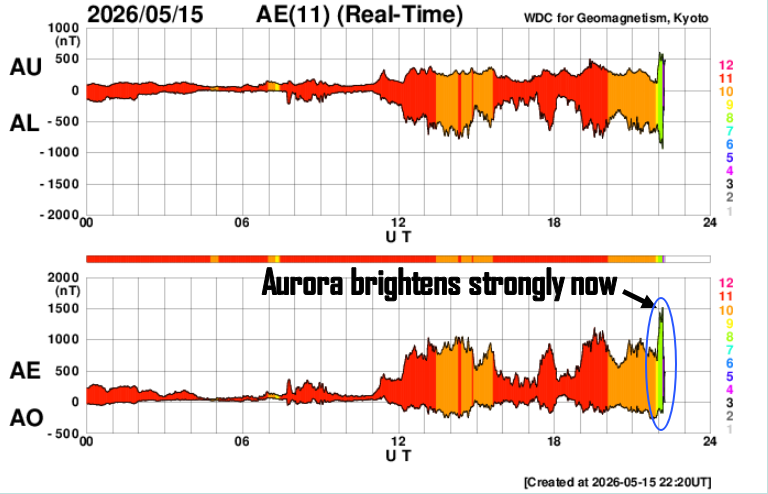
The fast solar wind is now giving us sustained southward field so aurora is dropping down to mid-latitudes now! Although the Ovation model was overestimating aurora viewing earlier today, that is no longer the case. Expect views to continue to brighten over the next several hours at least. The new moon tonight also means skies should be exceptionally dark! Perfect for viewing where skies are clear!
Dr. Tamitha Skov tweet mediaDr. Tamitha Skov tweet media
English
6
45
183
7.5K
Northern Lights Now รีทวีตแล้ว
Dr. Ryan French
Dr. Ryan French@RyanJFrench·
Here is a unique view of a solar flare, captured by the NASA IRIS space telescope last month. We’re used to seeing ‘saturated’ images of flares, but this movie shows an unsaturated view of solar flare heating and plasma motions in the lower solar atmosphere!
English
1
51
238
10.1K
Northern Lights Now รีทวีตแล้ว
Halo CME
Halo CME@halocme·
The eruption on 10 May 2026 from AR 14436 (associated with an M5.7 flare) was spectacular enough to wake me up. The region is the target of a Major Flare Watch by the Max Millennium Chief Observer.
English
5
90
341
17.1K
Northern Lights Now รีทวีตแล้ว
Jorge Álvarez
Jorge Álvarez@jorel698·
Tenemos una CME espectacular. 😮😬🤨 No dirigida a La Tierra. SOHO LASCO C2
Español
4
38
149
3.5K
Northern Lights Now รีทวีตแล้ว
SpaceWeatherNews
SpaceWeatherNews@SunWeatherMan·
When the sun chooses violence... (2 hours ago, 304 angstrom UV shine from ionized He)
English
25
87
628
15.2K
SpaceWeatherNews
SpaceWeatherNews@SunWeatherMan·
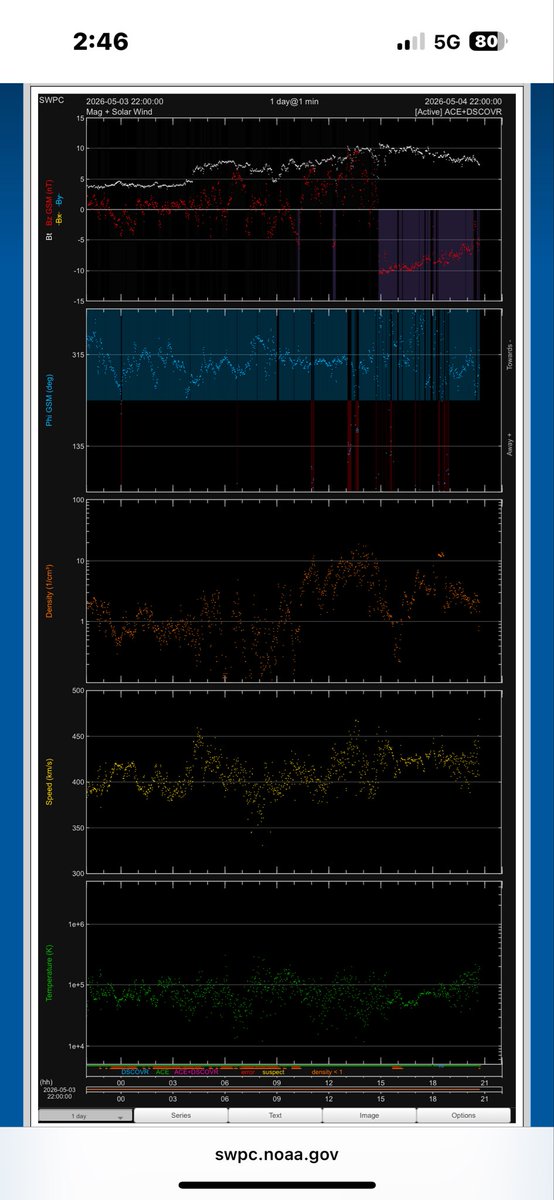
For the five people on the Internet who understand this question… No solar flares, solar wind speed under 500km/s, no CMEs, coronal hole stream still days away, phi angle not very variable… Why is the Bz riding the south like that? What is the source of this geomagnetic storm (kp6) right now?
SpaceWeatherNews tweet media
English
133
55
512
49.6K
Northern Lights Now รีทวีตแล้ว
Curiosity
Curiosity@CuriosityonX·
Aurora on Earth from the ISS vs on planet Adrian in Project Hail Mary
Curiosity tweet mediaCuriosity tweet media
English
10
93
1.1K
43.8K
Northern Lights Now รีทวีตแล้ว
Harlan Thomas
Harlan Thomas@theauroraguy·
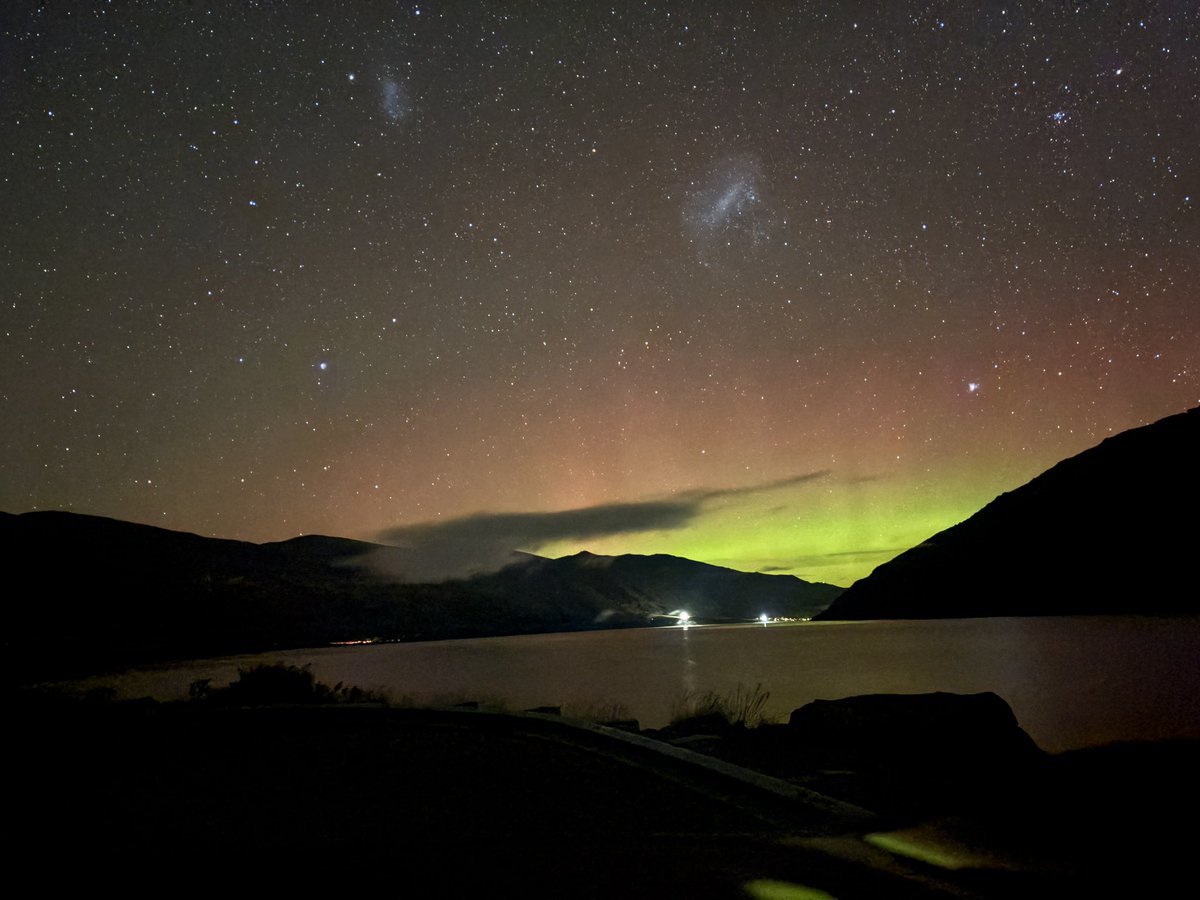
looks like Banff is seeing some aurora tonight
Harlan Thomas tweet media
English
3
12
88
4.2K
Northern Lights Now รีทวีตแล้ว
steve
steve@vastdepth·
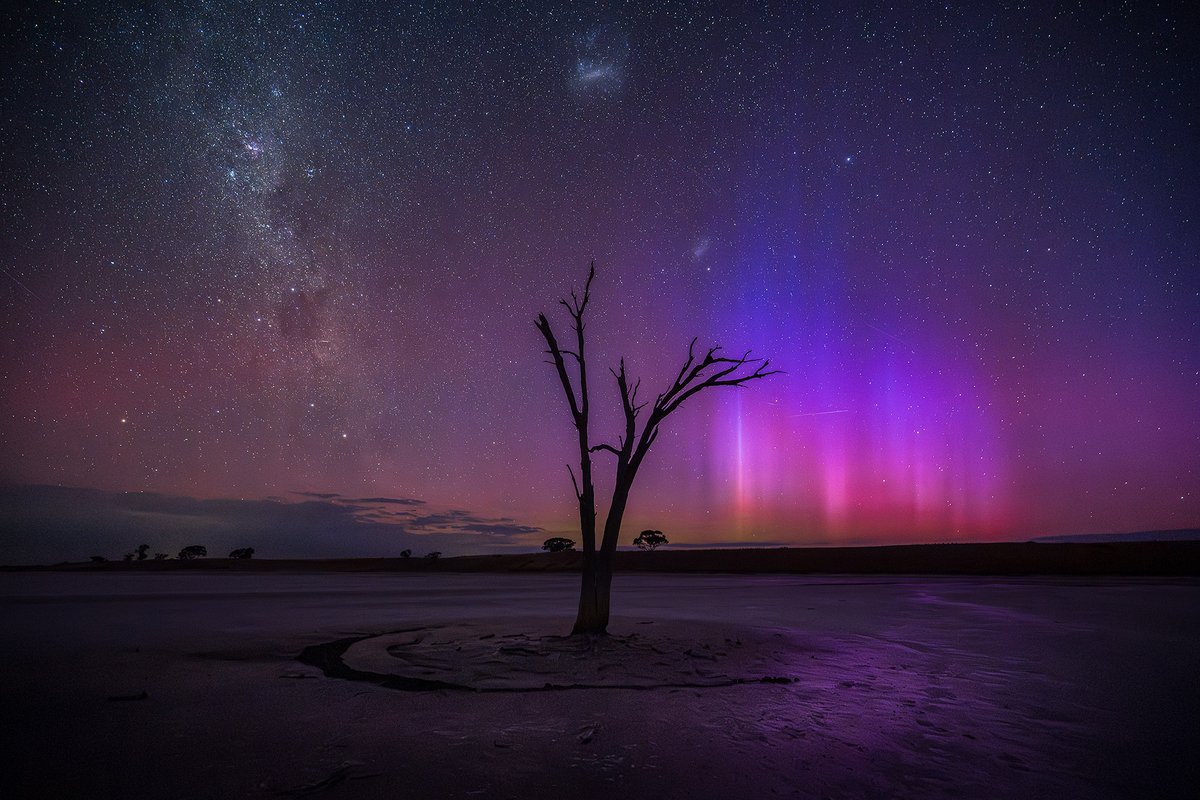
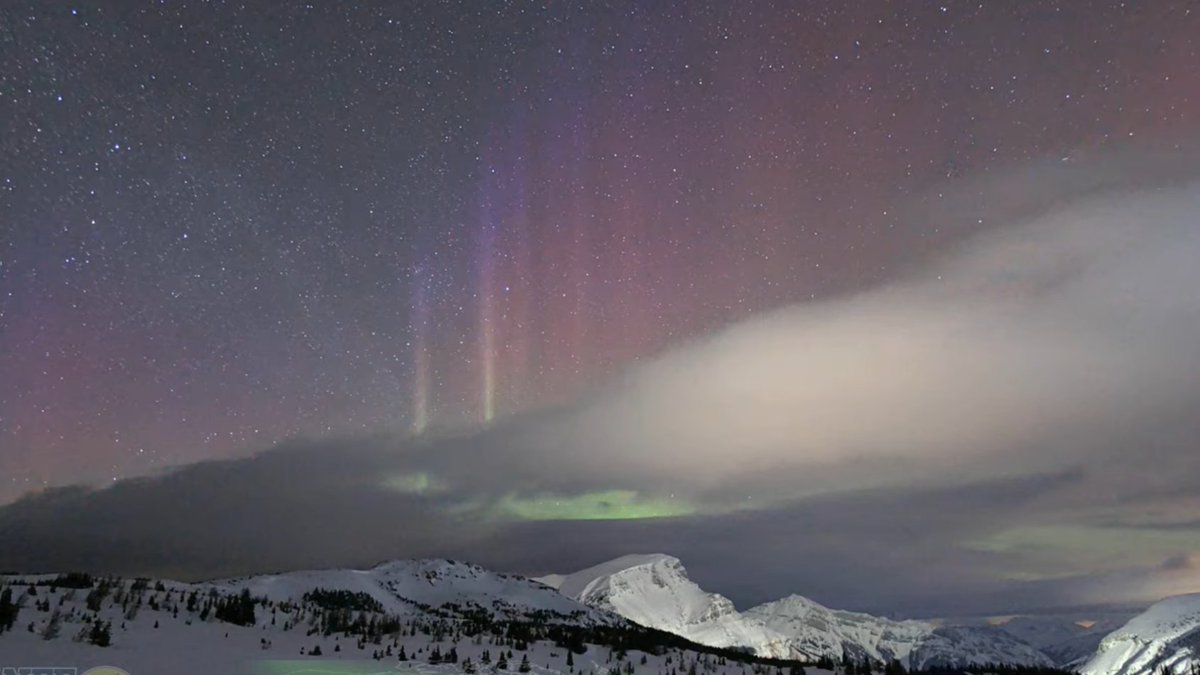
The aurora started as a faint glow on the horizon as daylight dropped. Then the pillars went up and the whole southern sky turned violet/magenta. The Milky Way was already there, just waiting for someone to notice. The evening was so calm you could hear a pin drop on the crusted lake.
steve tweet media
English
5
20
131
3.7K
Northern Lights Now รีทวีตแล้ว
Javier de la Cuadra
Javier de la Cuadra@JavierDlacuadra·
Ahora sí hablemos en serio de la foto. Este es un trino para interesados en fotografía, astrofotografía y el que quiera ¿Por qué esta foto es increíble? Algún conspiranóico, dándoselas de suspicaz, preguntó que por qué esta foto tomada por el comandante del Artemis II se veía más opaca que la foto tomada por la tripulación del Apolo 17 en 1972. Bueno. Acá viene lo emocionante. Esta fotografía hubiera sido imposible tomarla con una cámara análoga; y no cualquier cámara digital puede tomarla. El archivo original de esta foto está disponible para su descarga en la página de la NASA. En las propiedades del archivo se puede ver con qué cámara fue tomada y los ajustes de exposición que se usaron. Hasta el serial de la cámara. Esto, primero que todo, garantiza que la foto que estamos viendo no fue creada digitalmente, ni con IA, sino capturada por una cámara real por un humano. Sé que no es suficiente argumento para los conspiranóicos, pero ni modos. Esa que está ahí es la Tierra. Ahora sí lo interesante. ¿Por qué se ve como más opaca que la del 72? porque resulta que en la cara de la tierra que vemos en esa foto, está de noche; si hacen zoom pueden ver el brillo de la iluminación nocturna. Pero ¿cómo, si es de noche, puede verse como si fuera de día? Porque la foto se hizo con un altísimo ISO de 51200! El ISO es la sensibilidad del sensor a la luz. Con la mayoría de cámaras digitales, con ISOs de más de 6400, el ruido es tanto que la foto se ve prácticamente ilegible. Pero la cámara que tiene el comandante Reid Wiseman es una NIKON D5, que no es una cámara muy nueva; tiene 10 años de haber sido lanzada. Pero su sensor es reconocido por garantizar una calidad decente de imagen con ISOs altos. Y eso, para los que siempre preguntan cómo se hace una buena foto del cielo, es fundamental ¿Por qué? Pues para poder tomar fotos de los astros sin tener que bajar mucho la velocidad de exposición. Porque si bajas mucho la exposición apra que entre más luz, queda capturado el movimiento de los astros y de la rotación de la Tierra, cuando estás en la Tierra. Así que un iSO tan alto hizo posible que Wiserman pudiera disparar a una velocidad de 1/4 de segundo. Que es baja, pero no tanto. Es digamos, el límite para la astrofotografía. Por eso esta foto tiene ruido, porque de todas formas es un ISO altísimo. Pero lo que más me emociona a mí, es que la tomó con un lente 14 -24mm F2.8. Es decir, en terminos coloquiales, que esta foto no tiene zoom. Para que lo dimensionen: cuando uno quiere tomar una foto de la Luna desde la Tierra que salga así de "cerca" tiene que usar un lente de unos 400mm de distancia focal. Wiserman usó un ¡gran angular de 22mm! Es decir que él estaba viendo la Tierra asi de grande frente a sus ojos. Porque la foto no fue recortada en edición y eso lo sabemos porque en las propiedades del archivo siempre aparece cuando una foto fue editada. El archivo está limpio, tiene la resolución original de la cámara. La tierra era inmensa frente a su mirada. Hermoso. Pero para mí lo más mágico de esta foto, incluso más que las auroras boreales, es que se ve como la luz de sol, que está del otro lado de la tierra, ilumina nuestra atmosfera. Y eso es magia pura, porque esa atmosfera tiene una composición milimétricamente perfecta para permitir que la vida, tal y como la conocemos, sea posible. Esta foto, es un regalo precioso para la humanidad. Les dejo al link para que descarguen la foto en alta resolución y el pantallazo de las propuedades del archivo.
Javier de la Cuadra tweet media
Español
723
8K
31.3K
1.7M
Northern Lights Now รีทวีตแล้ว
Matt Phelps
Matt Phelps@themattphelps·
Violent aurora substorm just now in Fairbanks 🤯
English
13
33
207
9.7K
Northern Lights Now รีทวีตแล้ว
Marko Rummelsburg
Marko Rummelsburg@doktornihil·
Strong M7.55 solar flare from sunspot group 4409. A core filament was disrupted. Minor dimming only, some opening field lines and only very few post-eruptive arcades indicate that not much material left the corona.
Marko Rummelsburg@doktornihil

3 days evolution of sunspot region 4409 - now βγδ, with strong magnetic shear in the leading section and a complex sigmoid structure. At 2026-04-04 01:17 UTC it produced a solar flare of magnitude M7.55 (strong) and a strong microwave radioburst.

English
1
28
104
7.2K
Northern Lights Now
Northern Lights Now@NorthLightAlert·
Confirmed at near center disk. This wil be AR 4409
Northern Lights Now tweet mediaNorthern Lights Now tweet media
English
0
0
7
755
Northern Lights Now
Northern Lights Now@NorthLightAlert·
M7.54 solar #flare just now. This should be pretty center disk and looks like a moderately long decay!
Northern Lights Now tweet media
English
2
3
11
1.6K