Public History Weekly (PHW)

7.1K posts

Public History Weekly (PHW) banner
Public History Weekly (PHW)

Public History Weekly (PHW)

@PH_Weekly

The multinational multilingual collaborative Open Peer Review Journal for #PublicHistory. | Since 2013 — in coop with @dg_history publishers

Vienna เข้าร่วม Mayıs 2013
2.3K กำลังติดตาม6.6K ผู้ติดตาม
Public History Weekly (PHW) รีทวีตแล้ว
Clarissa Ceglio, PhD
Clarissa Ceglio, PhD@cjceglio·
Thoughtful reflection from @MDemantowsky on the founding, challenges & successes of @PH_Weekly as it marks its 10th anniversary & celebrates the beyond-amazing accomplishments of its outgoing Central Office Team at @PubHistVienna🏆🥇Stay tuned for what's ahead!
Public History Studies at University of Vienna@PubHistVienna

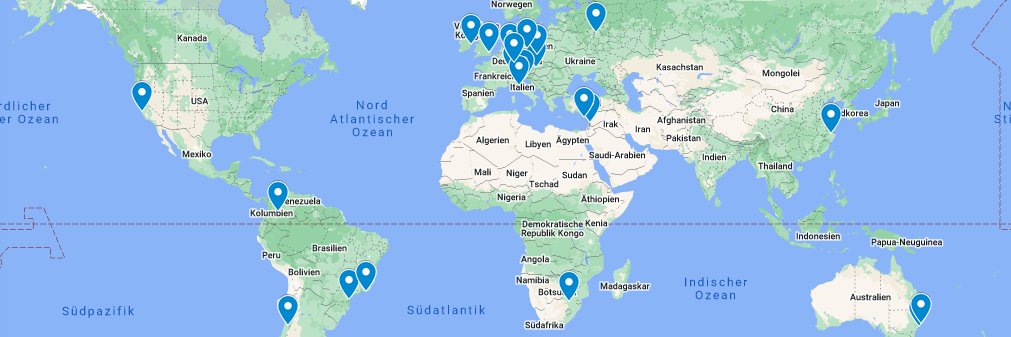
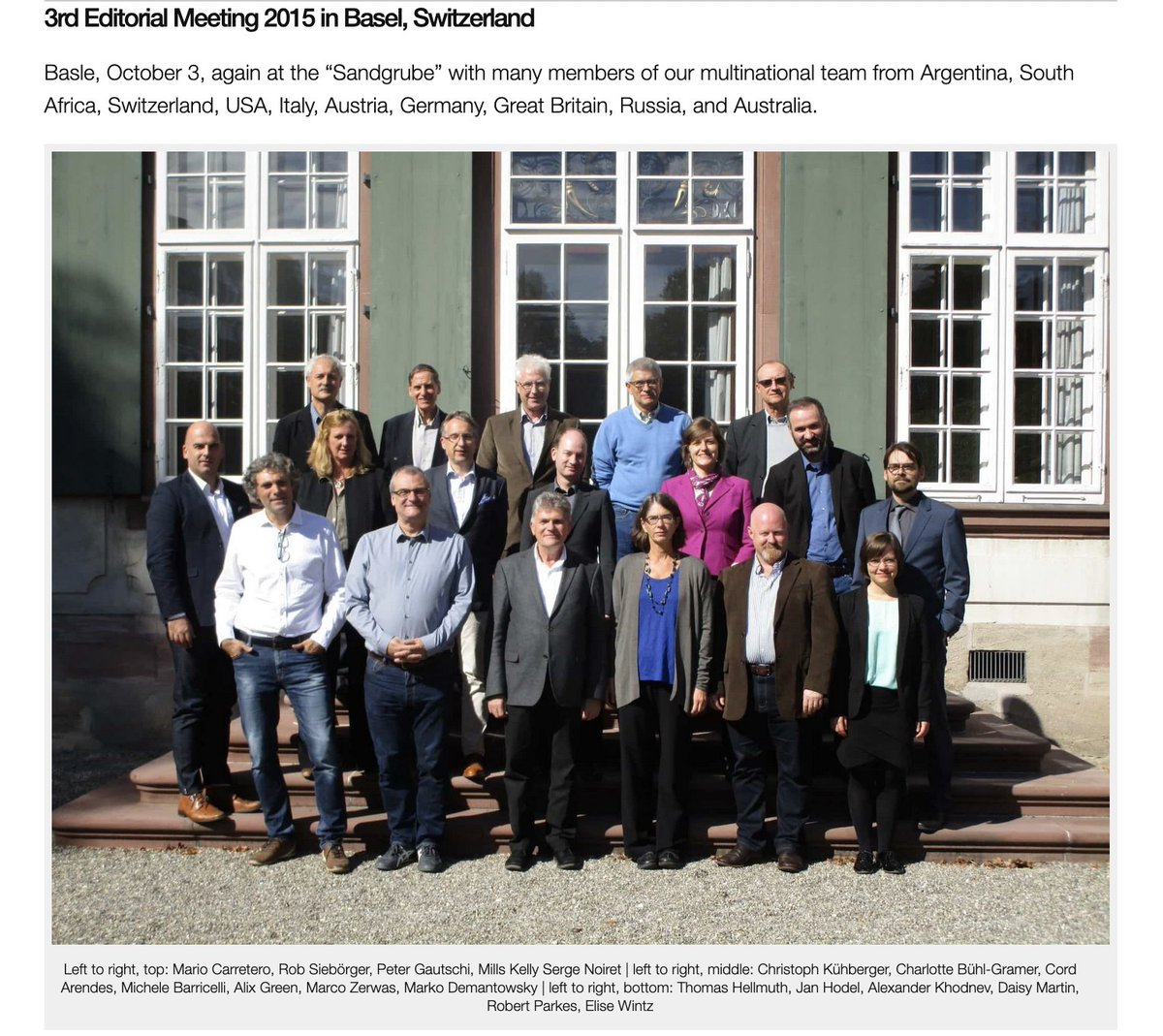
+Longread+ Time to say Goodbye to the management of @PH_Weekly after 10 full years of weekly editorial work and intense 10 months of development, fund raising and, preparation, and an initial invention. You see the very last issue under my management, ed. by Cord Arendes / Stefanie Samida in October 2023, editorially serviced by @moritz_hoffmann and @BPavlekLoebl. This work has started in autumn 2012 with rather critical observations on the academic journal landscape of that time, a specific idea, and new opportunities after my move from Germany to Switzerland. A first funding application of 300'000 CHF was successful, thanks to the support of my university leadership @PHFHNW. Since then, year after year we had to care for financing. All in all an estimated amount of 1.2 milion CHF were necessary to keep the ship afloat until today. The conceptual idea consisted of: - open access - collaboration - weekly appearing - mulilinguality - interactivity / open peer review - full academic standards in terms of referencing and arguing and permanent text protection - full social media embedding - screen-reading friendly layout - openess to a wider interested public - equal and contract-specified partnership between the publisher house and the other funding institutions Some of these characteristics may appear today as self-evident and trivial, but they certainly weren't that at all in 2012. In January 2013 I met the wise @mingus97, that time managing Oldenbourg publisher house in Munich, who adopted the concept, the man, and the initial funding like an orphan, spended the necessary professional framework and support and, not least, and found the as decisive as ambitious title in the twinkling of an eye. All of that of course not at the coffee table at Nymphenburg Palace while, funny enough, this conference about new ways of academic publishing, but in a series of telephone calls and meetings at Mannheim railway junction's waiting benches, for we both belonged to those typical German North-South distant commuters then. Another founding person was Dr Jan Hodel, who joined my chair's team in Sep 13, but he already got hooked on PHW in the early spring evening sunshine at one of our meetings in the wonderful Basel pub "Perron" at the tracks of the old St Johann station on the Swiss-French border. He invented our logo in a 5-minutes work in his later office in Windisch, but most importantly he invested grounded digital experinces and personality in the crucial work to set up and process everything. When I think of the contributions of and the cooperation with Martin and Jan, I notice that PHW has given me one friend after another. And this line goes on and on. This might be the reason why it is a hard to say goodbye as manager. Moritz may know better, from what exact day he started to invest himself into PHW. For me it is something like almost from the very start. @moritz_hoffmann was invaluable for PHW and its Central Office over so many years - until the very last article this October. Over the years, several young colleagues have at times supported our Central Office work. Everyone of them layed his or her mosaic stone to PHW's consistent success when we speak about outreach and impact. We have still about 11'000 monthly unique clients on board, PHW articles has be cited in many and various academic and popular publications, again just recently from the Financial Times. PHW was always keen on organising not just collaborative work across all possible borders but also on creating welcoming and warm circumstances of personal getogethers. Unforgettable our first editor's evening on a boat (Fähri) in June 13 in the middle of the Rhine (we all just missed a restroom after 1 hours drinking), or the 2015 meeting and conference, 3 days prolonged to see the sees and the alps, or just recently the confercence and afterwards the wonderful retraite in the Wachau. Academia ist not just about debate, research, competition - it thrives from friendship and partnership. This spirit has been always supported by our coop-partner and publisher house @dg_history (since 2014): Julia Schreiner, @EliseWintz, @RabeaRi, and @HoppeFlorian provided us always with everything necessary and possible. PHW has been (and hopefully will be) a journal in almost permanent development in terms of technology and conceptual work to develop the idea of future-oriented academic publishing. I cannot exclude the possibility that my ambition in this regard sometimes became a burden for those involved. But my conviction is and has been: Either you continue to develop a product constantly, discussing possible optimisations week after week, month after month, or the product dies the same digital death as many other fantastic projects that have remained projects. After my move from Basel to Vienna, many things have changed for me personally and it was quite its own project to re-establish the Central Office newly in new circumstances. Lucky me, @BPavlekLoebl joined my team as postdoc assistant in early 2022 and jumped directly into the editorial work of PHW. She managed within a super short time to understand this PHW-being thoroughly and became more than a just a deputy within weeks. Without her PHW wouldnt have survived my move through the Alps from West to East until today. Another great and invaluable support in Central Office came from @ArthurJChapman. Last year, the dear colleague @cjceglio was persuaded by sinister forces to take responsibility as head of PHW's Advisory Board. Since then, she has proven to be extremely competent, dedicated and approachable in this position. What a luck to have her now there when PHW ungoes a new transformation. This transformation is the search of a new management and the then necessary adaption to the ideas, needs, capabilities, and resources of the new leadership. The process has started in Summer, lead by Clarissa (and the AB of PHW) and De Gruyter Oldenbourg. Nobody can say at the moment whether this process will be successful or not, whether PHW wil continue publishing or not, but I think to have reasons to remain optimistic. As for me, I will keep connected to PHW. PHW is and will remain an important part of my life, not just academically. Hopefully, I can provide the readership once again with a new monthly Vienna PHW issue. The thematic idea is "The public history of mourning". Marko Demantowsky

English
1
2
6
892
Public History Weekly (PHW) รีทวีตแล้ว
Public History Studies at University of Vienna
+Longread+ Time to say Goodbye to the management of @PH_Weekly after 10 full years of weekly editorial work and intense 10 months of development, fund raising and, preparation, and an initial invention. You see the very last issue under my management, ed. by Cord Arendes / Stefanie Samida in October 2023, editorially serviced by @moritz_hoffmann and @BPavlekLoebl. This work has started in autumn 2012 with rather critical observations on the academic journal landscape of that time, a specific idea, and new opportunities after my move from Germany to Switzerland. A first funding application of 300'000 CHF was successful, thanks to the support of my university leadership @PHFHNW. Since then, year after year we had to care for financing. All in all an estimated amount of 1.2 milion CHF were necessary to keep the ship afloat until today. The conceptual idea consisted of: - open access - collaboration - weekly appearing - mulilinguality - interactivity / open peer review - full academic standards in terms of referencing and arguing and permanent text protection - full social media embedding - screen-reading friendly layout - openess to a wider interested public - equal and contract-specified partnership between the publisher house and the other funding institutions Some of these characteristics may appear today as self-evident and trivial, but they certainly weren't that at all in 2012. In January 2013 I met the wise @mingus97, that time managing Oldenbourg publisher house in Munich, who adopted the concept, the man, and the initial funding like an orphan, spended the necessary professional framework and support and, not least, and found the as decisive as ambitious title in the twinkling of an eye. All of that of course not at the coffee table at Nymphenburg Palace while, funny enough, this conference about new ways of academic publishing, but in a series of telephone calls and meetings at Mannheim railway junction's waiting benches, for we both belonged to those typical German North-South distant commuters then. Another founding person was Dr Jan Hodel, who joined my chair's team in Sep 13, but he already got hooked on PHW in the early spring evening sunshine at one of our meetings in the wonderful Basel pub "Perron" at the tracks of the old St Johann station on the Swiss-French border. He invented our logo in a 5-minutes work in his later office in Windisch, but most importantly he invested grounded digital experinces and personality in the crucial work to set up and process everything. When I think of the contributions of and the cooperation with Martin and Jan, I notice that PHW has given me one friend after another. And this line goes on and on. This might be the reason why it is a hard to say goodbye as manager. Moritz may know better, from what exact day he started to invest himself into PHW. For me it is something like almost from the very start. @moritz_hoffmann was invaluable for PHW and its Central Office over so many years - until the very last article this October. Over the years, several young colleagues have at times supported our Central Office work. Everyone of them layed his or her mosaic stone to PHW's consistent success when we speak about outreach and impact. We have still about 11'000 monthly unique clients on board, PHW articles has be cited in many and various academic and popular publications, again just recently from the Financial Times. PHW was always keen on organising not just collaborative work across all possible borders but also on creating welcoming and warm circumstances of personal getogethers. Unforgettable our first editor's evening on a boat (Fähri) in June 13 in the middle of the Rhine (we all just missed a restroom after 1 hours drinking), or the 2015 meeting and conference, 3 days prolonged to see the sees and the alps, or just recently the confercence and afterwards the wonderful retraite in the Wachau. Academia ist not just about debate, research, competition - it thrives from friendship and partnership. This spirit has been always supported by our coop-partner and publisher house @dg_history (since 2014): Julia Schreiner, @EliseWintz, @RabeaRi, and @HoppeFlorian provided us always with everything necessary and possible. PHW has been (and hopefully will be) a journal in almost permanent development in terms of technology and conceptual work to develop the idea of future-oriented academic publishing. I cannot exclude the possibility that my ambition in this regard sometimes became a burden for those involved. But my conviction is and has been: Either you continue to develop a product constantly, discussing possible optimisations week after week, month after month, or the product dies the same digital death as many other fantastic projects that have remained projects. After my move from Basel to Vienna, many things have changed for me personally and it was quite its own project to re-establish the Central Office newly in new circumstances. Lucky me, @BPavlekLoebl joined my team as postdoc assistant in early 2022 and jumped directly into the editorial work of PHW. She managed within a super short time to understand this PHW-being thoroughly and became more than a just a deputy within weeks. Without her PHW wouldnt have survived my move through the Alps from West to East until today. Another great and invaluable support in Central Office came from @ArthurJChapman. Last year, the dear colleague @cjceglio was persuaded by sinister forces to take responsibility as head of PHW's Advisory Board. Since then, she has proven to be extremely competent, dedicated and approachable in this position. What a luck to have her now there when PHW ungoes a new transformation. This transformation is the search of a new management and the then necessary adaption to the ideas, needs, capabilities, and resources of the new leadership. The process has started in Summer, lead by Clarissa (and the AB of PHW) and De Gruyter Oldenbourg. Nobody can say at the moment whether this process will be successful or not, whether PHW wil continue publishing or not, but I think to have reasons to remain optimistic. As for me, I will keep connected to PHW. PHW is and will remain an important part of my life, not just academically. Hopefully, I can provide the readership once again with a new monthly Vienna PHW issue. The thematic idea is "The public history of mourning". Marko Demantowsky
Public History Studies at University of Vienna tweet mediaPublic History Studies at University of Vienna tweet mediaPublic History Studies at University of Vienna tweet mediaPublic History Studies at University of Vienna tweet media
English
2
4
10
1.9K
Public History Weekly (PHW)
Public History Weekly (PHW)@PH_Weekly·
@UniJena Open Peer Review #OPR An excellent point of departure for future research by Doris Gutsmiedl-Schümann #comment-20593" target="_blank" rel="nofollow noopener">public-history-weekly.degruyter.com/11-2023-6/gend…
Deutsch
0
0
0
98
Public History Weekly (PHW)
Public History Weekly (PHW)@PH_Weekly·
Open Peer Review #OPR "Digital time travel – An issue between freedom and the need for regulation" by Michele Baricelli #comment-20580" target="_blank" rel="nofollow noopener">public-history-weekly.degruyter.com/11-2023-6/virt…
English
0
0
0
129