Past and Prosperity
4.5K posts

Past and Prosperity
@PastProsperity
“Those that fail to learn from history are doomed to repeat it”. 🏛️🔎💰
Follow for more เข้าร่วม Temmuz 2023
93 กำลังติดตาม13.4K ผู้ติดตาม

@stats_feed "One man's terrorist is another man's freedom fighter"
English

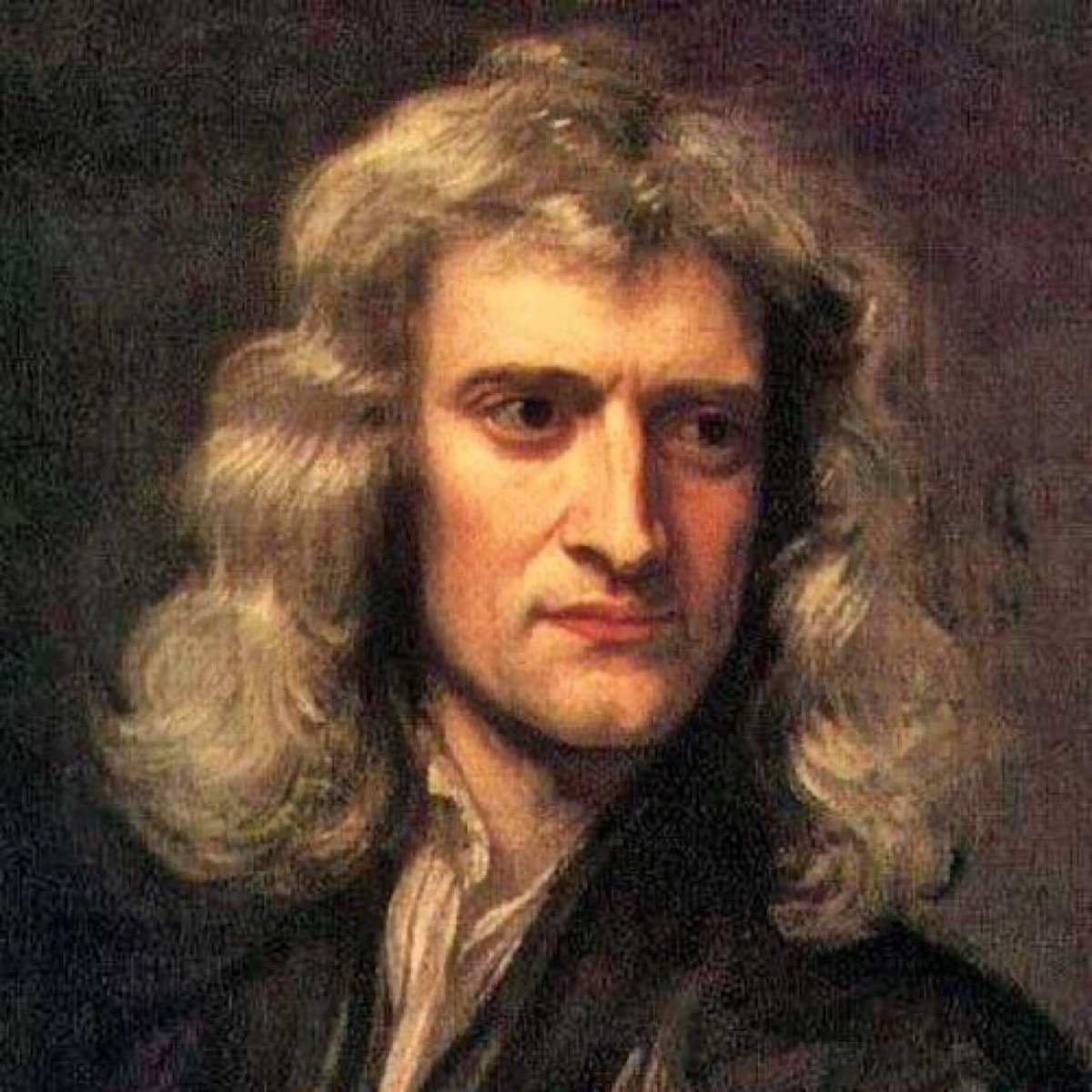
“Gravity explains the motions of the planets, but it cannot explain who sets the planets in motion”🪐
Isaac Newton, one of history's most renowned scientists, is often celebrated for his monumental contributions to physics and mathematics, particularly his laws of motion and universal gravitation. However, a lesser-known but significant aspect of his life was his profound religious belief and the extensive body of his work dedicated to theology.
Newton's belief in God was deeply intertwined with his scientific observations. He saw the universe as a complex, orderly system that could not have arisen by chance, leading him to conclude it was designed by a rational, omnipotent being. Newton argued that the intricate laws of nature and the precise structure of the cosmos pointed to a deliberate Designer. He famously remarked, "In the absence of any other proof, the thumb alone would convince me of God's existence," highlighting his view that even the smallest aspects of nature demonstrated divine craftsmanship. Newton also believed in the necessity of a First Cause, seeing God as the prime mover who set everything into motion and sustained the universe.
Many modern observers find it surprising that Newton, a paragon of rationalism and the Enlightenment, devoted so much intellectual energy to theology. This surprise stems from the contemporary tendency to separate science from religion. However, in Newton's time, the boundaries between science and religion were fluid. Scholars like Newton saw their scientific work as a way to glorify God by uncovering the divine laws governing the natural world.

English

@jacksonhinklle So much for freedom of speech
English


On August 10, 24-year-old model Maecee Marie Lathers caused a massive wreck in Miami after crashing her sports car into two other vehicles, resulting in the deaths of two motorists. She attributed the crash to 'pink cocaine,' claiming it made her believe she was from the future.
Police found Lathers vomiting by the roadside, where bystanders had prevented her from fleeing on foot.
English


In April 2023, Texas high school teacher Sherri Moody underwent a quadruple amputation after her limbs turned black and became "mummified."
The situation began during a class trip when Moody experienced symptoms resembling a common cold, which she initially dismissed. However, her condition rapidly worsened, leading to a high fever and difficulty breathing, prompting her to seek medical attention.
At the hospital, doctors diagnosed Moody with double pneumonia, a severe lung infection often caused by streptococcus, the same bacteria responsible for strep throat. Her body responded to the infection with septic shock, a critical condition that drastically lowers blood pressure and endangers life.
To save her life, doctors placed her in a coma and administered medication to restore blood flow to her vital organs, which inadvertently compromised circulation to her extremities.
After stabilizing her condition, medical professionals determined that amputating her limbs below the elbows and knees was necessary for her recovery.

English

The story of how the U.S. overthrew a government over bananas
The United Fruit Company( UFCO) which later became Chiquita Brands International, was a major American corporation with significant influence in Guatemala and several other Central and South American countries during the late 19th and early to mid-20th centuries. The company established itself as the dominant force in the global banana trade. It controlled vast banana plantations in countries like Guatemala, Honduras, Costa Rica, Colombia, and others. These plantations were often referred to as "banana republics" due to the immense influence the company held over local governments.
UFCO owned large tracts of land in the countries where it operated. This landownership gave the company immense power to dictate terms to local governments, often at the expense of small-scale farmers and indigenous communities. The company’s labor practices were often exploitative. It employed large numbers of local workers in its plantations and frequently resisted labor movements and unionization efforts. Workers endured harsh conditions and low wages, contributing to social unrest in many countries. It was said that at one point UFCO owned 50% of all farmable land in Guatemala tax free.
In the early 1950s one man, the democratically elected president of Guatemala Jacobo Árbenz, tried to change this. He wanted to implement progressive land reforms that aimed at helping poor Guatemalans escape poverty. These reforms however greatly threatened the UFCO’s immense power.
To protect their interests and investments the company sought support from the U.S. government. This coincided with the Cold War era, during which the United States was deeply concerned about the spread of communism. The U.S. government, fearing that Árbenz's government might be influenced by communism, decided to take action. This was despite the fact that Árbenz's was not a communist and all the reports linking him to communism were faked by the UFCO in order to convince the U.S. government to intervene.
In 1954, the CIA orchestrated a covert operation known as "Operation PBSUCCESS." It involved supporting Guatemalan exiles and military leaders opposed to Árbenz. Through a combination of psychological warfare, propaganda, and military support, the U.S. helped engineer a coup that ousted Árbenz from power. He was replaced by a pro-U.S. military junta that support the United Fruit Company’s interests.


English

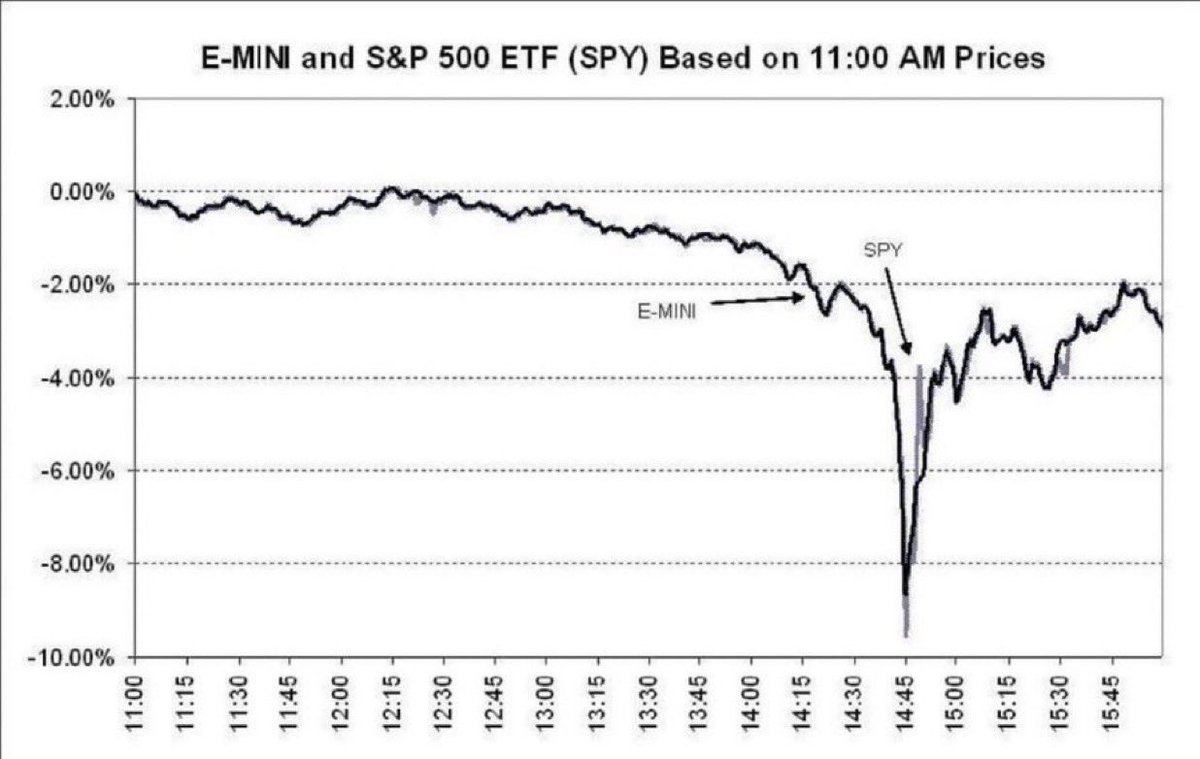
On May 6, 2010 the U.S. stock market lost approximately 1 trillion dollars in the span of only 15 minutes. The flash crash as it came to be called was later described as one of the most turbulent periods in the history of financial markets. The Dow Jones fell about a 1,000 points(9%) in a matter of minutes. The crash was caused by multiple reasons ranging from high frequency algorithms, technical communication glitches, and the evaporation of liquidity which occurring simultaneously caused this once in a lifetime event.
However despite this the crash ended fairly swiftly as markets rebounded by the end of the trading day, with the DJIA recovering most of its losses. But the event had lasting implications for financial markets. It led to the implementation of new market circuit breakers designed to halt trading during extreme price swings, highlighting the need for increased oversight of high-frequency trading practices and the importance of maintaining market liquidity to prevent future crashes of this magnitude.

English

Largest Empires in History
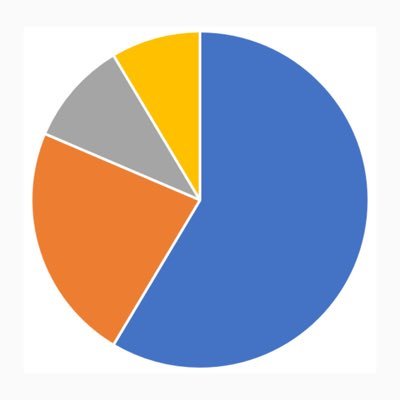
🇬🇧British Empire- 35.5 million km^2, 27% of world population
🇲🇳Mongol Empire- 24 million km^2, 18% of world population
🇷🇺Russian Empire- 22.8 million km^2,
9% of world population
🇨🇳Qing dynasty- 14.7 million km^2, 5.6% of world population
🇪🇸Spanish Empire- 13.7 million km^2, 5.3% of world population
🇫🇷French Empire- 11.5 million km^2, 4.4% of world population
☪️Abbasid Caliphate- 11.1 million km^2, 4.3% of world population
English

"Ladies and gentlemen, I don't know whether you fully understand that I have just been shot, but it takes more than that to kill a Bull Moose." 🫎
These were the words said by the U.S. President just seconds before giving a 90 minute speech. 🎤
Theodore Roosevelt, the 26th President of the United States, was known for his robust personality, active lifestyle, and political career. On October 14, 1912, while campaigning for the presidency as a candidate for the Progressive Party (also known as the Bull Moose Party) in Milwaukee, Wisconsin, an attempt was made on his life.
As Roosevelt was preparing to deliver a speech outside the Gilpatrick Hotel, a saloonkeeper named John Schrank approached him in the crowd. Schrank, who was mentally unstable and had been harboring a grudge against Roosevelt, fired a .38-caliber revolver at Roosevelt from close range.
The bullet struck Roosevelt in the chest but was significantly slowed down by passing through the steel eyeglass case and a 50-page folded copy of his speech that was tucked inside his breast pocket. Despite feeling pain, Roosevelt refused to panic or allow the incident to disrupt his plans.
He stood up and declared to the crowd, "Ladies and gentlemen, I don't know whether you fully understand that I have just been shot, but it takes more than that to kill a Bull Moose." Displaying his bloodstained shirt and bullet-pierced speech, Roosevelt continued with his scheduled speech for around 90 minutes, addressing the crowd on the Progressive Party's principles and his political platform.
After finishing his speech, Roosevelt finally agreed to receive medical attention. He was rushed to the hospital, where it was discovered that the bullet had not penetrated deeply into his chest, as it had been slowed down by the items in his pocket. The bullet had lodged itself near his ribs but did not puncture his lung or penetrate his heart.

English


On May 6, 2010 the U.S. stock market lost approximately 1 trillion dollars in the span of only 15 minutes. The flash crash as it came to be called was later described as one of the most turbulent periods in the history of financial markets. The Dow Jones fell about a 1,000 points(9%) in a matter of minutes. The crash was caused by multiple reasons ranging from high frequency algorithms, technical communication glitches, and the evaporation of liquidity which occurring simultaneously caused this once in a lifetime event.
However despite this the crash ended fairly swiftly as markets rebounded by the end of the trading day, with the DJIA recovering most of its losses. But the event had lasting implications for financial markets. It led to the implementation of new market circuit breakers designed to halt trading during extreme price swings, highlighting the need for increased oversight of high-frequency trading practices and the importance of maintaining market liquidity to prevent future crashes of this magnitude.

English