ProntoPC Baveno ֎

100.4K posts

ProntoPC Baveno ֎ banner
ProntoPC Baveno ֎

ProntoPC Baveno ֎

@ProntoPCBaveno

Cercate soluzioni per le vostre esigenze tecnologiche/informatiche? Aperti a Baveno orario 9/12:30 - 15/19 Il sabato fino alle 11:30 Chiuso Mart/Giov pomeriggio

Baveno, Lago Maggiore, Italia เข้าร่วม Mart 2014
672 กำลังติดตาม652 ผู้ติดตาม
ทวีตที่ปักหมุด
ProntoPC Baveno ֎
ProntoPC Baveno ֎@ProntoPCBaveno·
Ricordate: #ProntoPCBaveno è il punto di riferimento per la Vs. informatica, sia per l'ufficio che per casa. Aperti da Lun a Sab
Italiano
5
7
21
0
ProntoPC Baveno ֎
ProntoPC Baveno ֎@ProntoPCBaveno·
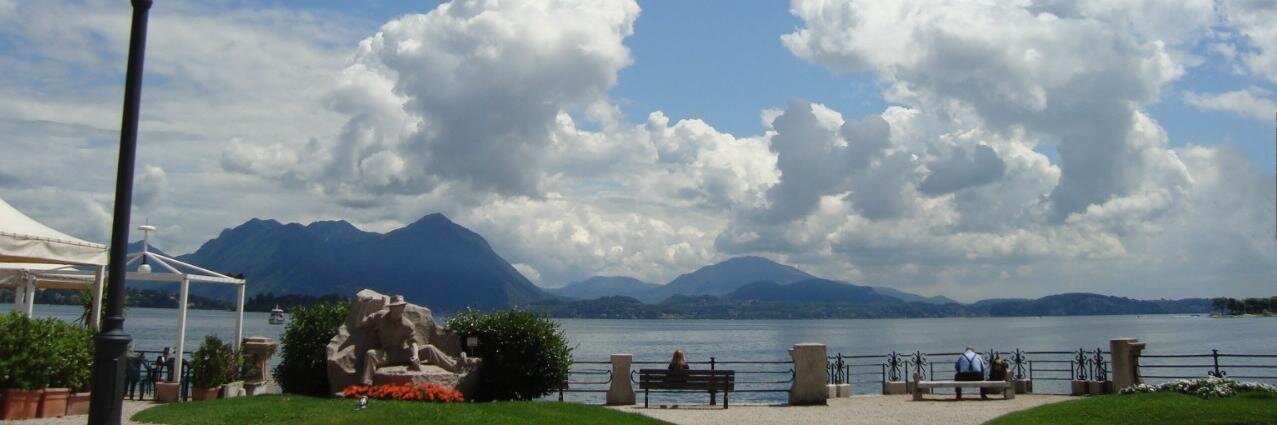
Buona sera amici, che pace c'è stasera
ProntoPC Baveno ֎ tweet media
Italiano
0
0
0
6
ProntoPC Baveno ֎ รีทวีตแล้ว
Aviation
Aviation@xAviation·
An A380 slicing straight through the clouds! One of the best sights in aviation 📹: schipholhotspot
English
15
147
1.1K
63.4K
ProntoPC Baveno ֎ รีทวีตแล้ว
Sarahh
Sarahh@Sarahhuniverse·
😂😂😂 © themasked_
English
2
25
56
7K
ProntoPC Baveno ֎
ProntoPC Baveno ֎@ProntoPCBaveno·
che mondo di merda, che siano bot o ignoranti poco cambia: è il tono becero e ignorante che mi schifa
ProntoPC Baveno ֎ tweet media
Italiano
0
0
0
9
ProntoPC Baveno ֎ รีทวีตแล้ว
Dr. M.F. Khan
Dr. M.F. Khan@Dr_TheHistories·
On November 18, 1983, seven young Georgians boarded Aeroflot Flight 6833 in Tbilisi, bound for Leningrad, disguised as a wedding party. They were not ordinary passengers. Among them were painters, a rising film actor, and two physicians, all from prominent Georgian intellectual families. Their plan was desperate and bold: force the plane to divert to Turkey and escape Soviet rule. After takeoff from Batumi, the group stormed the cockpit and demanded the pilots fly to Turkey. Captain Akhmatger Gardapkhadze refused to comply, instead performing sharp, violent maneuvers that pushed the aircraft far beyond its design limits. The maneuvers threw the hijackers off balance and forced them out of the flight deck. The captain circled Tbilisi and made an emergency landing, keeping the plane and its 57 passengers and 7 crew members inside Soviet airspace. Georgian Communist Party chief Eduard Shevardnadze immediately called Moscow and requested the elite Alpha Group special forces unit. The standoff stretched into the following day before Alpha Group stormed the aircraft on November 19. The assault was brutal. When it was over, three crew members, two passengers, and three hijackers lay dead, and the aircraft had sustained 108 bullet holes. The surviving hijackers, along with an Orthodox priest accused of being a co-conspirator, were put on trial by Soviet Georgian courts. They told the court they simply wanted to live in a free society. Shevardnadze labeled them bandits and drug addicts and pushed aggressively for the death penalty. In August 1984, three hijackers and the priest were sentenced to death, and on October 3, 1984, all four were executed by firing squad. A female co-conspirator received a 14-year prison sentence. Controversy has surrounded the case ever since, with accusations that Shevardnadze blocked the hijackers' own families from negotiating a peaceful resolution. Many believe he used the executions as a political tool to demonstrate his loyalty to Moscow's Communist leadership. The hijacking of Aeroflot Flight 6833 exposed the deep desperation felt by many Soviet citizens, particularly in Georgia, where cultural and national identity chafed against Moscow's iron control. The brutal response by Soviet authorities, including the executions of the hijackers and a priest with minimal evidence of direct involvement, sent a chilling message across the USSR about the cost of defiance. Rather than suppressing dissent, the heavy-handed reaction quietly fueled Georgian nationalist sentiment, which would boil over in the years leading to the Soviet Union's collapse in 1991. The incident has since become a cultural touchstone in Georgia, inspiring theater productions and documentary films, and transforming the hijackers in the public memory from criminals into symbols of a generation that risked everything for freedom. #drthehistories
Dr. M.F. Khan tweet media
English
11
25
205
37K
ProntoPC Baveno ֎ รีทวีตแล้ว
OSINTtechnical
OSINTtechnical@Osinttechnical·
Iranian forces appear to have blocked another pair of tankers from transiting the Strait of Hormuz. The tankers, both sanctioned, were forced to turn around in the strait while attempting a crossing this morning. Hormuz remains mostly closed.
OSINTtechnical tweet mediaOSINTtechnical tweet media
English
52
254
1.4K
100.6K
ProntoPC Baveno ֎
ProntoPC Baveno ֎@ProntoPCBaveno·
"Il Canale Cavour fu un’opera visionaria, complessa e dalle fortissime ricadute socioeconomiche: ridisegnò un territorio riportando benessere dopo le dure prove causate dalle guerre di indipendenza" . risoitaliano.eu/cavour-ci-manc…
Italiano
0
0
0
5
ProntoPC Baveno ֎ รีทวีตแล้ว
Archaeo - Histories
Archaeo - Histories@archeohistories·
Abu Simbel - the Great Temple of Ramesses II ... Abu Simbel Temple is an enormous rock temple complex located on Egypt’s border with Sudan. The two temples of this complex were built in 13th Century BC during the reign of the powerful Ramesses II. While this temple complex is known today as the Abu Simbel Temple, it was referred to in the past as the “Temple of Ramesses, Beloved by Amun.” During the 1960s, the Aswan High Dam reservoir was built, which resulted in the creation of Lake Nasser. This threatened the existence of the Abu Simbel Temple, and it was completely relocated in 1968. Abu Simbel Temple consists of two huge temples (Great Temple and the Small Temple) that were carved into the mountainside. The temple complex was commissioned by Ramesses II, one of ancient Egypt’s most renowned pharaohs. According to some scholars, work on the Abu Simbel Temple began around 1264 BC. This is based on the fact that artwork decorating the interior of the Great Temple indicates that the monument was created to celebrate, to a certain extent, the victory of Ramesses II over the Hittites at the Battle of Kadesh in 1274 BC. Alternatively, the year 1244 BC has also been suggested as the year when the construction of Abu Simbel Temple commenced. According to this hypothesis, temple is located on the border with the conquered lands of Nubia, and thus was built following the military campaigns carried out by the pharaoh against the Nubians. In any event, it has been agreed that the construction of the Abu Simbel Temple took 20 years to complete. At the entrance of the Great Temple, four colossal seated statues of Ramesses II (20m in height) gaze upon all who approach it. As for the Small Temple, which may have been built for Nefertari, the wife of Ramesses II, its entrance is guarded by two statues of the queen, and four of the pharaoh, each measuring 10m in height. One of the most fascinating aspects of the Abu Simbel Temple is the inner sanctum of the Great Temple. In this sacred space, four statues can be found – Ra, Amun, Ptah and Ramesses himself. The temple was built in such a way that twice a year, the 21st of February and the 22nd of October in present times, the Sun’s rays would find their way directly into the inner sanctum and illuminate three of the statues. The statue of Ptah was kept in darkness, a possible reason being that he was a deity associated with the Underworld. Two dates are traditionally thought to correspond with the birthday and coronation of the pharaoh, though there is no evidence to support this. In any case, these two dates are accepted to be related to some major events in the Ramesses II’s life. Abu Simbel Temple was eventually abandoned, and was buried under millennia of desert sand. This monument was forgotten, and was only rediscovered during the early part of the 19th century. The re-discovery was allegedly made by the Swiss traveler and geographer Johann Ludwig Burckhardt (most famous for his discovery of Petra, Jordan). According to one version of the story, in 1813 Burckhardt was traveling down the Nile when he saw the top of the Great Temple, which had not been covered by the sand. In another version of the tale, the Swiss scholar was led to the site by an Egyptian boy named Abu Simbel, and later named the site after him. Burckhardt himself was unable to uncover the temple. He mentioned the site to his friend, Giovanni Battista, and the two tried to excavate the monument, to no avail. In 1817, Battista returned, succeeded in uncovering the temple, and took everything that was valuable and portable out of the temple. 🎥© egypt_tour #archaeohistories
English
1
22
127
5.2K
ProntoPC Baveno ֎ รีทวีตแล้ว
Massimo
Massimo@Rainmaker1973·
Using your laptop while plugged in is less damaging than charging and unplugging: here’s why.
English
23
41
238
40.8K