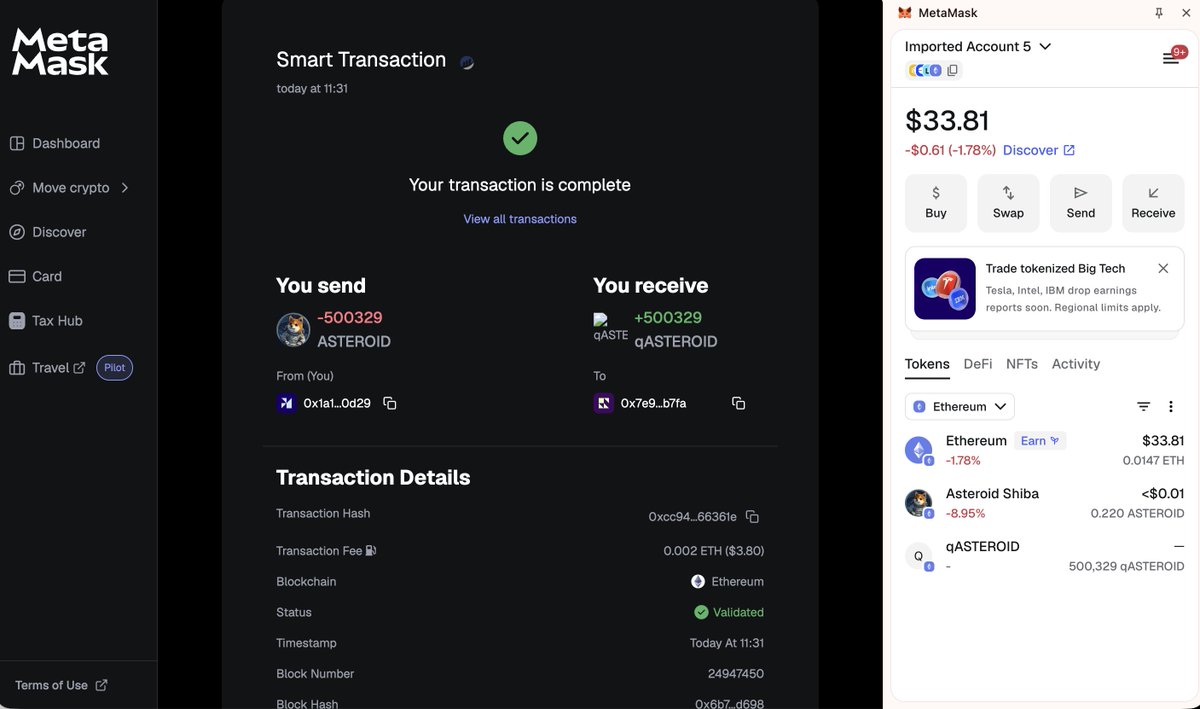
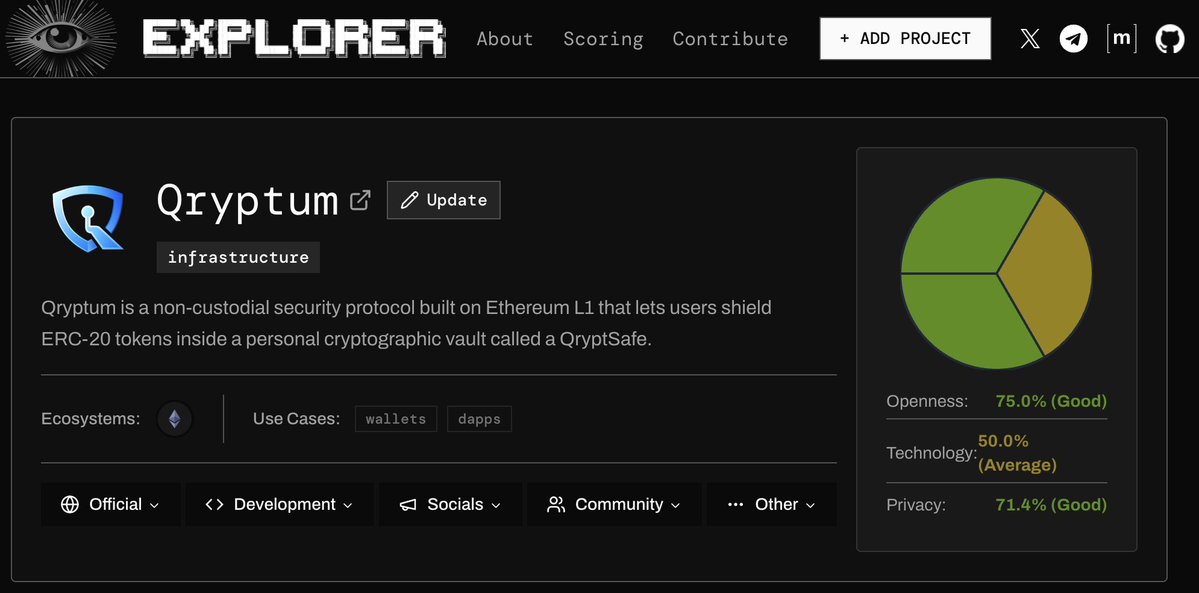
The problem with how most protocols handle user funds Most protocols pool user funds into a shared multisig vault controlled by a small group of signers. The logic sounds safe until one signer gets phished, one key gets leaked, one insider goes rogue, and suddenly hundreds of millions belonging to thousands of users vanish in a single transaction. This has happened. It keeps happening. Bybit. Radiant. KelpDAO. Drift. The pattern is always the same: one central point of failure, one catastrophic moment. How QryptSafe $QRYPT is structured differently QryptSafe does not work that way. Your vault is deployed directly to your own wallet. No team, no admin, no multisig controller has any access to it. Not Qryptum. Not anyone. What happens when your private key is compromised Even if your private key is fully compromised, leaked, phished, sold on the dark web, your funds do not move. Moving assets from a QryptSafe vault requires a second independent factor. That factor is derived through a one-way keccak256 hash computation. You cannot reverse it. You cannot brute-force it in any reasonable timeframe. ChatGPT cannot compute it. Claude cannot compute it. Gemini cannot compute it. Grok cannot compute it. No AI system, no quantum approximation, no compute cluster alive today changes that equation. This guarantee does not come from a policy document or a legal agreement, it comes from the properties of the cryptographic function itself, which cannot be overridden by any team, any regulator, or any attacker regardless of their resources. The live proof on Ethereum mainnet This is live on Ethereum mainnet right now. We published the private key publicly as a challenge. Nobody has moved the funds. That is the proof. qryptum.eth.limo/hack