Reputable.Network
34 posts

@Reputable_Tech
Build & Monetize Your Own Reputation Model On-Chain. https://t.co/0EKQp9GO9x https://t.co/RXpOAxvQZB


I think the current influencer/creator model is broken. Companies pay a creator for individual social posts to promote their product or service, hoping for a bump in sales or traffic to a landing page. But the issue is there’s no depth in the relationship. Creators got bills to pay so they’re often working with several brands at once. And because there’s no loyalty, you end up seeing low engagement from the audience, resulting in a poor use of marketing spend. Especially when you look over longer time periods. Audiences have gotten so used to being shilled different brands that they completely tune them out entirely whenever they see a sponsored post in the feed (at least this is what I find myself doing). I think a better model is one of two options: 1) Building your own in-house creator(s) or 2) Setting up long-term creator partnerships


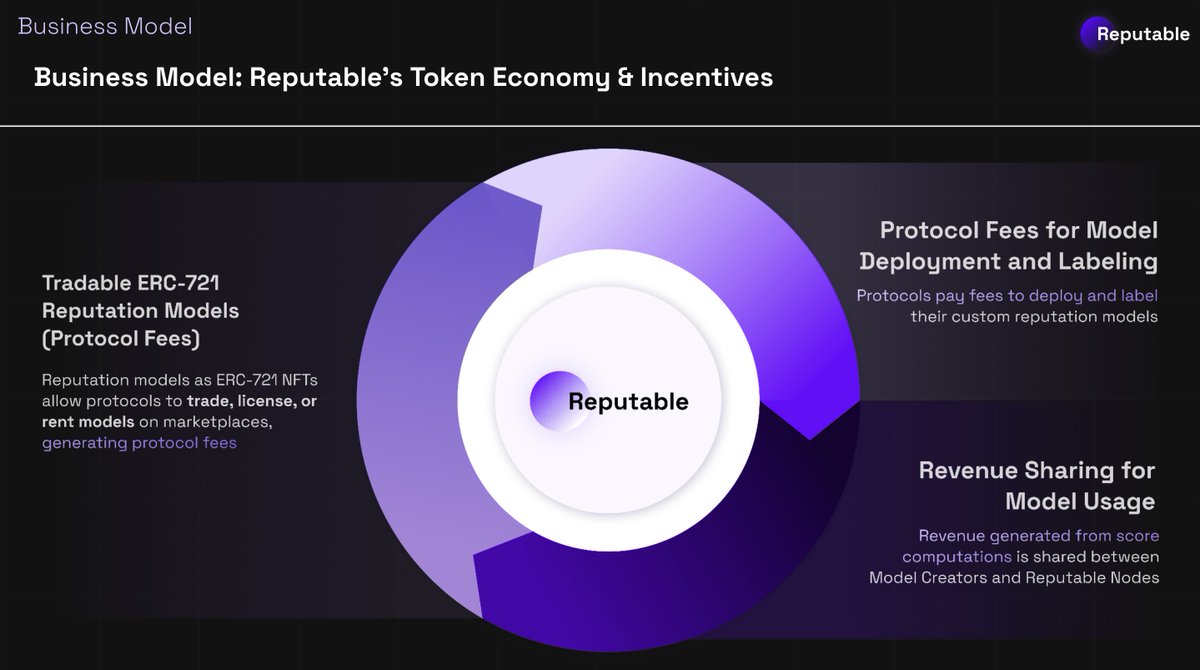
Dynamic Reputation Models in DeFi? Why Not? 1/ When you use platforms like YouTube, TikTok, or Instagram, the recommendations are tailored just for you. Imagine if DeFi protocols could do the same—adjust their offerings based on your unique on-chain and off-chain activity! 2/ After chatting with dozens of DeFi founders, one major challenge kept coming up: user categorization. DeFi protocols generally don’t label or score users based on activity patterns across multiple platforms. 3/ Think about it—right now, DeFi protocols often lack insights into users’ behaviors, like their favorite blockchain, average staking duration, liquidity provisioning habits, and even social activity on platforms like Farcaster, Lens, or Discord. 4/ @Reputable_Tech can change that by empowering DeFi protocols to create custom reputation models that categorize and score users based on on-chain metrics (staking, TVL, POAPs) and off-chain activity (social following, engagement). 5/ Here’s how it works: Step 1: Define custom parameters. A DeFi protocol like Aave could prioritize metrics such as staking duration, liquidity provision, or governance participation. Step 2: Assign weights to these metrics to reflect what’s most valuable for the protocol’s goals. 6/ Reputable then aggregates data, creating trusted, sybil-resistant scores that allow DeFi protocols to dynamically adjust incentives, reward high-value users, and even tailor lending rates based on individual reputations. 7/ For Protocols: - Gain a clear view of end-user profiles. - Dynamically adjust strategies based on real-time user engagement. - Customize rewards to incentivize valuable contributions effectively. 8/ For Users: - Earn exclusive rewards based on your reputation. - Access variable interest rates depending on your activity and reputation across chains. - Get targeted incentives and recognition in DeFi ecosystems based on real value.