Genos Historia

1.1K posts

Genos Historia

Genos Historia

@SamAndrews1017

เข้าร่วม Ocak 2018
56 กำลังติดตาม808 ผู้ติดตาม
Genos Historia รีทวีตแล้ว
Nrken19
Nrken19@nrken19·
“The main result of the study indicates that many of the biologically male individuals deposited in the same tomb or in nearby tombs were close genetic relatives, related to one another through the paternal line. This pattern repeats with sufficient consistency to suggest a defined pattern of social organization.”
LBV Magazine / English Edition@lbvmag

Large Megalithic Tombs in Neolithic Scotland Were Built to Safeguard the Paternal Line for Centuries labrujulaverde.com/en/2026/04/lar…

English
2
13
106
12.2K
Genos Historia รีทวีตแล้ว
Nrken19
Nrken19@nrken19·
Frequency distribution of chrY haplogroups across major ethnolinguistic groups in the GenomeIndia dataset. H1 and R1 represent the two most prevalent haplogroups, though their relative frequencies vary across populations.
Nrken19 tweet media
English
3
1
23
3.8K
Genos Historia
Genos Historia@SamAndrews1017·
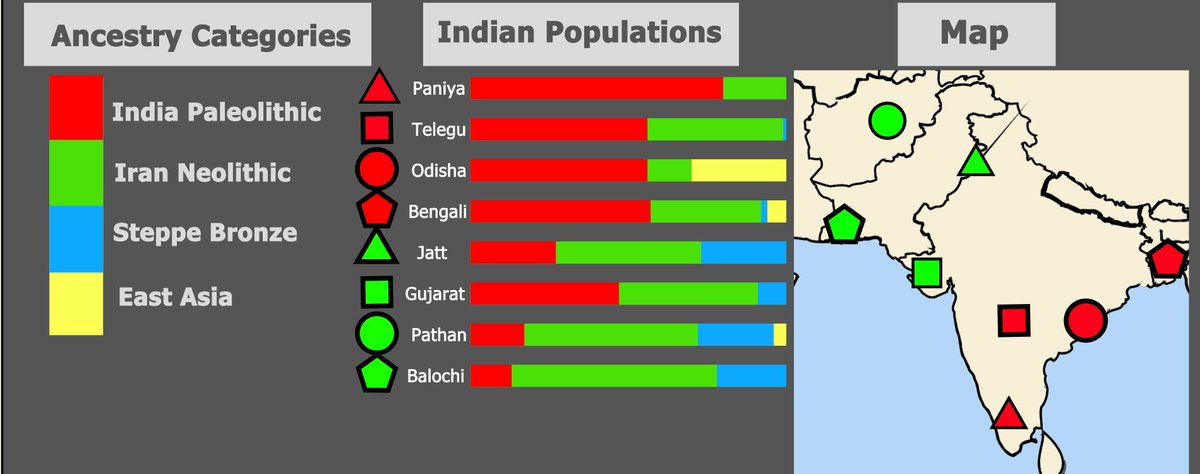
Broad Ancestry model for South Asian populations.
Genos Historia tweet media
English
20
24
188
18.5K
Genos Historia
Genos Historia@SamAndrews1017·
@adhish_sv Many languages in odisha are austroasiatic which is a language family from se asia
English
0
0
1
34
Armal Belton ☀️
Armal Belton ☀️@ArmalBelton·
@SamAndrews1017 Afghanistan isn't geographically located in South Asia,our country lies on the Iranian Plateau, not the Indian subcontinent. Afghan Pashtuns've higher Steppe ancestry in some individuals and subtribes, up to 40%. On average, it is around 30%, with about 50% Iranian, the rest CA.
English
1
0
5
469
Genos Historia
Genos Historia@SamAndrews1017·
@PranavInDecay Austroasuatic languages is what happened. They're spoken in odisha and nearby areas. They have been there for a long time
English
1
0
1
90
Genos Historia
Genos Historia@SamAndrews1017·
@CarlosPala93237 Good point. There is but only small amounts in northwestern populations. I chose to place it under Iran neolithic since all Anatolian technically came from late neolithic populations from iran.
English
0
1
4
465
Genos Historia
Genos Historia@SamAndrews1017·
@ape1234566 True. I used that not iranN but I still call it IranN. Tajikistan is in the same general region as Iran.
English
2
0
3
619
Ape
Ape@ape1234566·
@SamAndrews1017 The source of farmer ancestry in IVC is similar to Central Asia Eneolithic (Iran_N + Tutkaul/ANE + CHG + ANF). It’s not pure Iran_N
English
2
1
7
1.1K
Genos Historia
Genos Historia@SamAndrews1017·
Cool boar tusk hats. Both the mtDNA and Y DNA of the Lower DNA individual are of CHG origin.
Ancestral Whispers@Sulkalmakh

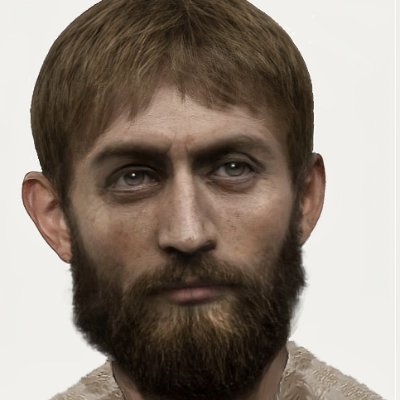
Reconstructions based on 6,300-year-old early Proto-Indo-European elites from the Lower Don (Krivyanski I11828/I31755, Y-DNA J-M319, mtDNA T2a1b), and from Hungary—the first known horse rider (Csongrád I5124, Y-DNA Q-Y6802, mtDNA K1b2) The Krivyanski individual was buried in a round pit with a concave bottom, its floor covered in red ochre. The adult male lay on his back with knees raised, skull oriented NNE; the left arm was extended and the left thigh disturbed by a later grave cut. The burial position, grave goods, and date are characteristic of the Sredny Stog culture. The inventory included a retouched flint blade (its broken tip found deeper in the grave), two bifacial projectile points, and a bifacial axe-shaped blank. Additional displaced finds included another blade and the missing blade tip. The tools are patinated brown to gray flint with fine retouch and use-wear. He carried Y-haplogroup J2a (J-M319), linked to Caucasus populations such as the Maikop culture and Aknashen, but showed only older Mesolithic CHG ancestry. His mtDNA (T2a1b) was common among steppe groups. On PCA, he clustered close to the Yamnaya culture (Lazaridis et al. 2025). The Csongrád individual from Hungary, attributed to the Suvorovo culture, represents one of the earliest known cases showing osteological evidence consistent with riding, well before the classic Yamnaya horizon. He exhibited clear skeletal markers of habitual horseback riding, especially in the lower trunk and pelvic region, consistent with “horseman syndrome” (Trautmann et al. 2023). He carried Y-haplogroup Q-Y6802, linked to Khvalynsk. Autosomally, he was primarily Steppe Eneolithic, with a Khvalynsk grandparent—likely the source of his Y-DNA (Lazaridis et al. 2025). Culturally, some Steppe Eneolithic groups such as Berezhnevka are also attributed to the Khvalynsk culture (Khokhlov A.A., Gromov A.V., Grigoriev A.P., Kazarnitsky A.A., Kapinus Yu.O., Kitov E.P., 2024). In addition, horses were sacrificed and buried alongside cattle, sheep/goats, and humans at Khvalynsk, where no obviously wild mammals were included. Polished stone mace-heads shaped like horse heads proliferated across the steppes and spread into the Lower Danube valley between 4400–4000 BCE. Eneolithic horses, even if more skittish than modern ones, may have been ridden in quiet settings such as herding, allowing a mounted shepherd to oversee three times more sheep than a pedestrian one, producing a surplus useful for hosting feasts (Lazaridis et al. 2025). He is depicted with a “composite sword” from a related Giurgiulești burial in Moldova, which belonged to another Early Proto-Indo-European elite individual with Q1a Y-DNA (Blagoje Govedarica and Igor Manzura, Eurasia Antiqua 22, 2016 [2019]). The two individuals belonged to the Protoeuropoid type, a robust type that was widespread among the Ukr_N/Dnieper–Donets/Mariupol culture. This type is also documented in the early phase of the Rakushechny Yar culture in the Lower Don. This culture showed some similarities with the Mariupol culture, but also distinct differences, such as the absence of ochre (T.D. Balanovskaya, 1972, “Paleolithic and Neolithic of the USSR,” Volume 7). Samples from north of Rakushechny Yar, in the Middle Don (e.g., Golubaya Krinitsa, attributed to the Mariupol culture), show a substantial increase in CHG ancestry. This may indicate that the Neolithic Lower Don Rakushechny Yar culture (often linked by archaeologists to the Caucasus) was a possible source of CHG ancestry in Proto-Indo-Europeans, contributing, alongside the Dnieper-Donets/Mariupol culture, to the Protoeuropoid strain in early Steppe group, as well as to the majority of Proto-Indo-European ancestry. The migration of this Don population to the North Caucasus foothills, where they mixed with Mesopotamian-derived Caucasus farmers at Nalchik and its surroundings, and then to the Volga, where they mixed with local EHGs of the Ancienturalic strain, resulted in the Steppe Eneolithic proper genetic profile, which, after returning to the Don, formed the Proto-Indo-European Sredny Stog culture.


English
3
2
42
3.7K
Genos Historia รีทวีตแล้ว
Ticia Verveer
Ticia Verveer@ticiaverveer·
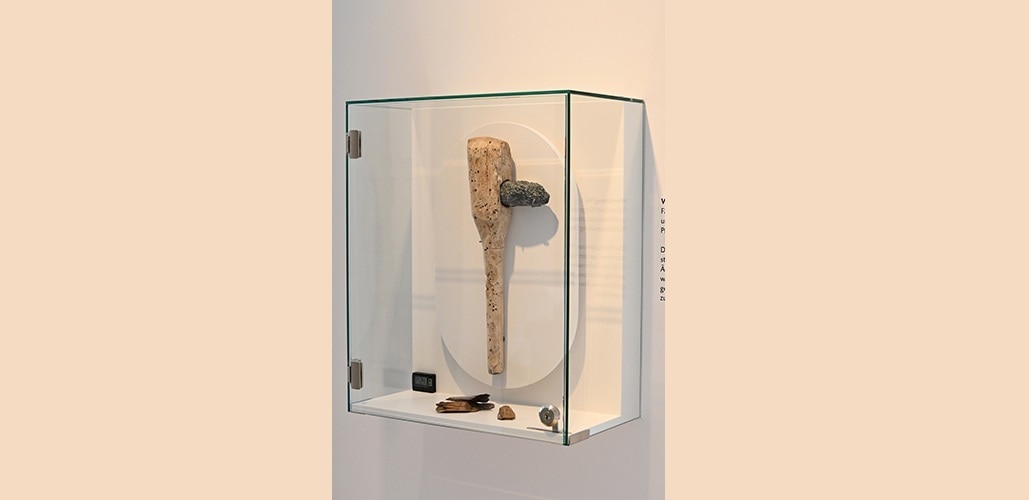
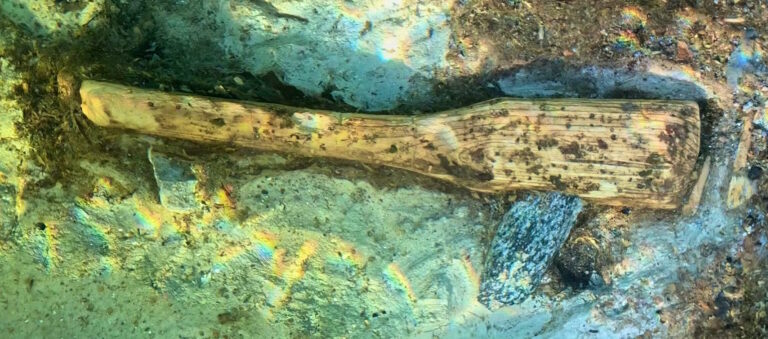
A Neolithic wood and stone axe was discovered in Switzerland’s Lake Constance last year. Its wooden handle dates around 4,800 years ago. The axe has been conserved and stabilized and is now on display at the Museum of Archaeology in Frauenfeld. tg.ch/news.html/485/…
Ticia Verveer tweet mediaTicia Verveer tweet mediaTicia Verveer tweet media
English
1
37
347
11.1K
Genos Historia รีทวีตแล้ว
Kurgantist
Kurgantist@Nieburgerr·
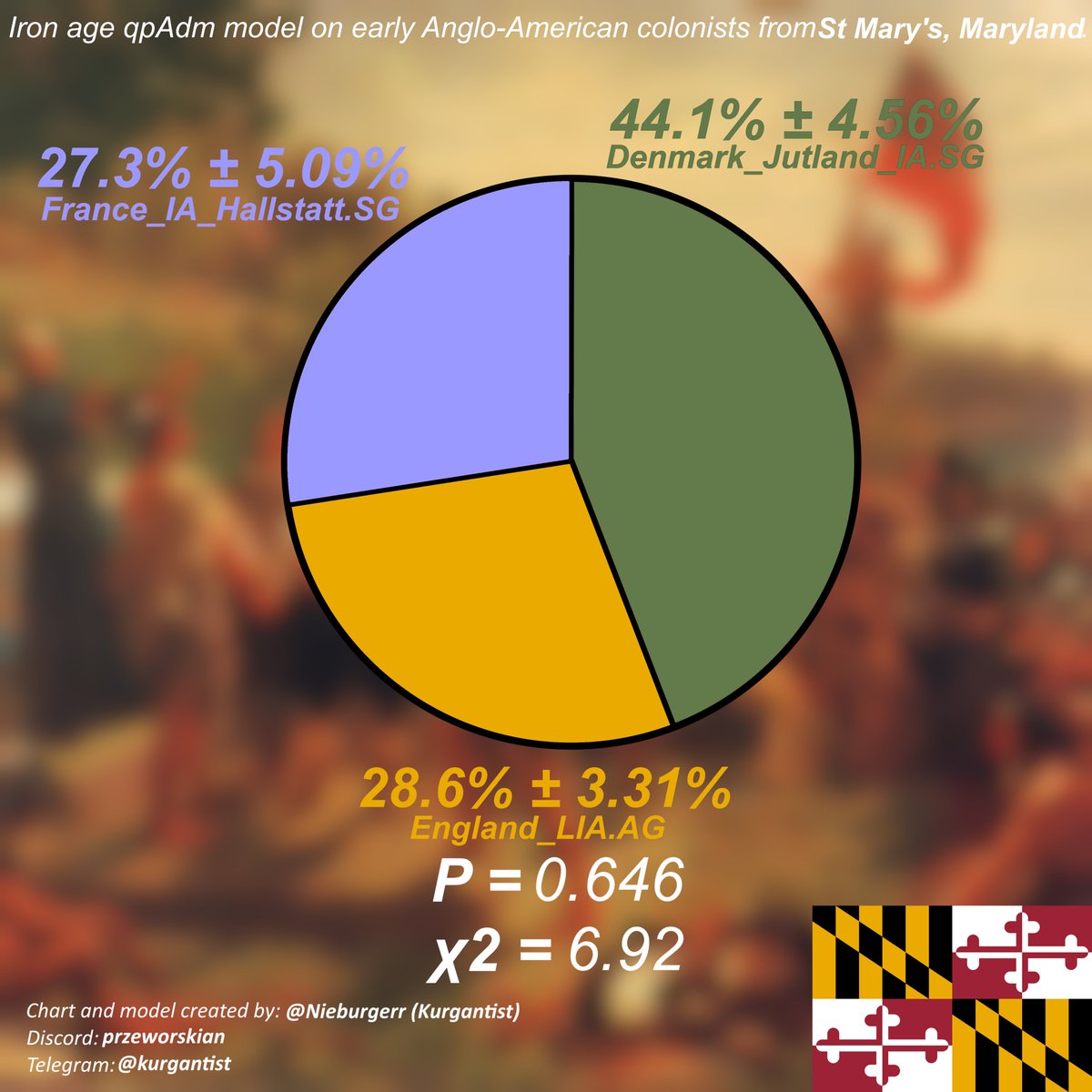
(1/3) Iron Age qpAdm model on early Anglo-American colonists from St Mary's, Maryland. (n=7) qpAdm model used: pastebin.com/raw/zjvRydnm
Kurgantist tweet media
English
10
20
163
55.5K
Малак Мухаммад Калибиф
mtdna remains of the Lchashen-Metsamor Culture in the South Caucasus mtDNA: H+152, H13a1a (x2), H13, H20, H2a, H3 , H4a1 ,J1b , N1b (x2), T2h(x2), U2e2al, W1 , X2.
Малак Мухаммад Калибиф tweet media
English
5
3
37
1.9K
Ancestral Whispers
Ancestral Whispers@Sulkalmakh·
Facial reconstructions of a giant and a dwarf Scythian The giant was buried at Edirey 3, an Iron Age burial site located near the village of Edirey in Kazakhstan. He was afflicted by a hormonal disorder that resulted in his exceptional height, estimated at 200–215 cm, as well as an enlarged skull. He died at around 40–45 years of age and was interred with grave goods, including a small knife, several arrowheads, and a large bronze mirror (Beisenov, A., 2007). The dwarf, buried at Dogehe-Baary in Tuva, stood about 127 cm tall. This individual, dating to an early phase of the Scythian Uyuk-Sagly culture, suffered from pituitary dwarfism. His condition likely included a clumsy or limping gait, a barrel-shaped chest, scoliosis, chronic joint pain, and reduced mobility. These issues, together with the underdevelopment of the apophyses of the upper and lower limb bones, would have significantly limited his mobility and likely led to obesity. His cranium exhibits healed injuries, suggesting that he was the target of aggression; he may ultimately have died from a traumatic brain injury. Despite this, his age at death was no less than 45 years. Such longevity for an individual with pituitary dwarfism complicated by epiphyseal dysplasia is exceptional even by modern medical standards (Aristova, E.S., Chikisheva, T.A., Seidman, A.M. et al., 2006). The Scythians, also known as the Saka, were an Iranic-speaking people who originated in regions including Minusinsk, the Altai, Tuva, Mongolia, and Xinjiang.
Ancestral Whispers tweet mediaAncestral Whispers tweet media
English
34
87
790
92.8K
Nicholas Norwood IV
Nicholas Norwood IV@haplogroupthink·
Impressive, very nice. Now let's see what's in Scythian blud's cart
English
3
2
23
870
Genos Historia รีทวีตแล้ว
Nrken19
Nrken19@nrken19·
Biomolecular perspective through combined strontium, oxygen and carbon isotope analysis, and ancient DNA of 33 inhumed and 44 cremated individuals buried at Praetorium Agrippinae in modern-day Valkenburg (South Holland, the Netherlands). “The Roman Military Community as a Melting Pot: Biomolecular Evidence from the Lower Rhine Limes” researchsquare.com/article/rs-869…
English
3
10
49
17.6K