Dr. Doug Corrigan

6.9K posts

Dr. Doug Corrigan banner
Dr. Doug Corrigan

Dr. Doug Corrigan

@ScienceWDrDoug

Ph.D. Biochemist & Molecular Biologist, Physicist, Award Winning Global Super Solver, Materials Scientist, Innovator, Space Enthusiast

United States เข้าร่วม Mart 2021
298 กำลังติดตาม100.2K ผู้ติดตาม
ทวีตที่ปักหมุด
Dr. Doug Corrigan
Dr. Doug Corrigan@ScienceWDrDoug·
Ever wonder if the universe is trying to tell us something? What if the light all around us is hiding a mind-blowing secret? Light, it’s everywhere. It wakes you up, guides you home, and paints your world in color. But have you ever wondered if there’s more to it than meets the eye? What if the everyday glow we take for granted is whispering something extraordinary, something about the universe itself? In this eye-opening book, I dive into the mysteries of light and uncover something wild: Light’s 18 unique properties tell an incredible story about our Creator.  Sounds crazy, right? But stick with me. This information turned my world upside down. This isn’t about heavy science or preachy religion, it’s about seeing things differently.  Light reveals what’s hidden. It’s the ultimate truth-teller, showing what’s really there. I’m not here to convince you of anything. Whether you’re a skeptic, a dreamer, or just someone who loves a good “what if,” this book will pull you into a journey that connects the dots between the physical world and something bigger.  No PhD, or background in science, or faith required—just an open mind. Why read it? Because light is something we all get. It’s universal. And through its quirks, you might stumble onto answers to questions you didn’t even know you had. If you’re intrigued by seeing the universe in a new way, this book is a good place to start.
Dr. Doug Corrigan tweet media
English
11
20
67
10.1K
Dr. Doug Corrigan รีทวีตแล้ว
Dr. Doug Corrigan
Dr. Doug Corrigan@ScienceWDrDoug·
The human immune system has an extraordinary capacity to produce antibodies. Through a complex process involving genetic recombination, junctional diversity, and somatic hypermutation, it can generate as many as one quintillion unique antibodies. That is ten to the eighteenth power. This number is greater than the estimated number of stars in the observable universe. The significance of this diversity is that the immune system has the potential to recognize and respond to an enormous range of foreign substances that might enter the body. The immune system is also capable of adapting very quickly. Viruses and other pathogens change rapidly, and the body responds by increasing mutation rates within certain immune cells, particularly B cells and T cells. This process produces vast numbers of receptor variations within a short period of time. In just a few days, billions of different immune cell receptors can be generated, allowing the body to keep pace with new and unfamiliar threats. Another important feature is the immune system’s ability to remember past encounters. Once the body has successfully fought off a pathogen, specialized memory B cells and memory T cells can persist for many years, and sometimes for a lifetime. These cells act as a long term biological record of previous infections. If the same pathogen appears again, the immune response can activate much faster and more efficiently than it did the first time. The immune system is also constantly protecting the body from cancer. Every day, normal cellular processes produce cells with damaged DNA or mutations that could potentially become malignant. Immune cells regularly patrol the body and identify many of these abnormal cells before they can develop into tumors. Natural killer cells, cytotoxic T cells, and other immune components participate in this surveillance system, quietly removing dangerous cells long before they cause noticeable problems. Equally impressive is the immune system’s ability to distinguish between the body’s own tissues and foreign material. During immune cell development, billions of cells are screened and those that react strongly against the body’s own molecules are eliminated. Regulatory T cells also help keep the immune system under control by suppressing harmful immune reactions. This process allows the body to tolerate the vast number of molecules that belong to it while still reacting aggressively to genuine threats. A large portion of the immune system is concentrated in the gut. Roughly seventy to eighty percent of immune cells are associated with the intestinal tract. There they interact with trillions of microbes that make up the gut microbiome. These microbes help train immune responses, influence inflammation throughout the body, and contribute to the production of antibodies. The relationship between the immune system and these microorganisms is an essential part of maintaining overall health.
Dr. Doug Corrigan tweet media
English
3
7
23
1.3K
Dr. Doug Corrigan
Dr. Doug Corrigan@ScienceWDrDoug·
🧬 DNA contains: Instructions on how to build an entire organism. Instructions on how to break down molecules and build new molecules that serve as the storage medium for those instructions. Instructions on how to fold and store the instructions into a compact space that is 200,000 times smaller than the length of the instructions. Instructions on how to convert hundreds of different types of molecules in the environment into energy that sustains the propagation of the instructions. Instructions on how to transcribe portions of the instructions into a series of temporary molecules that are synthesized and degrade at just the right time. Instructions on how to interpret/decode (translate) the instructions contained in the temporary copies of the instructions. Instructions on how to execute those instructions in space and time, and in different environmental conditions. Instructions on how to build another perfect copy of the instructions. Instructions on how to proof-read the instructions and identify errors in the instructions. Instructions on how to repair the instructions back to their original form if errors or damage are found in the instructions. Instructions on how to temporarily modify the instructions based on environmental conditions. Instructions on how to build new instructions that instruct the organism how to fight off enemies that seek to harm the instructions. Instructions on how to merge with a second set of instructions to produce a new set of instructions that can build a new organism that contains a set of instructions in every cell, and which is capable of all of the above.
English
4
3
16
461
Dr. Doug Corrigan
Dr. Doug Corrigan@ScienceWDrDoug·
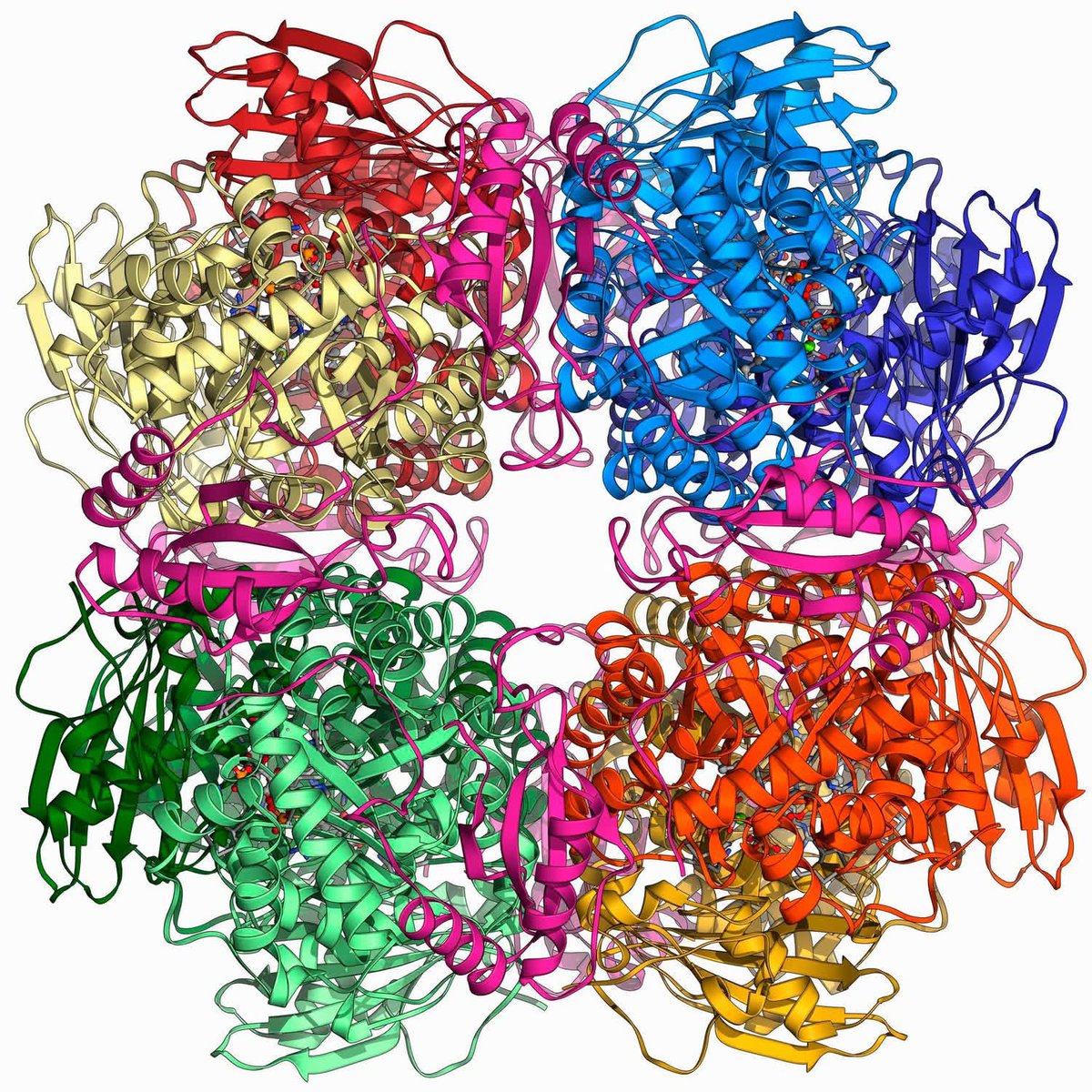
🌍 Without This Enzyme, Most Life on Earth Would End. The most abundant protein on the planet is a protein named RUBISCO. RUBISCO exists in plants and photosynthetic bacteria. This enzyme complex consists of 16 proteins that bind together to form the molecular structure shown below. RUBISCO is central to all life on the planet, as its function is to take Carbon Dioxide from the atmosphere and fix the carbon into a useable organic form. This enzyme is responsible for producing organic Carbon. Through the food chain, this carbon makes its way to all life on the planet. Inside this enzyme, a number of chemical steps are performed. First, a 5 carbon molecule is chemically reacted with a molecule of CO2 (which is extracted by the plant from the atmosphere). This converts the 5 carbon molecule into a 6 carbon molecule. This 6 carbon molecule is then split in half into two 3 carbon molecules. Some of these 3 carbon molecules can be used to build sugars (food for the plant) and some are recycled back into the pathway to regenerate the 5 carbon molecule. This process is repeated 6 times. One out of every 6 molecules is used to build glucose, which can then be used directly for energy in the plant, or it can be polymerized to form starch for energy storage. Hydrogen, which is extracted from water in the process of photosynthesis, is also used in this cycle to provide hydrogen for the sugar molecules. The net effect of photosynthesis is to use the energy from the sun, water, and CO2 to produce sugar and oxygen. This sugar provides the organic carbon in the food chain, and this oxygen regenerates the breathable oxygen for the planet. Without this enzyme, this cycle that powers all life would come to a screeching halt. You can see why RUBISCO is the most abundant protein on the planet.
Dr. Doug Corrigan tweet mediaDr. Doug Corrigan tweet media
English
1
4
11
329
Dr. Doug Corrigan
Dr. Doug Corrigan@ScienceWDrDoug·
The Enormous Scale of he Human Body The human body is a masterpiece of biological engineering, made up of trillions of cells, quadrillions of atoms, and billions of miles of DNA. Here are the numbers: ⚛️ A Universe of Atoms At the most fundamental level, the average adult human body contains approximately 7 × 10²⁷ atoms. That’s 7,000,000,000,000,000,000,000,000,000 atoms, or seven octillion atoms. Composition of the human body by atoms: • 65% hydrogen • 24% oxygen • 10% carbon • 1% trace elements (nitrogen, calcium, phosphorus, and others) To put that into perspective: there are more atoms in your body than there are stars in the observable universe, which astronomers estimate at roughly 200 billion trillion (2 × 10²³) stars. 🧫 Trillions of Cells Those atoms combine to form approximately 37,000,000,000,000 (37 trillion cells). This is an average estimate for an adult human, though it varies by body size and composition: • Adult male: about 37 trillion (37,000,000,000,000) cells • Adult female: about 28 trillion (28,000,000,000,000) cells • Child: about 17 trillion (17,000,000,000,000) cells 🧠 The Brain’s Neural Web The human brain is an electrical universe of its own. It contains around 86 billion (86,000,000,000) neurons. These neurons form 1,000,000,000,000,000 (1 quadrillion) synapses. Each neuron can link to as many as 10,000 other neurons, creating a mind-boggling network of pathways. 🧬 The Epic Stretch of DNA Inside nearly every one of these 37 trillion cells lies your genetic blueprint: DNA. This double helix molecule, only a few nanometers wide (a billionth of a meter), contains all the instructions for building and maintaining life. Each cell contains about 2 meters (6.6 feet) of DNA when fully uncoiled. Multiply that by 37 trillion cells, and you get a total length of approximately 👉 46 billion miles. That’s enough DNA to wrap around the earth’s 🌍 equator 1.9 million times. ❤️ A Vast Vascular Highway The body’s circulatory system forms an extraordinary network of blood vessels that deliver oxygen and nutrients while removing waste. Tiny capillaries, the smallest blood vessels, weave through every tissue to reach every cell. This vast network spans about 12,000 miles in an adult human. That’s long enough to circle nearly halfway around Earth! 🌍 🌍 In summary, your body is composed of: • 7 octillion (7,000,000,000,000,000,000,000,000,000) atoms. • 37 trillion (37,000,000,000,000) cells. • 86 billion (86,000,000,000) neurons. • 1 quadrillion (1,000,000,000,000,000) synapses. • 46 billion miles (46,000,000,000 miles) of DNA • 12,000 miles of blood vessels.
Dr. Doug Corrigan tweet media
English
3
13
29
834
Dr. Doug Corrigan รีทวีตแล้ว
Dr. Doug Corrigan
Dr. Doug Corrigan@ScienceWDrDoug·
In this book, I demonstrate how light, space, matter, time, and energy possess a unique signature that lead us to the identity of our Creator. amazon.com/Author-Light-R…
Dr. Doug Corrigan tweet media
English
154
296
1.3K
0
Lila Rose
Lila Rose@LilaGraceRose·
Please pray for our son (4 years old) who is very sick 🙏
English
1K
587
14.6K
246.8K
Zachary Miller
Zachary Miller@_ZacharyMiller·
My family could use your prayers My unborn daughter has a severe heart abnormality (we are not sure exactly what it is yet) and her prognosis is questionable at best If you know me and my wife personally, please refrain from reaching out to her directly for the time being
English
169
111
994
16.3K
Renatta Oxendine
Renatta Oxendine@Renatta·
Haven’t been feeling well the past few days. Going to the doctor tomorrow morning at 10. Please keep me in your prayers. Thank you all. Love you all.
English
543
217
4.1K
39.6K
Dr. Doug Corrigan
Dr. Doug Corrigan@ScienceWDrDoug·
Why doesn’t the stomach digest itself? Your stomach protects itself from its own acid (which has a pH of approximately 1) using three layers of defense: 1. Mucus Barrier The stomach’s inner lining secretes a thick, alkaline (pH-buffering) mucus layer. This mucus forms a physical shield between stomach acid and the tissue below. The bicarbonate in the mucus neutralizes acid on contact. 2. Rapid Cell Turnover The cells lining the stomach regenerate extremely fast. Cells are replaced about every 3–5 days. This is one of the fastest tissue replacement rates in the human body. Any cell that gets damaged is quickly replaced. This prevents small injuries from becoming ulcers. 3. Controlled Secretion The stomach doesn’t release acid everywhere, all the time. Acid is secreted by specialized cells called parietal cells. These cells pump acid into the stomach lumen, but the interior of the cells remains safe. They only activate when food is present (via signals like gastrin, histamine, and acetylcholine). So acid production is highly targeted and tightly regulated. What Happens When This System Fails? If the mucus barrier thins or acid secretion increases too much, the stomach can begin to digest itself. This is how ulcers develop. Common causes: • H. pylori bacteria (damages mucus layer) • Chronic stress (increases acid output) • NSAIDs (like ibuprofen/aspirin — they block mucus production) • Excess alcohol A pH of 1 is essentially the acidity of battery acid, or dilute hydrochloric acid. With the above mechanisms, your stomach stays healthy and intact.
Dr. Doug Corrigan tweet media
English
0
4
13
499
Sky
Sky@SkyTheViking·
My husband may be losing his job soon due to a lack of business. The phone just isn't ringing. Please pray for our little family. Pray that we trust in God and that my husband is guided to where he needs to be...whether that be a new/existing company or one he creates.
English
645
728
9.6K
282.1K
Dr. Doug Corrigan
Dr. Doug Corrigan@ScienceWDrDoug·
Whales can travel thousands of miles in the ocean and navigate to their final destination with amazing precision. Over certain legs of the trip they can move in a perfectly straight line and not deviate from this line over a thousand miles by more than 0.4 degrees. Scientists are still trying to unravel the mechanism behind their navigational abilities. It’s believed that whales use a combination of the earth’s magnetic field, underwater sonar, and the position of the sun to accurately calculate their position on the globe and maintain their course. Whales accomplish this without using GPS or some other external positioning system. By copying the approach used by the whale, more accurate positioning systems can be devised that function in the absence of any other external signals. Is the navigational system of the whale the result of random chance, or is it designed?
Dr. Doug Corrigan tweet media
English
4
3
13
738
Dr. Doug Corrigan
Dr. Doug Corrigan@ScienceWDrDoug·
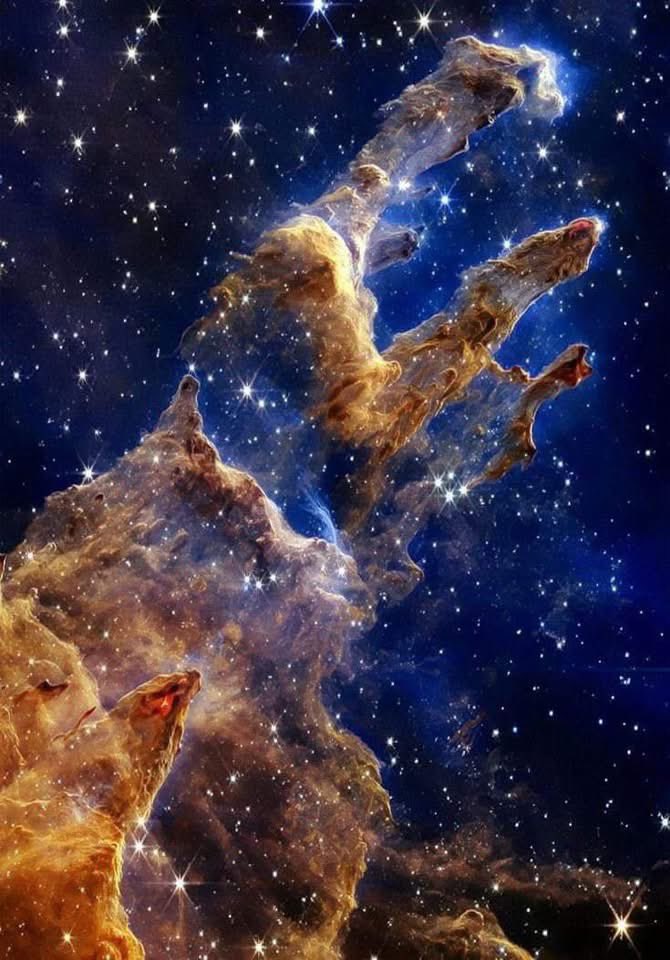
The Pillars of Creation in the Eagle Nebula are located approximately 7000 light years from earth. These are massive columns of interstellar gas and dust that were sculpted by intense radiation from nearby stars. “Lift up your eyes on high And see who has created these stars, The One who leads forth their host by number, He calls them all by name; Because of the greatness of His might and the strength of His power, Not one of them is missing.” -Isaiah 40:26
Dr. Doug Corrigan tweet media
English
1
3
15
475
Dr. Doug Corrigan
Dr. Doug Corrigan@ScienceWDrDoug·
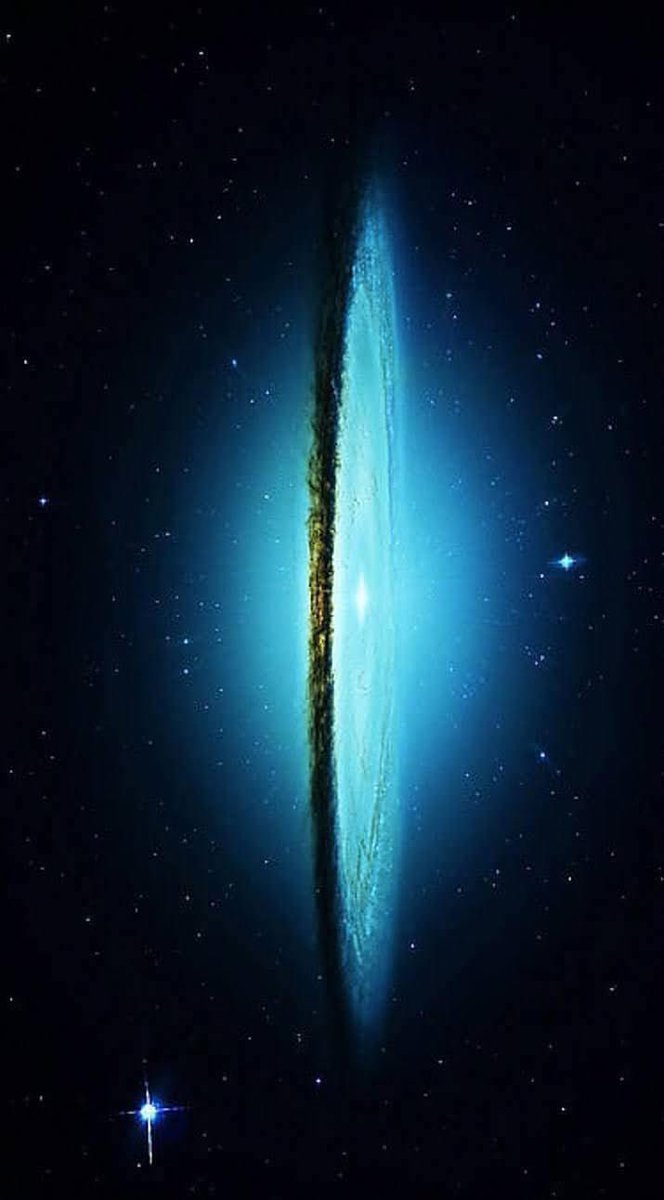
The Sombrero galaxy is approximately 176 million trillion miles away. It consists of ~700 billion stars, which translates to approximately 100 stars for each person on earth. There are approximately 2 trillion galaxies in the observable universe, each with approximately 100 billion stars on average. “Lift up your eyes on high And see who has created these stars, The One who leads forth their host by number, He calls them all by name; Because of the greatness of His might and the strength of His power, Not one of them is missing.” -Isaiah 40:26
Dr. Doug Corrigan tweet media
English
0
4
19
564
Bryce, Eternal ✝️
Bryce, Eternal ✝️@BryceEternal·
Please pray for my repentance and stopping of my sins, which are leading ne away from peace and love with the Lord. Yet He still shows me mercy, but I am failing Him continually.
English
59
27
307
3.2K
Dr. Doug Corrigan
Dr. Doug Corrigan@ScienceWDrDoug·
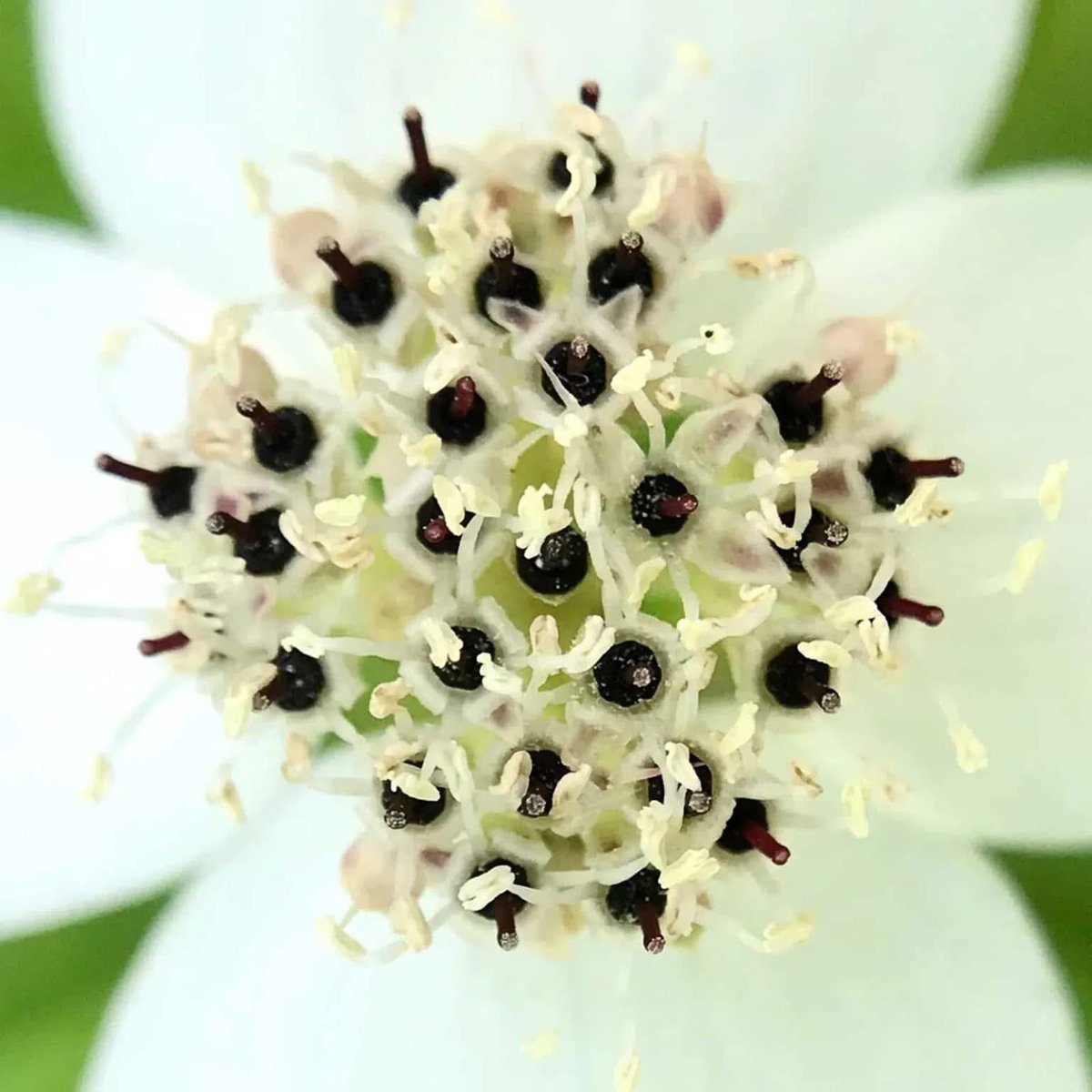
🌼 Pollen Rockets 🚀 Bunchberry flowers can launch pollen like a rocket into the air with accelerations that exceed that of a bullet leaving a gun. The stamen consists of a filament which is attached to the pollen-carrying anther sack via a hinge. Before the flower blooms, the anther sack opens and the pollen is ready to be ejected. In less than 0.4 milliseconds, these flowers bloom. This is less than the time it takes a bullet to leave the barrel of a gun. The petals fly open, releasing the stored up electric energy in the stamen. This explosive release of elastic energy propels the pollen with an acceleration of 24,000 m/s2, which is 800 times the acceleration experienced by astronauts during liftoff.
Dr. Doug Corrigan tweet media
English
1
3
12
522
Nicole
Nicole@prettiinsomiac·
Pray for me 🙏🏽 I'm having a procedure to see if i have cancer. I'm scared.
English
275
60
1.1K
15.6K
Dr. Doug Corrigan
Dr. Doug Corrigan@ScienceWDrDoug·
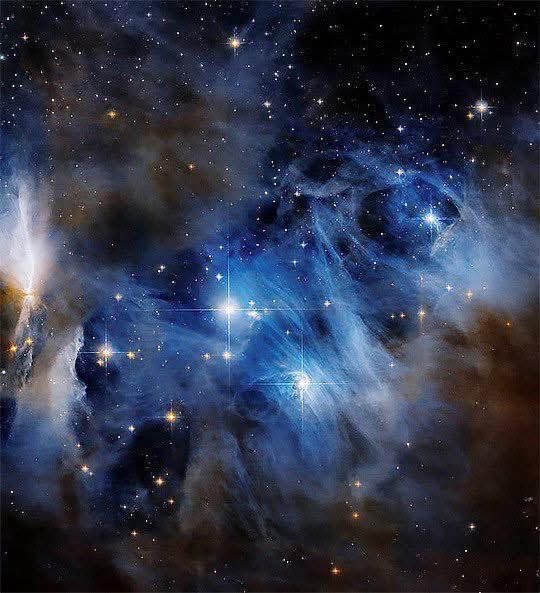
NASA Hubble Space Telescope high-resolution composite image captures one of three segments that comprise a 65-light-year wide star-forming region named the Chamaeleon Cloud Complex. This complex is about 500 light years from earth. “The heavens declare the glory of God; the skies proclaim the work of his hands. Day after day they pour forth speech; night after night they reveal knowledge. They have no speech, they use no words; no sound is heard from them. Yet their voice goes out into all the earth, their words to the ends of the world.” Psalm 19:1-4
Dr. Doug Corrigan tweet media
English
1
4
14
385