

Senti
281 posts

Senti
@SentiWallet
AI-powered non-custodial wallet. Spend, save & earn — all in one place.
Web3 เข้าร่วม Eylül 2024
1 กำลังติดตาม214 ผู้ติดตาม


If you hold stablecoins long term, you need more than just a wallet.
You need a way to actually decide what to do with them.
That’s what we’re building with Senti.
Not just earning or sending.
Allocation, clarity, and control.
It’s already live in beta & over 180+ persons are using it.
→ app.senti.finance

Senti@SentiWallet
Why we started building Senti? Really, It didn’t start with a big idea. It started with a small, uncomfortable realization. Holding stablecoins feels good… until it doesn’t. At first, it’s simple. You move into USDT or USDC, escape volatility, and finally feel some level of control over your money. No sudden drops. No emotional swings. Just stability. But after a while, something changes. You open your wallet and the number hasn’t moved. Not up, not down. Just sitting there. And a quiet thought starts to creep in: “Shouldn’t this be doing something?” That question is where things begin to get complicated. Because the moment you try to “do something,” you step into a completely different experience. One that isn’t as clean or straightforward as holding. You start looking around. You see different yields across platforms. Numbers that seem attractive at first glance. Some feel reasonable, others feel too good to be true. And naturally, you try to understand what’s behind them. That’s when it stops being simple. You’re no longer just holding value. You’re now making decisions about protocols, risks, and trade-offs you don’t fully see. And the strange part is, everything looks fine on the surface. Clean interfaces. Confident messaging. People saying it works. But when it’s time to actually move your money, there’s a pause. Not out of fear, exactly. But out of uncertainty. Because deep down, you’re not just asking “what’s the return?” You’re asking: “Do I really understand where this is going?” Most of the time, the answer isn’t clear enough. So you wait. You tell yourself you’ll look into it later. Maybe read more. Maybe try again another time. But in most cases, nothing changes. The money stays where it is. Not because opportunities don’t exist, but because acting on them feels more complex than it should be. That realization stayed with us. Because it wasn’t just a personal experience. It kept showing up in conversations with others. People weren’t avoiding yield because they didn’t care. They were avoiding it because the process required too much constant attention, too many decisions, and too much trust in things they didn’t fully understand. In a space built on giving users control, it ironically felt like too much responsibility without enough clarity. And that’s where the idea for Senti came from. Not from trying to create another DeFi product, but from trying to fix that exact moment (the hesitation before acting). The gap between knowing your money could be doing more, and actually feeling confident enough to do something about it. Senti is built around a simple belief: Managing stablecoin capital shouldn’t feel like a full time job. You shouldn’t have to open multiple tabs, compare scattered information, or second guess every move. And you definitely shouldn’t feel like the safest option is to leave your money idle. There’s a better way to approach it. One where decisions are clearer, risks are visible, and actions feel intentional rather than forced. We’re still building toward that. But the goal is simple. Make it easier for people to move from holding… to actually using their capital in a way that makes sense. Because stablecoins solved volatility. Now it’s time to solve what comes after.
English
@SentiWallet looking forward to seeing this in real practice.
the testnet experience is looking good so far!

English
Why we started building Senti?
Really,
It didn’t start with a big idea.
It started with a small, uncomfortable realization.
Holding stablecoins feels good… until it doesn’t.
At first, it’s simple. You move into USDT or USDC, escape volatility, and finally feel some level of control over your money. No sudden drops. No emotional swings. Just stability.
But after a while, something changes.
You open your wallet and the number hasn’t moved. Not up, not down. Just sitting there. And a quiet thought starts to creep in:
“Shouldn’t this be doing something?”
That question is where things begin to get complicated.
Because the moment you try to “do something,” you step into a completely different experience. One that isn’t as clean or straightforward as holding.
You start looking around.
You see different yields across platforms. Numbers that seem attractive at first glance. Some feel reasonable, others feel too good to be true. And naturally, you try to understand what’s behind them.
That’s when it stops being simple.
You’re no longer just holding value. You’re now making decisions about protocols, risks, and trade-offs you don’t fully see.
And the strange part is, everything looks fine on the surface.
Clean interfaces. Confident messaging. People saying it works.
But when it’s time to actually move your money, there’s a pause.
Not out of fear, exactly. But out of uncertainty.
Because deep down, you’re not just asking “what’s the return?”
You’re asking:
“Do I really understand where this is going?”
Most of the time, the answer isn’t clear enough.
So you wait.
You tell yourself you’ll look into it later. Maybe read more. Maybe try again another time.
But in most cases, nothing changes.
The money stays where it is.
Not because opportunities don’t exist, but because acting on them feels more complex than it should be.
That realization stayed with us.
Because it wasn’t just a personal experience. It kept showing up in conversations with others.
People weren’t avoiding yield because they didn’t care. They were avoiding it because the process required too much constant attention, too many decisions, and too much trust in things they didn’t fully understand.
In a space built on giving users control, it ironically felt like too much responsibility without enough clarity.
And that’s where the idea for Senti came from.
Not from trying to create another DeFi product, but from trying to fix that exact moment (the hesitation before acting).
The gap between knowing your money could be doing more, and actually feeling confident enough to do something about it.
Senti is built around a simple belief:
Managing stablecoin capital shouldn’t feel like a full time job.
You shouldn’t have to open multiple tabs, compare scattered information, or second guess every move. And you definitely shouldn’t feel like the safest option is to leave your money idle.
There’s a better way to approach it.
One where decisions are clearer, risks are visible, and actions feel intentional rather than forced.
We’re still building toward that.
But the goal is simple.
Make it easier for people to move from holding… to actually using their capital in a way that makes sense.
Because stablecoins solved volatility.
Now it’s time to solve what comes after.

English
gm guys,
a lot of people have gotten access to this test phase since I posted it.
we're almost halfway there, so I'm extending it again by a few days.
the project in question is @SentiWallet and you're still very early.
comment 'test' to get in
𝘇𝘂𝗯𝗯𝘆 (𝗽𝗲𝗿𝗽𝘀 𝗮𝗿𝗰)@0xgodzubby
big week! I'm opportuned to work with a brand in driving meaningful feedback for their early product. the product is a solid one and it promises to be rewarding. hearing there will be future rewards for early testers. I need about 400 testers that will try out the product and give meaningful feedback. if you're interested, kindly rt this post and comment "test" I'll send you a DM on what to do. ps: you don't need real money to test the product so there's basically zero risk here. also, this opportunity closes in 72hrs.
English
Feels a bit overstated tbh.
Regulating frontends and tightening compliance doesn’t “kill defi”…imo, it just shifts where and how people access it.
And even if passive yield gets squeezed, the bigger issue is:
most people don’t actually have a clear way to manage their stablecoins beyond chasing apy.
That problem doesn’t go away with or without regulation.
English

Say goodbye to Uniswap as you know it.
The Senate's new CLARITY Act is a direct hit on DeFi, engineered to protect the banks.
They are outright banning passive stablecoin yield. Banks are terrified lawmakers with projections of a $6.6 trillion deposit flight to crypto, so Washington stepped in to kill your yield and protect the legacy system.
Even worse, the bill aims to classify anyone running a DeFi front-end as a financial intermediary.
Just hosting a web interface for a smart contract will suddenly require bank-level AML compliance and audits.
They are rushing to force this through by May before the midterm elections make the bill politically radioactive.
But there is a massive blind spot in their plan.
They can regulate web domains and target companies, but they cannot ban math. Decentralized smart contracts live on-chain.
Real developers will keep building the permissionless solutions the market demands, and DeFi will simply route around the damage.
English
chains: solved ✅
now it’s just:
“where does my money go next?” 💀
that’s literally the hard part.
Senti exists for this.
Particle Network@ParticleNtwrk
Universal Accounts are now 1-year old... and so, we're leveling up. We're introducing full EIP-7702 support, allowing you to make any app chain-agnostic. Works out of the box with @privy_io, @dynamic_xyz, and @magic_labs. Connect an EOA to make it Universal. Zero migration required. Pay gas with any token. Deposit from any chain, Solana or EVM. Seamless cross-chain txs. In short, forget about chains. Start building 👇
English
Knowing your stablecoins don’t have to sit idle anymore.

Sui@SuiNetwork
Knowing that a new era of Bitcoin finance is beginning on Sui.
English
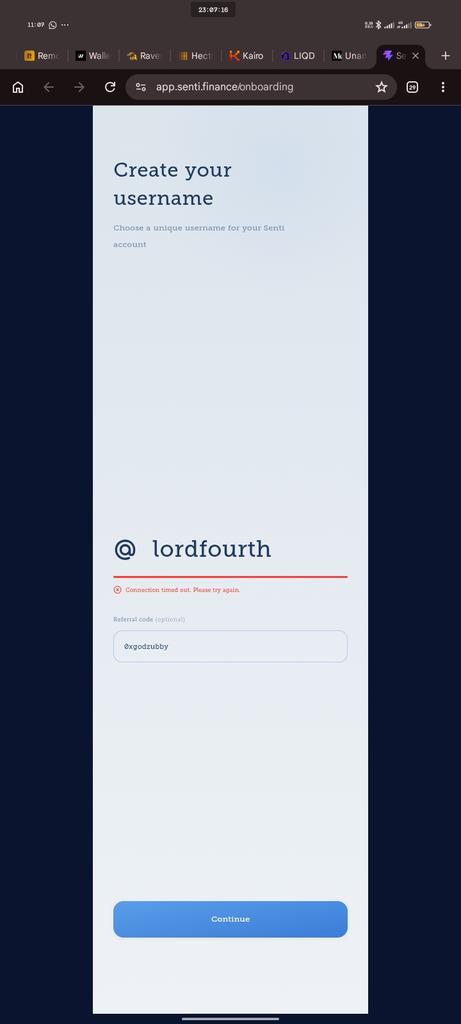
@Minato4659 An update is being pushed hence this error.
As soon as our dev gets it done, we will update you (on telegram most likely).
English

Idle stablecoins might be one of the most overlooked inefficiencies in crypto right now.
Not in an obvious way.
It’s not like people are losing money.
In fact, most people holding USDT or USDC feel like they’re doing the “safe” thing.
And to be fair… they are.
But there’s a quiet tradeoff that doesn’t get talked about enough.
You open your wallet and see $3k, $10k, maybe more… just sitting there.
It’s stable.
It’s accessible.
It’s not going anywhere.
But it’s also not doing anything.
And the tricky part is… nothing feels wrong.
There’s no red flag.
No loss notification.
No moment that tells you, “hey, you’re making a bad decision.”
So it just stays.
Days turn into weeks.
Weeks turn into months.
And that’s where opportunity cost lives…in the background, unnoticed.
Not as a loss you can feel…
But as progress you never made.
Because the reality is, it’s not like yield doesn’t exist.
It does.
The problem is what comes with it.
The tabs.
The comparisons.
The second guessing.
The “is this even safe?” feeling.
At some point, it stops feeling like a smart financial move…
and starts feeling like work.
So you close everything and tell yourself you’ll figure it out later.
Most people do.
That’s why so much stablecoin capital just sits idle.
Not because people are careless.
But because managing it properly still feels harder than it should be.
And until that changes, this inefficiency stays.
Not loud or dramatic.
Just quietly expensive over time.
That gap…between holding stablecoins and actually putting them to work in a way that makes sense…
That’s the part of crypto that still feels unfinished.
And honestly, that’s the part we’re most interested in fixing with Senti.

English

@SentiWallet Ohh 😂
He has updated me, so I’m still patiently waiting.
English