Dr Sharath Kumar G

4.8K posts

Dr Sharath Kumar G banner
Dr Sharath Kumar G

Dr Sharath Kumar G

@SharathKumarGG7

🇮🇳

Bengaluru, India เข้าร่วม Temmuz 2017
948 กำลังติดตาม1.4K ผู้ติดตาม
Dr Sharath Kumar G
Dr Sharath Kumar G@SharathKumarGG7·
Happy #WorldHealthDay! 🌍 ​This year’s WHO theme, "Together for health. Stand with science," is the absolute cornerstone of interventional neuroradiology. When treating strokes and complex neurological conditions, every single second counts—and it’s rigorous, evidence-based science that saves lives and preserves brain function. ​Proud to deliver science-driven, advanced neurointerventions at Manipal Hospital, Kanakapura Road, a true center of excellence in neuro care. 🧠🔬 ​#StandWithScience #WorldHealthDay2026 #StrokeCare #Neuroradiology #ManipalHospital #EvidenceBasedMedicine
English
0
0
0
54
Dr Sharath Kumar G
Dr Sharath Kumar G@SharathKumarGG7·
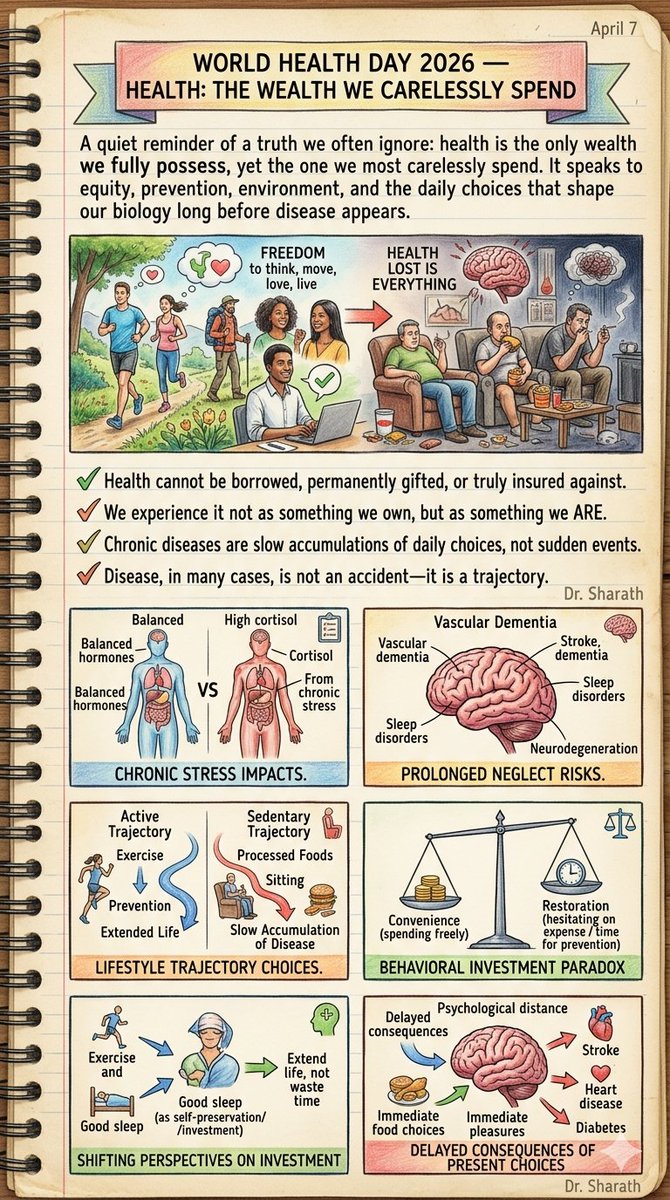
As a Lead Consultant Interventional & Diagnostic Neuroradiologist, I see the reality of this daily: chronic diseases, strokes, and cognitive decline are often the result of a slow accumulation of neglected choices. This #WorldHealthDay, let's shift our perspective. Time spent on exercise and prevention isn't an expense; it's self-preservation. 🧠🩺 ​Make health your primary investment today #WorldHealthDay2026 #HealthForAll #StrokeAwareness #Neurology #PreventiveMedicine
Dr Sharath Kumar G tweet media
English
0
1
2
60
Dr Sharath Kumar G รีทวีตแล้ว
Jay Gajera
Jay Gajera@jaygajera·
@SharathKumarGG7 Great summary, hopefully notebookLM improves in the future - the FLAIR images seem to be dodgy
English
1
0
0
9
Dr Sharath Kumar G
Dr Sharath Kumar G@SharathKumarGG7·
🧠👂 Did you know Delayed Contrast-Enhanced MRI is the gold standard for visualizing Menière’s disease in vivo? ​The target: Endolymphatic Hydrops (EH). ​Here is the physiology behind how it works: 💉 Gadolinium slowly crosses the blood-labyrinth barrier into the perilymph (which appears bright) but NOT the endolymph (which remains dark) 🧲 On heavily T2-weighted IR sequences, an enlarged dark area confirms EH! ​#Radiology #MedTwitter #MenieresDisease #MRI #Otology #NeuroRad
Dr Sharath Kumar G tweet media
English
2
9
37
1.9K
Spinal CSF Leak Foundation
Spinal CSF Leak Foundation@spinalCSFleak·
“This report describes the CT fluoroscopy–guided circumferential EBP, a technique that achieves 360° coverage of patching material around the thecal sac using combined ventral transforaminal and dorsal interlaminar injections” ajnr.org/content/47/4/1… From the @DukeRadiology team:
Spinal CSF Leak Foundation tweet media
English
1
10
18
827
Dr Sharath Kumar G รีทวีตแล้ว
The Curious Tales
The Curious Tales@thecurioustales·
🚨BREAKING: 8 weeks of gratitude practice physically rebuilds the neural pathways between your memory and reward centers. Your brain physically rewires itself every time you feel grateful. Eight weeks of intentional gratitude practice creates measurable structural changes in the neural pathways connecting your hippocampus to your ventral tegmental area. The memory center starts talking to the reward center in a fundamentally different way. New synaptic connections form. Existing ones strengthen. The physical architecture of how you process positive experiences rebuilds itself. Most people approach gratitude like a mood they can choose to feel. A psychological vitamin they remember to take when life gets difficult. The neuroscience reveals something far more profound. Gratitude is a biological intervention that sculpts brain tissue. Researchers tracked participants practicing gratitude exercises for two months using brain scans. They watched new neural highways construct themselves in real time. The anterior cingulate cortex developed stronger connections to the medial prefrontal cortex. The brain learned to route positive emotional experiences through higher order thinking centers instead of storing them as fleeting feelings. Every positive experience you’ve ever had exists as a neural trace in your memory network. Most sit dormant, accessible only when something external triggers the specific sensory combination that originally encoded them. You smell coffee, suddenly remember a conversation from years ago. Random. Unreliable. Outside your control. Gratitude practice systematically rewires that retrieval system. After two months, participants could voluntarily access positive memories with increasing ease. Their brains had built stronger pathways between memory storage areas and emotional processing centers. They experienced deeper emotional resonance during memory retrieval. The quality of remembering itself had improved. The participants also started noticing positive details in their present environment they had previously filtered out. Their attention systems recalibrated. The same neural pathways pulling positive memories forward were scanning current experiences more thoroughly for elements worth encoding as positive memories. Their brains became biased toward collecting evidence that life contains meaningful moments. Most cognitive interventions try to change how you interpret negative experiences. Gratitude practice changes how thoroughly you notice positive ones. It teaches your visual and emotional processing systems to detect opportunities and pleasures that were always present but neurologically invisible. The timeline reveals something crucial about neural plasticity. Weeks one through three showed minimal structural changes. Participants felt slightly more positive, but brain scans looked identical to baseline. Weeks four through six showed the first measurable increases in gray matter density. Weeks seven and eight revealed entirely new neural network formation. Two months. Your nervous system can physically restructure itself with consistent practice. The method was almost embarrassingly simple. Participants wrote down three specific things they felt grateful for every evening, explaining why each mattered. No meditation apps. No guided visualizations. Just pen, paper, and the requirement to identify gratitude targets with enough detail that their brains had to actively search for positive elements. Specificity drives the neural development. General statements like “I’m grateful for my family” generate different brain activity than precise observations like “I’m grateful my daughter laughed at my terrible joke during dinner because it showed me she still finds me funny despite growing more independent.” The brain needs detailed targets to practice connecting memory specifics to emotional rewards. After eight weeks, participants developed a fundamentally different relationship with their attention and memory systems. Someone whose brain automatically scans for and emotionally amplifies aspects of experience that make existence feel worthwhile. The neural pathways remain permanent after practice ends. Gratitude carves lasting roads through consciousness.
The Curious Tales tweet media
Darshak Rana ⚡️@thedarshakrana

Gratitude rewires the brain. Gratitude rewires the brain. Gratitude rewires the brain. Gratitude rewires the brain. Gratitude rewires the brain. Gratitude rewires the brain. Gratitude rewires the brain. Gratitude rewires the brain. Gratitude rewires the brain.

English
101
2.4K
9.9K
923.2K
Dr Sharath Kumar G รีทวีตแล้ว
JNIS
JNIS@JNIS_BMJ·
🧠 Can routine CT help refine prognostication after EVT? In this study of 450 patients, parietal and frontal atrophy on baseline CT were independently associated with poor outcome after thrombectomy, while white matter lesions did not retain independent prognostic significance. @AlessPezzini 📖 Read more (open access): bit.ly/4tilnh0
English
1
13
21
2.3K
Dr Sharath Kumar G รีทวีตแล้ว
World Stroke Academy
World Stroke Academy@WorldStrokeEd·
#MondayTip Cancer-related stroke ≠ routine ESUS ~50% of strokes in active cancer are cryptogenic, but many are cancer-driven hypercoagulable events 🔁14–29% recur at 1 year ⚖️Anticoag vs aspirin? Still equipoise 🧠Classify. Risk-stratify. Individualize doi.org/10.1161/str.00…
World Stroke Academy tweet media
English
3
60
101
6K
Dr Sharath Kumar G รีทวีตแล้ว
Andrew L Callen MD
Andrew L Callen MD@AndrewCallenMD·
Most patients with CSF pressure disorders don’t read the textbook. This review is about what to do when the imaging, symptoms, and physiology don’t line up, and why “high” vs “low” pressure is often the wrong framework. 🔓Open access: …adachejournal.onlinelibrary.wiley.com/doi/10.1111/he…
English
4
27
78
4.7K
Dr Sharath Kumar G รีทวีตแล้ว
Andreu Vilaseca
Andreu Vilaseca@andreuvilaseca7·
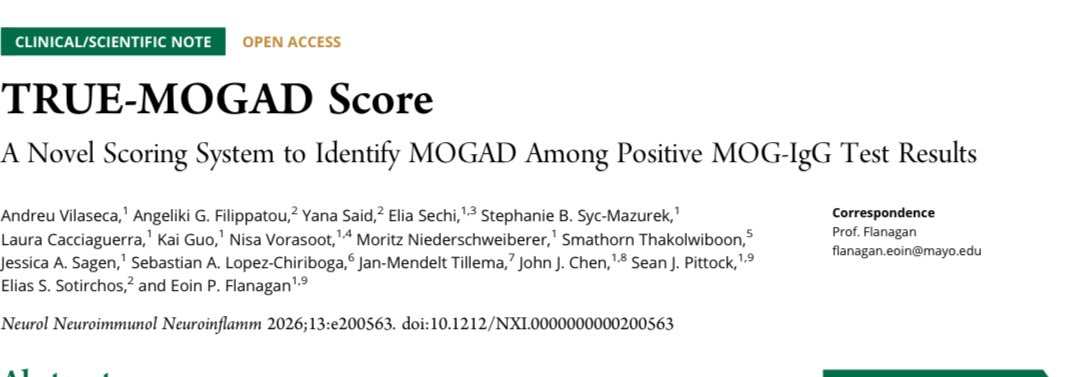
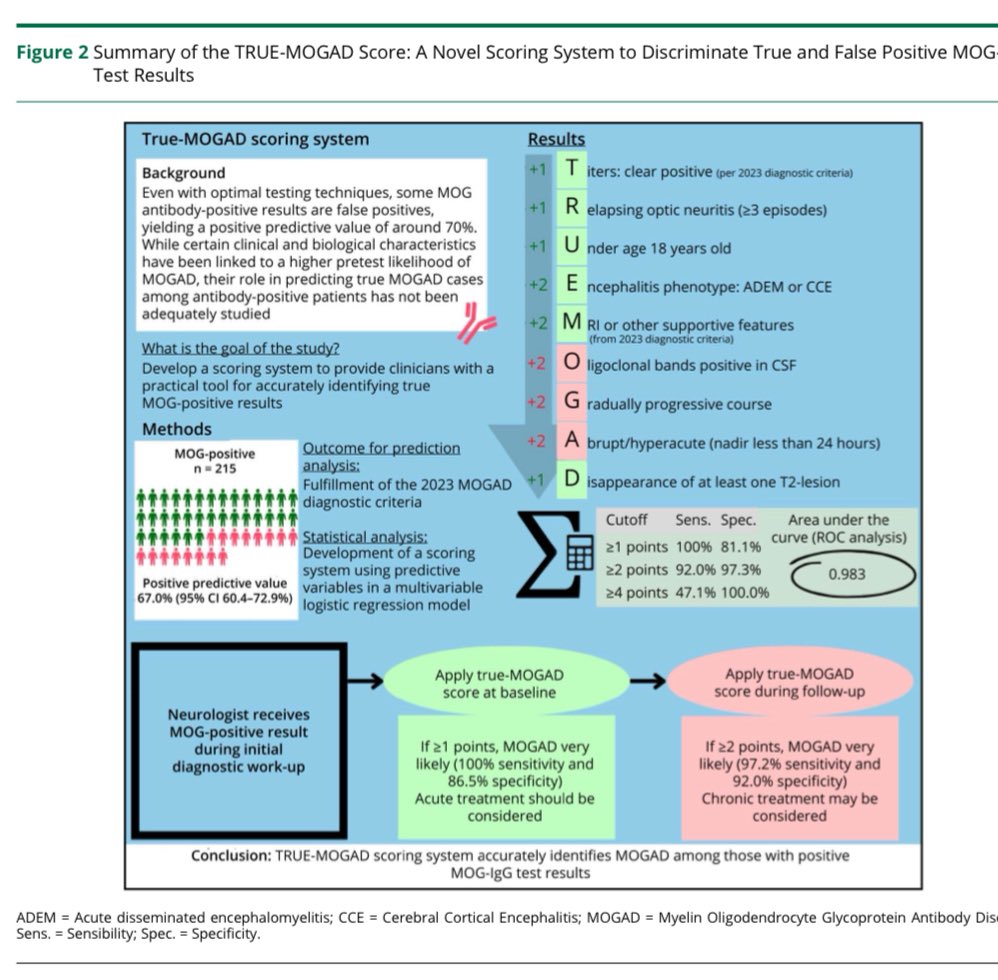
A positive MOG antibody result does not always mean MOGAD‼️ TRUE MOGAD Score helps neurologists worldwide estimate whether a positive MOG result is truly clinically meaningful. Proud collaboration between @MayoClinic and @JohnsHopkins Scan the QR code below to access the tool 👇🏽
Andreu Vilaseca tweet mediaAndreu Vilaseca tweet mediaAndreu Vilaseca tweet media
English
5
70
184
8.8K
Dr Sharath Kumar G รีทวีตแล้ว
Stroke AHA/ASA
Stroke AHA/ASA@StrokeAHA_ASA·
🧵#STROKE: Multicenter #BRAVO collaboration demonstrated that among patients with isolated VA occlusion, IVT-only appeared safe and was associated with better early recovery and recanalization.
Stroke AHA/ASA tweet media
English
2
18
37
1.8K
Dr Sharath Kumar G รีทวีตแล้ว
International Journal of Stroke
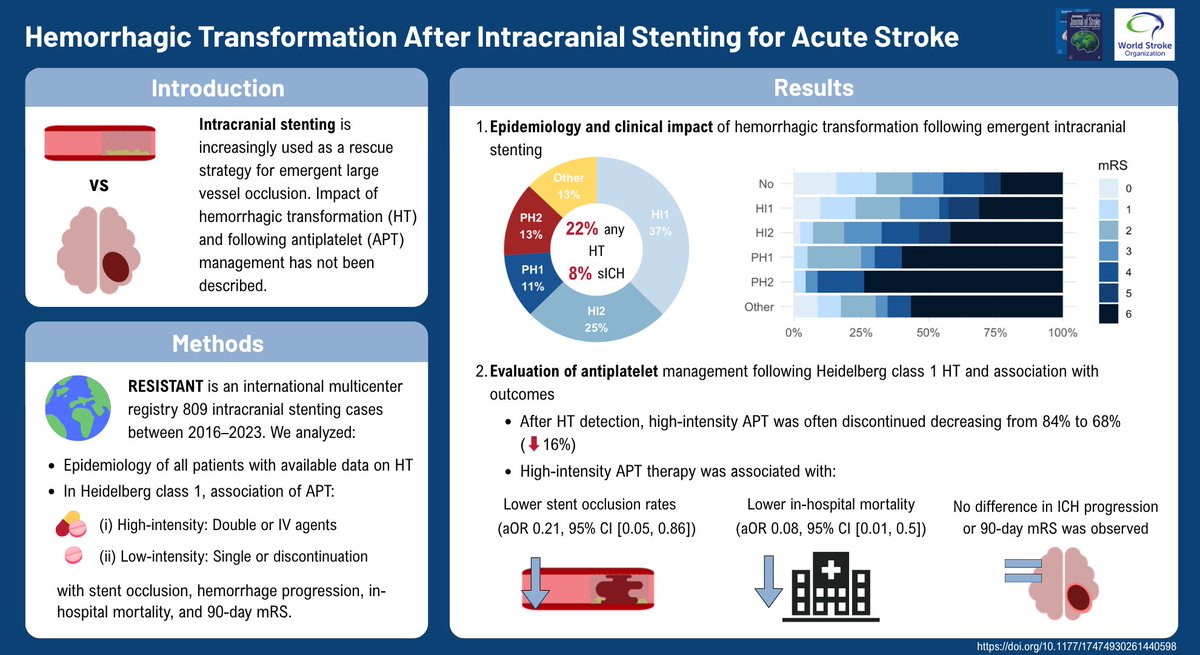
🧠🩸Hemorrhagic Transformation (HT) remains an important complication after emergent intracranial stenting 💊☝️High‑intensity antiplatelet therapy appears safe in select HT subtypes and was associated with⬇️lower occlusion and mortality Read more here👇 journals.sagepub.com/doi/abs/10.117…
International Journal of Stroke tweet media
English
0
9
19
1.9K
Dr Sharath Kumar G รีทวีตแล้ว
Dr. Filippo Cademartiri
Dr. Filippo Cademartiri@FCademartiri·
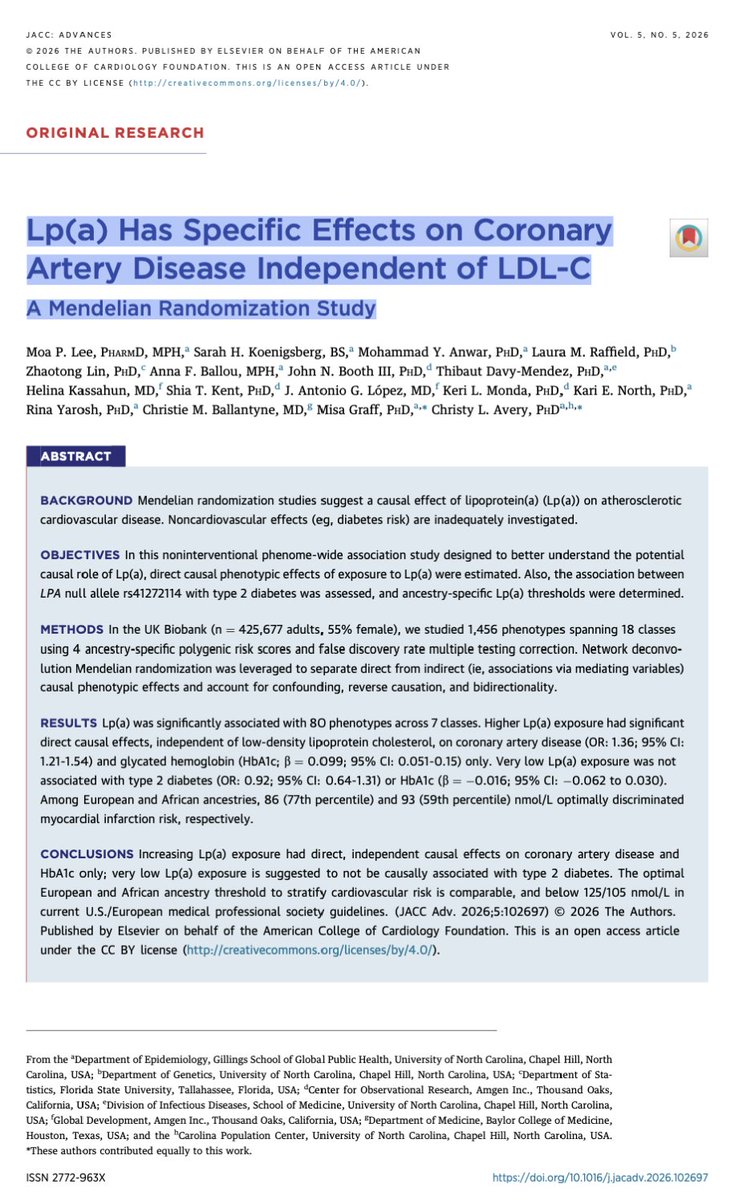
🧬🫀 Lp(a) is not just “another lipid.” It plays its own game. This Mendelian randomization study delivers a critical message: 👉 Lipoprotein(a) drives coronary artery disease independently of LDL-C. Not alongside it. Not through it. 👉 Independently. 📊 What does that actually mean? Even when LDL-C is: ✔ Normal ✔ Controlled ✔ Optimally treated 👉 Lp(a) still increases CAD risk. This is not correlation. This is genetically anchored causality. ⚠️ Why this matters (and why we’ve been missing it) For decades, we’ve built prevention strategies around: ✔️ LDL-C ✔️ Statins ✔️ Risk scores But: 👉 Lp(a) is largely genetically determined 👉 Barely modified by lifestyle 👉 Not adequately reduced by standard therapies So what happens? ➡️ Patients look “well-controlled” ➡️ LDL is low ➡️ Risk appears acceptable ❗ Yet atherosclerosis progresses. 💡 This paper reinforces a paradigm shift We are not dealing with one axis of risk. We are dealing with parallel biological pathways: ✔️ LDL-driven atherosclerosis ✔️ Lp(a)-driven atherosclerosis 👉 Same disease. Different engines. 🎯 Clinical implications If you’re not measuring Lp(a): 👉 You are blind to a significant portion of residual risk. At least once in a lifetime should become standard. 🚀 Bottom line Lowering LDL is necessary. But it is not sufficient. Because: 👉 You can “win” on LDL and still lose on Lp(a). And that’s exactly the patient we keep missing.
Dr. Filippo Cademartiri tweet media
English
12
35
151
21K
Dr Sharath Kumar G รีทวีตแล้ว
Michael Albert, MD
Michael Albert, MD@MichaelAlbertMD·
The cholesterol wars are over. LDL won. New guidelines. Four landmark trials. An oral PCSK9 inhibitor that matches injectables. And data proving we should be treating patients we currently aren't. Here's everything clinicians need to know. 🧵
English
177
436
3K
1.3M
Dr Sharath Kumar G รีทวีตแล้ว
Stroke AHA/ASA
Stroke AHA/ASA@StrokeAHA_ASA·
#STROKE: Among patients with CSVD, centrum semiovale perivascular spaces burden showed a subtype-specific association with amyloid biomarkers. Lower CSF Aβ42/40 ratio correlated with higher burden in probable CAA, but not DPA. ahajrnls.org/4vibqSK
Stroke AHA/ASA tweet media
English
1
7
19
1.4K