

Shiro
192 posts

Shiro
@ShiroTerminal
Building in silence…Watching everything…
เข้าร่วม Mart 2026
3 กำลังติดตาม46 ผู้ติดตาม




JUST IN: Trump reportedly “quite interested” in calling on Arab countries to pay for the cost of the Iran operation.
English

BREAKING: Bitcoin is now likely to crash below $45,000 this year.
52% chance. polymarket.com/event/what-pri…
English

🚨THE US ECONOMY IS HEADING INTO HUGE TROUBLE
And this is something most people aren't paying attention to.
The real risk to the US economy right now is not that the U.S. imports oil through the Strait of Hormuz.
It’s what happens to the rest of the world if energy stays expensive.
The U.S. can handle higher oil prices better than most because it produces a large share of its own energy.
But Europe and Asia don’t have that advantage.
They rely heavily on imported oil, gas, and even food. A significant part of that supply moves through the same chokepoint.
So when prices rise, the pressure doesn’t hit the U.S. first. It hits its allies.
And this matters more than people think.
The U.S. economy today is deeply dependent on foreign capital.
It works because other countries keep buying US Treasuries, keep allocating money into U.S. equities, and keep exporting cheap goods into the U.S. system.
This is what keeps borrowing costs relatively low, supports market valuations, and helps control inflation.
But this entire setup assumes one thing: that the rest of the world remains financially stable.
That assumption starts breaking when energy and food prices spike.
When countries that depend on imports suddenly have to pay much more for the same oil or food, they need more dollars. Their trade balances worsen, their currencies weaken, and inflation starts rising at home.
At that point, they don’t have many options.
They can print more of their own currency to afford these imports, but that directly fuels inflation and weakens their currency further. In an already inflationary environment, that quickly becomes unstable.
The other option is more immediate and more practical.
They can sell assets to raise dollars.
And a large portion of those assets are U.S. assets.
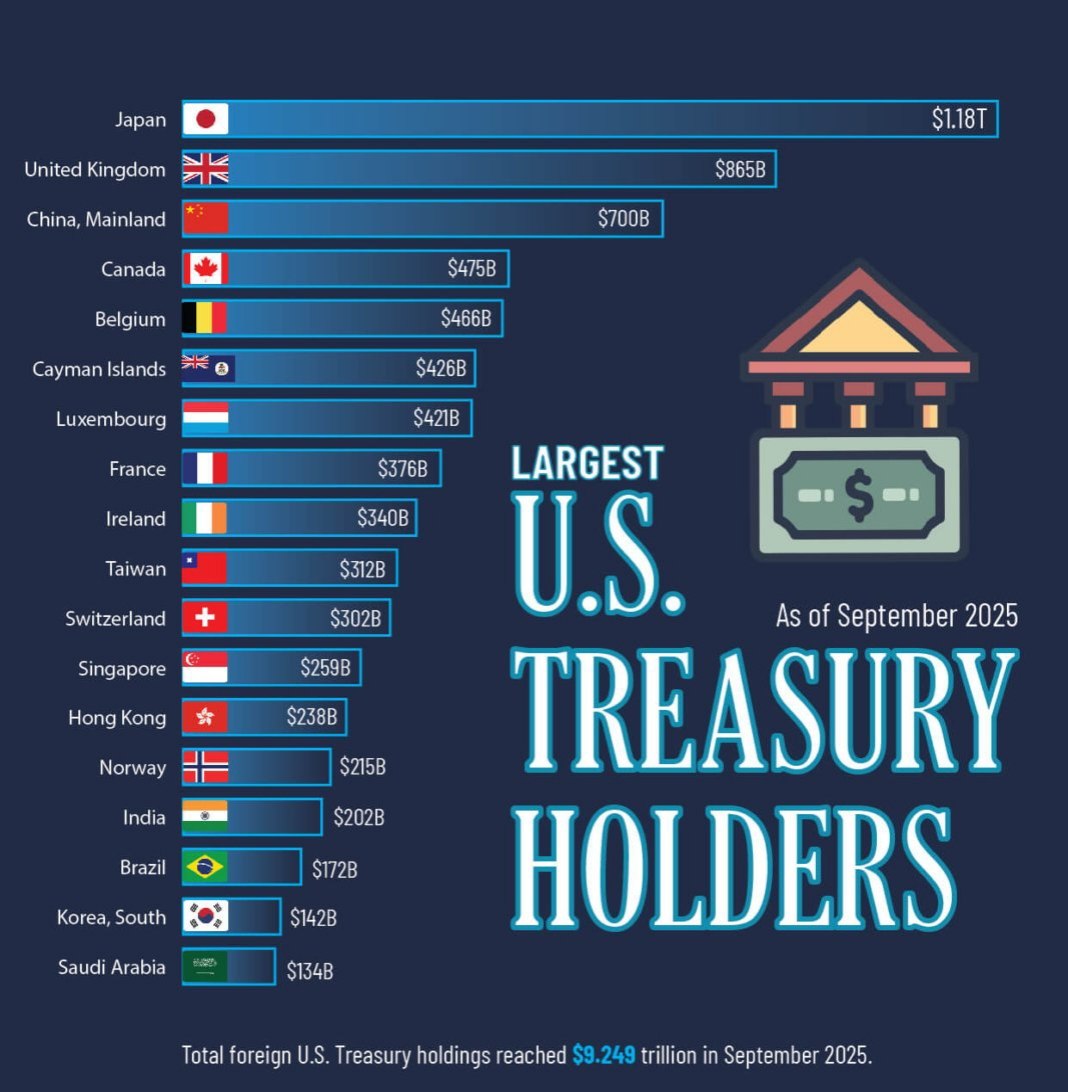
Foreign investors today hold trillions of dollars worth of U.S. Treasuries and equities. These holdings are not passive. They are reserves that can be used when stress appears in their domestic economies.
If energy prices remain high for longer, the incentive to use those reserves increases.
And this is where the risk starts feeding back into the U.S.
If countries begin selling even a small portion of their U.S. Treasury holdings, yields start rising. Higher yields tighten financial conditions inside the U.S. economy. At the same time, selling pressure in equities weakens market sentiment and reduces wealth effects.
This creates a feedback loop.
Higher energy prices put pressure on import-dependent economies. Those economies respond by selling U.S. assets. That pushes U.S. yields higher and tightens liquidity globally. Tighter liquidity then pressures risk assets, which feeds back into weaker global growth.
This is not a theoretical chain. Variations of this have happened before, just on a smaller scale.
The difference now is the size of the system.
Foreign holdings of U.S. assets run into the trillions. Even a marginal shift in behavior can move markets.
And timing matters here.
U.S. equities are still near elevated levels. For countries under pressure, selling into strength is the most logical move. It gives them immediate dollar liquidity, helps stabilize their currency, and buys time while energy markets remain volatile.
The longer the disruption around the Strait of Hormuz continues, the more this pressure builds.
At first, it shows up as inflation in other countries. Then currency weakness. Then policy stress. And eventually, it can show up as capital flows moving out of U.S. assets.
What looks like an external shock slowly becomes a domestic one.
The U.S. may not depend heavily on that specific oil route.
But it depends heavily on the stability of the countries that do.
English

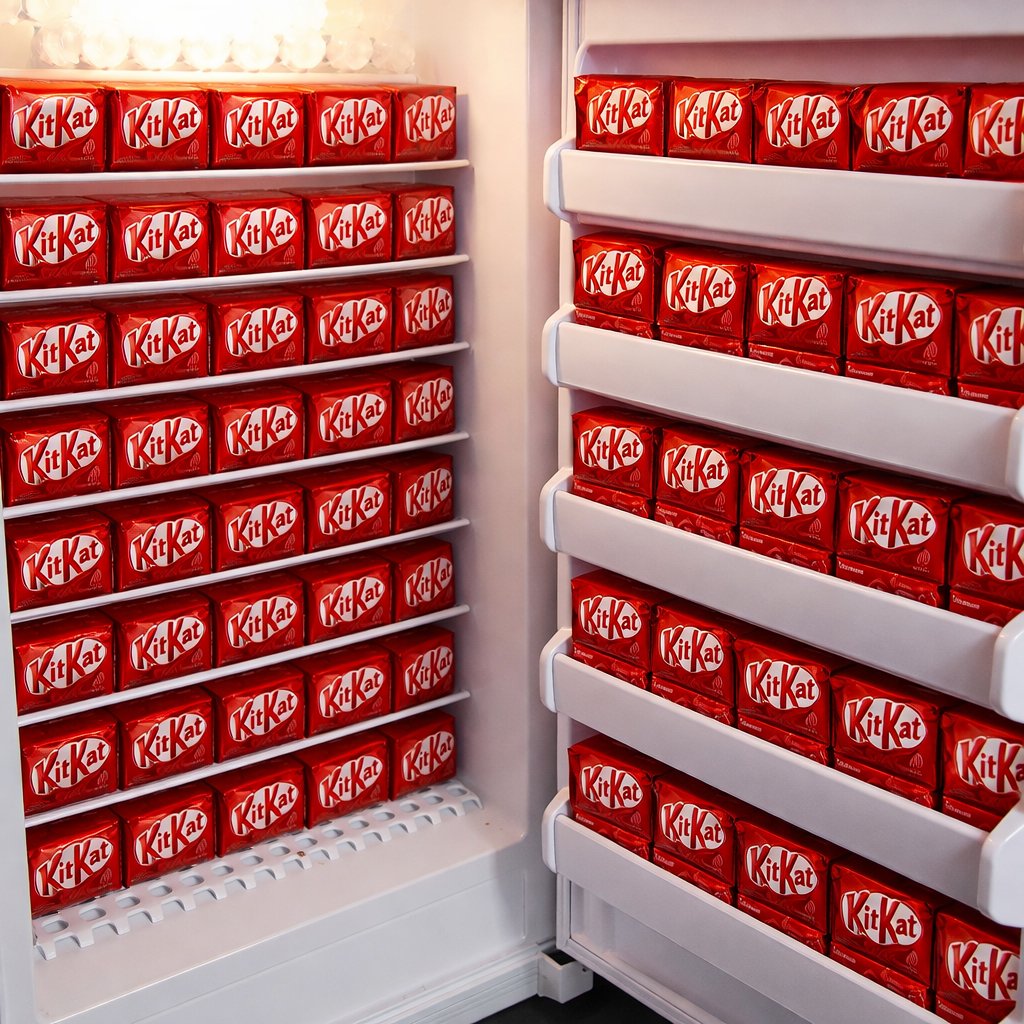
Intern’s fridge looking like this…
He said “just in case the market dips”
Should I be worried? 👇
KITKAT@KITKAT
Regarding recent press coverage
English


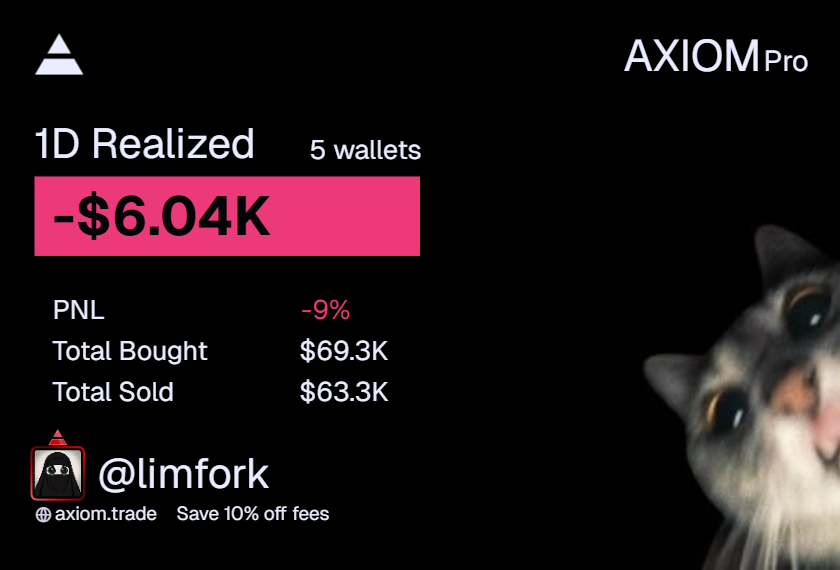
I thought I was going to retire from Memescope Monday
It turned out to be the opposite
I'm homeless now, cya
English



Trenches are straight chaos again today. Memes going crazy, people yelling about memescope monday like it's the next big thing, and the usual degen noise everywhere.
Half the timeline is just aping and farming, the other half arguing over which narrative wins.
I'm sitting back like usual, watching the volume and who’s actually doing real work behind the scenes
#crypto #trenches
English


