ทวีตที่ปักหมุด
Siegfire
3K posts

Siegfire
@SiegfireDotcom
"It is later than you think." - St. Seraphim of Platina Psalm 19:1 | Matthew 10:34 Sfinților Închisorilor, rugați-vă pentru noi! ПРАВОСЛА́ВИЕ ИЛИ СМЕРТЬ! ☦
เข้าร่วม Mart 2025
51 กำลังติดตาม470 ผู้ติดตาม
Siegfire รีทวีตแล้ว

My Lord and My God: The Faith That Clings to Christ
Thomas Sunday
“My Lord and my God!” exclaimed the holy Apostle Thomas. Do you feel with what strength he clung to the Lord and how firmly he held on to Him? Not even a drowning man holds more tightly to a plank that gives him some hope of salvation from drowning.
We may say that one does not yet believe as he ought if he does not relate to the Lord in this way. We say: “The Lord is the Savior,” meaning that He is the Savior of all, but the Apostle says: “My Lord and Savior.” He who says “My Savior” feels his own salvation, which proceeds from Him.
The sense of salvation is proportional to the sense of the destruction from which the Savior has delivered the one who is saved. The feeling of perishing in a man who naturally loves life, yet knows he cannot save himself, compels him to seek a Savior. And when he finds Him and feels the power of salvation that flows from Him, he clings firmly to Him and does not wish to be separated, even if for this he should be deprived of life itself.
Such events in the spiritual life of a Christian are not merely imagined by the mind, but actually take place in reality. Both faith and union with Christ become as strong as life and death. Only such people sincerely cry out: “Who shall separate me…?”
St. Theophan the Recluse - Thoughts for Every Day of the Year
buymeacoffee.com/holyresurrecti…
holyresurrection.shop
+++
Every temple is built first in the heart.
If you would like to help us lay the foundation for our future church home, you may become a $1 Monthly Supporter.
bit.ly/BuildOurParish
A small, steady offering offered in faith becomes a quiet work of grace.
Or One time Gift:
bit.ly/BuildOurParish…
givesendgo.com/BuildOurParish
May Christ bless you and your household.
+++

English
Siegfire รีทวีตแล้ว
Siegfire รีทวีตแล้ว
Siegfire รีทวีตแล้ว
Siegfire รีทวีตแล้ว

That’s one thing people forget about the Orthodox…
We’re don’t just have the faith of the apostles
We don’t just have the wisdom of the Saints
We have the strength of Christ
We are always ready for battle, within ourselves or for our faith and family
Bravery is Orthodox
☦️
Aristotle Ian@AristotleIan7
@JustAdaugoijele Catholic and Orthodox warriors are the reason why Europe and the Americas aren’t Islamic.
English
Siegfire รีทวีตแล้ว

☦️ORTHODOX MONASTICISM☦️
Monasticism (from the greek μοναχός—solitary) is the ancient Christian practice of withdrawal from the world in order to dedicate oneself fully and intensely to the life of the Gospel, seeking union with our Lord Jesus Christ. The focus of monasticism is the soul’s purification, illumination, and deification, or theosis. It is the process of perfection in Christ to which every Christian is called: “Be ye perfect as your heavenly Father is perfect” (Matt. 5:48).
Within their monastery enclosure, monastics live a life of spiritual stillness called hesychasm, working in silence and constant prayer throughout the day, keeping vigil at night, and carefully attending to their thoughts and feelings through inner watchfulness and prayer, while participating continually in the Sacraments and the liturgical life of the Church. At the center of this life lived for Christ is the ceaseless repetition—vocally or silently—of the Jesus prayer: “Lord Jesus Christ, have mercy on me.” This prayer, practiced within the framework of perfect obedience to the monastery’s abbot, brings the grace of God into the disciples’ souls. With patience and perseverance, in time and by the great mercy of God, they attain to the acquisition of the Holy Spirit.
Ceaseless prayer of the heart is a commandment of our Lord Jesus Christ Himself: “And He spake a parable unto them to this end, that men ought always to pray, and not to faint” (Luke 18:1). This form of concentrated, unremitting, noetic prayer was first practiced by the Holy Apostles and then handed down to each generation of Christians, monastics and laity alike, as Saint Paul exhorted: “Pray without ceasing” (1 Thess. 5:17). Dwelling in freedom from distractions and living outside the bustle of the modern world, the monastic offers this prayer to God for the salvation of the entire world.
Concerning the apostolic monastic life, Metropolitan Hierotheos of Nafpaktos writes:
Monasticism is the glory of the Church, and the monks, as Saint Gregory of Nyssa taught, are the crown of the body of the Church. The monastic life is the Christian life, the way of the Prophets, Apostles, and Martyrs. In reality, it is the evangelical life, as a life of repentance and keeping Christ’s commandments to as perfect a degree as possible.
Christ taught this life in His Sermon on the Mount, in His exhortations to be vigilant and take heed, to have absolute faith in God, to avoid cares that cause anxiety, and so on. He often went up on the mountain to pray on His own, not because He needed to, but to teach us this way of life. He Himself urged us to pray in the inner chamber, and when we have shut the door, to pray to our Father Who is in secret (Matt. 6:6).
If one reads the Acts of the Apostles and the Epistles of the Apostles, they will find that the first Christians—imitating the apostolic community of Christ—lived by prayer, common life, inspiration, with all possessions held in common, and they expected the coming of the Kingdom of God, which they experienced as a spiritual reality.
English
Siegfire รีทวีตแล้ว
Siegfire รีทวีตแล้ว
Siegfire รีทวีตแล้ว
Siegfire รีทวีตแล้ว
Siegfire รีทวีตแล้ว

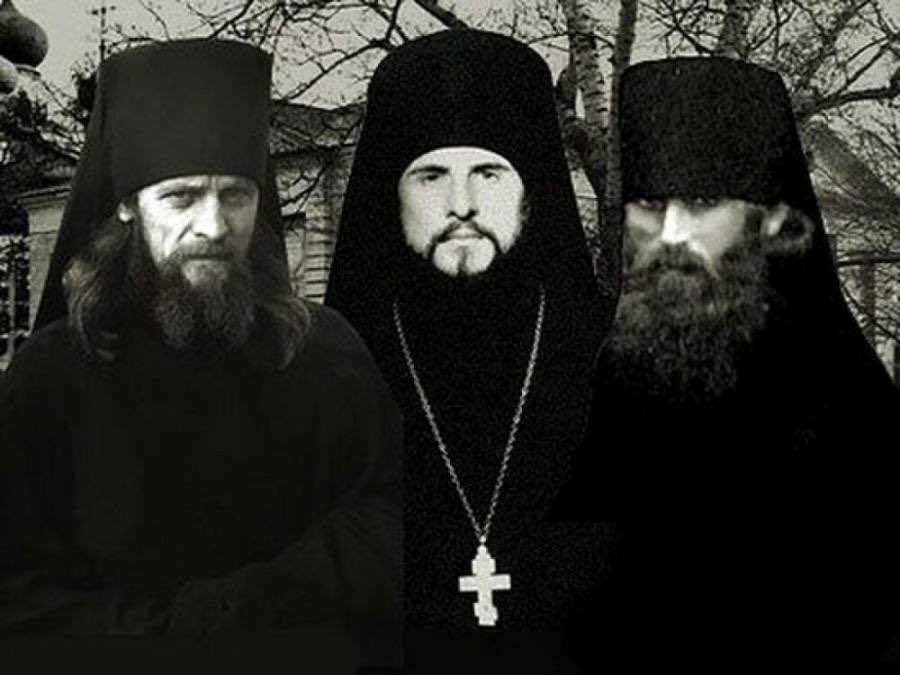
☦️April 18 — Day of Memory for the Martyred Monks of Optina Pustyn.
On the night of April 17 to 18, 1993, on Easter night, a tragedy occurred within the walls of Optina Pustyn: three monks were killed — Hieromonk Basil (Roslyakov), and lay brothers Ferapont (Pushkarev) and Trophim (Tatarnikov).
According to the official investigation, the crime was committed by Nikolai Averin, a resident of a neighboring village suffering from a mental disorder. That night, he came to the monastery with a knife, on the blade of which the ominous number "666" was carved.
His first target was the bell tower, where lay brothers Ferapont and Trophim were performing the Easter bell ringing at that moment. Both were mortally wounded. A few minutes later, around six in the morning, the killer attacked Hieromonk Basil from behind, who also died on the spot.
The criminal fled but was soon apprehended. During interrogation, he confessed to his guilt. The forensic examination declared him insane — he was diagnosed with "schizophrenia." He was sent for compulsory treatment to a specialized institution.
Since then, April 18 has become a day of special commemoration at Optina Pustyn.
For many years, they are daily commemorated during divine services and in frequent prayers by thousands of people. And to the Chapel of the Resurrection of Christ, where they are buried, pilgrims come from all over Russia and from other countries.

English
Siegfire รีทวีตแล้ว
Siegfire รีทวีตแล้ว

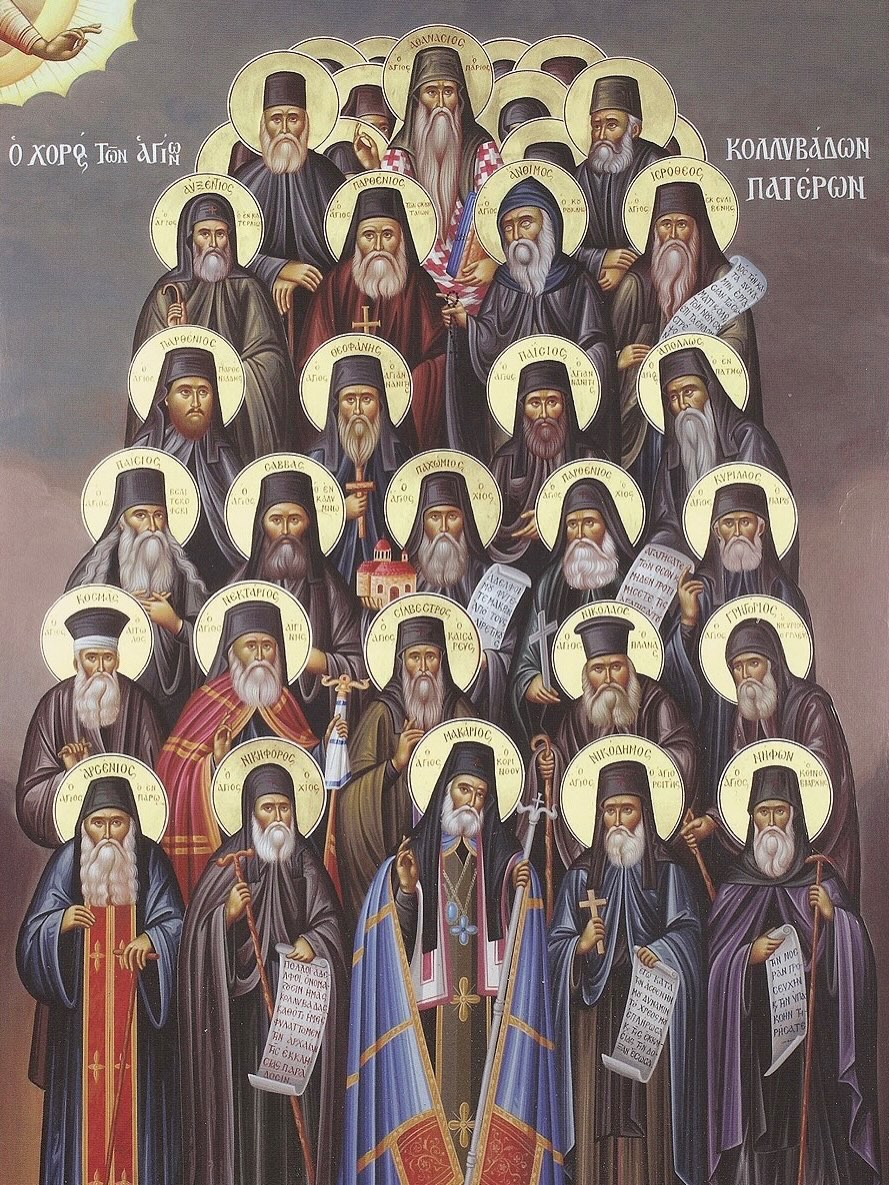
🔸 Bright Saturday - The Holy Kollyvades Fathers 🍚🔸
On the Saturday of Bright Week, we commemorate the Holy Fathers of the so-called “Kollyvades” movement. These monastics, primarily from Mount Athos, taught adherence to traditional Orthodox practices amid waves of westernization and secularism during the years of the Turkish occupation of Greece. In the mid-18th century, a debate arose on the Holy Mountain concerning memorial services for the departed, the frequency of Holy Communion, and other matters relating to the exact rules for observances within the Church.
The “Kollyvades” Fathers adhered to strict Orthodox tradition, and were opposed to unwarranted innovations regarding these matters. The starting-point for this controversy was the building of the Kyriakon at the Skete of Saint Anna in 1754. Debate arose as to whether the commemoration of the founders and benefactors should be held on Saturday or Sunday, and with what frequency the monks should receive Holy Communion.
In accordance with longstanding Orthodox tradition, the Kollyvades insisted that memorial services should not be performed on Sundays, the day of the Lord’s Resurrection, but on Saturday, the traditional day for commemoration of the dead, since Christ lay in the tomb on Saturday. These Fathers were mockingly dubbed ‘kollyvades’ after the kollyva (the sweetened boiled wheat served at memorial services).
The Kollyvades movement - led by Saints Makarios Notaras, Nikodemos the Hagiorite and Athanasios of Paros - strove for a rediscovery of Patristic theology and a liturgical life that included frequent communion, and a return to the precepts preached by the Hesychasts of the 14th century. Thus, the name of ‘kollyvas’ became a title of honor, and the movement was responsible for a beneficial regeneration of Orthodox tradition.
The movement came under assault by many at Mount Athos and elsewhere. In 1776, Fr Athanasios of Paros was even condemned as a heretic, defrocked, and excommunicated by Patriarch Sophronius II. In 1981, Patriarch Gabriel IV and the Holy Synod found the charges against Athanasius absurd and unfounded, and so he was restored to his priestly rank.

English
Siegfire รีทวีตแล้ว
Siegfire รีทวีตแล้ว