

Simen Munter
564 posts

Simen Munter
@SimenMunter
Large scale human process expert, Lean geek, loves digital innovation, Robotics, Big Data, AI and a passion for tractors.
Oslo, Norway เข้าร่วม Mayıs 2011
542 กำลังติดตาม1.2K ผู้ติดตาม

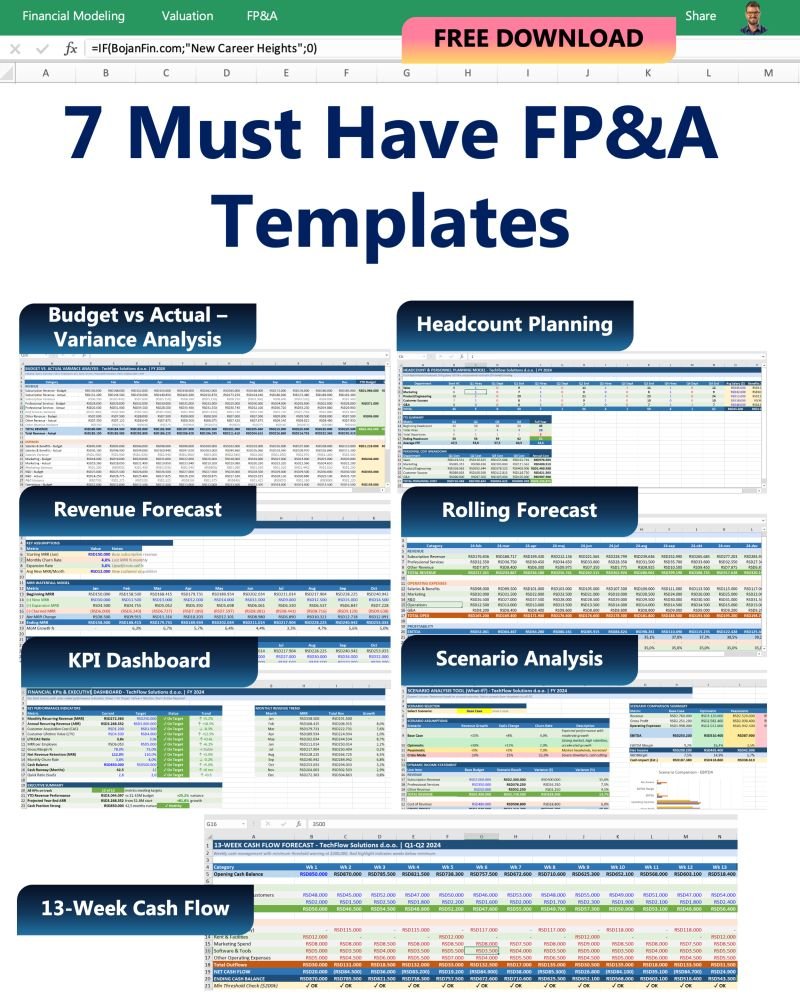
I recently audited an FP&A team that was working 70-hour weeks.
They were smart.
They were hardworking.
But their reporting was a mess.
Every month was a "fire drill."
Static spreadsheets.
Broken VLOOKUPs.
Manual variance comments that took 3 days to write.
When the CFO asked for a 12-month rolling forecast, the room went silent.
They didn’t have a model for it. They had to build it from scratch. Again.
This is the hidden cost of "manual" finance. We hire top talent, then we ask them to act like data entry clerks.
In my 15 years in finance, I’ve realized something: The difference between a "good" team and a "world-class" team isn't the software they buy.
It’s the standard of the templates they build.
You shouldn't be reinventing the wheel every Monday morning. There are 7 "Must-Have" templates that every FP&A professional needs to master.
From 3-Statement models to Driver-Based forecasting. If you have these ready, a "fire drill" becomes a 10-minute update.
Efficiency isn't about working harder. It’s about having the right infrastructure.
If you want these templates in Excel, just drop a comment and I’ll send it to you.
(Important: follow me so I can DM you!)
English
@BojanRadojici10 Would be great to see how you suggest using Claude for finance.
English
Most finance teams are only using 10% of Claude’s actual potential, that’s why I created this guide for you.
What’s inside?
We dive deep into the four essential Claude entry points:
• Claude Web - For high-level strategic analysis and document synthesis
• Claude in Excel - To automate formulas and data cleaning where you live.
• Claude Cowork - For seamless team collaboration on financial projects.
• Claude Code - For advanced automation and technical finance workflows.
Who is this for?
• FP&A Analysts: Streamline your reporting and variance analysis.
• Finance Managers: Speed up consolidation and team reviews.
• CFOs / VPs of Finance: Enhance strategic decision-making with rapid scenario modeling.
The Essentials:
→ 25 Detailed, Easy-to-Use Prompts: Copy-paste solutions for real-world finance tasks.
→ AI Safety for Finance Professionals: A dedicated section on maintaining data privacy and security.
→ From Analyst to CFO: Tailored workflows for every level of the finance hierarchy.
Here is what you can expect inside:
• Chapter 1: How to Use This Book
• Chapter 2: Getting Started — What You Need
• Chapter 3: AI Safety for Finance
• Chapter 4: Claude Web: Analysis & Narratives
• Chapter 5: Variance Analysis
• Chapter 6: Claude in Excel: Model Workflows
• Chapter 7: Reporting & Board Packs
• Chapter 8: Claude Cowork: Multi-File Automation
• Chapter 9: Building a CFO Agent with Claude Code
• Chapter 10: Implementing AI in Your FP&A Team
• Chapter 11: What Comes Next
The future of finance is "AI-augmented." Don't get left behind.
If you want this E-book, just drop a comment and I’ll send it to you.
(Important: follow me so I can DM you!)

English
360 years.
That is the collective Excel experience of my team of 30 people, in one room.
I have personally used Excel for 20 years. Since the very beginning.
We’ve spent decades "crushing it" when it comes to financial modeling.
We knew every shortcut. Every nested formula. We thought we had reached the peak of efficiency. (They are better then me, just to admit)
But I have something to tell you.
The game just changed.
In my opinion, we are witnessing the biggest innovation since Excel was first released. It’s not a new function or a Power BI update.
It’s Claude.
Specifically, Claude’s ability to build and manipulate Excel models.
For 40 years, the "manual labor" was the tax we paid.
Hardcoding formulas.
Spending hours formatting cells.
Manually linking sheets and building tables from scratch.
That era is over.
Claude can now handle the heavy lifting of building the structure, the logic, and the formatting in minutes.
But here is the part that really surprised me: It actually understands accounting.
It understands the relationship between a Balance Sheet and a Cash Flow statement. It understands how operating drivers flow into a P&L.
We aren't replacing our expertise. We are finally liberating it.
Instead of spending 80% of our time building the model, we spend 100% of our time analyzing the results.
If you want this Prompt and Excel model, just drop a comment and I’ll send it to you.
(Important: follow me so I can DM you!)

English
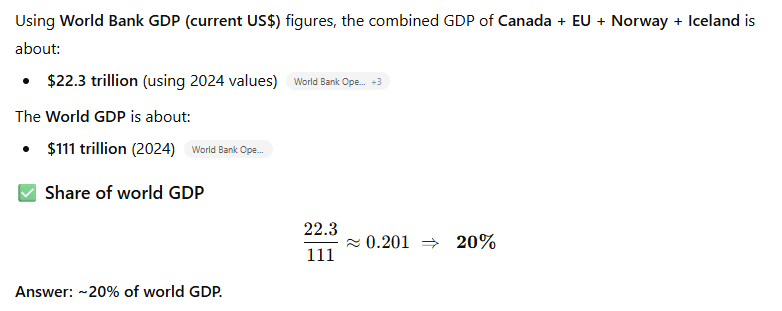

Imagine the headlines if it was Trump who said this, not Mr Davos
English
I think the largest strategic failure of EU over the last decades was its failure to include Turkey - mainly based on fears about a rapidly growing muslim population. This excellent piece by @JesusFerna7026 illustrate that Turkey is rapidly converting to the European average.
Jesús Fernández-Villaverde@JesusFerna7026
Yesterday, I argued that Turkey’s TFR was 1.48 in 2024, well below replacement level, and has been falling fast since 2014. Today, I want to highlight a few additional points. First: Turkey has the highest within-country TFR variance I’m aware of. In Şanlıurfa, TFR was 3.28 in 2024 (comparable to Kenya). In Bartın and Eskişehir, it was 1.12 (comparable to Spain). The ratio between them is nearly 3 to 1. By comparison, in the U.S., the highest TFR is in South Dakota (2.0), the lowest in Vermont (1.3), a ratio of 1.5. These differences in TFR reflect significant differences between Eastern and Western Turkey (in terms of economy, society, culture, and ethnicity) and will impact Turkey’s future. Yet even with those divides, TFR is falling everywhere. TFR in 2014: Şanlıurfa: 4.57. Bartın: 1.69. Eskişehir: 1.57. Even more striking is Şırnak. In 2000, it had a TFR of 7.06, comparable to Chad or Mali, and among the highest in the world. In 2024, it dropped to 2.62, roughly Turkey’s national level in 1998. That’s a 63% drop in 24 years. I struggle to find any other example in global demographic history of such a rapid decline in fertility. And remember: TFR is not the crude birth rate. TFR = expected births per woman, not per population. Migration flows don’t affect it (unless those who migrate are the most fertile per woman, which would increase TFRs in the destination provinces). As a whole, TFR in Southeast Anatolia went from 3.63 (2014) to 2.87 (2024). At this pace, the region will fall below replacement by 2030. In other words, Turkey’s national TFR still has much room to fall, as the east continues to decline from high levels, and we may soon see Turkey’s TFR fall below the EU average, something I wouldn’t have predicted even a decade ago. Second: Turkey is a textbook case of what @NezihGuner, @mattd_econ, and I have called “demographic contagion”: 📄 nber.org/papers/w29480 The fall in TFR in one region is strongly influenced by previous declines in adjacent regions, even controlling for income. In Turkey, if you map provincial TFRs over time, you see an unstoppable tidal wave moving eastward, rarely skipping or leaving provinces untouched. That dynamic, to me, is crucial. Third: there’s little evidence this drop in TFR is driven by timing. Yes, completed fertility may end up a bit higher than current TFR estimates, but that’s a second-order difference. Fourth (and finally): as in many countries, the 2024 UN WPP numbers for Turkey are hard to reconcile with national data. Turkish Statistical Institute: TFR = 1.48, Births = 937,559. UN WPP 2024: TFR = 1.85, Births = 1,196,000. The UN does not project Turkey’s TFR to fall to 1.48 at any point before 2100 (the end of its projections). And yet it already has, according to the Turkish Statistical Institute. This is a serious issue. Many rely on the 2024 UN WPP, but the numbers diverge massively from national statistical agencies and almost always in the same direction: UN projections show much higher TFRs and births. Why? I could discuss the demographic future of Turkey in much more detail, but I will stop here.
English
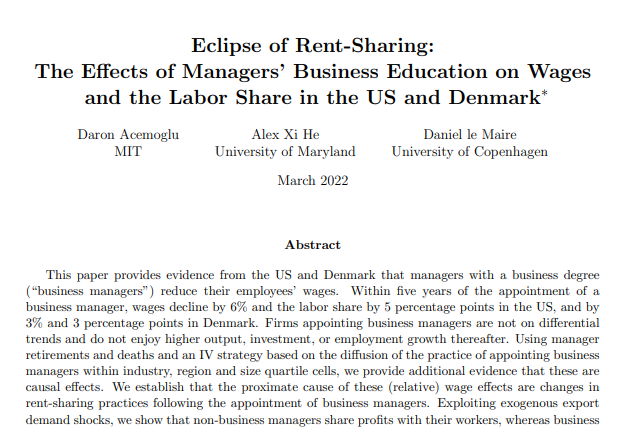
Interessant lesning - en av de nye nobelprisvinnerne i Økonomi har funnet ut at når et selskap ansetter økonomer så faller lønningene for de ansatte med 6% både i USA og Danmark. Kanskje også i Norge?
Norsk

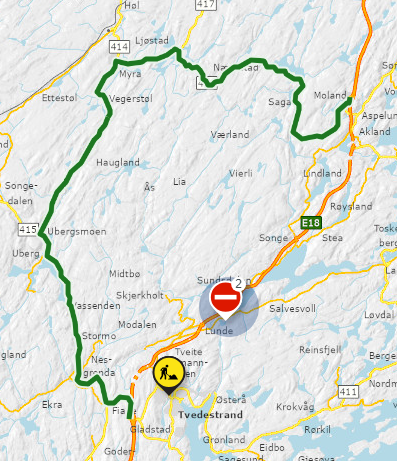
E18 Lundeslettene i Tvedestrand kommune:
Stengt for trafikk i begge retninger grunnet jordras.
Omkjøring for nordgående trafikk, er skiltet fra Grenstølkrysset, til Vegårdshei, via fylkesvei 415 og 414, og videre til Molandkrysset, via fylkesveg 416.
Se vedlegg.
Vegtrafikksentralen sør@VTS_sor
E18 Lundeslettene i Tvedestrand kommune: Stengt for trafikk i begge retninger grunnet jordras.
Norsk
Interessant at LO er ute og pusher kredittkort nå på sommeren - og å en måte som gjør det uklart om LO nå har begynt med kredittkort dispute handling. Eller har bare LO gitt helt frie hender til bankene de samarbeider med?

Norsk
Nei, ikke noe spesielt å se i bank næringen 😉
Hvordan blir bankene sterkere når de deler ut disse windfall gevinstene i utbytte?

Norsk
Dette er en av de mer oppløftende meldinger fra ECB på lang tid.
European Central Bank@ecb
Roses are red Violets are blue We're nearing our target And we will reach 2 #ValentinesDay
Norsk
@MacroAlf Switzerland is the riskiest? Switzerland? Makes no sense to look at debt levels in isolation without considering also the asset side of the balance sheet.
English

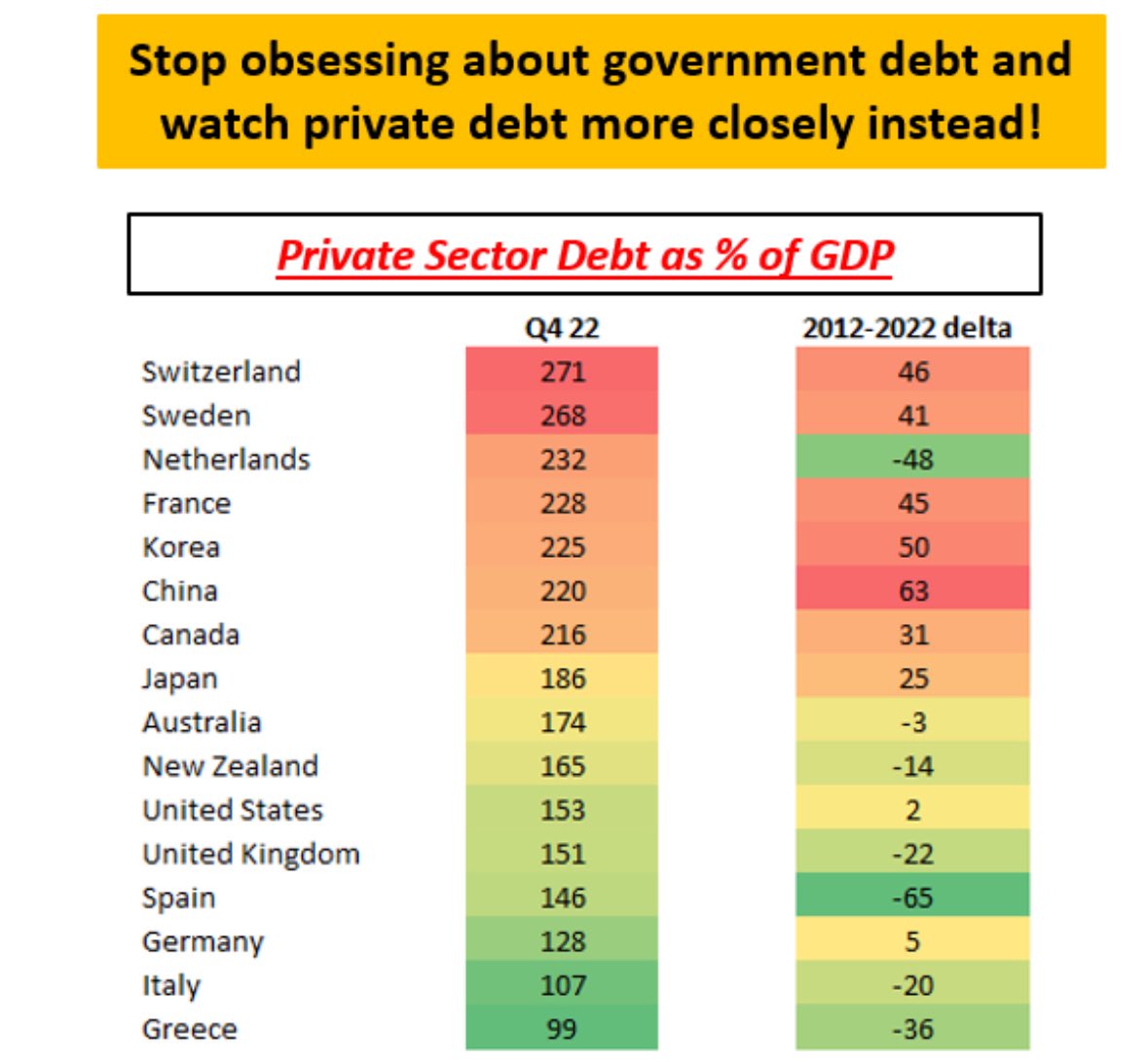
Veldig bra innlegg - hvorfor har det blitt normalisert å prisdiskriminere på det største finansielle instrumentet for de fleste? #huslån
Endre Jo Reite@privatokonom1
Stopp å henvise bankkunder til å prute på boligrenten, men rydd heller opp i prisdiskrimineringen hvor samme bank gir like kunder ulik rente - enten basert på om de pruter, eller basert på hvilke app de bruker linkedin.com/pulse/pruting-… via @LinkedIn
Norsk
@Michael_Balle TPS is a huge inspiration and one of the biggest inventions last century. Many are applying TPS thinking in services without reflecting on the difference in processing physical goods and processing data. Data can be reused and repurposed in ways which physical goods can’t.
English

@VidarHelgesen Det som er vanskelig å forstå er hvordan #energimeldingen vil fikse at vi har gått fra å ha nord Europas billigste til dyreste #strøm?

Norsk
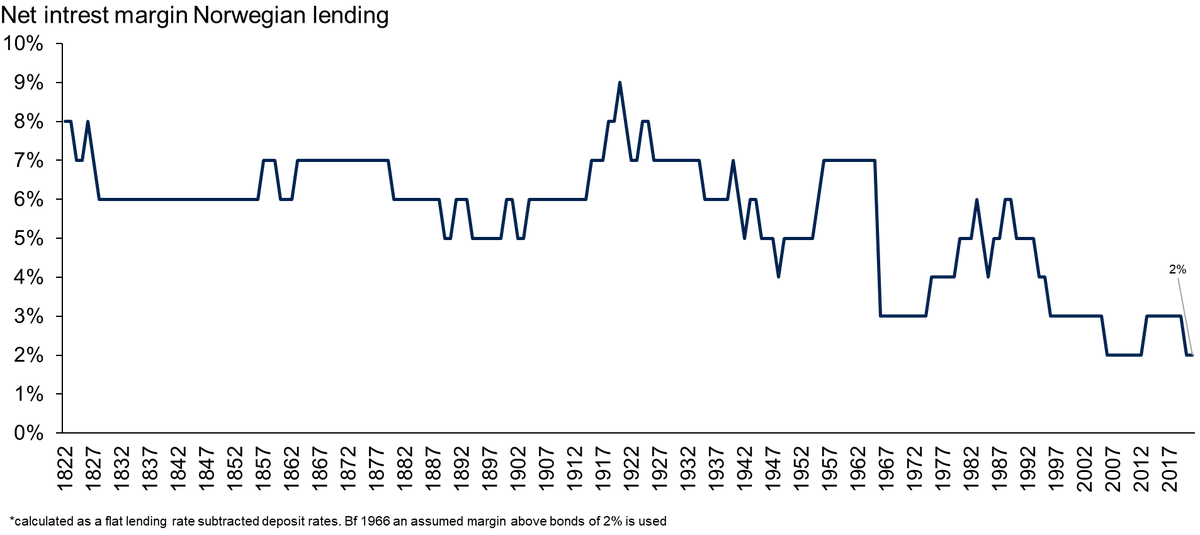
@ulf_huse Bra du startet i 1822 og stoppet i 2017 - ikke like bra story etter det.
Norsk

Really good #leadetship advice - independent leadership should leverage the skills of your leader, not only your co-workers. #lean #agile
Jean-Michel Lemieux@jmwind
Another common question I’m answering working with scaling tech companies is… Q. What’s the worst leadership advice you’ve heard? A. By far the worst is “Hire great people and get out of their way”. Let me explain… 🧵 (1/32)
English
This is completely right, the answer to complexity must not increase overall system complexity. #lean #SAF #agile
Gabrielle Benefield@gbenefield
If you need a heavyweight framework to manage complexity, perhaps you have too much complexity. Better bandaids won't stop the bleeding if you really need stitches.
English
@Giljen @singstaen @Statnett @NVE @EnergiNorge Prisen blir ikke satt av produsentene, i et fritt marked blir prisen satt av de konsumentene som er villig til å betale mest sk 'marginalprising'. Ved at vi har koblet sør Norge til UK så setter de marginalprisen også for oss.
Norsk

@singstaen @Statnett @NVE @EnergiNorge Skulle vi produsert mer strøm ville prisene vært høyere, da måtte jo norske kraftverk med høyere pris produsert istedenfor at vi importerte. Når vi er nettoimportør vil det være vannverdiene som setter norsk pris, og større produksjon ville krevd høyere pris. /1
Norsk

Merkelig lav strømproduksjon i Norge i dag. Har det blitt sånn at vannkraftprodusentene skrur igjen krana helt passelig for å melke norske strømkunder mest mulig? @Statnett @NVE @EnergiNorge
Norsk
@kariekas @EnergiNorge Helt enige med @kariekas - @energinorge må uttale seg mot bedre vitende - eller rett og slett at de ikke vet hva de snakker om. Dette er ikke et IT problem - det er en beslutningsproblem. Tid for å ta en pause og gjøre noe smartere. #nettleie #strømpris
Norsk

Det er rimelig pinlig, og ikke så klokt, av @EnergiNorge å gå så hardt ut mot Stortingsflertallet om utsettelse av nettleia. Det er tydelig helt mulig å utsette. Så skulle SV gjerne hatt denne beslutninga tidligere, men nå kom den. Da bør det følges opp lysekonsern.no/om-oss/nyhetsa…
Norsk