Brian Dougherty

1.3K posts

Brian Dougherty

Brian Dougherty

@SoilStudent

Consultant at Understanding Ag LLC. Life begins and ends in the soil. How we treat it in between is what matters.

Fitchburg, WI เข้าร่วม Temmuz 2016
1.4K กำลังติดตาม1.5K ผู้ติดตาม
Brian Dougherty รีทวีตแล้ว

Blake Vince
Blake Vince@blake_vince·
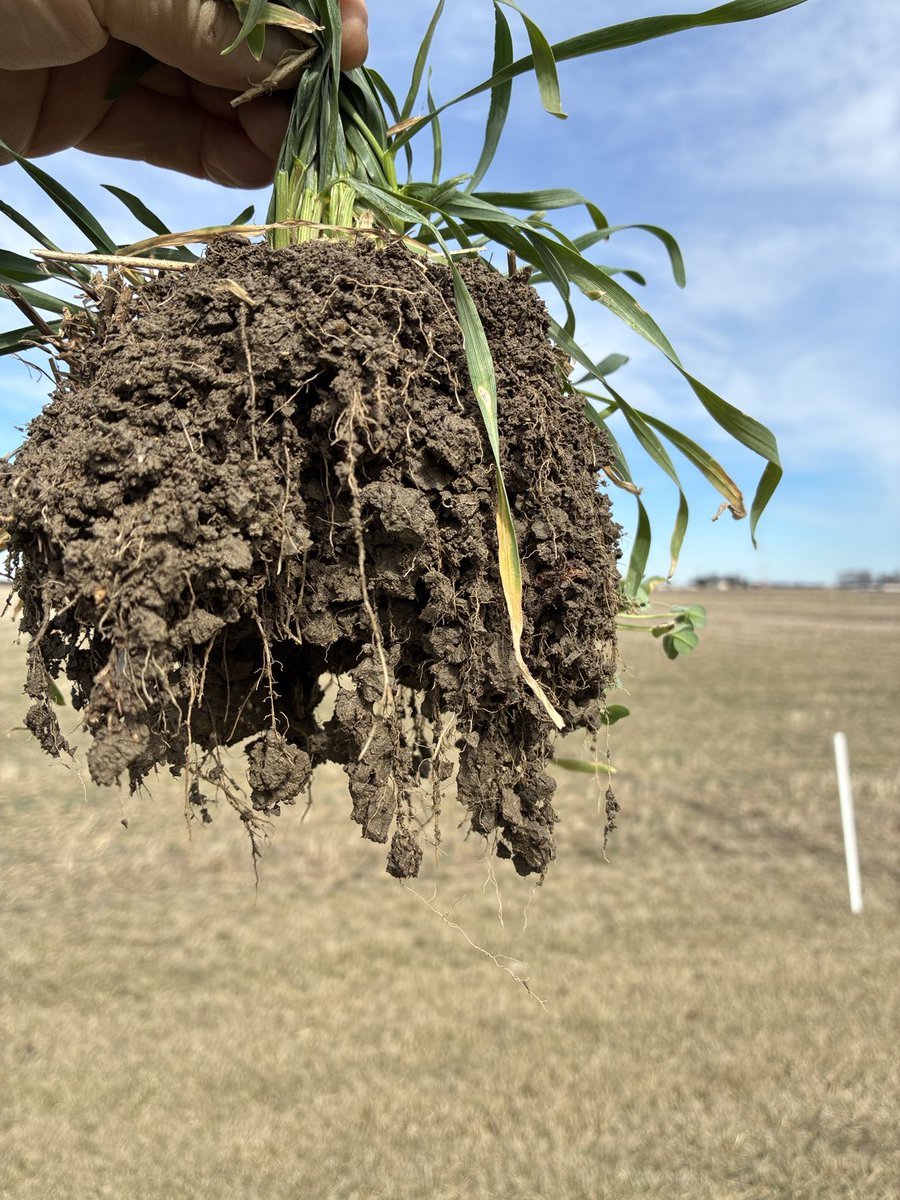
This is what well aggregated clay soil can look like. Zero tillage, living roots, diverse rotations, integration of ruminants with rotational grazing. The Devil is in the Detail. March 14, 2026 the last day of winter here in my corner of 🇨🇦
Blake Vince tweet media
English
18
27
268
8.7K
Brian Dougherty รีทวีตแล้ว
Clay Conry🎙
Clay Conry🎙@YPClayConry·
When we think of a generational farm we often think of multiple generations from the same family working the land over the course of centuries. Brian Dougherty and Sara Faivre are seeking to start a generational farm that is generational in it's founding.
English
0
1
4
195
Brian Dougherty รีทวีตแล้ว
Blake Hadley
Blake Hadley@blakeahadley·
Just Get pH Right? Does getting soil pH “right” lead to more nutrient availability? Yes, but also no. Life in the soil is not one dimensional. When considering pH, we should also be considering Eh (soil redox potential). There are management decisions that can influence both pH and Eh, and these two metrics should be thought of together. Redox Potential (Reduction and Oxidation) Reduction= gain of electrons (H+) Oxidation= loss of electrons or gain of Oxygen To make it easier to understand, I think about a plant oxidizing the atmosphere (adding oxygen) and the roots reducing (adding H+) to the soil. Reference the Pourbaix diagram I’ve attached to see how pH and Eh relate. There are more of these charts you can find to see where different nutrients may become available to the crop. You can find this by looking for Olivier Husson’s work. It makes sense why pH is considered and Eh is not. pH can actually be measured on a soil test. But even pH is not static even though we treat it like it is. Either way, there are management choices that will impact both. Here are some examples of an overly oxidized, reduced, and a more balanced system. Overly Oxidized: -frequent tillage -dry soil conditions, low residue cover -low OM/low WEOC -nitrate based fertility -low biological activity All results in high Eh and slightly alkaline conditions plus nutrient tie-ups Overly Reduced: -heavy clay w/ poor drainage -high OM and/ or manure inputs -compacted, anaerobic subsoil -waterlogged for extended periods of time All results in low Eh and more acidic conditions plus anaerobic microbial activity. Blueish gray looking soil that might smell rotten. A more balanced system: -living roots as much as possible -minimal tillage -mixed nitrogen sources -good biological activity -ground cover -aggregated soil All results in moderate Eh and slightly acidic to neutral pH. Leads to nutrient cycling and resilience.
Blake Hadley tweet mediaBlake Hadley tweet media
English
1
3
41
4.4K
Brian Dougherty
Brian Dougherty@SoilStudent·
There's still time to apply for Nuffield USA 2026 agricultural scholarships. Travel the world and connect with an amazing network while studying a topic of your choice Learn more and apply here:nuffieldusa.com/scholarships
Brian Dougherty tweet media
English
0
0
5
171
Blake Hadley
Blake Hadley@blakeahadley·
@cass_gilmore Yeah, I didn’t make this or really endorse it. It’s missing a lot. I know it will be used at meetings a lot, but it views the soil one dimensionally
English
1
0
1
44
Blake Hadley
Blake Hadley@blakeahadley·
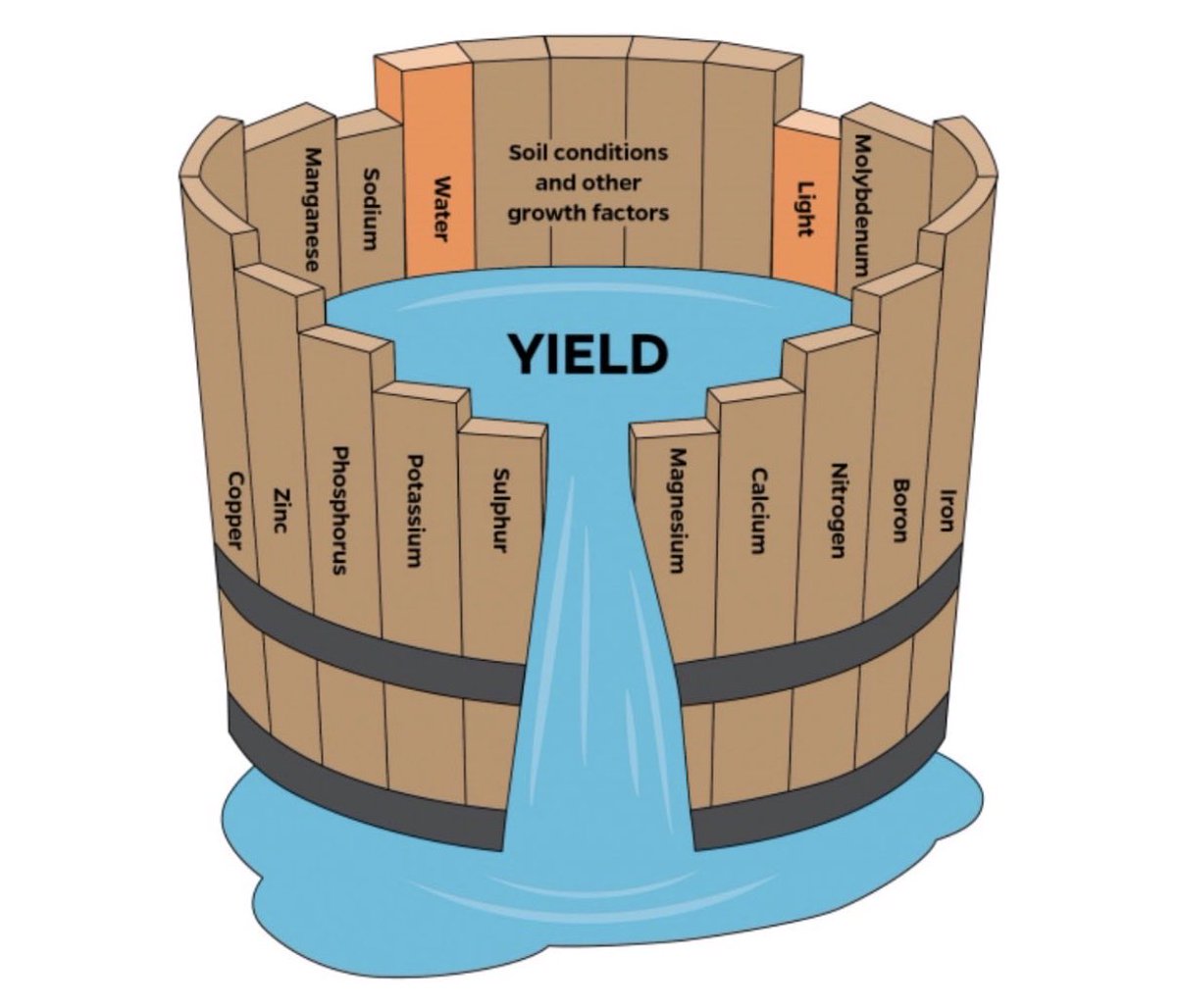
Law of the Minimum Growth/Yield/Success is controlled by the most limiting nutrient/factor. How many times will that be stated in meetings that are soon to start up? Often times nutrients are used as the example here. Liebig (the one whose name is attached to this law) admitted that chemistry alone could not increase yields. Adding NPK (you name the nutrient) will not ensure that this law of the minimum is taken care of. We have to understand just as much about plant physiology and soil structure as we do about chemistry. We should put equal weights to these. This should be considered when giving recommendations and when considering what recommendations to take.
Blake Hadley tweet media
English
3
1
16
1.4K
Brian Dougherty รีทวีตแล้ว
James Rebanks
James Rebanks@herdyshepherd1·
Been looking at the @AHDB_BeefLamb data on beef cow profitability The data is a little out of date now… But here’s a few takeaways…
English
7
13
80
13.1K
Brian Dougherty
Brian Dougherty@SoilStudent·
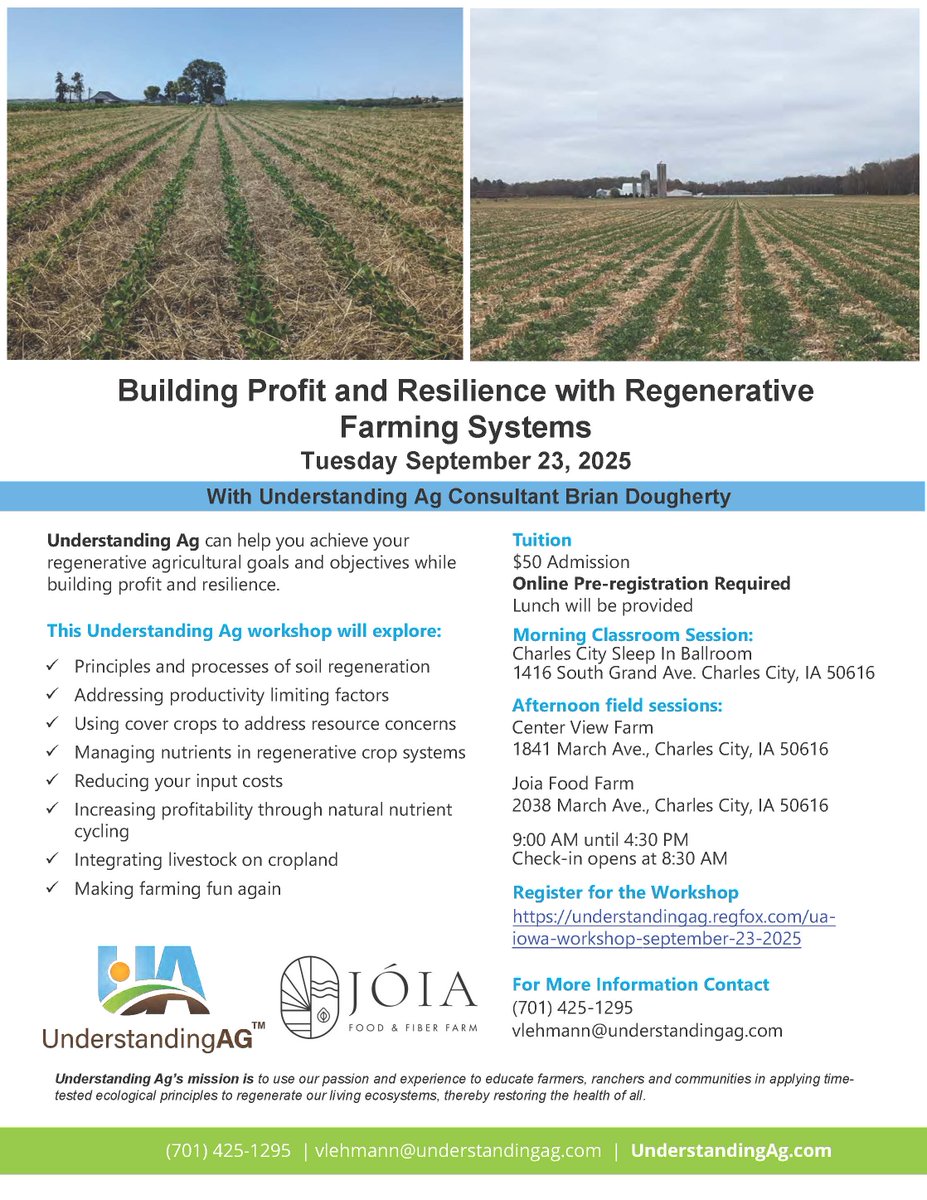
There's still time to register for the September 23rd workshop in Charles City IA where we will explore a different way to farm that builds profit and resilience while improving your land for the next generation. RSVP here: understandingag.regfox.com/ua-iowa-worksh…
Brian Dougherty tweet media
English
0
0
3
167
Brian Dougherty รีทวีตแล้ว
Understanding Ag
Understanding Ag@UnderstandingAg·
Join Understanding Ag Consultant Brian Dougherty in Charles City, IA, on September 23 for a hands-on workshop exploring soil regeneration, nutrient management, and profitable crop-livestock integration. understandingag.regfox.com/ua-iowa-worksh…
Understanding Ag tweet media
English
1
3
10
569
Brian Dougherty
Brian Dougherty@SoilStudent·
@SoilLorax Planted too shallow would be my guess. Tilled fluffy soil can settle after it's been planted and the resulting seed depth is less than it initially appears. You can still dig it up and find the seed and check.
English
1
0
2
137
Jodi DeJong-Hughes
Jodi DeJong-Hughes@SoilLorax·
Help! Field w/partial lodging issues over many years. #Corn that lodged didn't have brace roots. Why would some corn not grow brace roots? No pests or stalk issues. #Diskripped, cont corn, less issues in wheel tracks. Well fertilized. Tried multiple hybrids. #mncorn
Jodi DeJong-Hughes tweet media
English
8
0
10
1.8K
Brian Dougherty
Brian Dougherty@SoilStudent·
@StripTillFarmr Look up the definition of cide. 'Far more safe' = this pesticide might kill you slower than the old ones. These can be useful tools, but let's not pretend they're 'safe'. Soil, plant, animal, and human health cannot be disconnected.
English
0
0
0
27
Strip-Till Farmer
Strip-Till Farmer@StripTillFarmr·
Check out this post from X from an atmospheric science professor who argues that pesticides have become far more safe than in the past. However, there was some disagreements with him in the comments. What's your take? ow.ly/jFTo50Wx7ZZ #BestOfTheWeb
English
1
0
1
252
Brian Dougherty
Brian Dougherty@SoilStudent·
@kohima_io The conclusion is that people paying 1966 grazing rates who still haven't figured out how to make money are not going to adopt those technologies.
English
0
0
1
47
kohima.io 🌱
kohima.io 🌱@kohima_io·
Current BLM grazing fees haven't been updated since 1966. Most lessees barely break even. Meanwhile, tech companies are desperate for real carbon credits and paying $80-110/ton. The technology exists today: subsurface soil mapping (EarthOptics), virtual fencing (Herddog), soil microbiome optimization (Miraterra), biological soil treatments (Holganix), and nutrient density verification (Edacious) What if we treated land management like a systems engineering problem? Instead of extractive agriculture, regenerative systems optimize for carbon, nutrition, and profitability simultaneously. This isn't environmentalism, it's optimization theory applied to the largest underutilized asset in America. Make your own conclusions.
English
2
0
2
139
Brian Dougherty รีทวีตแล้ว
Understanding Ag
Understanding Ag@UnderstandingAg·
Hot, humid, and thriving: Keys to cattle comfort in summer When the summer sun blazes, are your cattle thriving or just surviving? In this timely blog, UA's Allen Williams, Ph.D. shares practical, proven strategies to help your herd beat the heat. understandingag.com/keys-to-cattle…
English
0
2
5
535
Brian Dougherty รีทวีตแล้ว
Strip-Till Farmer
Strip-Till Farmer@StripTillFarmr·
On this edition of the Strip-Till Farmer #podcast, brought to you by Environmental Tillage Systems (@SoilWarrior), Understanding Ag consultant Brian Dougherty gets to the root of compaction. ow.ly/5qay50WvgjO
English
0
1
3
269
Brian Dougherty
Brian Dougherty@SoilStudent·
@MasonClaude5 I know a few farmers in ND and SD that have done it and anecdotally it helps with IDC.
English
0
0
1
91
Mason Claude
Mason Claude@MasonClaude5·
@SoilStudent I like that! Oats drive pH lower as well. Would be a cool experiment to do next year
English
1
0
2
133
Mason Claude
Mason Claude@MasonClaude5·
Even with proactive steps, IDC can still show up What about reactive management strategies? Use siderophore bacteria early post They excrete organic acids that grab iron from soil particles and deliver it to the root It’s like putting a delivery driver in your rhizosphere
Mason Claude@MasonClaude5

Let’s talk management strategies Start with your corn N program Excess fall N in the soil fuels IDC next spring ✅ Split N applications ✅ Target a NUE of 0.6–0.8 ✅ Use Agronomy 365’s SET test to measure mineralization potential Right N rate = less spring nitrate = less IDC

English
1
0
13
2.7K