
Peisen Sun (孙培森)

101 posts

Peisen Sun (孙培森) banner
Peisen Sun (孙培森)

Peisen Sun (孙培森)

@Sun_python

🏫 School of Electronic Information, Xi'an Jiaotong University 🧬 Bioinformatics | Genomics | SC & Spatial Omics 👨🏻‍💻 Github: https://t.co/eFSCe28EYg

China เข้าร่วม Ocak 2018
266 กำลังติดตาม18 ผู้ติดตาม
ทวีตที่ปักหมุด
Peisen Sun (孙培森)
Peisen Sun (孙培森)@Sun_python·
STMiner, an algorithm specifically designed for complex #spatialtranscriptomic data can remove false-positive genes from the analysis results. We are deeply appreciative of @CellGenomics for affording us the platform to present this significant research outcome.
Peisen Sun (孙培森) tweet media
English
1
0
3
502
Peisen Sun (孙培森) รีทวีตแล้ว
Nature Methods
Nature Methods@naturemethods·
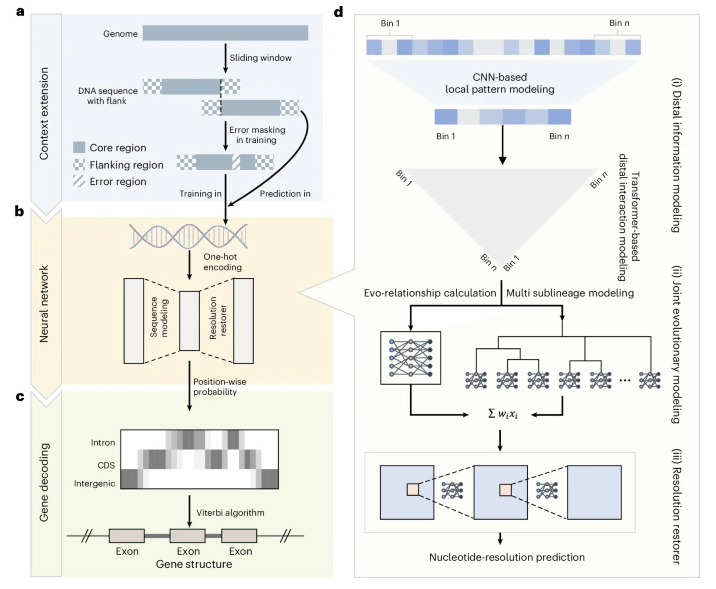
ANNEVO uses a deep learning approach to advance accurate and scalable ab initio gene annotation of evolutionarily diverse genomes. nature.com/articles/s4159…
Nature Methods tweet media
English
1
34
99
8.1K
Peisen Sun (孙培森) รีทวีตแล้ว
Fabian Theis
Fabian Theis@fabian_theis·
🚀 New in Communications Biology: Generative models of cell dynamics - from Neural ODEs to Flow Matching nature.com/articles/s4200… We discuss modeling single-cell dynamics beyond snapshots: from cont-time Neural ODEs to simulation-free flow matching for scalable pop modeling.
Fabian Theis tweet media
English
1
35
184
12.7K
Peisen Sun (孙培森)
Peisen Sun (孙培森)@Sun_python·
@qoder_ai_ide I gave QoderWork a try and found it excellent. However, the trial version's credit of 300 feels quite limited. Would it be possible to increase the credit a bit?
English
0
0
0
46
Qoder
Qoder@qoder_ai_ide·
Try QoderWork on anything: coding, research, writing, planning — whatever you’re doing already. Share what you attempted, what changed, and what you learned — even if it’s small. That’s how you become a QoFounder — through real work, not perfect demos.
GIF
English
3
3
9
839
Boxiang Liu
Boxiang Liu@boxiangliu·
Clever idea: embedding single-cell RNA-seq data on hyperspheres and hyperbolic spaces rather than Euclidean. The geometry better captures cell type hierarchies. Now published in @NatureComms. nature.com/articles/s4146…
English
3
0
6
289
Peisen Sun (孙培森) รีทวีตแล้ว
Fabian Theis
Fabian Theis@fabian_theis·
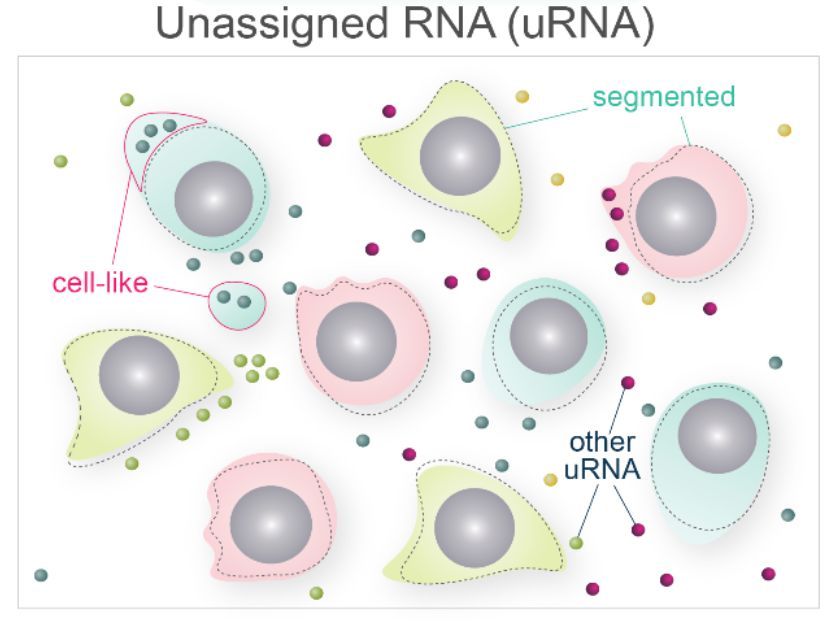
Excited to share new preprint led by Sergio Salas on “unassigned RNAs” in imaging-based spatial transcriptomics. Across technologies, 30-40% of transcripts fall outside segmentation, & many show structured, biologically meaningful extrasomatic patterns. 📄 biorxiv.org/content/10.648…
Fabian Theis tweet media
English
7
31
169
13.1K
Peisen Sun (孙培森) รีทวีตแล้ว
Niko McCarty.
Niko McCarty.@NikoMcCarty·
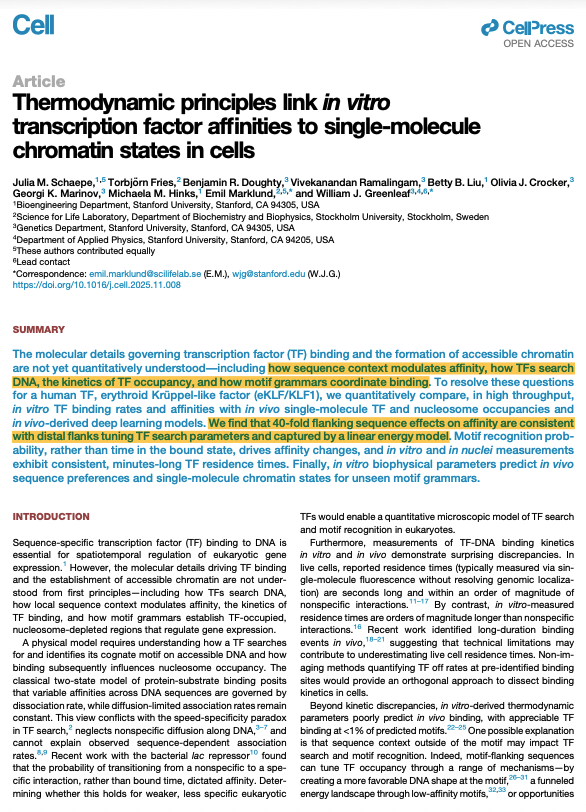
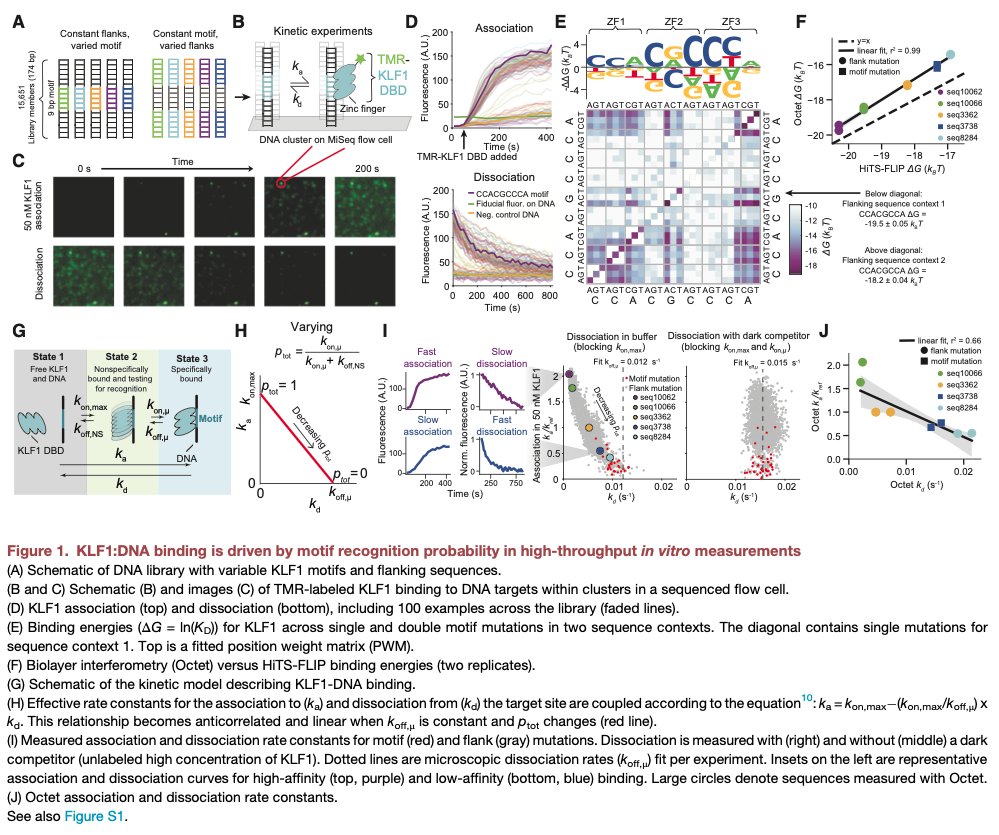
The model of gene expression taught in school is highly misleading! Transcription factors are proteins that bind to DNA and then help repress, or activate, the expression of genes. Cells have hundreds of different types of transcription factors, each tuned to regulate different genes based on short snippets of DNA located near those genes. The basic model, taught in school, says that these transcription factor proteins float around the cell and, when they bump into a DNA sequence, either latch onto it strongly (CORRECT SITE!) or fall off quickly (WRONG SITE) and keep searching. All the other DNA in a cell is basically abstracted away as unimportant or irrelevant; mere background noise. But again, this model is naive! And a new paper, published in Cell, beautifully shows how the sequences SURROUNDING a transcription factor's binding site also matter a great deal. This won't be surprising to many biologists, as "cracks" in the standard two-state model began emerging decades(?) ago. Biologists have tagged transcription factors with fluorescent tags and then watched them move around living cells. And they have noticed that when transcription factors land in a "wrong" location in the genome, they skip or hop to a nearby location and repeat this until finally connecting with the "correct" sequence. So in other words, there are actually three states that a transcription factor can exist in: free-floating, "searching", or "bound." (More technically, transcription factors first do a 3D search, then latch onto DNA and do a 1D search to find the correct location.) For this new paper, though, scientists exhaustively quantified *how* the sequences flanking a transcription factor binding site influence the search of the protein. They did a huge in vitro experiment, wherein they placed a specific transcription factor with a known binding site, called KLF1, in a huge library of 11,812 different DNA sequences. These sequences had mutated "core" binding sites and variations in the flanking sequences. They also prepared negative controls. Then, these researchers measured the binding kinetics of KLF1 with each sequence to understand which bases in the flanking sites impact the 1D search. What they found is that KLF1 has a basically flat disocciation rate from its core sequence, but that the PROBABILITY that it finds this sequence depends a lot on the surrounding context. Even mutations located dozens of bases away from the core site matter a lot, either pushing KLF1 to "hop" faster to find the site, or "trapping" KLF1 and slowing down its search. These flanking sequences can cause up to a 40-fold variation in the affinity of a transcription factor for its target site! This is just one small part of the paper, though, so I encourage anyone interested to read the whole thing. It is challenging throughout.
Niko McCarty. tweet mediaNiko McCarty. tweet media
English
19
240
1.2K
126.6K
Peisen Sun (孙培森) รีทวีตแล้ว
Mr Panda
Mr Panda@PandaTalk8·
1989年的杨乐昆在他的电脑上演示了卷神经网络的demo。
中文
50
141
1.4K
375.3K
Peisen Sun (孙培森)
Peisen Sun (孙培森)@Sun_python·
My poster for #ISMB is ready! 🙌🙌🙌 Analyzing Complex Spatial Omics Data Based on Optimal Transport💪💪💪 #ISCB #ECCB
Peisen Sun (孙培森) tweet media
English
1
0
1
112
Peisen Sun (孙培森)
Peisen Sun (孙培森)@Sun_python·
Utilizing STMiner to analyze complex spatial transcriptomics data, including identifying SVG and their spatial patterns. STMiner also enables to specify gene sets of interest and evaluate which genes share identical spatial expression patterns with them. star-protocols.cell.com/protocols/4224
English
2
0
1
113
Peisen Sun (孙培森) รีทวีตแล้ว
Marko Denic
Marko Denic@denicmarko·
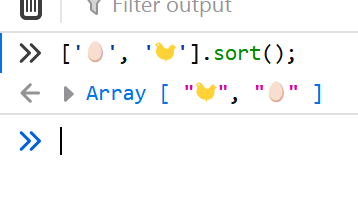
Mystery Solved!
Marko Denic tweet media
English
203
10.2K
36.6K
0
Peisen Sun (孙培森)
Peisen Sun (孙培森)@Sun_python·
@Jianfeng_Sunny Most studies have focused on downstream analyses, but addressing the biases introduced during the UMI step is indeed noteworthy. Congratulations!😀
English
0
0
0
10
Peisen Sun (孙培森)
Peisen Sun (孙培森)@Sun_python·
The Tang Dynasty (618–907 AD) female figurines in the Xi'an Museum feature plump figures and serene expressions, embodying the mainstream aesthetic ideals of that historical period. #AncientChina #TangDynasty
Peisen Sun (孙培森) tweet mediaPeisen Sun (孙培森) tweet media
English
0
0
0
58
Peisen Sun (孙培森) รีทวีตแล้ว
ᒍOᕼᗩᑎ ᗪᑌᑕᕼEᑎE
Popular methods like UMAP & t-SNE are stochastic and distort data structure. Bonsai - a novel method - builds trees to relate high-dimensional objects, accounting for measurement noise. biorxiv.org/content/10.110…
ᒍOᕼᗩᑎ ᗪᑌᑕᕼEᑎE tweet media
English
16
300
1.7K
133.1K