
ทวีตที่ปักหมุด
Tony Fich
1.1K posts

Tony Fich
@TonyFich
Expert in WEB 3.0 & DeFi & Blockchain | Founder & CEO of Fanspay
Dubai, UAE เข้าร่วม Aralık 2011
116 กำลังติดตาม2K ผู้ติดตาม
Tony Fich รีทวีตแล้ว

In the shadow of the Trinary, who will you become? EVE Frontier: a space survival simulation, revealed today.
Watch the Teaser Trailer now: bit.ly/3Xl5Rmi
Learn more and register for the PHASE IV playtest (starts Sept 27) evefrontier.com
#EVEFrontier
English

Tony Fich รีทวีตแล้ว

Midjourney version 1 was released in February 2022.
This is what it looked like.
A comparison from v1 to v6🧵

English

Dubai, United Arab Emirates 🇦🇪 English
Tony Fich รีทวีตแล้ว

Cruise.fi: A New Pioneer in Liquidation-Free Borrowing
Here’s a controversial opinion: liquidations wreck DeFi.
The way the system is designed today, sharp moves down in pricing cause “liquidation cascades” when underwater DeFi borrowers are forced to sell the bottom. This causes severe volatility, which scares away a lot of outside investment. It drives network congestion during times of panic, and costs borrowers inordinate amounts of money in fees. Ultimately, DeFi would be a better place if these things didn’t happen.
@cruisefi_gm's mission is to solve these problems with a new liquidation-free borrowing protocol.
The basic concept: Instead of getting totally nuked when collateral price falls below an arbitrary level, positions are slowly rehabilitated with a new type of yield derivative. Lenders - who would ordinarily wind up losing their lent funds to devalued collateral - keep their stable position, and receive heightened yield from collateral being gradually harvested, rather than sold off in a fire sale.
It’s a novel design that we’ll explain below. If it works, gone are the days of constantly monitoring your borrowing positions and limiting yourself to a fraction of your potential LTV.
So let’s find out: how is it possible to get rid of liquidations in DeFi?
The Mechanics of Liquidation-Free Borrowing
Under the traditional model of borrower liquidation, users are subject to cataclysmic loss whenever the price falls below their liquidation price. The basic concept of Cruise.fi is to replace this with a system where collateral is sold off gradually when LTV gets too high, buying time to rehabilitate underwater positions.
Here’s how it works:
For Borrowers:
Borrowers deposit ETH collateral and a native stablecoin, USDx, is minted against it. USDx liquidity pools are available on Uniswap, where they can swap for USDC. This is essentially like borrowing USDC against ETH, though the use of USDx has a few benefits, as we’ll see.
Ordinarily, these ETH collateralized loans would be given a liquidation level, and borrowers would lose their ETH if the price falls below it. Instead, every position has a threshold price below which their collateral begins to get sold off slowly. This gives borrowers plenty of time to add collateral to their position, repay some of their loan, or simply wait for price to recover.
For Lenders:
“Lenders” are actually liquidity providers in the Uniswap USDC-USDx pools. They receive swap fees from the pools, then go on to lock their LP tokens on the protocol for harvest fees and staked ETH yield from the borrowers’ collateral.
Now, obviously in a liquidation-free system, there will be times when lenders have outstanding positions that are under-collateralized. This is accounted for in a few different ways. First, when borrowers go underwater, staking yield continues to be paid to lenders to establish a baseline payment. Second, when LTV gets higher than 100%, lenders are issued a novel type of yield derivative called a Price Recovery Token (PRT), which we’ll describe in detail below.
Both of these mechanisms create advantages for USDC-USDx LPs that account for the risks they take. How exactly do they work, though?
Let’s go into a bit more detail to clarify a bit about PRTs and the harvesting mechanism by which the USDx peg is maintained.
Price Recovery Tokens (PRTs): A Novel DeFi Asset
PRTs are yield derivatives that entitle the owner to their share of collateral when it returns to a certain price. You can think of them as a quasi-call option, with a strike price slightly above your collateral’s liquidation price. If that’s too confusing, consider the following example:
A borrower uses stETH as a collateral asset, and their liquidation price is $1400. Suddenly, some FUD circulates, causing the price to drop below $1400 in a matter of minutes.
Instead of losing their entire collateral position, the borrower’s collateral remains frozen in the protocol and the lender receives PRTs that are redeemable if/when the price recovers back above the liquidation price.
In the meantime, the lender will still receive the yield from the borrower’s frozen stETH.
Based on crypto’s history, it’s safe to say that “blue chip” assets like BTC and ETH will eventually recover from their infamous flash-crashes and even make new highs. In fact, based on the ~800 liquidations that have occurred on Liquity, ~70% subsequently bounce back to their liquidation price plus an additional 50%!
Thus, Cruise.fi’s anti-liquidation mechanism can essentially save a user from forfeiting more lent assets than the collateral is worth. Instead, they receive a temporary “IOU” in the form of PRTs. The PRTs can then be exchanged back for the ETH collateral later on.
Continuing the above example, even in a more bearish scenario where the price of ETH falls below $1400 and stays there for months, the lender can sell their PRTs in a secondary market.
That’s right – PRTs will also be traded on the open market.
With capital efficiency top-of-mind, it makes no sense for collateral to sit in a frozen state. So, if the holder needs the capital before the price fully rebounds, they can simply sell their PRTs, and at least recover a fraction of the value back.
Additionally, this creates an entirely new market which enables speculation on would-be liquidated positions. For example, say an ETH position gets frozen at $2500 and the price falls to $1000. At that point, the PRTs would be extremely cheap, as ETH would need to rally by 150% for them to be redeemable at ETH-value. However, someone who wants to take advantage of the dip would likely be interested in buying PRTs, which they’d ideally be able to flip for a profit long before ETH rallies all the way back up to $2500. And because of their option-like qualities, the return on PRTs would be “leveraged” compared to the return spot ETH.
Harvesting: Another Method of Preventing Sudden Liquidation
Like PRTs, “harvesting” is another method of preventing sudden liquidation of collateral positions. Instead of risking a 100% loss of their collateral position, small amounts of borrower collateral are sold through harvesting. This compensates lenders for risky positions with high LTV, and but it also gives borrowers time to respond without losing all their ETH.
You can think of the harvest “yield” as an opposing force of the stETH yield. If the harvest yield increases above the stETH yield, it results in some decay in borrowers’ collateral position. When more funds are required to keep the peg of USDx, the harvest yield and PRT issuance will increase.
However, collateral that’s already underwater will be immune from any harvesting above the stETH yield, to prevent already-underwater collateral from being reduced even further. Additionally, borrowers with higher LTVs will face higher harvest rates to reduce eating into the collateral of lower-risk borrowers who have lower LTVs. So, the “higher reward” of taking on a higher LTV is met with the “higher risk” of seeing some collateral being harvested to support lenders and USDx.
In summary, harvesting and PRTs perform two primary functions in Cruise: mitigate bad debt and keep USDx pegged to $1.
The Future for Cruise.Fi
By doing away with liquidations, Cruise.fi has the potential to totally change the risk profile of DeFi borrowing. It seems better for borrowers, and frankly for lenders as well.
Considering that “lending” takes the form of an LP position, most of them would probably prefer to receive heightened yield on locked stables rather than having their position closed out. On most platforms, liquidation fees go to the protocol rather than the lenders, so it’s not like liquidation mechanisms are overwhelmingly beneficial to them in the first place.
It’s still very early in the game for Cruise.fi, so stay tuned because we expect to see a lot of news in the near future.
Cruise.fi will soon be launching a private beta for buying and selling PRT (Price Recovery Tokens). PRTs offer a unique way to get paid to HODL. Space will only be limited to 2000 users, so make sure to sign up for their waitlist while space lasts (cruise.fi/?ref=frogs).
If all goes according to plans, maybe we can say goodbye to liquidations once and for all.
Discord: discord.gg/3hjNM5R7d6
Twitter: x.com/cruisefi_gm
Mirror: mirror.xyz/cruisefi.eth/x…
Waitlist: cruise.fi/?ref=frogs

English
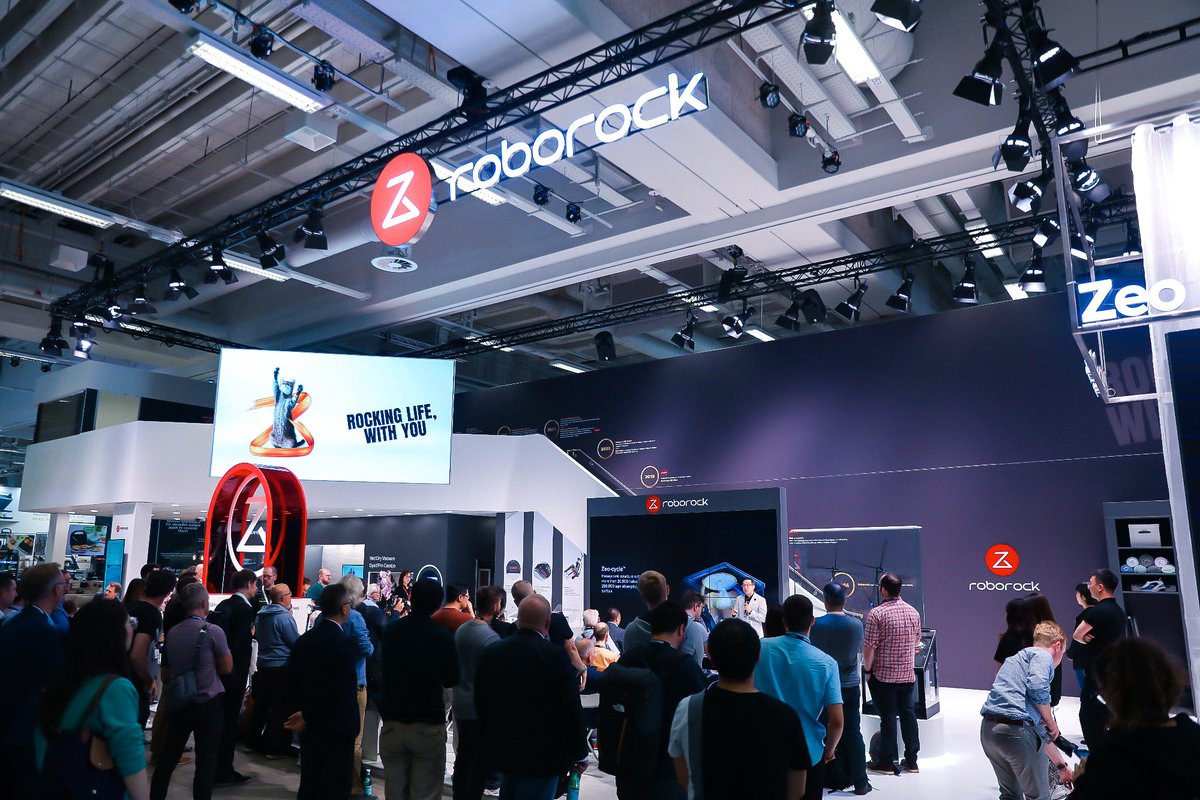
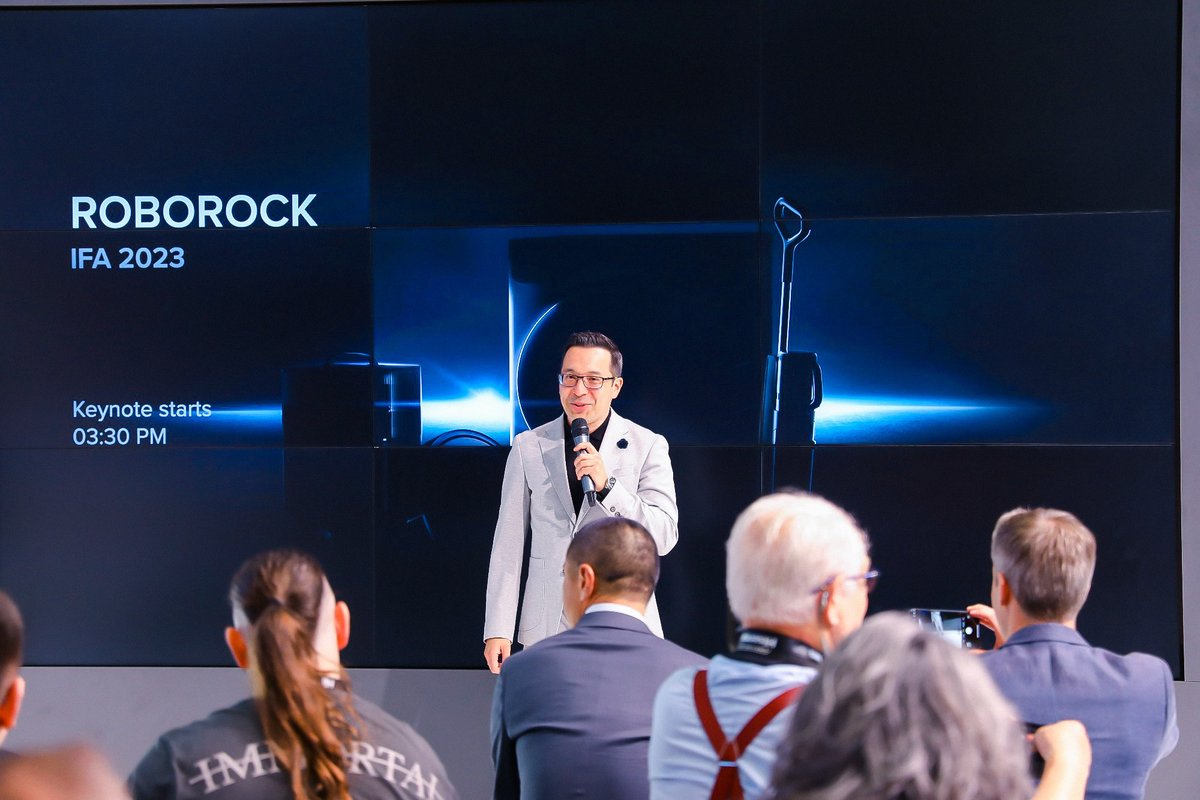
@roborockglobal @Ifa Hello! When Roborock S8 Pro Ultra be able in UAE on amazon?
English


Tony Fich รีทวีตแล้ว

@alexdolbun @pavelprata @in5dubai We are Seed stage B2B SaaS. At @in5dubai accelerator. Proofed our SaaS and have partnership with @Microsoft and support by @GoogleStartups
English
The Ultimate SEO Leverage and Digital Footprint Amplification Tool for Agencies, Marketing Teams, and SEO Specialists

English
@BuildOnBase 10/10: 🌟 Conclusion: Base blockchain is shaping up to be a significant player in the Ethereum L2 space, offering a blend of security, low fees, and scalability. Keep an eye on this one! 👀
English
@BuildOnBase 9/10: 🔄 Interoperability: Base enables easy onramping of users and assets from Ethereum L1, Coinbase, and other interoperable chains. #Interoperability
English
1/10 🧵: Let's talk about #BaseBlockchain, an Ethereum L2 solution designed to bring the next billion users onchain. @BuildOnBase is incubated within Coinbase and has some fascinating features. 🚀

English