ChungLab

52 posts

ChungLab banner
ChungLab

ChungLab

@TranslatingRNA

RNA, Translation control, Host:pathogen interaction, ThermoSwitches, microRNA, viruses and bacteria @Cambridge_Uni, @CamPathology
Cambridge, United Kingdom เข้าร่วม Aralık 2020
184 กำลังติดตาม271 ผู้ติดตาม
ChungLab
ChungLab@TranslatingRNA·
Funded 4 year #PhD opportunity! Explore how bacteria control protein synthesis in unexpected ways 🧬🦠 Start: January 2026| location UofCambridge. Apply now: findaphd.com/phds/project/f…
English
0
1
1
270
ChungLab
ChungLab@TranslatingRNA·
Moving to bcy23 @translatingrna.bsky.social please contact me there :-)
English
0
0
0
49
ChungLab รีทวีตแล้ว
Owain James Bryant
Owain James Bryant@OJ_Bryant·
Check out our latest paper where we identify a new C-terminal export signal in flagellar Type III secretion substrates which provides further evidence against a subunit capture/chain mechanism for flagellar assembly. doi.org/10.1128/mbio.0…
English
0
4
10
973
ChungLab รีทวีตแล้ว
Cambridge Biochemistry
Cambridge Biochemistry@CamBiochem·
We are very pleased to invite applications for an exciting new position of Professor of Synthetic Biology or Engineering Biology. Come and work with us and our @EngBioIRC group to build bridges across @Cambridge_Uni. More details here: jobs.cam.ac.uk/job/43556/
English
0
31
54
29.5K
ChungLab รีทวีตแล้ว
Dr Hannah Burgess
Dr Hannah Burgess@HannahmBurgess·
I'm recruiting a NIH funded postdoc to investigate circRNAs in virus infection! RTs appreciated! jobs.ac.uk/job/CSK115/res…
English
0
37
36
0
ChungLab
ChungLab@TranslatingRNA·
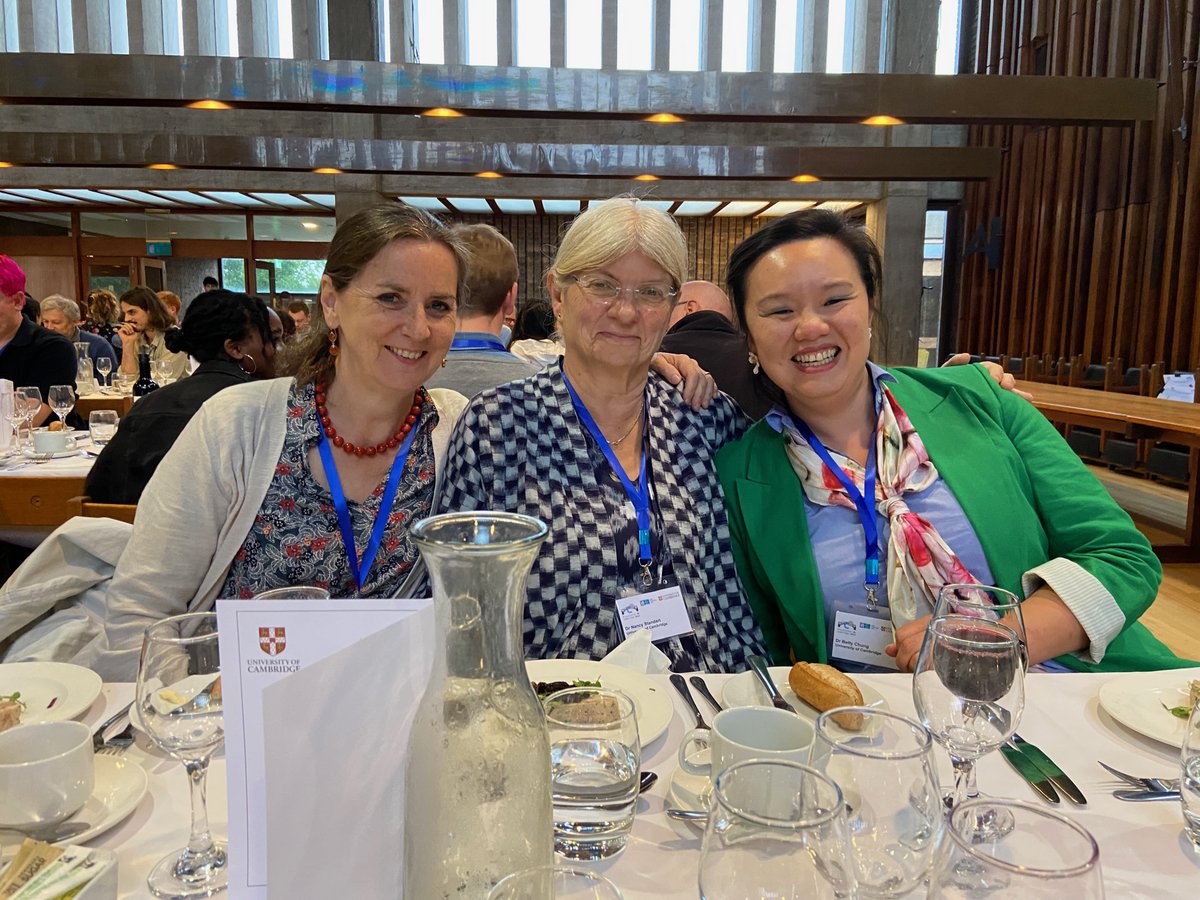
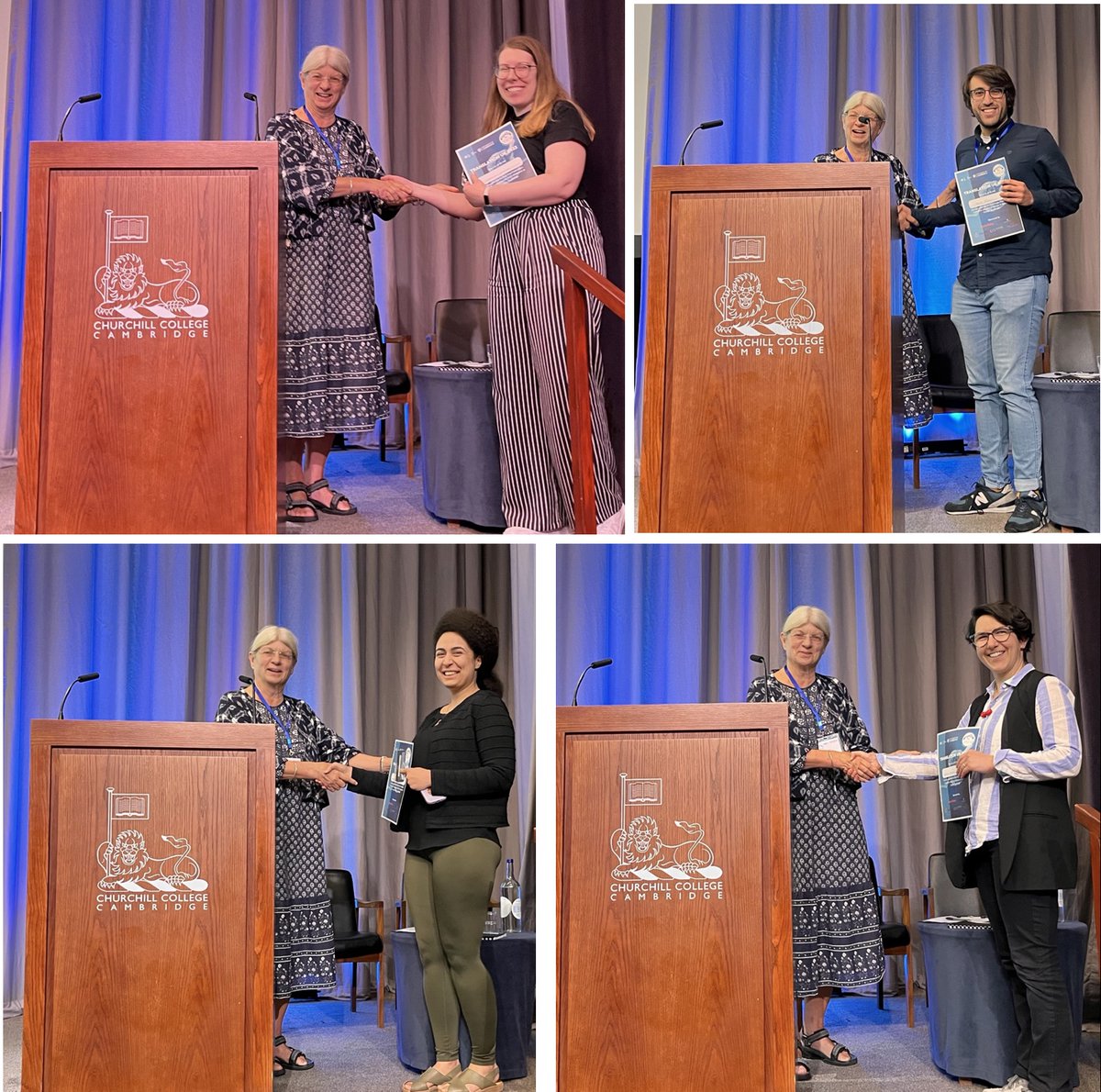
#TUK23 Prize winners presented by our very dear TUK veteran Nancy Standart! Poster prize ECR Chiara Giacomelli, Poster prize PhD Karim Elbouri, Talk prize 1 Farnex Mansouri-Noori, Talk prize 2 Federica Capraro!
ChungLab tweet media
HT
1
1
3
824
ChungLab รีทวีตแล้ว
Niko McCarty.
Niko McCarty.@NikoMcCarty·
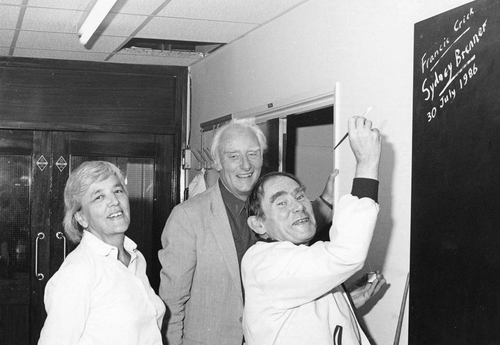
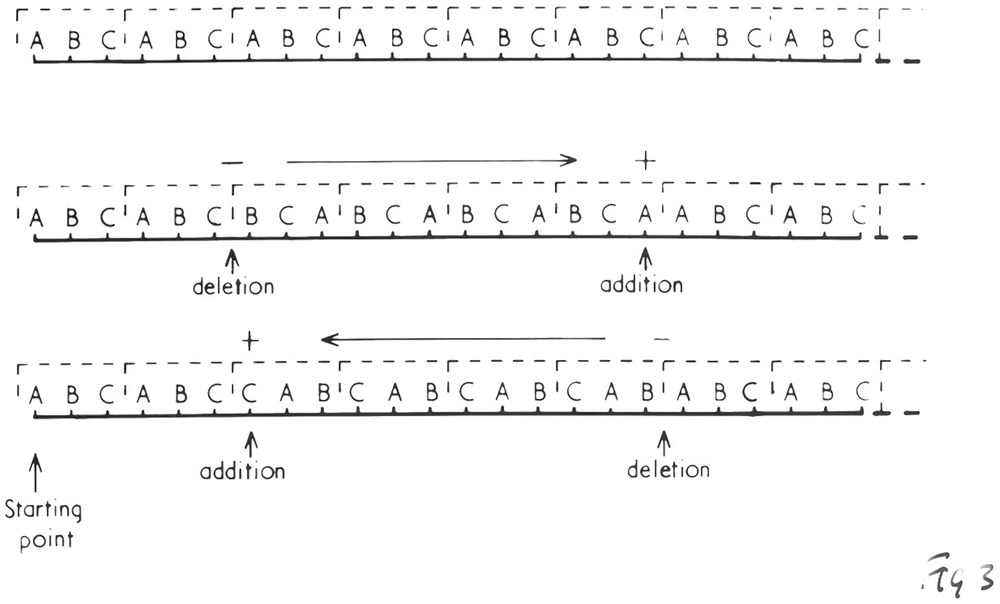
Day 30 of great biology papers. 🎆The final day.🎆 "General Nature of the Genetic Code for Proteins," by F. Crick, S. Brenner, L. Barnett & R.J. Watts-Tobin (1961). This paper is, in my opinion, the most impressive in the history of molecular biology. Here's why... **** When the structure of DNA was solved in 1953, molecular biology was a relatively barren landscape. By that, I mean that messenger RNA had not yet been discovered, nobody was quite sure whether there was any link between DNA and proteins, and there were zero technologies to isolate a gene, let alone sequence one. And yet, just 8 years after that seminal paper, these four scientists used a simple experiment — and fragmentary evidence — to correctly determine that... 1. Each amino acid in a protein is encoded by a triplet code... 2. The letters in this code do not overlap (e.g. AUGACC is read by the ribosome as 'AUG' and 'ACC,' rather than 'AUG,' 'UGA,' 'GAC' etc.)... 3. There is a start codon. Again, they discovered all of these things in the absence of tools to sequence DNA, or to compare a DNA sequence with a protein's amino acids. But before I tell you how they did it, I want to set the scene. The year 1961 was, essentially, the annus mirabilis for molecular biology: - In May, two separate groups reported that they had isolated and proved the existence of messenger RNA, and they postulated that it probably carried information from DNA to proteins. - Jacob and Monod argued that there are two types of genes: Those that encode proteins, and others that regulate gene expression. - Marshall Nirenberg showed that a chain of RNA containing the letters "UUUUUUUUUUUU" encoded a protein filled with phenylalanine amino acids, thus demonstrating a profound, initial insight into the genetic code. (See the excellent review by Matthew Cobb: onlinelibrary.wiley.com/doi/full/10.10…) With these prior experiments in mind, Brenner, Barnett, Crick, and Watts-Tobin set out to understand how, exactly, the genetic code works. Their experiments began with a bacteriophage that infects bacteria, called T4. When these bacteriophage are doused with mutagens, and their genetic material is altered, they sometimes lose their ability to infect bacteria. Now, there is also a dye, called acridine, that causes single nucleotides to be added or deleted from a piece of DNA. This is quite important, because most other mutagens just randomly change sections of DNA. But acridine always adds or removes just one nucleotide. So Crick put these two things together and had a brilliant idea. He took a T4 bacteriophage, exposed it to acridine, and found that it had lost its ability to infect E. coli. This strain was called FC0 — Francis Crick Zero. But then, he (and the others) used acridine to add or remove more letters in the bacteriophage DNA until it regained its ability to infect bacteria. If they added one base and then removed one base, the phage infected the bacteria. If they added two bases, the phage did not infect bacteria. If they added three bases, the phage infected bacteria. From these observations, they argued that the genetic code must use triplets to encode each amino acid. It was a brilliant takeaway, based on partial experimental evidence. From the paper: "The simplest postulate to make is that the shift of the reading frame produces some triplets the reading of which is ‘unacceptable’; for example, they may be ‘nonsense’, or stand for ‘end the chain’, or be unacceptable in some other way to the complications of protein structure." Even though the "combination of mutations strongly suggested that the code was based on units of three bases, the experiments could not prove that to be the case – a code using groups of six bases was consistent with the results," writes Cobb in his review. "This, however, would raise all sorts of problems by massively increasing the number of either meaningless or degenerate sequences (there would be 4096 possible combinations of bases, rather than a mere 64). As Crick later put it, this was 'hardly likely to be taken seriously.'" In his classic book on the history of molecular biology, The Eighth Day of Creation, Horace Judson called this experiment, "a classic of intellectual clarity, precision and rigour." And I agree. Thanks for reading this series! Paper: nature.com/articles/19212… Full text: labs.bio.unc.edu/Goldstein/1/Cr…
Niko McCarty. tweet mediaNiko McCarty. tweet media
English
18
305
1.3K
221.2K
ChungLab
ChungLab@TranslatingRNA·
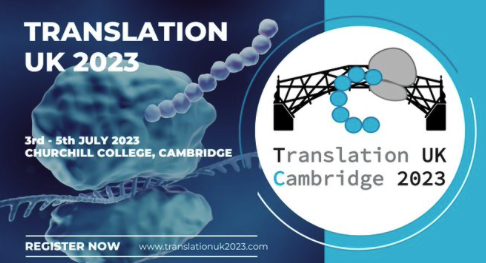
Reminder #TRUK202, translationuk2023.com Onsite accommodation running out! Please book your accommodation at the same time via the accommodation link on translationuk2023.com. Please be sure to use the promotional code KX53663 to secure these preferential prices.
ChungLab tweet media
English
0
0
5
879