Visual Ledger

185 posts

Visual Ledger banner
Visual Ledger

Visual Ledger

@Visualedger

Visualizing how real-world systems connect to crypto.

เข้าร่วม Nisan 2026
28 กำลังติดตาม425 ผู้ติดตาม
ทวีตที่ปักหมุด
Visual Ledger
Visual Ledger@Visualedger·
With DTCC starting limited trading in July and going full scale in October 2026. DTCC has made the roles and importance of these five networks clear. $XRP and $XDC Network are the primary assets for settlement, while $LINK, $QNT and $HBAR provide the "piping" to make it happen. XRP: Leads for high-liquidity bank-to-bank settlement. In March 2026, Ripple Prime (formerly Hidden Road) was officially named a participant in the DTCC’s NSCC directory, specifically to facilitate institutional post-trade settlement using XRP as a bridge asset. XDC: Dominates in trade finance settlement. It is the primary rail for tokenized bills of lading and letters of credit, achieving under-2-second finality. Its 2026 growth is driven by its Contour acquisition, which integrated thousands of trade finance users directly onto the XDC rail. QNT: Focuses on CBDC-to-commercial bank settlement. Its Overledger platform allows central banks (like the Bank of England) to settle tokenized liabilities using regulated "locked" digital currencies rather than open-market bridge assets. Chainlink and HBAR however, currently hold the deepest structural integrations within the traditional financial bank systems. LINK: The most integrated data and messaging layer. By 2026, Chainlink has moved into full production with the DTCC, Swift, and Euroclear to automate $58 billion in annual corporate actions (dividends, splits). It uses its CCIP and Runtime Environment (CRE) to link existing Swift messages directly to the DTCC's private blockchain nodes. HBAR: Holds a governance-level integration. As a member of the Linux Foundation's Decentralized Trust alongside the DTCC, Hedera is the preferred public chain for "RWA" (Real-World Asset) notary services. Its Governing Council members, including Google, IBM, and Standard Bank - use the network to track the lifecycle of assets that the DTCC eventually clears. QNT: Deeply embedded via the Murex partnership. Murex's MX.3 platform, used by 60,000+ traders daily - now has native Overledger integration, allowing banks to "switch on" blockchain features within their existing trading terminals. With this cleared out, we now know the importance of these networks within DTCC’s Financial Infrastructure.
Visual Ledger tweet media
Visual Ledger@Visualedger

DTCC Just announced they will start limited trading of Tokenized Securities in July. DTCC is THE US 🇺🇸 Financial infrastructure provider that is backing - or partnering with projects like $LINK, $XRP, $HBAR, $QNT and $XDC This will be HUGE for these networks.

English
36
320
956
77K
Visual Ledger
Visual Ledger@Visualedger·
@SMQKEDQG Where people thought this was all a conspiracy, we’re now seeing everything coming together. 🤝
English
0
0
0
18
Todd
Todd@Toddintheham·
@Visualedger Welp. Canton is there lol. I do think canton will do vastly more than just hold assets for every other chain to move. But we shall see. Very nice overall effort. Thanks for the update. Much appreciated
English
1
0
0
35
Visual Ledger รีทวีตแล้ว
Visual Ledger
Visual Ledger@Visualedger·
Diving deeper into the DTCC’s 𝘁𝗲𝗰𝗵𝗻𝗼𝗹𝗼𝗴𝗶𝗰𝗮𝗹 stack, we discover that $LINK and $QNT are key players in their infrastructure. 🔥 They are the dual-engine middleware connecting the DTCC/Canton (Internal layer) to $XRP, $XLM, $HBAR, $XDC (External layers) among a few other ‘blockchains’. 𝗖𝗵𝗮𝗶𝗻𝗹𝗶𝗻𝗸 (𝗟𝗜𝗡𝗞): The Secure Data & Transport Bridge. Role: The "Universal Bridge." Chainlink uses CCIP to move value and data from the private Canton Network ( canton-network:native ) to public layers. The Proof: The DTCC Smart NAV Pilot (May 2024). The DTCC officially utilized Chainlink as the core abstraction layer to distribute mutual fund data across multiple chains. Furthermore, Chainlink Labs is an official 𝗦𝘂𝗽𝗲𝗿 𝗩𝗮𝗹𝗶𝗱𝗮𝘁𝗼𝗿 𝗳𝗼𝗿 𝘁𝗵𝗲 𝗖𝗮𝗻𝘁𝗼𝗻 𝗡𝗲𝘁𝘄𝗼𝗿𝗸. 𝗤𝘂𝗮𝗻𝘁 (𝗤𝗡𝗧): The Intelligent Bridge. Role: The "Operating System." Quant’s Overledger translates legacy banking commands into blockchain actions, coordinating the logic between the DTCC’s internal books and external rails. The Proof: Integration with Murex. Murex provides the trading and risk infrastructure for the vast majority of DTCC’s participant banks; Quant’s partnership with Murex effectively "plugs" the global banking system into the blockchain middleware. Ties with External Layers - HBAR (Trust layer): Officially integrated Chainlink CCIP on its mainnet to facilitate institutional data flows from private layers like Canton. - Ripple (Settlement layer): Recently adopted Chainlink’s data standard for its RLUSD stablecoin, confirming that even major settlement layers rely on this middleware for institutional accuracy. - XDC Network (TradFi layer): Collaborates with Quant to automate Trade Finance workflows, linking legacy shipping documents to public ledgers. Conclusion: The DTCC provides the Assets, Quant provides the Logic, Chainlink provides the Bridge, and XRP/XLM/HBAR/XDC provide the Liquidity. These projects are closer than they seem, with $LINK and canton-network:native at the front having direct ties to the DTCC; while $QNT stands right next to $LINK."
Visual Ledger tweet media
English
2
16
63
1.9K
Visual Ledger
Visual Ledger@Visualedger·
@MarquartCapital Let them read this and they’ll understand. x.com/visualedger/st…
Visual Ledger@Visualedger

Diving deeper into the DTCC’s 𝘁𝗲𝗰𝗵𝗻𝗼𝗹𝗼𝗴𝗶𝗰𝗮𝗹 stack, we discover that $LINK and $QNT are key players in their infrastructure. 🔥 They are the dual-engine middleware connecting the DTCC/Canton (Internal layer) to $XRP, $XLM, $HBAR, $XDC (External layers) among a few other ‘blockchains’. 𝗖𝗵𝗮𝗶𝗻𝗹𝗶𝗻𝗸 (𝗟𝗜𝗡𝗞): The Secure Data & Transport Bridge. Role: The "Universal Bridge." Chainlink uses CCIP to move value and data from the private Canton Network ( canton-network:native ) to public layers. The Proof: The DTCC Smart NAV Pilot (May 2024). The DTCC officially utilized Chainlink as the core abstraction layer to distribute mutual fund data across multiple chains. Furthermore, Chainlink Labs is an official 𝗦𝘂𝗽𝗲𝗿 𝗩𝗮𝗹𝗶𝗱𝗮𝘁𝗼𝗿 𝗳𝗼𝗿 𝘁𝗵𝗲 𝗖𝗮𝗻𝘁𝗼𝗻 𝗡𝗲𝘁𝘄𝗼𝗿𝗸. 𝗤𝘂𝗮𝗻𝘁 (𝗤𝗡𝗧): The Intelligent Bridge. Role: The "Operating System." Quant’s Overledger translates legacy banking commands into blockchain actions, coordinating the logic between the DTCC’s internal books and external rails. The Proof: Integration with Murex. Murex provides the trading and risk infrastructure for the vast majority of DTCC’s participant banks; Quant’s partnership with Murex effectively "plugs" the global banking system into the blockchain middleware. Ties with External Layers - HBAR (Trust layer): Officially integrated Chainlink CCIP on its mainnet to facilitate institutional data flows from private layers like Canton. - Ripple (Settlement layer): Recently adopted Chainlink’s data standard for its RLUSD stablecoin, confirming that even major settlement layers rely on this middleware for institutional accuracy. - XDC Network (TradFi layer): Collaborates with Quant to automate Trade Finance workflows, linking legacy shipping documents to public ledgers. Conclusion: The DTCC provides the Assets, Quant provides the Logic, Chainlink provides the Bridge, and XRP/XLM/HBAR/XDC provide the Liquidity. These projects are closer than they seem, with $LINK and canton-network:native at the front having direct ties to the DTCC; while $QNT stands right next to $LINK."

English
0
0
1
28
David Marquart ⬡
David Marquart ⬡@MarquartCapital·
AI produces it. Chainlink verifies it. Digital truth is here. The world has yet to realize.
English
5
4
43
676
Bitrue
Bitrue@BitrueOfficial·
Is it $XRP v. $HBAR or $XRP & $HBAR? 🤝
English
110
34
678
31.9K
Visual Ledger รีทวีตแล้ว
Crypto Rover
Crypto Rover@cryptorover·
HUGE 🚀 U.S. markets have added over $12 Trillion in the last 27 trading sessions. S&P 500: +16% NASDAQ: +25%
English
127
132
1K
100K
Visual Ledger
Visual Ledger@Visualedger·
x.com/visualedger/st… Got you covered. 😉
Todd@Toddintheham

@Visualedger Yeah bud. I don’t care which other crypto’s you put in there…, but you need to redo your cool graphics and add Canton Network there at some level. It’s the literal base layer and somehow you’ve excluded it??

English
0
0
0
87
Visual Ledger รีทวีตแล้ว
Remarks
Remarks@remarks·
JUST IN: 23 cruise passengers exposed to the 'Hantavirus' returned to their home countries worldwide, including to US, with one already sick.
Remarks tweet media
English
665
1.1K
6.4K
2.1M
Visual Ledger รีทวีตแล้ว
Hashgraph
Hashgraph@hashgraph·
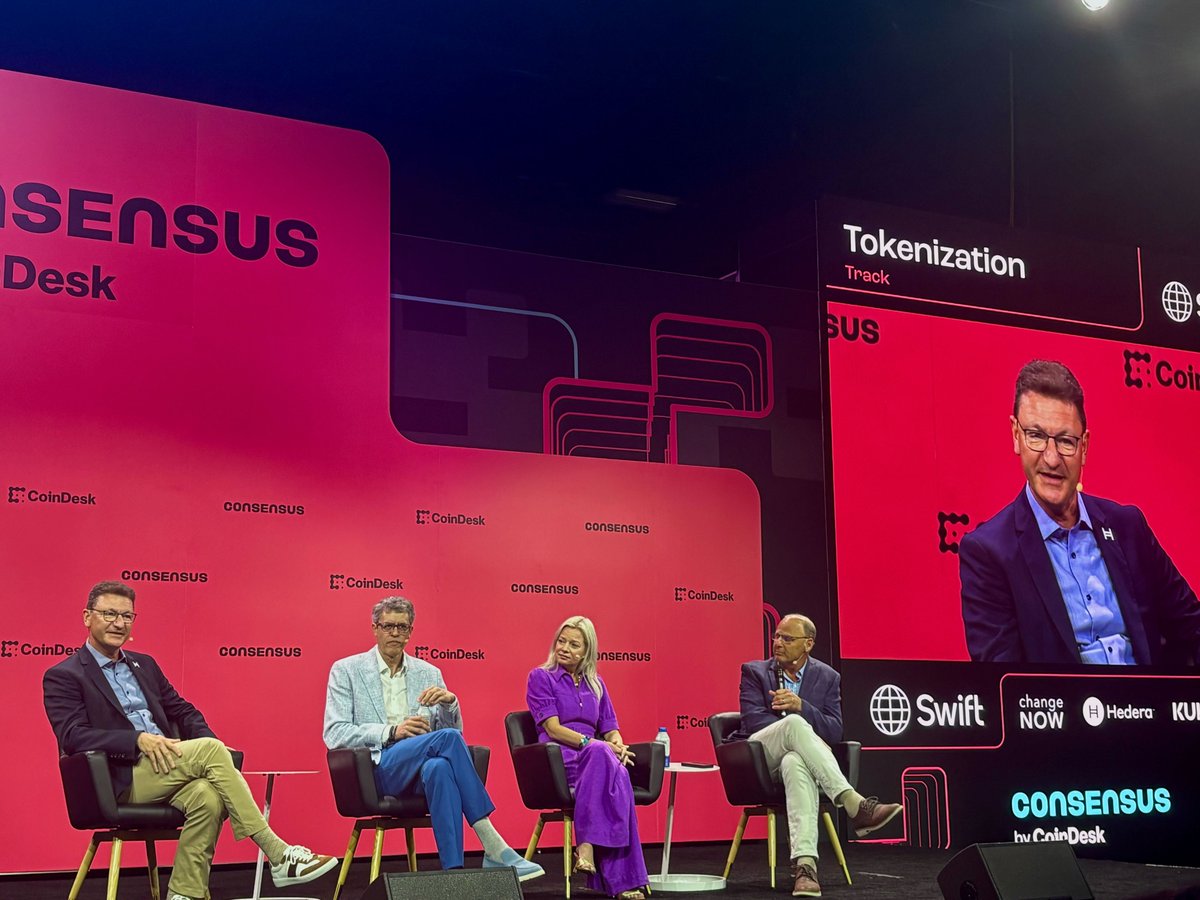
“CLPR will make its way into all tokenization platforms and create the trust we need, because now you have access to unlimited liquidity and assets.” - Eric Piscini (@episcini), CEO Today at @consensus2026, Eric joined the panel “Tokenized Treasuries & Commodities: The $25B Yield Engine” to discuss what the future of tokenization looks like.
Hashgraph tweet media
English
7
57
182
6.3K
Visual Ledger
Visual Ledger@Visualedger·
With DTCC starting limited trading in July and going full scale in October 2026. DTCC has made the roles and importance of these five networks clear. $XRP and $XDC Network are the primary assets for settlement, while $LINK, $QNT and $HBAR provide the "piping" to make it happen. XRP: Leads for high-liquidity bank-to-bank settlement. In March 2026, Ripple Prime (formerly Hidden Road) was officially named a participant in the DTCC’s NSCC directory, specifically to facilitate institutional post-trade settlement using XRP as a bridge asset. XDC: Dominates in trade finance settlement. It is the primary rail for tokenized bills of lading and letters of credit, achieving under-2-second finality. Its 2026 growth is driven by its Contour acquisition, which integrated thousands of trade finance users directly onto the XDC rail. QNT: Focuses on CBDC-to-commercial bank settlement. Its Overledger platform allows central banks (like the Bank of England) to settle tokenized liabilities using regulated "locked" digital currencies rather than open-market bridge assets. Chainlink and HBAR however, currently hold the deepest structural integrations within the traditional financial bank systems. LINK: The most integrated data and messaging layer. By 2026, Chainlink has moved into full production with the DTCC, Swift, and Euroclear to automate $58 billion in annual corporate actions (dividends, splits). It uses its CCIP and Runtime Environment (CRE) to link existing Swift messages directly to the DTCC's private blockchain nodes. HBAR: Holds a governance-level integration. As a member of the Linux Foundation's Decentralized Trust alongside the DTCC, Hedera is the preferred public chain for "RWA" (Real-World Asset) notary services. Its Governing Council members, including Google, IBM, and Standard Bank - use the network to track the lifecycle of assets that the DTCC eventually clears. QNT: Deeply embedded via the Murex partnership. Murex's MX.3 platform, used by 60,000+ traders daily - now has native Overledger integration, allowing banks to "switch on" blockchain features within their existing trading terminals. With this cleared out, we now know the importance of these networks within DTCC’s Financial Infrastructure.
Visual Ledger tweet media
Visual Ledger@Visualedger

DTCC Just announced they will start limited trading of Tokenized Securities in July. DTCC is THE US 🇺🇸 Financial infrastructure provider that is backing - or partnering with projects like $LINK, $XRP, $HBAR, $QNT and $XDC This will be HUGE for these networks.

English
36
320
956
77K
The ISO GOAT
The ISO GOAT@XrpKing09531420·
Gotta love the cream of the crop 😉
Visual Ledger@Visualedger

With DTCC starting limited trading in July and going full scale in October 2026. DTCC has made the roles and importance of these five networks clear. $XRP and $XDC Network are the primary assets for settlement, while $LINK, $QNT and $HBAR provide the "piping" to make it happen. XRP: Leads for high-liquidity bank-to-bank settlement. In March 2026, Ripple Prime (formerly Hidden Road) was officially named a participant in the DTCC’s NSCC directory, specifically to facilitate institutional post-trade settlement using XRP as a bridge asset. XDC: Dominates in trade finance settlement. It is the primary rail for tokenized bills of lading and letters of credit, achieving under-2-second finality. Its 2026 growth is driven by its Contour acquisition, which integrated thousands of trade finance users directly onto the XDC rail. QNT: Focuses on CBDC-to-commercial bank settlement. Its Overledger platform allows central banks (like the Bank of England) to settle tokenized liabilities using regulated "locked" digital currencies rather than open-market bridge assets. Chainlink and HBAR however, currently hold the deepest structural integrations within the traditional financial bank systems. LINK: The most integrated data and messaging layer. By 2026, Chainlink has moved into full production with the DTCC, Swift, and Euroclear to automate $58 billion in annual corporate actions (dividends, splits). It uses its CCIP and Runtime Environment (CRE) to link existing Swift messages directly to the DTCC's private blockchain nodes. HBAR: Holds a governance-level integration. As a member of the Linux Foundation's Decentralized Trust alongside the DTCC, Hedera is the preferred public chain for "RWA" (Real-World Asset) notary services. Its Governing Council members, including Google, IBM, and Standard Bank - use the network to track the lifecycle of assets that the DTCC eventually clears. QNT: Deeply embedded via the Murex partnership. Murex's MX.3 platform, used by 60,000+ traders daily - now has native Overledger integration, allowing banks to "switch on" blockchain features within their existing trading terminals. With this cleared out, we now know the importance of these networks within DTCC’s Financial Infrastructure.

English
1
0
8
330