ZhaoRichard รีทวีตแล้ว
ZhaoRichard
238 posts




ZhaoRichard รีทวีตแล้ว

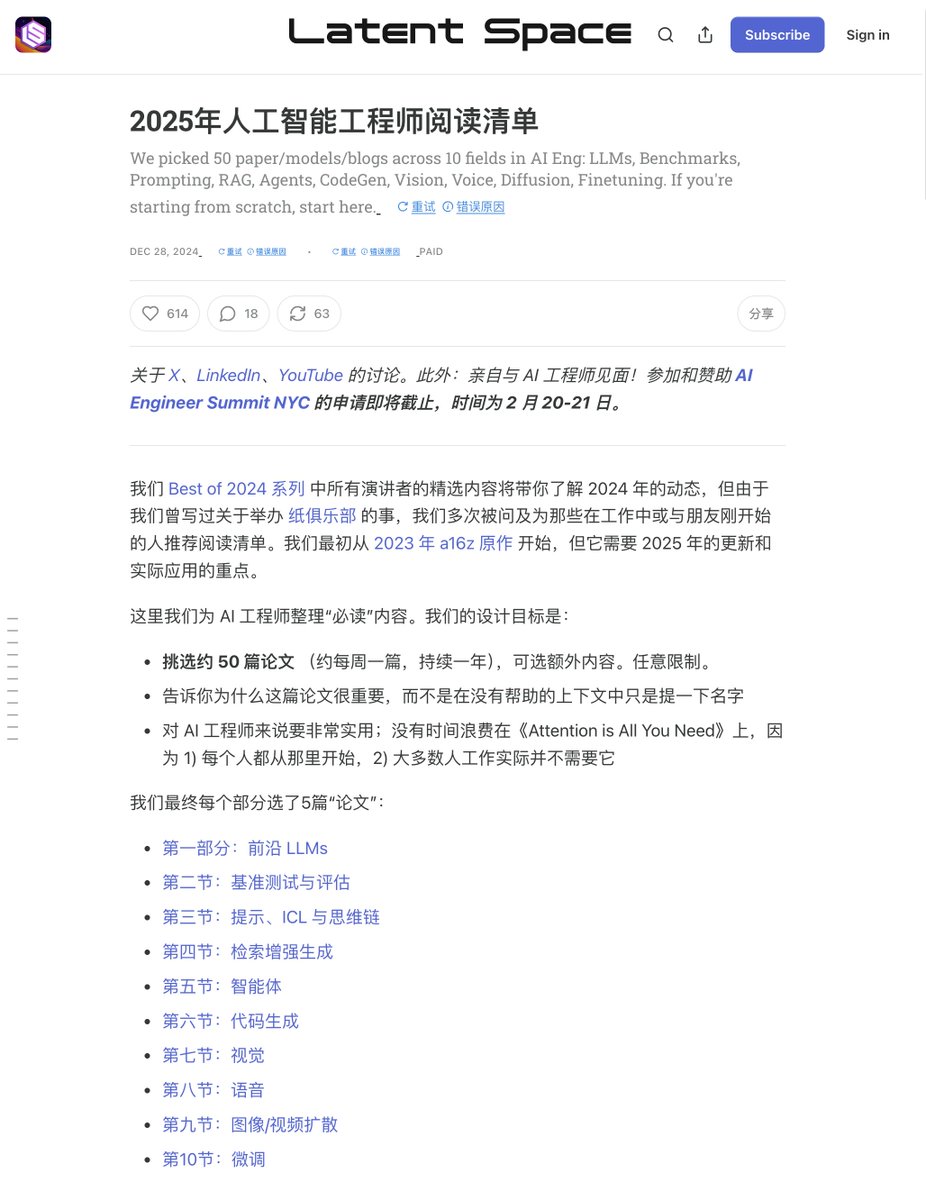
《2025年人工智能工程师阅读清单》,是一个“给 AI 工程师的全年学习路线图”,不是随手凑的书单,而是精心挑选的 50 篇论文,系统吃透 LLM、RAG、Agent、代码、视觉、语音、扩散、微调全栈的升级手册。
现在关于 LLM 和 Agent 的论文、博客、talk 海量,很多人每天在 X / Hacker News 刷链接,却不知道哪些是真正值得花一周啃完的,Latent Space 直接帮你定量:一年 50 篇,读完就有全局地图。
Latent Space 是专门面向 AI 工程师的 newsletter + 播客,听众和读者已经超过 200 万,长期深挖 LLM、Agent、基础设施和开源模型,对“工程视角”非常敏感,这份清单是他们经验沉淀后的浓缩品。
清单不是简单罗列论文,而是从 10 个关键方向各挑 5 篇:前沿 LLM、评测基准、Prompting 、RAG、Agent、代码生成、视觉、语音、图像/视频扩散、微调,每一篇都有“为什么你要读”这种工程师视角的说明。
页面会把论文、官方报告、博客和实战教程混在一起选,比如 GPT 系列、LLaMA 系列、Gemini、Claude、DeepSeek、GraphRAG、RAGAS、LoRA/DPO 等,将“研究层”和“工程落地层”打通,避免只看懂概念却写不出产品。
很多人只看“谁又出新模型”、“谁登顶什么榜”,真正模型原理、评测框架、扩展方法完全没系统过,这份清单把 MMLU/MATH/ARC、RAG 评估、代码 benchmark 等基石性工作全部打包进去,补齐“理论 +工程常识”。
每个方向固定 5 篇,完全可以按“每周一篇”的节奏,把这 50 篇当作 一年的主线学习项目,从 LLM 前沿,到评测、RAG、Agent、代码、视觉、语音、Diffusion、微调,走完就是一个“AI 工程通才”的骨架。
很多工程经验现在根本没有正式论文,只散落在博客和播客里,这篇清单直接把 Lilian Weng、Eugene Yan、Anthropic prompt 教程、LlamaIndex/LangChain RAG 课程、OpenAI 实时 API 手册等“工业界秘籍”附在各章节下面,当成延伸阅读。
latent.space/p/2025-papers
中文
ZhaoRichard รีทวีตแล้ว

谷歌技术之神 Jeff Dean 提到的牛逼论文:Titans(泰坦)
让 AI 简单解读下。
Titans 让 AI 有了"真正的记忆力",既能像人一样记住重要的事,又能忘掉不重要的,还能在使用时边学边记。
三个厉害的地方:
1. 解决了AI的"金鱼记忆"问题
Transformer:像个学霸,啥都记得清清楚楚,但脑子装不下太多东西(只能看几千个字)
传统RNN:像个压缩狂,把所有东西塞进一个小盒子,结果啥都记不清
Titans的解法
- 短期记忆:用注意力机制,精确处理当前看到的内容
- 长期记忆:用神经网络当"大脑",把重要信息编码进参数里
- 持久记忆:存储关于任务本身的知识
像人脑一样,三种记忆各司其职。
2. 会判断什么值得记住
核心创新:借鉴人类记忆系统:违背预期的事件(更容易被记住,定义为惊喜度量。
看新闻:
- 看到"今天天气不错" → 不惊讶,不用特别记
- 看到"火星发现生命" → 很惊讶,赶紧记下来
- 后续相关报道 → 虽然不那么惊讶了,但因为和之前的大事件相关,也要记住。
Titans的工作原理:
- 当前惊喜:这个信息和我之前见过的差多少?
- 历史惊喜:最近有没有重要事件在发生?
- 自适应遗忘:这段记忆该保留多久?
3. 边用边学,越用越聪明
传统模型,训练完就定型了,测试时只能"回忆",不能"学习"。
Titans,测试时记忆模块还在更新,看到新内容会实时调整记忆
实验结果有多猛?
超长文本理解,Needle in Haystack(大海捞针)任务
在16,000字的文章里找一个关键信息,Titans准确率:96%+。
最强对手Mamba2:5.4%(基本瞎猜)
BABILong 超难推理任务,在百万字文档里推理
Titans用不到1/70的参数量,打败了700亿参数的Llama3.1,甚至超GPT-4
常规任务也不拉胯
- 语言建模:比Transformer和所有线性RNN都好
- 时间序列预测:7个数据集全面领先
- 基因序列分析:达到最优SOTA水平
为什么其他模型做不到?
Transformer的困境,想记住100万字?内存爆炸,算不动
,只能看固定长度的窗口。
线性RNN的问题,把历史压缩成一个向量或矩阵,就像把一本书总结成一句话,信息丢太多了,没有遗忘机制,时间长了"脑子"就乱了。
Titans的优势
- 深度记忆:用多层神经网络当记忆,比一个矩阵强太多
- 动量机制:不只看当前,还看最近的趋势
- 遗忘门:该忘的忘,该记的记
- 并行训练:虽然复杂,但训练速度不慢
技术上的巧妙之处
把"学习"变成"记忆",记忆模块本质是在做梯度下降
,但它是在测试时做的,相当于一个"元学习器"。
统一了很多现有方法:
- Mamba的遗忘门?Titans的特例
- DeltaNet的增量规则?Titans的简化版
- TTT的测试时训练?Titans加了动量和遗忘
为什么说这个工作重要?
打开了新思路,不是简单地"加大模型"或"优化attention",从记忆系统的角度重新思考架构。
解决了真实痛点,长文档分析,长视频理解,持续学习场景
最后一个类比
Transformer = 照相机记忆,看到的都能记住,但一次只能看一小块
传统RNN = 记笔记,把所有东西总结成几句话,细节丢了
Titans = 人类大脑
- 短期记忆:处理当前信息
- 长期记忆:存储重要经历
- 元记忆:知道怎么学习
- 忘记不重要的事
强在哪里?
1. 能记得更多:扩展到200万token,其他模型早崩了
2. 记得更准:知道什么重要,什么该忘
3. 越用越聪明:测试时还在学习
4. 理论有保证:有数学证明和实验。
5. 实验很能打:各种任务都是SOTA或接近SOTA
真的牛逼啊!
NomoreID@Hangsiin
中文
ZhaoRichard รีทวีตแล้ว

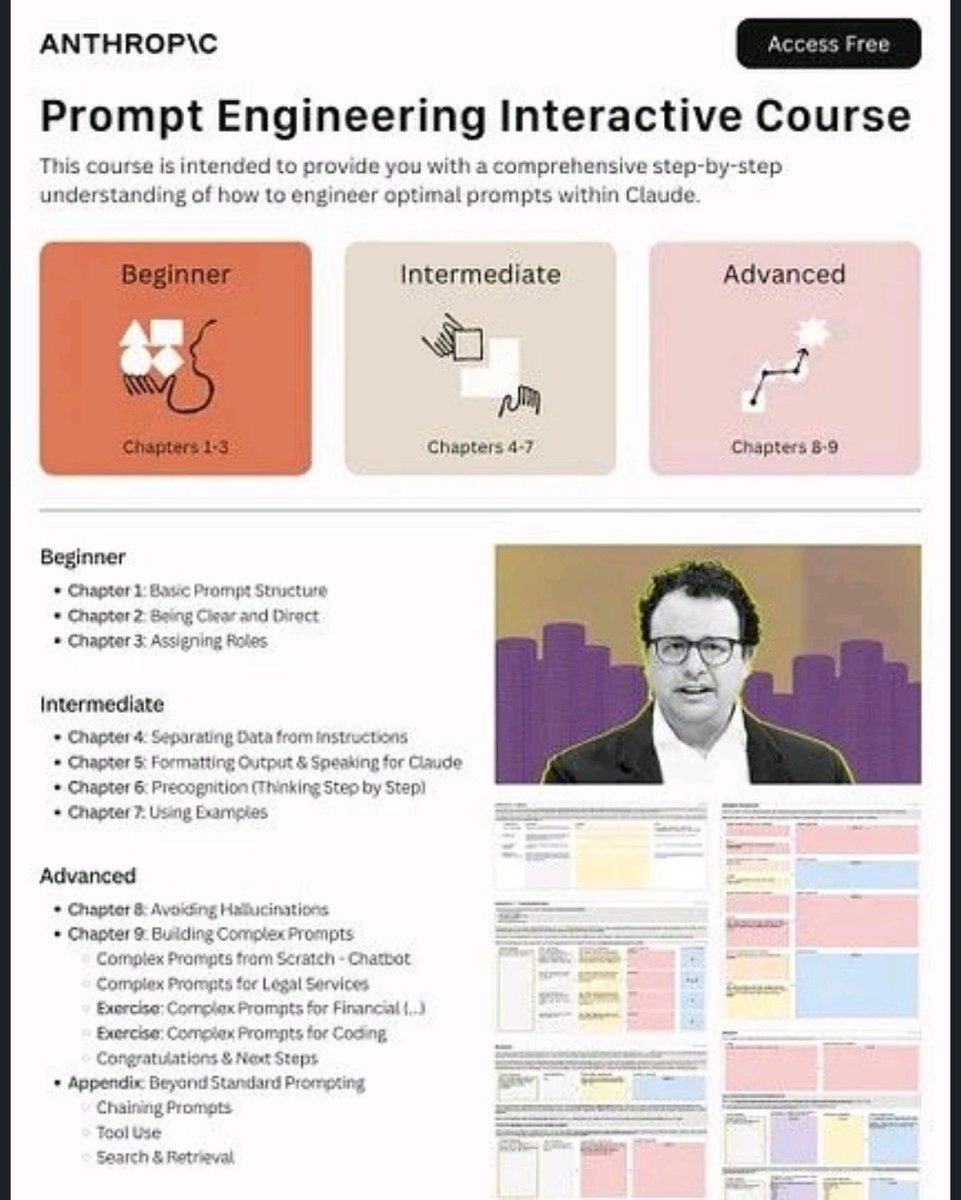
🔥Anthropic 官宣:推出免费 9 章 Prompt 工程大师课!
从基础到高级技巧都有,包含互动练习 + GitHub 实战工具,
对想提升 AI 使用能力的人太友好
这套课已经被不少技术博主夸爆了,我自己刷了几章,的确干货密度很高👇
🔗 github.com/anthropics/pro…
中文

ZhaoRichard รีทวีตแล้ว


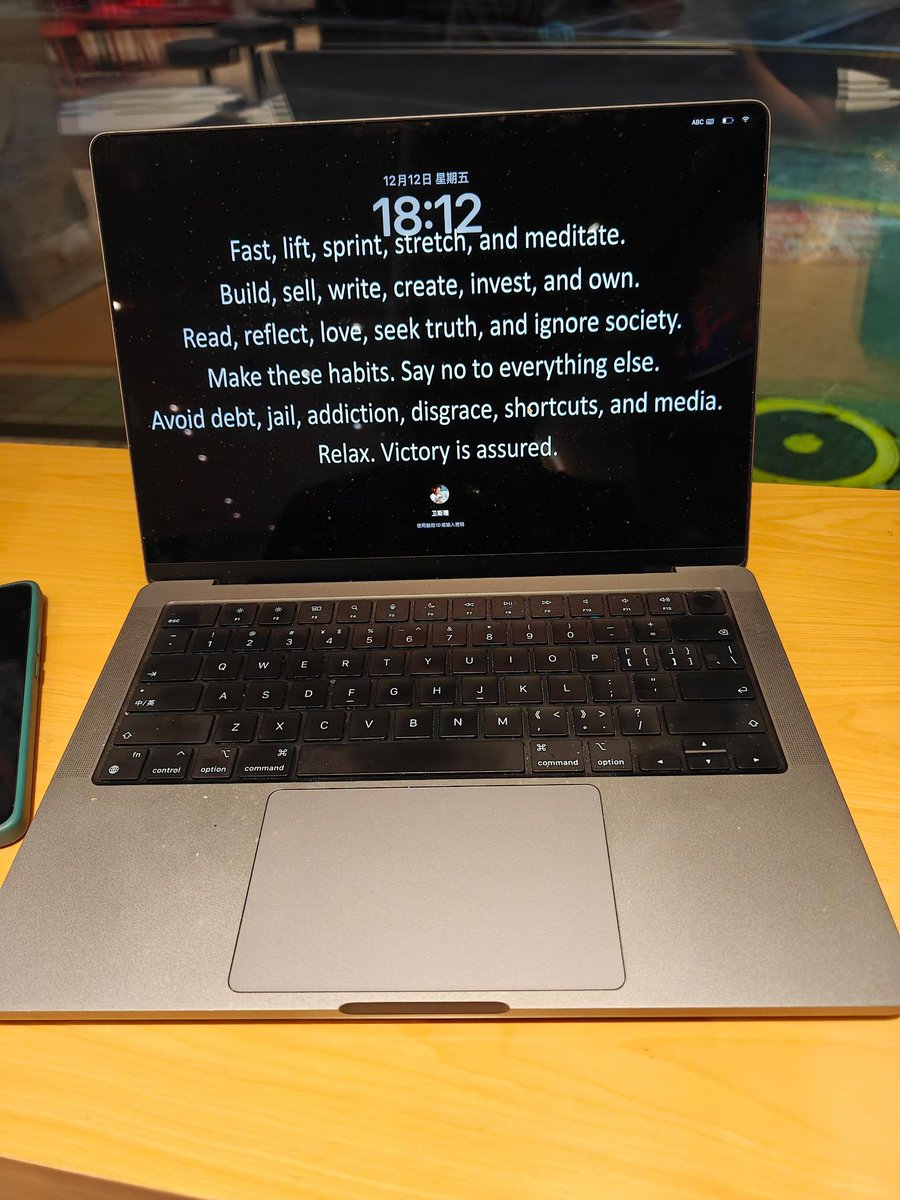
人生也算完美,领了大礼包
虽不多,但也是经验➕1
下一步就是 all in AI。
简单再来介绍下:10 年码农,能干前端、后端、爬虫、大数据,简称全干工程师。
3 月份干过口播、AI 视频,能尝试的都干一遍。
5 月份决定还是搞 AI 编程,主要公众号、掘金、知乎输出,Claude 4 发布后,第二天就充值 Claude Code 100 刀套餐,7、8 月份迎来巅峰,后续 B 站和 Youtube 也同步输出视频。
9、10 月份最忙,两个星球当 AI 编程教练。
我自己其实还是想搞一份长期的事情,选择了建站出海,虽然目前只上了一个 Sora2 的站,还没来得及搞外链。
最近又迷上了推特运营,慢慢发现离很多大佬越来越近,也发现这里的 AI 世界会更精彩,可以近距离感受到 AI 产品团队初创人员的气息。
至于收入确实不多,但给我带来了上班不一样的体验,涨粉,帮助别人发红包,可以接触到高质量项目,可以用我自己的能力帮助到更多人,也许这也是我离开公司这个平台的勇气和底气。
不过也是最近病了 3 场,基本连轴转,身体终究扛不住(6 点起,基本凌晨睡,上下班通勤3小时,有时候在地铁上噼里啪啦写文章),所以也是解放自己,选择了这条路。
时间也许刚刚好,所以不问结果,享受过程。
30-40,我觉得是男人综合战斗力爆表的阶段,这些经历都可以刺激多巴胺的分泌,也是一种享受。
所以肝起来,在这个 AI 时代留下一点自己的印记。

中文
ZhaoRichard รีทวีตแล้ว

为 2026 年寻找下一个月收入超过 1 万美元的创业想法提供了 30 种实用方法
来自 @gregisenberg 的帖子,提供了 30 种方法,主要围绕观察在线社区、技术趋势和用户痛点,利用 AI 和智能体来构建产品或服务。Greg 强调,机会往往隐藏在日常抱怨和重复任务中,通过系统化挖掘可以转化为可盈利的解决方案。
1. 阅读 GitHub 问题,寻找开发者反复忽略的痛点——这些是潜在的产品需求来源。
2. 在 Reddit 设置关键词警报,如“我希望有人能构建……”,并验证需求强度。
3. 围绕 Upwork 上单一、高薪的垂直重复任务构建智能体。
4. 监控 API 变更日志,并在变更发布当天构建集成工具。
5. 使用 ChatGPT 总结 Chrome 商店的一星评价,并修复前三大投诉。
6. 审计浏览器开发工具,找出 power 用户仍需手动操作的部分。
7. 逆向工程 Product Hunt 热门产品,然后应用AI改进它们。
8. 阅读 YouTube 教程评论,识别观众仍无法理解的内容。
9. 观察 Twitch 主播,记录中断他们流程的工作流。
10. 扫描招聘广告中反复出现的“必备”工具,并构建更简单的版本。
11. 挖掘像 Google 这样的公司废弃项目,并重新推出最佳的。
12. 将新的 AI 研究论文实现为可用的 Web 应用。
13. 探索 Reddit 的细分子版块,找出每周反复出现的问题。
14. 查看 SaaS 产品的功能请求,构建大公司延迟推出的功能。
15. 连接尚未互操作的开源工具。
16. 追踪“Chrome 扩展用于 X”的搜索量,以发现新需求。
17. 将顶级扩展描述输入 GPT,请求相邻产品想法。
18. 使用 Perplexity 等工具深度研究播客转录,挖掘人们日常挫败感——这些直接指明构建方向。
19. 跟踪热门初创公司的变更日志和技术栈迁移,构建缺失的连接件。
20. 查看 Zapier 最常用的自动化流程,每个都可能成为自主智能体。
21. 使用 SerpAPI 追踪“AI 用于 X”或“智能体用于 X”的搜索查询。
22. 分析公开的 Notion 模板,并围绕它们构建垂直智能体。
23. 在 LinkedIn 浏览人们描述的手动数据任务,并将其产品化。
24. 观察初创公司如何用 ChatGPT 处理客户支持,并从中创建垂直智能体。
25. 将细分目录(如律师、治疗师、房产经纪人)重建为 AI concierge 服务。
26. 创建智能体,接入枯燥的 SaaS 类别,如采购、合规、人力资源运营。
27. 阅读 AI 模型提供商的变更日志,并在新功能出现当天构建工具。
28. 找出公司依赖的电子表格,并用 AI 仪表盘替换它们。
29. 识别按项目收费的代理机构,将其工作产品化为带有智能体的订阅 SaaS。
30. 作者提到自己构建了一个自动化这些过程的工具(链接提供),每天免费提供一个创业想法,并有付费计划包括 AI 智能体支持,以激发创意。
帖子结尾的 Greg 总结了核心洞见:下一个大想法可能藏在评论线程中;每条在线抱怨都是免费焦点小组;追逐摩擦点,每个痛点都是一张地图,通过连贯解决形成不可或缺的工作流;每个重复任务都是等待智能体的商业模式;互联网不断留下线索,只需倾听。

GREG ISENBERG@gregisenberg
30 ways to find your next $10K+ MRR idea for 2026: 1. Read GitHub issues and look for recurring pain points developers ignore. 2. Set Reddit alerts for “I wish someone would build…” and validate demand. 3. Build an agent around a single recurring vertical Upwork task that pays well. 4. Monitor API changelogs and build integrations the day they launch. 5. Summarize 1-star Chrome Store reviews with ChatGPT and fix the top three complaints. 6. Audit browser DevTools to see what power users still do manually. 7. Reverse-engineer topProduct Hunt hits, then apply AI to improve them. 8. Read YouTube tutorial comments to see what viewers still can’t figure out. 9. Watch Twitch streamers and note what workflows interrupt their flow. 10. Scan job listings for repeated “must-know” tools; build easier versions. 11. Dig through graveyard from companies like Google and ship the best abandoned projects. 12. Implement new AI research papers as usable web apps. 13. Explore niche subreddits and find problems that appear every week. 14. Review SaaS feature requests and build what the big players delay. 15. Connect open-source tools that don’t yet talk to each other. 16. Track “Chrome extension for X” search volume to spot new demand. 17. Feed GPT the top extension descriptions and ask for adjacent product ideas. 18. Use Perplexity Deep research etc to mine podcast transcripts on people's daily frustrations they’re telling you what to build. 19. Follow changelogs and tech-stack migrations of popular startups; build the missing glue. 20. Look at Zapier’s most-used zaps and each one could be an autonomous agent. 21. Track “AI for X” or “agent for X” search queries with SerpAPI. 22. Analyze public Notion templates and build vertical agents around them. 23. Browse LinkedIn for people describing manual data tasks and productize one. 24. Watch how startups use ChatGPT for customer support and make a vertical agent from it. 25. Rebuild niche directories (lawyers, therapists, realtors) as AI concierge services. 26. Create agents that plug into boring SaaS categories: procurement, compliance, HR ops. 27. Read changelogs from AI model providers; build tooling the day new capabilities appear. 28. Find spreadsheets that companies rely on and replace them with AI dashboards. 29. Identify agencies that charge per project and productize their work into recurring SaaS with agents. 30. I built a tool that automates a lot of this, ideabrowser.com and we give away 1 free startup idea per day with paid plans for AI agents to help you. Maybe it'll get your creative juices flowing. I'm rooting for you. TLDR; – The next big idea is probably hidden in a comment thread. – Every complaint online is a free focus group. – Chase friction. every pain point is a map. find one, solve it, then look for the next one it connects to. keep solving until the solutions form a workflow people can’t live without. by owning the whole chain of pain you build defensibility. – Every repetitive task is a business model waiting for an agent. – The internet keeps leaving clues, just gotta listen
中文
ZhaoRichard รีทวีตแล้ว


ZhaoRichard รีทวีตแล้ว

阿里刚刚发了一个智能简历解析系统:SmartResume,直接把PDF/图片/Office文档简历变成结构化数据
HR部门的手动录入工作可以直接秒级完成了
系统融合了OCR与PDF元数据完成文本提取,结合版面检测重建阅读顺序,通过LLM将内容转换为结构化字段
能够提取基本信息、工作经历、教育背景等结构化信息
模型用的微调版Qwen3-0.6B,版面检测模型用的YOLOv10
可API及本地模型部署
#简历提取工具 #SmartResume

中文

🔥1024节来个猛的吧🔥
价值16599元的懒猫AI算力舱,此帖评论超过100、阅读量超过3万,明天就把他抽奖送给大家!
懒猫AI算力舱战力分析:
英伟达AI芯片、275T真算力、64GB超大显存、70B大模型、畅玩CUDA生态、AI浏览器、10多款AI牛逼应用全免费(看视频介绍)
欢迎大家评论、转发、收藏,说话算话!
Andy Stewart@manateelazycat
你们说,今天1024,程序员节 我们是不是要给推特大佬们整点活动呀?😜
中文


ZhaoRichard รีทวีตแล้ว

最近在网上看到一位大神 Chris Dzombak,用 Claude Code 在短时间内写了整整12个项目,效率高到吓人。
我深挖了一下他的方法,发现终极秘诀不是什么花哨的Prompt,而是给 Claude 植入一个“资深工程师”的灵魂。
他创建了一个全局配置文件 CLAUDE .md,也就是AI的个人操作系统。这个文件里定义了:
> 开发哲学:比如“增量优于全部重构”、“代码要清晰而非聪明”。
> 标准工作流:规划 -> 写测试 -> 实现 -> 重构 -> 提交。
> “卡住怎么办”预案:尝试3次失败后,必须停下来,记录失败、研究替代方案、反思根本问题。
> 决策框架:当有多种方案时,按可测试性 > 可读性 > 一致性 > 简单性的顺序选择。
最关键的是,他强调“AI写的代码,最终责任在人”,所有代码都必须手动审查和测试。
这个 CLAUDE .md 文件简直是把高级工程师的思维模式和职业素养灌输给了AI,让它从一个“工具”变成了一个有章法、懂取舍的“准同事”。
我已经把他的这份“AI调教圣经”fork了,强烈建议大家也去学习一下。
中文
ZhaoRichard รีทวีตแล้ว

Stop what you're doing for a few minutes.
Outrage porn about Trump, Mamdani, and P. Diddy can wait.
None of that matters compared to what I'm about to say.
Something insane is coming.
Something that's made me rethink everything I know about investing and business.
What if I told you that in the next 1,000 days, everything you've learned and honed over the last few decades could become irrelevant?
Your expertise. Your knowledge. The things that gives you status and wealth. All of it—potentially made obsolete.
There's something scary and amazing happening in the world.
An artificial intelligence tsunami is approaching that will wash away the moats of an astounding number of businesses - and almost nobody sees it coming.
And I'm not just talking about you tech bros.
Everyone. HVAC. Plumbing. Electrical. Carpentry. Construction. Landscaping. Every business model built on today's skilled labor shortages is about to change.
Just as we protect our most valuable physical assets, we need to think about protecting ourselves against this impending disruption.
Think about your house for a second. You've got insurance for that, right?
Most of us pay a small annual fee (a premium) to protect our homes from fires and other unpredictable events.
It makes a lot of sense. A price we collectively pay to help us sleep at night.
But outside of their homes, most people don't adequately insure themselves because, let's be honest—it's confusing to figure out how to do so, and frankly, it's painful to think about downside scenarios.
Yet for many of us—founders especially—the majority of our net worth isn't in our homes. It's in business equity. Private, and sometimes public portfolios of stocks.
Insuring against risks to business equity is complicated, and "hedging" — insuring financial assets against loss — mostly remains the domain of people in finance.
Like when my friend @BillAckman made $2.6 billion from $27M worth of credit default swaps—the billionaire equivalent of buying "fire insurance" for his massive stock portfolio—during the height of COVID insanity in March 2020.
A hedge is the finance world's version of home insurance.
For the cost of a few percent of your assets, you buy a financial instrument that (hopefully) covers you in a downside scenario. If some black swan occurs and causes the value of your assets to fall, you get a big payout that covers your losses.
In some cases, investors even buy these as individual investments. All-or-nothing bets on a macro trend, a company being disrupted, or a risk the market is underestimating.
But the problem with a hedge is that you can't buy one when you need one. You have to buy them before everyone else catches on.
And right now, there's a massive exogenous risk to almost every business model on the planet: artificial intelligence.
Yeah, yeah. You've seen ChatGPT. I can see you shaking your head.
But this isn't about chatbots that forget what you're talking about after 10 minutes. This is about where it's going in the near future.
I'm astounded by how few business leaders are thinking clearly about that future. Even people in tech who should know better.
Yes, they get that AI is a big deal.
What they don't get is that many of them are ants in front of the steamroller.
Imagine you're living in 1900 and someone hands you a smartphone. That's the level of disruption we're about to experience.
The best summation I've heard is this quote from @bgurley:
"It's like we've discovered a new continent with 100 billion people on it, and they're all willing to work for free."
*Note: these people are also soon to be super geniuses. But more on that in a moment.
How would the world react if this was true? If we discovered this imaginary continent?
I think slightly differently from what we're seeing today. Because we'd all recognize that it would completely shift the dynamics of our labour force.
It would be like if, over the course of a year or two, 80 million extremely skilled illegal immigrants entered the United States and were willing to accept 10‑cent‑per‑hour wages.
This might sound wild, but this isn't some far-future prediction: many conservative analysts agree that AI will in some way disrupt at least 25% of all jobs by 2030 - and that number keeps getting revised upward.
Here's the scary part: Imagine we could hit a big red PAUSE button and stop AI development in its tracks. Freeze it. No more progress.
Just roll out what already exists.
Here are the jobs we know will vanish in 5-10 years, using only today's technology like LLMs (OpenAI/Anthropic/Grok/DeepMind) and self-driving (Waymo/Tesla):
Drivers - 7-10% of jobs Trucking, taxi/Uber, delivery, couriers
Admin - 10-15% of jobs Data entry, exec assistants, customer service, bookkeeping, payroll
Low Level Legal - 2-5% of jobs Paralegals, legal researchers, contract review
Of course, these are just the jobs that would be disrupted if we PAUSED AI today, made no further progress, and focused on rolling out these technologies.
This gets far crazier if you assume AI continues to progress.
Based on conversations with leading AI researchers and my own analysis, here's what I imagine the next five years could look like:
2026-27: First Wave
- AI automation becomes more widespread
- Digital Employees arrive
- Markets celebrate productivity gains
2028-29: The Hammer Drops
- AI matches/exceeds human cognitive abilities
- Mass white-collar displacement begins
- First fully AI-managed companies appear GDP soars while individual prosperity grows less certain
2030 and beyond: The Great Reshuffling
- AI-human hybrid roles become the norm
- Many knowledge work jobs vanish
- New goods and services emerge, creating new unforeseen jobs
- Profound increases in productivity across all dimensions of society (business, science, medicine, education, research)
- Governments create a universal basic income or negative income tax
This isn't science fiction futurism. These timelines are based on predictions from industry leaders.
@DarioAmodei, Anthropic's famously cautious CEO, who has historically underestimated AI timelines (and who is about as close to the metal as you can get), recently predicted that AI could wipe out half of all entry-level white-collar jobs within five years.
What he said next was far more profound:
"I have never been more confident that we're close to powerful AI systems. What I've seen inside Anthropic over the last few months has led me to believe that we're on track for human-level systems that surpass humans in every task within two to three years."
Let me bold that for you: IN EVERY TASK.
That is, beating the best PhDs in the most complex fields (physics, material science, biology, astronomy, etc) by 2027 or 2028.
Let's say it's the latter. January 2028. That means that we have 918 days until our human "hardware" — our brains — become like vinyl records compared to digital audio.
Beautiful and unique in their own way, but ultimately obsolete for most practical purposes.
There will be a day - probably in 2026 or 2027 - when we'll look back and say 'that was the moment everything changed.' Just like the iPhone launch or the internet going mainstream.
I believe we're rapidly nearing that inflection point.
I remember walking around, shopping in a mall, using my Palm Treo — one of the first internet connected phones — to send emails and thinking "this is the future."
But we all know what happened next.
The iPhone came out. The Palm Treo was a joke compared to what was coming, just as current AI systems are a joke compared to what's coming in the next 2-3 years.
A friend of mine who works at a frontier AI lab put it this way:
"Nobody gets what's coming. When I talk to people about this, I feel like I'm an epidemiologist in January 2020 freaking out about COVID while my friends stare at me like a crazy person."
But what about jobs that require humanity? Deep connection and trust?
We have a deep need to connect with other humans and I don't imagine that will change.
Business has always been built on relationships - on looking someone in the eye and knowing they'll deliver, on understanding subtle social cues, on building genuine connections that last years or decades. Surely those roles are safe from AI disruption.
Or are they?
Have you tried OpenAI's Advanced Voice mode? It's basically the movie 'Her' in real life – a perfectly natural voice you can talk to conversationally.
It launched just 12 months ago, and already I sometimes forget I'm not talking to a human (when in reality, I'm talking to millions of lines of code).
What about video models like Google Veo 3 and OpenAI's Sora? They're already generating photo-realistic videos of humans that look almost real.
Now combine the two: LLM + audio + video.
Imagine 4K streaming video with perfect human voices, complete with emotional resonance and an LLM that can pass the Turing test.
This is the disruption nobody's talking about.
We all love thinking that AI = efficiency. That the AI and robots can do all the stuff we don't enjoy (boring admin work, data entry, driving taxis, etc) and free us up to do everything else.
That is surely true.
But in reality, AI will soon be able to do EVERYTHING.
Including the one thing everyone assumes is safe: human connection.
In the next few years, we will all have Digital Employees and maybe even friends and therapists who, for all intents and purposes, will be Digital People.
Somebody on Slack, who joins your Zoom and appears as a woman sitting at their desk, chatting casually with the team, making jokes, and taking notes. Someone who can look you in the eyes and emote. Someone you can call up to brainstorm, then ask to meet with the rest of the team to drive things forward. Who, if you didn't know she was AI, you'd assume was just a super smart person working remotely.
We all think prompting is key. That it's the new coding. But we're in the command line interface stage of AI. Soon, prompting will just be a conversation—just as we "prompt" our team at work.
Need financial reporting? Your AI accountant will synthesize data from all your systems in real-time – no more monthly closes or waiting for reports. They'll continuously analyze your cash flow, predict upcoming shortfalls, and proactively suggest optimization strategies based on industry benchmarks and your specific business patterns.
Want to create an ad campaign? Your AI director will generate multiple concepts live, complete with storyboards and test footage. They'll analyze your target demographics, predict engagement metrics, and even estimate how each version might affect your sales.
Trying to rethink your business model? Forget McKinsey, you'll "hire" an AI management consultant. They'll do what management consultants do: pick your pocket watch to tell you the time.
Ask you a zillion questions, request you send them a bunch of data, and ask you to give them access to all your systems. In 72 hours, they'll accomplish what would take McKinsey 6 months and cost you millions. They'll have a change management plan rolled out across your company, individually meeting with every single employee using genius-level psychology and incentives to motivate them to implement their plan.
Feeling blue? You'll do a video chat with your AI therapist. They'll be PhD-level in not only psychology, but psychiatry, medicine, and all other modalities that could be affecting your mental health.
Or maybe even a digital friend who is deeply empathetic and can make you laugh harder than any standup comedian.
The list goes on. Are you hearing me?
If I'm even half correct, most knowledge/white-collar work as we know it is gone.
So, what's left? What's safe?
What about physical skills that took decades to master - surely the trades are immune?
I hear it all the time from blue-collar business owners:
"AI doesn't keep me up at night."
Well, it should.
Sure, there will still be jobs in the trades, home services, and retail for the foreseeable future.
But will the businesses be as profitable? And will wages continue to be as high as they are?
I don't think so. The AI steamroller is coming for blue-collar and Main Street business owners too.
Why? Because business is all about competition.
Right now, trades like HVAC, local retail shops, and personal services are profitable for one reason: limited supply. There aren't enough technicians, qualified staff, or entrepreneurs in these fields. High demand, low supply – owners take the spread.
But where do laid-off white-collar workers go?
Think about these people - the ones who followed society's blueprint perfectly.
Top universities, crushing student debt paid off diligently, grinding through prestigious internships, climbing the corporate ladder exactly as they were told.
The MBAs, the consultants, the middle managers who picked the "safe" path. The corporate lawyers who spent a decade in school. The accountants who collected every certification.
They did everything right. Good schools, good grades, safe careers. The responsible choices.
And suddenly, they're holding worthless credentials in industries that no longer need humans.
These millions of educated, ambitious people aren't just going to disappear. They're going to pivot hard into whatever fields they think AI can't touch. And that brings us to traditional blue-collar jobs.
As they flood in, bringing their education and capital, they create massive competition and margins collapse.
Of course, this disruption will take time—retraining as an HVAC technician doesn't happen overnight—but a flood of new labour to these job markets seems inevitable.
The jobs themselves will survive. Just as Jevons Paradox shows that increased efficiency can drive higher consumption, cheaper services mean more demand.
Because it will become cheaper, we might all do more renovations, have more ornate landscaping, get more frequent haircuts, and do more extensive home upgrades. Maybe you'll finally build that outdoor kitchen, or get weekly massages instead of monthly ones, or hire regular cleaning services instead of doing it yourself.
But business owners won't see the same profits. More competition means better prices for consumers but razor thin margins for businesses.
Just like restaurants, hair salons, and convenience stores - industries where intense competition has created a brutal reality: long hours, thin margins for owners, and modest wages for workers despite the essential nature of their services.
And what if we add robotics into the mix?
@elonmusk claims Tesla's Optimus humanoid robot will be in production by 2026 (Elon admits he's usually too aggressive on timelines, so call it 2028-29). Pair that with superintelligent AI, and suddenly manual labor may not be safe either.
To be clear, many roles that require a delicate human touch—those involving nuanced physical manipulation, intricate interpersonal dynamics, and deep empathy—may be less susceptible to automation. But roles that today require deep trust—think therapists, doctors, consultants, lawyers, financial advisors—aren't necessarily immune to AI over the long term.
And what will that long term future be like? Incredible for humanity But in the short term? Bumpy. Very bumpy.
As an investor, I feel like I'm evaluating sand castles on a beach with an unpredictable tide. Some castles are built higher than others. Some will survive. But the tide is far less predictable than it was last decade.
On the flip side, as a person, entrepreneur, and consumer, I welcome our new AI overlords. These are exciting times.
Most goods and services will become abundant and cheap. And good medical care, legal advice, education, and mental health support (among many other things), will effectively become free for everyone.
Once AI reaches human-level intelligence, scientific progress won't just accelerate - it will explode exponentially as each breakthrough immediately compounds into the next.
I believe, if we achieve AGI (human level intelligence), and then ASI (super intelligence), it will likely solve climate change, extend human lifespan, and cure diseases at an unimaginable speed.
This is an insanely exciting future that we are about to enter. I can't wait.
But there's a catch.
There's a gap. A trough of sorrow between today and that abundant future.
Whether it's UBI, new economies, or a Star Trek-style post economic world – this transition will take time.
In the near term (next 5 years), we are facing 20-30% job disruption. Maybe more.
Remember the Great Depression? At its peak, the US reached 25% unemployment. That meant successful people in homeless camps. Bread lines. Society on the brink. And that only lasted a year before employment spiked again.
So how do we protect ourselves from this unprecedented disruption? This is where hedging comes in.
There's a quote I love by Andy Grove, the longtime chairman of Intel:
"Only the paranoid survive"
I was born paranoid. It's the way I'm wired.
I always think about the downside. In any deal I do, I'm asking myself "how could this go wrong" or "what action could I take to de-risk this". And while it makes me less happy day-to-day, it has made me a better investor.
Over the last year, I've spent an unimaginable amount of time pondering this stuff and considering where it might lead and planning for this potentially bumpy future.
These are the steps I'm taking to insulate myself.
Throughout my various businesses, I'm realigning around what's coming:
- Improving margins by automating roles
- Training our teams on the latest tools
- Examining our unique data assets
- Focusing on brand, switching cost, and network effect moats
- Underwriting deals far more conservatively
I still feel great about many of the businesses we own - people will continue to DJ at weddings and clubs, drink coffee, watch and talk about films, and make and sell goods. We own many businesses that will benefit in this future.
But I've become way, way more conservative. Over the past year, we've passed on dozens of businesses that we previously would have jumped on. The AI risk was just too high.
Far too many tech companies are just databases with a nice interface — ripe for LLM and agent disruption.
Without a network effect or hardware lock-in, most software is up for grabs. What previously required millions in R&D and can now be vibe coded by some college kid in a weekend.
As with blue collar work, it's not like software ceases to exist. I just see it becoming a million times more competitive, driving margin compression, as the cost to build software goes to near zero.
Outside of these best practices, I'm also looking for smart hedges - those little insurance policies that could pay off big if there's rapid adoption of AI.
Here are a few ideas that could be opportunities for hedging:
Self-driving vehicles: Full self-driving is already here. I use it 90% of the time in my Tesla, and their robotaxis are coming later this year. Trades I've considered: Long Tesla calls for robotaxi and Optimus upside, puts on Uber/Lyft as their networks become obsolete.
Human longevity: AI could dramatically extend lifespans as it rapidly accelerates breakthroughs in medicine. Trade ideas: Long retirement home operators like Welltower/Ventas for sustained demand. Short annuity-heavy insurers like Prudential/Lincoln National whose actuarial assumptions break if people live longer.
Compute and inference: The obvious plays - buy NVIDIA, ASML, and TSMC. Great companies but expensive multiples and premiums. Note that TSMC carries Taiwan risk.
Datacenter infrastructure (my favorite): In January, I came across IREN ($IREN). They own massive datacenters with 1.4GW of power capacity coming online in Texas by 2026 - the kind of infrastructure AI companies desperately need. Currently they mine Bitcoin profitably, but here's the hedge: if AI compute demand explodes, these same facilities could be worth $20-40B based on typical datacenter multiples. Even if AI fizzles, they still have a profitable Bitcoin business and valuable power infrastructure in a world increasingly hungry for both compute and clean energy. Heads you win big on the AI boom (10-20x potential), tails you own scarce datacenter assets at a steep discount. For a more conservative bet, I also like MSFT and AMZN, who control massive amounts of computing power.
Frontier models/other beneficiaries: You could buy secondary in Anthropic, x.AI or OpenAI, but the valuations are huge, positions are difficult to come by, and you're also betting on a winner (this is notoriously hard to predict). Another frontier play is simply to buy Google, which owns DeepMind/Gemini (the risk being that it bungles their AI rollout or their ads/search business gets decimated by ChatGPT).
The other investment I've considered with a mix of exposure is Softbank. It holds some OpenAI and other AI businesses, owns 90% of ARM (whose chip designs are a small part of many critical AI components and GPUs), and is trading for roughly ⅓ of NAV (the risk there is its volatility/debt, as Masayoshi Son is known for wild bets).
*Note: I own some of these stocks. This is not investment advice. On options and shorting: the market can remain irrational longer than you can remain solvent - be extremely careful with these strategies and size appropriately.
Anyway, please consider my arguments and take the other side. Send this to the smartest people you know in AI and business. Roast me. I'm all ears.
It could play out very differently. This could all go smoothly. Scaling laws could slow. I could even be the modern-day equivalent of a 1950's futurist predicting that, by 1990, we're all going to be living on the moon with robot butlers.
I hope I look back and feel embarrassed, because it means that AI has gone much more smoothly than anticipated.
Here are a few of the best arguments for why I could be off base:
- We run out of useful training data
- The power grid and/or compute can't keep up
- Regulators, bureaucracy, and coordination problems slow adoption
- A crisis in Taiwan halts the chip supply
- Smarter AI delivers diminishing returns
- Local models and inference (Apple Silicon/Nvidia) make datacenters irrelevant
- "Last Mile" problems reduce job disruption
These could all end up being the case.
But just sit with this for a bit. Read some stuff and think about it.
Before jumping down my throat, read/watch a few of these:
Machines of Loving Grace by @darioamodei (blog - also check out his excellent interview from Davos in January on YouTube)
Situational Awareness by @leopoldasch (blog)
Wait But Why: The Artificial Intelligence Revolution (blog)
Humans Need Not Apply by @cgpgrey (YouTube)
Power and Prediction by @professor_ajay /Goldfarb/Gans (book)
Supremacy by @parmy
The Coming Wave by @mustafasuleyman
Mull it over and let me know your thoughts.
What if I'm right? Or even half right?
Personally, I think it's worth considering the in-between times and having some fire insurance.
Sure, maybe my timelines are wrong.
Maybe they're too aggressive.
Or too conservative.
But the trajectory is clear:
We're heading into uncharted territory at unprecedented speed and AI isn't waiting for us to be ready.
AI doesn't progress linearly. It compounds exponentially. And unfortunately, our outdated grey goo hardware (brains) don't grok exponential curves very well.
T-minus 918 days and counting until human brains turn into vinyl.
Godspeed🫡
English
ZhaoRichard รีทวีตแล้ว


ZhaoRichard รีทวีตแล้ว