Hector Blanco

305 posts

Hector Blanco banner
Hector Blanco

Hector Blanco

@_Hector_Blanco

AP Economics @RutgersU. Previously: @FurmanCenterNYU. Public, Urban and Housing. PhD @MITEcon.

Jersey City เข้าร่วม Mart 2021
706 กำลังติดตาม393 ผู้ติดตาม
ทวีตที่ปักหมุด
Hector Blanco
Hector Blanco@_Hector_Blanco·
🚨 Excited to share that my work w/ @lorenz_06, “Knocking it Down and Mixing it Up: The Impact of Public Housing Regenerations” found a home at @restatjournal. We study the impact of converting distressed public housing into mixed-income housing on local housing markets. 🧵👇1/9
The Review of Economics and Statistics (REStat)@restatjournal

Replacing distressed public housing with mixed-income housing raises local prices & improves local amenities. Just Accepted new paper by Hector Blanco @_Hector_Blanco and Lorenzo Neri @lorenz_06 zurl.co/YyIqS

English

1
5
23
2.5K
Hector Blanco รีทวีตแล้ว
Rebecca Diamond
Rebecca Diamond@rebeccardiamond·
Submit you housing papers: Cities, Housing, & Society — a one-day conference at Harvard on Aug. 27, 2026. We welcome policy-relevant housing research across urban, public, labor, real estate, IO, political economy & macro. Deadline: May 1. Submit here: diamondr.github.io/cities-housing…
English
0
38
106
11.9K
Hector Blanco รีทวีตแล้ว
Evan Soltas
Evan Soltas@esoltas·
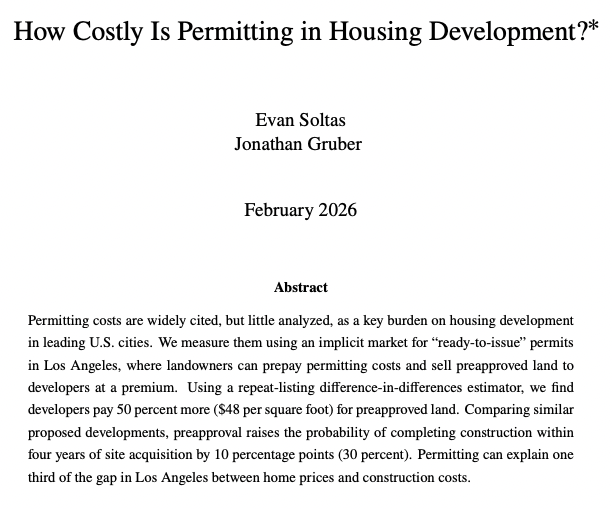
New paper (w/ Jon Gruber): What’s a building permit worth? And what can we learn about the importance of de-facto regulatory burdens versus de-jure constraints in housing development? We study these questions using a new setting: the market for land with preapproved permits.
Evan Soltas tweet media
English
17
139
569
137.8K
Hector Blanco รีทวีตแล้ว
Jorge Galindo
Jorge Galindo@JorgeGalindo·
¿Sabéis qué es lo bueno de la economía aplicada a las políticas públicas? Que toma una medida y se pregunta "oye, esto qué efectos va a tener REALMENTE". El Comité asume que el DESEO basta para que el objetivo se cumpla. Pero si abres tu mente, admites que el mundo es complejo y la gente decide de manera autónoma a tu deseo normativo, en seguida verás que una medida como esta tendría serios efectos negativos: → Si solo puede comprar quien entra a vivir, el mix de gente que llega a un barrio o a una ciudad corresponderá con quien puede comprar: clase media en adelante, no migrantes. → Quien se plantea comprar para alquilar a largo plazo (alguien me tiene que explicar muy despacio por qué esto sería "especular": ¿no queremos favorecer esta oferta?) no podrá hacerlo. → Es un "mira mejor no vengas" a quien se plantee construir para alquilar, o rehabilitar grandes bloques, o en general invertir en movilizar parque de vivienda. Las respuestas habituales a estas objeciones tienen el mismo pecado original: 🤬 "Pues regularemos quién puede comprar". Buena suerte haciendo eso y que la oferta no se vaya a pique por falta de incentivos para vender. 💵 "Daremos ayudas a la compra para los perfiles más vulnerables". Imaginad la captura de este dinero por parte del vendedor si la oferta no puede responder creciendo (construyendo). 🏛️ "Que compre el Estado". ¿Todo lo que salga a la venta (que no será mucho en estas condiciones)? ¿Con qué dinero/a qué precio? ¿Por qué este uso es superior a simplemente inversión en vivienda nueva de la que claramente hay déficit? Esto es lo bueno de la economía. Que te devuelve los pies al suelo. Y, si quieres, desde ahí puedes caminar hacia tu objetivo pisando sobre firme.
elDiario.es@eldiarioes

ÚLTIMA HORA | El comité de expertos de la Generalitat avala limitar la compra especulativa de viviendas en Catalunya eldiario.es/catalunya/comi…

Español
12
57
153
25.4K
Hector Blanco รีทวีตแล้ว
Urban Economics Association
Urban Economics Association@UrbanEconomics·
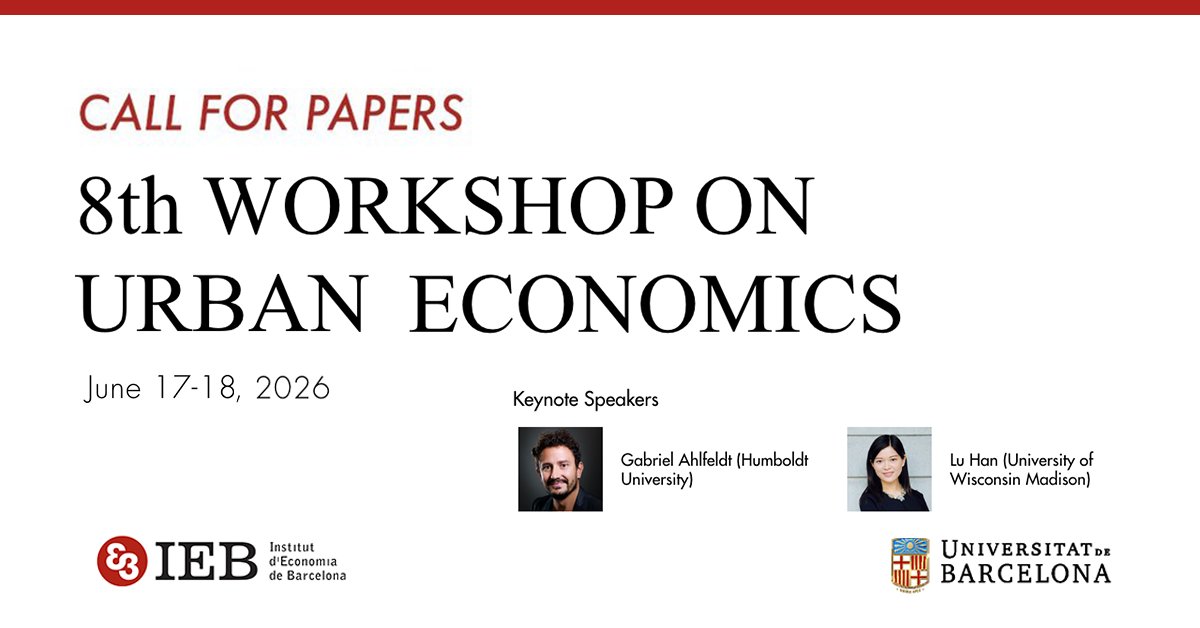
Of potential interest to UEA members: Call for Papers – IEB 8th Workshop on Urban Economics Barcelona, June 17–18, 2026 Keynotes: Gabriel Ahlfeldt and Lu Han Submission deadline: March 15, 2026 Details: ieb.ub.edu/wp-content/upl…
English
0
13
17
2.6K
Hector Blanco รีทวีตแล้ว
Tom Cui (Perpetual Amazement)
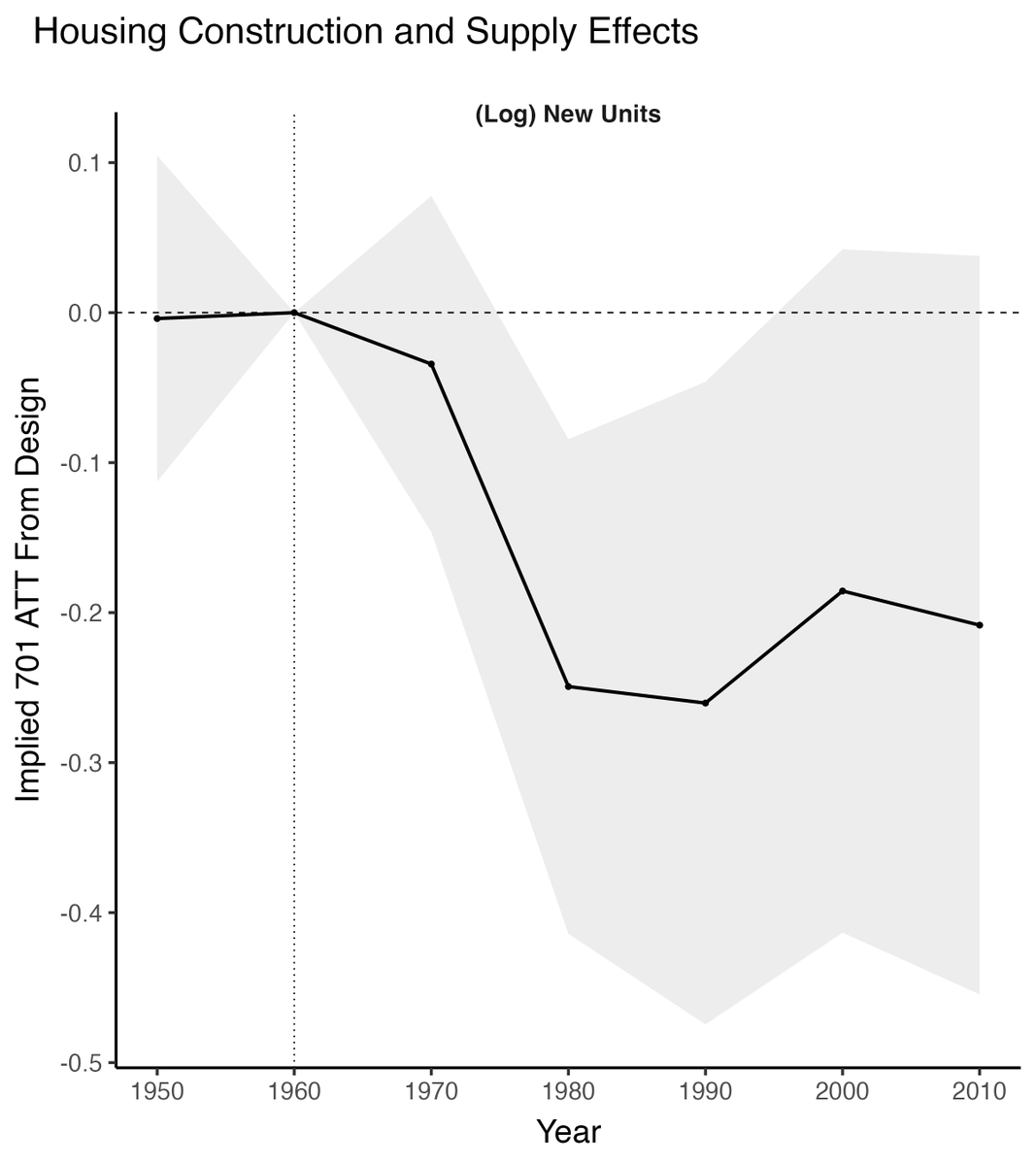
Why are many U.S. cities building less? Why have they insisted on a "thicket" of regulations that make housing hard to build? In a new #jobmarketpaper with @beau_bressler , I study how much of the answer lies with a forgotten federal program that taught cities to restrict growth
Tom Cui (Perpetual Amazement) tweet media
English
4
53
228
134.1K
Hector Blanco รีทวีตแล้ว
Martin Saavedra
Martin Saavedra@MartinHSaavedra·
My coauthor Tate Twinam and I have a new NBER working paper: “Shutting Down Japantown: The Effects of WWII Internment on Japanese Enclaves.” nber.org/papers/w34510 During WWII, the U.S. government incarcerated all Japanese Americans living on the West Coast (the “exclusion zone”) in internment camps. While there is a large literature on how internment affected the internees themselves, far less is known about what happened to the Japantowns and Little Tokyos they left behind. Were these neighborhoods repopulated by other minority groups? Or did Japanese Americans return and rebuild their historic enclaves? We digitize enumeration-district maps from the 1940 and 1950 censuses for 14 cities (representing newly every city with a significant Japanese population) and use them to track racial composition changes across thousands of neighborhoods. We find: The locations of Japanese enclaves proved remarkably resilient. But historic West Coast Japantowns lost 25–50% of their prewar Japanese American populations. The vacancies created by internment were filled almost one-for-one by Black households. Enclaves outside the exclusion zone boomed, gaining roughly 0.8 Japanese Americans for every Japanese American who was already there. These new enclaves, however, remained smaller than their West Coast predecessors.
Martin Saavedra tweet mediaMartin Saavedra tweet media
English
0
4
10
1K
Hector Blanco รีทวีตแล้ว
Libertad González
Libertad González@LibertadGonLu·
EALE 2026 in Barcelona! Deadline February 1, submit here: ub.edu/eale2026/
Libertad González tweet media
English
0
31
125
16K
Hector Blanco รีทวีตแล้ว
Martin Saavedra
Martin Saavedra@MartinHSaavedra·
I am pleased to announce the Rutgers Economics 2025–2026 Job Market candidates. We’ve got six students this year, all in applied microeconomics. economics.rutgers.edu/job-market They are: Ji Hye Choi’s fields are labor, household/gender economics, and crime. Her JMP studies the mechanism through which marriage reduces male criminal behavior, focusing on bargaining power within the household. Md Wahid Ferdous Ibon’s fields are labor, education, and development. His JMP studies whether the effect of parental job loss on college enrollment and dropout varies with the academic calendar. Shailee Manandhar’s fields are labor, development, and migration. Her JMP studies how the 2015 earthquake affected migration trends in Nepal. Roisin O'Neill’s fields are labor, public, and family/gender economics. Her JMP studies how paid family leave and paternal leave-taking affect the child penalty. Pim Pinitjitsamut’s fields are crime, urban, and labor economics. Her JMP studies the effect of arbitration caps on police performance in New Jersey. Tessie Krishna’s fields are health economics and the economics of crime. Her JMP studies the effects of a juvenile diversion program on recidivism.
English
0
6
35
8K
Hector Blanco รีทวีตแล้ว
Trade Diversion (Jonathan Dingel)
Trade Diversion (Jonathan Dingel)@TradeDiversion·
Spatial JMCs: Each year, I compile a list of spatial-economics job-market papers. To make sure you're on my list (& save me some work), please reply with your info in the following format: Firstname Surname (School) - JMP title - homepageURL [Trade JMCs: reply to other tweet]
Trade Diversion (Jonathan Dingel) tweet media
English
28
25
81
17.5K
Hector Blanco รีทวีตแล้ว
Michael Wiebe
Michael Wiebe@michael_wiebe·
Local control over zoning is a government failure, because restrictive zoning imposes a negative externality on non-residents who are priced out. Higher-level governments need to set zoning policy to internalize the externality.
Michael Wiebe tweet media
English
1
21
102
9K
Hector Blanco รีทวีตแล้ว
Nathaniel Hendren
Nathaniel Hendren@nhendren82·
📢 Call for Small Grant Proposals 📢 Measuring the causal effect of a policy change and seeking to measure its Marginal Value of Public Funds? Apply for an Early Career Scholars Grant @policyimpacts to support your work: policyimpacts.org/announcements/…
English
3
12
26
5.3K
Hector Blanco รีทวีตแล้ว
Zachary Liscow
Zachary Liscow@ZLiscow·
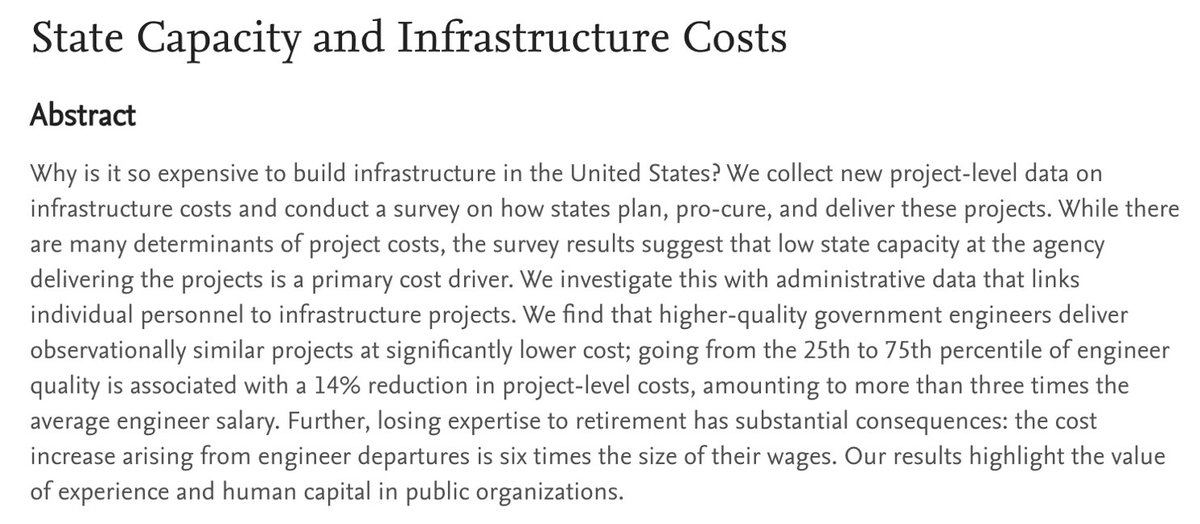
🚨NEW RESULTS (w/ @cailin_slattery & @WNober) - When gov't engineers retire, highway projects cost more: the engineers pay for themselves 6 times over - Improving gov’t engineer quality from the 25th to 75th percentile reduces costs by 14%, equal to 3x avg. engineer pay
Zachary Liscow tweet media
English
13
169
782
248.2K
Hector Blanco รีทวีตแล้ว
Filippo Tassinari
Filippo Tassinari@FilippoT7·
🚨 Our working paper The Price of Silence is out! Thrilled that @el_pais featured our research on noise & housing prices. Great to see our work making an impact beyond academia! 📰 Article (in Spanish): shorturl.at/rLBYC 📄 WP: shorturl.at/MheQ4 With @marimagagno
Filippo Tassinari tweet media
IEB@FundacioIEB

📃 IEB #WorkingPaper 2025/10 on #Cities: “The Price of Silence” By ✍️ Marianna Magagnoli (@marimagagno) and Filippo Tassinari (@FilippoT7) 🧵⬇️

English
1
6
32
2.2K
Hector Blanco
Hector Blanco@_Hector_Blanco·
A caveat of our results is that we focus on **highly localized** effects, where demand effects dominate, while regenerations may still contribute (albeit modestly) to city-wide affordability through broader supply effects. 9/9
English
0
0
0
31
Hector Blanco
Hector Blanco@_Hector_Blanco·
Implications: 1️⃣ Conversion to mixed-income housing while preserving the public housing stock can mitigate the negative effects of traditional public housing on neighborhoods 2️⃣ By improving amenities, it can also make housing less affordable in the **very local** vicinity 8/9
English
1
0
0
36
Hector Blanco
Hector Blanco@_Hector_Blanco·
🚨 Excited to share that my work w/ @lorenz_06, “Knocking it Down and Mixing it Up: The Impact of Public Housing Regenerations” found a home at @restatjournal. We study the impact of converting distressed public housing into mixed-income housing on local housing markets. 🧵👇1/9
The Review of Economics and Statistics (REStat)@restatjournal

Replacing distressed public housing with mixed-income housing raises local prices & improves local amenities. Just Accepted new paper by Hector Blanco @_Hector_Blanco and Lorenzo Neri @lorenz_06 zurl.co/YyIqS

English

1
5
23
2.5K