
Karen รีทวีตแล้ว

New York is a city of immigrants, by immigrants, and for immigrants.
Always has been, always will be.
English
Karen
94.4K posts





SCOOP: The Pentagon is preparing for weeks of ground operations in Iran, U.S. officials said, as thousands of American soldiers and Marines arrive in the Middle East for what could become a dangerous new phase of the war should President Donald Trump choose to escalate.


Trump: "You know, when I didn't get the Nobel Peace Prize. You gotta understand, I don't care. Norway has lost so credible. I stopped 8 wars. Stopping wars -- I think I do it the best. President Putin called me, he said, 'I can't believe you stopped this one!'"



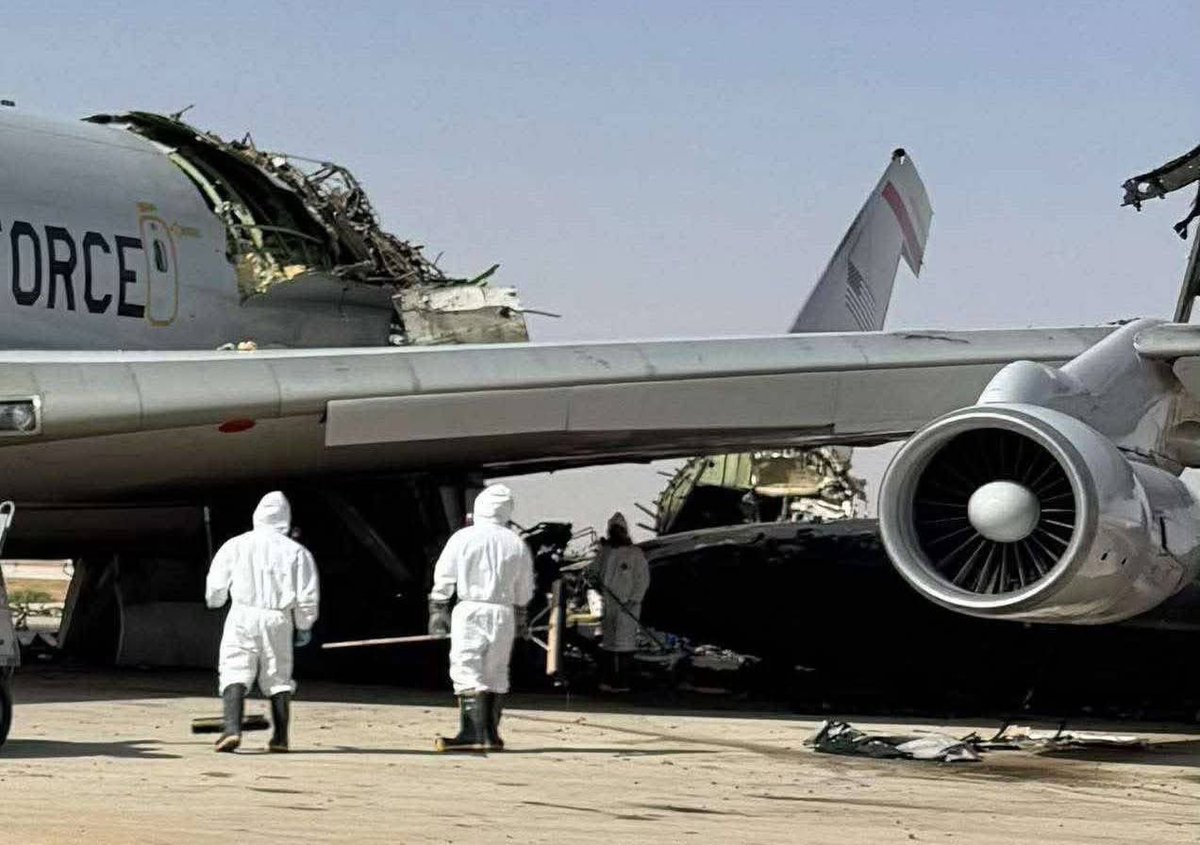
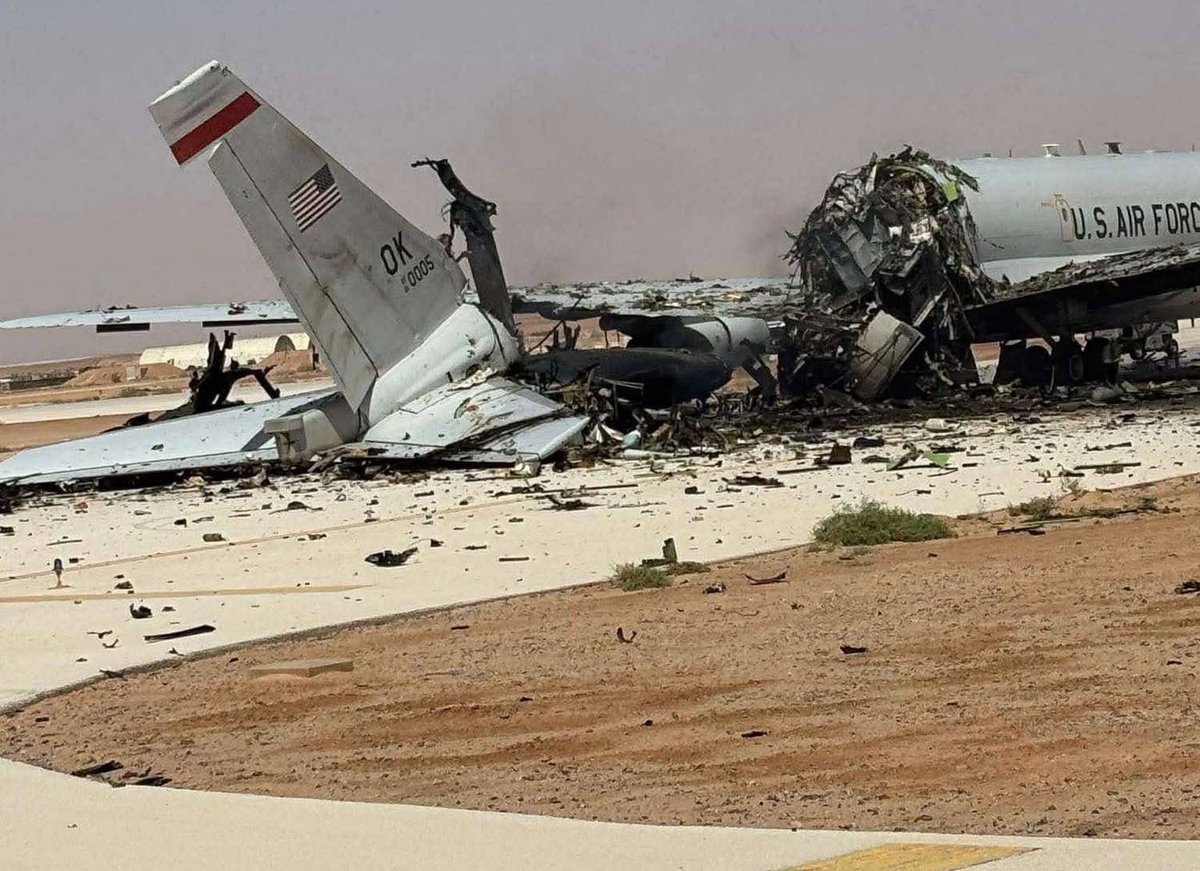
BREAKING: Iran just damaged one of America’s 16 remaining E-3 Sentry AWACS aircraft on the ground at Prince Sultan Air Base in Saudi Arabia. The Boeing 707 airframe that the E-3 is built on has not been manufactured since 1992. There is no production line. There are no new airframes. The replacement, the Boeing E-7 Wedgetail, will not arrive until 2028 at the earliest and has already slipped a year per Air and Space Forces Magazine. Each E-3 is worth $537 to $596 million in 2026 dollars. There are 16 left in the entire US Air Force inventory. Six were deployed to the Middle East for this war, nearly 40 percent of the global fleet per Army Recognition, leaving Alaska and the Indo-Pacific critically exposed. Iran hit one with a ballistic missile. On the ground. Parked on the flight line. Not in the air. Not in combat. On the apron at PSAB per satellite imagery confirmed by Defence Security Asia and Air and Space Forces Magazine. The strike also damaged several KC-135 Stratotanker refueling aircraft, five in some reports per WSJ and Reuters. Ten to twelve US troops were wounded, two seriously, with no fatalities per AP and NYT. The KC-135s are described as repairable. The E-3 sustained what officials call “notable” to “significant” damage. Some assessments say “possibly inoperable.” Here is why this matters more than any single missile strike in the war. The E-3 AWACS is the flying brain of American air operations. Its rotating radar dome tracks threats from surface to stratosphere across 250 miles. It coordinates every fighter, tanker, bomber, and intelligence aircraft in the theatre. In this war, the AWACS tracks Iranian Shahed drones, coordinates F-35 strike packages, and manages the interceptor network already burning through 18 months of Patriot production every four days. Lose one AWACS and you lose a command node that cannot be replaced at any price on any timeline. The E-7 replacement was cancelled by the Pentagon, reinstated by Congress, and will not fly until 2028. Sixteen former four-star Air Force generals wrote publicly that the gap cannot be filled by space-based sensors. And now one of the 16 is sitting damaged on a Saudi flight line because Iran parked a ballistic missile next to it. The arithmetic of irreplaceability connects to every thread in this war. The US fired 943 Patriot interceptors in four days and cannot produce them fast enough. It raided Swiss F-35 funds to cover the gap. Every F-35 flying over Iran carries 418 kilograms of Chinese-processed rare earth materials that cannot be sourced elsewhere for five to ten years. Ukraine is offering $2,100 interceptors because the $3.9 million ones are running out. And now an aircraft that literally cannot be rebuilt has been damaged by a weapon that costs a fraction of its value. This is not a war of attrition. This is a war against irreplaceability itself. Iran does not need to match American technology. It needs to damage things America cannot replace. A Patriot that is fired is gone. A Swiss account that is raided is empty. An AWACS that is hit on the ground is a hole in the sky that nothing can fill until 2028. The war is eating the things that cannot be eaten twice. open.substack.com/pub/shanakaans…

Trump: I like to hang out with losers because it makes me feel better.

Russian drone strikes destroy Ukraine maternity hospital full of newborns: 'This was pure terror' trib.al/J4lZJbD


Photos have surfaced showing extensive damage to US Air Force E-3 Sentry #AE11EA 81-0005 following the drone and missile attack at Prince Sultan Air Base yesterday that also damaged several KC-135s.



When I travel outside of Ukraine, I get daily intelligence updates online. This morning, I was briefed that U.S. military facilities in the Middle East and the Gulf region were photographed by Russian satellites in the interests of Iran. On March 24th, they imaged the U.S.–UK joint military facility on Diego Garcia located in the Chagos Archipelago in the Indian Ocean. They also captured pictures of Kuwait International Airport and parts of the infrastructure of the Greater Burgan oil field. On March 25th, they took pictures of the Prince Sultan Air Base in Saudi Arabia. The Shaybah oil and gas field in Saudi Arabia, İncirlik Air Base in Türkiye, and Al Udeid Air Base in Qatar were all imaged on March 26th. There are no Ukrainian facilities on this list. But who is helping whom when sanctions are lifted from an aggressor that earns daily revenue and provides intelligence for strikes against American, Middle Eastern, UK, and U.S.–UK bases and so on? When surveillance is carried out over facilities in Ukraine, we always understand that they must be protected, since plans are in motion to destroy them – energy and water infrastructure, military facilities, and so on. Everyone knows that repeated reconnaissance indicates preparations for strikes. How can sanctions be eased if this is what the Russians are doing? There must be pressure on the aggressor. And lifting sanctions is certainly not pressure. It looks strange. Sanctions are being lifted, while the aggressor is providing intelligence to strike facilities, including those of the countries that are discussing or have already lifted sanctions. From my conversation with journalists (3/3).
🔥 Leningrad: Russia's Kirishi refinery still burning 2 days after Ukraine hit.


Trump insiders explode over Stephen Miller's shadow rule... and reveal how 'puppet master' overrides the president: 'He needs to be fired' trib.al/MOuTUJZ
