
Aditi รีทวีตแล้ว
Aditi
3.5K posts

Aditi
@addymitra
Dancer. Photographer. Grammar Nazi. Narcissist
เข้าร่วม Kasım 2011
658 กำลังติดตาม220 ผู้ติดตาม
Aditi รีทวีตแล้ว
Aditi รีทวีตแล้ว
Aditi รีทวีตแล้ว
Aditi รีทวีตแล้ว

Please report this handle @Silverf0xred, I have reported and blocked. My notifications since yesterday is filled with violent abusive trash like him. But nicely cleaning up now with ample blocking. Reporting violent ones.

English
Aditi รีทวีตแล้ว

“I have Muslim friends that I’m close to but they have never expressed their anguish to me.”
It’s because they don’t trust you enough with their emotional well-being. They don’t even have the luxury of venting out their anxiety.
Just as men will never truly feel what it is like for a woman to live her life with her guard up, looking over her shoulder, a Hindu will never truly know what it is to live as a minority in India - your identity under threat 24x7.
From casual remarks in social circles to outright hatred being peddled in the media and on the streets, every single Muslim citizen is in some form of anguish over what’s happening, no matter where in the country they live.
This is not who we once aspired to be.
Everyone who has chosen to stay quiet when the fringe was just fringe - has enabled this venomous ecosystem our future generations will grow up in.
"I have *minority* friends” is a statement to make yourself feel better. They are not specimen samples to prove your misguided sense of inclusivity.
We all have hate-spewing relatives, friends, colleagues and neighbours. Call out their bigotry to their face or disconnect/distance from them. Please exit that toxic WhatsApp group.
We are far too deep within the rot to simply "adjust".
Do you realise that if those brainwashed youth on the streets had access to education, they would have been demanding jobs instead of blood?
It is easier for their masters to keep their raging testosterone occupied with destruction and unrest. None of those youth have any clue what their own religion stands for - let alone someone else’s.
Their frustration with life and lack of purpose has been brutally and strategically weaponised.
Maybe we don’t speak out enough because it is truly emotionally taxing to deal with trolls and online assault.
Compare that to people who are likely to be ostracised, disenfranchised, or even killed for merely belonging to another religion or to a tribe that’s settled for centuries on valuable land.
I pray to the universe that the hate doesn’t come to your door. That’s the nature of hate. Once released in the air, it finds its way into everyone’s nostrils.
Remember… for the one in love with power, everyone else is the enemy.
💪🏻🇮🇳❤️
English
Aditi รีทวีตแล้ว

The Teetotaler's Alcohol Problem.
What do men who never drank but with detectable alcohol in their livers, a bunch of mice, a terrifying bacteria and a bacteria-killing human friendly virus have in common?
Stay with me, to know about the futuristic hunt for a new type of warfare against non-alcoholic fatty liver disease.
Almost a year back, scientists at Amsterdam University Medical Centers looked at a group of people who never drank, but had fatty liver disease.
For fatty liver disease to develop, alcohol use is a common reason. But these people had non-alcoholic fatty livers because they never drank.
They did something interesting.
They took fasting blood samples from a vein the arm and samples from the portal vein, the largest vessel supplying blood to the liver.
In those with non-alcoholic fatty liver, the arm samples did not show alcohol content, but the portal vein blood did.
In individuals with non-alcoholic fatty liver disease, the alcohol (ethanol) concentrations were 187 times lower in peripheral (arm samples) as compared to portal vein (inside liver) blood.
When they looked at patients with non-alcoholic fatty liver who had disease progression, the alcohol content in the portal vein increased so much more.
The scientists were stumped. The patients were not drinking alcohol, but alcohol in the liver was found to cause fatty liver and further, progression of fatty liver.
Were they lying?
No they were not.
The patients were truthful, because alcohol was not detected within the main blood system. It was only inside the vein supplying the liver.
The liver was getting hit from "a ghost source" of alcohol and like the defender that it was meant to be, it was destroying all that alcohol that was coming into it, so that excess alcohol never made it to the main system, which is why arm blood samples did not have detectable alcohol. And in the process, the liver was developing fatty deposits.
Then they thought of and did something very cool. The liver was strategically placed near the intestines for it to "detox" the body from harmful byproducts of digestion/metabolism. And one of the toxins formed from metabolism - was alcohol.
They ran studies on intestinal tissue to see why the liver was getting hit by alcohol which they never drank - and found something surprising.
A group of bacteria in the intestines were producing alcohol from within, to which the liver was getting exposed to and in the process, developing fatty liver.
And this group of bacteria were more in those with metabolic diseases - obese/overweight, diabetes, high blood pressure and high lipids even when they did not drink alcohol and were absent in a group of people without metabolic disease.
But to their dismay, the team could not identify specific bacterial strains that produced high levels of alcohol - they could only find a correlation between a family of bacteria called Lactobacillacea (lactic acid bacteria)
But a specific high-alcohol-producing bacteria was already identified among Chinese non-alcohol drinkers with fatty liver previously - a terrible and sinister fellow by the name Klebsiella pneumonia
When a specific strain of the bacteria Klebsiella pneumonia (HiAlc Kpn) was transplanted into the intestines of germ-free mice (sterile mice) - the rodents developed severe fatty liver in the absence of alcohol feeding.
But there was something more disastrous. When mice were fed pure sugar (glucose) or high fat diet - when specific strain of Klebsiella was present, alcohol formation increased so much that it was detectable even in the blood as well as liver. The rodents were getting 'drunk' on sugar and fat without the need for alcohol.
In June 2023, just a month ago, a group of Chinese researchers did something incredible. They injected a bacteriophage - a type of large virus that eats bacteria - with special appetite for Klebsiella pneumonia into mice with severe fatty liver and found that as the big virus rammed through and ate up the dirty alcohol-producing bacteria, the fatty livers improved!
Crazy right?!
This brings forth a future of medical therapy called "Phage Therapy" where we use human friendly large viruses that can kill bad bacteria that harm us without our knowledge. Maybe a future treatment for severe non-alcoholic fatty liver disease is to use a special type of virus that can help us.
Remember their name - Bacteriophages.
Sources:
1] Identifying the fact that bacteria in intestine produces alcohol in non-drinkers with metabolic syndrome: nature.com/articles/s4159…
2] Identifying the bacteria that produces high-volume alcohol in the intestines: cell.com/cell-metabolis…
3] Using bacteriophage to kill bad bacteria in severe fatty liver disease: nature.com/articles/s4146…

English
Aditi รีทวีตแล้ว

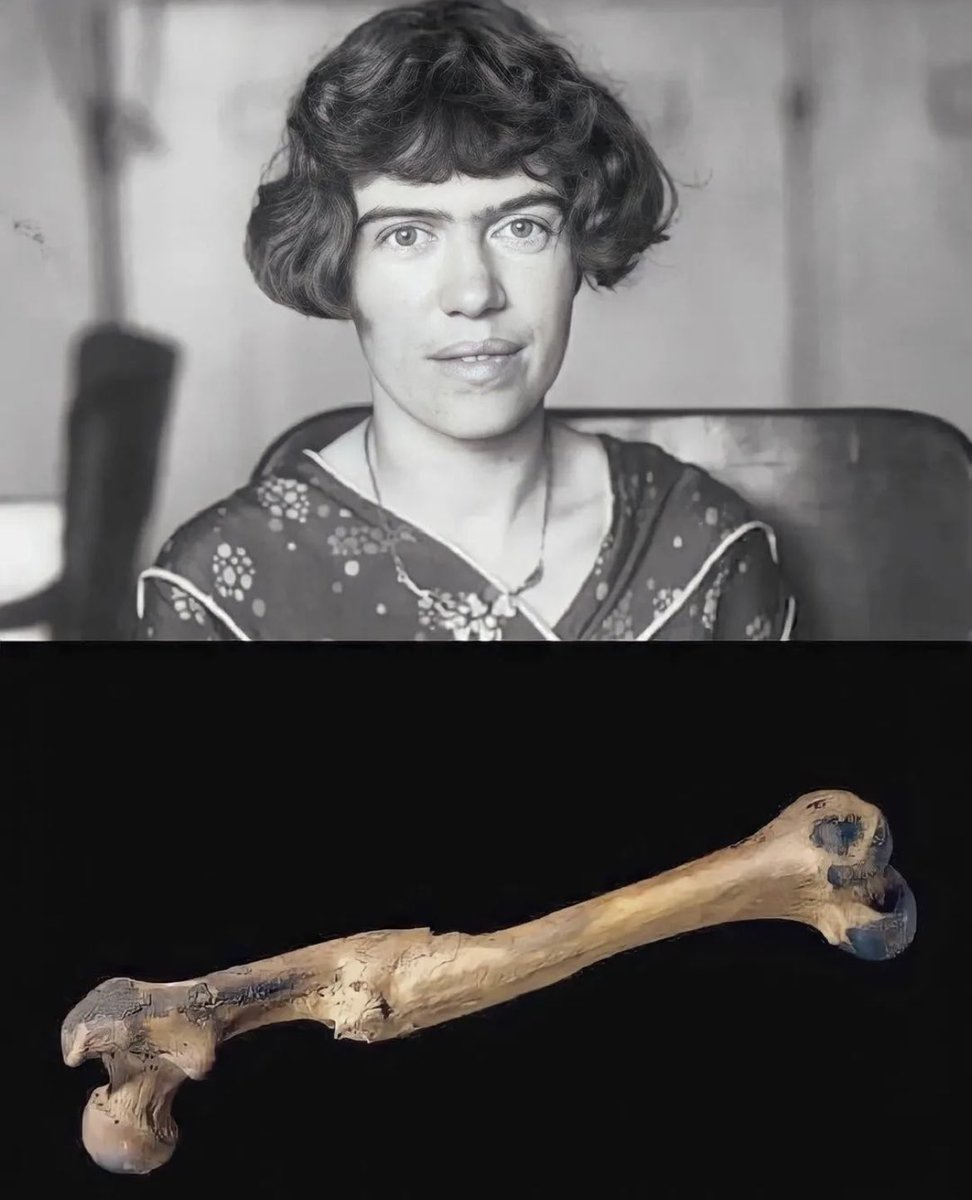
The concept of civilization is often associated with various tangible artifacts and advancements, such as tools, architecture, or systems of governance. However, anthropologist Margaret Mead presented a different perspective when she was asked about the first sign of civilization in a culture. Rather than focusing on material objects, she emphasized the significance of a healed femur bone.
In Mead's view, the animal kingdom provides a stark contrast to human civilization. When an animal breaks its leg, survival becomes nearly impossible. The inability to escape from danger, access water, or procure food renders the injured animal vulnerable to predators. Consequently, no animal lives long enough for a broken leg to heal naturally. Thus, the healing of a femur bone is a profound indication of civilization.
Why is a healed femur bone considered the first sign of civilization? Mead's explanation lies in the collective care and empathy demonstrated by a community. When someone breaks their leg, it is a moment of extreme vulnerability and danger. However, if the injured individual receives aid and support from others, they can overcome this critical period.
The act of caring for someone with a broken leg requires time, compassion, and a sense of responsibility towards others. Mead suggests that the healing process involves multiple steps. First, someone must have witnessed the accident and recognized the injured person's distress. Then, they would have provided immediate assistance, possibly by binding the wound and ensuring the person's safety. Finally, they would have stayed by their side, offering ongoing care and support during the recovery period.
By highlighting the significance of collective care, Mead emphasizes that civilization begins with the recognition of the suffering of others and the willingness to help. It is through acts of compassion and support that a community establishes its foundations of empathy, cooperation, and social cohesion. The healing of a broken femur, symbolizing the survival and recovery of an individual within a community, reflects the values and actions that underpin a civilized society.
Mead's perspective challenges the notion that civilization is solely determined by material progress or technological advancements. While such developments are undoubtedly important, they are built upon a deeper foundation of human connection and mutual aid. The healing of a broken femur bone serves as a metaphor for the care and support that individuals provide to one another, promoting the well-being and progress of society as a whole.
In conclusion, Margaret Mead's unconventional response to the question about the first sign of civilization reminds us of the fundamental importance of collective care. Civilization, she argues, is not solely defined by tangible artifacts or structures but by the empathy and support extended to those in need. The healing of a broken femur bone represents the compassion and responsibility that underpin a civilized society, highlighting the significance of human connection and mutual aid in fostering progress and well-being.

English
Aditi รีทวีตแล้ว
Aditi รีทวีตแล้ว
Aditi รีทวีตแล้ว
Aditi รีทวีตแล้ว

उस्ताद राशिद खान और हरिहरन जी की जुगलबंदी। दोनों कलाकारों में एक ख़ास रिश्ता है। उस्ताद राशिद खान आज जिस रामपुर सहसवां घराने का मज़बूत स्तंभ हैं उसी घराने के दिग्गज उस्ताद ग़ुलाम मुस्तफ़ा ख़ान हरि जी के गुरू थे
#Raaggiri
@SingerHariharan @rabbanimk @YRDeshmukh @hvgoenka @sumrag
हिन्दी
Aditi รีทวีตแล้ว
Aditi รีทวีตแล้ว
Aditi รีทวีตแล้ว

A fascinating visual guide to the various gaits utilized by canines when moving at different speeds.
Credit: Stephen Cunnane
twitter.com/o_betoaraujo/s…
English
Aditi รีทวีตแล้ว
Aditi รีทวีตแล้ว