Andy Glover

726 posts

Andy Glover banner
Andy Glover

Andy Glover

@andyecon

Research and Policy Advisor @KansasCityFed doing macro and labor; Minnesota PhD; Views and tweets are my own. Retweets ≠ endorsement. https://t.co/gHcXdyyG5O

Kansas City, MO เข้าร่วม Nisan 2018
815 กำลังติดตาม2K ผู้ติดตาม
Andy Glover
Andy Glover@andyecon·
@Noahpinion Interesting juxtaposition in that first photo - very beatnick looking room but that looks like a $5000 Sonor Vintage drum kit!
English
0
0
0
65
Noah Smith 🐇🇺🇸🇺🇦🇹🇼
Stanford used to have a place exactly like this, called Chi Theta Chi (an old frat house repurposed as a hippie co-op). But the university destroyed it, because of the "safetyism" of the 2010s.
Agence France-Presse@afpfr

🇯🇵 Le Foyer Yoshida de la prestigieuse Université de Kyoto est autogéré par les étudiants. Malgré les signes évidents d'insalubrité, ils le chérissent comme un bastion de la libre pensée, face à la hiérarchie stricte qui domine la société japonaise. ➡️ u.afp.com/SLgi


English
18
9
312
37.5K
Elena Pellegrini
Elena Pellegrini@Ele_Pellegrini·
Very excited to share that my job market is over and that I’ll be joining @UvA_Amsterdam as an Assistant Professor this fall! Looking forward to being part of such a fantastic department and moving to a really beautiful city 🇳🇱
Elena Pellegrini tweet media
English
28
7
466
27K
Jared Bernstein
Jared Bernstein@econJaredB·
Thanks for doing this and for the monthly updates. Important! Current u* of 4.9% seems quite high to me, esp given infl behavior post pandemic-shock when u was very low. Your lower bound of 4.2% seems more realistic and lines up with Fed SEP.
Andy Glover@andyecon

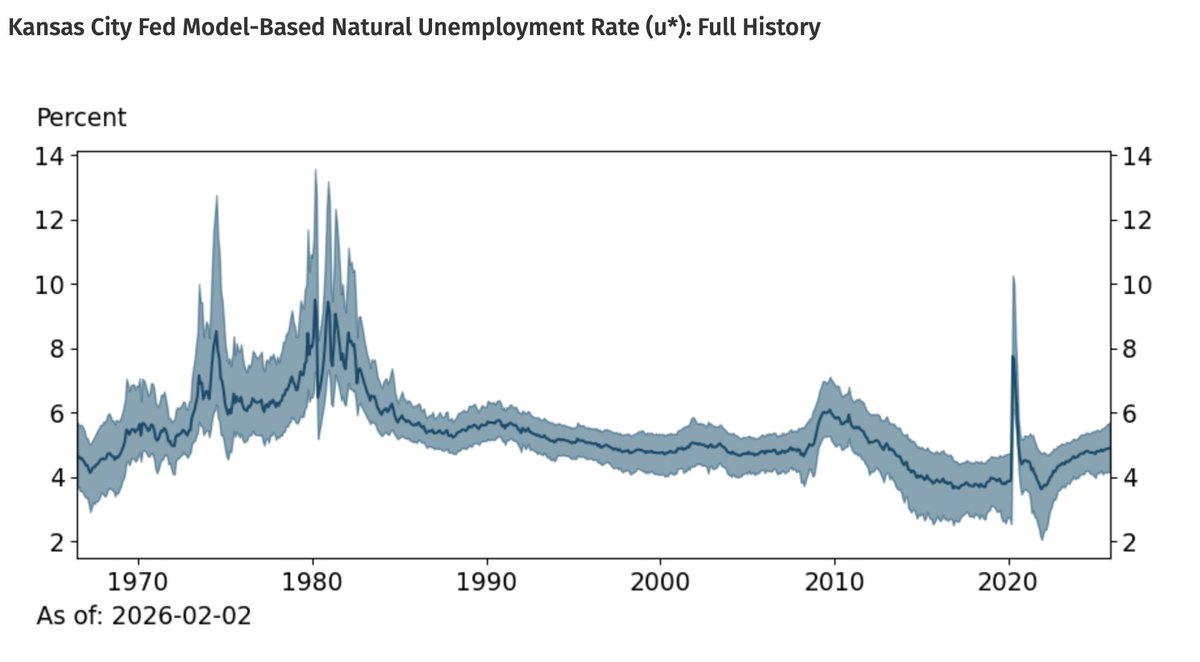
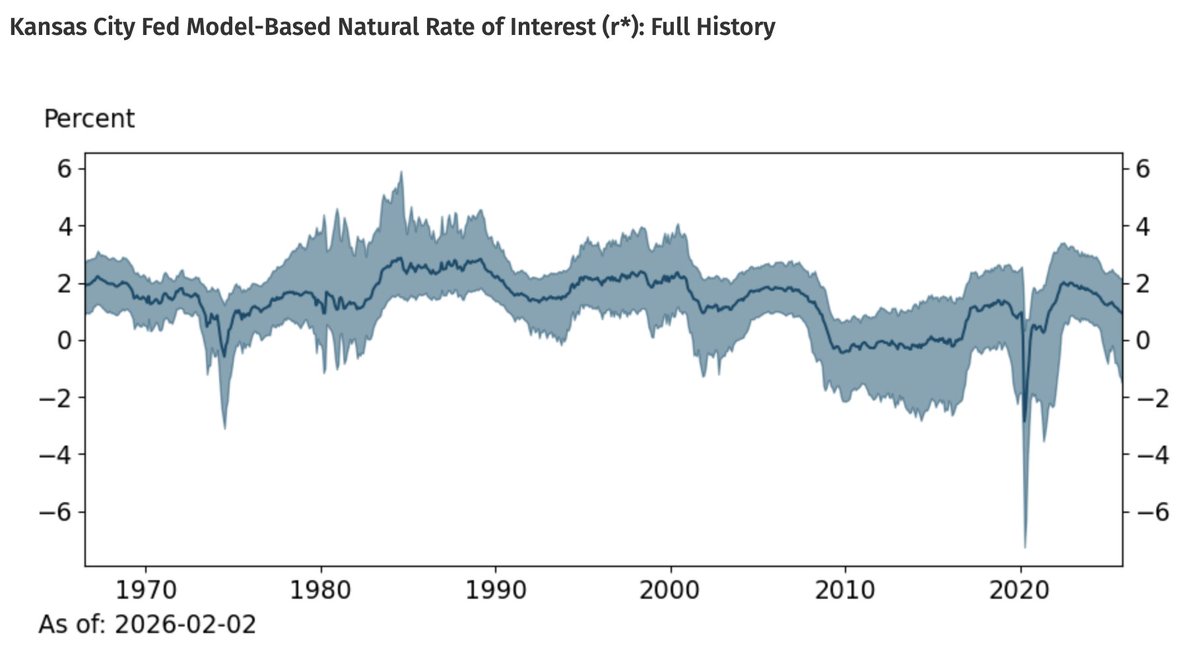
We have introduced the KC Fed Model-Based u* and r*, monthly estimates of these two vital objects. We use the methodology of Lubik and @cmatthes_econ on monthly data and unemployment rather than output growth. So what do the data look like?

English
1
1
4
691
David Andolfatto
David Andolfatto@dandolfa·
@andyecon Would be interesting to correlate tight/slack labor market against real wage growth.
English
3
0
2
112
Andy Glover
Andy Glover@andyecon·
The Federal Reserve has a dual mandate to ensure price stability and full employment. But how to tell if labor markets are at full employment and how to know what interest rate achieves the dual mandate? This requires estimating two time-varying objects: u* and r*.
Andy Glover tweet mediaAndy Glover tweet media
English
11
24
150
14.4K
Andy Glover
Andy Glover@andyecon·
@lucasian76 Lubik, Merone, and Robino estimate r* measures for Canada, the Eurozone, and the UK richmondfed.org/publications/r… But yes, the methodology could be applied to any country for which you have the relevant variables over a reasonably long period.
English
1
0
2
237
Andy Glover
Andy Glover@andyecon·
These series will be updated monthly from now on and available on a link that I will post in just a minute (I still don't quite know why, but people say not to post links on X).
English
0
0
9
737
Andy Glover
Andy Glover@andyecon·
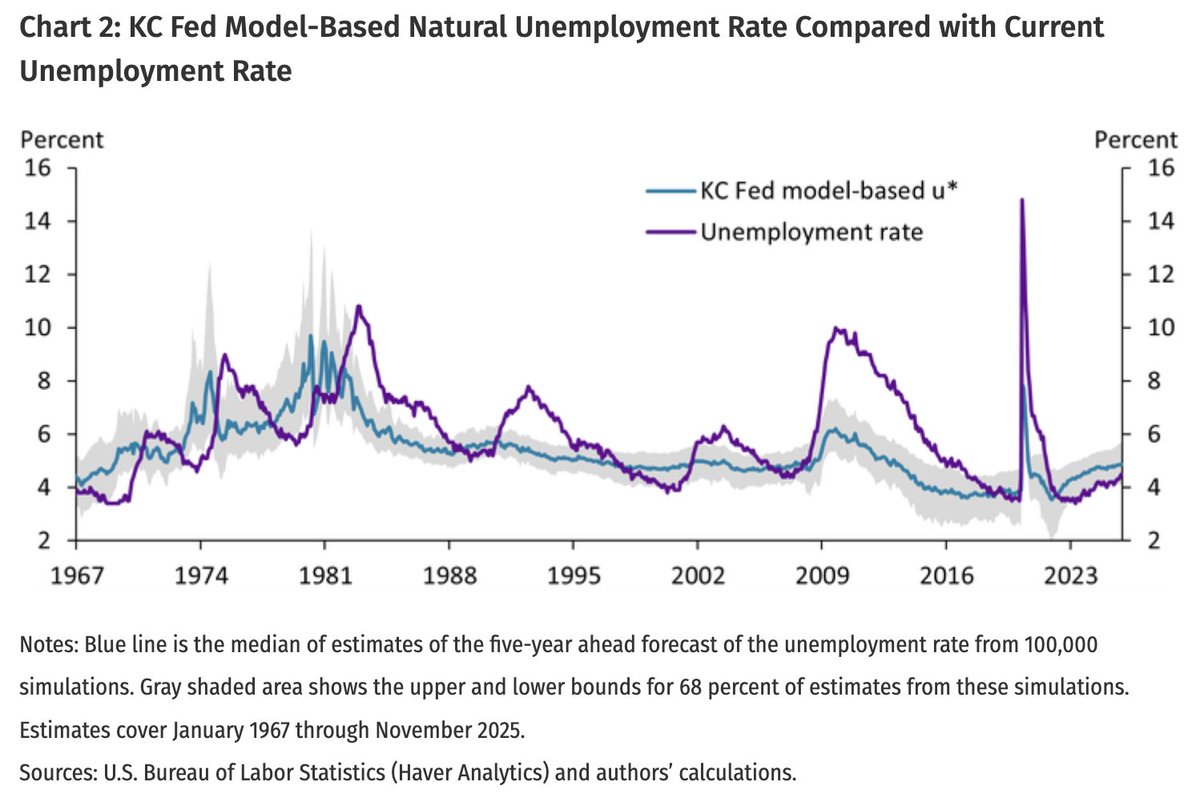
Relatedly, the KC Fed Model-Based u* indicates that labor markets were slack for most of the 2010's even with inflation below 2% and policy rates near zero. Labor markets became balanced a few years before the pandemic, became tight in 2022, and are now roughly balanced again.
Andy Glover tweet media
English
7
2
14
4K
Andy Glover
Andy Glover@andyecon·
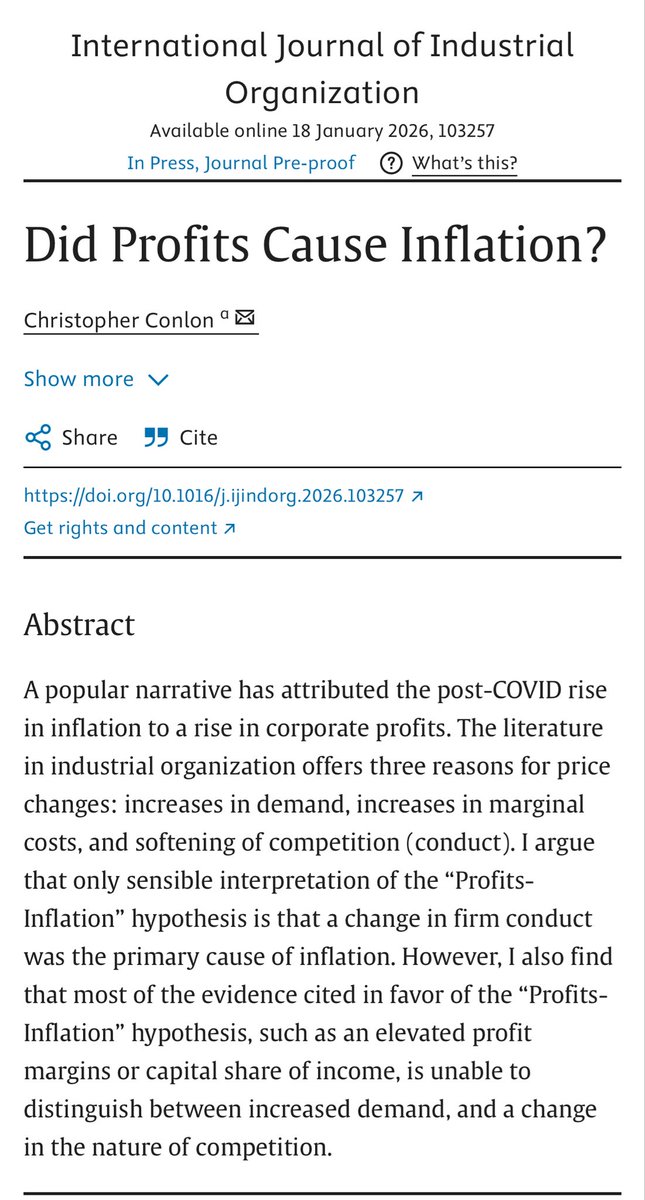
@conlon_chris @BrianCAlbrecht Hi Chris, thanks for citing us. One of our main points relates to your section 2.8 - in macro models, expectations of marginal costs affect prices today, so passthrough depends on persistence of current cost shocks and news about future cost shocks.
English
1
0
1
86
Andy Glover
Andy Glover@andyecon·
@roozbeh52 Ahh, ok, I had it confused! I def never had one of the hats
English
0
0
1
73
Andy Glover
Andy Glover@andyecon·
@t_holden I understand the theory for your suggestion, but in practice would it be very similar to using a popular “market-based” estimate of r* (like a real 5y5y forward)?
English
1
0
2
260
Tom Holden
Tom Holden@t_holden·
This is yet one more illustration of why r* is the wrong intercept for a monetary rule. Unobservables are invitations to make up your favourite numbers. The right intercept is the current observed real rate from TIPS. This delivers everything people wrongly imagine r* delivers.
Stephen Miran@SteveMiran

Today I worked through the arithmetic of how I came to my policy projections for appropriate monetary policy. There's a lot of numbers in the speech, but given the divergence between my views and other FOMC members, I felt it necessary to be meticulous and transparent.

English
4
9
63
11.6K
Andy Glover
Andy Glover@andyecon·
Did you read Nakamura, Riblier, and Steinsson's 2025 Jackson Hole paper "Beyond the Taylor Rule"? Check it out! It inspired Johnson Oliyide and I to check how much post-pandemic monetary policy diverged from our own specification of the Taylor Rule #Federal-Funds-Rate-Was-Lower-Than-Prescribed-by-the-Taylor-Rule-During-PostPandemic-Inflation-Surge-New-Research-Argues-This-Was-Appropriate-Policy" target="_blank" rel="nofollow noopener">kansascityfed.org/research/chart…
Andy Glover tweet media
English
2
0
21
1.5K
Andy Glover
Andy Glover@andyecon·
Like Nakamura, Riblier, and Steinsson's, our rule prescribes a higher policy rate post 2021. Our Rule's rates differ quantitatively from theirs, which reinforces their conclusion that optimal policy may not be well described by any given Taylor Rule.
English
0
0
0
142
Andy Glover
Andy Glover@andyecon·
In a new Charting the Economy, we use our own monthly estimate of the natural rate to calculate the prescribed federal funds rate from a Taylor Rule that tracks r* while responding to inflation deviations from 2% and the unemployment gap.
English
1
0
0
155