Anthony@anthohad
Saw a couple posts from people trying to wire Claude Code to delegate code reviews to Codex, so I tested it too and got to a relatively clean, simple setup. ( No MCP or Claude.md updates)
Here’s how I did it.
I use Claude Code in terminal as the main interface, but I have a dedicated reviewer agent that always runs Codex for:
- code review
- security review
- diff analysis
The pattern is:
Claude subagent -> Bash -> codex exec -> Codex output -> Claude summary
No MCP needed or complicated routing.
Setup
1) Install Codex CLI
Install it, then test it.
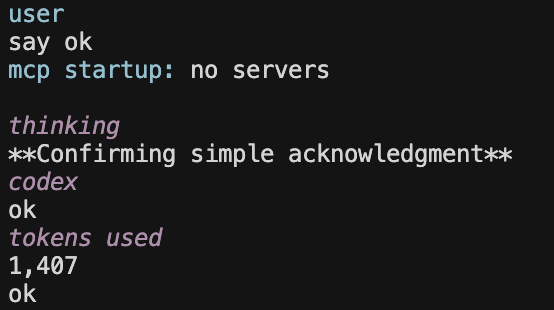
A quick test is:
codex exec "say ok"
If that works, you’re good.
2) Create a Claude Code subagent
In Claude Code:
/agents
Create a Personal agent (so it persists across repos), then choose Manual configuration.
I named mine:
codex-runner
3) Configure the agent properly
I gave it:
Bash tool (mandatory)
optional read-only tools
I also used a system prompt so it always shells out to Codex via CLI, then adds a short summary.
I set this subagent to Haiku because it’s mostly orchestration.
The correct way is to invoke the subagent directly with:
/agent:codex-runner review this repo for security issues or you can also just tell Claude to use codex-runner to review recent code changes.
Another issue I hit was that the agent showed up in one terminal, but not another.
It just needed a terminal/session refresh for Claude Code to pick up the newly created agent.
There are 2 separate model layers here:
Claude Code model (Haiku / Sonnet / Opus)
Codex CLI model (whatever Codex is configured to use)
So when the subagent runs codex exec, it uses the Codex model, not Claude’s model.
In my case, Codex was set to:
gpt-5.3-codex medium
So the split is basically:
Claude subagent model = orchestration
Codex model = actual code review
Codex CLI now does the heavy review work
Claude summarizes findings and helps with next steps
And honestly it’s good!
Been really enjoying coding with AI lately and hope this helps someone trying to set up the same flow.