
Ascent of Mount Carmel
27.4K posts
Ascent of Mount Carmel
@ascent_of
I administer the Ascent of Mount Carmel YouTube channel at: https://t.co/hjcZmpMhwO
เข้าร่วม Mayıs 2020
2 กำลังติดตาม5.8K ผู้ติดตาม
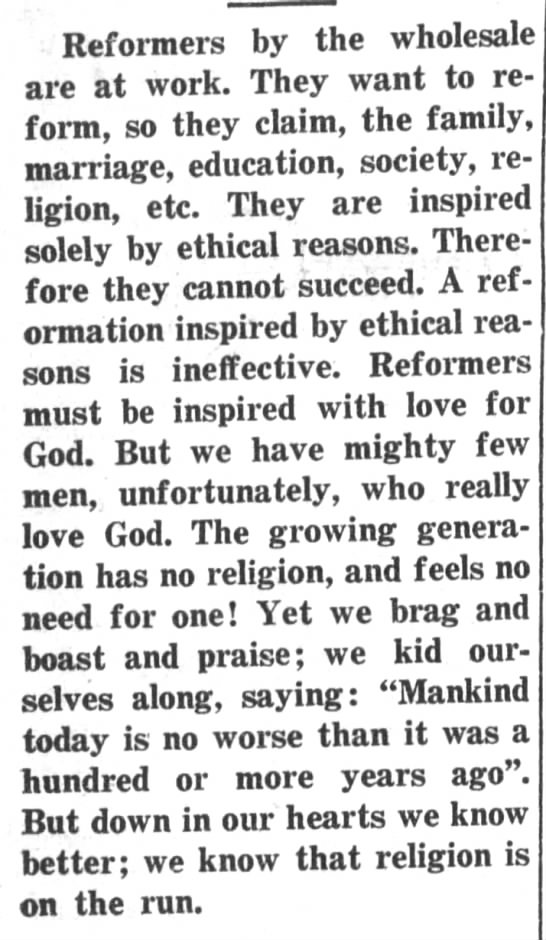
@RGuillimanXIII Catholic school children were taught that it was.
English

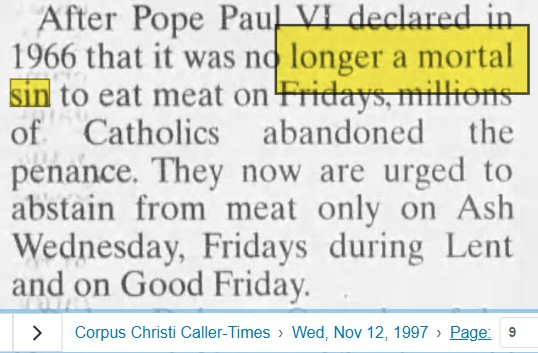
@ascent_of Eating meat on a Friday has never actually been a sin, mortal or otherwise.
English
@manu27641 @sudamerica1020 @Ordo_Militaris son of a gun. you are doing the work of a troll and drawing me in. This is truly my last response. St. John of the Cross was arrested by the spiritual fore fathers of the second Vatican Council. They were gangsters.
English
@ascent_of @sudamerica1020 @Ordo_Militaris And Saint John of the Cross was arrested in his time. And Saint Teresa of Avila was rejected in her time. If we are guided by the perception of the saints' work in their time, we will be left without saints.
English
@manu27641 @sudamerica1020 @Ordo_Militaris This is my last reply: "If there's no one who professes it." You don't need to be formally declared a heretic to be a heretic.
English
@ascent_of @sudamerica1020 @Ordo_Militaris No, we have a duty to reject all heresy. Even if you say you don't call anyone a heretic, what heresy are you rejecting then if there's no one who professes it? Logically, there must be a heretic for there to be a heresy.
English
@manu27641 @sudamerica1020 @Ordo_Militaris I've engaged with you for about a half an hour. If you want to study your faith (listed as an obligation by the Baltimore Catechism) that would be great. But I think this is going nowhere at this point.
English
@ascent_of @sudamerica1020 @Ordo_Militaris So, are the works of St. John Henry Newman post-conciliar even though they are from the 19th century? And is Pius XII also post-conciliar?
English

@manu27641 @sudamerica1020 @Ordo_Militaris I'm not calling anyone a heretic. We are under the duty to reject all seeming heresies.
English
@ascent_of @sudamerica1020 @Ordo_Militaris In what way has the Pope been declared a heretic? To be declared a heretic, there must be a formal declaration; it's not simply a matter of personal preference.
English
@manu27641 @sudamerica1020 @Ordo_Militaris development of doctrine is a novus ordo novelty. This was defined by Vatican I and throughout the Church's history.
English
@ascent_of @sudamerica1020 @Ordo_Militaris The Church has always had the authority to develop, clarify and discipline. That's not a Vatican II invention. Newman wrote about doctrinal development in 1845. Pius IX, a very pre-conciliar pope, affirmed it. This is nothing new.
English
@manu27641 @sudamerica1020 @Ordo_Militaris The popes who embrace this are in schism with the Church. Lay people who embrace this are also at risk. An ecumenical council anathamatized those who followed Pope Honrious I in his heresy. youtube.com/watch?v=XxoCiL…
YouTube
English
@ascent_of @sudamerica1020 @Ordo_Militaris You don't get to define which things are unchangeable and then accuse Rome of heresy when she exercises her own authority. That's putting yourself above the Magisterium while claiming to defend it.
English
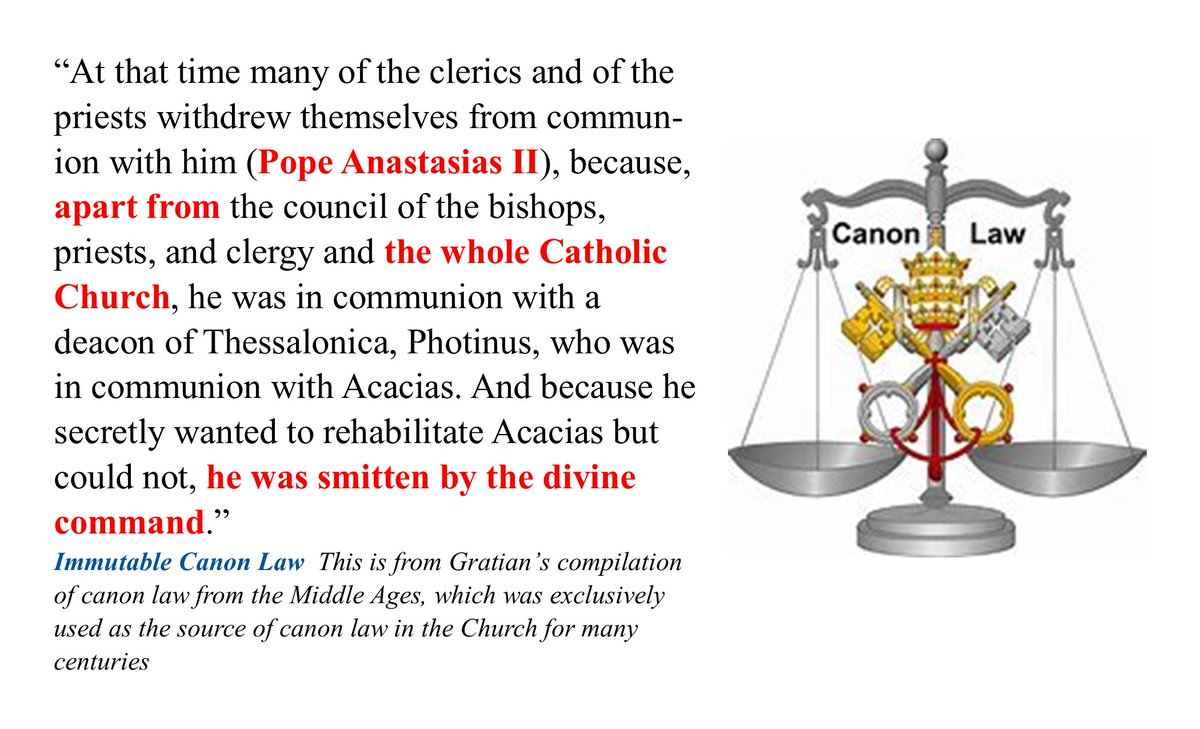
@ascent_of @sudamerica1020 @Ordo_Militaris St. John of the Cross submitted to the Church even when she imprisoned him. He didn't call her "noise." Using him as a mascot for resisting Church authority is honestly kind of ironic.
English
@ascent_of @sudamerica1020 @Ordo_Militaris Encouraging voluntary Friday abstinence? Totally fine. Beautiful, even. But that's a completely different thing from claiming there's an anathema that the Church never actually issued. One is piety, the other is a false historical claim.
English
@ascent_of @sudamerica1020 @Ordo_Militaris The Novus Ordo Mass was promulgated by a legitimate pope with full authority. You can prefer the Traditional Mass, that's valid. But calling the ordinary form of the Roman Rite "noise to block out" isn't traditional Catholicism, it's a schismatic mindset.
English
@manu27641 @sudamerica1020 @Ordo_Militaris The people following this page emulate St. John and are completely obedient to the legitimate authority of the Church as clearly outlined by the pre conciliar Church. We reject any changes to unchageable doctrines.
English
@ascent_of @sudamerica1020 @Ordo_Militaris There it is. This isn't really about St. John of the Cross. It's about rejecting the legitimate authority of the Catholic Church. St. John of the Cross was deeply obedient to the Church, by the way.
English
@ManFromPense You might want to check out my playlist on Ascent of Mount Carmel (intended as a Cliff Notes on the book) youtube.com/playlist?list=…
English

@ascent_of I have his collected works and cracked it last night. Just flipping through randomly, I see this is the spiritual, meditative and reverent Catholicism I've always been seeking. Going to give this a careful study!
English
As you might know, I'm working on a book on the Divine Mercy Devotion. ...I'm including this section on St. John of the Cross and private revelation.
St. John of the Cross on Private Revelation and Locutions
The Church’s traditional teaching on private revelation is expressed with particular clarity by St. John of the Cross in his Ascent of Mount Carmel.
First, he emphasizes the finality of divine revelation in Christ:
“In giving us, as He did, His Son, which is His Word, He had no other, and He spoke all things to us at once in this one Word, and He has no more to say.”
(Ascent of Mount Carmel, II, 22)
He continues:
“For what He spoke before to the prophets in parts, He has now spoken all at once by giving us the All, which is His Son.”
(Ascent of Mount Carmel, II, 22)
Thus, no new revelation can add to what has already been fully given in Christ.
At the same time, St. John warns that even when supernatural words are truly from God, they are not always understood correctly by the one who receives them:
“The words which God speaks to the soul are of themselves most certain and true; but, because of the low capacity of the soul, they are not always understood as they are said.”
(Ascent of Mount Carmel, II, 29)
He further cautions:
“God is not bound to make the soul understand clearly and distinctly what He says.”
(Ascent of Mount Carmel, II, 29)
And again:
“This can be seen in the case of the prophets, who, although they spoke by the Spirit of God, yet did not always understand what they said.”
(Ascent of Mount Carmel, II, 29)
For this reason, the apparent meaning of such locutions cannot be treated as certain without careful discernment.
St. John goes even further in warning of the dangers associated with such experiences, especially those that affect the external senses:
“So he that esteems such things errs greatly and exposes himself to great peril of being deceived; in any case he will have within himself a complete impediment to the attainment of spirituality.”
(Ascent of Mount Carmel, II, 11)
He adds:
“And thus it may always be supposed that such things as these are more likely to be of the devil than of God; for the devil has more influence in that which is exterior and corporeal, and can deceive a soul more easily thereby than by that which is more interior and spiritual.”
(Ascent of Mount Carmel, II, 11)
Such experiences also carry the danger of spiritual pride:
“…it is often visited, insidiously and secretly by a certain complacency, so that it thinks itself to be of some importance in the eyes of God; which is contrary to humility.”
(Ascent of Mount Carmel, II, 11)
For all these reasons, St. John gives a clear and consistent directive:
“It is always well, then, that the soul should reject these things, and close its eyes to them, whencesoever they come.”
(Ascent of Mount Carmel, II, 11)
Taken together, these principles establish that private revelations and locutions are not only unnecessary for salvation, but can also be a source of error, deception, and spiritual harm if relied upon. They must therefore be approached with great caution, measured against the teaching of the Church, and never treated as certain on the basis of their apparent meaning alone.
With these principles in mind, it is now possible to examine the claims found in the Diary.
English
@manu27641 @sudamerica1020 @Ordo_Militaris this page is devoted to St. John of the Cross. I encourage people to abstain and to block out the noise of the novus ordo church, not because we have to, but because it is the best thing for the soul.
English
@ascent_of @sudamerica1020 @Ordo_Militaris Nobody said "take the easy road." The argument is about what the Church has actually defined, not about whether penance is good. Of course penance is good. That's not the point.
English

@sudamerica1020 @Ordo_Militaris @ascent_of The Council of Gangra (c. 340 AD) did anathematize people around fasting, but read it carefully. It condemned those who rejected fasting out of heretical contempt for creation (Eustathians). That is completely different from a canonical Friday abstinence rule.
English


@ascent_of This isn’t divine law, it’s the law of the church. This can be changed if the Pope wants to do so.
English
