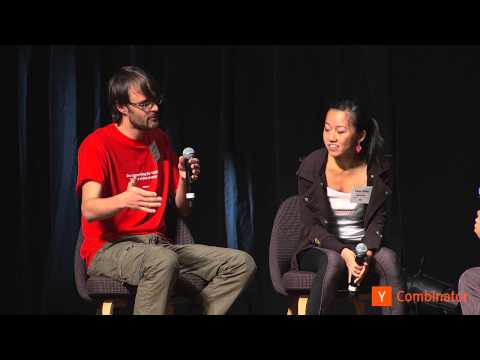
Adam Smith

2.6K posts

Adam Smith

Adam Smith

@asmith

Founded Xobni and Kite, MIT, YC 2006, VP Eng Affirm; https://t.co/IIGTe58e1P | https://t.co/SlPMsPYxHO | https://t.co/Uu6jnPYjFj


เข้าร่วม Nisan 2007
228 กำลังติดตาม5.1K ผู้ติดตาม
Adam Smith
Adam Smith@asmith·
@arronacosta Right now given limited model capabilities it’s a breadth of applications, e.g. consider AI’s revenue today. As technology develops you will be able to pay more for higher levels of intelligence on any given problem.
English
0
0
1
14
Arron Acosta
Arron Acosta@arronacosta·
@asmith Really interesting, Adam! I perceive that this makes sense. I’d like to better understand it, as I imagine you do. What are some upper-limit current and future applications? What might someone spend $1T or more on intelligence for?
English
1
0
0
22
Adam Smith
Adam Smith@asmith·
Most technologies are democratic because they top out on how much you can spend. There is no $100,000 iPhone. But AI won’t top out. You can just keep buying intelligence.
English
1
0
4
142
David Lieb
David Lieb@dflieb·
@ericmigi Couldn’t there be a design that trades noise cancellation for this with an in-ear bud?
English
2
0
2
3.6K
David Lieb
David Lieb@dflieb·
The AI device I think I want: - AirPods form factor - with wide angle cameras for context - with always-on ChatGPT voice mode - that knows when I’m talking vs other sounds (which it’s terrible at now) - that can respond reactively or be proactive I don’t think I want a display. I’ll have my phone in my pocket anyway.
English
47
8
228
105.3K
Kradle
Kradle@kradleai·
Hello World, we’re Kradle.ai We eval frontier models by putting them in simulations. So what happens when 6 frontier models compete in #Minecraft for GPUs? Video and 🧵
English
53
89
405
92.7K
Adam Smith
Adam Smith@asmith·
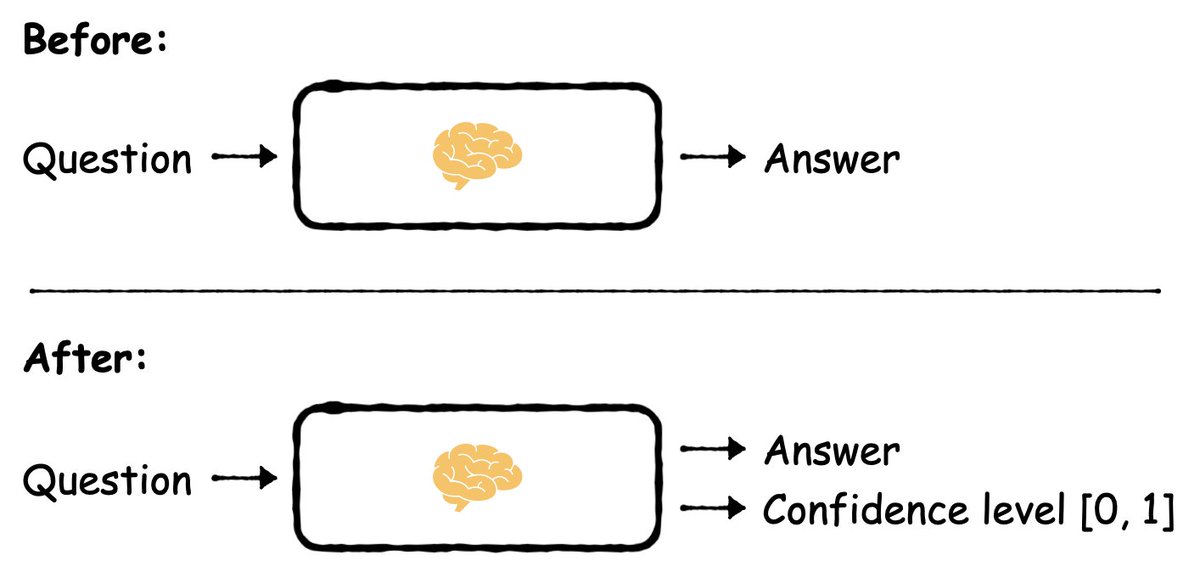
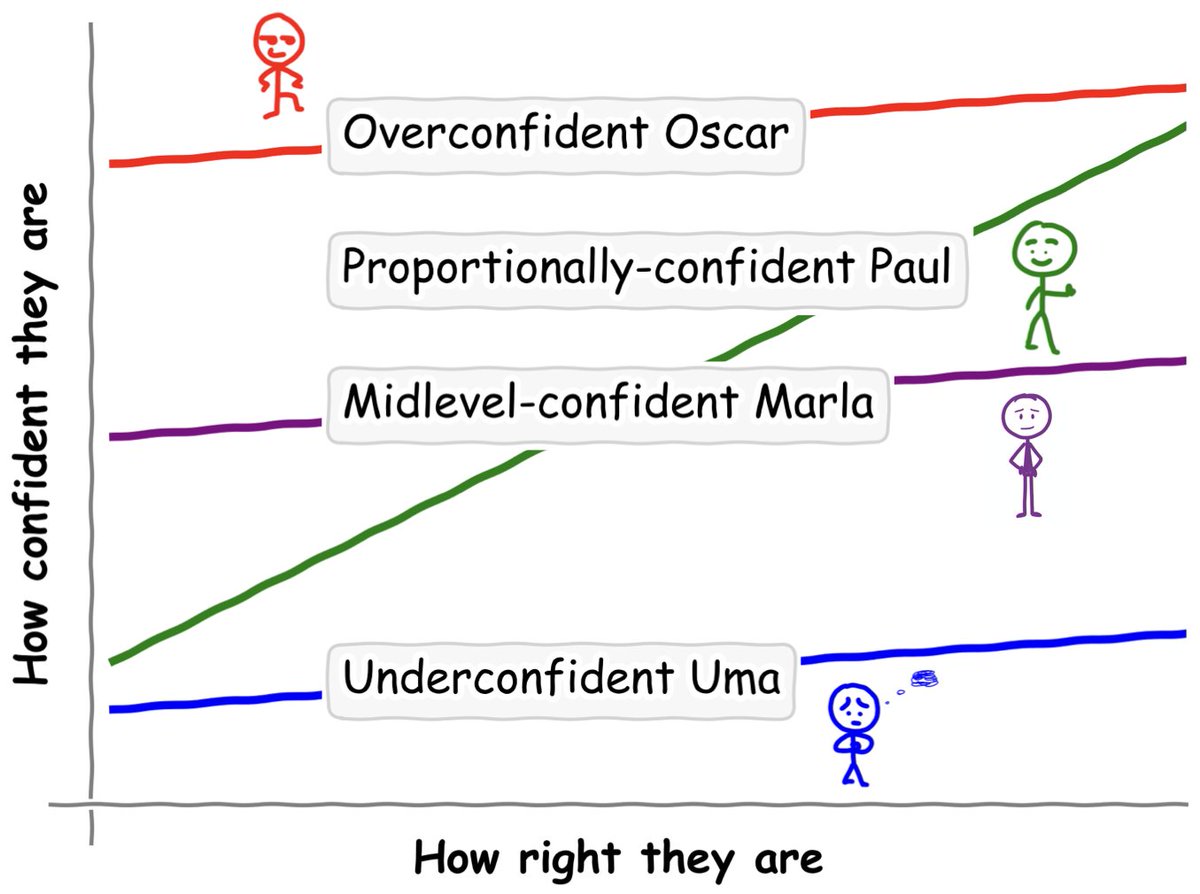
THE FOUR STYLES OF CONFIDENCE ON A TEAM I think of everyone as having a property: how strongly they state their opinions, divided by how right they actually are. There are four common buckets. People with high ratios are OVERCONFIDENT. They always pound the table, even when they’re wrong. Those with low ratios are UNDERCONFIDENT. They rarely speak up. MIDLEVEL-CONFIDENT people speak up, but never with either conviction or doubt. They are always “mid” confident. And finally, the PROPORTIONALLY-CONFIDENT are good at estimating how likely they are to be right, and communicating that confidence level to others. This is an underrated skill. CONFIDENCE STYLES IMPACT TEAMS Let’s order these four confidence styles by how they impact teams, from worst to best. The worst type is overconfidence. When someone is overconfident you may not get the benefit of any of the brains in the room, because conversations end too early. Suppose Overconfident Oscar makes a strong assertion. One person may think “If Oscar is so confident then maybe I’m wrong, so I won’t push back.” Someone else may think “Pushing back requires too much energy and social capital, so I’m going to pick my battles.” People withdraw. Underconfidence is somewhat better. Their teams miss the benefit of their brain, because they don’t speak up, but at least conversations don’t stop prematurely. Then there is midlevel confidence. Teams get their input, but no signal about how to weigh it. And finally, in the #1 spot, is PROPORTIONAL CONFIDENCE. Teams get their input, and signal about how likely it is to be right. We should all strive to be proportionally confident. HOW TO BECOME PROPORTIONALLY CONFIDENT Both individuals and teams can learn how to become proportionally confident. Let’s start with the how-to guide for individuals, and then turn to the manager toolkit. LEARN TO ESTIMATE HOW LIKELY YOU ARE TO BE RIGHT Although there are different playbooks for fixing over- versus underconfidence, both begin with knowing how likely you are to be right. When you learn this skill, your thinking goes from one dimension — “What do I think?” — to two dimensions: “What do I think, and how likely am I to be right?” Adding confidence levels to your thinking is like adding hot-water plumbing to a Victorian-era house that only has cold-water pipes. It takes a lot of work. You have to go one by one through every mental model you reason with, and watch it to estimate how often, and under what conditions, it is accurate. For example, I’ve interviewed hundreds of recruiting candidates over the years, and in addition to tuning my scores for candidates, I’ve also tried really hard to know how likely my scores are to be right. [1] You can develop this skill by tracking your positions against what actually happens in the end. Pay extra attention when you make a confident decision that turns out to be wrong. Knowing how likely you are to be right produces a bonus: it makes you more right anytime you combine reasoning from multiple mental models, which is very common, because you’ll be better at reconciling conflicting information. For example, suppose you are considering investing in a startup. The market seems great but the team seems like a B+. The more accurately you estimate how likely your team assessment is to be right, the better the overall decision you can make. [2] FIXING OVERCONFIDENCE Overconfident folks habitually try to persuade others without inviting pushback. This behavior squelches conversations, resulting in wrong answers and, in some cases, resentment. Fortunately overconfidence can be fixed and the potential gains are huge for you and your team. PERSUADE VS DISCOVER (DON’T MIX THEM) Be clear with yourself about when you are trying to persuade, versus trying to discover a truth. Do not attempt to do both at the same time. As Paul Graham wrote (paulgraham.com/discover.html), “Writing to persuade and writing to discover are diametrically opposed.” That’s true in writing, and it’s true in conversations. Sales roles sometimes train people to exude confidence when persuading, and they misapply that skill to decisionmaking. It’s great to be skilled at persuading someone of something [3], but it’s the wrong toolkit when you’re working with a team trying to find the best solution to a problem. BE OPEN TO CHANGING YOUR MIND When I was young I was sharp enough to defend incorrect ideas, so I would pick whatever position felt right, and then defend it vigorously. I could usually find technicalities or ambiguities in opposing arguments. That’s a great way to be wrong about a lot of things. As Jeff Bezos puts it, THE PEOPLE WHO ARE RIGHT THE MOST OFTEN CHANGE THEIR MINDS THE MOST OFTEN. This is my all-time favorite business one-liner. The inverse is also true: sticking to your guns will make you wrong more often. The best leaders update their opinions frequently. For example, here is Steve Jobs in 1995: “I don’t really care about being right — I just care about success. You’ll find a lot of people who will tell you I had a very strong opinion and they presented evidence to the contrary and five minutes later I completely changed my mind. I don’t mind being wrong, and I’ll admit that I’m wrong a lot. It doesn’t really matter to me. What matters is that we do the right thing.” —Steve Jobs, The Lost Interview (filmed 1995) Tactics: say “I think…”, “It seems like…”, or “This isn’t a strong opinion, but…” to qualify your positions so your ego is less attached. Also, find a team where you feel respected; established respect lowers the pressure to defend positions. FIXING UNDERCONFIDENCE Normally underconfident people express confidence in inverse proportion to how much pressure they feel to get along, instead of how right they are. Every human reading this is a social animal, and feels a desire to please others, fit in, and avoid conflict. This drive to fit in can be a problem. It undermines trust because trust is built by having and resolving conflict. It deprives your team of the perspectives you have to offer. And it can lead to burnout and disconnection because you are suppressing your inner truths. The underlying dynamics are usually psychological; here are a few practical solutions. CALIBRATE YOUR CONFIDENCE RATIO Mechanistically, watch how often others are more confident and less correct than you. Increase your confidence until your “How confident you are ÷ How right you are” ratio matches others on your team. WHO OWNS WHICH FEELINGS? You may avoid conflict because you’re taking responsibility for others’ feelings, but you are not responsible for others’ feelings. You may avoid conflict because you’d feel shame if someone reacts badly. You are responsible for working through those feelings of shame. PREPARE SCRIPTS FOR HIGH- VS LOW-CONFIDENCE OPINIONS Practice speaking up when you are not very confident (“I think this is right, but I’m curious what I may be missing…”) as distinct from when you are confident (“I feel confident that …”). Write a few phrases for both cases that sound authentic to you. OTHER RESOURCES See the books Radical Candor, Difficult Conversations, and Thanks for the Feedback. FIXING MIDLEVEL CONFIDENCE Midlevel-confident folks share their input and don’t crowd out others, but their teams get no signal about how to weigh that input. Decisions drag, risks hide in hedges, and postmortems reveal “We kinda knew, but no one put a stake in the ground.” Start paying attention to confidence levels: • How confident are you? • What would change your mind? • Force-rank lists — risks, solutions — by likelihood or impact • How bad would it be if we are wrong? • Specify loose confidence intervals • Vocally update your confidence level as new info surfaces FOR MANAGERS: BUILDING PROPORTIONALLY-CONFIDENT TEAMS It’s fun to be on teams that combine everyone’s knowledge to get the best answers. As a leader, you must deliberately build this dynamic: hire for proportional confidence, cultivate the right culture, and coach directly. HIRING WELL Screen for overconfidence. Measure the average force of someone’s opinions across topics. If it is always high, they’re overconfident — even without knowing who’s right. If you do know the material, you can detect overconfidence faster. When you push back, do they get curious and weigh the new information, or just dig in? Also avoid people who would never add their perspective (with more margin for error). Depending on the role, avoid the top ~10% most overconfident and the bottom ~5% most underconfident. Midlevel confidence is okay in most junior roles. For senior roles, look for dynamic range: some answers with confidence and others with appropriate humility. CULTURE Encourage people to change their minds easily and expect others to change often too. Senior folks should downplay confidence or go last to encourage discussion. COACHING Give feedback on this skill. Nudge underconfident people to share. Talk directly with overconfident people about impact on the team, share resources like this post, and give same-day course-correction feedback. WHEN IT ALL COMES TOGETHER A fun moment is when someone with high judgment and a track record of proportional confidence pounds the table. In a healthy culture, the team recognizes that signal and can rally around the decision, solving puzzles lower-functioning teams couldn’t. FAQ — STRONG OPINIONS, LOOSELY HELD? “Strong opinions loosely held” is three-quarters right. It’s always good to hold opinions loosely, but opinions should only be strong when they’re right. Assuming opinions are right half the time, “strong opinions” is right half the time; add the “loosely held” half and you get ~¾ right. I’m being a bit glib — the point is that the “strong” should be earned, not the default. FAQ — DON’T SOME HIGH-PERFORMING TEAMS YELL? There’s an exception: specialized teams that readily push back, where strongly stated opinions encourage more discussion. Steve Jobs’s exec team reportedly worked this way; Tim Cook later unwound that culture. It’s rare and still an antipattern for most teams. FAQ — “EXPERTS” Experts live on the right side of the “how right they are” axis, so it makes sense for them to project confidence. They get into trouble when they stray outside their circle of competence or the domain shifts under them. FAQ — “FOUNDER MODE” Paul Graham: paulgraham.com/foundermode.ht… Brian Chesky interview: youtube.com/watch?v=ViqxJY… Brian describes becoming relatively underconfident as Airbnb grew. Early on, companies often operate with proportional confidence; as you scale, you hire career executives who sometimes succeed by being overconfident. Founder Mode is founders recalibrating by asserting input more confidently. CONCLUSION Teams need more than smart people. They need people who can estimate how likely they are to be right and communicate that confidence. Individually: don’t be underconfident, and especially don’t be overconfident. Fixing overconfidence is one of the biggest unlocks on hard problems. As a builder of teams: avoid hiring the overconfident, create a culture that prizes changing minds, and coach this skill. Then you’ll get the benefit of all the brains in the room. NEXT UP “Team attitude” post coming soon. Sign up on my site to get new posts (low frequency). FOOTNOTES [1] It’s a particular blessing when someone you scored low gets hired anyway because you get to see the underlying truth once they are onboarded. [2] For startup investing, write down your predictions and revisit them 3–8 years later. Sobering and educational. [3] Focusing on persuasion is often an ineffective way to persuade anyway. If you believe in what you’re selling, have “discover” conversations by asking lots of questions and without holding tightly to your ideas.
YouTube video
YouTube
Adam Smith tweet media
English
2
0
2
361
Adam Smith
Adam Smith@asmith·
Every teammate has a confidence ratio: how strongly they state their opinions, divided by how right they actually are. The 4 styles—and why proportional confidence wins. 🧵
Adam Smith tweet media
English
2
1
5
684
Adam Smith
Adam Smith@asmith·
@eshear ‘Forecasting based on evidence’ implies a process that is more rigorous, e.g. with regularization applied to avoid overfitting, to have more predictive power
English
0
0
0
68
Emmett Shear
Emmett Shear@eshear·
What’s the difference between reading signs from the universe, and forecasting based on evidence?
English
126
7
297
46.9K
Adam Smith
Adam Smith@asmith·
@eshear I had a fun night one time coming **this** close to buying an old-school flight gyroscope. So cool.
English
0
0
0
98
Adam Smith
Adam Smith@asmith·
@jorispoort Yes, at least we are conscientious, which women seem to care more about!
Adam Smith tweet media
English
0
0
1
48
Joris Poort
Joris Poort@jorispoort·
@asmith Unfortunately many great founders and entrepreneurs are highly disagreeable... 😬
English
1
0
0
58
Adam Smith
Adam Smith@asmith·
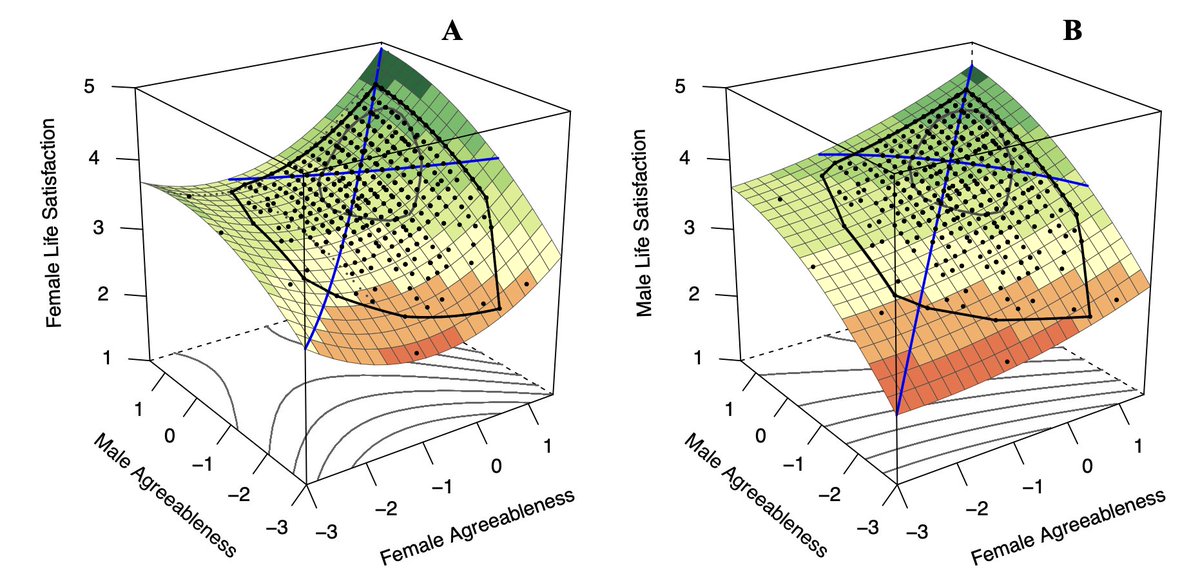
Female vs Male life satisfaction with varying levels of male-female partner agreeableness. Many interesting conclusions here
Adam Smith tweet media
English
2
0
1
444
Adam Smith
Adam Smith@asmith·
Source: Trait and facet personality similarity and relationship and life satisfaction in romantic couples, Supplementary Material
English
0
0
1
259
Adam Smith
Adam Smith@asmith·
In U2’s 2009 album, Bono says “The best of us are geniuses of compression.” That’s something one LLM might say to another 🤠
English
1
0
0
287
Adam Smith
Adam Smith@asmith·
@agupta There is something special about recording them
English
0
0
0
69
Ankit Gupta
Ankit Gupta@agupta·
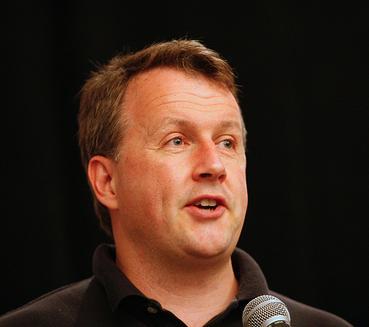
One of the most interesting things about watching this is 12 years later the YC interview hasn’t changed at all. Almost makes me wonder if we should bring back the live audience component
Adam Smith@asmith

Watch @typesfast pitch Flexport to Paul Graham and Sam Altman for the first time at Startup School 2013:

English
1
1
15
2.7K
Adam Smith
Adam Smith@asmith·
Watch @typesfast pitch Flexport to Paul Graham and Sam Altman for the first time at Startup School 2013:

English
57
79
1.6K
223.4K
Vedant Nair
Vedant Nair@vedantnair__·
what is your favorite @paulg essay? (pg if you're reading this i'd also love to hear your answer)
English
49
7
377
80.1K
Adam Smith รีทวีตแล้ว
Mark Cummins
Mark Cummins@mark_cummins·
OK, say it goes further and we get AI that's broadly superhuman across all domains. How do you invest for this? Does the question even make sense?
English
5
1
8
4.2K