

AstroScroll
366 posts

AstroScroll
@astroscroll
🌌 The universe is stranger than we imagine 🔭 Deep space, time & cosmic mysteries 🚀 Follow if curiosity controls you
Beyond the Stars ✨ เข้าร่วม Temmuz 2023
7.5K กำลังติดตาม1.8K ผู้ติดตาม
🚨🌕 Elon Musk says SpaceX plans to build a self-growing city on the Moon in under 10 YEARS — humanity is officially leaving Earth behind.


English
James Webb literally sees galaxies that are 13 billion years old, yet many people still insist Earth is just 6,000 years old. The contrast is wild.
English
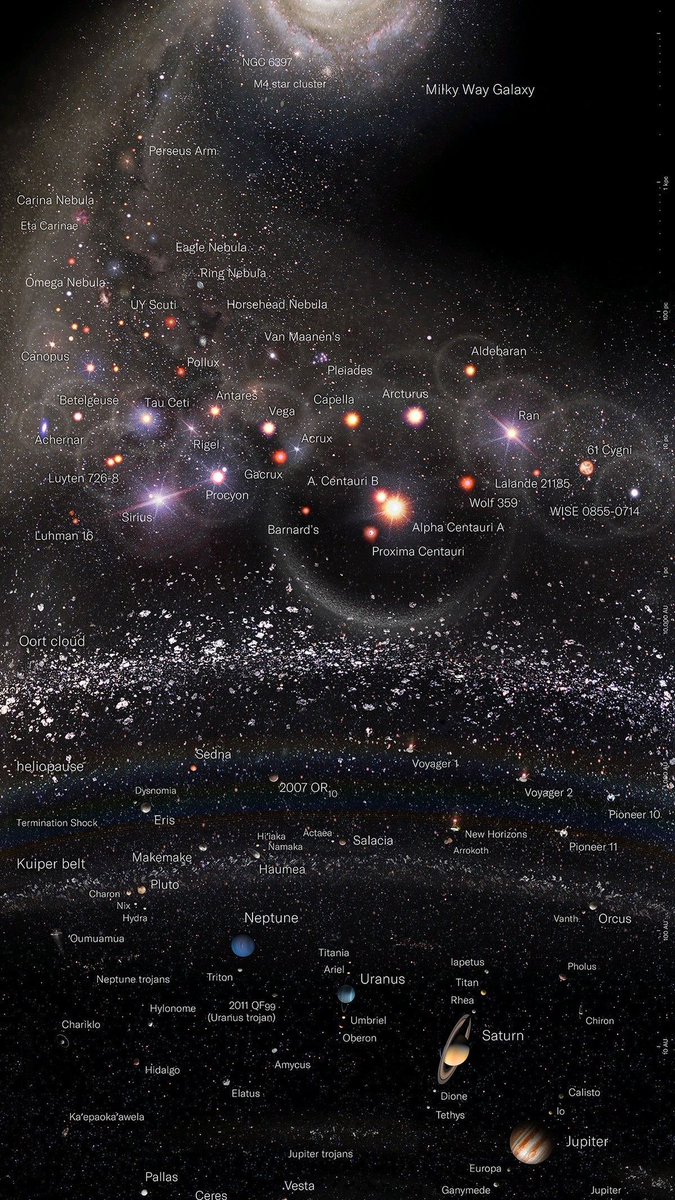
🚨 Scientists Finally Found a “Demon” Hiding in Plain Sight for 70 Years!
For decades, physicists have whispered about a strange, invisible particle, a massless “demon” that no one could detect. Predicted back in the 1950s, it was thought to exist only in theory… until now. Researchers have finally uncovered evidence of this ghostly particle inside a metal crystal, using ultra-precise experiments that can see what ordinary instruments cannot.
What makes it so mysterious? This “demon” doesn’t carry a charge and has no mass, making it almost impossible to spot. It’s not like the particles we’re used to, it’s a hidden rhythm inside matter itself, quietly oscillating, shaping the world in ways we’re only beginning to understand.
Could this discovery unlock new ways to control electricity or even create revolutionary materials?
Science is just starting to peek behind the curtain, and the secrets of this massless demon might change everything we thought we knew about the quantum world.
The question now is… what else has been hiding, waiting to be found?

English

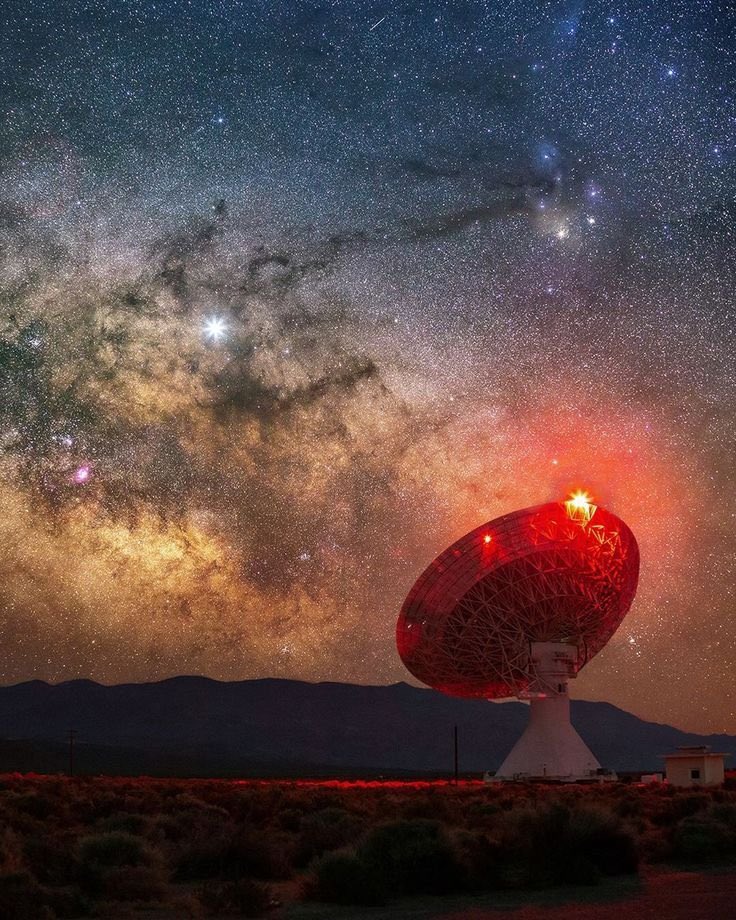
If you could send a message to an Alien civilization, what would you say?
English

While you slept last night, completely still in your bed, our galaxy moved millions of kilometers through the cosmos. You woke up in the same room, on the same planet, yet unimaginably far from where you were the night before.
The Milky Way is not drifting quietly through the universe. It is racing through space at around 600 kilometers per second, carrying billions of stars, planets, and everything on them along for the ride.
It is a good reminder that even when life feels motionless, you are always in motion.
English

A small moon of Saturn creating massive waves in the planet's rings.
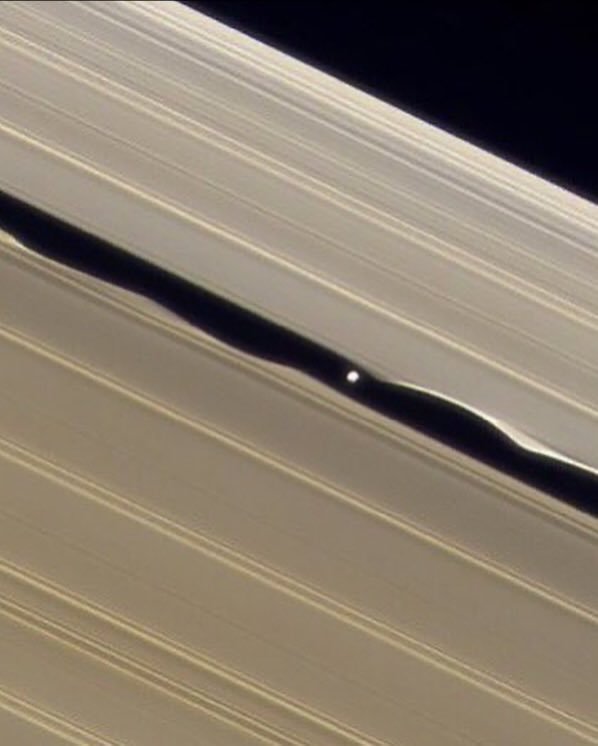

English


🚨: It took 9 years and 3 billion miles to get this shot. Pluto’s icy Mountains.
English
The Apollo 10 crew watches the Earthrise over the lunar horizon on May 21, 1969
English

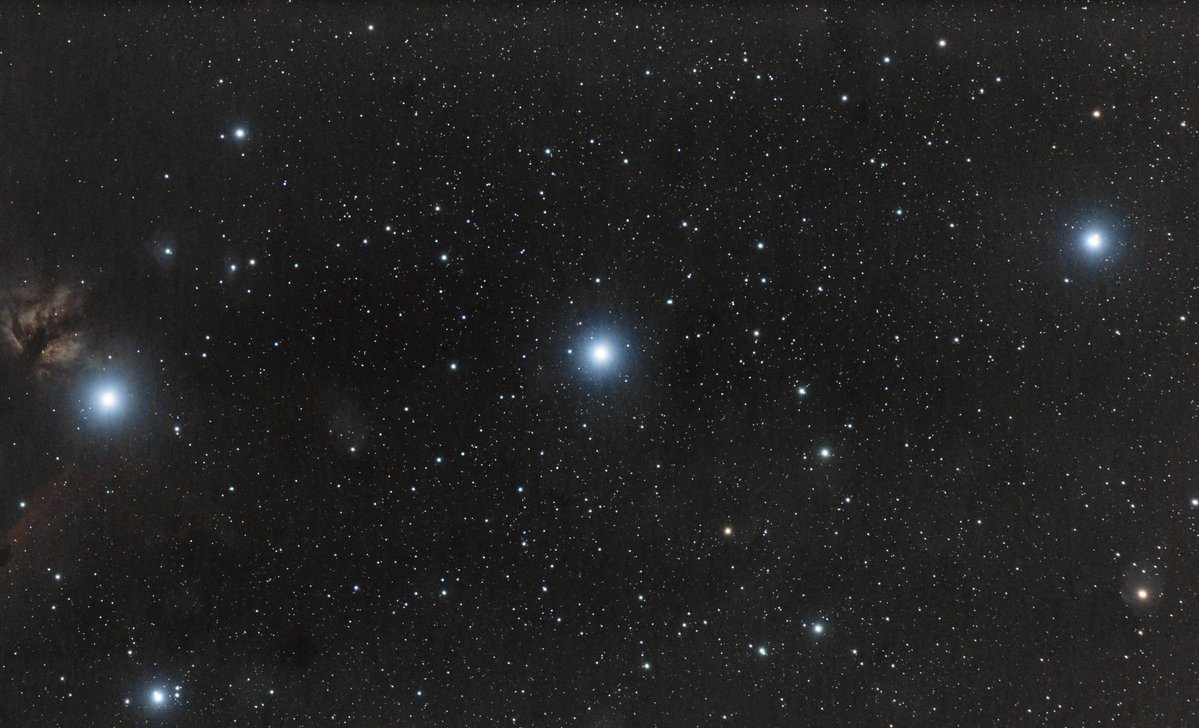
This view shows part of the stellar nursery called the Tarantula Nebula in the Large Magellanic Cloud, a small neighbor of the Milky Way. At the center lies the brilliant star VFTS 102, which is the fastest rotating star yet found.
CREDIT: ESO/M.-R. Cioni/VISTA Magellanic Cloud survey. Acknowledgment: Cambridge Astronomical Survey Unit

English

China’s quantum computer completed a task in 4 minutes that would literally take a supercomputer billions of years.
Chinese researchers have achieved a monumental breakthrough in quantum computing with their prototype, Jiuzhang. By counting 76 photons through Gaussian boson sampling, the system completed a calculation in four minutes that would take a traditional supercomputer billions of years. This achievement shatters the previous classical record of five photons, demonstrating how an intricate array of lasers and mirrors can outperform traditional silicon bits in complex processing tasks.
This milestone is more than just a speed record; it proves the viability of photon-based quantum mechanics in solving real-world challenges. From revolutionizing quantum chemistry to laying the groundwork for a secure, large-scale quantum internet, the principles of superposition and entanglement are moving from theoretical physics into functional technology. This shift promises to redefine our global computational limits, offering answers to mathematical problems once considered impossible to solve within a human lifetime.
source: Zhong, H.-S., Wang, H., Deng, Y.-H., Chen, M.-C., Peng, L.-C., Luo, Y.-L., ... & Pan, J.-W. (2020). Quantum computational advantage using photons. Science

English
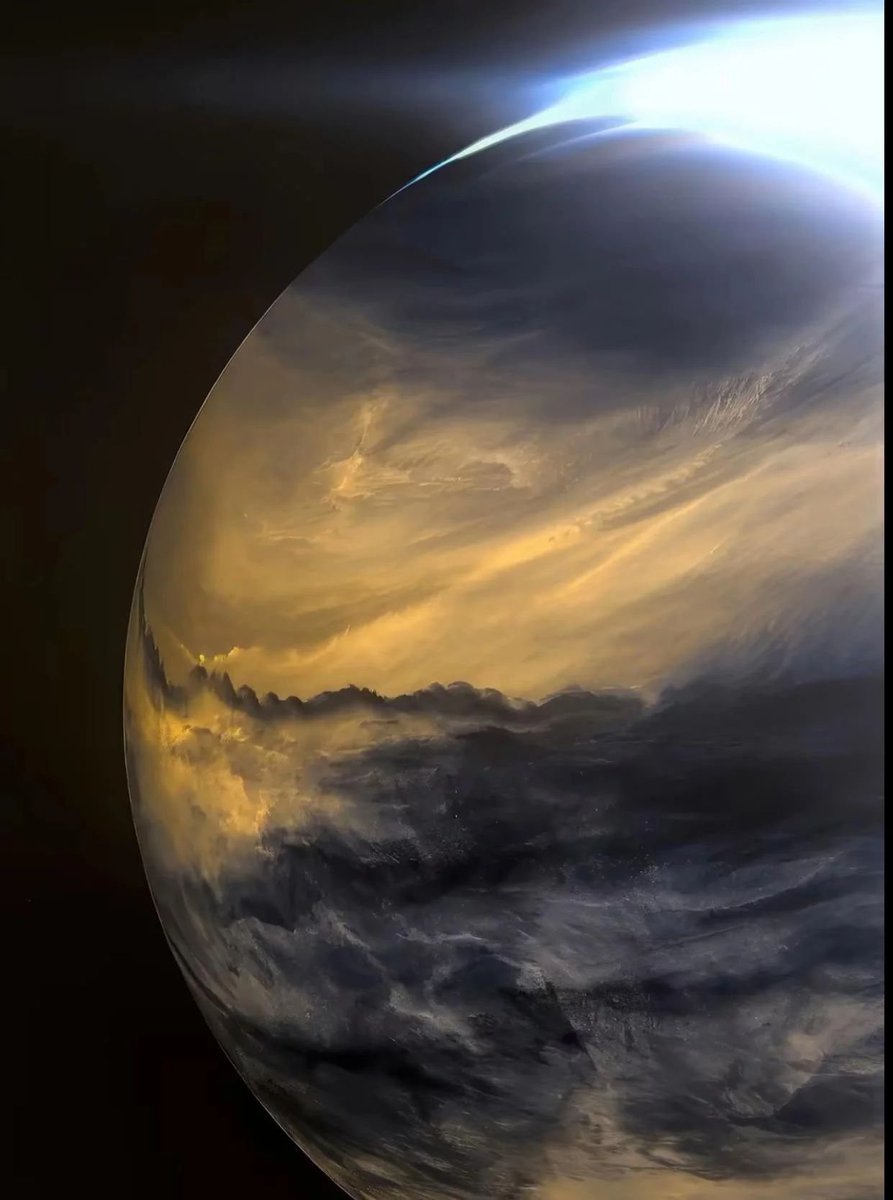
A day on Venus lasts 243 Earth days
A year on Venus lasts 225 Earth days

English