BADCHAN 🔻

57.6K posts

BADCHAN 🔻 banner
BADCHAN 🔻

BADCHAN 🔻

@b4dchan

Regimer ☭

เข้าร่วม Nisan 2015
3.2K กำลังติดตาม8.7K ผู้ติดตาม
ทวีตที่ปักหมุด
BADCHAN 🔻
BADCHAN 🔻@b4dchan·
Mohammad thanks everyone who has given to his campaign, confirming that he regularly receives your contributions. This is a scam-free campaign supporting an extended family with a newborn suffering genocide-induced developmental issues, failing to draw in what is needed for nutrition. Please chip-in & spread widely! Link in the comments: "Thank you everyone for your ongoing contributions. We have regularly received your contributions, which we are surviving on." The effects of genocide are causing terrible developmental issues for their newborn son, and their lack of financial resources, limiting their ability to provide adequate nutrition, only intensifies this. Mohammad asked me to share this extended note detailing their struggle: "I wanted to share with you what we’ve been going through lately regarding my little boy. He’s now about two and a half years old, and it’s been a really tough journey. It seems he suffered from oxygen deficiency at birth, but with everything that happened at the start of the war, his condition wasn't properly caught back then. Even now, he still can’t walk or speak, and his comprehension is quite limited. What’s frustrating is that we’ve taken him to so many neurologists and orthopedic specialists, and all the tests came back 'normal' and 'excellent,' yet there’s no progress. On top of that, the nerve medications he needs are nowhere to be found in Gaza. It’s a very heavy situation to handle, and I just wanted to keep you in the loop about our reality."
English
3
28
53
25.8K
BADCHAN 🔻
BADCHAN 🔻@b4dchan·
Theres no reason this pedophile cop should continue to have any voice in anti-imperialist discourse. Noone gets such slack. Except for operatives, of course.
English
0
1
3
63
BADCHAN 🔻
BADCHAN 🔻@b4dchan·
Just a reminder that Scott Ritter was busted on *three different occasions* trying to solicit sex from children on the internet, To Catch a Predator style. His problem with "Isreal" is that it's a sex offender safe haven for Jews only.
BADCHAN 🔻 tweet media
leila@ainiladra

hate @realscottritter ... such an arrogant prick

English
1
2
9
125
BADCHAN 🔻
BADCHAN 🔻@b4dchan·
@NickBAwesome @normalwomxn The point is that nationalism isnt determinate. If we say "nationalism bad", that means national liberation & self-determination — both necessarily nationalist — is bad. Not all nationalisms are forged from the same conditions. They must be judged discreteley & are thus neutral.
English
0
1
1
47
a botanist
a botanist@NickBAwesome·
@normalwomxn @b4dchan I have never found nationalism to be “neutral” It seems that in every context nationalism is an ideological poison
English
1
0
0
9
BADCHAN 🔻 รีทวีตแล้ว
BADCHAN 🔻
BADCHAN 🔻@b4dchan·
@tasawwufn I've been arguing this with fellow communists for ages and always got so much flack, glad the western propaganda narrative is finally starting to fall apart.
English
1
0
2
18
BADCHAN 🔻 รีทวีตแล้ว
Liwa | لواء
Liwa | لواء@tasawwufn·
“But Iran is now demonstrating (not only to subservient Arab regimes but to Europe and beyond) what substantive state sovereignty means in practice, while teaching how popular sovereignty emerges once a state has constructed the collective sovereign subject that reproduces it.” — This model of governing where the state and society remains in constant connection is what majority of the world dreams of, yet, due to Islamophobia, it is difficult for them to acknowledge the accomplishment of Iran in creating a third path away from the models of government in which we—western and eastern—where both have relation with materialism thus always seems to fall short. Even China had to betray its principles of communism to state capitalism in order for it to thrive, yet Iran has created its own way.
Amal Saad@amalsaad_lb

What Arab Regimes Fear Most Is Iran’s Example Even as missiles rain down on co-belligerent Arab regimes, Iran is perceived by them as a threat not primarily on account of its military power but because it embodies what sovereignty looks like when exercised as a political practice rather than as an empty formal claim, one that simultaneously indicts the past and destabilises the future. Until now, the Arab state system has operated on the premise that the US and Israel set the limits of the politically possible in the region and that regimes which accept those limits will be protected--an order maintained by a regional orthodoxy that framed subordination as a strategic and sovereign choice. But Iran is now demonstrating (not only to subservient Arab regimes but to Europe and beyond) what substantive state sovereignty means in practice, while teaching how popular sovereignty emerges once a state has constructed the collective sovereign subject that reproduces it. The result is a depth of popular identification in which even critics rally behind the state in moments of existential confrontation, defending not necessarily the government but the state as the political expression of the collective to which they belong. No Arab leader could possibly fathom how former protestors and even dissidents might refrain from undermining, much less rally behind their state in such moments, because no Arab state has constructed the collective sovereign subject that would make such identification possible. If this war confirms what is already becoming difficult to deny, that Iran and Hizbullah have imposed costs capable of deterring future aggression and reshaping the regional order, it will amount to a historical renewal of the Iranian revolution, bringing back into view the sovereignty question that gave rise to it and that the Arab order was built to suppress. The deeper danger for this order lies in that question which foregrounds what has long been concealed, that the surrender of sovereignty was always a political choice rather than a necessity and that the bargain demanding submission in exchange for protection ultimately delivered neither sovereignty nor security.

English
2
3
6
329
BADCHAN 🔻
BADCHAN 🔻@b4dchan·
@primarycatdad I agree that whisper campaigns shouldn't be tolerated, but am unconvinced that conflict should soley be moderated by orgs. Such precepts almost always lead to abusers who close ranks with the moderators so that they can advance their abuse.
English
0
0
0
30
Suburb Septembriseur
Suburb Septembriseur@primarycatdad·
Criticism between Marxists should be formal, submitted to the organization in question in writing, and the criticizer and criticized must be willing to have a dialogue for it to be of any use. Struggle must be formal, controlled, moderated. Whisper campaigns are fed work.
English
3
15
104
3.5K
BADCHAN 🔻 รีทวีตแล้ว
leila
leila@ainiladra·
he is arguing that iran is suicidal ... he is trying to convince everyone they must surrender or they will be permanently destroyed & he is scaremongering about nukes too ... he is definitely controlled opposition ... seen him do this too many times at critical moments
English
14
19
184
2.8K
BADCHAN 🔻 รีทวีตแล้ว
ج
ج@labaniyyeh·
@ainiladra @BIG__Brother7 yes. no one should be engaging with him or giving him a platform tbh blocked him long ago when he was very disrespectful to @EyesOnSouth1
English
0
1
13
496
BADCHAN 🔻 รีทวีตแล้ว
ܚࡅߺו𐬠ܘ߳ 𐭦ߺࡋߺـي
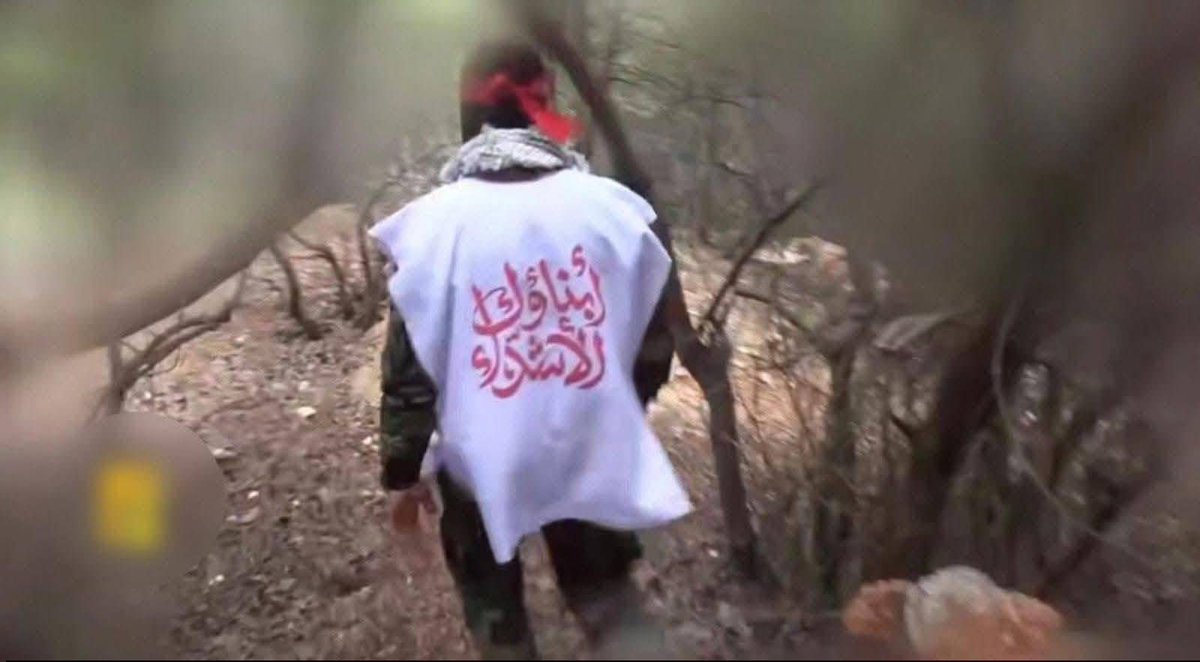
المجاهد الشاب فضل عوالا الذي ظهر قبل يومين وهو يرتدي الكفن ذهب الى ربه شهيـ ـدا مقبلا غير مدبر هنيئا لك الشهادة على طريق الحسين عليه السلام #العصف_المأكول
ܚࡅߺו𐬠ܘ߳ 𐭦ߺࡋߺـي tweet mediaܚࡅߺו𐬠ܘ߳ 𐭦ߺࡋߺـي tweet mediaܚࡅߺו𐬠ܘ߳ 𐭦ߺࡋߺـي tweet media
العربية
14
81
381
17.3K
BADCHAN 🔻 รีทวีตแล้ว
Mujamma Haraket
Mujamma Haraket@MujammaHaraket·
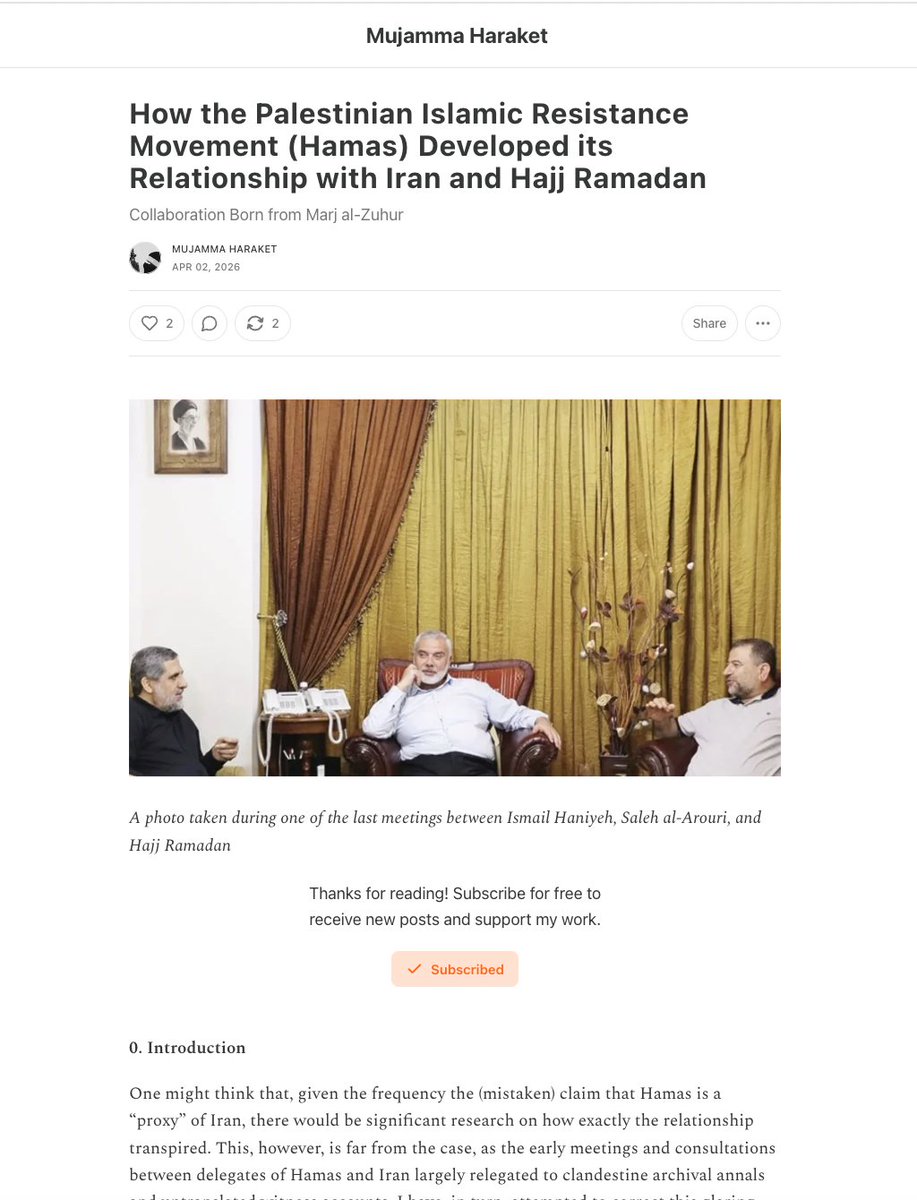
I have just published my new article, "How the Palestinian Islamic Resistance Movement Developed its Relationship with Iran and Hajj Ramadan." This article recounts the beginning of the Iran's relationship with the Islamic resistance began, reviewing the close collaboration cultivated between Mohammad Saeed Izadi (“Hajj Ramadan”) of the IRGC. Consulting various archival resources, witness accounts, and primary sources circulated in Arabic platforms, I seek to illuminate the historical record by focusing on the earliest points of contact. Part 1 describes Mojtaba Abtahi’s meetings with the Palestinian Islamic Movement in 1985 at a hotel in the Cypriot city of Larnaca and, following Ayatollah Khamenei’s exhortations, an Iranian delegation represented by Homayoun Alizadeh and Asghar Mohammad meeting Hamas leaders Musa Abu Marzouk and Khalil al-Quqa in the United Arab Emirates in 1992. It also adumbrates the significance of Iran’s Conference in Support of the Intifada. Part 2 turns to Hajj Ramadan’s 1992 fraternization with Hamas leaders in "Marj al-Zuhur," southern Lebanon, when over 400 Palestinian leaders were exiled by the occupation. After elaborating on the legacy of this introduction, which galvanized shared military training and weapons-system engineering between the IRGC and Hamas’ Izz al-Din al-Qassam Brigades, I conclude by reproducing two obituary letters, hitherto not translated into English—one by the Secretary-General of PIJ, Commander Ziyad al-Nakhalah, and another by Hamas political bureau leader Khalil al-Hayya—published after Hajj Ramadan’s recent martyrdom by the Zionist entity on 21 June 2025. The article is linked in the first comment below. EXCERT: "[...] Iran’s work with Hamas was the result of a decision by Ayatollah Khamenei, based on a recommendation from the Ministry of Foreign Affairs and the IRGC’s external intelligence work (as the IRGC’s Quds Force had not yet been established). [...] The Republic’s leadership settled the matter in a meeting attended by representatives of the Ministry of Foreign Affairs, the Revolutionary Guards, and the office of Ayatollah Montazeri, who oversaw external activities. [...] As Ali Asghar Mohammadi reveals, 'there existed differing viewpoints.' While some encouraged establishing ties with the movement, others were more uncertain and advocated for waiting until it became clear what the Hamas movement’s presence and influence would amount to. The Iranian Ministry of Foreign Affairs initiated relations with the movement, and the former Minister of Foreign Affairs, Ali Akbar Velayati, and Sheikh al-Islam all played leading roles in shaping this decision. [...] While the 1991 meeting with Ali Akbar Velayati laid the groundwork for the diplomatic relationship between Iran and Hamas, Marj al-Zuhur was pivotal in broadening the nascent resistance channels to include Hamas’ Gazan leadership. Hajj Ramadan treated the deportees as a unified body rather than as separate factions. He and his team assisted with establishing the Marj al-Zuhur camp’s infrastructure, including the erection of tents and the provision of essential supplies under harsh winter conditions. From the outset, he developed a plan oriented toward the deportees’ eventual return to Palestine, while simultaneously seeking to reduce factional divisions within the camp and to facilitate cooperation among its members. Hajj Ramadan spent 13 months with the deportees. He ate, slept, and sat with them, providing for their needs to the best of his ability. Additionally, [...] Hajj Ramadan provided 'training' to the exiled Palestinians. Specifically, early during Hajj Ramadan’s stay in Marj al-Zuhur, Hamas broached the question of whether Iran could train and prepare some of its resistance fighters; Iran responded by organizing military courses for dozens of exiles. Although the Iranians had offered to train Hamas members prior to Marj al-Zuhur, the Palestinian movement had been somewhat cagey at first. But as trust built, in large part due to Hajj Ramadan’s presence, this dissipated. Palestinian groups then began traveling to Iran to undergo military exercises and workshops [...] Hajj Ramadan, held a meeting with Hamas leaders on the second day after the exiles’ arrival. Mahmoud al-Zahar, who attended the meeting, recalls that: 'Hajj Ramadan introduced himself as an Iranian official and then told us: "We are at your service."’ The Iranians quickly provided significant logistical support to the deportees, including supplies necessary for a long stay—such as tents, blankets, and medicine. They also reunited some of the deportees with their families in private vehicles from Jordan. [...] Marj al-Zuhur was a major breakthrough for the Iranians in the Palestinian cause."
Mujamma Haraket tweet media
English
3
109
279
14.8K
BADCHAN 🔻 รีทวีตแล้ว
Hamed Seyed-allaei🔎
I knew Dr. Kamal Kharazi from my time in cognitive science. He has a PhD in industrial psychology from the University of Houston, and he used his connections to build something like an NIH for cognitive science in Iran — funding research, founding institutes. Today, his home was bombed. His wife was killed. He is critically injured. Either this was indiscriminate — bombing residential neighborhoods — which is terrifying. Or it was targeted — assassinating an 80-year-old academic-diplomat in his home — which is also terrifying. There is no good version of this story. And now I'm thinking about my other colleagues still in Iran.
Narjes Rahmati 🟩☫🟥 نرجس رحمتی@Narjes_Rahmati

Today, the US-Israel bombed the home of Dr. Kamal Kharazi, Iran's former foreign minister. The bombing resulted in the martyrdom of Dr. Kharazi's wife. Dr. Kharazi is severely injured.

English
440
6.1K
15.9K
643.4K
BADCHAN 🔻 รีทวีตแล้ว
Studio Ghibli Koba☭
Studio Ghibli Koba☭@KobaGhibli·
I think people forget that Bertrand Russell was basically the precursor to Noam Chomsky, he will have the correct criticism’s of capitalism and imperialism. But he hated and denounced every movement that was effectively fighting against capitalism and imperialism.
Rothmus 🏴@Rothmus

BERTRAND RUSSELL: “Marx pretended that he wanted the happiness of the proletariat. What he really wanted was the unhappiness of the bourgeois. And it was because of that hate element that his philosophy produced disaster.”

English
17
142
1.2K
20.6K
BADCHAN 🔻 รีทวีตแล้ว
Mujamma Haraket
Mujamma Haraket@MujammaHaraket·
*The Short-Lived Palestinian Hizbu'llah Branch* From 30 October to 1 November 1991, as the PLO participated in the Madrid Conference—which foreshadowed the so-called Oslo “peace process”—Iran convened a summit in Tehran aimed at unifying the resistance front. Titled “The International Conference to Support the Palestinian People’s Islamic Revolution,” the summit declared its determination to halt and abort the settlement. Held in support of the Intifada, the conference brought together a range of Palestinian factions, including the organizations that would comprise “the alliance of the ten fasa'il” (and, subsequently, the “Ten Resistance Organizations,” or TRO): Hamas, PFLP, PFLP-GC, DFLP, PIJ, Fateh/Al-Intifada, Fateh/Revolutionary Council, Vanguards of the War of Popular Liberation, Al-Sa’iqa, the Popular Struggle Front, and the Revolutionary Palestinian Communist Party. Also present was the short-lived "Hizbu'llah Palestine," which was created in ca. 1990 and dissolved in 1993. The movement was founded by Ahmad Muhanna, a former member of PIJ’s shura council. It was represented at the Tehran conference by Abbas al-Musawi of the Lebanese Hizbu'llah leadership. Al-Musawi's presence proved consequential for the working relationship that Hamas and Hizbu'llah would enjoy, as it marked an early point of contact between the two resistance movements. At the conference, the Hamas representative, Ibrahim Ghosheh, requested the Lebanese Hizbu'llah's support in confronting the occupation. Al-Musawi gave his word in response. Over the next year, the two movements would train together in southern Lebanon and Tehran. Why exactly did Hizbu'llah Palestine form? One of the critical conditions was an internal fissure between PIJ's Fathi al-Shiqaqi and Hizbu'llah Palestine's would-be founder, Ahmad Muhanna. Muhanna had previously served as an officer in the Popular Liberation Forces (quwwat at-tahrir ash-sha'biyya), a unit of the Palestine Liberation Army (PLA) established after 1967 to resist Zionist control within the occupied territories. According to Beverley Milton-Edwards' 1999 book, "Ahmad Muhanna, Mohammad Jamal and Misbah al-Suri are also cited as joining the ranks of the Jihad in jail after being formerly active in the PFLP." Upon its creation, the Hizbu'llah Palestine organization operated in close coordination with Lebanese networks and maintained direct ties to Iran and Syria, with training camps located in the Syrian Hauran and Lebanon’s Bekaa Valley. According to Legrain, the creation of Hizbu'llah Palestine signaled a diversification of Iranian and Hizbu'llah military support to Palestinian fighters. According to political scientist Jean-François Legrain: "Feeling deprived of its particular links with Iran, the Islamic Jihad Movement in Palestine thence tried to sabotage the initiative in appealing directly to the Guide of the revolution. After this episode, it created its own military wing, the Islamic Fighting Forces 'Qasam' (oath) (القوى الإسلامية المجاهدة قسم) which became later the al-Quds [Jerusalem] Brigades (سرايا القدس)." In turn, the existence of Hizbu'llah Palestine indirectly precipitated the formal creation of PIJ's Saraya al-Quds. The Hizbu'llah Palestine experience enabled Iranian and Lebanese channels to not only coordinate more effectively but also to foster new alliances among Palestinian Islamist organizations. Ahmad Muhanna’s deputy, Adnan al-Ghoul, a refugee from Gaza’s al-Shati camp, had earlier joined the Palestinian Muslim Brotherhood. Committed to armed struggle, he later distanced himself from the movement and moved between various resistance circles before emerging as a key military figure in Hizbu'llah Palestine. As Hamas developed its armed strategy, al-Ghoul rejoined the movement in 1992 and became deputy to Mohammed al-Deif, already commander of the Izz al-Din al-Qassam Brigades. Through al-Ghoul, Hamas strengthened its working relationship with Hizbu'llah, particularly during the year in which over 400 leaders of the Palestinian Islamic resistance were expelled to southern Lebanon's "Marj al-Zuhur". At the same time, its ties with Iran deepened and became institutionalized, building on the connections first consolidated at the Tehran conference of October 1991.
Mujamma Haraket tweet media
English
3
39
111
3.8K
BADCHAN 🔻 รีทวีตแล้ว
Ayatollah Mojtaba Khamenei
One such commendable action is for people in all cities and villages to plant fruit trees starting from Nature Day and continuing until the end of spring.
English
203
1.3K
9.7K
372.2K
BADCHAN 🔻 รีทวีตแล้ว
Good Shepherd Collective
Good Shepherd Collective@Shepherds4Good·
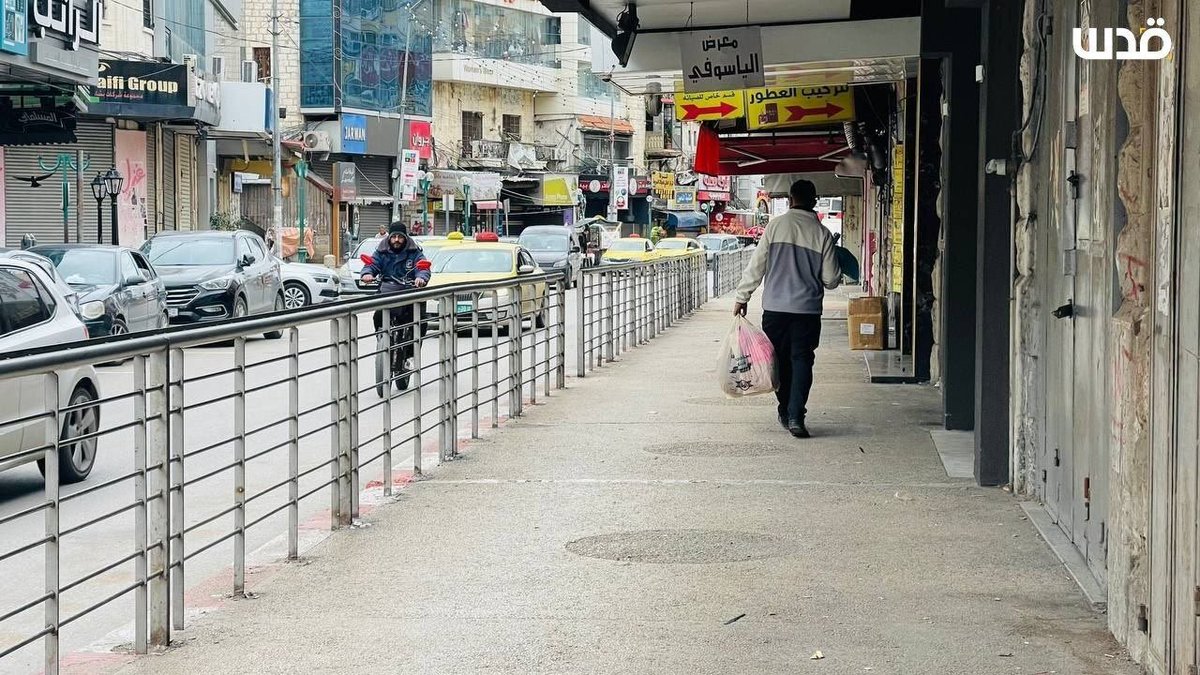
Across the West Bank and Jerusalem today, Palestinians are observing a general strike in protest of the zionist Knesset approving the imposition of the death penalty on Palestinian prisoners. From Yatta to Jenin, storefronts and businesses are closed and the streets are empty.
Good Shepherd Collective tweet mediaGood Shepherd Collective tweet mediaGood Shepherd Collective tweet mediaGood Shepherd Collective tweet media
English
3
131
211
4.6K
BADCHAN 🔻 รีทวีตแล้ว
🇱🇧 ☫
🇱🇧 ☫@ebnShihinreborn·
Just to clear things, I probably post like 1% of the red alert in the North of occupied Palestine on the border settlements, there's way too many. But this is good because the Resistance isn't slowing down and will not slow down.
English
0
21
107
1.2K
BADCHAN 🔻 รีทวีตแล้ว
🇱🇧 ☫
🇱🇧 ☫@ebnShihinreborn·
"Israel Hayom" quoted Major General (Res.) Gershon Hacohen as saying: "The war in Lebanon is causing great concern among the public. Against a backdrop of distrust, many are asking: If Hezbollah was truly defeated as they were told, how did it manage to recover so quickly?"
English
0
11
39
1.4K