Lanre Ade Basamta

49.3K posts

Lanre Ade Basamta banner
Lanre Ade Basamta

Lanre Ade Basamta

@basamta

God || Strategy || Business || Marketing || Tech || Bibliophile || Politics & Sports.💪 AUTHOR - 📖#MyCrazyAttempt CEO/CoFounder at @optimusai_labs

Here & There เข้าร่วม Nisan 2009
5.2K กำลังติดตาม10.2K ผู้ติดตาม
ทวีตที่ปักหมุด
Lanre Ade Basamta
Lanre Ade Basamta@basamta·
YORÙBÁ'S ETIQUETTES AND VALUES "In Yoruba land, money has never been foremost in Yorùbá value system. In our value system, money is number six.. What are the first five ? The first is làákà’yè, which is the application of ogbón, ìmò òye (knowledge, wisdom, understanding).
Lanre Ade Basamta tweet media
English
154
1.5K
2.3K
0
Lanre Ade Basamta
Lanre Ade Basamta@basamta·
Intriguing
Daniel Foubert 🇵🇱🇫🇷@Arrogance_0024

Trump thinks he can solve a clash of ancient civilisations that started more than 2500 years ago. The Israelis are Mesopotamians, and the Iranians are Indo-Europeans. Abraham is explicitly from Ur of the Chaldees, which is in southern Iraq, near modern Basra. There is no meaningful genetic discontinuity between the people of ancient Mesopotamia and the people who became Canaanites who became Israelites. Hebrew is a Semitic language. The Semitic language family originated in Mesopotamia and the Arabian Peninsula. Hebrew, Aramaic, Akkadian, Arabic, Babylonian — all branches of the same tree. Hebrew and Babylonian Akkadian are cousin languages the way Spanish and Italian are cousins. They share root words, grammatical structures, and conceptual vocabulary going back thousands of years before the Bible was written. The foundational myths of Judaism — creation, the flood, paradise, the first man, the tower — all have direct Mesopotamian predecessors that are older. The ethical and legal framework — the covenant structure, the law codes — mirrors Mesopotamian forms. The calendar is Babylonian. The alphabet is Aramaic-Mesopotamian. The very concept of recording sacred history in written texts is a Mesopotamian invention. El — the chief god of the early Israelites and the root of the word Elohim, one of the Hebrew names for God — was a Canaanite/Mesopotamian deity. The word Israel itself contains El. The angels, the cosmic hierarchy, the idea of a divine council — all have deep Mesopotamian roots. Early Israelite religion before the exile looks very much like a local variant of broader Mesopotamian religious culture, with Yahweh gradually absorbing the attributes of El, Baal and others into a single deity. "Iran" comes directly from "Aryana" — land of the Aryans. The Iranians were Indo-European, not Semitic. This is the foundational distinction. Where the Semitic world — Sumerians absorbed by Akkadians, Babylonians, Canaanites, Jews, Arabs — emerged from the Fertile Crescent and Arabian Peninsula, the Iranians came from somewhere completely different. The Iranian peoples were part of the great Indo-European migration — a population that originated on the Pontic Steppe, the grasslands north of the Black Sea and Caspian Sea, in what is now Ukraine, southern Russia and Kazakhstan. Around 2000–1500 BC these steppe peoples began expanding in all directions on horseback, carrying their languages with them. One branch went west and became the Greeks, Romans, Celts, Germans, Slavs. Another branch went south and east and split into two streams — one into India becoming the Vedic civilization, one into Iran becoming the Persians and Medes. Old Persian, Sanskrit, Greek, Latin and all their descendants are branches of the same tree. The word for father in Persian is "pedar," in Latin "pater," in Greek "patér," in Sanskrit "pitár," in English "father." The word for god in Persian is related to the Sanskrit "deva." The Iranian god Mithra appears in Roman religion as Mithras and possibly echoes in the Vedic Mitra. These are not coincidences — they reflect a common origin perhaps 5,000 years ago on the Eurasian steppe. The two main Iranian tribes that entered history were the Medes in the northwest and the Persians in the south. The Medes formed the first Iranian empire around 700 BC, destroying the Assyrian Empire — the superpower of its day — in alliance with the Babylonians. Then the Persians under Cyrus the Great overthrew the Medes in 550 BC and built the Achaemenid Empire. In 651 AD the Sassanid Persian Empire — the last great pre-Islamic Persian dynasty — was destroyed by the Arab Muslim armies in one of the fastest conquests in history. Iran was Islamicized. Arabic became the language of religion and high culture. Yet something remarkable happened — unlike Egypt, like North Africa, like the Levant, which gradually became Arabized in language and identity, Iran kept its language. Persian survived. Within two centuries Iranians were writing sophisticated poetry, philosophy and science in Persian — using the Arabic script but their own language. The Persian cultural identity proved resilient enough to absorb Islam without being dissolved by it. The Persian literary renaissance of the 9th-10th centuries produced figures like Ferdowsi, whose Shahnameh — Book of Kings — deliberately reconstructed pre-Islamic Persian identity and mythology. It was a conscious act of cultural preservation remarkably similar to what the Jewish scribes did with the Torah in Babylon. A conquered people writing their way back into existence. So you have two civilizational streams that met in the Middle East: The Semitic stream — out of Arabia and the Fertile Crescent, producing Sumerians, Akkadians, Babylonians, Canaanites, Jews, Arabs. Urban, agricultural, text-centered from very early, building civilization in river valleys. The Indo-European Iranian stream — out of the Eurasian steppe, mounted, pastoral, bringing a completely different cosmology, a dualistic theology, a warrior aristocratic culture that then learned to govern sedentary civilizations from the Semitic world. Modern Iranians are the descendants of that Indo-European Iranian stream, heavily mixed with the pre-existing Elamite and Semitic populations of the region, then further shaped by Arab Islamic conquest. Genetically they are distinct from Arabs — closer to South Asians and Europeans than to Semitic Arabs in certain markers, reflecting that ancient steppe origin. Linguistically Persian is closer to English than it is to Arabic — both are Indo-European, while Arabic is Semitic. Which makes the current conflict between Iran and Israel — between the heirs of the Indo-European Iranian world and the heirs of the Semitic Mesopotamian-Canaanite world — in some sense a resumption of the oldest cultural fault line in the Middle East. The same two civilizational streams that first encountered each other when Cyrus walked into Babylon in 539 BC, when he freed the Jews and sent them home. Except then they were allies. And the Iranian was the liberator of the Semite. History has a very dark sense of humor.

English
0
0
0
17
Lanre Ade Basamta รีทวีตแล้ว
Adeyemi Oyero
Adeyemi Oyero@oyero61489·
If you are the man who paid for the food of three soldiers yesterday evening at the restaurant close to Tamando Navy Barracks, Apapa, this message is for you. We were three of us. After eating, we asked for the bill, which was ₦9,600, only for the waitress to tell us that someone had already paid for our food. She said you pointed at us and cleared the bill, then left before we could even see you or say thank you. To be honest, we were surprised and even a bit pained that we didn’t get the chance to appreciate you in person. We don’t know your reasons, we don’t know your story, but what you did meant a lot to us. So wherever you are, we want to say thank you. Thank you for appreciating us. Thank you for your kindness. Thank you for your support. May God bless you, may He continue to shine light on your path, and may you never lack help when you need it. From three grateful soldiers we appreciate you. 🫡🪖 May Nigeria forever be blessed 🇳🇬
English
757
4.6K
27.9K
564.7K
Lanre Ade Basamta รีทวีตแล้ว
The Away Fans
The Away Fans@theawayfans·
🇩🇰 The man of the match for Sønderjyske in the Danish Superliga was awarded 55kg of freshly dug potatoes 🤣👏
The Away Fans tweet media
Dansk
142
974
7.2K
423.3K
Lanre Ade Basamta
Lanre Ade Basamta@basamta·
There is a quiet pressure many young professionals carry. The pressure to have it all figured out early. The pressure to choose perfectly. The pressure to know exactly where life is going. But what if that pressure is built on the wrong assumption?
Lanre Ade Basamta tweet media
English
1
0
1
18
Lanre Ade Basamta รีทวีตแล้ว
Yorùbáness
Yorùbáness@Yorubaness·
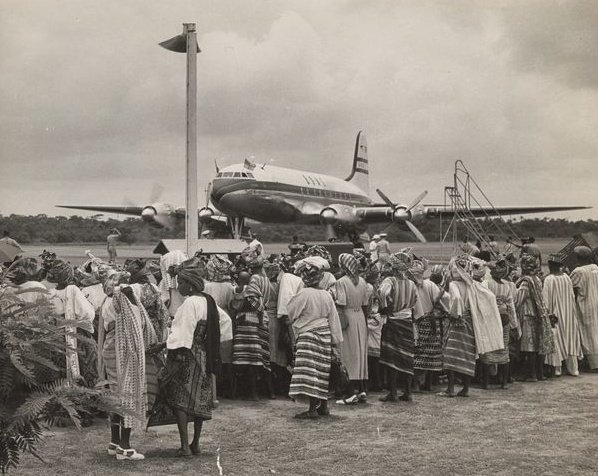
Lagosians lined up to watch the departure of family and friends on the BOAC. four-engine airplane from Ikeja Airport in the 50s
Yorùbáness tweet media
English
39
350
1.6K
162.2K
Lanre Ade Basamta รีทวีตแล้ว
Arnaud Bertrand
Arnaud Bertrand@RnaudBertrand·
I was, unfortunately, in the right ballpark: Qatar Energy just announced they may have to declare Force Majeure on long-term contracts **FOR UP TO FIVE YEARS**. As I wrote, we're deep into worst-case scenario territory.
Arnaud Bertrand tweet media
Arnaud Bertrand@RnaudBertrand

I hate to be the bearer of bad news but if infrastructure like this 👇 gets blown up, as of this moment it will take at least a decade to recover from this war - and the truth is that the world's energy picture is probably changed forever. This single facility 👇produced roughly 20% of global LNG supply (aljazeera.com/news/2026/3/18…) and, as of 2011, had taken $70 billion to build (energyintel.com/0000017b-a7be-…). What makes this even worse is that Iran's strike on this was retaliation after Israel attacked their South Pars gas field which draws from the same natural gas reservoir, which is the world's largest by far (9,700 km² - about the size of Qatar itself). Heck, on the list of the 25 largest natural gas fields (en.wikipedia.org/wiki/List_of_n…) this single reservoir holds roughly 40% of their combined recoverable reserves - and is nearly 6 times bigger than the 2nd biggest field in the world. And, unlike many of the others on the list, it's only at 10% depletion (meaning 90% of the gas is still there). Which means that, probably for many years, a huge share of the gas from the world's largest reservoir simply won't be extractable, as infrastructure on both sides - Qatar's and Iran's - has now been blown up. From a global energy supply perspective, we're deep into worst-case scenario territory.

English
68
1.7K
4.9K
515.4K
Lanre Ade Basamta รีทวีตแล้ว
Clash Report
Clash Report@clashreport·
BREAKING: Iran hit Israel's Haifa refinery.
Clash Report tweet media
English
277
3.2K
17.4K
406.7K
Lanre Ade Basamta รีทวีตแล้ว
Lanre Ade Basamta
Lanre Ade Basamta@basamta·
Really sad for the whole world😢
Arnaud Bertrand@RnaudBertrand

I hate to be the bearer of bad news but if infrastructure like this 👇 gets blown up, as of this moment it will take at least a decade to recover from this war - and the truth is that the world's energy picture is probably changed forever. This single facility 👇produced roughly 20% of global LNG supply (aljazeera.com/news/2026/3/18…) and, as of 2011, had taken $70 billion to build (energyintel.com/0000017b-a7be-…). What makes this even worse is that Iran's strike on this was retaliation after Israel attacked their South Pars gas field which draws from the same natural gas reservoir, which is the world's largest by far (9,700 km² - about the size of Qatar itself). Heck, on the list of the 25 largest natural gas fields (en.wikipedia.org/wiki/List_of_n…) this single reservoir holds roughly 40% of their combined recoverable reserves - and is nearly 6 times bigger than the 2nd biggest field in the world. And, unlike many of the others on the list, it's only at 10% depletion (meaning 90% of the gas is still there). Which means that, probably for many years, a huge share of the gas from the world's largest reservoir simply won't be extractable, as infrastructure on both sides - Qatar's and Iran's - has now been blown up. From a global energy supply perspective, we're deep into worst-case scenario territory.

English
0
0
0
169
Lanre Ade Basamta รีทวีตแล้ว
Tatchero
Tatchero@tatchero·
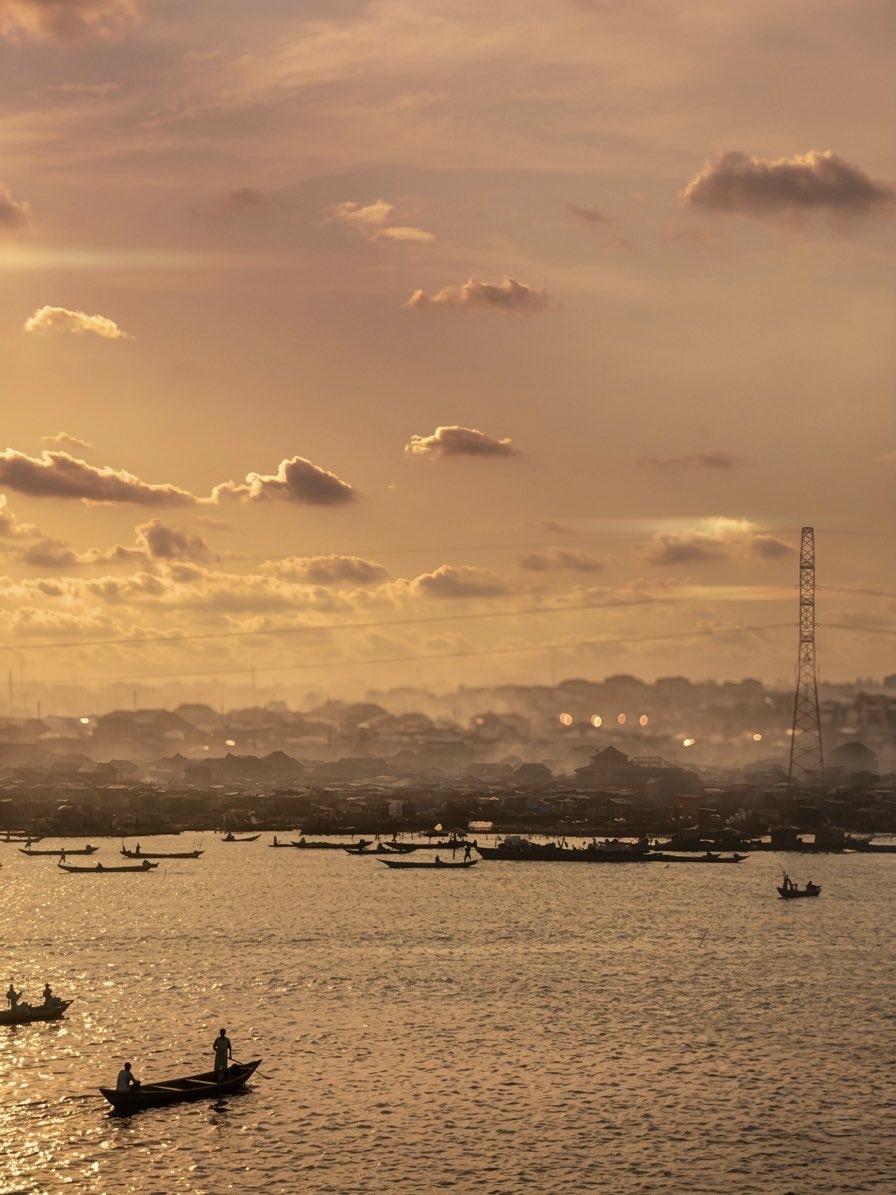
Shot Yaba, Lagos, film style. #shotoniphone
Tatchero tweet mediaTatchero tweet mediaTatchero tweet mediaTatchero tweet media
Filipino
30
206
1K
17.4K
Lanre Ade Basamta รีทวีตแล้ว
Arnaud Bertrand
Arnaud Bertrand@RnaudBertrand·
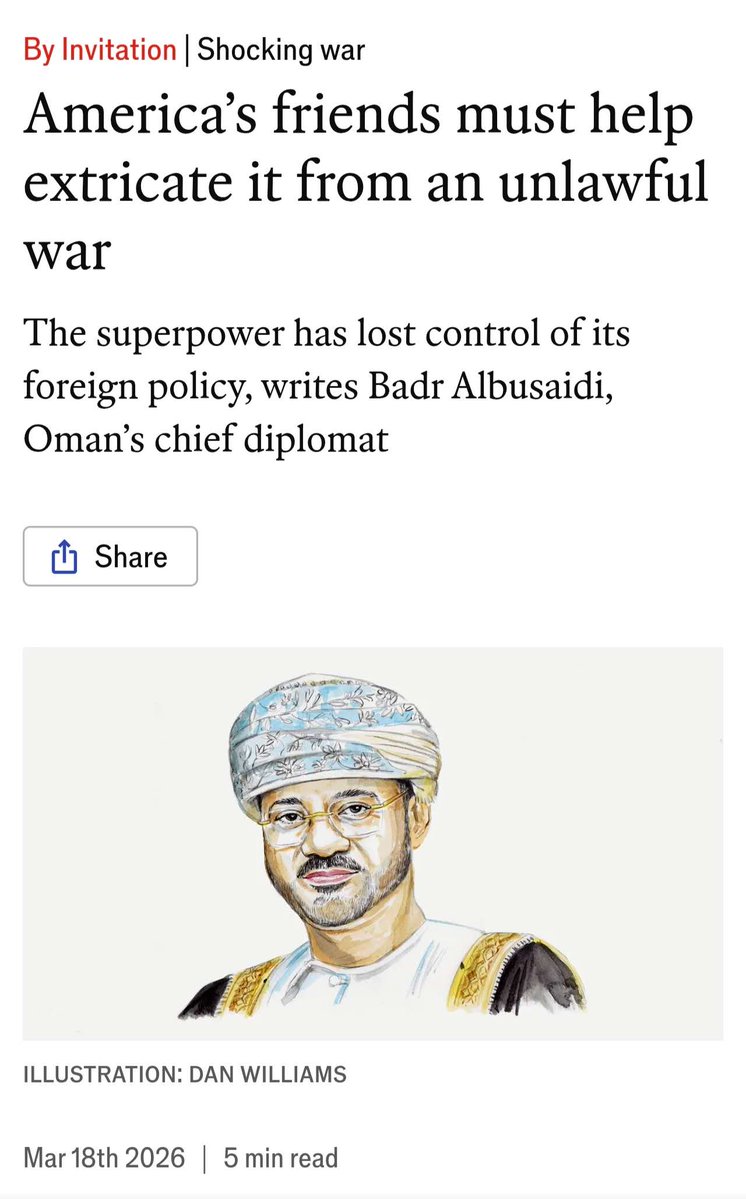
This is probably the most important article of the month: an op-ed by Oman's Foreign Minister, who mediated the talks between the U.S. and Iran, in which he writes that the U.S. "has lost control of its foreign policy" to Israel. He repeats that a deal was possible as an outcome of the talks (something confirmed by the UK's National Security Advisor, who also attended: x.com/i/status/20341…) and that the military strike by the U.S. and Israel was "a shock." Interestingly, given he is one of Iran's neighbors and given that Oman has been struck multiple times by Iran since the war began (en.wikipedia.org/wiki/2026_Iran…), he writes that "Iran’s retaliation against what it claims are American targets on the territory of its neighbours was an inevitable result" of the U.S.-Israeli attack. He describes it as "probably the only rational option available to the Iranian leadership." He says the war "endangers" the region's entire "economic model in which global sport, tourism, aviation and technology were to play an important role." He adds that "if this had not been anticipated by the architects of this war, that was surely a grave miscalculation." But, he adds, the "greatest miscalculation" of all for the U.S. "was allowing itself to be drawn into this war in the first place." In his view this was the doing of "Israel’s leadership" who "persuaded America that Iran had been so weakened by sanctions, internal divisions and the American-Israeli bombings of its nuclear sites last June, that an unconditional surrender would swiftly follow the initial assault and the assassination of the supreme leader." Obviously, this proved completely wrong, and the U.S. is now in a quagmire. He says that, given this, "America’s friends have a responsibility to tell the truth," which is that "there are two parties to this war who have nothing to gain from it," namely "Iran and America." He says that all of the U.S. interests in the region (end to nuclear proliferation, secure energy supply chains, investment opportunities) are "best achieved with Iran at peace." As he writes, "this is an uncomfortable truth to tell, because it involves indicating the extent to which America has lost control of its own foreign policy. But it must be told." He then proposes a couple of paths to get back to the negotiating table, although he recognizes how difficult it would be for Iran "to return to dialogue with an administration that twice switched abruptly from talks to bombing and assassination." That's perhaps the most profound damage Trump did during this entire episode: the complete discrediting of diplomacy. If Iran was taught anything, it is: don't negotiate with the U.S., it's a trap that will literally kill you. The great irony of the man who sold himself as a dealmaker is that he taught the world one thing: don't make deals with my country. Link to the article: economist.com/by-invitation/…
Arnaud Bertrand tweet media
English
311
8.4K
19.3K
1.3M
Lanre Ade Basamta รีทวีตแล้ว
Fineurl🇳🇬💕💋
Fineurl🇳🇬💕💋@fineurl9128·
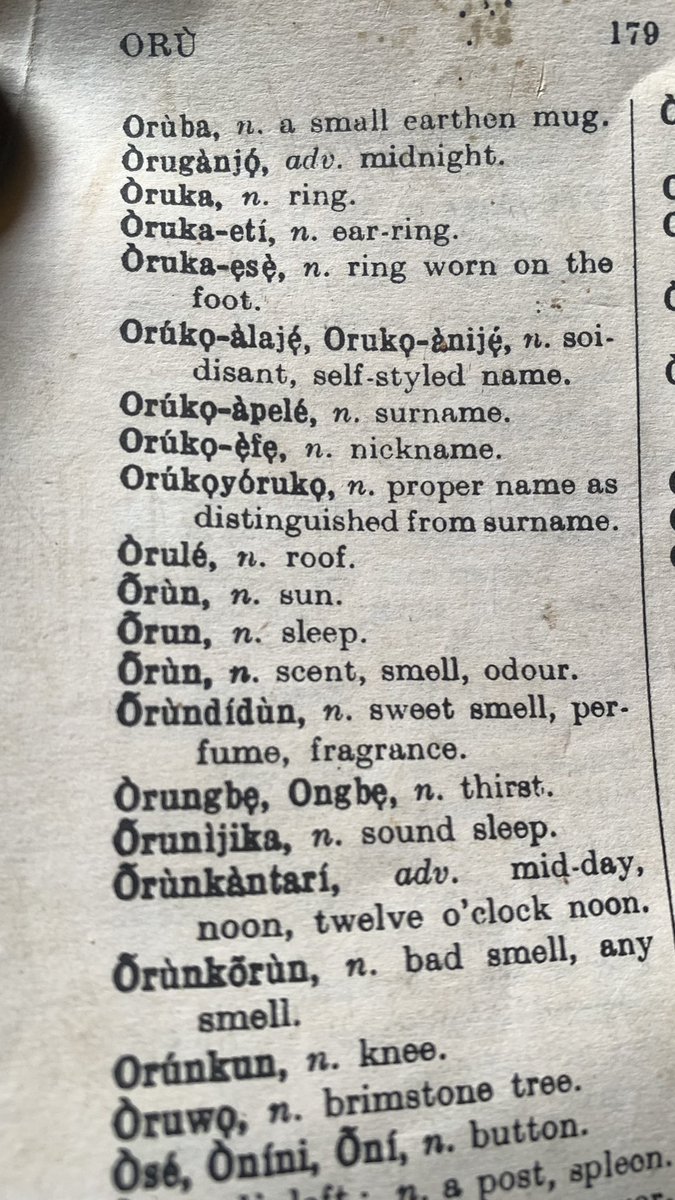
I was going through my dad’s bookshelf when I came across a Yoruba dictionary. The moment I saw it, I could tell it wasn’t a recent one. That’s when I learned that “surname” in Yoruba is orúkọ àpèlé.
Fineurl🇳🇬💕💋 tweet media
English
47
270
994
49K