

Shirley
4.1K posts


同样是1989年
4月5日,面对抗议,波兰统一工人党,选择了妥协,进行了圆桌谈判
5月22日 ,面对抗议,匈牙利共产党,通过了民主法案
11月9日,面对抗议,柏林墙倒塌
12月22日,面对抗议,罗马尼亚总书记齐奥塞斯库下台,并在几日后被枪毙
1989年东欧取得了巨大的成功,但是中国却陷入了失败
中国像是进入了一个平行世界,中国人民似乎也被世界抛
弃了
今天就以史为鉴,看看东欧这些国家是如何成功的?
东欧的经验又能给我什么启发?
youtu.be/CGsnwPYYraU

YouTube
中文









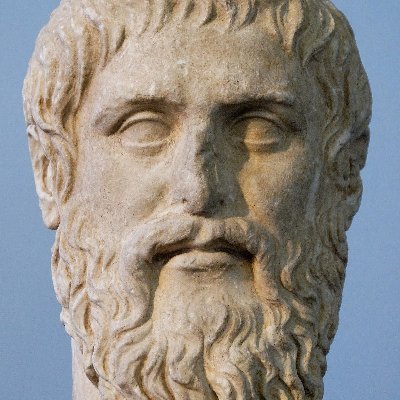
A wise man is warned about a divine flood that will destroy the world, so he builds a boat for his family and all the animals. They survive and humanity starts again.
This is NOT the story of Noah's Ark.
It's the Akkadian story of Atrahasis, written 1,000 years before Genesis.
There are several Ancient Mesopotamian flood myths dating back to at least 2,000 BC. The Sumerians, Akkadians, and Babylonians all told slightly different versions of the same story, in which the protagonist was called Ziusudra, Atrahasis, or Utnapishtim (who also features in the Epic of Gilgamesh!)
In all cases its basic narrative is the same. This is the Akkadian story of Atrahasis:
The Annunaki (major gods) create the Igigi to dig canals for them. But eventually the Igigi grow tired of this manual labour and rebel, so the Annunaki create humanity to do labour instead, as suggested by Enki, god of water and wisdom.
But the humans become too numerous; the gods are annoyed by how loud they are and how rarely they pray. Plus Ellil, god of the earth and air, can't sleep because of the noise humanity makes. So he sends plagues and famines to reduce overpopulation. The humans endure, however, and he decides to end them once and for all with a catastrophic flood.
Enki is supposed to keep this plan secret. But he tells a man called Atrahasis (whose name means "very wise") about the flood and advises him to build a boat. Atrahasis builds the boat exactly as told, puts his family and wild animals on board, and survives the flood. Ellil is angry with Enki, but he agrees to find other ways of controlling human population, such as cursing them with miscarriages.
One important difference between the story of Atrahasis and those of Ziusudra and Utnapishtim is that, in the latter two, they are rewarded for surviving the flood with immortality. Hence why Gilgamesh searches out Utnapishtim in order to learn the secret of living forever.
It became clear in the 19th century that the story of Noah's Ark as told in the Book of Genesis was derived from these much older Mesopotamian flood myths. The broad story is the same and so are many of the minor details, especially from the Utnapishtim version: sending out birds to see if the waters have receded, the goddess Ishtar creating a rainbow to show that the divine anger has ceased, and the boat coming to rest on a mountain.
But that isn't surprising. Mesopotamia had a huge influence on the religions of surrounding regions. Many (but not all) of the Greek gods were directly descended, via the Phoenicians and other Eastern Mediterranean cultures, from the Mesopotamian gods. There's even a flood in Ancient Greek mythology. Deucalion, the son of Prometheus, is aided by his father in building a boat to survive the flood sent by Zeus to destroy humanity.
So why all these flood myths? No doubt there is rich symbolic depth to the story, hence its survival for centuries and its changing interpretations by different cultures and religions. But it may have historical origins too.
When excavating the Sumerian city of Ur in the 1920s, Sir Leonard Woolley found a huge layer of sand and clay separating two different eras of construction. It was four hundred miles long and one hundred miles wide; this could only have been left by a catastrophic flood dated to around 2,900 BC — which fits with the chronology established in Mesopotamian mythology. So was this the "original" flood? Woolley thought so, but the myth could go back even further.
Some theorists argue that stories about floods might date back to the end of the last Ice Age 12,000 years ago. Sea levels rose as the glaciers melted, with catastrophic consequences for prehistoric humanity for the following six thousand years. It seems reasonable to assume that cataclysmic events of such magnitude would have loomed large in our cultural memory, passed on from one generation to the next.
Or not! We don't know for sure — and perhaps we never will — but these many versions of the flood myth are a wonderful example of how events and the stories we tell about them echo through history. There was evidently something about this myth, whatever its historical truth, that captivated people time and time again.
And even though most people today wouldn't say they believe in "mythology", we haven't changed the way we tell, understand, reshape, and interpret stories. How many different versions of Batman and Spiderman are there, for example, and how long will we go on retelling their stories? Who knows what future historians will make of our modern fascination with superheroes...

English

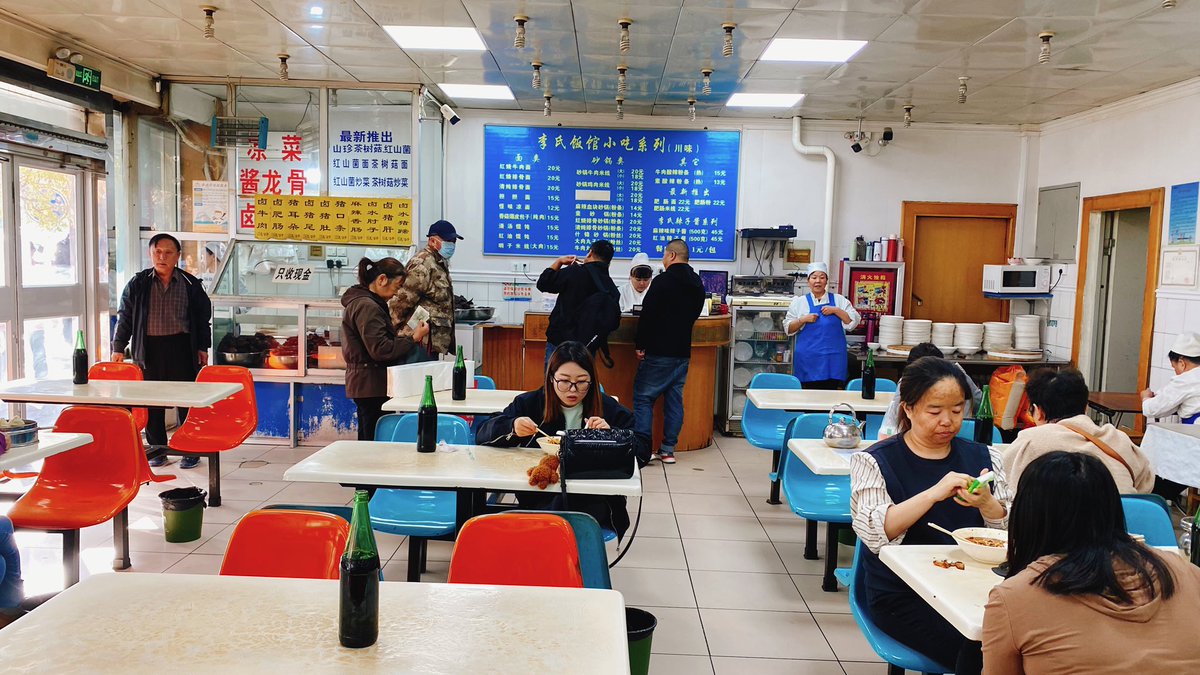
朋友们好!我的早餐在南京
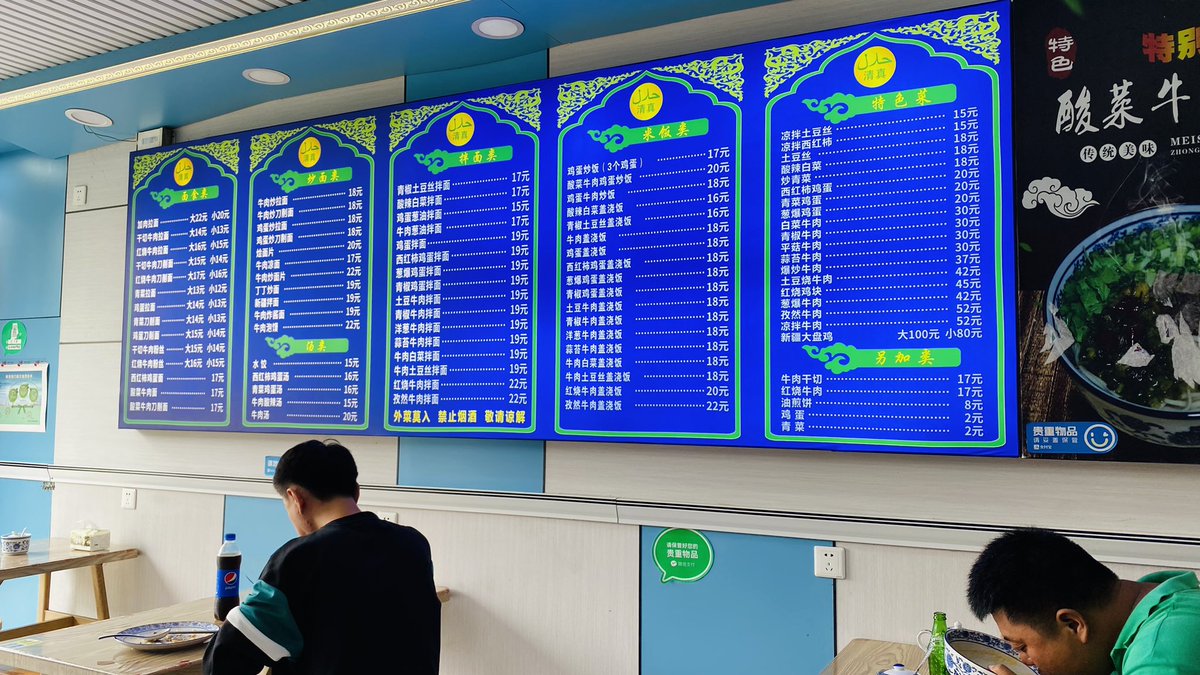
新疆丁丁炒面19➕煎蛋2元,支付宝红包🧧帮我付了1.88元,感谢🙏
面条略硬筋道滑溜,多加辣子多加醋,油多盐多老板娘炒的很香吃的很满足。配菜有几片牛肉,洋葱,西葫芦片和小青菜。免费的小菜拌豆腐皮。免费的汤。
这个面条是手工拉成筷子粗,然后切成一节一节的。
是西北面食的味道,但不一定是新疆的味道,没有番茄,蕃茄酱也没放或者放的很少。
第一次吃,在新疆的时候每一家面馆都有这个,可是我的第一选择是拉条子,第二选择是汤饭(揪片子)。
新疆是面食者的天堂,有个当地人和我说吃大米饭像嚼沙子,还吃不饱。乌鲁木齐中午吃饭的时候想吃米饭,除了抓饭,只能到汉餐馆去吃,米饭炒菜快餐就没有。我喜欢,我可以一直吃面食。
刚才订好了票,下月6日扬州出发,经西安转车到阿图什,全程5000公里左右,在火车上3个夜晚。车票不紧张的时候12306可以选下铺,2段车票我都选到了下铺。



中文
@culturaltutor 中国人穷的很多,能有钱出国旅游的人都是少数,大部分只能在中国国内旅游,但是又想看看不一样的风景,所以只能看一些仿品🤷
中文
It's always going to depend on the context. Some imitations are cheap knockoffs, and others can be kitsch or rather vulgar.
But, in principle, is there really anything wrong with "fake" buildings like Jilong Castle? Would you want things like this to be built near you, or not?

English
This looks European, but it's actually a Chinese hotel inspired by Neuschwanstein Castle.
China also has its own versions of Paris, Venice, and London.
Some call them "fake", but 80% of the world has never been on a plane. Why shouldn't architecture do the travelling instead?

English
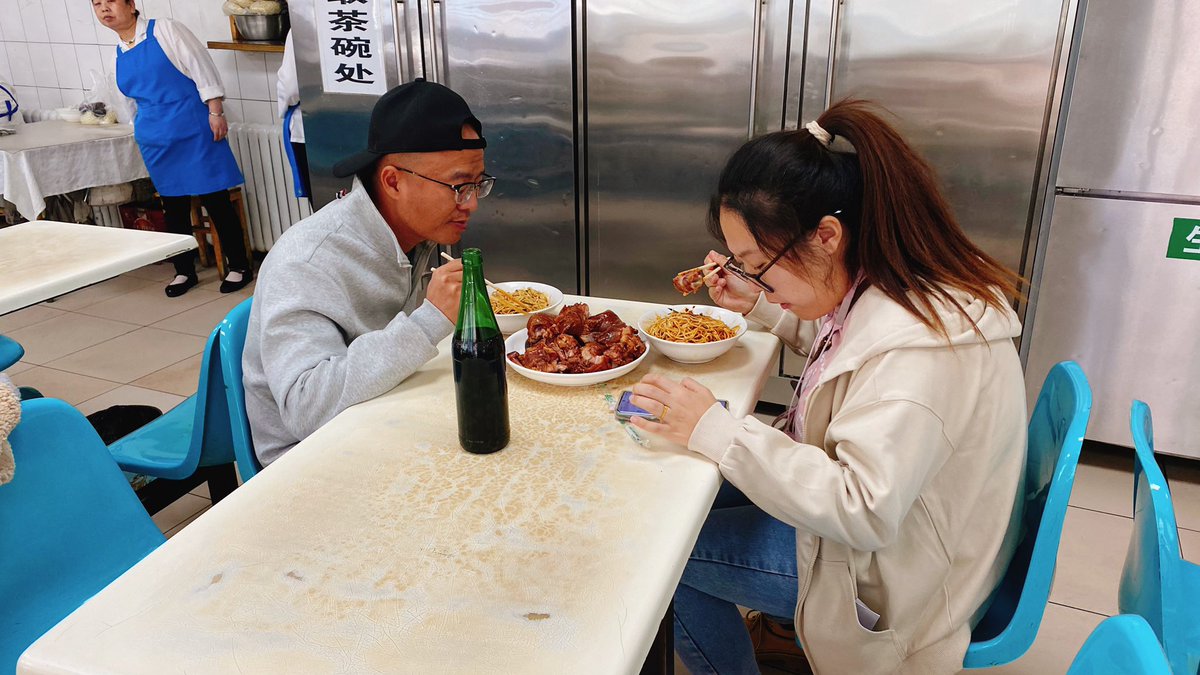
朋友们好!我的早餐在南京
路边摊
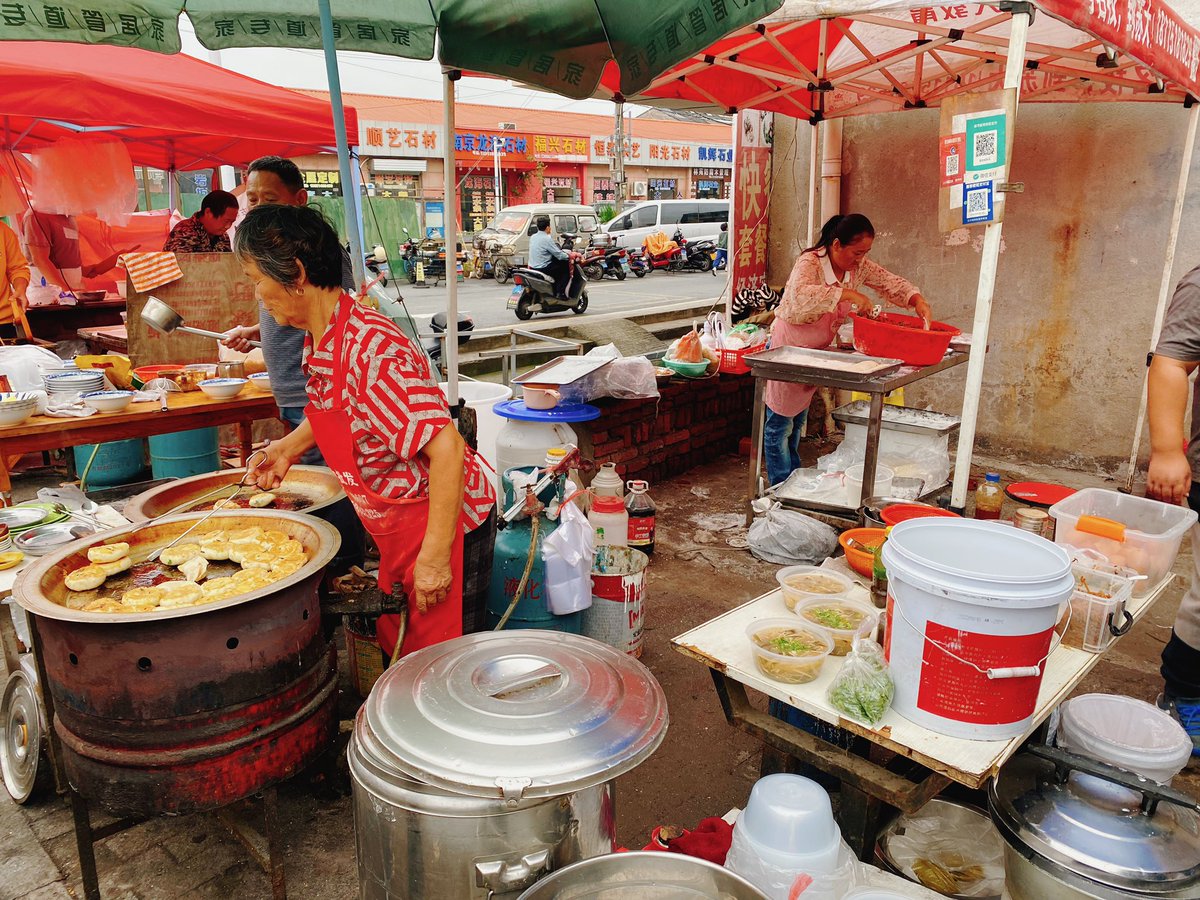
小馄饨6元,这是南京人喜欢的气泡馄饨,一点点肉馅吃到嘴里很香鲜,馄饨皮滑溜溜的吞肚里,汤也很鲜,点缀着香葱和虾皮。加了辣油挺辣的。
有时候你不身临其境很难理解有些事情,凭空想象下结论肯定是不对的。比如这个小馄饨肉馅只是筷子头点一点,是不是要骂奸商?可是当地人就喜欢这种,馅少不会腻,喜欢馅多干嘛不去吃饺子?
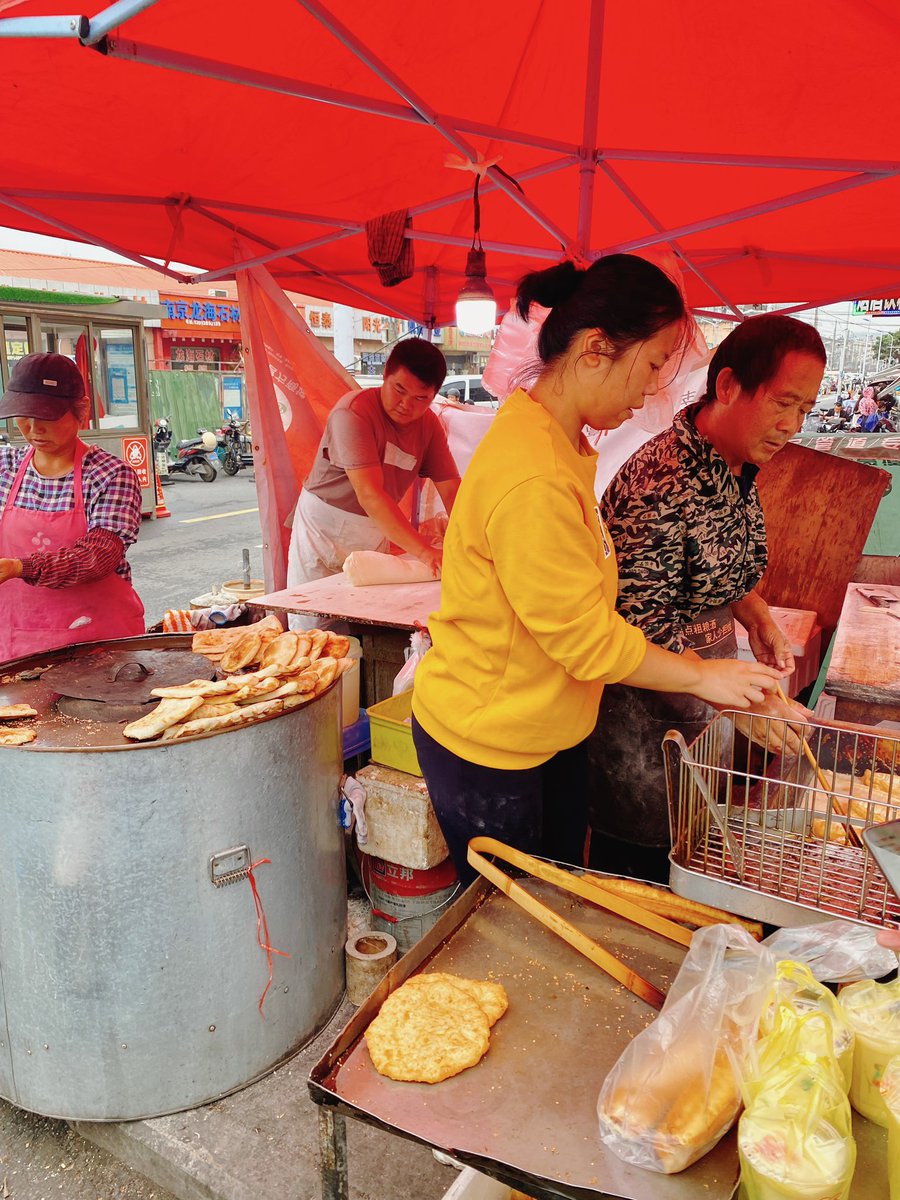
朝排烧饼2元夹油条1.5元,我还加了点疙瘩丝和雪菜。油条酥脆油香,烧饼有韧性,都是高水平的出品。
买单共9.5元,支付宝有红包帮我付了1块多钱。
感谢马云,感谢许许多多的私营企业给我生活带了的便利。如果都是国企,那最后只能带给我们灾难。


中文













12 Reasons Why Cities Need More Trees:
1. Temperature Control
One large tree is equivalent to 10 air conditioning units, and the shade they provide can reduce street temperature by more than 30%.
2. Noise Reduction
Trees can reduce loudness by up to 50%. In urban areas filled with the sound of cars, construction, sirens, aeroplanes, and music, trees are essentially the best way to block noise and keep cities — along with the homes and workplaces in them — quieter.
3. Air Purity
Trees remove an astonishing amount of harmful pollutants and toxins from the air. In urban areas air quality is often disastrously bad — with severe consequences for our health. Trees make the air we breathe much cleaner.
4. Oxygen
And, while absorbing all those pollutants, trees also put more oxygen back into the urban environment. Oxygen levels are significantly lower in cities compared to the countryside; trees help to solve that problem.
5. Water Management
Trees do more than just shelter us and our buildings from rain — which is, in fact, extremely important. They also absorb huge quantities of water, reduce run-off, neutralise the severity of flooding, and make flooding more unlikely altogether. Not to forget that their roots absorb pollutants and prevent them from feeding back into a city's water supply.
6. Psychological Health
Studies have proven what we instinctively know to be true: that human beings are significantly happier when surrounded by nature rather than sterile urban environments. Our emotions, behaviour, and thoughts are shaped by the places we spend time — and trees have a profoundly positive effect on our psychology. The consequential benefits of being happier and more peaceful — as individuals and as a society — are immense.
7. Physical Health
Beyond all the other ways in which trees improve air quality and the urban environment, much to the benefit of our health, they also encourage people to go outside. Cycling, running, and walking are all more common in urban areas with plenty of trees. A knock-on effect of people spending more time outdoors is also social integration and stronger communities.
8. Privacy
A simple point, but not inconsequential, is that trees provide privacy.
9. Economics
The total economic benefit of urban trees is hard to calculate. There are costs, of course, including the repair of infrastructure damaged by roots and maintaining the trees themselves. But the total economic benefit — a consequence of everything else in this list and more — far outweighs the expenditure. Trees make cities wealthier.
10. Wildlife
Trees are miniature cities all of their own, serving as a habitat for hundreds of different species, including birds and mammals and insects.
11. Light Pollution
Trees don't only block the light shining down, therefore keeping us and our cities cooler — they also disrupt light shining up, from street lighting, cars, houses, and billboards. Skies are clearer in cities with more trees.
12. Aesthetics
And, finally, trees are beautiful. They break up the potential monotony of urban environments — the sharp geometry, the greyscale roads and buildings, the endless rows of cars — with their trunks, boughs, canopies, and flowers.
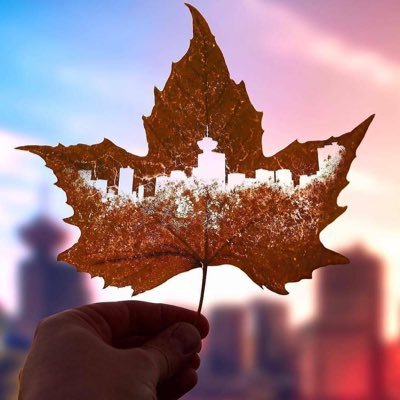
Just think: the gold and red of falling leaves in autumn, the white and pink blossom of spring, the vast green canopies of summer, and the branches lined with hoar-frost in winter. Every single tree is a myriad of intricacy and texture, of colour and scent, of dappled light on the pavement, mottled bark, knotted roots, of clustered leaves and delicate petals and stern boughs.
Few streets would not be improved by the kaleidoscopic aesthetic delights of a tree, not to mention the many different species of tree, all over the world, whether willow, oak, lime, cherry, aspen, maple, birch, horse chestnut, dogwood, hornbeam, ash, sycamore... the list goes on.
There are some drawbacks to urban trees, most of them context-specific, and they are not — of course — universally appropriate. But it seems fair to say that many cities would benefit from at least a few more trees here and there.

English