Armaan Fallahi

1.8K posts

Armaan Fallahi banner
Armaan Fallahi

Armaan Fallahi

@circuitfreud

MD-PhD Student @UofTMedicine @SickKidsNews @sjo09 🧠 | Vanier Scholar | Neuro https://t.co/Q1uVK57qwm. @McGillU @UCL | Junior Fellow @MasseyCollege | triathlon ☪️🇨🇦

Tkaronto / Treaty 13 เข้าร่วม Ekim 2019
3K กำลังติดตาม1.3K ผู้ติดตาม
Armaan Fallahi รีทวีตแล้ว
Michael Skinnider
Michael Skinnider@skinniderlab·
Very happy to share our latest efforts to map the mammalian metabolome, in which we combine large-scale in vivo isotope tracing with biochemical AI to discover several structurally unprecedented and biologically fascinating metabolites: biorxiv.org/content/10.648…
English

3
8
36
2.4K
Armaan Fallahi รีทวีตแล้ว
University of Toronto
#UofT ranked first in Canada, among top 17 globally across all broad subject fields in QS World University Rankings by Subject 2026 🍁 uoft.me/cht
University of Toronto tweet media
English
3
27
63
4.4K
Armaan Fallahi รีทวีตแล้ว
Dr sthanu subramanian
Dr sthanu subramanian@drsthanus·
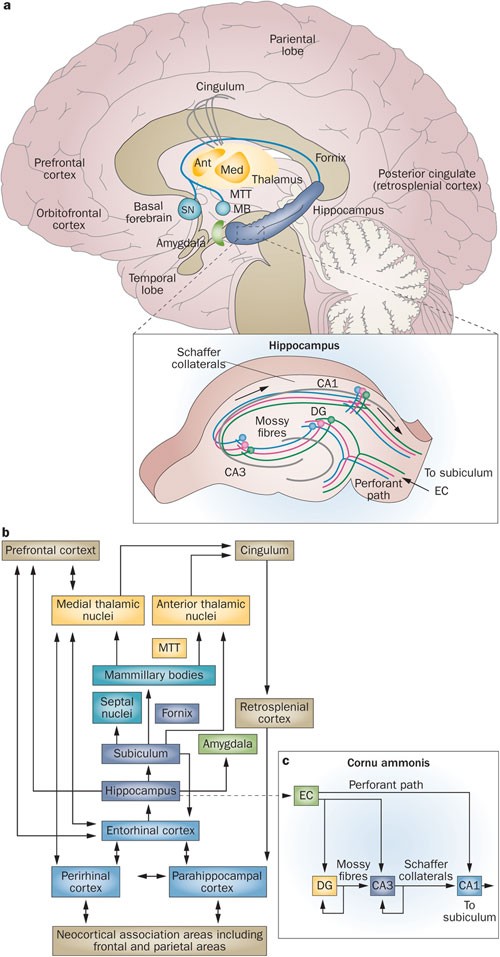
Detailed anatomical diagrams and connectivity maps of the human brain's limbic system, with a specific focus on the hippocampus and its associated pathways. nature.com/articles/nrneu…
Dr sthanu subramanian tweet media
English
0
46
161
9.9K
Armaan Fallahi รีทวีตแล้ว
Hugo Bayer
Hugo Bayer@HugoBayer1·
New paper alert! 🚨 In this study we explored how interactions between the locus coeruleus (LC), basolateral amygdala (BLA), and the ventromedial prefrontal cortex (vmPFC) affect freezing behavior and extinction learning. 🧵(1/5) pnas.org/doi/10.1073/pn…
English
1
17
63
5.7K
Armaan Fallahi รีทวีตแล้ว
Claire Bedbrook
Claire Bedbrook@clairebedbrook·
Aging may feel gradual… but what if it’s not? In our paper out today, we tracked fish continuously from puberty until death. This gave us a unique view of how aging unfolds across the adult lifespan. 🧵
English
22
145
555
70.1K
Armaan Fallahi รีทวีตแล้ว
Jorge Bravo Abad
Jorge Bravo Abad@bravo_abad·
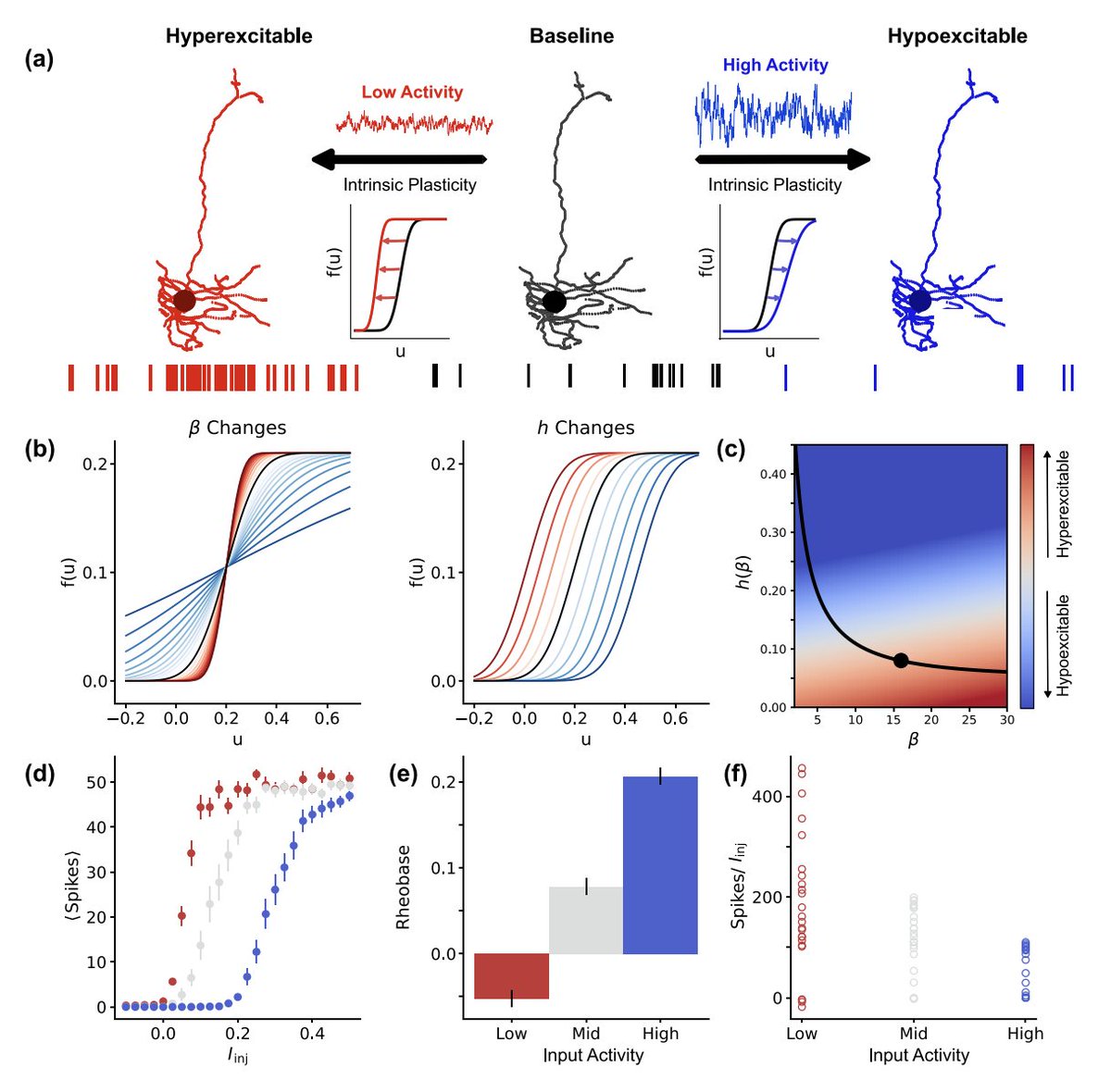
Mean-field theory and network simulations reveal how the brain tunes its own neural diversity The stability of brain activity depends on a principle that is easy to overlook: neurons must be different from each other. This excitability heterogeneity—cell-to-cell variation in firing thresholds and gain—is not noise. It is functional. Heterogeneous neural populations respond smoothly and linearly to inputs; homogeneous ones can tip abruptly between silence and synchronized bursting, the hallmark of pathological states like epilepsy. Experimental data in human epileptic tissue confirm it directly: loss of neuronal diversity precedes seizure onset. But how does the brain regulate this diversity over time? Trotter, Valiante, and Lefebvre address this question with a computational and analytical framework combining mean-field theory with network simulations. Their model is a recurrent network of excitatory Poisson neurons, each equipped with a homeostatic intrinsic plasticity rule: the slope β and rheobase h of each neuron's excitability curve adapt continuously to drive individual firing rates toward a shared target—analogous to a biological learning rule. The critical ingredient is degeneracy: the equilibrium conditions are underdetermined, so many (β, h) pairs satisfy the same homeostatic constraint. These define a "degeneracy curve" in parameter space, and neurons settle at different points along it depending on their local input statistics. Mean-field analysis reveals the key mechanism: each neuron's "milieu"—the mean and variance of its membrane potential, shaped by synaptic degree and presynaptic firing rates—determines its position on the degeneracy curve. High variance in connectivity degree or input rates amplifies heterogeneity across the population. High-amplitude stimulation can actively induce heterogeneity that persists after stimulation ends. Conversely, low activity—as in silenced or deafferented tissue—drives neurons toward similar milieus, causing convergence, steepening of the network response function, and the emergence of seizure-like multistability. Beyond epilepsy, the model provides a mechanistic link between network topology and cellular identity: the log-normal distribution of synaptic degree observed across cortex may itself sustain neural diversity, dynamically aligning population variability with functional demand. Paper: journals.aps.org/prxlife/abstra…
Jorge Bravo Abad tweet media
English
5
38
201
10.5K
Armaan Fallahi รีทวีตแล้ว
Heather Burrell Ward, MD
Heather Burrell Ward, MD@hbwardMD·
Establishment of the Society for the Advancement of Neuroscience and Psychiatry in Residency Research Education (Synapse): An Organization to Promote Research Training in Residency, a 🧵: link.springer.com/article/10.100…
English
2
7
20
3.1K
Armaan Fallahi
Armaan Fallahi@circuitfreud·
@uoftmdphd is the best for bringing in @KarlDeisseroth to share about his writing process. It was great to meet one of my scientific role models and biggest influences.
Mathepan Mahendralingam@mathepan

5yrs later, our 2nd @uoftmdphd bookclub ft @KarlDeisseroth! @kao_jenn and I asked KD how to write for papers and for prose. We revisited Projections and students shared their writing. Thank you Karl for your mentorship of physician-scientists & reminding us of the power of words

English
0
0
10
378
Students of U of T's MD–PhD Program
Such an amazing seminar! Thank you @KarlDeisseroth for all of your writing wisdom, and to @mathepan and @kao_jenn for organizing 👏✍️
Mathepan Mahendralingam@mathepan

5yrs later, our 2nd @uoftmdphd bookclub ft @KarlDeisseroth! @kao_jenn and I asked KD how to write for papers and for prose. We revisited Projections and students shared their writing. Thank you Karl for your mentorship of physician-scientists & reminding us of the power of words

English
1
2
20
4.3K
Armaan Fallahi รีทวีตแล้ว
Robert Y. Chen
Robert Y. Chen@therealRYC·
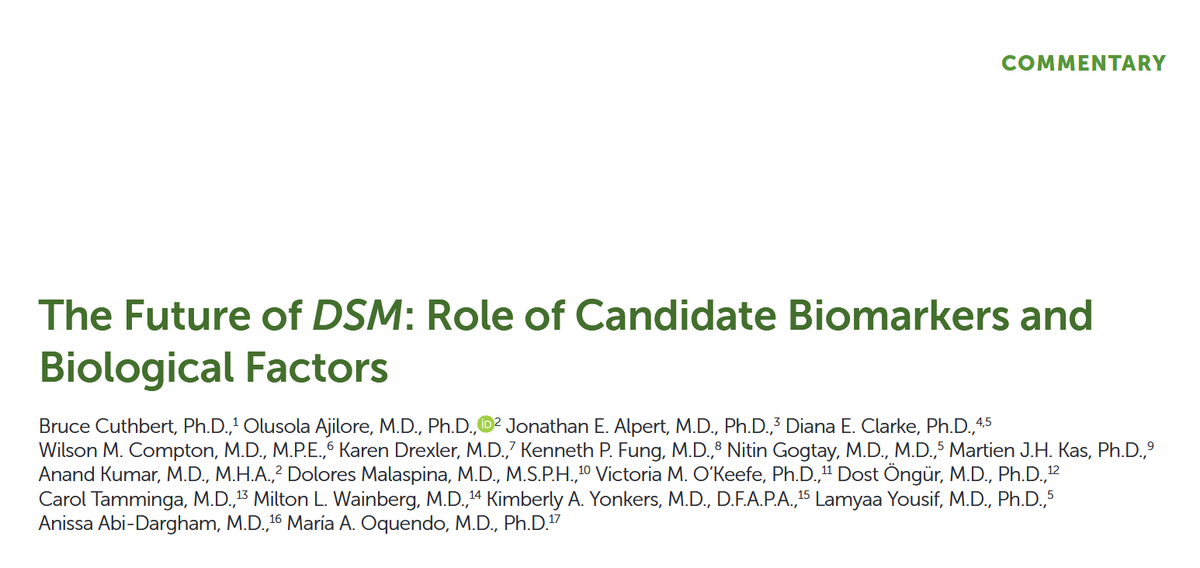
🚨 At long last - Biomarkers for Psychiatry? For the first time, the APA announced its plan to include biomarkers in the new DSM. They would be building a formal bridge from symptom checklists to objective biology. Precision psychiatry is coming 🧵
Robert Y. Chen tweet media
English
19
28
108
17.8K
Armaan Fallahi รีทวีตแล้ว
Denise J. Cai, Ph.D.
Denise J. Cai, Ph.D.@denisejcai·
How does neuronal gene expression evolve over time in response to experience? CytoTape will help us find out - a major milestone for neuroscience, providing new ways to study memory & aging 🧠 Congrats to the whole team! Looking forward to our continued collaborations 🎉
Changyang Linghu@ChangyangLinghu

Our CytoTape work is published today in @Nature! CytoTape is a genetically encoded, flexible, intracellular protein tape recorder for spatiotemporally scalable and multiplexed recording of cellular activities continuously across weeks in vitro and in vivo. nature.com/articles/s4158…

English
0
11
65
9K
Armaan Fallahi รีทวีตแล้ว
Save OSC 🇨🇦
Save OSC 🇨🇦@SaveOSC·
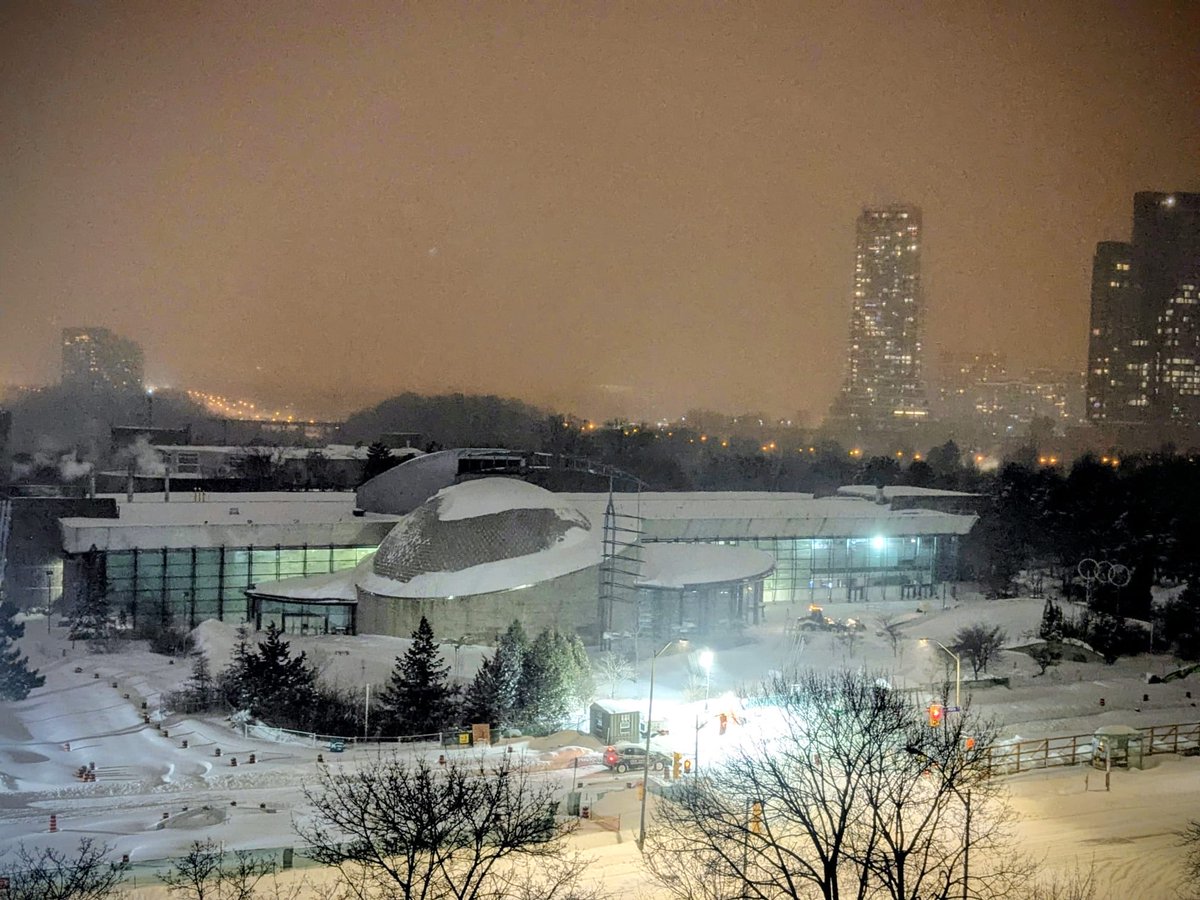
Sunday, January 25, 2026, 9:05 pm. Built for winter. ❄️ Built for Canada. 🇨🇦
Save OSC 🇨🇦 tweet media
English
42
422
2.1K
523.4K
Armaan Fallahi รีทวีตแล้ว
Jesus Ramirez-Bermudez
Jesus Ramirez-Bermudez@JRBneuropsiq·
The Uncertainty and Anticipation Model of Anxiety emphasizes 5 processes explaining why uncertainty about future threat is so disruptive in anxiety. *These processes are: 1) Inflated estimates of threat cost and probability, 2) increased threat attention and hypervigilance,
Jesus Ramirez-Bermudez tweet media
CLaE@leafs_s

Nature Reviews Neuroscience Uncertainty and anticipation in anxiety: an integrated neurobiological and psychological perspective nature.com/articles/nrn35…

English
2
106
498
31.1K
Armaan Fallahi รีทวีตแล้ว
Brad Stulberg
Brad Stulberg@BStulberg·
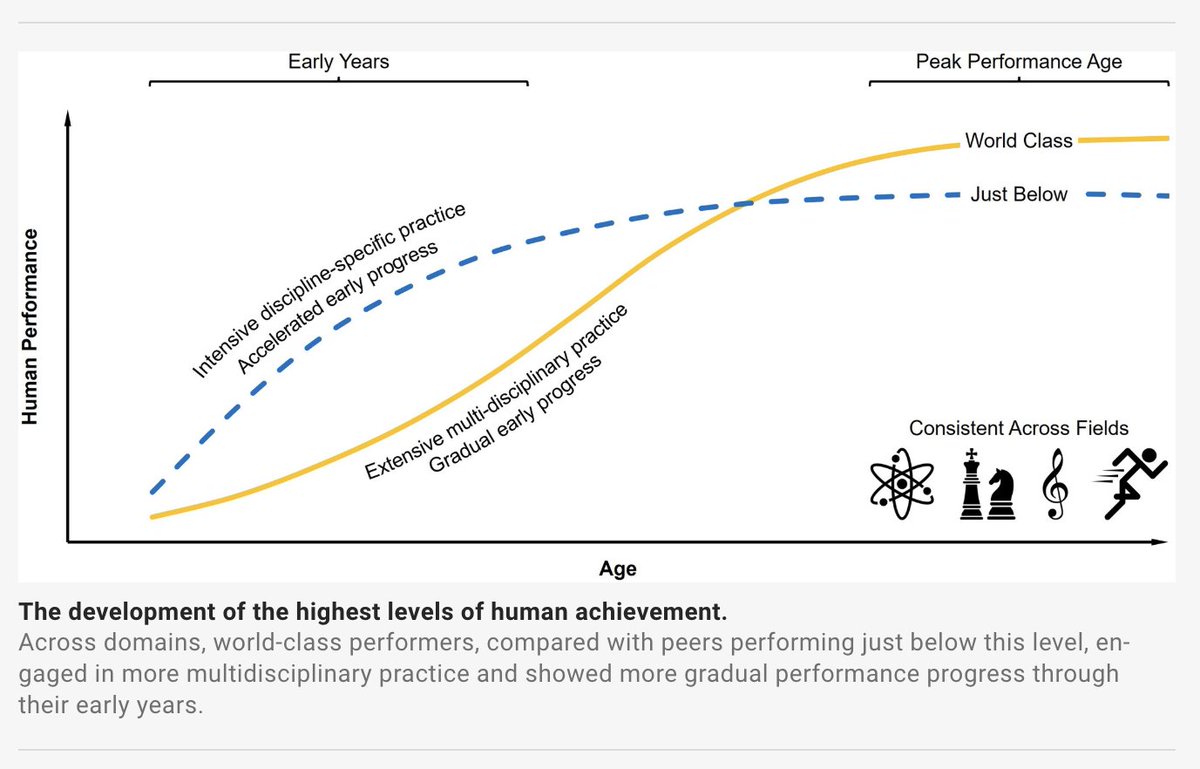
A massive new study on peak performance included 34,000 international top performers: Nobel laureates, renowned classical music composers, Olympic champs, and the world’s best chess players. It shows early specialization is a trap, and the road to greatness is long and varied.
Brad Stulberg tweet media
English
244
2.3K
12.6K
2.2M
Armaan Fallahi รีทวีตแล้ว
Andreas Tolias Lab @ Stanford University
In Nature Electronics, we present BISC with Ken Shepard, @peabody124 & others: an ultrathin brain–computer interface chip with 65,536 electrodes, 1,024 channels, and ~100× higher bandwidth at 100 Mbit/s. A bidirectional platform toward future neocortex–AI 'exocortex' systems. nature.com/articles/s4192…
English
2
27
92
13.2K
Armaan Fallahi รีทวีตแล้ว
Deblina Sarkar
Deblina Sarkar@DeblinaSarkar59·
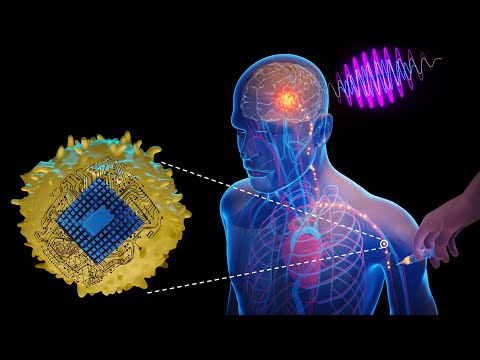
During the first 2 years, more than 35 grants I wrote got rejected in a row! Why? Reviewers mentioned that 𝐚 𝐛𝐫𝐚𝐢𝐧 𝐢𝐦𝐩𝐥𝐚𝐧𝐭 𝐰𝐡𝐢𝐜𝐡 𝐢𝐬 𝐬𝐮𝐫𝐠𝐞𝐫𝐲-𝐟𝐫𝐞𝐞 — 𝐭𝐡𝐚𝐭 𝐭𝐨𝐨 𝐜𝐚𝐧 𝐚𝐮𝐭𝐨𝐧𝐨𝐦𝐨𝐮𝐬𝐥𝐲 𝐟𝐢𝐧𝐝 𝐢𝐭𝐬 𝐭𝐚𝐫𝐠𝐞𝐭 𝐚𝐧𝐝 𝐬𝐞𝐥𝐟-𝐢𝐦𝐩𝐥𝐚𝐧𝐭 — 𝐰𝐚𝐬 𝐢𝐦𝐩𝐨𝐬𝐬𝐢𝐛𝐥𝐞! Things changed drastically when our research proved it was possible! We demonstrated the first 𝐚𝐮𝐭𝐨𝐧𝐨𝐦𝐨𝐮𝐬 and 𝐬𝐮𝐫𝐠𝐞𝐫𝐲-𝐟𝐫𝐞𝐞 brain implants creating unprecedented 𝐛𝐫𝐚𝐢𝐧-𝐜𝐨𝐦𝐩𝐮𝐭𝐞𝐫 𝐬𝐲𝐦𝐛𝐢𝐨𝐬𝐢𝐬. We went on to receive the #NIH 𝐃𝐢𝐫𝐞𝐜𝐭𝐨𝐫’𝐬 𝐍𝐞𝐰 𝐈𝐧𝐧𝐨𝐯𝐚𝐭𝐨𝐫 𝐀𝐰𝐚𝐫𝐝 with the highest and rarely achieved impact score. The NIH official review statement called our technology  “𝐞𝐱𝐭𝐫𝐞𝐦𝐞𝐥𝐲 𝐜𝐫𝐞𝐚𝐭𝐢𝐯𝐞” & with “𝐩𝐨𝐭𝐞𝐧𝐭𝐢𝐚𝐥 𝐭𝐨 𝐡𝐞𝐫𝐚𝐥𝐝 𝐚 𝐧𝐞𝐰 𝐞𝐫𝐚” This technology has garnered many prestigious awards since then. Through the hardest moments, my father’s teachings gave me indomitable strength: “𝐋𝐢𝐯𝐞 𝐥𝐢𝐤𝐞 𝐚 𝐒𝐚𝐢𝐧𝐭, 𝐖𝐨𝐫𝐤 𝐥𝐢𝐤𝐞 𝐚 𝐆𝐢𝐚𝐧𝐭” And I modified this a little 😊 “𝐋𝐢𝐯𝐞 𝐥𝐢𝐤𝐞 𝐚 𝐒𝐚𝐢𝐧𝐭, 𝐖𝐨𝐫𝐤 𝐥𝐢𝐤𝐞 𝐚 𝐆𝐢𝐚𝐧𝐭 𝐚𝐧𝐝 𝐋𝐚𝐮𝐠𝐡 𝐥𝐢𝐤𝐞 𝐚 𝐂𝐡𝐢𝐥𝐝” A click from one of those many days I stayed in the lab whole night and enjoyed the sunrise from my MIT office. 🎥 MIT Video: youtube.com/watch?v=dDcgLM… 🧠 MIT News Release: media.mit.edu/posts/deblina-… . . . @MIT #MedTech #Neuroengineering #BrainCancer #HealthcareTech #CMOS #microelectronics #nanoelectonics #nanofabrication #neuromodulation #DBS #DeepBrainStimulation #ImplantableMedicalDevices #BrainComputerInterface #BCI #TherapeuticBCI
YouTube video
YouTube
Deblina Sarkar tweet media
English
40
98
981
65.3K