
Justin Curry

1.5K posts

Justin Curry banner
Justin Curry

Justin Curry

@currying

Associate Professor of Math & Statistics at UAlbany-SUNY

Albany, New York, USA เข้าร่วม Kasım 2009
900 กำลังติดตาม1.8K ผู้ติดตาม
Justin Curry รีทวีตแล้ว
Dwarkesh Patel
Dwarkesh Patel@dwarkesh_sp·
When Copernicus proposed heliocentrism in 1543, it was actually less accurate than Ptolemy's geocentric model - a system refined over 1,400 years with epicycles precisely tuned to match observed planetary positions. It took another 70 years before Kepler, working from Tycho Brahe's unprecedentedly precise observations, replaced Copernicus’s circles with ellipses - finally making heliocentrism empirically superior. Terence Tao's point is that science needs a high temperature setting. If we only fund and follow what's most state of the art today, we kill the ideas that might need decades of work to surpass some overall plateau.
English
116
562
4.6K
479.1K
Justin Curry รีทวีตแล้ว
SAIR
SAIR@SAIRfoundation·
Our co-founder Terence Tao is announcing SAIR Foundation's inaugural competition: the Mathematics Distillation Challenge. Co-organized by @damekdavis, Terence Tao, and SAIR Foundation. competition.sair.foundation/competitions/m…
English
24
200
1.9K
459.4K
Justin Curry รีทวีตแล้ว
Jonathan Gorard
Jonathan Gorard@getjonwithit·
I think one of the conclusions we should draw from the tremendous success of LLMs is how much of human knowledge and society exists at very low levels of Kolmogorov complexity. We are entering an era where the minimal representation of a human cultural artifact... (1/12)
English
189
497
4.5K
750.1K
Justin Curry
Justin Curry@currying·
This.
gdsimms@gdsimms

@getjonwithit @lu_sichu But the complexity of the latent space manifold certainly must be considered. True we can imagine a near future in which nearly anything of significance as a cultural artifact is map coordinates on that manifold but we did after all create the manifold

English
0
0
2
227
Justin Curry รีทวีตแล้ว
Boris Hanin
Boris Hanin@BorisHanin·
🚨 2026 @Princeton ML Theory Summer School Mini-courses by: - Subhabrata Sen @subhabratasen90 - Lenaic Chizat @LenaicChizat - Sinho Chewi - Elliot Paquette @poseypaquet - Elad Hazan @HazanPrinceton - Surya Ganguli @SuryaGanguli August 3 - 14, 2026 Apply by March 31. Link 👇 Sponsors: @NSF, @PrincetonAInews, @EPrinceton @JaneStreetGroup, @DARPA, @PrincetonPLI, Princeton NAM, Princeton AI2, Princeton PACM Some amazing speakers from previous years: @Andrea__M, @TheodorMisiakie, @KrzakalaF, @_brloureiro, @rakhlin, @DimaKrotov, @CPehlevan, @SoledadVillar5, @SebastienBubeck, @tengyuma
English
3
36
419
43.2K
Justin Curry รีทวีตแล้ว
Jorge Bravo Abad
Jorge Bravo Abad@bravo_abad·
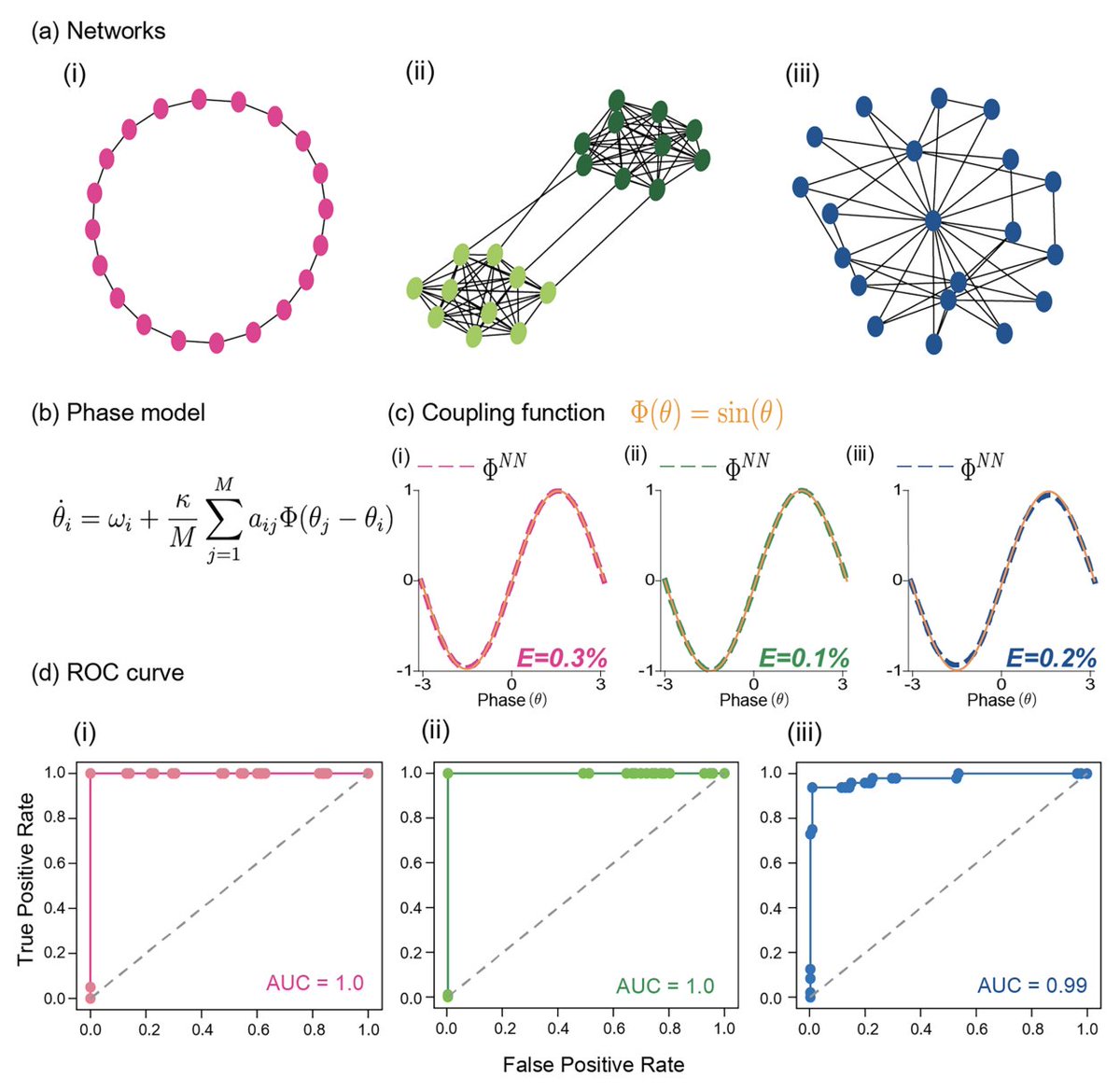
Physics-informed neural networks for inferring how coupled oscillators interact: from embryonic clocks to spinning nanorods Coupled oscillators are everywhere in nature—the segmentation clock coordinating vertebra formation in embryos, circadian rhythms in the suprachiasmatic nucleus, power grids, rotating nanoparticles under polarized light. All are governed by a coupling function that determines whether oscillators attract, repel, or synchronize asymmetrically. Identifying that function from data is the key to understanding the interaction mechanism, but it is a hard inverse problem. Standard approaches represent the coupling function as a sum of trigonometric polynomials fit to observed phase time series—but there is no principled rule for choosing how many terms to include. Hwang, Jo and Kim show this is not a matter of convention: no single optimal number exists. Few basis functions miss asymmetric structure; many overfit on sparse or noisy data. To bypass basis selection entirely, they introduce IC-PINN (Inference of Coupling via Physics-Informed Neural Networks). Two separate networks learn, respectively, the phase trajectories and the coupling function as a function of phase difference, with periodicity enforced by mapping inputs through (sin θ, cos θ). Joint training minimizes a combined loss—data fidelity plus a physics constraint enforcing consistency with the governing differential equations. This constraint acts as a natural regularizer, making IC-PINN robust to noise and sparsity without manual tuning. IC-PINN recovers coupling functions across bidirectional, Winner-Take-All, and Loser-Take-All synchronization regimes, extends to M coupled oscillators, and infers network structure with AUC of 1.0 on sparse and modular topologies. Applied to HES gene oscillation data from mouse embryo tail bud cells, it confirms Winner-Take-All synchronization and predicts that the phase difference halves in approximately 100 minutes. Applied to gold nanorods rotating under circularly polarized light, it recovers the coupling function from phase difference data alone—a regime where conventional methods fail entirely. The deeper point is architectural: IC-PINN separates phase dynamics from interaction dynamics into distinct networks, coupled only through physical constraints. This makes the coupling function identifiable even from partial, noisy observations, and opens the door to discovering nonlinear interaction principles without imposing them a priori. Paper: journals.aps.org/prresearch/abs…
Jorge Bravo Abad tweet media
English
12
80
405
17.2K
Justin Curry รีทวีตแล้ว
Luiz Pessoa
Luiz Pessoa@PessoaBrain·
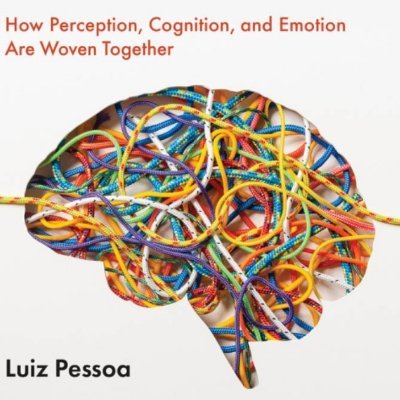
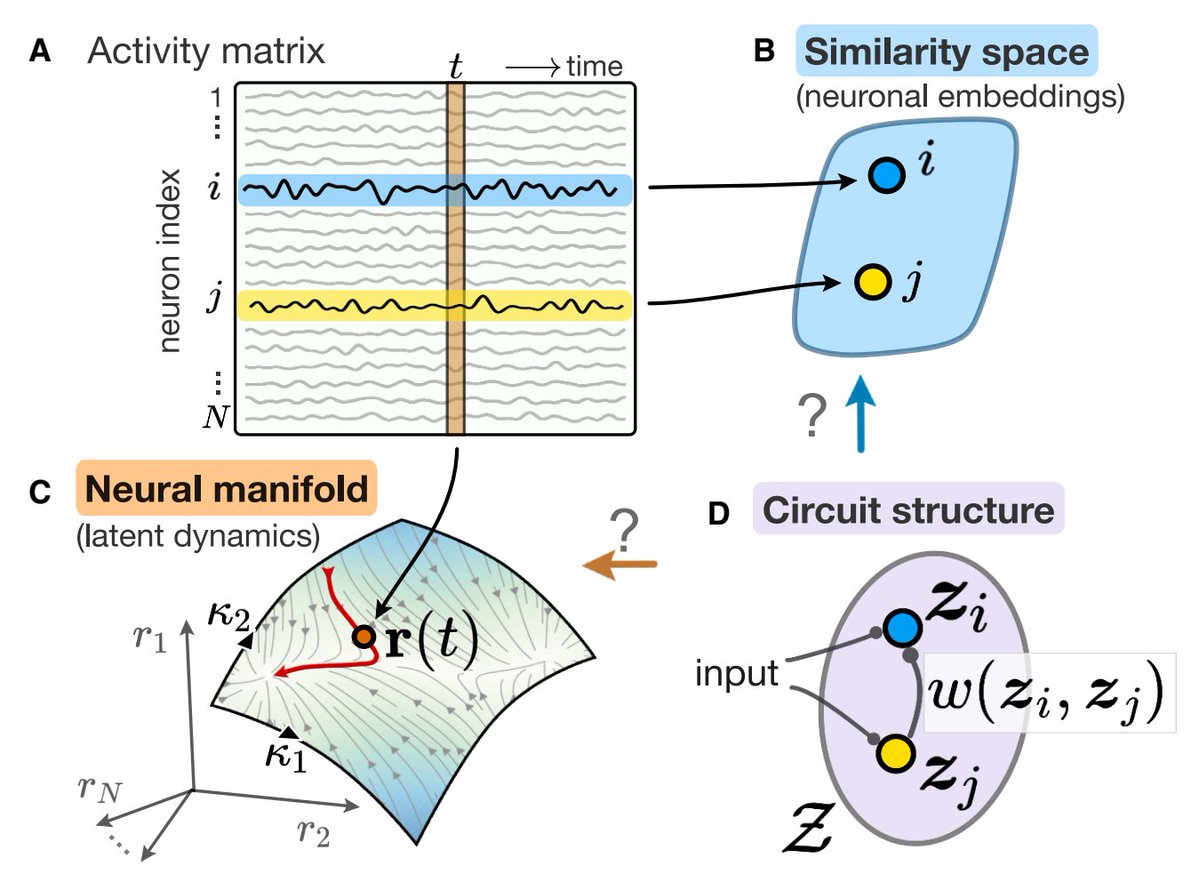
𝗪𝗵𝗮𝘁'𝘀 𝘁𝗵𝗲 𝗿𝗲𝗹𝗮𝘁𝗶𝗼𝗻𝘀𝗵𝗶𝗽 𝗯𝗲𝘁𝘄𝗲𝗲𝗻 𝗺𝗮𝗻𝗶𝗳𝗼𝗹𝗱𝘀 𝗮𝗻𝗱 𝗿𝗲𝗰𝘂𝗿𝗿𝗲𝗻𝘁 𝗻𝗲𝘁𝘄𝗼𝗿𝗸𝘀 𝗶𝗻 𝘁𝗵𝗲 𝗯𝗿𝗮𝗶𝗻? This looks like a must read (suppl material bursting with goodies). doi.org/10.1016/j.neur…
Luiz Pessoa tweet media
English
4
144
817
37.4K
Justin Curry รีทวีตแล้ว
Yi Ma
Yi Ma@YiMaTweets·
Version 2.0 of our new open-source book is now released on the book website: ma-lab-berkeley.github.io/deep-represent… As the update is very substantial from version 1.0, we give the book a new title: "Principles and Practice of Deep Representation Learning," or "A Mathematical Theory of Memory."
Yi Ma tweet media
English
11
169
956
60.3K
Justin Curry รีทวีตแล้ว
Dan Roy
Dan Roy@roydanroy·
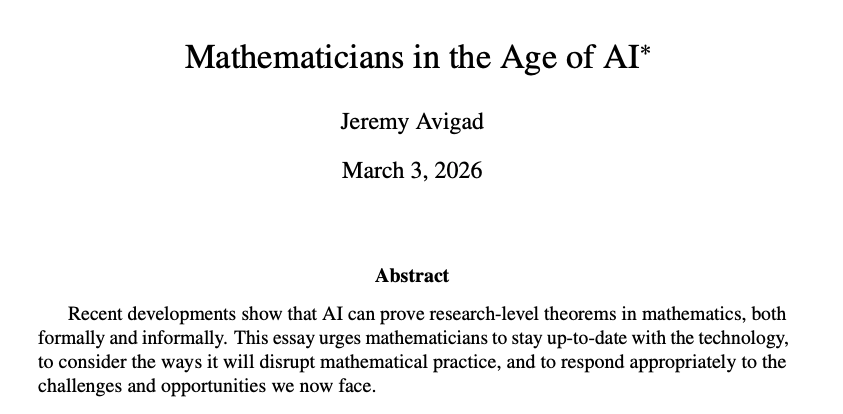
How are mathematicians facing the wave of rapidly advancing AI-for-math capabilities? Jeremy Avigad (CMU prof and co-author on the original 2015 system description paper for Lean) just posted a paper with his thoughts in the wake of the Math, Inc. announcement on sphere packing. andrew.cmu.edu/user/avigad/Pa… There are a lot of interesting passages in here, including a bit of the back story of the Math, Inc. bomb drop and how it was initially received by the humans working on the formalization project. But, as for how mathematics proceeds, here's the key last passage: "We need to remember our strengths: mathematicians are problem solvers and theory builders extraordinaire. Rather than fight the use of AI in mathematics, we should own it. It is not enough to keep up with current events and design benchmarks for AI researchers; we need to play an active role in deploying the technology and molding it to our purposes. We also need to learn how to raise our students with the wisdom to use the new technologies appropriately, and we need to be careful that we still manage to impart core mathematical intuitions and understanding. Figuring out how to use AI effectively to achieve our mathematical goals won’t be easy, but mathematicians have always embraced challenges—indeed, the harder, the better. If we face AI head-on and stay true to our values, mathematics will thrive. We just need to show up and get to work." The next few years should be a golden era for mathematics. For those of us working on the frontier, I hope we do well by our mathematician colleagues.
Dan Roy tweet media
English
22
193
850
106.8K
Justin Curry รีทวีตแล้ว
Steven Strogatz
Steven Strogatz@stevenstrogatz·
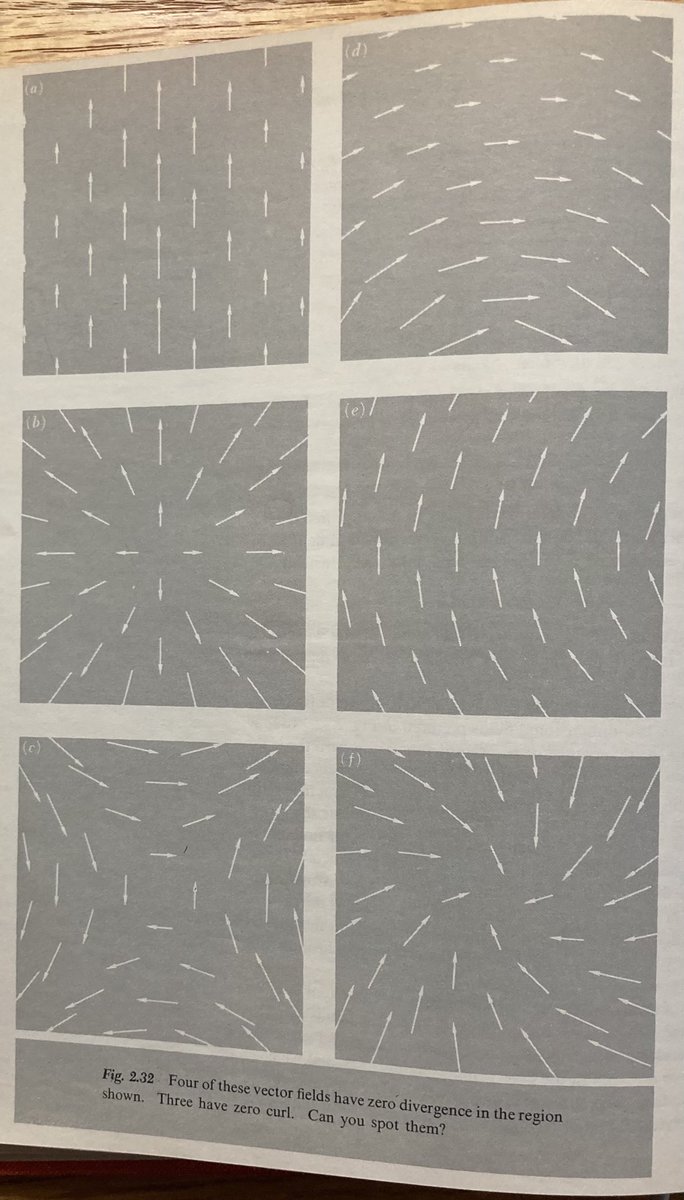
Brilliant exercises for developing intuition about divergence and curl, from Purcell’s book on electricity and magnetism. “Four of these vector fields have zero divergence in the region shown. Three have zero curl. Can you spot them?” (I’ll show solutions lower in the thread.)
Steven Strogatz tweet media
English
21
168
1.1K
0
Justin Curry รีทวีตแล้ว
Rémi Lodh
Rémi Lodh@LodhSpringer·
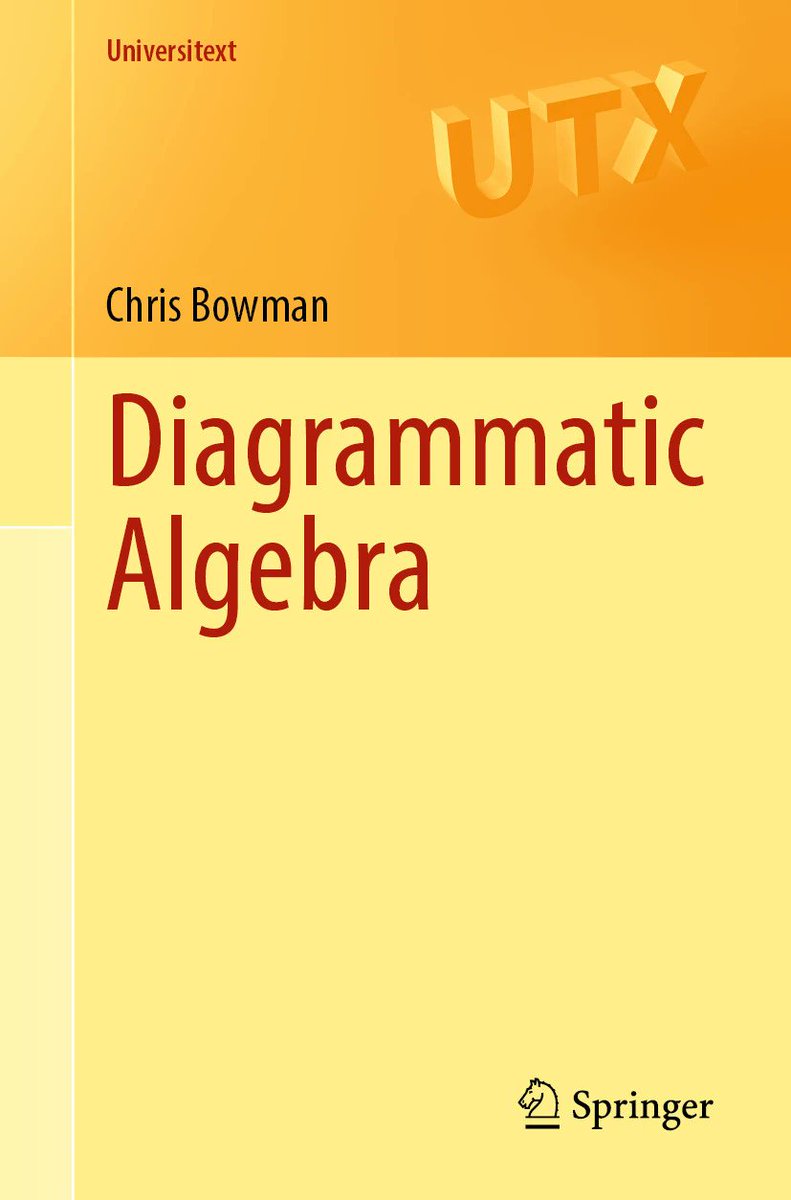
"A broad and accessible introduction [...] all while maintaining a high level of accessibility and didactic clarity" writes zbMATH reviewer Enrico Jabara about the book Diagrammatic Algebra by Chris Bowman (2025). A beautifully illustrated into to categorification in rep. thy!
Rémi Lodh tweet media
English
3
14
80
3.7K
Justin Curry รีทวีตแล้ว
Stéphane Deny
Stéphane Deny@StphTphsn1·
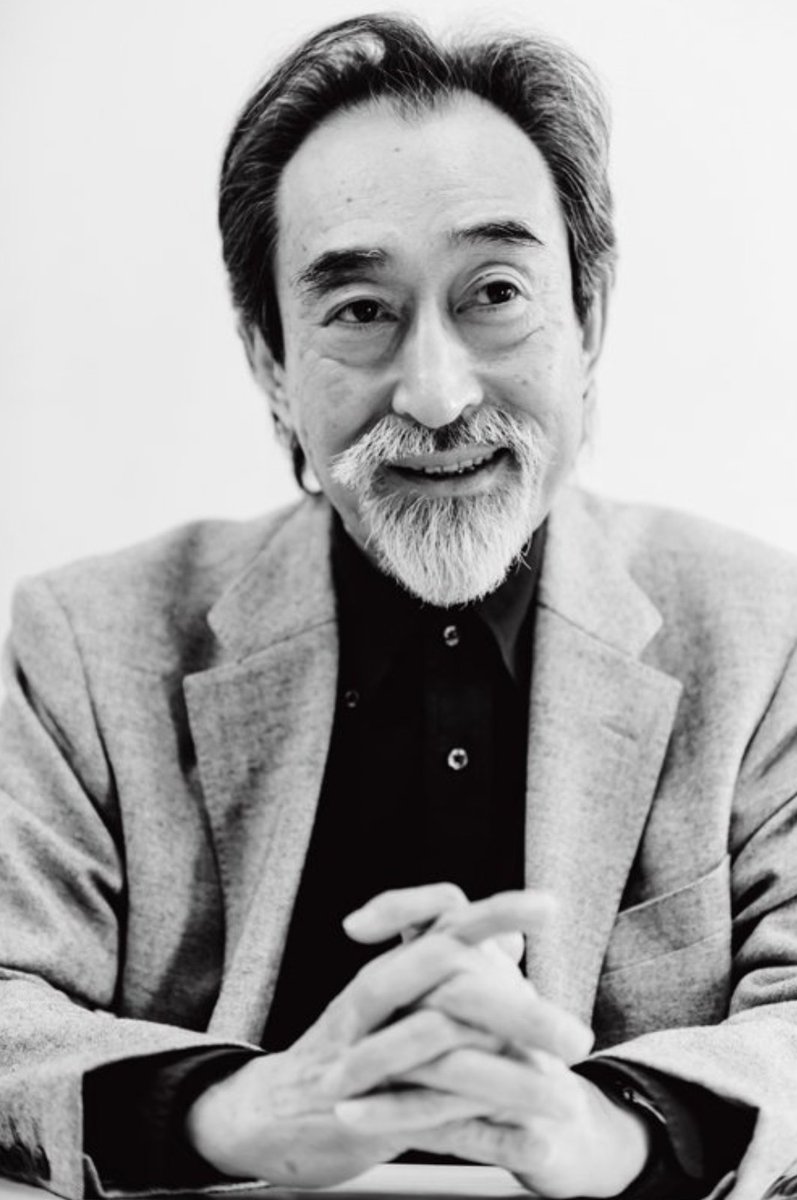
Today, I'd like to tell you about an article by Yohtaro Takano, entitled "Perception of Rotated Forms: A Theory of Information Types" (1989). 🧵
Stéphane Deny tweet mediaStéphane Deny tweet media
English
4
50
257
15K
Justin Curry รีทวีตแล้ว
Luiz Pessoa
Luiz Pessoa@PessoaBrain·
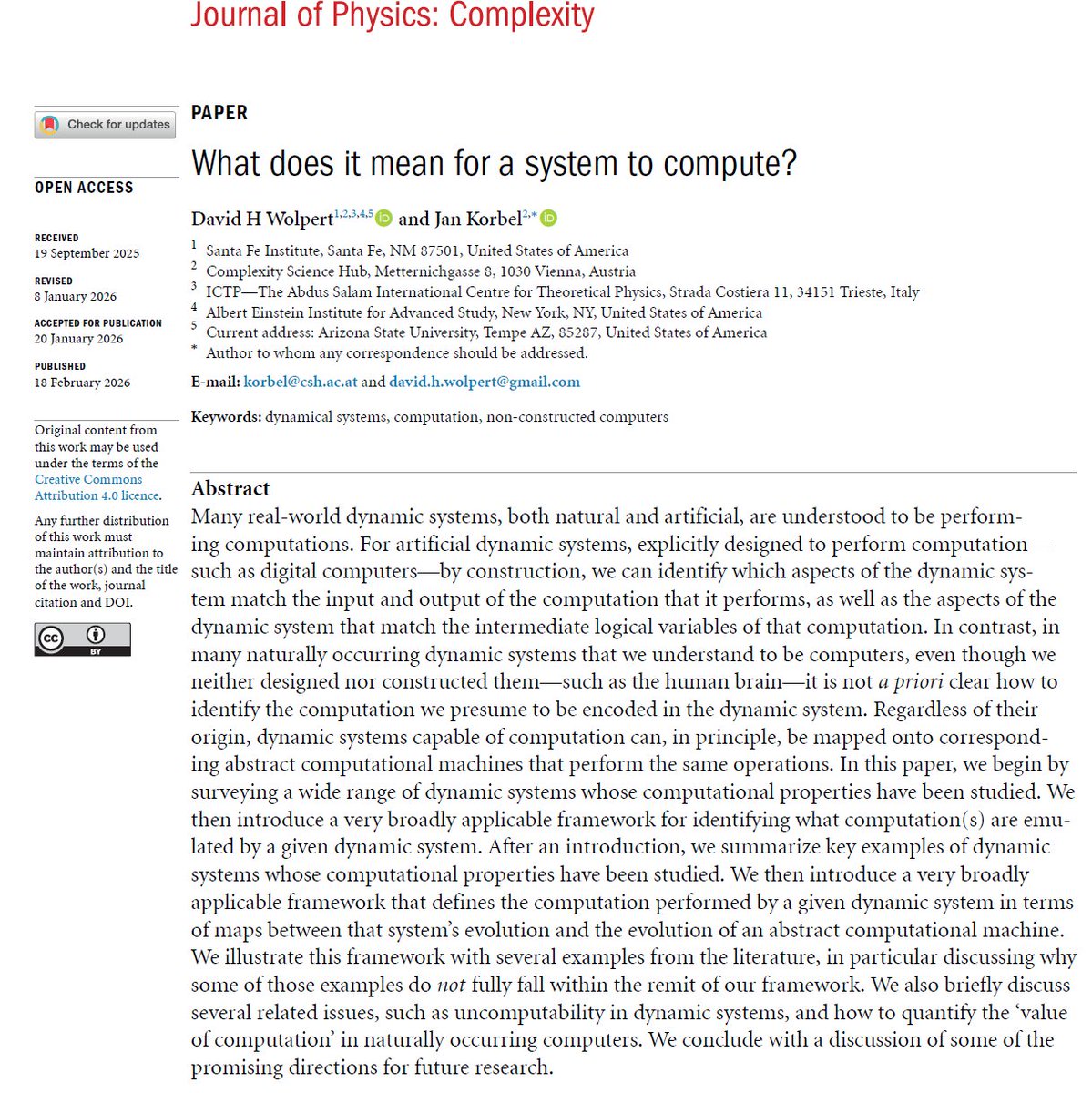
𝗪𝗵𝗮𝘁 𝗶𝘀 𝗰𝗼𝗺𝗽𝘂𝘁𝗮𝘁𝗶𝗼𝗻 𝗶𝗻 𝗱𝘆𝗻𝗮𝗺𝗶𝗰𝗮𝗹 𝘀𝘆𝘀𝘁𝗲𝗺𝘀? Interesting paper tackling this difficult question. Answer (in part): it's complicated! doi.org/10.1088/2632-0…
Luiz Pessoa tweet media
English
8
101
485
24.3K
Justin Curry
Justin Curry@currying·
Love this final exam! “Four questions to be answered 15 years from now: 1. Are you still interested in mathematics? 2. Do you use it in creative ways? 3. Do you read about it for pleasure? 4. Do you still know why mathematics is good for the soul?”
SIAM@TheSIAMNews

On the SIAM News blog, Christoph Börgers discusses how his unconventional #mathematics course at @TuftsUniversity without “coercion”—namely the threat of a bad grade—fostered genuine interest for the subject. Read more about his classroom experiment! siam.org/publications/s…

English
0
0
2
262
Justin Curry รีทวีตแล้ว
William Gilpin
William Gilpin@wgilpin0·
How do time series foundation models forecast unseen dynamical systems? In new experiments, we find that small transformers learn to approximate transfer operators in-context. (1/N) arxiv.org/abs/2602.18679
English
3
79
383
28.4K
Justin Curry รีทวีตแล้ว
Junior Rojas
Junior Rojas@junior_rojas_d·
training new morphologies
English
39
133
1.2K
57.5K
Justin Curry รีทวีตแล้ว
Alex Kontorovich
Alex Kontorovich@AlexKontorovich·
Yesterday we finished the formalization of Erdos Problem 392 as part of the PNT+ project. And it really drove home for me just how far we still are from math being “solved” by AI. There was one task left. It was marked “small.” It had been claimed, then a few weeks later unclaimed after little progress (this happens all the time, someone thinks they’ll have more time, life intervenes, etc.). It sat in the middle of a 3000+ line proof. Supposedly just a stitching together of some already-proved elementary lemmas. So I said, sure, I’ll take the last task and get us over the finish line. I handed it to Claude 4.6, thinking it would finish in 20 minutes. It spun. And spun. Going in circles, unable to make the argument work. So I handed it to GPT-5.3Pro. It also spun — just in a different loop of confusion. At that point, having claimed the task, my pride was on the line. So I rolled up my sleeves and actually had to figure out what the hell was going on. It turned out we needed to slightly tweak the initial parameters (1000 lines above), modify the statement of the main lemma I was supposed to prove, and then repair all the downstream consequences 1000 lines later. It took two days. In the end it was ~700 lines, roughly a third human / Claude / GPT. It felt a bit like the transcontinental railroad, construction from both sides was supposed to meet in the middle, but the tracks were off by 200 miles. Maybe I would’ve gotten better results from the beginning by asking the AI to fix the entire 3000-line file. But a big, complicated file with shifting dependencies may simply be too much for even the largest models today. It didn’t help that earlier task-solvers had run into off-by-one bugs and updated the formal lemma statements without updating the blueprint. So by the time I got there, it was a mess. But we got through it. And if you want a concrete data point on where we are with autonomous mathematics, especially in Lean, this is one. I’m very bullish overall on Math+AI. But there’s still a LOT left to do.
English
20
46
406
157.8K
Justin Curry รีทวีตแล้ว
Frank Nielsen
Frank Nielsen@FrnkNlsn·
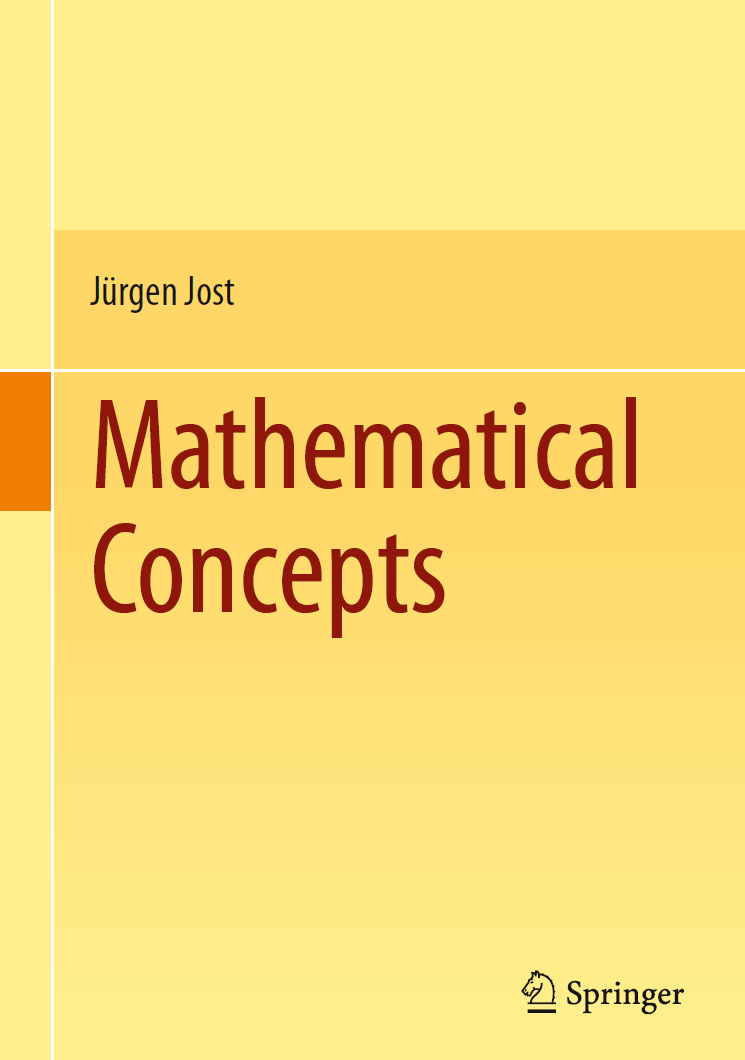
Very nicely written book covering many topics. Worth checking! "Mathematics translates *concepts* into *formalisms* and applies those formalisms to derive *insights* that are usually not amenable to a less formal analysis." -- J Jost
Frank Nielsen tweet media
English
5
40
314
15K