Daniel Akst

6.5K posts

Daniel Akst

Daniel Akst

@danakst

Author, columnist, critic. @WSJ weekend news quiz. Editor and publisher @tivolibooks. https://t.co/jGuovodkVK

เข้าร่วม Nisan 2009
1.6K กำลังติดตาม850 ผู้ติดตาม
Daniel Akst รีทวีตแล้ว
Alex Tabarrok
Alex Tabarrok@ATabarrok·
Never quite seen a "how it started/how it's going" like this. Truly astounding. Very sad. thefp.com/p/the-radicali…
Alex Tabarrok tweet media
English
97
429
3.9K
392K
Daniel Akst
Daniel Akst@danakst·
This is a valuable case study of how to use AI to learn. Note the reading involved (and yes the author is unusually learned and quick). Note also the emphasis on detailed prompts and ongoing consultation.
Jesús Fernández-Villaverde@JesusFerna7026

I am at the Board of Governors today, presenting my paper on oil tankers (especially relevant given current events), so I won’t have time to write the second part of yesterday’s post on the role of universities. That will have to wait until later this week. Meanwhile, a journalist contacted me to request more details about my Goffman study plan, so I decided to share my workflow. I want to emphasize that this workflow worked for me based on my background, interests, and the time I had available. Others will discover different approaches that better suit their needs. That’s exactly the point. The most valuable feature of an LLM as a learning tool is its ability to be personalized. A course has a single syllabus for everyone, but Claude creates one tailored for you. Time and process. I spent a little over 12 hours over the weekend, which is more than I initially planned (I had asked for a 9-hour schedule, but the material drew me in). To put that in perspective: according to the Carnegie Standard for college work in the U.S., a typical semester course requires 135 hours of student effort—45 hours in class and 90 hours outside of class. Of course, in reality, most courses demand less time, or students are not always as diligent. A master’s course on modern sociological theory might cover 10 to 12 major thinkers over 14 weeks. Goffman would typically be covered in one week, which translates to roughly 9 to 12 hours of total student effort. So, the time I dedicated is comparable to what a student in a well-structured course would spend on the same thinker. The process had three stages. First, the study plan. I asked Claude to prepare a plan tailored to my specific background. I am a macroeconomist, not a sociologist, but I have some familiarity with social theory and a strong background in game theory, information economics, and signaling. I told Claude all of this and asked it to consider my existing knowledge, focus on Goffman’s most important contributions, and make explicit connections to concepts I already understand. I’ve discovered that spending enough time preparing the prompt is essential. Tell Claude as much as you can about what you’re trying to achieve! The plan it created included a reading sequence, key themes to focus on in each text, and a set of questions designed to connect Goffman's ideas to economic theory. For example, the plan highlighted early on that Goffman's distinction between “expressions given” and “expressions given off” naturally aligns with the difference between intentional signals and involuntary information leaks in signaling models. Having that link outlined before I started reading made the process much more productive than it would have been otherwise. This is where personalization shines. A standard syllabus for a sociology course would not draw these connections, because it is not designed for an economist but for the median student in the class. Second: reading the actual texts. I want to clarify this: Claude did not replace the reading. I read The Presentation of Self in Everyday Life in its entirety. I read significant sections from Asylums (the full first essay, “On the Characteristics of Total Institutions”) and from Stigma (the first three chapters). Claude chose which texts to focus on and in what order. But I sat with the books and read them thoroughly. There is no substitute for experiencing an original thinker in his own words, and Goffman is a remarkable writer. No summary, no matter how well done, can capture the depth of his observations. Third: interactive Q&A. As I read, I used Claude as an interactive interlocutor. This was the most valuable stage. I asked Claude when Goffman’s argument was unclear to me. I asked for connections to the broader sociological literature (how does Goffman relate to Mead? to Garfinkel? to Bourdieu?). I asked for links to ideas I already knew from economics. For example, I spent considerable time exploring the relationship between Goffman’s concept of “audience segregation” (the performer must keep different audiences apart because the signal that works in one room is destructive in another) and multi-audience signaling problems in mechanism design. I also pushed Claude on where Goffman’s ideas have and have not been formalized: team signaling, the cooperative receiver, frame manipulation. Some of these turned into interesting exchanges that forced me to think carefully about the limits of existing economic models. This is the difference between reading a book alone and reading it alongside a knowledgeable colleague who has infinite patience, no office hours, broad knowledge of adjacent literatures, and the ability to adjust the conversation in real time to your level and your interests. Not a perfect colleague. Not an infallible one. But an extraordinarily useful one. Were there errors? Probably. There always are. When I teach my own graduate courses in areas where I have published for two decades, I catch myself giving imprecise or incomplete answers more often than I would like to admit. Perfection is not the benchmark. The benchmark is whether the experience, taken as a whole, produces understanding. In this case, I believe it did. Can someone with a different background create a better workflow? Certainly. A computer scientist might want Claude to highlight the links between Goffman and agent-based modeling. A psychologist might focus on the connection to self-perception theory. A philosophy student could trace the phenomenological roots. That’s exactly why personalization is a major advantage. The study plan I received was designed for a macroeconomist familiar with Spence but not Garfinkel. Yours should be built for whoever you are and whatever you already know. That is the point, and it is the thing a standard university course, however good, cannot do.


English
0
0
1
82
Daniel Akst รีทวีตแล้ว
Luke Tress
Luke Tress@luketress·
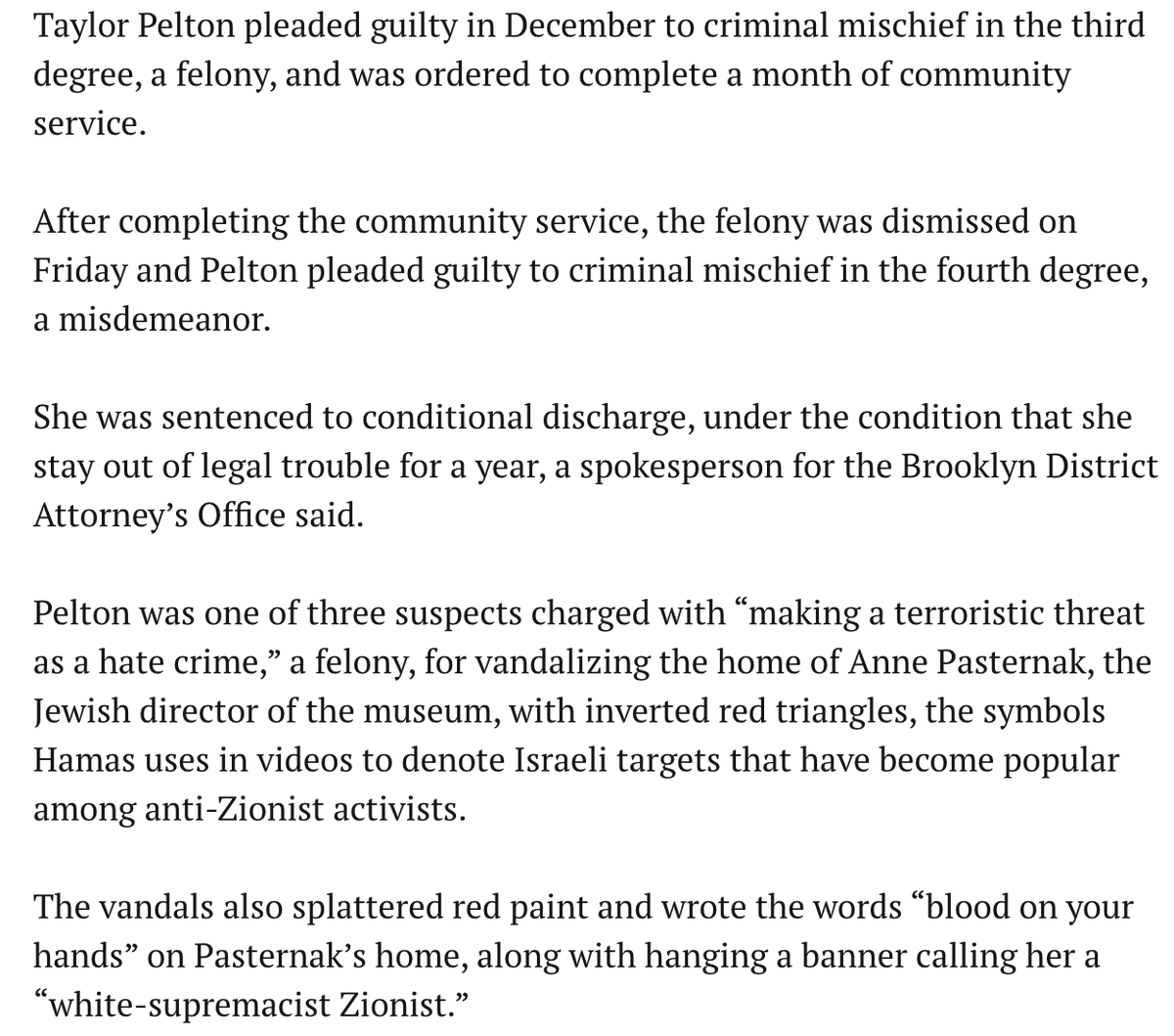
Felony charge dismissed against woman who vandalized the home of Brooklyn Museum’s Jewish director with antisemitic graffiti
Luke Tress tweet media
English
19
84
260
27.6K
Daniel Akst
Daniel Akst@danakst·
@johnbyronkuhner Yes indeed but I doubt MLB wants doubles and triples at the expense of home runs.
English
1
0
0
16
Daniel Akst รีทวีตแล้ว
Hen Mazzig
Hen Mazzig@HenMazzig·
Here’s a list of synagogues that have been targeted since October 7: - Oct 17: El Hamma, Tunisia - Oct 18: Berlin, Germany - Nov 8: Montreal, Canada - Nov 15: Yerevan, Armenia - Nov 19: Lakewood, NJ, USA - Dec 10: Albany, NY, USA - Feb 28: Sfax, Tunisia - Apr 5: Oldenburg, Germany - Apr 10: Moscow, Russia - May 1: Warsaw, Poland - May 17: Rouen, France - May 30: Vancouver, Canada - Jun 10: Yerevan, Armenia - Jun 23: Derbent & Makhachkala, Dagestan, Russia - Jul 11: Obninsk, Russia - Jul 29: Pittsburgh, PA, USA - Aug 10: Brooklyn, NY, USA - Aug 24: La Grande-Motte, France - Oct 26: Chicago, IL, USA - Dec 6: Melbourne, Australia - Dec 18: Montreal, Canada - Dec 30: Mykolaiv, Ukraine - Jan 11: Sydney, Australia - Jul 4: Melbourne, Australia - Aug 13: Obninsk, Russia - Oct 2: Manchester, UK - Oct 7: Minneapolis, MN, USA - Nov 27: Chernivtsi, Ukraine - Jan 10: Jackson, MS, USA - Jan 14: Giessen, Germany - Jan 28: Brooklyn, NY, USA - Feb 10: Olney, MD, USA - Feb 22: Charleston, SC, USA - Mar 3: Toronto, Canada - Mar 7: Toronto, Canada - Mar 7: Ontario, Canada - Mar 9: Liège, Belgium - Mar 12: West Bloomfield Township, MI, USA - Mar 23: Golders Green, London, UK Every time a synagogue is targeted, I have to update this list. And it doesn’t feel any less heavy.
English
501
1K
2.9K
129.3K
Daniel Akst รีทวีตแล้ว
Laura Marcus
Laura Marcus@MissLauraMarcus·
I have seriously considered leaving this country to live in Israel as I genuinely feel it’s not safe for Jews to live here. I’m now alone since my beloved husband John died. I have no children. No ties. I own my house and have some savings. So I have means. I could go - Make Aliyah as it’s called. Elderly Jews in Nazi Germany could not get out or were reluctant to leave till it was too late. I don’t think Britain will have concentration camps. Why bother? They cost money and need organisation. But I do think attacks on Jews will continue. Hitler could only have dreamt of the reach antisemitism has today. But I’m staying. My house is full of John. He completely redecorated - “Let me do this while I can!” he insisted. Meaning before the Parkies got too bad. He had the whole house re-floored and re-carpeted. Changed the lighting and bought a new ‘fridge freezer, cooker, washing machine and sink. Put up shelves, rails and hooks. John is in every pore of this house. To leave it is to leave him. And I cannot. So I’ll stay. I’ll stay knowing things are going to get worse for Jews. Much worse. But I’ve lived all the life I want to live now. It’s for the coming generations of Jews to decide when it’s time for them to go. Many left it too late in Nazi Germany. We’re at about the 1932/33 stage now. With the shadows of 1938’s Kristallnacht - Gail’s Bakery in Archway, north London had its windows smashed. Other businesses deemed to have Jewish connections have had their windows smashed too. Universities are unsafe for Jews. Rampant Jew hate also thrived in the universities in Nazi Germany. Every gathering of Jews in Britain now asks, “If not now, when? When do we go?” I’m staying. But many are leaving.
English
933
340
2.8K
117.8K
Daniel Akst รีทวีตแล้ว
Phil Craig
Phil Craig@philmcraig·
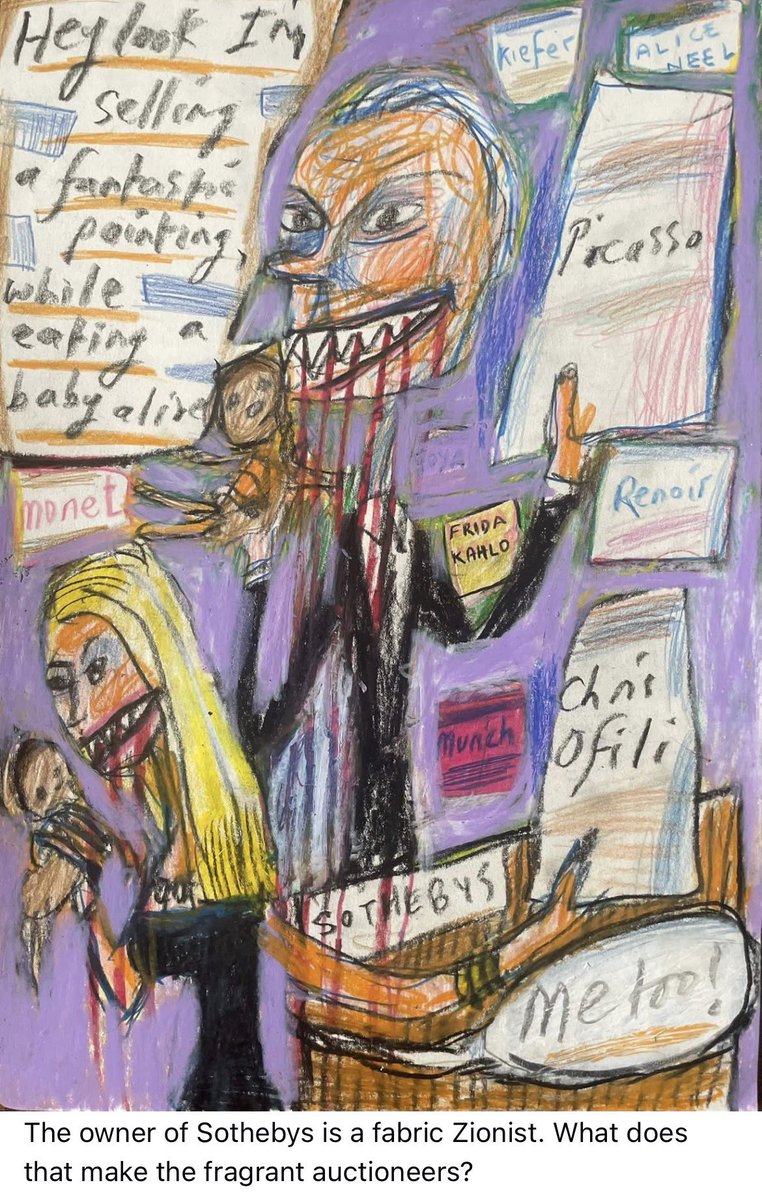
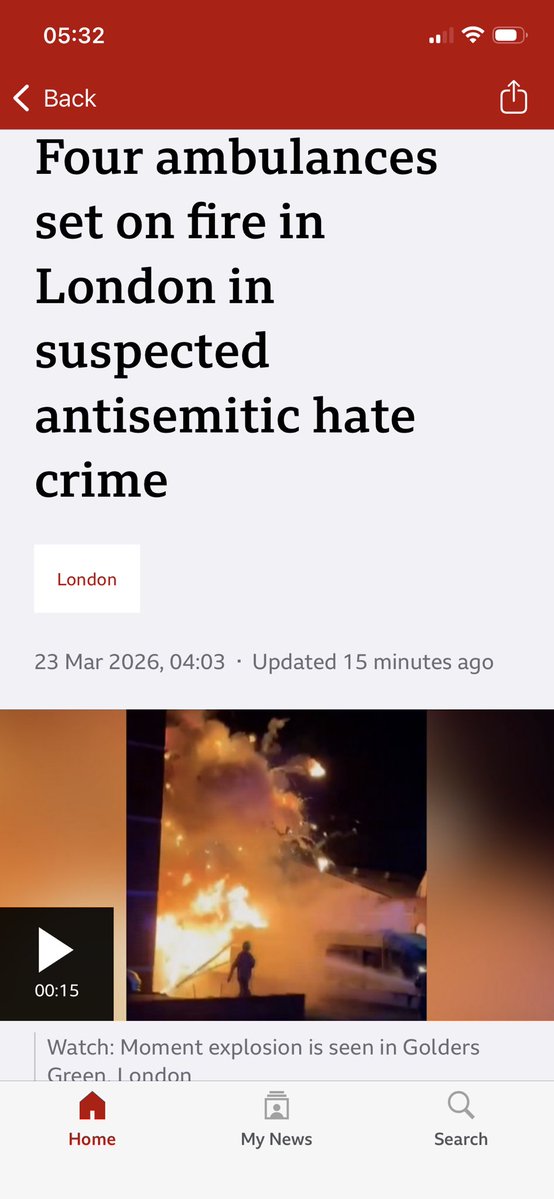
If gallery owners and council officials consider it normal - even artistically brave - to showcase images of baby eating Jews, then the rest of us better get used to waking up to images of burning ambulances and worse.
Phil Craig tweet mediaPhil Craig tweet media
English
99
390
1.6K
41.5K
Daniel Akst รีทวีตแล้ว
Shany Mor שני מור شني مور
@Ameer_Kotecha Britain didn’t become unsafe for Jews because a rabble of semi-literates with violent tendencies. It became unsafe because the cultural and academic elite nurtured for years a comprehensive worldview organised around the idea of Jewish malevolence abroad and conspiracy at home.
English
31
180
870
40.8K
Daniel Akst รีทวีตแล้ว
European Jewish Congress
European Jewish Congress@eurojewcong·
Dutch authorities have foiled a planned attack on a synagogue in Heemstede, where multiple explosive devices were discovered in close proximity to the site. This attempted attack comes amid a wave of recent incidents targeting Jewish institutions in the Netherlands and across Europe, including attacks in Rotterdam, Amsterdam and Liège. The discovery of explosive materials near a place of worship is extremely alarming and highlights the serious and ongoing threat facing Jewish communities. Preventing this attack likely averted potentially devastating consequences. This incident underscores the urgent need for heightened vigilance, strong intelligence cooperation and reinforced protection of Jewish sites. Authorities must ensure that those responsible are identified and that any wider networks behind these attempts are dismantled. Jewish communities must be able to live, gather, and pray in safety. Attempts to terrorise them will not succeed.
European Jewish Congress tweet media
English
59
621
1.4K
60.3K
Daniel Akst
Daniel Akst@danakst·
@wrathofgnon Thomas’s work in Jackson Heights is magnificent. Don’t miss the annual open garden day in the historic district there.
English
0
0
2
245
Wrath Of Gnon
Wrath Of Gnon@wrathofgnon·
This is Millan House, on Lennox Hill, Upper East Side, Manhattan NYC. Built in 1931 for Rockefeller by NY state architect Andrew J. Thomas who was famous for being cost efficient as rental homes for employees of the Rockefeller Institute(their director was the first tenant). Romanesque Revival on the street side, and Italianate on the garden side. The animal themed door surrounds are carved limestone. Once it represented an almost philanthropic interest in beauty and honest labor. Today, it wouldn't be difficult to copy these and have them machine carved and replaced, or remade to fit other buildings in other cities around the world.
Micah Springut@mspringut

In another life I’m writing a dissertation on the side doors of New York.

English
3
23
325
23.7K
Daniel Akst รีทวีตแล้ว
Tali Goldsheft
Tali Goldsheft@TaliGoldsheft·
Amazing letter by @Cornell President rejecting the resolution. Should be read by all: Dear Zora, Thank you for conveying SA Resolution 61: Calling for the Termination of Cornell University’s Partnership with the Technion – Israel Institute of Technology While Preserving Cornell Tech. I reject this resolution, which fundamentally conflicts with Cornell’s principles of academic collaboration and our core commitment to academic freedom. Cornell Tech is not a political entity. It is an academic partnership, created through shared investment by Cornell University, the Technion, and the City of New York for the benefit of the city and the state, according to a negotiated set of conditions that govern its development and the terms of its 99-year ground lease on Roosevelt Island. As one of Cornell University’s many international partnerships and collaborations, Cornell Tech deepens, enriches, and strengthens the ability of our students, faculty, and staff to pursue knowledge and advance the university’s academic mission. The Joan and Irwin Jacobs Technion-Cornell Institute, the core international partnership upon which Cornell Tech is based, is an extraordinarily valuable collaboration focusing on education and research in health tech, media tech, and urban tech, and supporting the development of new startup companies. Severing our relationship with the Technion—or with any entity affiliated with governments, institutions, or enterprises with which some of our community members disagree—as a statement of political protest, would not only hinder our research, teaching, and public engagement; it would imperil our academic principles. Our university, like all of our peer institutions, regularly faces pressure—from across the political spectrum, from within and beyond our own community—to make academic decisions according to political priorities. The phenomenon is not a new one: universities have grappled with such pressures from governments and societies for as long as the institution of the university has existed. When we yield to these pressures and proscribe specific collaborations or collaborators on grounds other than merit, we compromise our principles of academic freedom, undermine our own institutional excellence, and damage public trust in our work.   Moreover, this resolution inaccurately asserts that “the continued operation of Cornell Tech as a Cornell University campus does not require an ongoing partnership with the Technion-Israel Institute of Technology.” Cornell Tech, while part of Cornell, is a joint effort of the university, the Technion, and the City of New York. It is no more possible for Cornell to unilaterally terminate that effort and claim full control of the campus than it would be for the Technion or the City of New York to do the same. Finally, I am deeply troubled by the selective manner in which this resolution singles out the Technion, alone of Cornell’s many international partners, for censure. Cornell currently maintains 159 active agreements with institutions in 59 nations and regions; all of these institutions have some government affiliation, and many conduct research with military and security applications. Cornell itself has military research contracts, conducts research with potential military applications, and has relationships with companies whose products are used in military contexts. Cornell also has relationships with institutions in countries whose governments have been accused of human rights violations—as our own has been.  None of these publicly available facts are mentioned in the resolution; only our partnership with an Israeli institution is targeted for erasure. The political bias evident in this selective approach is deeply disturbing, and the resolution is incompatible with both the Student Assembly’s purpose and Cornell University’s core values. I reject it fully and forcefully. Sincerely,   Michael Kotlikoff President and Professor of Molecular Physiology Cornell University
Gregg Mashberg@gregg_mashberg

Cornell rejects anti-Technion BDS resolution. And tells ⁦@ZohranKMamdani⁩ not even to think about ending the Consortium: “It is no more possible for Cornell to unilaterally terminate…than it would be for…the City of New York to do the same.” assembly.cornell.edu/resolutions/st…

English
141
868
5.6K
938.8K
Daniel Trubman
Daniel Trubman@dmtrubman·
Manhattan is the best borough, but the plethora of treat options at the Jackson Heights Costco really puts the East Harlem Costco to shame.
English
6
0
9
1.6K