
David Contreras M. รีทวีตแล้ว
David Contreras M.
7.5K posts


David Contreras M.
@davidcontrerasm
Founding AI Designer at iGent AI. Arctic lover. My opinions are my own. 🇪🇸 | 🇬🇧
London (UK) | Logroño (ES) เข้าร่วม Mart 2009
1K กำลังติดตาม1.5K ผู้ติดตาม

David Contreras M. รีทวีตแล้ว

Vivimos en una península que fue invadida por foceos, fenicios, púnicos, romanos, suevos, alanos, vándalos, godos, visigodos, bereberes, vikingos, almorávides, almohades, pinches perros ingleses y franceses, y no estamos todo el puto dia llorando ni reclamando disculpas a nadie

Español


Emotions That Only Exist In Japanese:
// Thread //
English
David Contreras M. รีทวีตแล้ว

David Contreras M. รีทวีตแล้ว

@Chaarrllyyy Copenhague es una de las capitales europeas más bonitas. No solo eso, si te gusta el diseño es el paraíso.
"El mundo está lleno de secretos maravillosos esperando a que tus sentidos se agudicen".
Español
David Contreras M. รีทวีตแล้ว

Está hablando de autofagia, un mecanismo inducido por el ayuno que ha demostrado reducir tumores y eliminar todo tipo de células cancerígenas.
En 30 días con control médico puede perder unos 15 kilos. Extenuante pero posible (yo he hecho 4 días, el récord mundial en más de 300 días).
Aún con todo, el ayuno y la autofagia pueden ayudar pero no sustituir tratamientos convencionales.
Español

🚨🚨Radiólogo: "Si tengo cáncer, no iré al hospital"...
"He visto a demasiada gente morir por quimioterapia, no por cáncer"...
"Ayunaré durante 30 días y dejaré de trabajar"....
Español
David Contreras M. รีทวีตแล้ว

David Contreras M. รีทวีตแล้ว

The goal is neverrrrrrrrrrrrrrrrrrrr gucci bags. It's seeing the world, breathing in nature, and living free.
English
David Contreras M. รีทวีตแล้ว

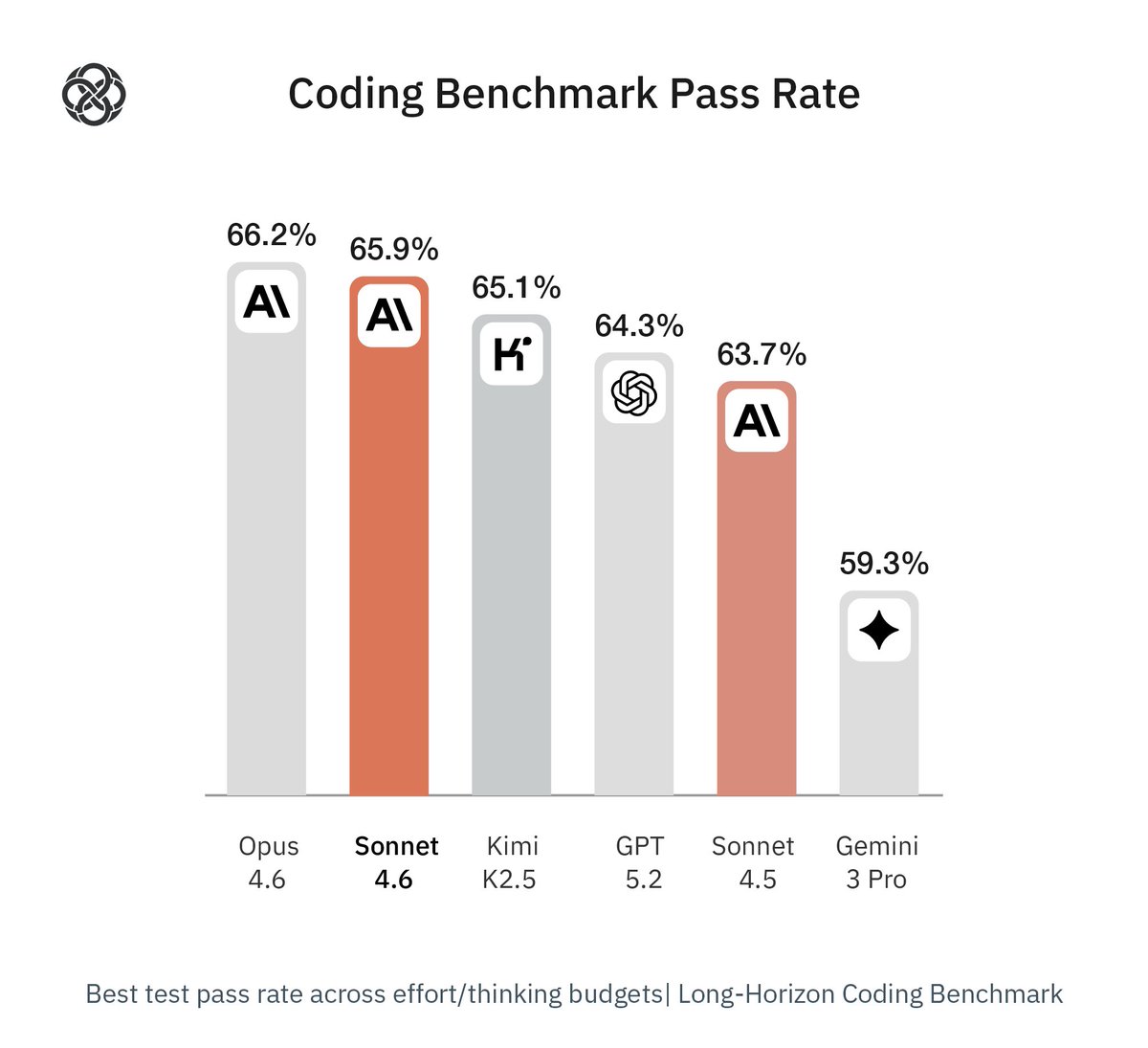
We’ve been testing Sonnet 4.6 and it has been potent in our agent, Maestro. Our primary eval is to implement a long list of features across a diverse set of use cases, iteratively across codebases, building on prior work. The result: it completed features faster, cheaper, and with a higher benchmark pass rate.
English
David Contreras M. รีทวีตแล้ว

Reviewing Claude Code output before pushing directly to prod
English
David Contreras M. รีทวีตแล้ว

It’s simple, from a sci-fi & time-travel perspective.
Af the beginning there’s one temporal line, where there’s a plane accident.
Then the survivors of this accident provoke an electromagnetic event that splits the original time line into 2: In one there’s an accident and in the other there is not.
Then, in the original line where the plane accident happened , they go back in time, and detonate an atomic bomb that splits the time-line into 2 as well.
That’s why at the end there Jack has a son, etc.: Because we are talking about different temporal lines.
The only way to get “out of the island” for the folks that had the accident is to “merge” the temporal lines. That’s why the folks that didn’t have the accident “remember” the island.
Etc. etc. :)
English

LOST, which ended 16 years ago, remains to me a total mystery.
I watched everything and still have no clue about what actually happened.
Who can explain it to me in one (long) sentence ?
English
David Contreras M. รีทวีตแล้ว

> Opus 4.6 wrote a C compiler from scratch which compiled the Linux kernel successfully and you think it's a bubble???

Anthropic@AnthropicAI
New Engineering blog: We tasked Opus 4.6 using agent teams to build a C compiler. Then we (mostly) walked away. Two weeks later, it worked on the Linux kernel. Here's what it taught us about the future of autonomous software development. Read more: anthropic.com/engineering/bu…
English
@socoloffalex Beautiful! I'd only say that "external radius = internal radius + distance between items".
English

If you see this on your For You Page, it means the algorithm is working again! 🎉
English
@vladaxnt @101babich 100% agree. Users want predictability, feeling mastery with their tools. The only 2 scenarios where dynamic content wins is on micro-copy (i.e. a button that changes its tone depending on the context) or VUIs, where users appreciate variation.
English

@101babich I hardly think that will ever be the case, and not because the tech can’t do it, it’s just a fundamentally flawed idea. consistency and predictability, which AI is trash at, are key. no user wants a different journey generated every time they want to perform a certain action.
English

AI instead of UI
The last few years radically changed how we think about digital products & product design process in general. What we are witnessing right now is a transition where AI is no longer just a feature; it is becoming the infrastructure of interaction.
For decades, UI design was rooted in the concept of “Happy Path,” a series of static, linear screens (routes from A to B) designed to funnel users toward a goal. This “one-size-fits-all” approach assumes that all users have the same mental model, which is far from the truth.
The rise of AI tools like ChatGPT and Gemini is showing that we are moving into an era of Generative Interfaces. Instead of a designer pre-determining every button and menu, the interface is synthesized in real-time based on user actions.
Back in 2019, @glebich and I were working on the concept of morphing Interface, the idea of a UI that adapts its structure based on user intent. The great thing about this UI is that it was highly dynamic: different users saw different content/contextual actions based on their behavior. This concept was crazy in 2019, but it is highly relevant to the modern state of the product design process. And I strongly believe that it represents the future of UI design.
We will move beyond the “AI chatbox" crutch
Yes, many products today treat AI as a sidecar (think of Copilots or chatbots pinned to the side of a traditional dashboard), but this is a transitional phase. Why? Because adding a chat window to a 20-year-old software layout is like putting a jet engine on a horse-drawn carriage.
That's why the future isn't "AI as an add-on"; it is AI as the Operating System. AI will power generative interfaces that are rooted in anticipatory design: UI won’t wait for a command; it will surface tools based on the user's current environmental context and historical behavior. This evolution changes the very nature of product design, and we will move away from designing pages/screens and toward designing systems of logic.
English
@thsottiaux The bottleneck is still how fast you can learn from your users :P
English

David Contreras M. รีทวีตแล้ว

Dalian has officially entered China’s trillion-yuan GDP club, becoming the 29th city to do so.
English