Prathik

7.1K posts

Prathik

Prathik

@diku_

Have anyone wondered how our body works without any external energy ?(even thinking needs electric impulse).

Mumbai เข้าร่วม Ocak 2011
1.1K กำลังติดตาม216 ผู้ติดตาม
Prathik รีทวีตแล้ว
Jain Lifestyle
Jain Lifestyle@Anekantwadi·
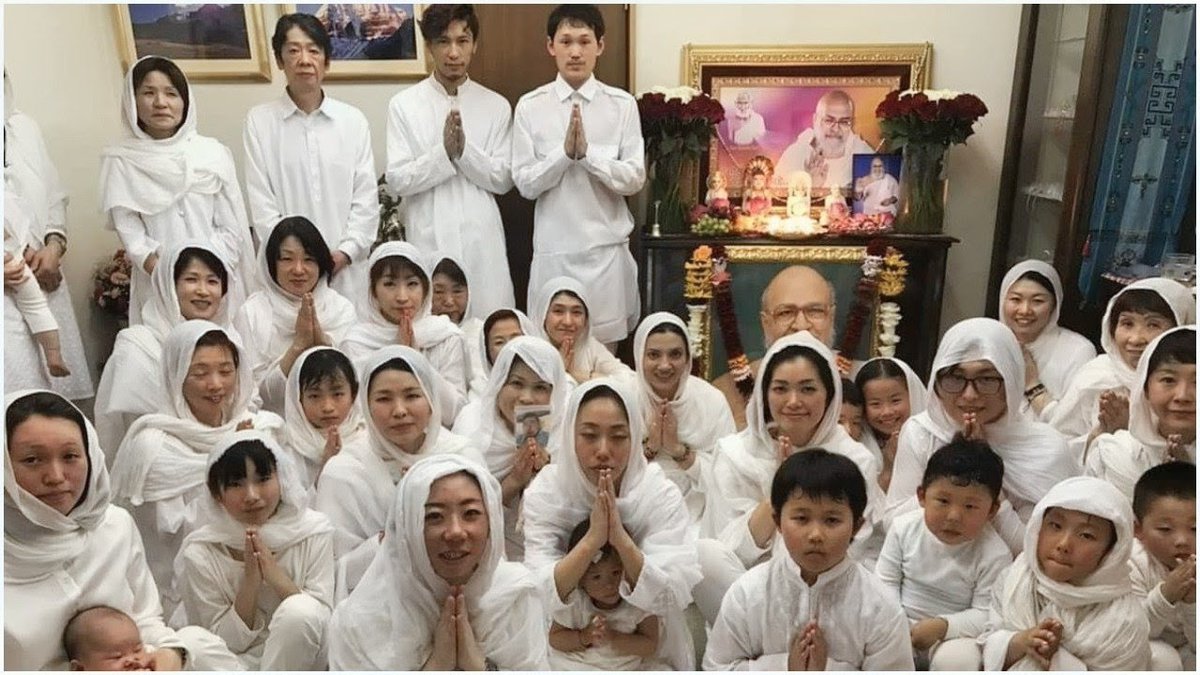
Great Jain Acharya #PunyaSamrat JayantSen Suri Ms who influenced 5000 Japanese to become Jains through his pravachans. Punyodaya of Tap, Daan and aradhana in masses wherever he stepped, he was an extraordinary soul. His lifestyle at the age 80+he still walked, didn't of vehicle🙏🏻
English
5
16
216
3.3K
Prathik รีทวีตแล้ว
Tanvi Jain 🇮🇳
Tanvi Jain 🇮🇳@TanviSolanki_·
2,500 Japanese travelled to Tharad in Gujarat and spent a week there with the disciples of JayantSen suriswarji Maharaj Saheb. “There are a number of Japanese coming here in large numbers. They follow all our rules, pray with us, eat Satvik food before the sun sets, mediate and go back home to follow the same lifestyle,” said Acharya Nityasen Suriswarji Maharaj Saheb
Tanvi Jain 🇮🇳 tweet media
Tanvi Jain 🇮🇳@TanviSolanki_

Salutations to the Jain Acharya Punya Samrat's Sri Jayant Sen Surishwar ji Maharaj Saheb on his 9th death anniversary 🙏🏻🙌🏻 He was an iconic reformer and spiritual preacher. Thousands of (non veg) Zen from Japan became proper Jains

English
5
34
195
5K
Prathik รีทวีตแล้ว
Elon Musk
Elon Musk@elonmusk·
NASA Artemis passing close to the Moon
English
21.7K
118.2K
1.3M
133.7M
Prathik รีทวีตแล้ว
CA Vivek Khatri
CA Vivek Khatri@CaVivekkhatri·
🚨Last night, India switched on a reactor. Here are 9 numbers nobody is talking about: → 72 years: Time since Homi Bhabha conceived this plan → 22 years: Time to actually build it → ₹7,700 crore: Final cost (started at ₹3,492 crore) → 500 MW: Power it will generate → 2nd: India's global rank only Russia had this before → 25%: India's share of world's thorium reserves → 400 years: How long those reserves can power India → 200+: Indian companies that built it. Zero foreign designs. → 3: Countries that tried and quit - USA, Germany, UK 🧵 A thread that will blow your mind:
English
170
3.8K
17.4K
1.2M
Prathik
Prathik@diku_·
@KumaraKant12142 @sarpame @grok can u explain who is rishbhadeva ? whose name has been mentioned many times in the oldest veda which is RIG VEDA. (according to Jainism Bhagwan Rishabdev is 1st tirthankar of ths avsarpini )
English
1
0
4
395
Kumara Kantirava
Kumara Kantirava@KumaraKant12142·
@sarpame 😂😂 And where did Neminatha get it from .... ??! From Vedas Upanishads !! @grok is there any literature prior to vedas Upanishads which discuss Atma Vidya ??
English
4
0
6
2.3K
Sandeep Parswanath
Sandeep Parswanath@sarpame·
According to Jain traditions and narratives, Neminatha (also known as Lord Neminath or Arishtanemi), the 22nd Tirthankara of Jainism, gave the knowledge of the Bhagavad Gita (or a version of it) to Krishna. Neminatha is said to have narrated or taught a Gita-like discourse—to Krishna, who then delivered or adapted it on the battlefield of Kurukshetra. Krishna is portrayed as regarding Neminatha as his teacher or mentor in these stories. This differs from the Hindu tradition, where Krishna himself imparts the Gita directly to Arjuna as divine wisdom.
Sandeep Parswanath tweet media
English
73
32
224
34.4K
Prathik
Prathik@diku_·
@Summi479 @KushalM98 @aka911_ ths ppl won't think they just want to bash ayurveda .. they r saying like allopathy saves every person from any disease. thr r many cases thr also.u rightly said u need both ayurveda nd modern medicine. it is upto the person to understand his or her body nd go for the treatment.
English
1
0
0
34
Sumi🇮🇳
Sumi🇮🇳@Summi479·
@KushalM98 @aka911_ It was the same all around the world, probably because of world wars & famine. I've met people who got treated with Ayurveda and found relief. You need both Ayurveda and modern medicine.
English
2
0
3
149
Ketofol☀️
Ketofol☀️@aka911_·
So this happened One of my patient who was earlier suffering from CKD (kidney disease) went to Patanjali Haridwar for treatment in 2025 Shockingly there was a slight improvement in his symptoms. This year in Feb 2026 - his condition suddenly deteriorated and creatinine shot up to 12. Imagine he actually called up a “Doctor” at the ayurveda centre who advised him - agar himmat hai to Aa Jaiye. The patient in this life threatening condition travelled in a train all the way to Haridwar & again got “treated”. But this time his condition became even worse and combined with the cold in Uttarakhand he beat a hasty retreat back home. This was in Feb. Last week he called me up & the blood reports were alarming. Creatinine was around 16 & K around 8.6 Fortunately better sense prevailed this time and he got admitted under a nephrologist & underwent dialysis after which his condition is stable. However what was more shocking for me was when he told that his health insurance covered the treatment at Patanjali. Imagine - hydrotherapy & mud therapy in a patient with creatinine 12. Below- generic Google image of treatment at Patanjali wellness centre
Ketofol☀️ tweet media
English
106
255
1.6K
412.2K
Prathik รีทวีตแล้ว
Dr. Shah
Dr. Shah@ankitatIIMA·
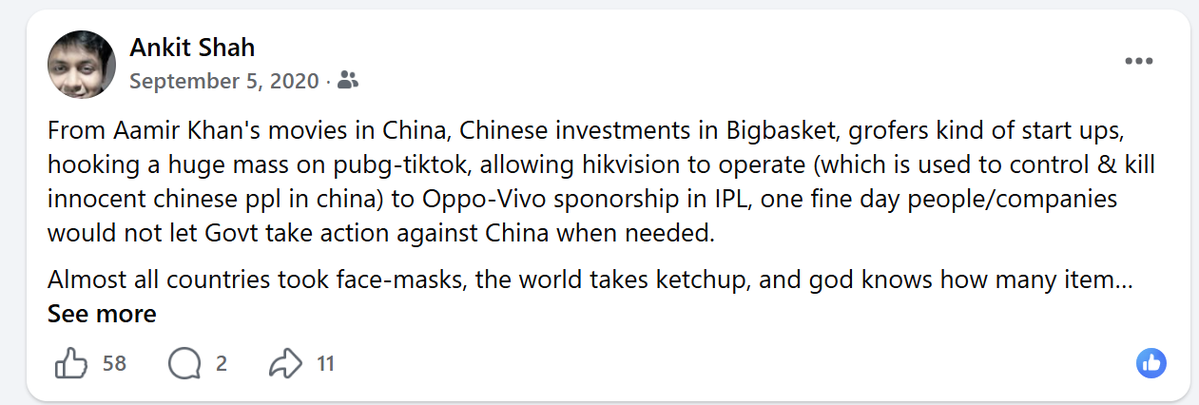
💥1st April, 2026 Why is India banning Hikvision, Dahua, TP-Link CCTV cameras from today 13th September, 2022 Aamir Khan decides not to release Laal Singh Chaddha in China 11th January, 2022 BCCI stitches IPL deal with Tatas to hand Vivo a smooth exit 19th October, 2020 FDI with even the smallest Chinese holding will need govt nod 5th September, 2020 #Prediction
Dr. Shah tweet media
English
29
279
1.5K
58.6K
Prathik รีทวีตแล้ว
Tanvi Jain 🇮🇳
Tanvi Jain 🇮🇳@TanviSolanki_·
The History of Jain Warriors ⚡ Jain history is marked by several significant rulers and military leaders who defended Indian territories while balancing the principles of their faith with the necessity of statecraft. 🗡️A list of notable Jain warriors ⚡ Ancient and Medieval Kings👑 👑 Emperor Kharavela (1st/2nd Century BCE): The greatest Jain warrior-king of the Mahameghavahana dynasty in Kalinga (modern-day Odisha). He is celebrated for his extensive military conquests across India and for restoring the glory of Kalinga. 👑 Chandragupta Maurya (4th Century BCE): Founder of the Mauryan Empire and a formidable military leader who conquered most of the Indian subcontinent before abdicating his throne to become a Jain monk. 👑 King Kumarapala (12th Century): A monarch of the Chaulukya (Solanki) dynasty in Gujarat. Though a devout follower of non-violence (Ahimsa) in his later life, he was a strong and heroic ruler who maintained a powerful army to protect his kingdom. 👑 Amoghavarsha I (9th Century): A famous Rashtrakuta emperor known for his military prowess and deep commitment to Jainism; he is often compared to Ashoka for his religious patronage. 👑 Bimbisara and Ajatashatru (6th–5th Century BCE): Early Magadhan rulers associated with Jain traditions; Bimbisara is credited as one of the first Indian kings to maintain a professional standing army. Warriors, Generals, and Queens 🗡️Bhamashah (16th Century): A legendary general and prime minister for Maharana Pratap. He fought in several battles against the Mughal empire, including the Battle of Haldighati, and provided the financial resources that allowed Pratap to continue the resistance. 🗡️Rani Abbakka Chowta (16th Century): The Queen of Ullal (coastal Karnataka) and a member of the Jain Chowta dynasty. She was the first Indian queen to fiercely resist and defeat the Portuguese navy and army. 🗡️Chamundaraya (10th Century): A celebrated general and minister of the Western Ganga dynasty. He was a brave warrior who also commissioned the famous Gommateshwara statue at Shravanabelagola. 🗡️Vastupala and Tejapala (13th Century): Two brothers who served as ministers and generals for the Vaghela dynasty in Gujarat. They are remembered for their military strategy in defeating invading armies and for building the Dilwara temples. 🗡️Rani Chennabhairadevi (16th Century): Known as "Raina-de-Pimenta" (The Pepper Queen), she ruled for over 50 years and successfully defended her territory against Portuguese incursions.
Tanvi Jain 🇮🇳 tweet media
English
17
32
109
2.1K
Prathik รีทวีตแล้ว
Jain Lifestyle
Jain Lifestyle@Anekantwadi·
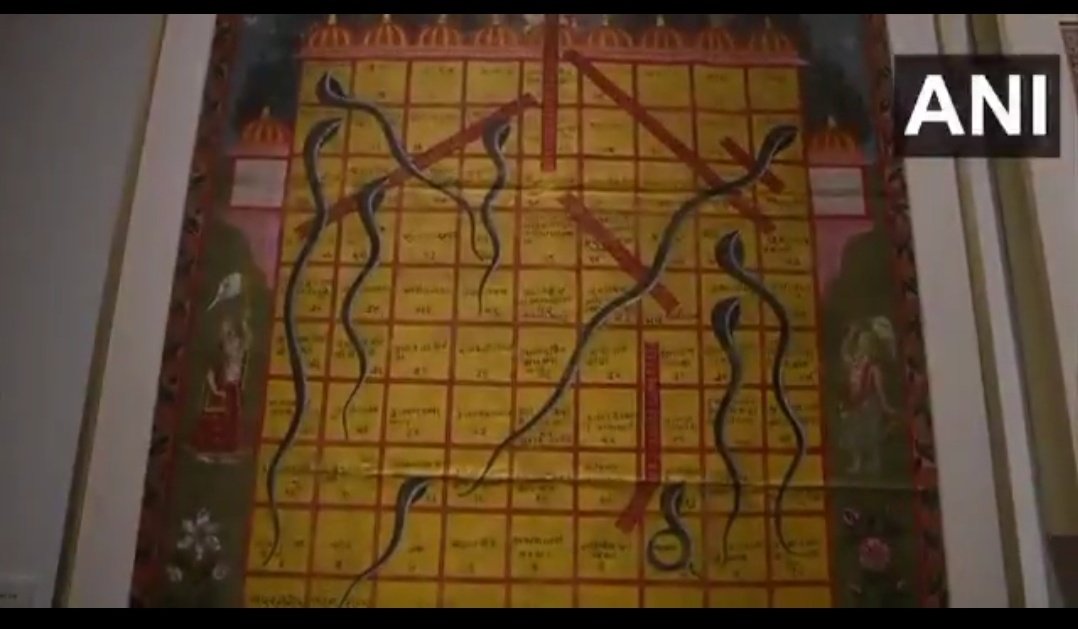
Snakes and ladders was developed by jain scholars Gyan chauper A game of Knowledge in Jainism with a deep philosophy Image: Koba Tirth... सांप सीढ़ी भारत का अति पुराना खेल है।
Jain Lifestyle tweet media
Jain Lifestyle@Anekantwadi

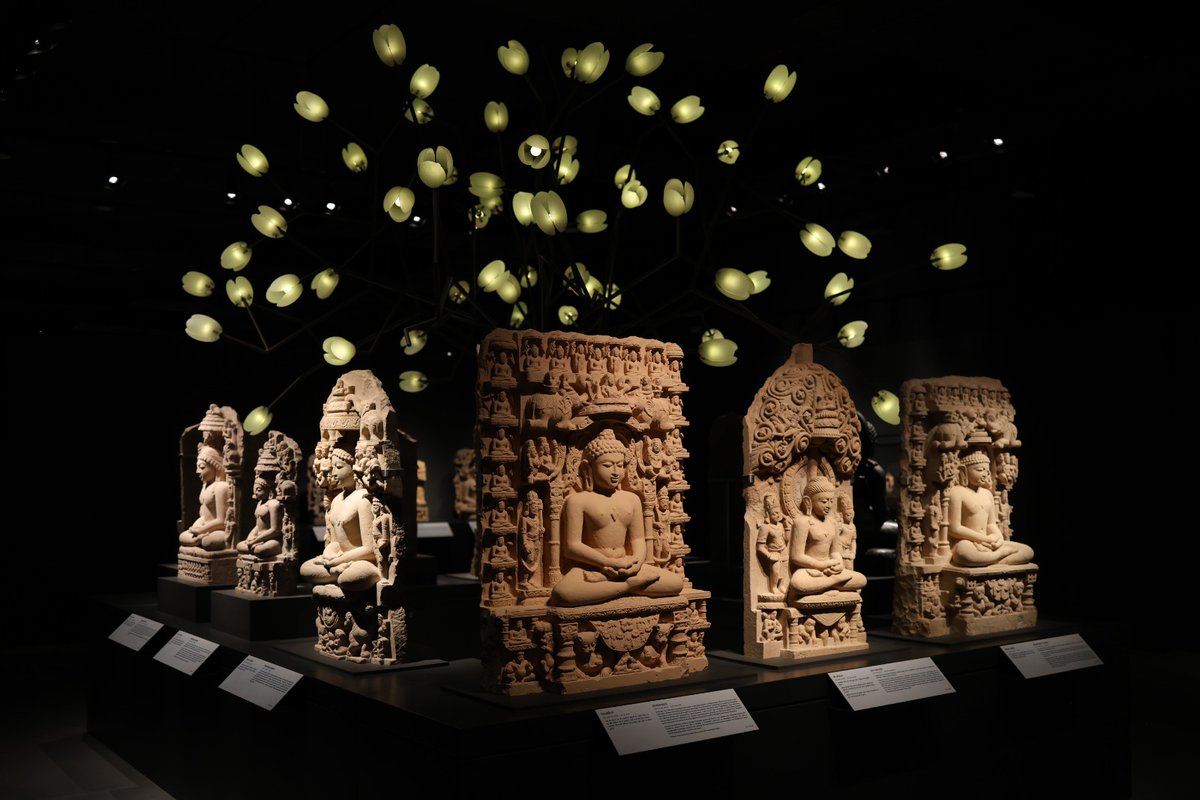
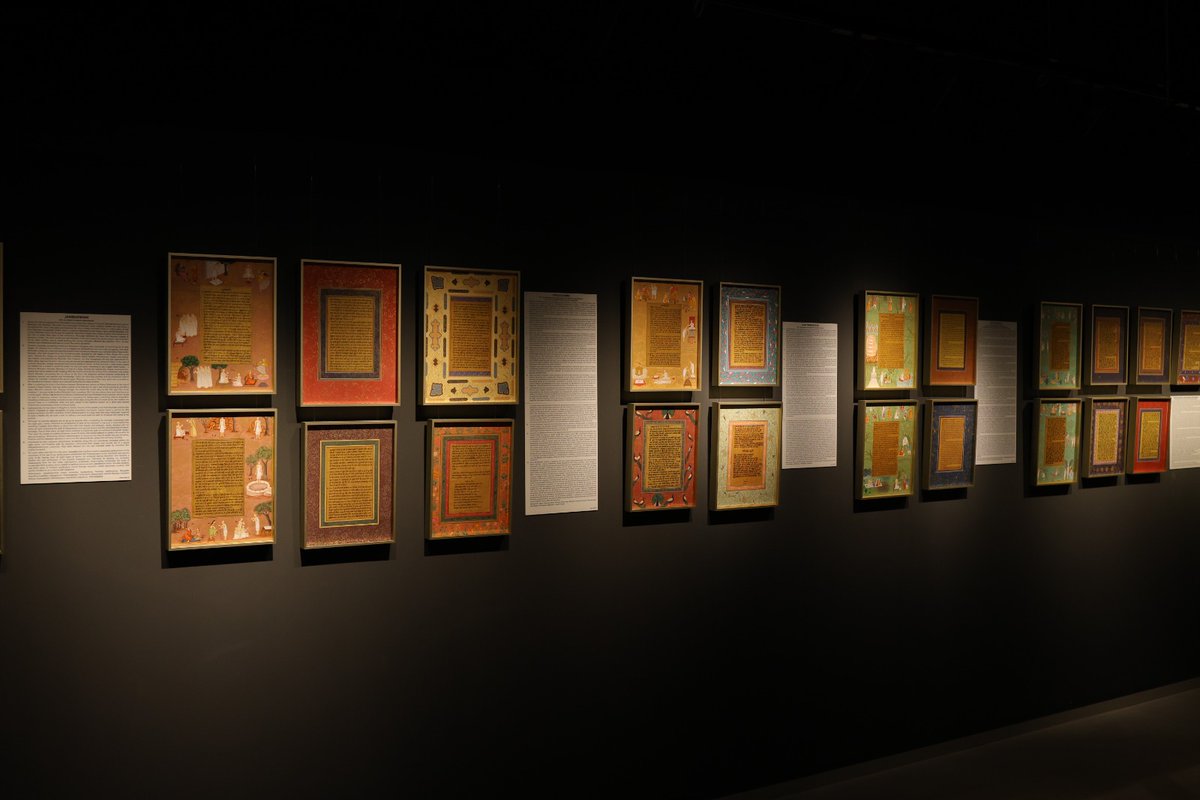
Prime Minister Narendra Modi inaugurates Samrat Samprati Museum named after Samrat Samprati, the grandson of Ashoka, at Koba Tirth in the Mahavir Jain Aradhana Kendra campus. The museum showcases the rich historical, cultural, and spiritual legacy of Jainism. Gandhinagar, Gujarat

English
3
18
116
2.6K
Prathik รีทวีตแล้ว
Sandeep Parswanath
Sandeep Parswanath@sarpame·
Many European travellers, travelling in 1800 old Mysore kingdom had observed the following Jainism was rich in culture and antiquity Jains celebrated regional or seasonal festivals like Ugadi, Sankranti, Mahanavami and Gouri etc., while doing so the cultural system was being Jainised with in the well-established Socio-religious structure. Socio-Religious practices is due to fundamental doctrinal differences, the Jainas and other Hindu communities almost lived apart; and they hardly mixed with each other in relation to socio-religious ceremonies. The Jains form perfectly a distinct class. Hindu Brahmins never attended any of their religious or civil ceremonies, while Jains on their part never attended those of the Brahmins. They have their own temples, and men professing the same tenets as themselves fill the priestly office. There were brahmins in the Jain society called Jain Brahmanas In addition, other sects like Bogara, Panchama, Chaturtha, Jaina Banajiga, Jaina Sadaru, Jaina Komattis, Jaina Arasu, Jaina Chippiga, and Jaina Gowda are also reported It is apparent that, in addition to their own festivals, the Jains also observed other regional or seasonal festivals. Ram is never represented by an idol in a basadi; although he is acknowledged to be a Siddha; and although Ganesha and Hanuman are acknowledged to be devas these favourities of the followers of the Vedas have no image in the temples of the Arhants. Travel log of following European travellers were used: Abbe. J.A. Dubbe Col. Mackenzie Francis Buchanon J.A. Dubois
Sandeep Parswanath tweet media
English
3
26
88
2.4K
Prathik รีทวีตแล้ว
Jain Basadi's
Jain Basadi's@crp9786·
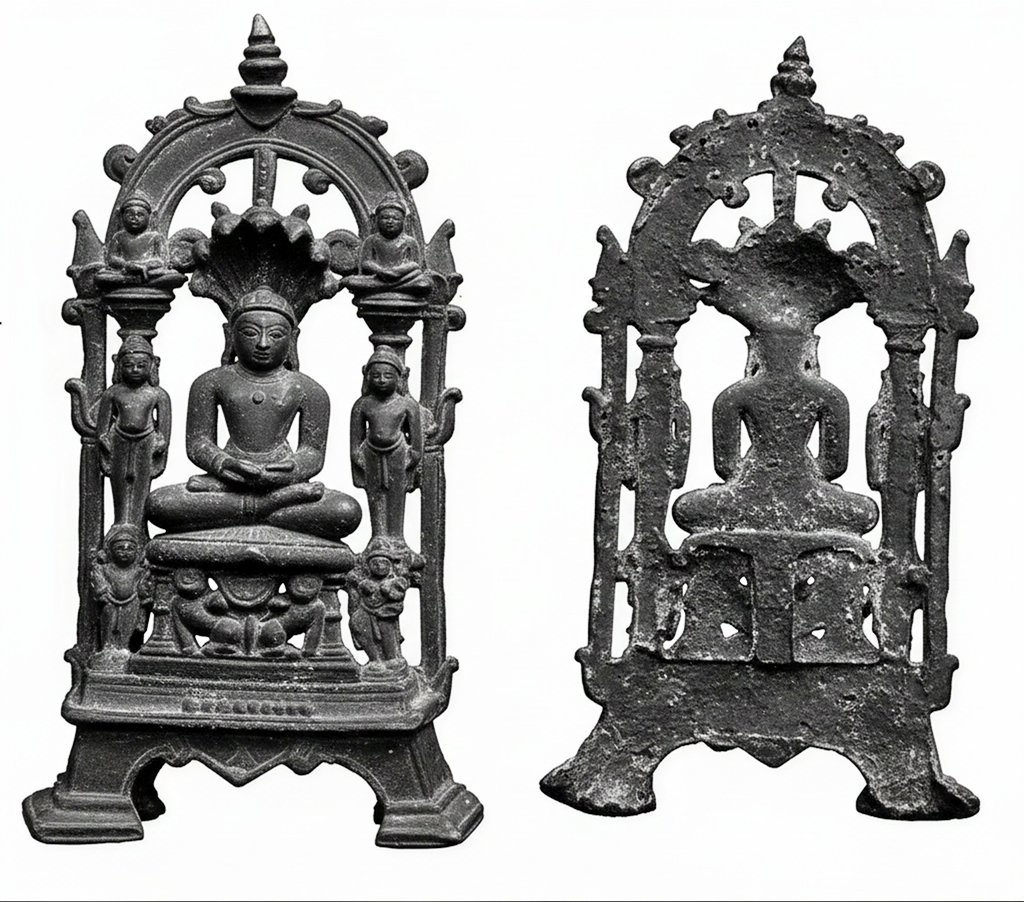
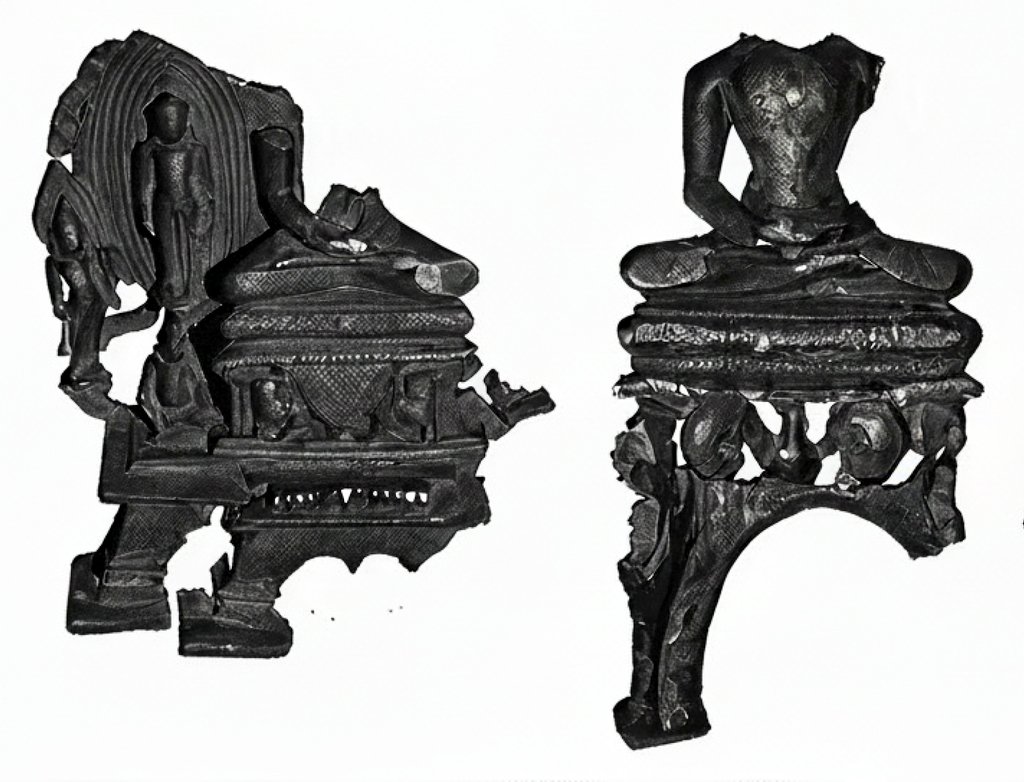
Rishod in Washim district has 12th-century Jain temple remains. The Hingoli-Shirpur-Karanja belt is rich in Jain history and heritage. Scattered remains near the Padmavati temple in Rishod hint at an ancient Jain temple once standing there. Unfortunately, the government hasn't taken steps for archaeological survey. The Padmavati temple houses a beautiful, ancient idol dated to 1212 CE, with an inscription. The white marble idol depicts Padmavati, the yakshini of Parshvanatha, seated on a lotus with a lotus and pasha/ankush in her hands, a five-hooded snake, and Gaj #padmavatijainyakahini #padmavati #karnjajains #rishod #digambarjainismimaharashtra #washim #maharastrajain
Jain Basadi's tweet media
English
0
24
74
904
Prathik รีทวีตแล้ว
Tanvi Jain 🇮🇳
Tanvi Jain 🇮🇳@TanviSolanki_·
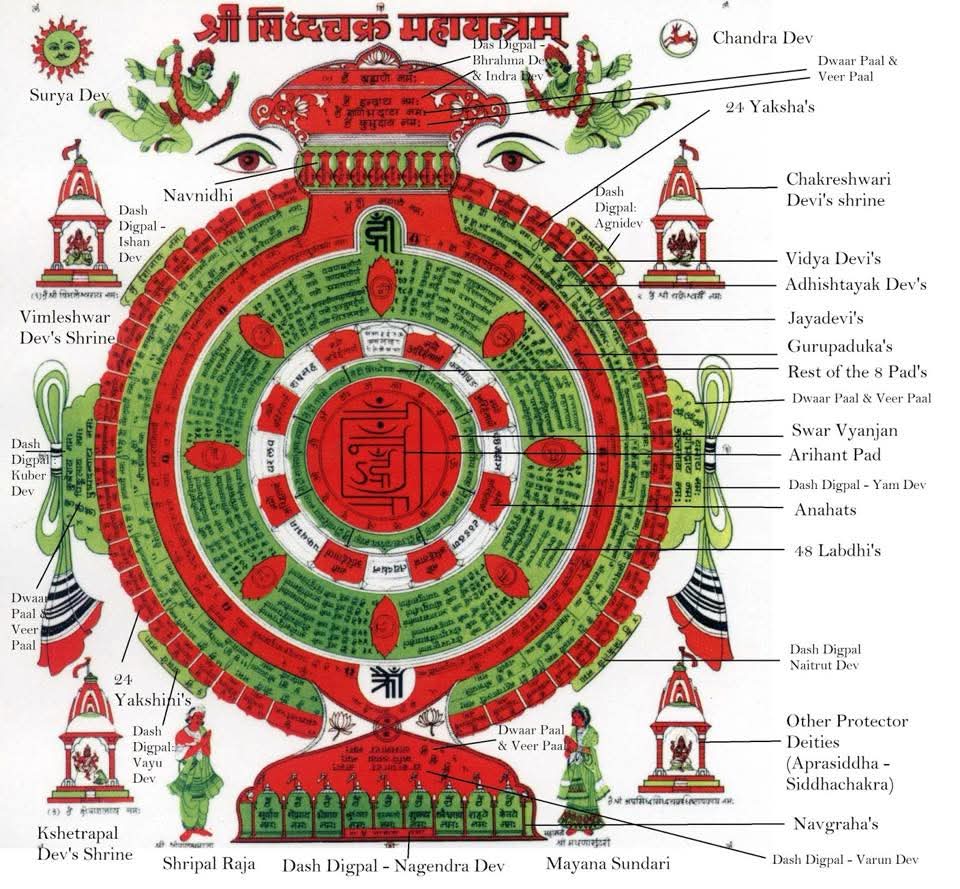
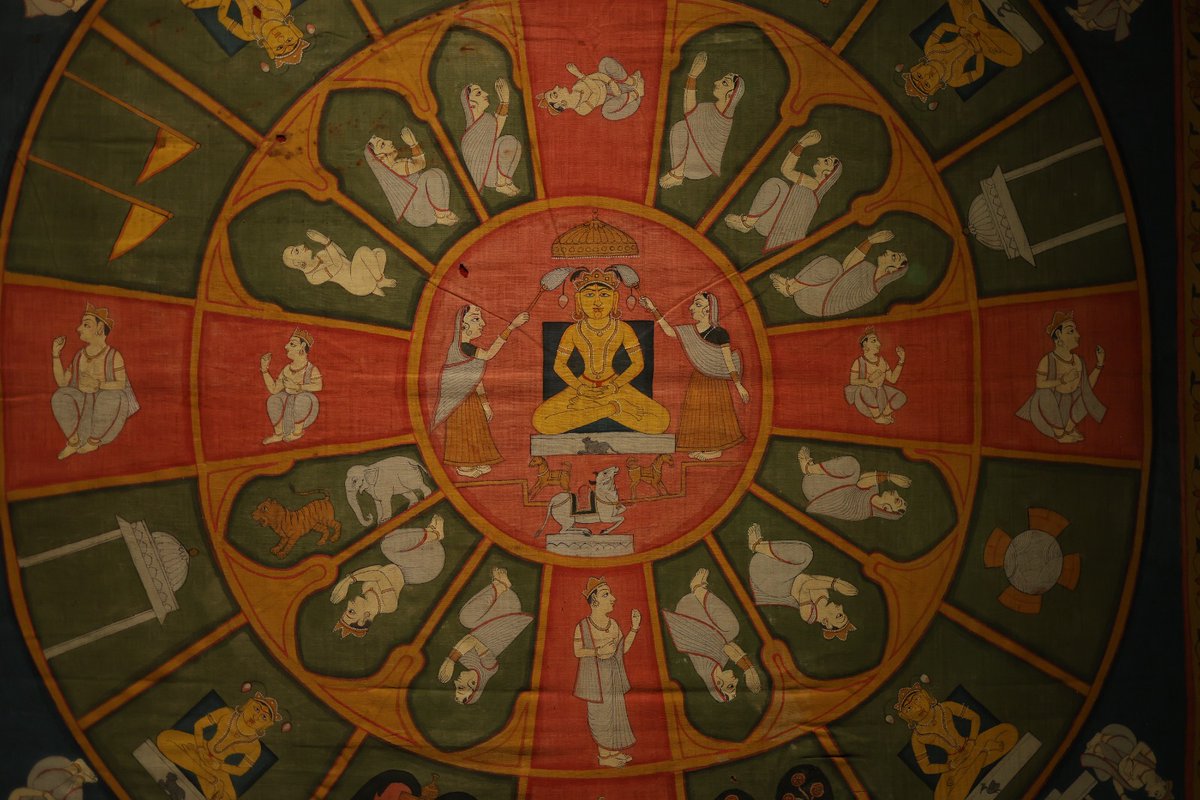
Structure of Siddhachakram Mahayantram From Jain Dharma
Tanvi Jain 🇮🇳 tweet media
English
3
7
62
825
Prathik รีทวีตแล้ว
Narendra Modi
Narendra Modi@narendramodi·
On the occasion of Bhagwan Mahavir Janma Kalyanak Diwas tomorrow, 31st March, the Samrat Samprati Museum at Koba Tirth will be inaugurated. The seven wings of this museum are dedicated to India’s glorious history and culture. Numerous rare relics, Jain artefacts and traditional heritage collections are also on display. It also showcases the exemplary Jain culture and the contribution of Jainism to humankind.
Narendra Modi tweet mediaNarendra Modi tweet mediaNarendra Modi tweet mediaNarendra Modi tweet media
English
1K
8.1K
71.6K
6.4M
Prathik รีทวีตแล้ว
Swarajya
Swarajya@SwarajyaMag·
On 23 March, two tunnel boring machines — each weighing over 2,000 tonnes, each wider than a four-lane highway — were unloaded at Mumbai's JNPT port. They were meant to arrive in October 2024. This thread, and the accompanying story, is about what held them up. 📷
English
14
515
2.4K
395.9K
Prathik รีทวีตแล้ว
Tanvi Jain 🇮🇳
Tanvi Jain 🇮🇳@TanviSolanki_·
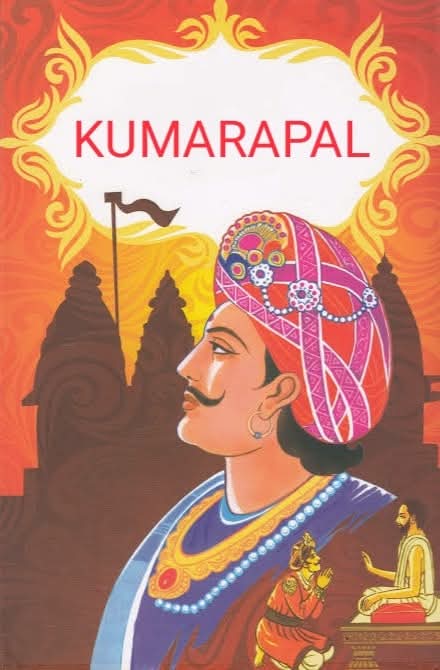
A Fascinating History of Kumarpala Chaulukya/Solanki 👑 Maharaja Kumarapala remains one of the most iconic figures in Indian history. 1. Early Life & The 30-Year Exile Born in 1084 CE (VS 1140) to the Chaulukya (Solanki) dynasty of Gujarat. *King Jayasimha Siddharaj wanted to kill his nephew, Kumarapala, because it was prophesied that the kingdom would go to Kumarapala's hands. Kumarapal lived as a fugitive for 30 years, wandering through forests and cities, often facing starvation and extreme hardship. Hemchandracharya protected Kumarapala during this time. Kalikal Sarvagnya Hemchandracharya Saving Him from Exile/Death, Hiding Him in the Library:  A popular legend describes that when soldiers came to capture Kumarapala, who was traveling in disguise, Hemchandracharya hid him under a pile of manuscripts (or beneath a palm-leaf manuscript) in his library to save his life. Prophecy of Ascension: Hemchandracharya predicted that Kumarapala would succeed Siddharaja, which helped him survive his early life and eventually ascend the throne. Protection After Becoming King: Later, when Kumarapala was ruling, Jain texts state that another king decided to invade Gujarat, taking advantage of Kumarapala's conversion to the non-violent Jain faith. Hemachandra assured Kumarapala that the Jain deities would protect him and predicted that the invading king would die, which happened when the invader was strangled by a tree branch.  2. Ascension to the Throne (1143 CE) *After the death of Siddharaj, Kumarapal finally ascended the throne of Anahilapataka (Patan) at the age of 50.
Tanvi Jain 🇮🇳 tweet media
English
4
17
69
1.2K
Prathik รีทวีตแล้ว
Tanvi Jain 🇮🇳
Tanvi Jain 🇮🇳@TanviSolanki_·
--- The Crisis: Knowledge Held Only in Memory When Lord Mahavir* attained nirvana, his teachings were never written down. For centuries, they were preserved entirely through oral tradition* — memorised and passed from one generation of monks to the next. It was a remarkable feat of human memory, but also a deeply fragile one. Then disaster struck. A devastating famine* lasting many years claimed the lives of numerous monks. With each death, vast stores of memorised knowledge were lost forever. For the Jain community, the situation was dire: if nothing was done, centuries of spiritual teachings could simply vanish*. --- The Response: The Councils of Vaachanas To confront this crisis, Jain monks began organising large scholarly gatherings known as Vaachanas — councils where the most knowledgeable monks would come together to pool and organise surviving teachings. Four major councils are recorded in Jain history: - Pataliputra* – around 350 BC - Mathura* – around 300 AD - Valabhi* – around 300 AD - Valabhi (again)* – around 450 AD It was the *final council at Valabhi* that proved most decisive.
Tanvi Jain 🇮🇳 tweet mediaTanvi Jain 🇮🇳 tweet mediaTanvi Jain 🇮🇳 tweet mediaTanvi Jain 🇮🇳 tweet media
English
2
8
25
409
Prathik รีทวีตแล้ว
Tanvi Jain 🇮🇳
Tanvi Jain 🇮🇳@TanviSolanki_·
Do you know ❓😊 The extent of non-violence principle practiced by the King Kumarpal 👑 He built a separate home for lice & ants🐜; He provided filtered water to 1100000 horses, 1100 elephants; Anybody in his kingdom who uttered the word hit/cut (maaro, kaato) was punished.
Tanvi Jain 🇮🇳 tweet media
English
0
5
23
446
Prathik รีทวีตแล้ว
Jain Lifestyle
Jain Lifestyle@Anekantwadi·
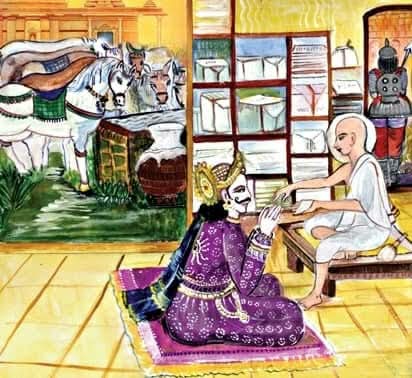
He is speechless, cannot see and cannot walk...he is a special child. But he can feel the aura around him 🪄 He is going to complete one year's fasting called Varshitap which is a long tough penance. Incredible 👏🏻🙏🏻
English
4
23
85
1.8K
Prathik รีทวีตแล้ว
GemsOfINDOLOGY
GemsOfINDOLOGY@GemsOfINDOLOGY·
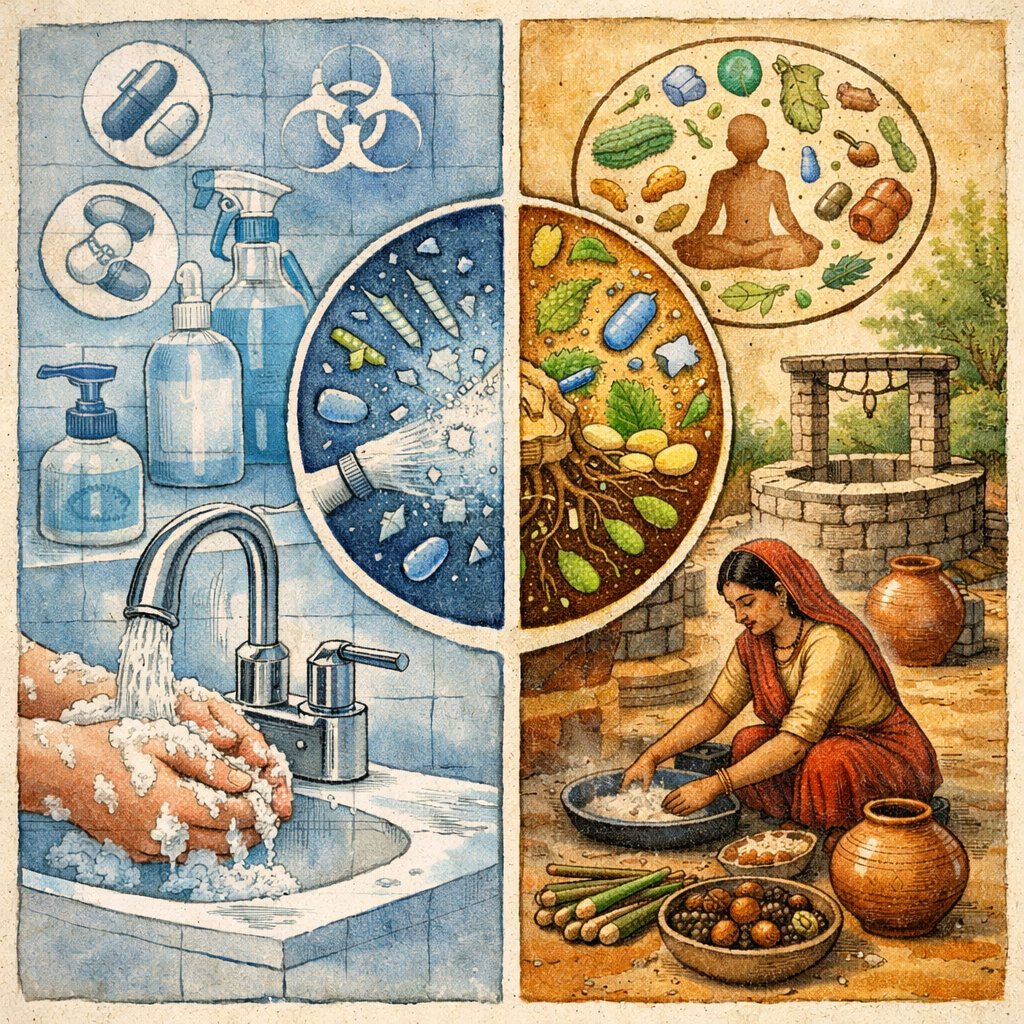
₹40,000 crore. That is roughly the size of the global probiotic market today. Pause for a moment. Modern hygiene first wipes out microbes with antibiotics, antiseptics, antibacterial soaps, sterilized surfaces, RO filtration. Then science discovers that humans cannot live without microbes. Suddenly the market is full of probiotic capsules to restore “good bacteria”. Kill them. Then sell them back. But traditional Indian life followed a very different logic. Not sterility. Balance. Consider the village house. Floors were often plastered with a thin layer of cow dung mixed with clay. To a modern eye this looks primitive. Yet dried dung contains soil bacteria such as Bacillus species that suppress harmful pathogens. The plaster also controls humidity and dust. Instead of chemical sterilization, the floor hosted a stable microbial layer. Clean. But alive. Now look at washing practices. Before commercial soaps, many households used ash to clean utensils or hands. Wood ash contains alkaline salts like potassium carbonate. When mixed with water it behaves like a mild soap, breaking down grease. It cleans. But it does not flood the surface with synthetic antimicrobial chemicals that wipe out everything. Hair care followed the same ecological logic. Reetha and shikakai were common cleansers. These plants contain natural saponins that produce foam and remove dirt, yet they are far gentler than modern sulfate shampoos. The scalp oils remain. The skin barrier survives. The microbial ecosystem stays intact. Oral hygiene was also interesting. People commonly brushed with datun sticks made from neem or babool. When chewed, the fibers fray into a natural brush. Neem carries antibacterial phytochemicals that suppress cavity-causing bacteria. But the mouth is not sterilized. The oral microbiome remains balanced. Water tells another part of the story. Drinking water came from wells, stepwells, ponds, and tanks. Groundwater naturally carries minerals like calcium and magnesium. These minerals influence gut chemistry and microbial growth. Modern RO filtration often strips them away. Water becomes chemically pure, but biologically poorer. Add one more layer. Traditional life meant constant contact with soil. Courtyards, fields, earthen floors, bare feet, clay vessels. Soil microbes interacted daily with human skin and immune systems. Today immunologists call this the “hygiene hypothesis”. When microbial exposure disappears, immune systems become confused. Allergies and autoimmune diseases rise. The pattern becomes hard to ignore. Traditional Indian hygiene did not aim for sterility. It aimed for equilibrium. Clean surfaces. Living ecosystems. Modern science is slowly rediscovering the same idea through microbiome research, fermented foods, and probiotic therapy. Which leaves an uncomfortable question. If the future of medicine is restoring microbial balance, were many traditional Indian practices quietly doing exactly that all along? 🧬
GemsOfINDOLOGY tweet media
English
44
737
1.9K
47.2K