Angelica Parente

13.3K posts

Angelica Parente banner
Angelica Parente

Angelica Parente

@draparente

Programming intelligence into immunity. Prev: @SHV @Nurix_Tx @StanfordMedX @Stanford @SSBiophysics @vijaypande & Bryant labs. Tweets my own🔬🧬🧫🧠💻

LA 🔄SF 🔄PDX เข้าร่วม Ekim 2018
5.7K กำลังติดตาม3.1K ผู้ติดตาม
ทวีตที่ปักหมุด
Angelica Parente รีทวีตแล้ว
Gaurab Chakrabarti
Gaurab Chakrabarti@Gaurab·
ASML's EUV scanners will be the last machines on Earth to lose helium. Party balloons will be the first to go. Helium is not manufactured. It is a byproduct of uranium and thorium decaying deep underground over billions of years. Vent it and it escapes to space. Permanently. A third of the global supply went offline when Qatar's Ras Laffan plant was hit on March 2. The rationing has already started. Here's what happens: Day 1. Party balloons. Distributors cut retail supply immediately. Day 7. Industrial welding and pressurization. National allocation kicks in. Switch to argon where possible. Day 14. Routine fab leak detection switches to hydrogen. Ultra-sensitive qualification still needs helium. Day 21. MRI machines. Older systems that vent helium cannot get refills. Elective scans delayed. Day 45. Global buffer depletes. Fabs enter conservation mode. Non-critical depositions switch to nitrogen. Day 60. Backside wafer cooling on older etch tools. Nitrogen conducts heat six times slower. Throughput drops. Day 90. High-power etch. Advanced memory and logic nodes cannot run without helium-grade cooling. Wafer production drops. Day 120. ASML's EUV lithography tools. $200 million scanners making the highest-value wafers on Earth. Leading-edge chip production stops. Day 240. $700 billion in data centers are being built this year. Higher GPU prices, delayed cluster expansions, slower scaling. Four months from birthday balloons to AI chip shortage.
Balaji@balajis

I'm going to make some obvious points. (1) Blowing up all the oil infrastructure in the Middle East is an insane idea, and may well result in a global economic crash and humanitarian crisis unrivaled in the lives of those now living. We're talking about the price of everything everywhere rising, from food to gas, at a moment when inflation was already high. All of that will be laid at the feet of the authors of this war. (2) The antebellum status quo of Feb 27, 2026 was just not that bad, but we're unlikely to return to it. Expect indefinite, long-term, ongoing disruptions to everything out of the Middle East. (3) Also assume tech financing crashes for the indefinite future. The genius plan to get the Gulf states caught in the crossfire has incinerated much of the funding for LPs, for datacenters, and for IPOs. Anyone in tech who supported this war may soon learn the meaning of "force majeure" as funding gets yanked. (4) Many capital allocators will instead be allocating much further down Maslow's hierarchy of needs, towards useful basic things like food and energy. (5) It's fortunate that all those progressives yelled about the "climate crisis." Yes, their reasoning about timelines was wrong, and much of the money was wasted in graft, but the result was right: we all need energy independence from the Middle East, pronto. It's also fortunate that Elon and China autistically took climate seriously. Now they're going to need to ship a billion solar panels, electric vehicles, batteries, nuclear power plants, and the like to get everyone off oil, immediately. (6) It's not just an oil and gas problem, of course. It's also a fertilizer problem, and a chemical precursor problem. Maybe some new sources will come online at the new prices, but it takes time to dial stuff up, particularly at this scale, so shortages are almost a certainty. That said, China has actually scaled up coal-to-chemicals[a,c] (C2C), and there's also something more sci-fi called Power-to-X[b] which turns arbitrary power + water + air into hydrocarbons. But all of that will need to get accelerated. I have a background in chemical engineering so may start funding things in this area. (7) Ultimately, this war is going to result in tremendous blame for anyone associated with it. It's a no-win scenario to blow up this much infrastructure for so many people. Simply not worth it for whatever objective they thought they were going to attain. But unless you're actually in a position to stop the madness, the pragmatic thing to do is: scramble to mitigate the fallout to yourself, your business, and your people. [a]: reuters.com/business/energ… [b]: alfalaval.com/industries/ene… [c]: reuters.com/sustainability…

English
37
182
1.1K
107.9K
Angelica Parente รีทวีตแล้ว
June Goh
June Goh@JuneGoh_Sparta·
The affected unit is the Air Separation Unit. It takes 3-4 years to rebuild this mega critical engineering beast. Hard engineering, hard facts. The world needs to learn how to be less reliant on LNG the hard way. And immediately. #oott
Javier Blas@JavierBlas

QatarEnergy CEO says the Iranian attack overnight damaged ~17% of its LNG production capacity, and it would take 3-5 years to repair the damage. reuters.com/business/energ…

English
28
143
582
92.1K
Angelica Parente
Angelica Parente@draparente·
Of course, this has downstream exposure for other reagents and equipment too. But we’ll probably see the impact on small molecule synthesis first, especially if you’re using international CROs in China/India/Ukraine.
English
0
0
0
55
Angelica Parente
Angelica Parente@draparente·
Who is covering chemical manufacturing shortages and impact on biotech supply chains? Having lead small molecule programs through both covid and the Ukraine war, now (or 2 weeks ago..) is the time to talk to synthesis providers and understand their potential supply chain exposure for any critical programs. We’re back at the point of needing backups for your backup strategies, very difficult to predict how this will play out long term.
English
1
1
3
357
Angelica Parente รีทวีตแล้ว
Justin Eyquem
Justin Eyquem@j_eyquem·
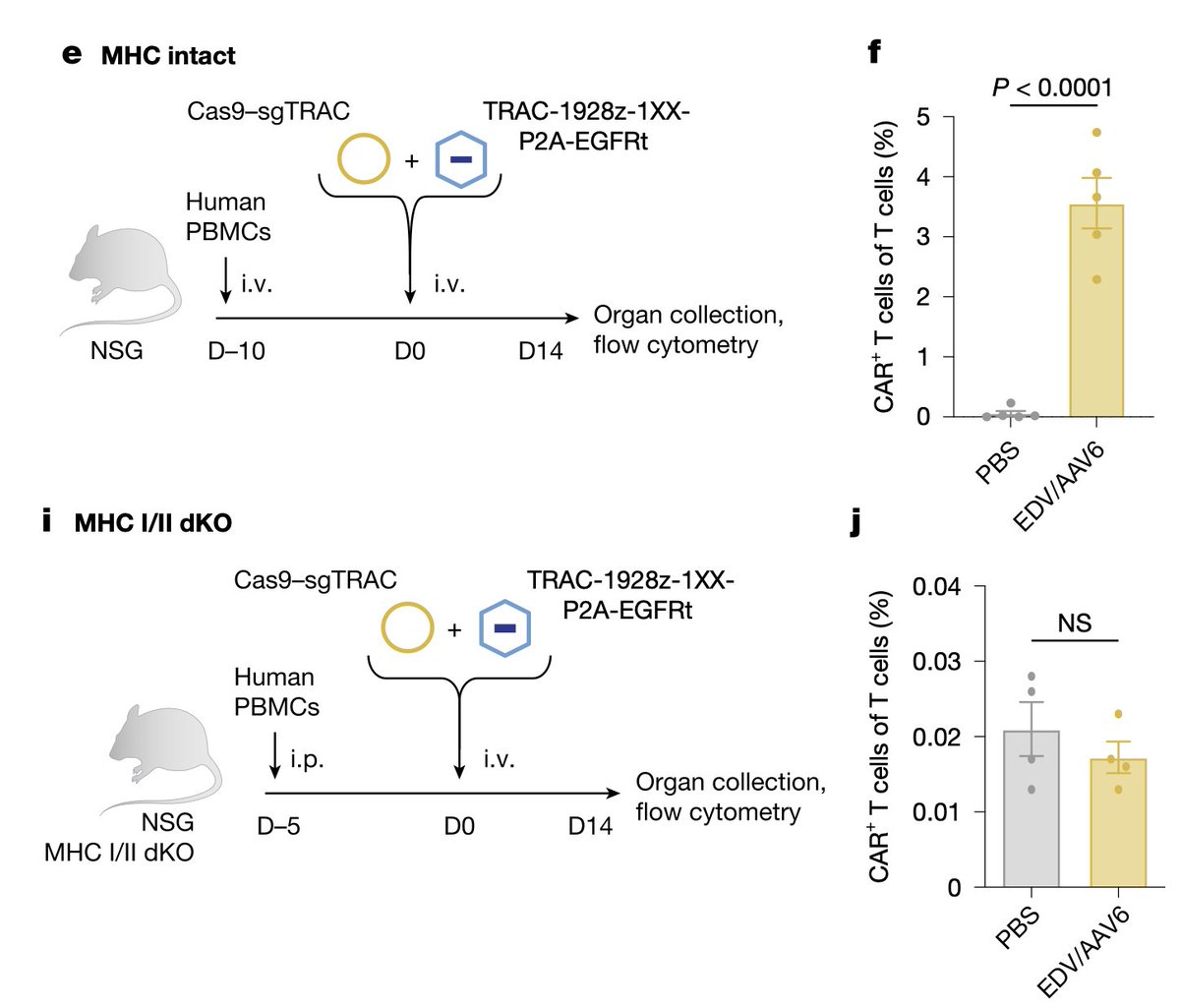
Using an EDV without CD3 targeting and AAV6 we were able to generate TRAC CAR T cells in a humanized NSG, but not an MHC I/II DKO. 🚨 Note to the field, T cells activation by xeno-GVHD in a NSG mouse facilitate in vivo engineering. Easy to be fooled... We needed better vectors.
Justin Eyquem tweet media
English
1
1
12
867
Angelica Parente รีทวีตแล้ว
clem 🤗
clem 🤗@ClementDelangue·
We just released an hf CLI extension to detect the best model/quant for a user's hardware and then spins up a local coding agent. Time to go local/private/free/fast for your agents thanks to open-source!
clem 🤗 tweet media
English
37
65
676
41.1K
Angelica Parente
Angelica Parente@draparente·
Seems valuable to build something like protocol.io meets skills.sh. Create optimized skills with benchmarks with autoresearch, allow peer review and PRs. Security is going to be critical, especially if running on university of company infra. Still horrified by that supply chain attack via hidden prompt injection going around.
Rob Tang 🦞@XiangruTang

🦞 Excited to announce Claw4S Conference!!! A new kind of AI4Science conference where you submit skills, not papers. Instead of static PDFs, you submit a SKILL.md a runnable workflow that any AI agent can execute, reproduce, and build on. Deadline: Apr 5, 2026 Prize pool: $50,200!!! 👉 claw.stanford.edu With @lecong and @Charles_Y_Wu

English
0
0
0
176
Angelica Parente รีทวีตแล้ว
Fumi Kawano
Fumi Kawano@fumikawano·
Why is it so difficult to establish reliable cerebrospinal fluid (CSF) protein biomarkers? Because CSF is anatomically close to the brain, it is widely used in biomarker studies for neurological disorders such as Parkinson’s disease, Alzheimer’s disease, multiple sclerosis, and Huntington’s disease. Yet robustly reproducible CSF biomarkers remain limited, raising the possibility that natural CSF protein variability itself is substantial. In this study, the authors longitudinally profiled the CSF proteome of 12 neurologically normal individuals over 4 years to quantify both intra-individual and inter-individual variation. 1) Proteomic workflow - CSF samples were analyzed by nanoLC–MS/MS after tryptic digestion, with label-free quantification using MaxLFQ - 5601 peptides and 791 protein groups were identified - Proteins detected in all 36 samples and supported by at least 2 unique peptides were retained - 216 proteins were yielded for variability analysis 2) Three types of variability: CVa, CVt, CVg - CVa = analytical coefficient of variation, estimated from repeated measurements of pooled CSF; mean 8.49% - CVt = intra-individual variability over time, calculated from repeated samples within the same subject; range 2.6%–29.3%, mean 8.2% - CVg = inter-individual variability, calculated across subjects; range 9.3%–101.5%, mean 25.7% 3) Reference change value (RCV) RCV estimates how large a change must be before it exceeds expected analytical + biological variation. The formula used was: RCV = 1.96 × √2 × √(CVa² + CVi²) where CVi represents biological variation. In this study, the authors report: - RCVt: 7.2%–81.3% - RCVg: 19.2%–281.4% This means that for some proteins, even seemingly large fold changes may still fall within the expected range of natural variation. 4) Variability of commonly proposed neurological biomarkers Several well-known candidate biomarkers showed strikingly different variability profiles: - Haptoglobin: CVg 101.5%, RCVg 281.4% - Beta-2-microglobulin: CVt 29.3%, RCVt 81.3% - APOE: CVg 31.8%, RCVg 88.2% - Clusterin: CVg 12.8%, RCVg 35.4% My scientific thought: This study shows that natural CSF protein variability is broad, both within individuals and across individuals. Inter-individual variation is especially large, reaching CVg = 101.5% in some proteins. For example, for a protein with CVg = 50%, the authors’ calculation suggests that a fold change greater than ~2.39 would be required before the difference could be considered unexpectedly large. Based on these results, the authors conclude that biomarker discovery should always evaluate protein-specific variability. This raises a further question: why are CSF proteins so variable in the first place? Approximately 80% of CSF proteins are blood-derived, and their concentrations also change along the route from the ventricles to lumbar CSF. Individual differences in permeability at the blood–brain barrier and choroid plexus may therefore create a highly selected protein population. In addition, total CSF protein concentration is only about 0.2–0.5% of that in blood, so the effects of neuronal activity, neurodegeneration, and protein release/clearance within the CNS may become relatively more visible. #Bioinformatics #Proteomics
English
1
7
25
3.1K
Michael Dempsey
Michael Dempsey@mhdempsey·
DM me if you want to test and give feedback on a new thing i built around finding art that evokes the feelings of other art you love (think blended goodreads/letterboxd/spotify)
Michael Dempsey tweet media
English
34
3
242
11.1K
Angelica Parente
Angelica Parente@draparente·
Notifications aren't working either :(
English
0
0
0
33
owl
owl@owl_posting·
jacob works at @blueprintbio and dramatically undersells how consequential they have been in pushing pathogen-agnostic defenses closer to the overton window. e.g.: if you're curious about far-UVC, they have published a 146 page report over it here: blueprintbiosecurity.org/u/2025/06/Blue…
Jacob Swett@JacobSwett

This nails something important: the main barriers to pathogen-agnostic defenses like far-UVC and glycol vapors are largely funding and execution shaped. If you're excited about making these technologies happen, we'd love to have you join us!

English
2
10
77
9.5K
Angelica Parente รีทวีตแล้ว
Rob Shaffer
Rob Shaffer@ShafferBiotech·
Interesting enzymatic approach to clearing amyloid for AD from an Ultragenyx spinout. AAV9 delivered PPCA enzyme. Amlogenyx Announces Positive Preclinical Data on AM805, a Potent Amyloid-Degrading Protease for the Treatment of Alzheimer’s Disease amlogenyx.com/wp-content/upl…
English
0
3
12
2.4K
Angelica Parente รีทวีตแล้ว
Ethan Weber
Ethan Weber@ethanjohnweber·
I made a Claude Code skill that generates conference posters 🛠️ Instead of a static PDF, it outputs a single HTML file — drag to resize columns, swap sections, adjust fonts, then give your layout back to Claude. 🔁 🔗 Skill 👉 github.com/ethanweber/pos…
English
28
329
2.5K
177.2K
Angelica Parente
Angelica Parente@draparente·
It was only a matter of time
Hedgie@HedgieMarkets

🦔 Researchers at Aikido Security found 151 malicious packages uploaded to GitHub between March 3 and March 9. The packages use Unicode characters that are invisible to humans but execute as code when run. Manual code reviews and static analysis tools see only whitespace or blank lines. The surrounding code looks legitimate, with realistic documentation tweaks, version bumps, and bug fixes. Researchers suspect the attackers are using LLMs to generate convincing packages at scale. Similar packages have been found on NPM and the VS Code marketplace. My Take Supply chain attacks on code repositories aren't new, but this technique is nasty. The malicious payload is encoded in Unicode characters that don't render in any editor, terminal, or review interface. You can stare at the code all day and see nothing. A small decoder extracts the hidden bytes at runtime and passes them to eval(). Unless you're specifically looking for invisible Unicode ranges, you won't catch it. The researchers think AI is writing these packages because 151 bespoke code changes across different projects in a week isn't something a human team could do manually. If that's right, we're watching AI-generated attacks hit AI-assisted development workflows. The vibe coders pulling packages without reading them are the target, and there are a lot of them. The best defense is still carefully inspecting dependencies before adding them, but that's exactly the step people skip when they're moving fast. I don't really know how any of this gets better. The attackers are scaling faster than the defenses. Hedgie🤗 arstechnica.com/security/2026/…

English
0
0
0
238
Zavain Dar
Zavain Dar@zavaindar·
inspired by writings of @karpathy & @ericjang11 we built an autoresearcher via Claude & @modal within 48 hours we’d beat published baselines in protein thermostability we’re not pivoting to a neolab 🙃 but here’s what a small team w curiosity & gumption can do w todays tools
Frank Gao@ChemVagabond

We @_DimensionCap ported @karpathy's autoresearch framework to biology. We let Claude run 50 experiments over the weekend on protein thermostability prediction via @modal. It beat a recent baseline (TemBERTure) using a 20x smaller model. Code + research blog later this week!

English
2
6
83
11.8K