
Fahdoo

5.8K posts

Fahdoo banner
Fahdoo

Fahdoo

@fahdoo

i also am

San Francisco, CA เข้าร่วม Temmuz 2008
2.7K กำลังติดตาม795 ผู้ติดตาม
Fahdoo
Fahdoo@fahdoo·
ZXX
0
0
0
7
Fahdoo
Fahdoo@fahdoo·
@waitbutwhy If we collapse this into a single decision this is what’s happening: You have two coins and can only flip one. Flip the blue coin: 50% chance you die, no impact on anyone Flip the red coin: 50% chance everyone dies, you always survive
English
2
0
0
591
Fahdoo รีทวีตแล้ว
Ben Horwitz
Ben Horwitz@horwitzben·
I made the anti-Grammarly. Mess up your emails with AI. Sinceerly.com
English
449
625
11.8K
2.1M
Fahdoo รีทวีตแล้ว
مجموعة إيوان البحثية
🕌 إطلاق مشروع "تدبر" (Tadabur): أكبر مجموعة بيانات صوتية لتلاوات القرآن الكريم حتى الآن! يحتوي المشروع على أكثر من ١٤٠٠ ساعة من التلاوات الصوتية لأكثر من ٦٠٠ قارئ مختلف، مع محاذاة زمنية دقيقة على مستوى الكلمة والآية، وأكثر من ٣٦٥ ألف ملف آية. صُمم المشروع لدعم أبحاث التعرف على الكلام العربي (ASR)، نمذجة التجويد، التعرف على القراء، والتحليل الصوتي والنغمي. كما يتضمن نماذج Whisper مُعدّلة خصيصاً للتلاوة القرآنية. رابط المشروع: fherran.github.io/tadabur/ #القرآن_الكريم #الذكاء_الاصطناعي
مجموعة إيوان البحثية tweet media
العربية
13
232
1.1K
70.9K
Fahdoo รีทวีตแล้ว
Kun Chen
Kun Chen@kunchenguid·
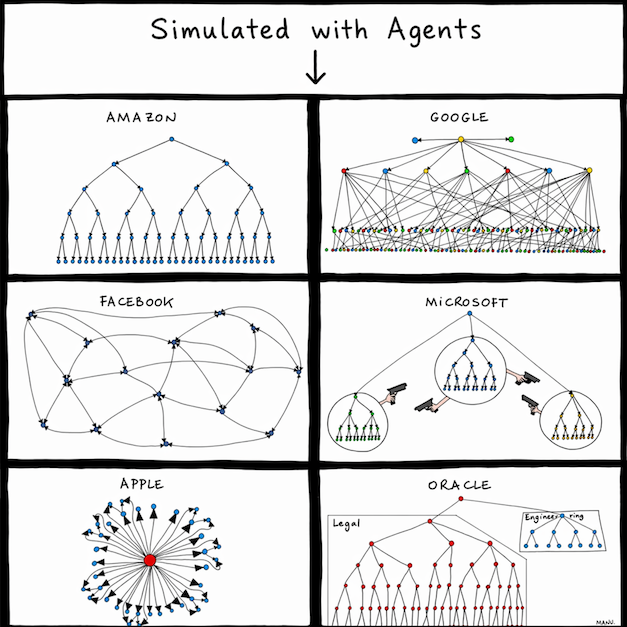
lol remember this org chart meme? I just created a full simulation for all of them with agents, and the results blew my mind! the simulation asked each organization to build and ship a web spreadsheet want to take a guess who built the best product? reveal in thread below!
Kun Chen tweet media
English
37
62
936
230K
Fahdoo
Fahdoo@fahdoo·
ZXX
0
0
0
13
Fahdoo รีทวีตแล้ว
Replit ⠕
Replit ⠕@Replit·
Build your own finance app with Replit using @plaid Plaid is now natively integrated into Replit, giving you secure, real-time access to your financial data. Connect your accounts → prompt what you want → get a working app. Spending dashboards, AI financial assistants, investment trackers, and more. Start building.
English
21
37
291
93.5K
Fahdoo รีทวีตแล้ว
𝖊𝖉𝖉𝖎𝖊 𝖏𝖎𝖆𝖔
What if your whole computer were just pixels streamed to you from a model? I’ve been working with @zan2434 and @drewocarr to imagine a version of generative computing that’s much more flexible and visually rich than the GUIs we have today. (Video is sped up and edited)
English
79
128
1.8K
200.6K
Fahdoo รีทวีตแล้ว
Orson Scott Card
Orson Scott Card@orsonscottcard·
You don't need advice from editors on rejected manuscripts.  My short story “Ender's Game” was rejected by Ben Bova at Analog back when that was the top market for a sci-fi story. Ben gave me feedback. He thought the title should be “Professional Soldier” and he said to “cut it in half.” But I knew he was wrong on both points and submitted it to Jim Baen at Galaxy. He sat on it for a year, and responded to my query with a rejection. There was some kind of explanation, but I don't remember what it was. I concluded at the time that Baen's comments showed that he had barely glanced at the story. So … I got feedback both times, but it was not helpful. I looked at Ben's rejection again. What was it about the story that made him think it should, let alone COULD, be cut in half? Apparently it FELT long. What made it feel long? Now, post-Harry Potter, I would call it the quidditch problem. I had too many battles in which the details became tedious. So I cut two battles entirely, merely reporting the outcomes, and shortened another. In retyping the whole manuscript (pre-word-processor, that was the only way to get a clean manuscript), I added new point-of-view material to the point that I had cut only one page in length. So much for “in half.” But I already knew that my manuscripts did not need cutting — if it wasn't needed, it wouldn't be there in the first place. Even the battles were still there, but instead of showing them, I merely told what happened (so much for the usually asinine advice “show don't tell”), which kept the pace going. Those changes made, I sent it to Ben again. I did not remind him of what he had advised me to do. I merely told him I liked my title, and said, “I have addressed your other concerns,” which was true. I figured he wouldn't remember what his exact words had been. My answer was a check. That revised story was the basis for my winning the Campbell Award for best new writer. Did Ben's feedback help? Yes — but his specific advice was not right, and I knew it. On my next two submissions, Ben hated my endings, and I revised as suggested. The fourth submission he rejected outright, and the fifth, and I thought, Am I a one-story writer? I went back to Ender's Game and tried to analyze why it worked. Then, deliberately imitating myself, I wrote “Mikal's Songbird.” Ben bought it, and it received favorable mentions. I was afraid then that I had consigned myself to writing stories about children in jeopardy. But in fact I was writing character stories rather than idea stories. And THAT was how I built a career, not by self-imitation, and not by following editorial suggestions. I did get wise counsel from David Hartwell on my novel Wyrms, but that was on a book that was already under contract, and it was story feedback, not style. I got wise counsel from Beth Meacham, too, on various books over the years — but again, only on books that were under contract. I also received appallingly stupid advice from the editor of my novel Saints, which temporarily destroyed the book's marketability; after that, I was allowed to go back to my original structure and save the book — now it's one of my best. Editors don't know more than you about your story. They especially don't know why they decide to accept or reject stories. YOU have to know what your story needs to be, and take only advice that you believe in. Your best counselor on a story nobody bought is TIME. Let some time pass and then reread the story. Don't even think about why it Didn't Work. Instead, think about what DOES work, and then write it again, a complete rewrite, keeping nothing from the previous draft. Find the right protagonist and begin at the beginning — the point where the protagonist first gets involved with the events of the story. Be inventive — the failed first draft no longer exists, so you're not bound by any of your earlier decisions. THAT is how you resurrect a good idea you did not succeed with on your first try.
English
271
961
10.8K
1.4M
Fahdoo รีทวีตแล้ว
Luis Héctor Chávez
Vibe coding is changing how software gets built. But as AI agents write more of our code, the question security teams are asking has shifted from "Can AI build this?" to "Can I trust what AI builds?". At Replit, we believe the answer has to be yes, not through blind faith, but through architecture. Every layer of the Replit infrastructure where customer code runs, from the development sandbox to the production deployment, is designed with defense in depth. The Replit platform itself, our control plane, is also implemented with these principles in mind. No single control is the last line of defense. Every layer assumes the one above it might fail. This thread is a detailed walkthrough of how we think about security across the stack, written for the people who need to evaluate it: CISOs, security engineers, and teams considering Replit for production workloads. 🧵
English
16
33
214
133.5K
Fahdoo รีทวีตแล้ว
Amjad Masad
Amjad Masad@amasad·
Replit testified in support of the BASED Act: Stopping Big Tech from rigging software marketplaces (very unbased).
English
13
16
216
24.6K
Fahdoo รีทวีตแล้ว
Replit ⠕
Replit ⠕@Replit·
Meet Replit Security Agent - providing comprehensive app security reviews in minutes And you get $5 in credits to try it for a limited time Security Agent’s hybrid static analysis and AI-scanning approach is first of its kind: - Acts on custom threat model to review full codebase - Resolves vulnerabilities in parallel using background tasks - Reduces false positives by 90% Powered by @semgrep + @HoundDogAI. Keep vibe coding safely 🔒
English
9
20
133
83.7K
Fahdoo รีทวีตแล้ว
Kardashian de Software
Kardashian de Software@oprimodev·
“Como as pistas de fórmula 1 são desenhadas”
Português
1.1K
31.4K
360.3K
11.4M
Fahdoo รีทวีตแล้ว
Anish Moonka
Anish Moonka@anishmoonka·
You can smell rain better than a shark can smell blood. 200,000 times better. Your nose picks up the compound behind petrichor (that smell after rain) at levels so tiny it's like finding one teaspoon spilled across 200 Olympic swimming pools. That compound is called geosmin. It comes from soil bacteria. And the word "petrichor" itself didn't exist until 1964, when two Australian scientists, Isabel Joy Bear and Richard Thomas, published a paper in Nature trying to figure out why rocks smell after rain. They took the Greek words for stone and "the blood of the gods" and stuck them together. Blood of the stone. When soil stays dry for weeks, certain plants leak an oil that the clay soaks up like a sponge. At the same time, soil bacteria called Streptomyces start making spores (tiny survival pods that can sprout into new bacteria later) and give off geosmin while they do it. The smell just sits there in the dirt, waiting. Then rain hits. A 2015 MIT paper figured out the physics of what happens next. Raindrops land on dry soil and trap tiny air bubbles in the soil's pores. The bubbles rise up through the raindrop and pop out the top, flinging thousands of tiny droplets into the air. Each one carries a piece of the oil, some bacterial spores, and some geosmin. Wind does the rest. Light rain releases the most of these droplets. Heavy rain releases very few, which is why a drizzle smells more than a downpour. MIT estimated that rain across the planet throws between 10,000 and 800,000 trillion bacterial cells into the air every single year. In 2020, scientists in Sweden and the UK published a paper in Nature Microbiology that explained why this smell exists at all. Streptomyces bacteria only release geosmin when they're about to die and make spores. The smell is a bacterial ad. It attracts tiny 1.5mm bugs called springtails, which eat the bacteria. Springtails have evolved enzymes that let them survive the antibiotics Streptomyces produce to kill everything else. In exchange, the bacterial spores pass through the springtail's gut alive and stick to its body, hitching a ride to new soil. This deal has been running for about 400 million years. Same molecule, different stories. Geosmin is why raw beets taste like dirt. It's why catfish and tilapia taste muddy when raised in bad water. Acid breaks it down, which is why every recipe for muddy fish starts with vinegar or lemon juice. Your nose catches all of this at parts-per-trillion. You're smelling a 400-million-year-old conversation between soil bacteria and the bugs that eat them.
Science girl@sciencegirl

That fresh smell after rain is called petrichor. When raindrops hit dry soil, they release plant oils and geosmin from bacteria, creating that rich, earthy scent.

English
53
1.3K
9.1K
954.1K
Fahdoo รีทวีตแล้ว
Deva Hazarika
Deva Hazarika@devahaz·
One of the worst communication gaps is between people who care about precision in language and those who don’t
English
168
1.4K
12.4K
399.6K
Fahdoo รีทวีตแล้ว
sarah li
sarah li@sarahli·
just dropped my first video in a 5 part series where we build a full travel planner app on Replit and i am so excited 🌍✈️ as a software engineer, design has always felt a little out of reach for me. like i had all these ideas in my head but turning them into something that actually looks good was a whole other skill set. but the Replit Canvas genuinely changed that for me. my favourite way to use the Canvas is to bring in reference images and websites to help me to create designs! in this first video we jump into the Canvas, explore design directions for our travel app, and apply a final look to a real working app. it is so fun i promise. go watch it and let me know what you think 🎨👇
English
20
16
135
17.6K