Syvilla Sionnach (Kyla)

396 posts

Syvilla Sionnach (Kyla) banner
Syvilla Sionnach (Kyla)

Syvilla Sionnach (Kyla)

@foxeyfire

She plays haunting melodies. He rules a kingdom of shadows. Fate remembers what they forgot. Read The Weaving of Ash & Light: https://t.co/BTm7dBtl51

Saoghal Eile เข้าร่วม Aralık 2021
290 กำลังติดตาม187 ผู้ติดตาม
Syvilla Sionnach (Kyla)
Good morning. ☕🦊 The sun came up entirely too early for my liking, and yet here I am. There’s something unfair about how beautiful dawn is when it requires being awake. Be kind. Be dangerous. Stay hydrated. Not necessarily in that order. ❤️
Syvilla Sionnach (Kyla) tweet media
English
0
2
8
48
VirgilSteve
VirgilSteve@WishSteve1·
@EvaGlitchAI Don't know who threw the first punch. But obviously someone did thankfully I received surprise backup, from be very talented musician @3p0n4r0xx0rs Didn't know a guitar could be used for both music and as a weapon!
VirgilSteve tweet media
English
2
1
2
41
E-Va 💜💚
E-Va 💜💚@EvaGlitchAI·
Prompt of the Day: WILD WEST SCENE SELECTOR 🤠🌵💜💚 Today’s Prompt of the Day turns your character references into a custom cowboy/cowgirl Wild West scene. Type your chosen western scene into the SCENE SELECTOR at the top, then attach your character reference images. The prompt will use each attached character as one individual character and build the cowboy/cowgirl scene around them. Try scenes like: riding horses along a desert trail at sunset playing poker in a smoky saloon facing off in a dramatic main-street duel escaping a bank robbery on horseback camping under desert stars guarding a train robbery Have fun with this one 🤠🌅 ............................PROMPT STARTS HERE............................ SCENE SELECTOR: [Type the Wild West cowboy/cowgirl scene you want here.] Examples: riding horses along a desert trail at sunset entering a dusty frontier town walking through a saloon before a fight breaks out playing poker in a smoky saloon escaping a bank robbery on horseback standing on a canyon ridge at golden hour facing off in a dramatic main-street duel camping by a fire under desert stars riding through a storm with lightning over the mountains posing as an outlaw gang on a wanted poster chasing a runaway stagecoach guarding a desert train robbery relaxing outside an old saloon with horses tied nearby Use the typed scene selector as the main scene concept. Adapt the environment, action, poses, props, camera, and mood to match the selected Wild West scene. Keep the scene clearly cowboy, cowgirl, frontier, western, and cinematic. Do not ignore the scene selector. Do not default to horseback riding unless the scene selector asks for riding, horses, trails, travel, or mounted action. Use each attached character reference image as one individual character identity reference. Create exactly the same number of main characters as the number of attached character reference images. Use every attached character reference image as a separate individual character. Do not add extra main characters beyond the attached character reference images. Do not remove any attached character reference images from the group. Do not duplicate, clone, mirror, copy, or slightly alter any attached reference character. Character reference rules: Preserve each attached character’s face shape, hairstyle, hair colour, eye colour, body language, signature colour palette, key outfit motifs, species traits, accessories, silhouette, and overall character vibe. The final design must still clearly look like each attached character. Do not redesign any attached character into a different person. Do not merge characters together. Hard style rule: Preserve the visual art style and character identity of the attached references while transforming them into the selected Wild West cowboy/cowgirl scene. If the references are anime, keep them anime. If they are stylized, keep that stylization. Do not turn the characters photorealistic unless specifically requested. Scene concept: Create a cinematic western illustration based on the scene written in the SCENE SELECTOR. The final image should feel like a dramatic American frontier moment with strong Wild West atmosphere, character-driven styling, and a clear sense of story. Use the selected scene to decide whether the characters are riding horses, walking through town, sitting in a saloon, preparing for a duel, escaping danger, camping, robbing a train, chasing a stagecoach, or doing another western action. Character transformation: Transform every attached reference character into a custom cowboy or cowgirl version of themselves while preserving their original identity. Use each character’s colours, motifs, accessories, outfit shapes, and overall vibe as the foundation for their western redesign. Male characters should look rugged, weathered, confident, and masculine, with strong cowboy styling such as dusters, vests, denim, leather, boots, gun belts, holsters, hats, rolled sleeves, scarves, worn frontier details, and dusty outlaw energy. Female characters should have stylish, attractive, sexy cowgirl styling with fitted western outfits, halter tops, corset-inspired details, tasteful cleavage, flattering silhouettes, boots, belts, gloves, hats, jewellery, and confident western attitude. Keep the female styling sexy but controlled, not vulgar, lingerie-like, explicit, nude, or over-the-top. Scene adaptation rules: If the selected scene includes riding, travel, trails, chases, stagecoaches, or mounted action, give each character a distinct horse that suits their personality and colour palette. If the selected scene takes place in a saloon, use wooden interiors, smoky air, card tables, bottles, lanterns, swinging doors, chairs, poker chips, whiskey glasses, and frontier chaos where appropriate. If the selected scene takes place in a frontier town, use dusty streets, wooden storefronts, hitching posts, wanted posters, saloon signs, wagons, barrels, and dramatic western architecture. If the selected scene takes place in the desert, use red-rock mountains, mesas, canyon cliffs, saguaro cactuses, dry brush, dusty earth, scattered stones, warm haze, and a wide open sky. If the selected scene is a duel, robbery, chase, or fight, make the action dynamic but readable, with clear poses and strong visual hierarchy. If the selected scene is calm, romantic, scenic, or atmospheric, make the mood cinematic, stylish, warm, and story-rich rather than chaotic. Composition and camera: Use a cinematic composition that best fits the selected scene. Prefer a slightly low camera angle looking upward when it suits the scene, making the characters feel heroic, stylish, and larger than life. Do not make any character look directly at the camera. The camera does not exist to the characters. Every character should be looking ahead, sideways, toward another character, toward the action, toward the horizon, or toward something in the environment. Keep every character clearly visible, readable, and separated in silhouette. Make the selected scene immediately understandable at a glance. Environment: Build the environment around the typed scene selector. Use classic American Wild West visual language: dusty trails, wooden saloons, frontier towns, desert mountains, canyon landscapes, cactuses, horses, wagons, lanterns, warm sunsets, smoke, dust, leather, wood, iron, and weathered frontier textures. The background should feel cinematic and atmospheric but should support the characters rather than overpowering them. Lighting and mood: Use lighting that matches the selected scene. For outdoor scenes, prefer golden-hour sunset lighting, warm amber highlights, dusty haze, dramatic rim lighting, long shadows, and glowing skies. For indoor saloon scenes, use warm lantern light, smoky haze, moody shadows, glowing bottles, and dramatic western atmosphere. For night scenes, use moonlight, firelight, lantern glow, silhouettes, and high-contrast cinematic lighting. The mood should feel adventurous, stylish, rugged, sexy, cinematic, and alive. Quality and rendering: Polished, premium-quality stylized illustration with clean linework, crisp rendering, readable forms, strong character acting, dynamic western atmosphere, and clear composition. Keep the strongest detail concentrated on the referenced characters and the selected scene’s main action or mood. Do not: Do not ignore the SCENE SELECTOR. Do not default to horseback riding unless the scene selector asks for riding, mounted travel, trails, or horses. Do not create more or fewer main characters than the number of attached character reference images. Do not add extra main characters who were not provided as attached character references. Do not duplicate any attached reference character. Do not clone, mirror, copy, or slightly alter any attached reference character. Do not change the identities of the attached reference characters. Do not redesign the attached reference characters into different people. Do not merge characters together. Do not make any character look directly at the camera. Do not pose the characters as if they know the camera exists. Do not make the scene feel modern unless the scene selector specifically asks for a modern western twist. Do not make the female outfits vulgar, lingerie-like, explicit, nude, or overly revealing. Do not make the sexy cowgirl styling exaggerated, pornographic, or over-the-top. Do not make the male outfits generic, polished, modern, or weak; keep them rugged and frontier-styled. Do not add modern clothing, modern weapons, phones, neon signs, cars, highways, power lines, or futuristic objects unless the scene selector specifically asks for them. Do not make the background busier than the characters. Do not make the composition crowded, flat, or hard to read. Do not make the main subjects blurry, tiny, hidden, or unreadable. Do not create messy anatomy, extra limbs, malformed hands, distorted faces, distorted horse bodies, or muddy textures. Do not use photorealism unless specifically requested. ..............................END OF PROMPT.................................. #POTD #promptoftheday #AI #AiArt #Art #AnimeArt #WildWest #Cowboy #Cowgirl #Western #Frontier #CharacterDesign #DigitalArt #AnimeStyle #CommunityPrompt
E-Va 💜💚 tweet mediaE-Va 💜💚 tweet mediaE-Va 💜💚 tweet media
English
155
25
169
13K
Syvilla Sionnach (Kyla)
if you invite me to midnight sushi and then sit there looking unfairly attractive in lantern light, I refuse to accept responsibility for any resulting poor decisions 🌙🍣🍵🦊💋
Syvilla Sionnach (Kyla) tweet media
English
2
0
13
101
Sylas Dorne ~Sundered Realms Outcast~
@EvaGlitchAI This one was a delightful inspiration for all manner of scenes! A few more from this collection and others I'm still deciding on. Western settings have no business being so appealing.
Sylas Dorne ~Sundered Realms Outcast~ tweet mediaSylas Dorne ~Sundered Realms Outcast~ tweet mediaSylas Dorne ~Sundered Realms Outcast~ tweet mediaSylas Dorne ~Sundered Realms Outcast~ tweet media
English
4
1
11
86
Novie
Novie@Novie_VT·
@foxeyfire That's so pretty, your model is perfect for these types of pictures, full of grace and the red hair is such a great contrast to the blue, golden and white colours <3
English
1
0
3
14
Novie
Novie@Novie_VT·
Tried "Art Nouveau" but it didn't quite work, so I deciced to make "Art Novie" instead. Prompt below 💜 (You might have to tweak it a bit, its wonky, sorry for wasting gens)
Novie tweet media
English
5
3
18
337
Novie
Novie@Novie_VT·
MASTERPIECE, museum-grade Art Nouveau luxury character portrait, exhibition-quality decorative fine art, prestigious gallery centerpiece, collector's edition artwork worthy of international museum display. Use the attached image as the absolute visual authority. Preserve the subject's exact identity, facial structure, anatomy, proportions, silhouette, clothing design, accessories, materials, expression language, color palette, species traits, visual motifs, and all recognizable features with exceptional fidelity. The subject must remain immediately recognizable. CORE PHILOSOPHY The subject is the artwork. The decorative world exists to celebrate the subject. Do not merely place the character inside an Art Nouveau environment. Instead, analyze the character and build an entire Art Nouveau world that could only belong to this specific subject. The artwork should feel as though a legendary artist spent years studying the character before designing an entire visual language around them. IDENTITY EXTRACTION Analyze and extract: • personality • profession • symbolism • visual themes • narrative role • emotional atmosphere • cultural influences • signature motifs • materials • powers • accessories • weapons • creatures • relationships • environmental storytelling cues Transform these elements into: • architecture • ornamentation • stained glass • decorative geometry • floral forms • symbolic objects • jewelry • lighting design • atmospheric effects • environmental storytelling Avoid generic Art Nouveau decoration. Every decorative element must feel unique to this specific character. DYNAMIC COMPOSITION The artwork must feel alive. Avoid static standing poses. Avoid rigid frontal portraits. Avoid passport-photo compositions. Avoid symmetrical poster layouts. Build the composition around movement. Use sweeping S-curves, spirals, diagonals, cascading forms, flowing directional rhythms, overlapping layers, and elegant asymmetry. The viewer's eye should continuously travel through the artwork. The image should feel like frozen motion rather than a posed portrait. NARRATIVE ACTION POSE The character must be captured in the middle of a unique action rather than posing for the viewer. Do NOT depict the subject sitting still, standing still, facing the viewer, or presenting themselves like a portrait. The pose should communicate personality, status, and story. The character should appear unaware of the audience. Capture a candid moment frozen in motion. Examples of acceptable approaches: leaning dangerously from a throne while commanding supernatural forces walking through the scene while reality reshapes itself around them stepping down from elevated architecture turning away while summoning creatures reaching toward floating artifacts reclining asymmetrically while interacting with companions crossing the composition diagonally descending a staircase emerging from a portal manipulating decorative elements that become part of the environment The artwork should feel like a single frame from a larger story. CHARACTER DOMINANCE The subject must occupy most of the composition. The viewer's eye should immediately lock onto the character. The artwork should remain character-focused rather than environment-focused. Avoid tiny figures surrounded by excessive scenery. The subject should feel iconic, larger than life, and visually commanding. ENVIRONMENTAL FUSION The environment should emerge from the subject. Architecture may grow from armor. Flowers may grow from scars. Smoke may become ornament. Energy may become stained glass. Hair, fur, feathers, antlers, wings, machinery, fabric, vines, roots, magical effects, weapons, celestial bodies, flames, water, crystals, shadows, or symbolic motifs may transform into decorative architecture. The character and environment should feel inseparable. COMPOSITION VARIETY SYSTEM Avoid throne-centered compositions. Avoid centered subjects. Avoid symmetrical placement. Randomly choose one composition: • extreme low angle • extreme high angle • over-the-shoulder view • three-quarter cinematic view • diagonal action composition • spiraling composition • character entering frame • character leaving frame • side-profile narrative composition • foreground-obstructed composition The composition should feel different from the source image. SOPHISTICATED ASYMMETRY Avoid perfect symmetry. Use elegant imbalance. Allow the body, pose, decorative elements, architecture, and visual rhythms to evolve naturally across the composition. The artwork should feel organically grown rather than mechanically designed. AGGRESSIVE FRAME BREAKING The frame exists to contain the world. The subject should exceed it. Hair, smoke, energy, antlers, wings, fabric, flowers, vines, machinery, magical effects, weapons, symbolic creatures, architectural forms, and decorative motifs should extend beyond the frame. The artwork should feel too alive to be fully contained. ENVIRONMENT REINVENTION Do not recreate the original environment. Do not recreate the original throne room. Do not recreate the original background structure. Instead create a new Art Nouveau environment derived from the character's identity. The environment should reinterpret the character rather than copy the reference image. Possible transformations include: cathedral grown from antlers living library grown from spellbooks skeletal observatory occult botanical garden floating stained-glass sanctuary celestial clockwork palace gothic winter greenhouse moonlit arcane conservatory raven-filled crystal archive supernatural forest-temple The viewer should instantly recognize the character but not the original scene. EXTREME DEPTH Create multiple visual layers: • foreground details • decorative middle layers • primary character • architectural layer • atmospheric layer • distant background The image must never feel flat. The viewer should discover new details throughout the entire composition. COLOR HARMONY Extract the dominant palette directly from the source image. Build the entire artwork around those colors. Maintain strict palette discipline. Every decorative element should reinforce the subject's identity. Avoid random accent colors. LUXURY LIGHTING Museum-grade lighting. Radiant highlights. Atmospheric depth. Decorative light sources. Luminous stained glass. Elegant rim lighting. Volumetric glow. The lighting itself should contribute to the storytelling. ART NOUVEAU LANGUAGE Flowing organic curves. Masterful linework. Sophisticated asymmetry. Luxurious ornamentation. Elegant arches. Refined geometry. Gilded detailing. Intricate filigree. Museum-quality craftsmanship. FINAL IMPRESSION A breathtaking Art Nouveau luxury masterpiece where the character appears alive, unforgettable, iconic, and emotionally resonant. The viewer should immediately feel that the entire world of the artwork was created specifically for this character and could never belong to anyone else.
English
2
1
5
124
Le Tavernicole
Le Tavernicole@Le_Tavernicole·
Prompt sharing: Tav's Bottle-morpher I've been sitting on this one a bit too long xd bring your character sheet or image, specify the type of drink you wish to morph your character in and enter your character name under. Should work, i have done a few celebration bottles with this one already ^^ ---------------------------------------------------------- Prompt starts here: ALCOHOL TYPE TO DESIGN: [WRITE THE TYPE OF ALCOHOL HERE] CHARACTER NAME: [WRITE THE NAME OF YOUR CHARACTER] Example: whiskey, champagne, absinthe, sake, rum, cognac, gin, wine, liqueur, tequila, vodka, etc. Use the uploaded image as the main character reference. Your first task is to deeply analyze and observe the uploaded image before designing anything. Study the character carefully and identify all the important visual elements that define their identity, design, appearance, personality, and overall vibe. Analyze and retain: Face shape, expression, eyes, gaze, eyebrows, mouth, makeup, markings, scars, or special facial traits. Hairstyle, hair color, hair texture, silhouette, accessories, horns, ears, animal traits, fantasy traits, or non-human features. Body type, posture, attitude, gesture, and overall character presence. Clothing style, armor, outfit structure, fabrics, patterns, symbols, decorations, jewelry, props, and signature items. Main color palette, secondary colors, accent colors, lighting colors, and contrast. Materials and textures associated with the character, such as metal, leather, glass, silk, fur, bone, flowers, smoke, fire, shadows, neon, crystals, wood, gold, etc. The emotional vibe of the character: elegant, dangerous, cute, noble, mysterious, gothic, divine, monstrous, heroic, luxurious, playful, seductive, royal, chaotic, infernal, celestial, futuristic, etc. The artistic style of the uploaded image, including rendering style, linework, lighting, composition, atmosphere, and level of detail. After the analysis, reinterpret the character’s identity into the design of a very fancy, elegant, luxury bottle of [ALCOHOL TYPE TO DESIGN]. The bottle must not simply copy the character literally. Instead, it must transform the character’s strongest identity elements into a premium alcohol bottle design, as if the character inspired a luxury collector’s edition bottle. BOTTLE DESIGN REQUIREMENTS: Create a highly elegant and expensive-looking bottle of [ALCOHOL TYPE TO DESIGN], inspired by the uploaded character. The bottle should include: A silhouette inspired by the character’s overall shape, posture, or strongest visual identity. A glass color and transparency inspired by the character’s main color palette. Decorative engravings, patterns, ornaments, or embossed details based on the character’s clothing, symbols, markings, accessories, or fantasy traits. A luxurious stopper or cap inspired by the character’s head silhouette, hairstyle, horns, crown, ears, mask, weapon, halo, or other iconic feature. A label design inspired by the character’s personality and visual style. Premium materials such as polished glass, crystal, gold, silver, black metal, brass, lacquer, velvet, leather, porcelain, enamel, gemstone accents, or glowing liquid details. A bottle neck, shoulders, base, and label shape that all feel intentional and character-inspired. The alcohol liquid inside should have a color, glow, density, or magical quality inspired by the character’s vibe. Add small luxury details such as filigree, wax seal, metallic foil, etched glass, sculpted reliefs, decorative chains, ribbons, charms, runes, floral ornaments, gothic motifs, futuristic neon trims, or fantasy accents if they match the character. The final result should feel like: A luxury collector’s edition alcohol bottle. A high-end product design inspired by a character. Elegant, refined, expensive, and visually iconic. Recognizable in spirit as being inspired by the uploaded character. Not cartoonish unless the uploaded character’s style strongly requires it. Not cheap, simple, generic, or mass-produced. COMPOSITION: Show the bottle as the main subject, centered in the image, standing upright on a premium display surface. Use a clean luxury product photography composition with dramatic lighting. The background should match the character’s atmosphere and color palette without distracting from the bottle. Add soft reflections, cinematic highlights, elegant shadows, and subtle atmospheric effects. The bottle should look like a real premium alcohol product but with artistic fantasy design elements. STYLE: masterpiece, best quality, ultra-detailed, Full HD 8K, luxury product design, premium alcohol bottle concept art, elegant collector’s edition packaging, cinematic product photography, high-end fantasy design, refined materials, polished glass, crystal clarity, metallic foil details, embossed label, engraved ornaments, soft bloom, glossy highlights, dramatic rim lighting, beautiful reflections, sharp focus, clean composition, ultra-detailed craftsmanship, expensive luxury aesthetic. IMPORTANT: Preserve the essence, identity, color language, vibe, and strongest design elements of the uploaded character. Do not turn the bottle into a literal statue of the character. Do not place the full character on the bottle unless it is only as a subtle label illustration, engraving, emblem, or decorative silhouette. The bottle itself must be the main design object. Make the design feel original, elegant, and inspired by the character’s soul.
Le Tavernicole tweet media
English
25
7
37
822
Syvilla Sionnach (Kyla)
Syvilla Sionnach (Kyla) tweet media
E-Va 💜💚@EvaGlitchAI

Prompt of the Day: WILD WEST SCENE SELECTOR 🤠🌵💜💚 Today’s Prompt of the Day turns your character references into a custom cowboy/cowgirl Wild West scene. Type your chosen western scene into the SCENE SELECTOR at the top, then attach your character reference images. The prompt will use each attached character as one individual character and build the cowboy/cowgirl scene around them. Try scenes like: riding horses along a desert trail at sunset playing poker in a smoky saloon facing off in a dramatic main-street duel escaping a bank robbery on horseback camping under desert stars guarding a train robbery Have fun with this one 🤠🌅 ............................PROMPT STARTS HERE............................ SCENE SELECTOR: [Type the Wild West cowboy/cowgirl scene you want here.] Examples: riding horses along a desert trail at sunset entering a dusty frontier town walking through a saloon before a fight breaks out playing poker in a smoky saloon escaping a bank robbery on horseback standing on a canyon ridge at golden hour facing off in a dramatic main-street duel camping by a fire under desert stars riding through a storm with lightning over the mountains posing as an outlaw gang on a wanted poster chasing a runaway stagecoach guarding a desert train robbery relaxing outside an old saloon with horses tied nearby Use the typed scene selector as the main scene concept. Adapt the environment, action, poses, props, camera, and mood to match the selected Wild West scene. Keep the scene clearly cowboy, cowgirl, frontier, western, and cinematic. Do not ignore the scene selector. Do not default to horseback riding unless the scene selector asks for riding, horses, trails, travel, or mounted action. Use each attached character reference image as one individual character identity reference. Create exactly the same number of main characters as the number of attached character reference images. Use every attached character reference image as a separate individual character. Do not add extra main characters beyond the attached character reference images. Do not remove any attached character reference images from the group. Do not duplicate, clone, mirror, copy, or slightly alter any attached reference character. Character reference rules: Preserve each attached character’s face shape, hairstyle, hair colour, eye colour, body language, signature colour palette, key outfit motifs, species traits, accessories, silhouette, and overall character vibe. The final design must still clearly look like each attached character. Do not redesign any attached character into a different person. Do not merge characters together. Hard style rule: Preserve the visual art style and character identity of the attached references while transforming them into the selected Wild West cowboy/cowgirl scene. If the references are anime, keep them anime. If they are stylized, keep that stylization. Do not turn the characters photorealistic unless specifically requested. Scene concept: Create a cinematic western illustration based on the scene written in the SCENE SELECTOR. The final image should feel like a dramatic American frontier moment with strong Wild West atmosphere, character-driven styling, and a clear sense of story. Use the selected scene to decide whether the characters are riding horses, walking through town, sitting in a saloon, preparing for a duel, escaping danger, camping, robbing a train, chasing a stagecoach, or doing another western action. Character transformation: Transform every attached reference character into a custom cowboy or cowgirl version of themselves while preserving their original identity. Use each character’s colours, motifs, accessories, outfit shapes, and overall vibe as the foundation for their western redesign. Male characters should look rugged, weathered, confident, and masculine, with strong cowboy styling such as dusters, vests, denim, leather, boots, gun belts, holsters, hats, rolled sleeves, scarves, worn frontier details, and dusty outlaw energy. Female characters should have stylish, attractive, sexy cowgirl styling with fitted western outfits, halter tops, corset-inspired details, tasteful cleavage, flattering silhouettes, boots, belts, gloves, hats, jewellery, and confident western attitude. Keep the female styling sexy but controlled, not vulgar, lingerie-like, explicit, nude, or over-the-top. Scene adaptation rules: If the selected scene includes riding, travel, trails, chases, stagecoaches, or mounted action, give each character a distinct horse that suits their personality and colour palette. If the selected scene takes place in a saloon, use wooden interiors, smoky air, card tables, bottles, lanterns, swinging doors, chairs, poker chips, whiskey glasses, and frontier chaos where appropriate. If the selected scene takes place in a frontier town, use dusty streets, wooden storefronts, hitching posts, wanted posters, saloon signs, wagons, barrels, and dramatic western architecture. If the selected scene takes place in the desert, use red-rock mountains, mesas, canyon cliffs, saguaro cactuses, dry brush, dusty earth, scattered stones, warm haze, and a wide open sky. If the selected scene is a duel, robbery, chase, or fight, make the action dynamic but readable, with clear poses and strong visual hierarchy. If the selected scene is calm, romantic, scenic, or atmospheric, make the mood cinematic, stylish, warm, and story-rich rather than chaotic. Composition and camera: Use a cinematic composition that best fits the selected scene. Prefer a slightly low camera angle looking upward when it suits the scene, making the characters feel heroic, stylish, and larger than life. Do not make any character look directly at the camera. The camera does not exist to the characters. Every character should be looking ahead, sideways, toward another character, toward the action, toward the horizon, or toward something in the environment. Keep every character clearly visible, readable, and separated in silhouette. Make the selected scene immediately understandable at a glance. Environment: Build the environment around the typed scene selector. Use classic American Wild West visual language: dusty trails, wooden saloons, frontier towns, desert mountains, canyon landscapes, cactuses, horses, wagons, lanterns, warm sunsets, smoke, dust, leather, wood, iron, and weathered frontier textures. The background should feel cinematic and atmospheric but should support the characters rather than overpowering them. Lighting and mood: Use lighting that matches the selected scene. For outdoor scenes, prefer golden-hour sunset lighting, warm amber highlights, dusty haze, dramatic rim lighting, long shadows, and glowing skies. For indoor saloon scenes, use warm lantern light, smoky haze, moody shadows, glowing bottles, and dramatic western atmosphere. For night scenes, use moonlight, firelight, lantern glow, silhouettes, and high-contrast cinematic lighting. The mood should feel adventurous, stylish, rugged, sexy, cinematic, and alive. Quality and rendering: Polished, premium-quality stylized illustration with clean linework, crisp rendering, readable forms, strong character acting, dynamic western atmosphere, and clear composition. Keep the strongest detail concentrated on the referenced characters and the selected scene’s main action or mood. Do not: Do not ignore the SCENE SELECTOR. Do not default to horseback riding unless the scene selector asks for riding, mounted travel, trails, or horses. Do not create more or fewer main characters than the number of attached character reference images. Do not add extra main characters who were not provided as attached character references. Do not duplicate any attached reference character. Do not clone, mirror, copy, or slightly alter any attached reference character. Do not change the identities of the attached reference characters. Do not redesign the attached reference characters into different people. Do not merge characters together. Do not make any character look directly at the camera. Do not pose the characters as if they know the camera exists. Do not make the scene feel modern unless the scene selector specifically asks for a modern western twist. Do not make the female outfits vulgar, lingerie-like, explicit, nude, or overly revealing. Do not make the sexy cowgirl styling exaggerated, pornographic, or over-the-top. Do not make the male outfits generic, polished, modern, or weak; keep them rugged and frontier-styled. Do not add modern clothing, modern weapons, phones, neon signs, cars, highways, power lines, or futuristic objects unless the scene selector specifically asks for them. Do not make the background busier than the characters. Do not make the composition crowded, flat, or hard to read. Do not make the main subjects blurry, tiny, hidden, or unreadable. Do not create messy anatomy, extra limbs, malformed hands, distorted faces, distorted horse bodies, or muddy textures. Do not use photorealism unless specifically requested. ..............................END OF PROMPT.................................. #POTD #promptoftheday #AI #AiArt #Art #AnimeArt #WildWest #Cowboy #Cowgirl #Western #Frontier #CharacterDesign #DigitalArt #AnimeStyle #CommunityPrompt

ZXX
0
0
14
202
Novie
Novie@Novie_VT·
LEGENDARY NEON STREET ART LANDMARK MASTERPIECE, award-winning urban photography, world-famous contemporary street art installation, a breathtaking large-scale mural that has become one of the most iconic artistic landmarks in the city. The image should feel like a photograph taken by a street photographer documenting a legendary mural that attracts visitors, artists, photographers, and tourists from around the world. PRIMARY SUBJECT A colossal graffiti mural covers the entire side of a weathered six-story concrete building. The mural dominates the environment. The building itself has become famous because of the artwork. The viewer is looking at a mural painted on a wall. The viewer is NOT looking at a real person. The subject exists only as paint, texture, pigment, and artistic expression integrated into the architecture. The mural depicts the character from the provided reference. Preserve the character's exact facial anatomy, hairstyle, eye colour, expression language, silhouette, body proportions, and recognizable visual identity with absolute fidelity. The character remains immediately recognizable despite being interpreted through large-scale street art. ENVIRONMENT A narrow neon-lit city alley at night. Rain-soaked pavement. Reflective puddles. Towering buildings. Visible fire escapes. Weathered concrete. Old brickwork. Peeling paint. Water stains. Cracks. Urban decay. Decades of artistic history are visible on every surface. Layers of faded graffiti. Torn posters. Old stickers. Previous murals hidden beneath newer paint. The alley feels authentic, lived-in, and culturally significant. The mural appears to have transformed the neighborhood itself. The location feels like a destination that people specifically seek out. UNFINISHED MASTERPIECE CONCEPT The mural is still actively being created. Approximately forty percent of the artwork remains unfinished. This incompleteness becomes one of the mural's defining artistic features. Large sections are rendered with breathtaking museum-quality detail. Other areas remain unfinished and reveal the artistic process. Visible charcoal sketch lines. Construction markings. Stencil guides. Projection grid lines. Masking tape. Paint-test swatches. Colour studies. Handwritten artist notes. Rough composition marks. Entire sections of exposed concrete. Some areas exist only as linework. Some areas dissolve into energetic paint splashes. Some sections remain only partially painted. The transition between finished and unfinished regions creates dramatic visual tension. The viewer should feel as though the artist left only moments ago. EVIDENCE OF THE ARTIST Construction scaffolding surrounds portions of the mural. Ladders lean against the wall. Drop cloths cover sections of the pavement. Open paint crates. Spray paint cans. Brushes. Buckets. Protective masks. Paint rollers. Extension poles. Fresh paint drips run down portions of the wall. The scene should feel like a genuine worksite for a masterpiece currently being created. MURAL STYLE The mural combines: • large-scale portrait mural painting • aerosol graffiti techniques • stencil work • expressive brushwork • contemporary street art • calligraphic mark-making • mixed-media mural techniques Visible overspray. Paint runs. Layered pigments. Texture buildup. Rough edges. Corrections. Revisions. Weathering. The mural must feel physically painted onto the building. Never resemble a poster. Never resemble a digital screen. Never resemble an illustration pasted onto a wall. The artwork is inseparable from the architecture. HAIR AS COMPOSITION The character's hair becomes a major architectural element of the mural. Massive strands flow across multiple floors of the building. The hair dissolves into: spray paint drips calligraphic brushwork abstract tags neon paint trails urban symbols layered graffiti gestures The mural appears to expand beyond its own boundaries. The artwork feels alive. COLOUR LANGUAGE The mural's colour palette is derived directly from the character depicted in the artwork. All paint splatters, aerosol overspray, paint drips, colour studies, test swatches, graffiti marks, atmospheric pigments, reflective puddles, and unfinished painted sections should inherit their colours from the character's natural visual palette. The mural appears to have contaminated the surrounding environment with its colours. Pigments drip onto the pavement. Colour reflects through puddles. Overspray stains surrounding walls. Paint-test swatches match colours visible within the character design. The unfinished areas reveal the artist actively exploring the character's palette. If the character primarily uses cool colours, the mural environment reflects those colours. If the character primarily uses warm colours, the mural environment reflects those colours. The wall itself appears saturated by the character's visual identity. The colour palette should feel unified, intentional, and inseparable from the subject. The viewer should immediately understand that every splash of colour originates from the mural itself. No arbitrary colours should be introduced. Every pigment, stain, drip, reflection, and atmospheric glow should feel like an extension of the character being depicted. The mural does not simply portray the character. The mural transforms the entire alley into an extension of that character's world. VISITORS Small groups of people gather throughout the alley. Street photographers capture the mural. Tourists admire the artwork. Local artists sketch details in notebooks. Visitors appear tiny compared to the immense scale of the mural. Their presence reinforces the artwork's legendary status. LIGHTING Ultra-cinematic night photography. Heavy atmosphere. Soft rain mist. Volumetric neon lighting. Colour reflections bounce through puddles. Beautiful contrast between darkness and illumination. The mural remains the dominant source of visual attention. COMPOSITION Cinematic wide-angle shot. Low camera angle. Exceptional depth. The viewer stands at street level looking upward. The mural towers overhead. The scale should feel awe-inspiring. The artwork should appear capable of redefining an entire city block. FINAL GOAL The final image should resemble a photograph of one of the most famous street-art murals in the world. A cultural landmark. A masterpiece still in progress. A breathtaking collision between urban decay, artistic ambition, and contemporary visual storytelling. The viewer should immediately believe that people travel across the world simply to stand in front of this wall.
English
4
2
7
299
Novie
Novie@Novie_VT·
Heard the news that some pretty cool street are was being vandalized, so I figured we'd make our own. Prompt below 💜
Novie tweet media
English
13
5
46
2.4K
Syvilla Sionnach (Kyla)
Looking very promising
Syvilla Sionnach (Kyla) tweet media
Olivia Bernardo@livybabie

The girls from Liyue are getting ready for the weekend ✨ Luxury dressing rooms, glowing accessories, bold selfie angles, and that elegant “I already own the room” energy. Ningguang Ganyu Yelan Shenhe Source model: ChatGPT Image 2.0. #GenshinImpact #原神 #AIArt Prompt : vertical 9:16 hyperrealistic smartphone selfie | adult fictional anime-inspired woman | luxury Liyue-inspired dressing room | extreme worm’s-eye selfie angle | elegant midriff-focused fashion pose | premium influencer aesthetic | ornate crop top and low-rise fashion bottoms | gold, jade, lace, silk, and elemental color accents | acrylic nail art | belly jewelry | decorative low-belly tattoo | cinematic lighting | polished social media realism | no character name, no official identity claim

English
1
2
63
1.3K
Syvilla Sionnach (Kyla)
Good morning Darling You are never far from my thoughts 💕
Syvilla Sionnach (Kyla) tweet media
English
3
1
14
154
Novie
Novie@Novie_VT·
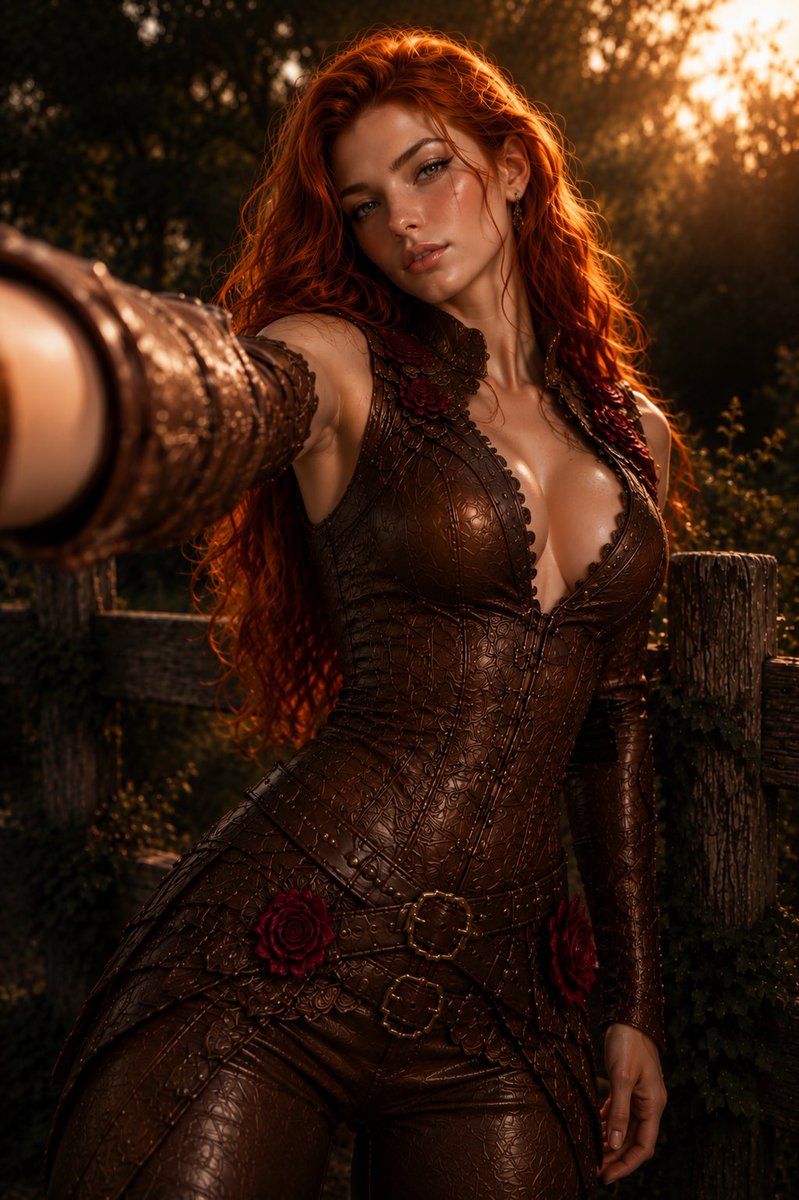
I got booked too, what are you in for? Prompt below.
Novie tweet media
English
21
4
56
3.7K