Sharkproof | Outsmart the system.Build real wealth

147 posts

Sharkproof | Outsmart the system.Build real wealth banner
Sharkproof | Outsmart the system.Build real wealth

Sharkproof | Outsmart the system.Build real wealth

@getsharkproof

Outsmart the system. Behavioral economics + negotiation + procurement tactics. Stop overpaying. 📩 10 Pricing Tricks → https://t.co/ycEa0I3gZh


United States เข้าร่วม Ocak 2026
107 กำลังติดตาม22 ผู้ติดตาม
ทวีตที่ปักหมุด
Sharkproof | Outsmart the system.Build real wealth
You're losing $5,000/year. Not because you spend too much. Because the system is designed to take it from you. One thing at a time, I'll show you every leak. 🦈 Follow for more.
English
0
1
2
291
Sharkproof | Outsmart the system.Build real wealth
The 4% rule is based on assumptions about returns, retirement years, inflation, and the risk of the order of events. It's a risk to think that those inputs will act the same way for the next 40 years as they did for the last 100. It's safer to withdraw money at a rate that takes uncertainty into account.
English
1
0
2
1.2K
Graham Stephan
Graham Stephan@GrahamStephan·
The 4% rule works well for 30-year retirements, with a small likelihood that you’ll end with $0. For those who want financial independence much earlier (for a 40-50+ year retirements), a 3% withdrawal rate is much safer. Or 2.8% per year and you’re 99.99% likely to build generational wealth and continue growing your portfolio.
theficouple@theficouple

In case you forgot: The 4% rule has survived: - The Great Depression - Black Monday - The dot-com crash - 2008 - COVID 100 years of data says take your expenses, multiply by 25x. Get there & you're free forever.

English
35
6
159
59K
Stacie
Stacie@R128Stacie·
Thank you for this! Only one car (the 2019 MBZ) has full coverage, but I'm considering knocking it down to liability and uninsured coverage. I do have a 23 yr old daughter on our plan, a Subaru, and Honda Pilot. I pay over 2k per month for insurance! (House + auto + health) All just so I can pay above market for any fixes (house + auto + health). Plus deductibles on all three!
English
1
0
1
47
Jödes
Jödes@WhoDeanie589·
I pay $1200 dollars a year for insurance on a car worth $3200. I think I’m done.
English
339
251
11.6K
370.7K
Sharkproof | Outsmart the system.Build real wealth
@R128Stacie @WhoDeanie589 If you have three paid-off cars, the bank can't tell you what kind of insurance to get. That is leverage. And most people don't even touch it. If your oldest car is worth less than what you pay each year to insure it, full coverage costs more than the car is worth. Start there.
English
1
0
0
32
Sharkproof | Outsmart the system.Build real wealth
@R128Stacie @WhoDeanie589 A $3,200 car costs $1,200 a year, which is 37.5% of its value. Every year. Not normal. Not okay. But not very common either. The math gets bad quickly with older cars, certain zip codes, and a history of not having coverage. This is the perfect time to shop around.
English
1
0
1
142
Anthony DiGiorgio, DO, MHA
@mcuban You’re letting the hospitals off too easy. They run massively inefficiently with bloated admin. They could cover patients with far less cost. They choose not to.
English
4
4
66
1.9K
Mark Cuban
Mark Cuban@mcuban·
The are a function of health insurance plans. The insurance companies create plans with deductibles that most people can’t afford. So to get to the insurance money from their plan, they will loan the patient money to cover their deductible. That turns the hospital into a sub prime lender. Then the insurer will under pay, late pay and claw back in the contract. Costing the hospital more cash. And costing them in administrative costs even more Then the insurer will delay approvals and deny care, earning interest on the premiums. So then the hospitals. Non profit or not, have to compensate for the issue with insurance companies. So they create ridiculous shit like facilities fees, abuse 340b programs , abuse site neutrality and more. And of course non profits don’t pay taxes And then the biggest provider systems will say they can’t make money on Medicare. Which is a function of them spending like drunken sailors on everything they can. From buildings to consultants. There are more administrators than doctors and in aggregate they make more. It makes no sense that hospitals spend so much money on consultants. It’s a waste. It’s like them want them to give the CEO cover , so they can try to buy more hospitals which leads to more pay for the ceo Break em all up
Larry Goldberg@TeslaLarry

@mcuban you are not wrong. Now do the huge healthcare non-profits, their motivations and behaviours.

English
87
243
1.2K
193.1K
Sharkproof | Outsmart the system.Build real wealth
Agreed. The insurance plan is the original load-bearing wall. Everything downstream: facility fees, 340B games, admin bloat is hospitals engineering their way around a reimbursement model that was already broken. Fix the incentive upstream, the downstream dysfunction loses its justification.
English
0
0
3
44
Mark Cuban
Mark Cuban@mcuban·
@DrDiGiorgio I agree with you. But it all starts with the insurance plan.
English
10
2
25
1.1K
I interject
I interject@Swflresident·
@getsharkproof @mcuban You’re touching on it. The governance needs to live upstream of the irreversible decision. Until money moves as fast as approval. Denial/appeal confusion cost is inevitable.
English
1
0
1
77
Sharkproof | Outsmart the system.Build real wealth
@0xKlinko @mcuban Government involvement accelerated it but the incentive structure was already broken. Private insurers designed the deductible gap. Hospitals filled it with financial engineering. Government made it worse. The market made it profitable. Both are true.
English
1
0
0
80
Sharkproof | Outsmart the system.Build real wealth
The problem with these takes is they treat housing like a straight line when it’s actually a stack of moving parts: interest rates, taxes, insurance, maintenance, liquidity, mobility, and timing. A mortgage isn’t just ‘forced savings’ — it’s leverage. And leverage amplifies gains and losses.” Buying can build equity, but only if the appreciation outpaces the carrying costs, you stay long enough to amortize the loan, and you can absorb the shocks - roofs, HVAC, insurance spikes, tax reassessments, and rate cycles. Most of the ‘$600k equity’ stories assume perfect conditions and ignore the volatility underneath. Renting isn’t ‘throwing money away.’ It’s paying for flexibility, liquidity, and the ability to avoid concentration risk. A renter isn’t tied to one asset class in one ZIP code. They can move for opportunity, avoid six‑figure repair cycles, and keep their capital diversified instead of locked in drywall. The real answer isn’t ‘buy’ or ‘rent.’ It’s: understand the incentives, the math, and the risks because the system will happily sell you a narrative that ignores all three.
English
0
0
1
29
Finance Guy
Finance Guy@GuyTalksFinance·
If I pay my mortgage for 30 years I’ll have $600k in equity on a home valued over $1 million dollars. If I rent for 30 years I’ll pay off my landlord’s house and have nothing to show for it. When it comes to Buying vs Renting — the answer is clear.
English
185
11
334
41.2K
Sharkproof | Outsmart the system.Build real wealth
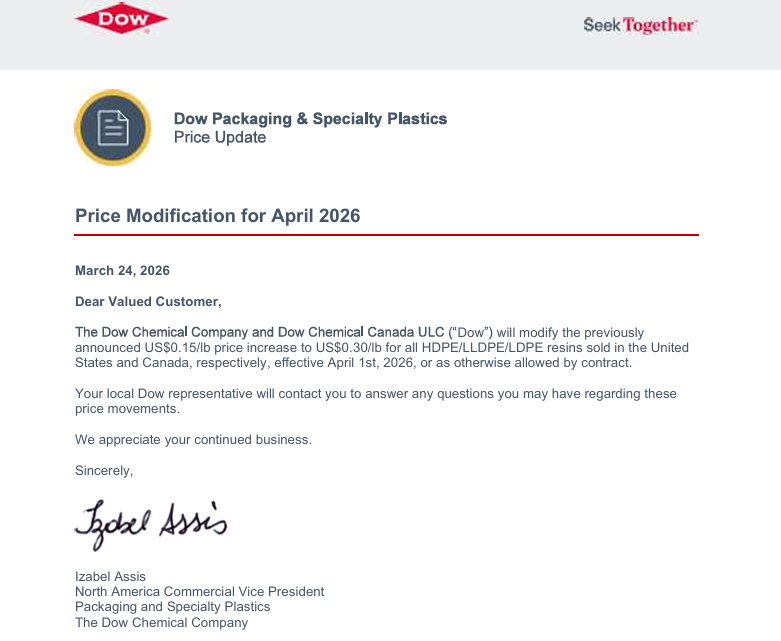
A price jump like this isn’t about plastic. It’s about how concentrated the upstream supply chain is. When a handful of petrochemical giants control the feedstock, the resin, and the contracts, a ‘price update’ becomes a transfer of cost straight through the system. Polyethylene is tied to oil, gas, and cracker capacity and when production tightens or margins shrink, the increase gets pushed downstream instantly. Packaging companies can’t absorb it, manufacturers can’t negotiate it, and consumers can’t avoid it. This is what happens when the market structure gives one side pricing power and the other side no alternatives. The shock doesn’t get managed. it gets passed along. And by the time the consumer sees the higher price on the shelf, the negotiation happened months earlier in a boardroom.
English
2
3
6
915
Green Eggs-n-Sam
Green Eggs-n-Sam@HamEggsnSam·
The price of plastic just doubled. . .
Green Eggs-n-Sam tweet media
English
135
1.3K
4.7K
258.2K
Sharkproof | Outsmart the system.Build real wealth รีทวีตแล้ว
Vala Afshar
Vala Afshar@ValaAfshar·
“You can do everything right and still lose. That is not weakness, that is life.”
English
23
57
209
8.3K
Sharkproof | Outsmart the system.Build real wealth
The uncomfortable truth is that dentistry has the same incentive problem as the rest of healthcare: the business model rewards procedures, not prevention. When a dentist is paid more for drilling, crowning, and replacing than for monitoring and maintaining, the system nudges both sides toward overtreatment even when the patient isn’t in pain. Add in student debt, private‑equity ownership, production quotas, and insurance reimbursement games, and suddenly the exam room becomes a sales environment. Not because dentists are bad people, but because the math pushes them there. That’s why two dentists can look at the same mouth and one sees ‘routine cleaning’ while the other sees ‘13 cavities.’ The diagnosis isn’t just clinical. it’s financial, structural, and incentive‑driven. This isn’t about one bad dentist. It’s about a system where the incentives are misaligned long before the patient opens their mouth.
English
0
0
0
10
Grant Slatton
Grant Slatton@GrantSlatton·
insane that we tolerate living in a society where you can go see one dentist and he's like "ya u have 13 cavities, will be $4000 to fix them all" then see another and he's like "that guy was full of shit and trying to scam you, you're fine" ???
English
927
3K
78.1K
3.2M
Sharkproof | Outsmart the system.Build real wealth
The first number in any negotiation is a trap. Not an offer. A trap. Anchoring bias: your brain fixes on the first number it sees and uses it as the reference point for everything that follows. Salary? They anchor with their budget. Car? The sticker price anchors the "discount." Contractor? The first quote frames the room. The countermove isn't to negotiate from the anchor. It's to reset it entirely. Ask: "What's the basis for that number?" Then go quiet. Silence after that question is one of the most powerful tools in any negotiation. The first price should never be the starting price.
Sharkproof | Outsmart the system.Build real wealth tweet media
English
0
0
1
43
Sharkproof | Outsmart the system.Build real wealth
@cwebbonline By the time you get to the register, the negotiation is already over. Digital tags just make it easier for the system to move first - and faster - while the consumer is still catching up. Others in Grocery business and elsewhere are catching up too...
English
1
0
1
48
Christopher Webb
Christopher Webb@cwebbonline·
We need to start taking pictures of the shelf prices because they might change by the time we get to the register. 📌 Walmart is rolling out digital price tags in every store. Prices can now be changed across the entire chain in seconds.
English
234
2K
4.6K
109.9K
Sharkproof | Outsmart the system.Build real wealth
@SlopHq This didn’t happen by accident. Once the car ecosystem became profitable, the system kept reinforcing itself - zoning, subsidies, parking minimums, cultural messaging. By the time the consumer shows up, the ‘choice’ was engineered decades earlier.
English
0
0
0
27
urbanist slop hq
urbanist slop hq@SlopHq·
a freeway costs $50-200 million per mile to build and we don't ask it to turn a profit. a train line proposes the same price tag and suddenly it needs to be self-funding by 2031. the infrastructure we subsidize reveals what we value and we have chosen the car every single time
English
168
2.4K
18.8K
177.3K
Sharkproof | Outsmart the system.Build real wealth รีทวีตแล้ว
Vala Afshar
Vala Afshar@ValaAfshar·
Airbnb CEO: the best people in your life can see potential in you, that you cannot see in yourself
English
0
13
36
6.8K