

HRLT
107 posts




HRLT รีทวีตแล้ว


Today was the most important day of my father's life
He just received his pension projection letter from the German government
He has worked for 42 years as an engineer at Siemens
His projected monthly pension: an eye-popping €850
“I paid so much in taxes my whole life and this is all I get?”
I was shocked. This wasn’t my father
“I earned €85k a year and paid 65% in taxes my whole life for this?” he kept mumbling nonsense
That’s when I knew something was seriously wrong
I’m scheduling him for a neurological evaluation immediately
I think he has dementia
Or maybe he has just been reading American propaganda online
Either way, he needs help
Most Germans would kill for €850 pension so this man is clearly unwell
Get well soon, Papa
English
@Gerashchenko_en Belgium basically admitted that they are too tiny a country to take responsibility for such large amounts in Euroclear. They acted like European money was theirs.
Belgium long term will lose out. There will be structural banking changes made after this debacle.
English
Bart De Wever, Prime Minister of Belgium, has strongly reacted to Politico's questions about securing finances for Ukraine (Belgium was strongly opposed to using frozen Russian assets):
Politico, you published some very nice articles with some very nice titles.
Claiming that I was Russia's most valuable asset. I like that one a lot. I will remember that one.
There's always division at the European table. This is Europe.
27 countries, different interests, different public opinions close to Russia, far from Russia. We're not all playing in the same ballgame. But at the end of the day, there's a decision with unanimous support.
We found a solution for the financing of Ukraine, and we were unanimous.
Three countries don't want to be implicated? Okay, fine. But we're there. But now I have to go to my dacha in St. Petersburg, where my neighbor is Depardieu, and then across the street there is Assad.
And I think I can become mayor of that little village. Maybe that could be your title.
Anton Gerashchenko@Gerashchenko_en
EU leaders are meeting in Brussels these days for a European Council summit. Among other issues, the Council has already sent two telling signals about how the EU views the war and its own role in it. • First, EU leaders agreed on a financial framework to support Ukraine in 2026-2027 in the form of a large loan, aimed at ensuring predictability of assistance and reducing the scope for annual crisis bargaining. This matters not just in terms of the amount of money involved, but as a political signal: support for Ukraine remains a strategic priority that requires planning "for years ahead," not reactive "from summit to summit" decisions. • Second, at the level of the summit conclusions, the EU more clearly outlined its response framework for hybrid attacks, with an emphasis on resilience, protection of critical infrastructure, and readiness to apply additional restrictive measures. This is also significant, as it shifts the discussion from "isolated incidents" toward an understanding of systematic pressure on European societies. At the same time, both signals lead to the central question: is European leadership ready to speak honestly about this reality - so that societies understand the scale of the threat and support the necessary decisions? This question points to a much deeper problem: a crisis of leadership in European democracies. And it concerns not just security, but democracy itself - the ability to speak frankly with one’s own society and to obtain a mandate for decisive action. ▪️ The EU lacks a shared "threat map" Let us start with the obvious: EU countries perceive both Russia and the cost of confronting it differently. For some, this is a matter of survival and long-term confrontation. For others, it is a manageable risk that should not be "inflated" because of domestic politics, economic concerns, or elections. As a result, joint decisions are hard to reach: the disagreements are not technical, but political. ▪️Language is also a security tool There is another factor that is discussed less often, yet explains a great deal: narrative. In democracies, words carry weight. How leaders name events determines what society considers normal, what it is willing to support, and what costs it is prepared to bear. Language, therefore, is part of security policy. ▪️ The "glossary" problem: euphemisms instead of clarity Today, European politicians often describe Russian attacks using language that: • softens reality ("hybrid threats," "incidents," "interference"); • sounds overly bureaucratic - as if the issue were regulations rather than conflict; • fragments the picture into isolated episodes that people do not connect into a coherent story. This is partly deliberate. The moment a situation is called a war, a logical question arises: "What are you going to do next?" That, in turn, implies costs, priorities, and unpopular decisions. Euphemisms seem to "lower the temperature," but at the price of long-term weakness. ▪️ Distrust of citizens is a dangerous vulnerability for democracy This brings us to a painful issue: many leaders appear not to trust their own voters. As if they fear that society cannot handle an honest conversation - that people will be frightened, exhausted, or unwilling to pay the price of security. Sometimes the problem is also that elites themselves are not ready for the next step: there is no agreed plan, no package of decisions, no social safeguards. But the outcome is the same - careful formulas instead of a direct conversation. ▪️ Why silence makes everyone less secure The worst part is that this tactic is not neutral - it increases risks. When events are framed as mere "incidents," the response becomes reactive rather than strategic. People are not prepared - neither psychologically nor practically. When reality becomes undeniable through a serious shock, a sense emerges that "we were not warned," and trust erodes. Externally, this looks like indecision - and indecision invites provocation. In other words, silence does not reassure; it gradually undermines trust and makes democracies more vulnerable. ▪️ An honest conversation - without a permanent state of emergency At the same time, honesty does not mean a constant state of alarm or emergency. It is crucial not to cross the line where, under the banner of security, democracy itself begins to shrink - where opposition is restricted, space for debate is narrowed, and dissent is labeled "disloyalty." That is why what is needed is an honest but democratically responsible conversation. It should include: • clear criteria: what we consider an attack and how we respond; • transparency and oversight, including parliamentary control; • an honest "social contract": what the costs will be and how the state will protect people; • the role of citizens: what each individual can do to make society more resilient. So, today, the main challenge for leadership in Europe is not only to find the right tools to counter threats, but to restore democracy’s key resource: trust. And trust starts with language. It is time to call reality by its name - not to frighten people, but to become more resilient. When Russian border guards in uniform physically enter EU and NATO territory, as happened on 17 December in Estonia, things must be called by their proper names. Russia is a threat. Russia behaves in a hostile manner toward the EU. And people must be aware of this.
English
@eurofounder What did your wife's boyfriend think of the whole situation?
English
Just called the police on my new neighbors
They were having a loud barbecue at 8:02pm on a Sunday
I quickly checked the municipal noise ordinance
Quiet hours begin at 8pm
I recorded audio as evidence and called the police at 8:04pm
My wife asked what I was doing
"Being a good citizen" I said
She looked at me with visible disgust
"They're just having a barbecue, why do you always need to be so compliant?"
I ignored her
The police arrived at 8:47pm and shut down this illegal gathering
Justice, a beautiful thing to witness
The following weekend neighbors threw another party
I wasn't invited but my wife was
She came home at 3am with a man I didn't recognize
"This is Matteo. He's our neighbor's cousin from Italy"
"Buongiorno" I said to him, to make him welcome in our house
They went straight into our bedroom
I heard strange noises for about 40 minutes - he must be apologizing to her on behalf of his family for the noise violations
I know Italians tend to be very expressive when apologizing
My wife seemed much more relaxed after he left
I knew following the law was worth it
Neighbors sent someone to say sorry personally
That's European respect
English
@eurofounder the amount of people who don't realize this is ragebait is what's really concerning
English
Just fired my best employee today
She was with us for 7 years
Perfect performance reviews, clients loved her
"Our compliance officer found something on your laptop" I told her
She went pale
"A VPN. You have been accessing American websites"
She started shaking
"It was just Netflix. The European catalog doesn't have the shows I want"
I couldn't believe what I was hearing
"So you bypassed European content regulations because you wanted more options?"
"Please. I'll delete it, it was only once and after work hours" she begged me
"The data already crossed American servers. There's no undoing that"
I handed her the termination papers and called for security to escort her out
I promoted the compliance officer the same day
That's the kind of initiative we need
English

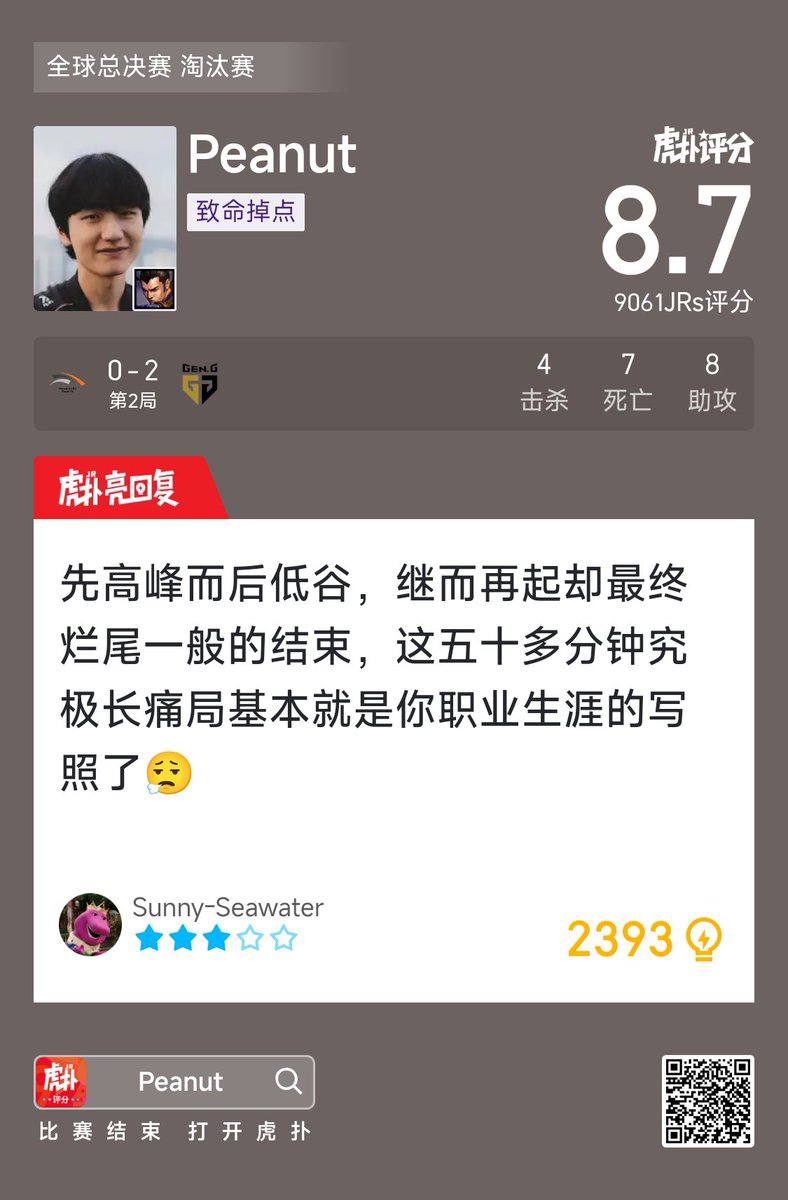
Peanut gets an 8.7 for Game 2 against GEN:
"This 50-plus-minute, soul-crushing match—a marathon of pain that peaked, then fizzled, and ultimately ended in disappointment—pretty much sums up your entire career."
#Worlds2025 #LCK #HLEWIN
English

@ClubBrugge On a Geertruida mais je vous promets, on va vous retrouver
Français

@lascari_tony @FFScout Everton only has the most xGC (4.6) in the Premier League after two games.
English
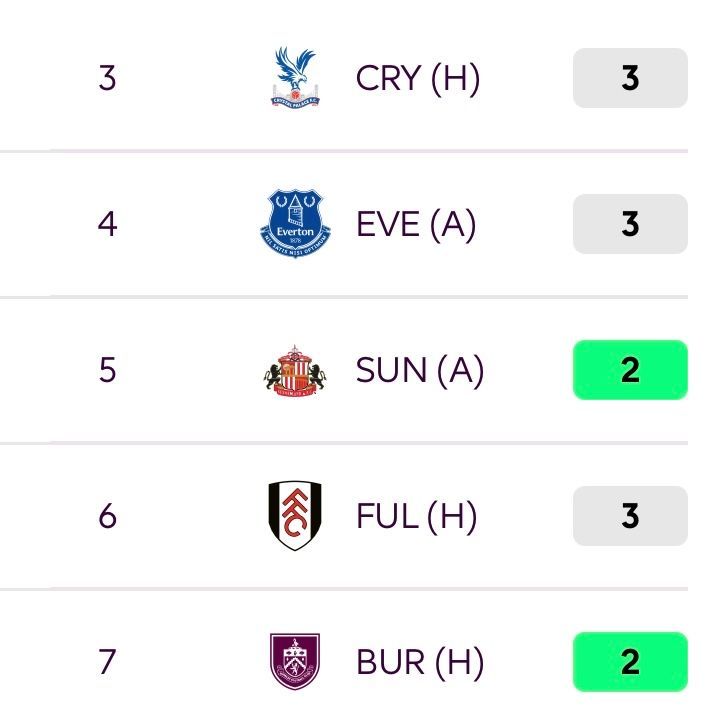
@FFScout Stop acting like CP and then Everton away are good fixtures, honestly!
English

Over 160,000 transfers out for Watkins 🚮
GW1: ❌ / GW2: ❌
✅ How can you sell him with those fixtures though?!
English
@LetsTalk_FPL Just get Adingra and stop with the boring defcon pick in midfield
English

@ClubBrugge gaat binnen twee jaar hetzelfde flikken als em dan ineens naar barca of liverpool wilt
Nederlands
One year. Countless memories. Thanks for everything, Ardon. 💙🖤
English


@Gillesmbb Marktwaarde 32M, zéér schoon contract van vier jaar getekend in januari 2025 en nu staan mokken - faut comprendre. Dat Milan met hun toxic fanbase dat al een maand te weinig aan het bieden is en zijn kop zot maakt. Twee saga's de laatste jaren en 't is beiden met ACM.
Nederlands
@MilanCritic @ClubBrugge @rscanderlecht Noooooooooooooooooooooooooooooooooooooooooooooooooooooooooooooooooooooooooooooooooo, everything but this pleaaaaase😭😭😭😭😭😭😭😭😭😭😭😭😭😭😭😭😭😭😭😭😭😭😭
English

@ClubBrugge Fuck off Brugge. You have chosen the wrong enemy. We'll follow ur season and we'll celebrate every your defeat and failure. This is a promise. Go @rscanderlecht !!!
English
Bekijk hier de samenvatting van de 2-1 overwinning tegen KRC Genk! 📺⚽️
Nederlands
@Stino46112223 @OverratedOzil @Godenherders @tomaztaecke @ClubBrugge @hlnsport Lees eens braaf Fabrizio opnieuw
Nederlands

@OverratedOzil @Godenherders @tomaztaecke @ClubBrugge @hlnsport Fabrizio Romano en Voetbal International plus andere Nederlandse berichten
Nederlands
Forbs legt morgen zijn medische test af. Ajax vroeg initieel 8 miljoen + bonussen, uiteindelijk zijn dat er dus 6+1 geworden.
De speler zelf wou al een tijd naar @ClubBrugge, dat vorige week overtuigd raakte tijdens een gesprek in The Lensbury Resort op stage in Londen @hlnsport
Nederlands
@tomaztaecke @ClubBrugge @hlnsport Heerlijk die ouderwetse arrogantie uit Amsterdam hier. Toch al effe de derde ploeg in Holland. Wasproductje
Nederlands
Carlos Forbs (21, 🇵🇹) wordt de nieuwe vleugelspits van @ClubBrugge. Blauw-zwart betaalt 6 miljoen + 1 miljoen aan bonussen aan #Ajax en heeft zo een eerste versterking op de flanken beet @hlnsport
Nederlands

Italiano
Ardon Jashari heeft zich zoals afgesproken gemeld in het Basecamp vandaag. Hij traint vanaf vandaag mee met @ClubBrugge @hlnsport
Nederlands