

GK | HaloBrief
8.5K posts


GK | HaloBrief รีทวีตแล้ว

The East is Red provides a translation of a very interesting essay by Wang Xiaolu, Deputy Director of the National Economic Research Institute.
The problem with the Chinese economy, Wang says (and as I have argued for over a decade), is that China's excessively low consumption (21 percentage points below the global average, he notes) is intrinsic to its growth model. "The problem is not simply a shortfall in aggregate demand, but a deeper imbalance in its composition: investment has been excessive, while consumer demand has remained severely weak."
The two are not separate conditions but are rather different sides of the same coin: "That imbalance is closely tied to years of expansionary monetary policy and a government-investment-led expansionary fiscal strategy."
So far, he notes, Beijing has addressed the problem of excessively weak consumption by pairing it with excessively high investment, in order to maintain high domestic demand (although clearly not by nearly enough to prevent a soaring trade surplus). While this strategy generated sustainable growth in the 1990s and early 2000s, when China was highly underinvested, not only does it no longer generate healthy growth, but it tends to lock in the imbalances.
This is because, he argues, the two are not functionally equivalent when it comes to sustainable economic growth: "One obvious defect in Keynesian theory is its assumption that consumer demand and investment demand are in a fully substitutable relationship. According to this theory, if saving is too high and household consumption too weak, policymakers can offset the gap by loosening monetary policy to spur investment, or by having the state invest directly. This logic implies that even wasteful public works—endlessly digging holes only to fill them in again—can generate growth, so long as money is spent."
That's not quite what Keynes said, I would argue, because he was mostly talking about the need to create jobs, however useless, in times of high unemployment mainly as a way of reigniting the demand needed to justify productive investment, but I agree with Wang that this isn't the problem China currently faces.
At any rate in China today this approach has serious limitations, Wang argues: "In reality, however, any such effect is at best short-lived. Policies that boost investment may raise demand in the near term, but over the medium to long run, they further expand production capacity and increase supply, thereby worsening the structural imbalance between excess supply and weak demand."
Those who have in the past agreed with my views on Chinese overinvestment will find themselves in especially strong agreement with Wang when he writes that increasing government investment in order to balance the imbaility to increase consumption quickly enough just deepens the structural imbalances.
"Government investment, of course, can be directed mainly toward infrastructure rather than productive capacity" he writes. "When such spending creates genuinely useful infrastructure and relieves bottlenecks in transport, communications, and related areas, it can generate positive spillovers, support growth, and raise returns across the wider economy."
"But when infrastructure investment becomes excessive or duplicative, it too turns into low-yield or ineffective spending, consuming resources without generating commensurate returns and becoming little different from overcapacity. If continued, it will inevitably depress economy-wide returns, steadily erode the efficiency of resource allocation, and leave growth weaker. At the same time, high investment spends national income that might otherwise have gone to households, further suppressing consumer demand and deepening its inability to drive growth."
For ten years or more Beijing has been trying to cut excess capacity, but it hasn't been able to do do. The reason, accoroding to Wang, "is that earlier efforts relied mainly on administrative measures to cut capacity in a few sectors, while leaving the underlying drivers of overcapacity largely intact—excessive investment, excessive monetary expansion, and excessive government borrowing. To address the structural imbalance at its root, those deeper institutional and systemic causes must be changed first."
I of course agree that Wang is absolutely right to argue that resolving excess capacity in the worst-hit industries is useless if excess investment is simply shifted to other sectors with less excess capacity – in property, manufacturing and infrastructure. But while we agree, I think nonetheless that Wang may underestimate how difficult it will be to shift "national income that might otherwise have gone to households" without undermining China's manufacturing competitiveness. He is very clear, however, about the need to implement such a shift.
I could go on to quote a lot more, but I think it is much better to read the essay. I know that over the years a number of prominent Chinese economists have made comments that are similar to those Wang makes in this essay, although mostly only in private conversations, but it seems that over the past 2-3 years this has started to become a consensus view – at least among economists, if not yet policymakers.
Zichen Wang and his team should be thanked once again for their great work in bringing internal Chinese economic discussions to a wider public.
@ZichenWanghere
eastisread.com/p/wang-xiaolu-…
English
GK | HaloBrief รีทวีตแล้ว

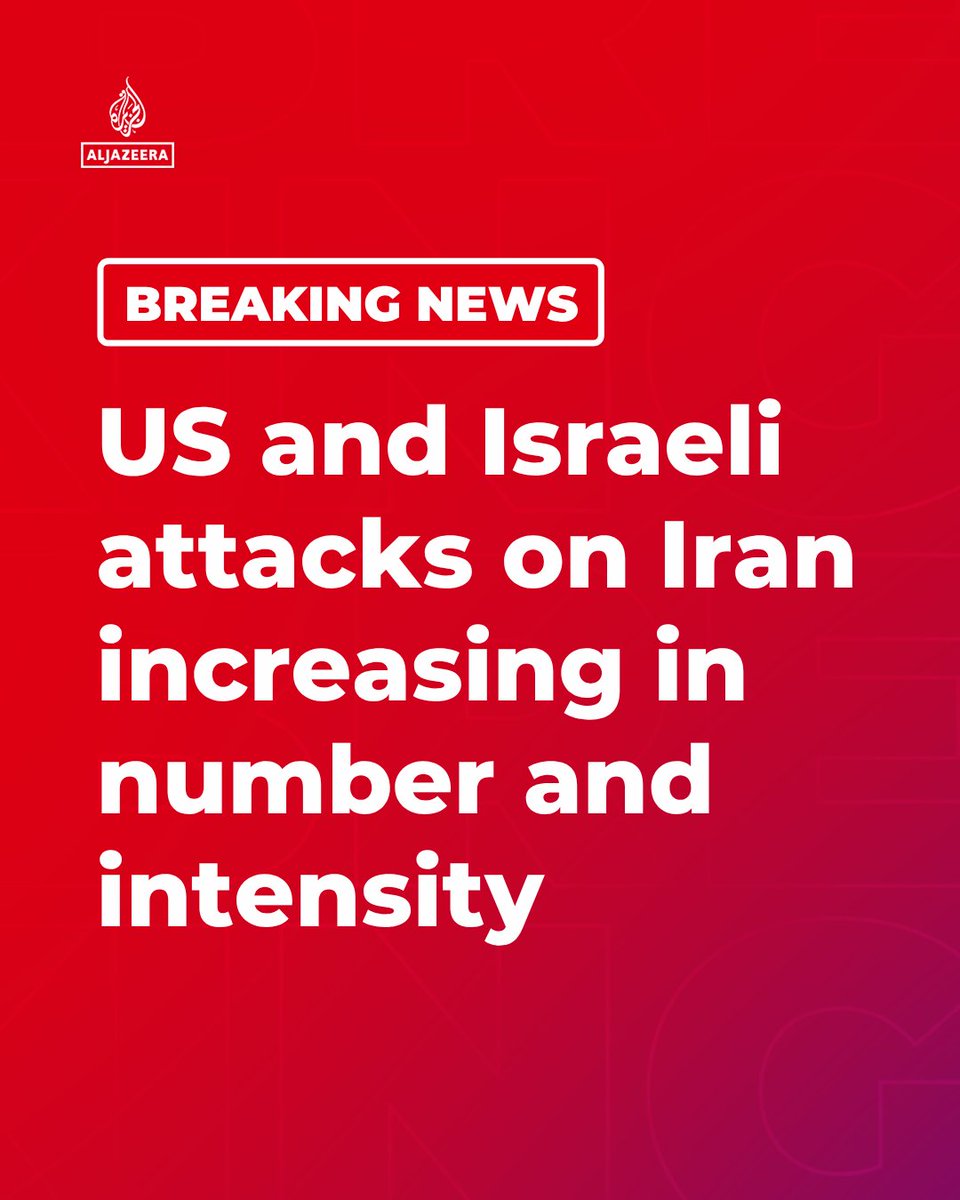
BREAKING: US and Israeli strikes on Iran are intensifying and spreading, hitting Shiraz, Lamerd Airport, Isfahan, Karaj, Bandar Abbas, and now Mashhad and Taybad, reports Al Jazeera’s Mohamed Vall.
🔴 LIVE updates: aje.news/z06h9e
English
GK | HaloBrief รีทวีตแล้ว
1/8
Xinhua: "China's top economic planner has announced that temporary control measures regarding retail prices of gasoline and diesel will be implemented starting on Monday, amid increases in international oil prices."
english.news.cn/20260323/bfc3d…
English
GK | HaloBrief รีทวีตแล้ว

Saudi Arabia and the United Arab Emirates have taken some steps toward joining the Iran War, the Wall Street Journal reported — potentially signaling an escalation of the fighting. bloomberg.com/news/articles/…
English
GK | HaloBrief รีทวีตแล้ว

BREAKING: Saudi Arabia intercepts waves of drones targeting east of country
🔴 LIVE updates: aje.news/b79m9v?update=…
GIF
English
GK | HaloBrief รีทวีตแล้ว
The US doubled down on its criticism of the EU's rules to curb methane emissions from its oil and gas imports bloomberg.com/news/articles/…
English
GK | HaloBrief รีทวีตแล้ว
BREAKING: UK summons Iranian ambassador after Iranian national and a British-Iranian dual national charged on suspicion of providing assistance to Iran's intelligence service
🔴 LIVE updates: aje.news/e3f29t?update=…
GIF
English
GK | HaloBrief รีทวีตแล้ว

WATCH: New video captures Air Canada plane crashing into a truck at New York airport
English
GK | HaloBrief รีทวีตแล้ว

If Beijing is truly worried about Japan's re-militarism, perhaps it could place some faith on the checks and balances the Japanese public places on the political elites. That assumes, of course, Beijing isn't playing the bogeyman game. bloomberg.com/news/articles/…
English
GK | HaloBrief รีทวีตแล้ว

Hormuz will be 'jointly controlled' by 'me & the next Ayatollah' says Trump
English
GK | HaloBrief รีทวีตแล้ว

President Trump said he ordered a five-day pause on strikes against Iranian power plants after talks with Iranian figures, easing tensions in the ongoing conflict reut.rs/3PBGQD2
English
GK | HaloBrief รีทวีตแล้ว
BREAKING: Iran says '77th wave' of strikes underway on Israel, US military bases in the Gulf
🔴 LIVE updates: aje.news/e3f29t?update=…
GIF
English
GK | HaloBrief รีทวีตแล้ว
1/4
I am a little surprised by these comments from the governor of the PBoC. According to Yicai, yesterday he said that "the world’s major deficit countries are the same as 40 years ago because of the inherent flaws in the international monetary system."
yicaiglobal.com/news/major-def…
English
GK | HaloBrief รีทวีตแล้ว

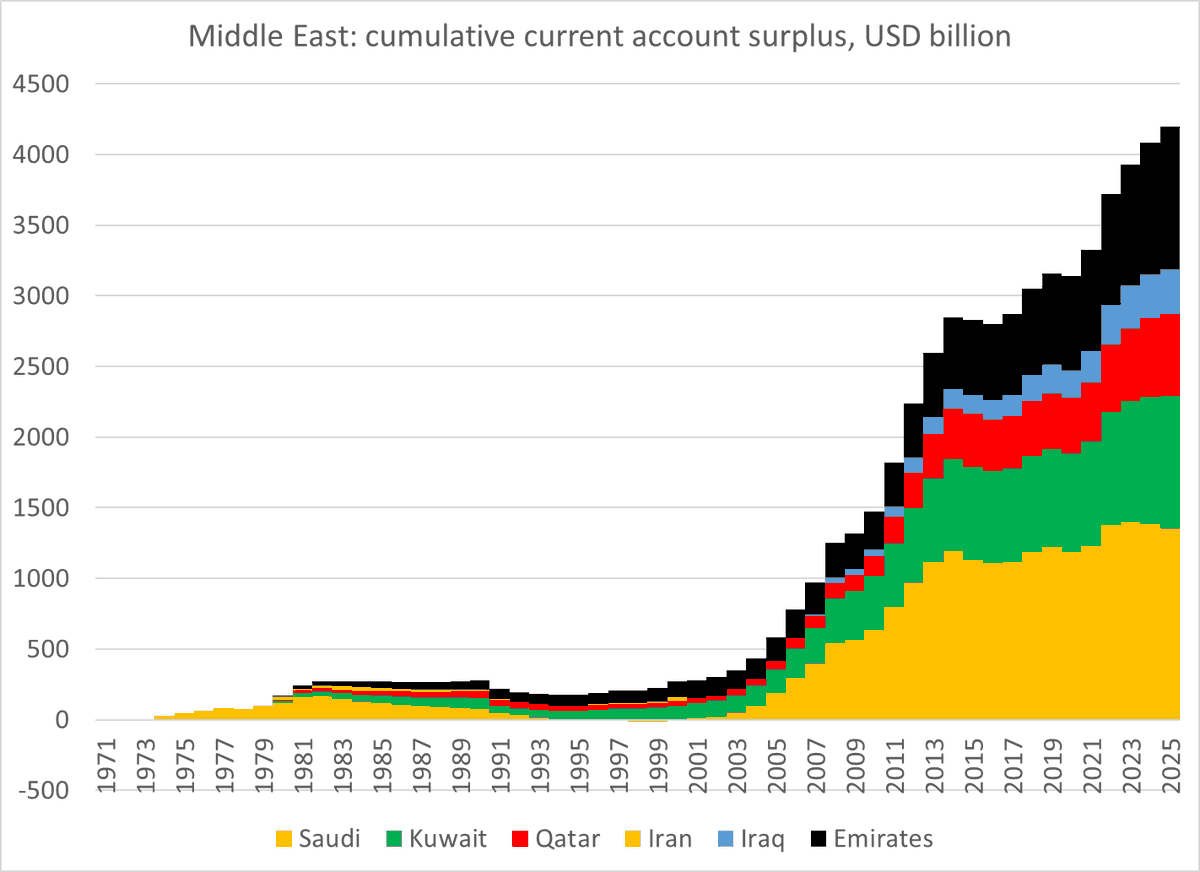
Petrodollars! Nothing produces more heated discussion and, in my experience, less insight. Myths trump facts, because the actual data is a bit obscure --
But here is the most important thing to know. Before the Hormuz crisis, the flow of petrodollars had more or less dried up
1/many
English
GK | HaloBrief รีทวีตแล้ว
Trading in two-year German bond futures was halted twice on Monday, leaving traders struggling to keep up with swings triggered by US President Donald Trump’s decision to back down from strikes on Iran’s energy infrastructure. bloomberg.com/news/articles/…
English
GK | HaloBrief รีทวีตแล้ว
Israeli military says it is conducting strikes in Tehran reut.rs/40Stxk7 reut.rs/40Stxk7
English