
Ian Tien

2.1K posts

Ian Tien banner
Ian Tien

Ian Tien

@iantien

CEO @mattermost, collaborative workflow for critical infrastructure. Ex-Microsoft, Trilogy. #YC S'12

Palo Alto, CA เข้าร่วม Eylül 2009
905 กำลังติดตาม1.8K ผู้ติดตาม
Ian Tien รีทวีตแล้ว
Chamath Palihapitiya
Chamath Palihapitiya@chamath·
Our cracked team just used Software Factory to rebuild and replace Jira in a little more than a month. We first spent 3.5 weeks planning. This is Software Factory’s superpower. It allowed our lead PM, Designer and Architect to thoughtfully describe and detail exactly what they wanted. Software Factory then did the heavy lifting in filling in the blanks and allowing our senior tech folks to sharpen the direction of what they wanted. Then in 2.5 weeks 2.5 junior devs built a replacement. This will launch as an updated Planner module inside of Software Factory on Tuesday. It’s beautiful, clean and super useful. Try it here: 8090.ai
English

263
86
1.4K
1.1M
Ian Tien รีทวีตแล้ว
Startup Archive
Startup Archive@StartupArchive_·
Airbnb founder Brian Chesky on how to design an amazing user experience “How do you make something for a million people? I don’t know where to start. But if you pick one person, study them, and take their journey, you can actually build something really personal. You can design something and keep iterating until they love it. Don’t stop improving it until that person loves it, and you’re not allowed to move to the second person until the first person loves it. Then you get the second person and keep iterating until they love it. And so on.” As Brian argues, designing the perfect experience for one person is a much easier place to start than trying to design something for a million people. You can figure out how to scale it later. “If you can design something really amazing using the hand-crafted part of your brain, then you can reverse-engineer how to industrialize this millions of times over. And what happens is people love your product and they tell everyone else about your product.” When people truly love your service, they become your marketing department. But counterintuitively, the biggest and best products seem to mostly get started by solving a very specific problem for a very specific user. Video source: @StanfordGSB (2023)
English
18
30
307
28.6K
Ian Tien รีทวีตแล้ว
Alex Konrad
Alex Konrad@alexrkonrad·
Last week, @Flexport released an AI agent that can audit bills from shippers and truckers against the actual logs to ensure its customers are invoiced correctly. The product was just an idea 3 days before. "We probably pivoted 30% to 40% of our engineers now just to building agents," founder Ryan Petersen (@typesfast) says. "There's way less planning than there used to be at Flexport in the roadmap. It used to be a one year strategic plan. Now you're like, ‘Alright, let's go see if you can make this work, come back to me two days later.' And it works, because of AI.” Catch the full interview on The Upstarts Podcast: YouTube: youtube.com/watch?v=1JamC0… Apple: podcasts.apple.com/us/podcast/fle… Spotify: open.spotify.com/episode/1S1sx3…
YouTube video
YouTube
English
23
40
545
121.6K
Ian Tien รีทวีตแล้ว
Aakash Gupta
Aakash Gupta@aakashgupta·
The PM skill that matters in 2026 is taste at speed. Boris Cherny just showed everyone what that looks like. His Claude Code team at Anthropic doesn’t write PRDs. They build hundreds of working prototypes before shipping a single feature. Boris personally ships 20-30 PRs a day running 5 parallel Claude instances. They built Cowork, a full product for non-engineers, in about 10 days. Everyone in the replies is debating whether PRDs should die. Wrong conversation. The real question is what happens to the PM who can’t evaluate 15 prototypes and pick the 3 worth shipping. Because here’s what changes when building costs near zero: the bottleneck moves from “can we build it” to “should we ship it.” PRDs existed because building was expensive and you needed sign-off before committing resources. When a prototype takes 45 minutes instead of 6 weeks, nobody needs a document to authorize exploration. They need someone who can look at working software and say “this one, not that one” in real time. On the Claude Code team, PMs code. Data scientists code. User researchers code. Boris said productivity per engineer grew 70% even as Anthropic tripled in headcount. The coordination cost of translating specs into code disappears when everyone can build. And that changes what a PM is actually good for. Boris said it himself: “There’s just no way we could have shipped this if we started with static mocks and Figma or if we started with a PRD.” The old process would have spent more calendar time documenting Cowork than his team spent building it. This is the Claude Code team today. It will be most fast-moving teams within 18 months. The PMs who thrive will be the ones reviewing prototypes at 9am, killing 80% of them by noon, and shipping the survivors by end of week. Pattern matching across user research, technical feasibility, and business model simultaneously while staring at working software. The PMs who struggle will be the ones still writing 15-page specs for features that could be prototyped, tested, and validated before the doc hits its first review cycle. Taste at speed is the new moat.
yenkel@yenkel

you must internalize this ASAP: - less handoffs, decide fast - faster exploration - encourage to throw away code/tokens - learn by building, de risk with code - pick leads that can own design, eng and product

English
33
36
442
99K
Ian Tien
Ian Tien@iantien·
Before AI, the newest version of enterprise software only lasted 6-9 months before competitors caught up, the market moved forward, and leaders had to innovate in driving more value for customers. Moreover, leaders had to constantly compete against their current and previous offerings—the same way iPhone 17’s biggest competitor is iPhone 16 and “good enough” With AI, the innovation and obsolescence cycles will be faster, and there may be more competitors, including customers themselves. Leaders need to fully embrace AI (in a responsible and effective way). They need to understand there will be more competition, and turn the dial up on the speed and precision of delivering value—not super different than riding other innovation and obsolescence waves: Smartphone, Internet, and PC.
English
0
0
0
29
Ian Tien รีทวีตแล้ว
Aaron Levie
Aaron Levie@levie·
The force multiplier of the agent harness right now is crazy. The industry has landed on some architectural consistency, but there are still so many different variants of how to attack this. Maybe this gets bitter lessened out of existence, but for now it’s a huge lever.
Himanshu@Hxlfed14

x.com/i/article/2028…

English
47
59
635
220.9K
Ian Tien รีทวีตแล้ว
Garry Tan
Garry Tan@garrytan·
I was on a plane yesterday vibe coding and the 20 something engineer sitting next to me asked me what I was doing. He had heard about these tools but don’t use them. I was blown away. These tools are like the holy grail for engineers! It’s Feb 2026 and you haven’t tried it yet?
Rohan Paul@rohanpaul_ai

Head of Claude Code @bcherny says Claude Code now writes 100% of his code, no manual edits since November, up from 20% in February and 30% in May.

English
216
55
1.4K
531.2K
Ian Tien รีทวีตแล้ว
Chamath Palihapitiya
Chamath Palihapitiya@chamath·
Is on-premise the new cloud? I’m beginning to think yes. It’s the only way for companies to not blow themselves up and have some semblance of capability in an AI world…
English
418
124
2.4K
790.7K
Ian Tien รีทวีตแล้ว
David Roberts
David Roberts@recap_david·
I built an AI marketing agent to run my $100K media company. After 4 months of prompting, tooling, and integrations, I built this agent that effectively replaced my content team. Here’s how it works under the hood: → Scrapes Reddit, Hacker News, X, and Google News → Publishes a Morning Brew–style daily AI newsletter (10k daily readers) → Repurposes that content into:  • viral Twitter threads (like this one)  • short-form videos for TikTok & Instagram  • Reddit posts  • high-engagement LinkedIn updates → Produces content that’s driven millions of impressions → Generates custom, brand-aligned images for every unique asset All automated. The entire system runs through Jarvis-like voice commands, powered by ElevenLabs + n8n (see video below, I literally trained it on Jarvis from Iron Man). No manual content creation. No team to manage. Runs while I sleep. I'm no longer focusing on this business, so I'm giving all this away for free. If you want the complete system, prompting, n8n templates, & setup walkthrough: Comment “AGENT” Like & Retweet Follow me (so I can DM you) I’ll send everything over.
English
2.6K
1.5K
6.8K
314.9K
Ian Tien รีทวีตแล้ว
TBPN
TBPN@tbpn·
Sequoia partner @sonyatweetybird says we're going from the age of product-led growth to the age of agent-led growth. "You see this most clearly if you're using Claude Code actively. It says, 'Hey, for a database, you should use Supabase. For hosting, use Vercel.' It's choosing for you, the stuff you should be using." "Product-led growth brought us closer to the vision of 'best product wins,' but ultimately people are still lazy. They can't read all the reviews, and they kind of default to what looks cool on the website." "Whereas your agent has infinite time to go and make these choices for you. It can go and read all the documentation, read all the user comments, and figure out [what you need] for your use case."
English
93
169
1.3K
1.2M
Ian Tien รีทวีตแล้ว
Ed Batista
Ed Batista@edbatista·
I've known @iantien for 9 years(!), so it was a privilege to join him for this conversation that covers a host of topics related to my work as a coach over the past two decades. youtube.com/watch?v=zr7Z1_…
YouTube video
YouTube
English
0
1
2
320
Ian Tien รีทวีตแล้ว
Chris Hladczuk
Chris Hladczuk@chrishlad·
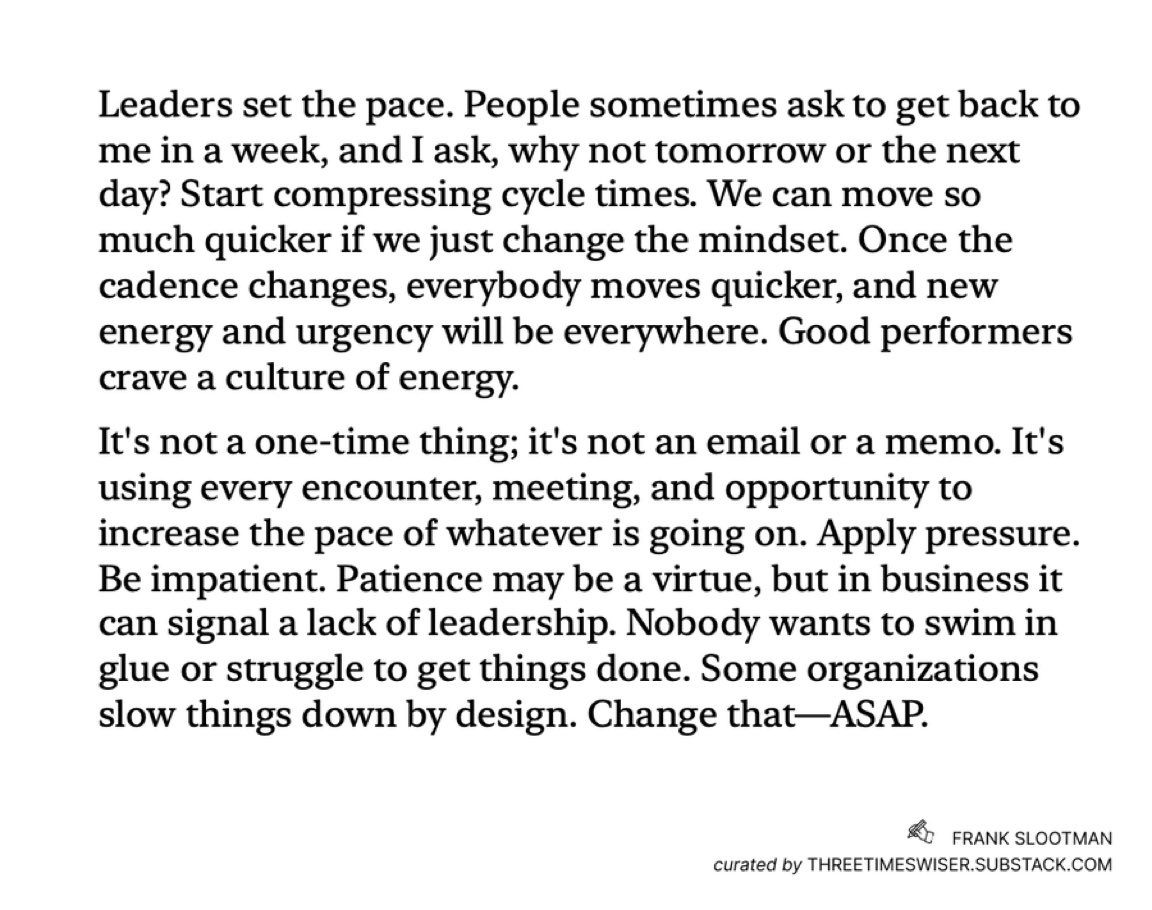
Snowflake CEO on maniacal urgency. h/t @Kpaxs
Chris Hladczuk tweet media
English
26
167
1.6K
117K
Ian Tien รีทวีตแล้ว
Startup Archive
Startup Archive@StartupArchive_·
Chamath Palihapitiya on the growth principles that got Facebook to billions of users “The most important thing we did was I teased out virality, and said, ‘You cannot do it. Don’t talk about it. Don’t touch it. I don’t want you to give me any product plans that revolve around this idea of virality. I don’t want to hear it.” Instead, Chamath urged the growth team at Facebook to focus on “the three most difficult and hard problems that any consumer product has to deal with”: 1. How do you get people in the front door? 2. How do you get them to an aha moment as quickly as possible? 3. How do you deliver core product value as often as possible? Chamath warns that focusing on virality is why you see so many startups experience this amazingly steep rise and then fall off a cliff. The second thing he set out to do at Facebook was invalidate all of the lore: “In any given product, there’s always people who strut out around the office like, ‘I have this gut feeling.’ It’s all about gut feeling. And most people’s gut feelings are morons. They don’t know what they’re talking about. Gut feel is not useful because most people can’t predict correctly. We know this. So one of the most important things that we did was just invalidate all of the lore… You can’t believe your own BS. Because when you do, you start to compound these massively structural mistakes that don’t expose core product value… You don’t listen to customers because you think it’s all about your gut. You don’t bother doing any of the traditional, straightforward, obvious things, and you lose yourself.” As Chamath explains, a maniacal focus on delivering core product value as frequently and fast as possible is what led Facebook to its most important realization: “The single biggest thing we realized was to get any individual to 7 friends in 10 days. That was it… There was not much more complexity than that. There’s an entire team now of hundreds of people that have helped ramp this product to a billion users, based on that one simple rule — a very elegant statement of what it was to capture core product value… And then what we did at the company was talk about nothing else. Every Q&A. Every all-hands… It was the single, sole focus.” He continues: “You have to work backwards from: What is the thing that people are here to do? What is the ‘aha moment’ that they want? Why can I not give that to them as fast as possible? That’s how you win.” Chamath recommends starting with a cohort of your most engaged users — What features are they using? What pathways in your product did they take? Then work backwards and try to get all of your other users to that same state.
English
18
118
1.1K
156.1K