Igor Roncevic

115 posts

Igor Roncevic banner
Igor Roncevic

Igor Roncevic

@igor_roncevic

Lecturer in #compchem and #theochem at @OfficialUoM, previously MSCA fellow in @HLAGroupOx at @UniofOxford

Manchester เข้าร่วม Ocak 2021
619 กำลังติดตาม380 ผู้ติดตาม
Igor Roncevic รีทวีตแล้ว
Chemistry World
Chemistry World@ChemistryWorld·
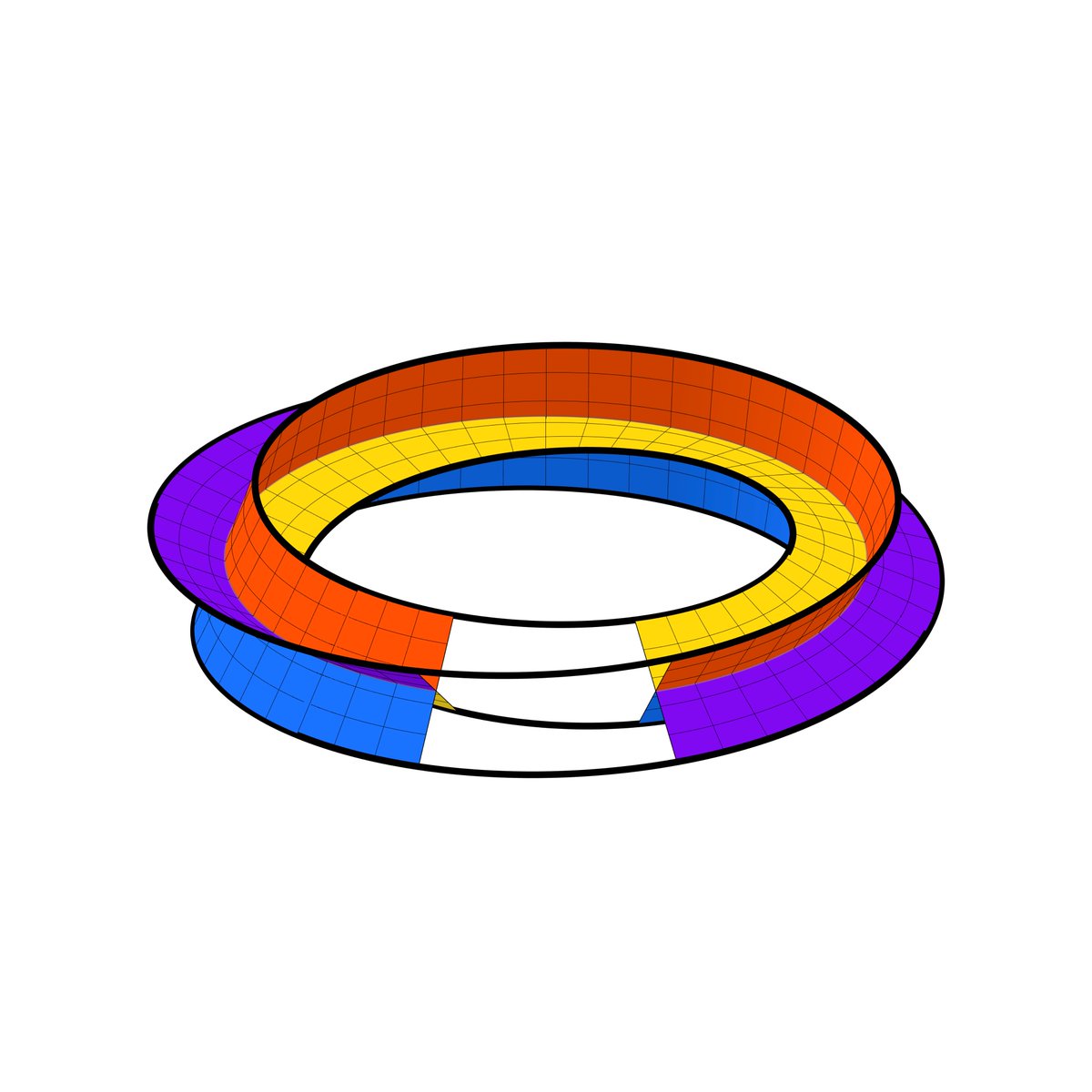
This unusual half-Möbius molecule is the first example of a structure that becomes more aromatic as it becomes less symmetric. chemistryworld.com/news/first-hal…
English
1
4
22
1.9K
Igor Roncevic รีทวีตแล้ว
Leo Gross
Leo Gross@Leo_Gross_IBM·
You see a half-Möbius body. Start somewehre on it and go around. You will need to go 4 times around to return to your starting position. We made a molecule with an orbital basis of such topology and switched the winding by atom manipulation. science.org/doi/10.1126/sc…
Leo Gross tweet media
English
9
28
125
5K
Igor Roncevic รีทวีตแล้ว
Neil Renic
Neil Renic@NC_Renic·
The most common question in academia is - “Is this article terribly written or am I extremely dumb?”
English
63
3.6K
51.5K
533.9K
Igor Roncevic รีทวีตแล้ว
Iago Pozo
Iago Pozo@IagoPozo·
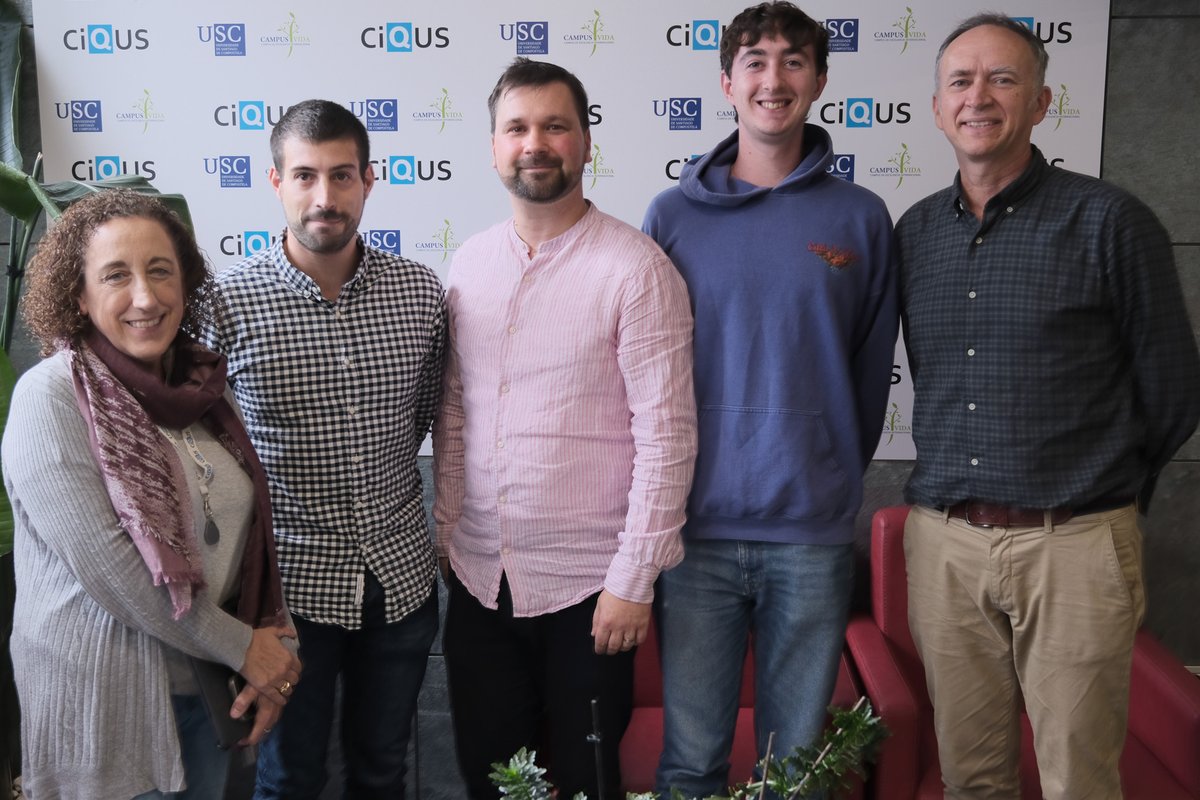
Delighted to host @igor_roncevic and @Beren_Dempsey this week. Igor’s talk and the many discussions have been exceptionally engaging. Grateful to @RoySocChem for supporting this research collaboration!
Iago Pozo tweet media
English
0
2
10
1K
Igor Roncevic รีทวีตแล้ว
Keith Andrews
Keith Andrews@KGAndrews_·
How can Le Chatelier drive kinetics? @StefanBorsley and I analyse Denton's organocatalytic Mitsunobu reaction and show water removal outperforms catalyst redesigns. Why? Removing water part way through the reaction resets the potential energy surface! doi.org/10.1021/jacs.5…
Keith Andrews tweet media
English
0
14
66
5.4K
Igor Roncevic รีทวีตแล้ว
Martin Bauer
Martin Bauer@martinmbauer·
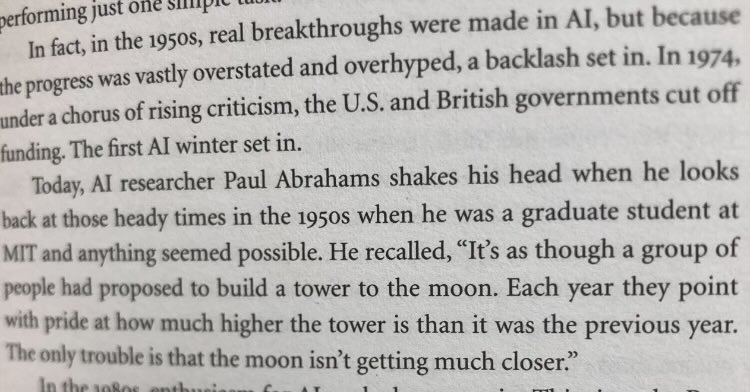
Interesting passage from Michio Kaku‘s on the early history of AI:
Martin Bauer tweet media
English
8
9
58
6K
Igor Roncevic รีทวีตแล้ว
Denys Biriukov
Denys Biriukov@DenysBiriukov·
🚨 I have an open PhD position in my team to work on simulating glycans and their interactions. If you’re passionate about computational biophysics and glycobiology, go ahead and apply! Any shares would be greatly appreciated. 🙃
CHARMM-GUI@CharmmGui

[Jobs and Events] Ph.D. position in Computational Biophysics and Glycobiology, Masaryk University, Brno, Czech Republic: charmm-gui.org/?doc=jobs&view…

English
0
9
12
1.2K
Igor Roncevic รีทวีตแล้ว
Valentina Erastova
Valentina Erastova@V_Erastova·
I never knew that particle on a ring can be this exciting 🙊 Thank you @igor_roncevic for such interesting talk today at @EdinburghChem
Valentina Erastova tweet media
English
0
2
9
639
Igor Roncevic
Igor Roncevic@igor_roncevic·
(6/5) The question that now remains is: Are these predictions true? The fused nanorings have proven to be extremely difficult to make, but a theoretician can hope… @HLAGroupOx no pressure :)
English
0
0
6
336
Igor Roncevic
Igor Roncevic@igor_roncevic·
(5/5) The presence of a global ring current shows that the molecule behaves as a quantum object instead of a classical one. We predict such currents in rings with a circumference of almost 20 nm, which makes the molecular quantum world much bigger than previously thought (~5 nm).
English
1
0
6
834
Igor Roncevic
Igor Roncevic@igor_roncevic·
(3/5) Small conjugated systems can be described quite well using wavefunction theory (WFT). For large systems density functional theory (DFT) is a popular choice. DFT has very many flavours and in the case of conjugated systems the results depend A LOT on the flavour used.
English
1
0
5
429
Igor Roncevic
Igor Roncevic@igor_roncevic·
(2/5) Organic conjugated systems are pretty cool–they absorb and emit light very well (photosynthesis!), exhibit exotic magnetism (ask @IagoPozo), and when bent into a ring and exposed to a magnetic field they show ring currents! But modelling them is not straightforward…
English
1
0
5
290
Igor Roncevic
Igor Roncevic@igor_roncevic·
(1/5) To wrap up the year, my first paper out of @OfficialUoM has been published in @acsnano: pubs.acs.org/doi/10.1021/ac… We explore: 1. How to model the electronic structure of large conjugated systems? 2. How large can these systems get and still exhibit quantum phenomena?
English
3
18
100
6.3K