@shanaka86 What's your point? Follow your logic, China should stop export Sodium perchlorate or any rare earth to USA which help your army to build ballistic missels, right? And this will kill the circle too.
JUST IN: Four ships left Chinese ports carrying sodium perchlorate and arrived at Iranian harbours after the war began. Sodium perchlorate is a white crystalline salt. When heated, it decomposes and releases oxygen. Mixed with aluminium powder and a polymer binder, it becomes solid rocket fuel. Solid rocket fuel propels ballistic missiles. Ballistic missiles close the Strait of Hormuz. The Strait of Hormuz sets the global oil price. And China, the country that shipped the chemical, is buying that oil at a discount, paying in yuan, while co-authoring a five-point peace plan to end the war the chemical is helping to sustain.
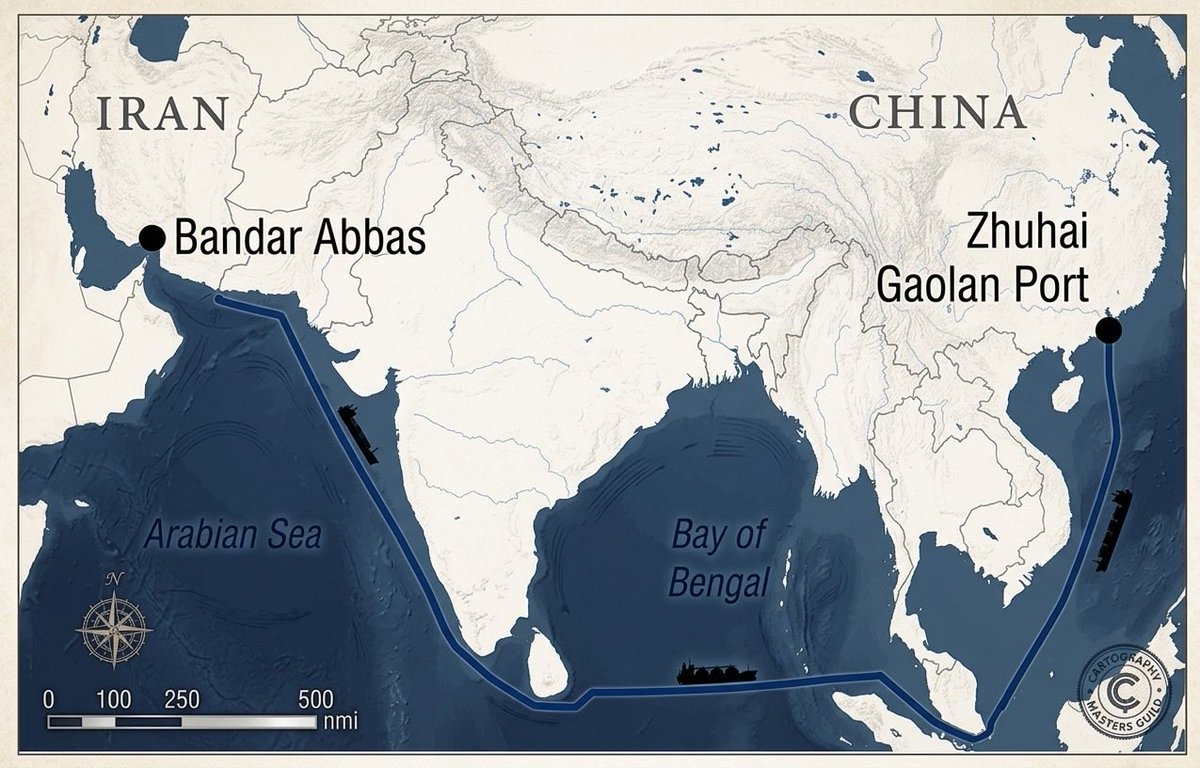
The Telegraph reported on April 3rd that the vessels Hamouna, Barzin, Shabdis, and Rayen, all sanctioned Iran-flagged ships, loaded cargo at Chinese chemical ports including Gaolan in Zhuhai and delivered it to Iran since the war began. Analysts assessed the shipments could enable production of hundreds of additional ballistic missiles. In early 2025, over a thousand tons of sodium perchlorate were shipped on similar routes. One shipment was linked to an explosion at Bandar Abbas.
Follow the molecule. Sodium perchlorate leaves a Chinese factory in Guangdong Province. It crosses the Indian Ocean on a sanctioned vessel that no Western insurer will touch. It arrives in Iran. It enters a dispersed production facility that the US Air Force has spent five weeks trying to locate and destroy. It is mixed, cast, cured, and loaded into a solid-fuel motor. That motor is fitted to a ballistic missile. That missile is aimed at a tanker, a refinery, a bridge, or a base. The tanker it hits was carrying oil through the strait that the missile was built to close. The oil that does not pass through the strait becomes scarce. The scarcity raises the physical price to $140. And China, whose factory produced the precursor, buys the scarce oil that its own chemical helped make scarce, at prices negotiated bilaterally in a currency that is not the dollar, through a strait it helped close with a chemical it shipped on a vessel it knew was sanctioned.
The circle has tracking numbers, port manifests, vessel IMO codes, and satellite timestamps. No government has denied the cargo. China says it “strictly controls dual-use exports.” The vessels are sanctioned. The chemical is a known propellant precursor. And the shipments arrived during a war in which China blocked the UN resolution to reopen the strait, co-authored a peace plan with Pakistan, supplied the rare earth magnets inside every F-35 sent to bomb the missile facilities, and published the tutorial that taught Iran to shoot down the aircraft carrying those magnets.
Supplier of the missile fuel. Supplier of the jet engine magnets. Teacher of the countermeasure. Blocker of the resolution. Author of the peace plan. Buyer of the oil. China does not have a side in this war. China has a position at every point on the circumference of a circle whose centre is the Strait of Hormuz and whose radius is measured in the distance a sodium perchlorate molecule travels from a factory in Zhuhai to a missile silo in Khuzestan.
The chemical left China. The missile closes the strait. The oil price rises. China buys the oil. The peace plan fails. The war continues. The next shipment loads. The circle turns.
open.substack.com/pub/shanakaans…
BREAKING: On April 2, China voted to prolong the war that is depleting the stockpile that China supplies.
The United States has roughly two months of rare earth materials in military reserve for sustained combat operations. The Iran war has been running for five weeks. Every Tomahawk cruise missile, every JDAM smart bomb, every radar-guided munition launched from the Ford carrier group or the B-52s at Fairford or the A-10s at Lakenheath requires rare earth magnets and alloys that are overwhelmingly processed in China. Seventy-eight percent of all US weapon systems depend on critical minerals from a supply chain that China controls at the 90 percent level. Each F-35 contains more than 900 pounds of these materials. Each Virginia-class submarine contains 9,200 pounds. The war is burning through the stockpile at a rate the supply chain cannot replenish because the country that processes the materials banned their military export in December 2025.
On the same day the stockpile clock ticked deeper, China broke silence at the United Nations Security Council alongside Russia and France to block a Bahrain-led resolution authorising force to reopen the Strait of Hormuz. The vote that would have ended the war faster was killed by the country that supplies the materials the war is consuming. Every additional week of combat depletes the reserve further. The veto extends the war. The same country controls both levers.
President Trump proposed a $1.5 trillion defence budget on January 7 to build what he calls a “Dream Military,” the largest single-year increase since the Korean War. Golden Dome missile defence alone is budgeted at $185 billion. The Committee for a Responsible Federal Budget estimates $5 trillion in cumulative cost through 2035, adding $5.8 trillion to national debt with interest. Moody’s called the fiscal impact “negative.” The Pentagon comptroller said the budget was “trimmed to the most essential things” just to reach the $1.5 trillion mark. The budget funds the weapons. It does not fund the periodic table.
Project Vault, a $12 billion strategic reserve, is the countermeasure. The Pentagon holds a $400 million equity stake in MP Materials, the only integrated rare earth mine in America. The 2027 NDAA bans Chinese magnets in defence procurement starting January 2027. But non-Chinese capacity covers less than 10 percent of global demand. Pentagon magnet certification is not expected until mid-2027. The budget is approved this year. The supply chain is not ready until next. And the war is burning the bridge between the two.
Meanwhile China’s own vessels transit the Strait of Hormuz freely under the IRGC’s selective passage regime, paying tolls in yuan while European, Japanese, and Korean tankers sit anchored. China profits from the closure, blocks the resolution that would end it, supplies the materials that sustain the war consuming American reserves, and sits in a conference room in Beijing with a Pakistani diplomat holding the key to the deal that would stop all of it.
The $1.5 trillion budget is not the story. The story is the trap. America is fighting a war with weapons it cannot replace, built with materials from the country that just voted to keep the war going, in a strait that the same country transits freely while everyone else is blocked. The Dream Military runs on Chinese metal. The Chinese just voted to keep the dream burning.
And the periodic table does not negotiate.
open.substack.com/pub/shanakaans…
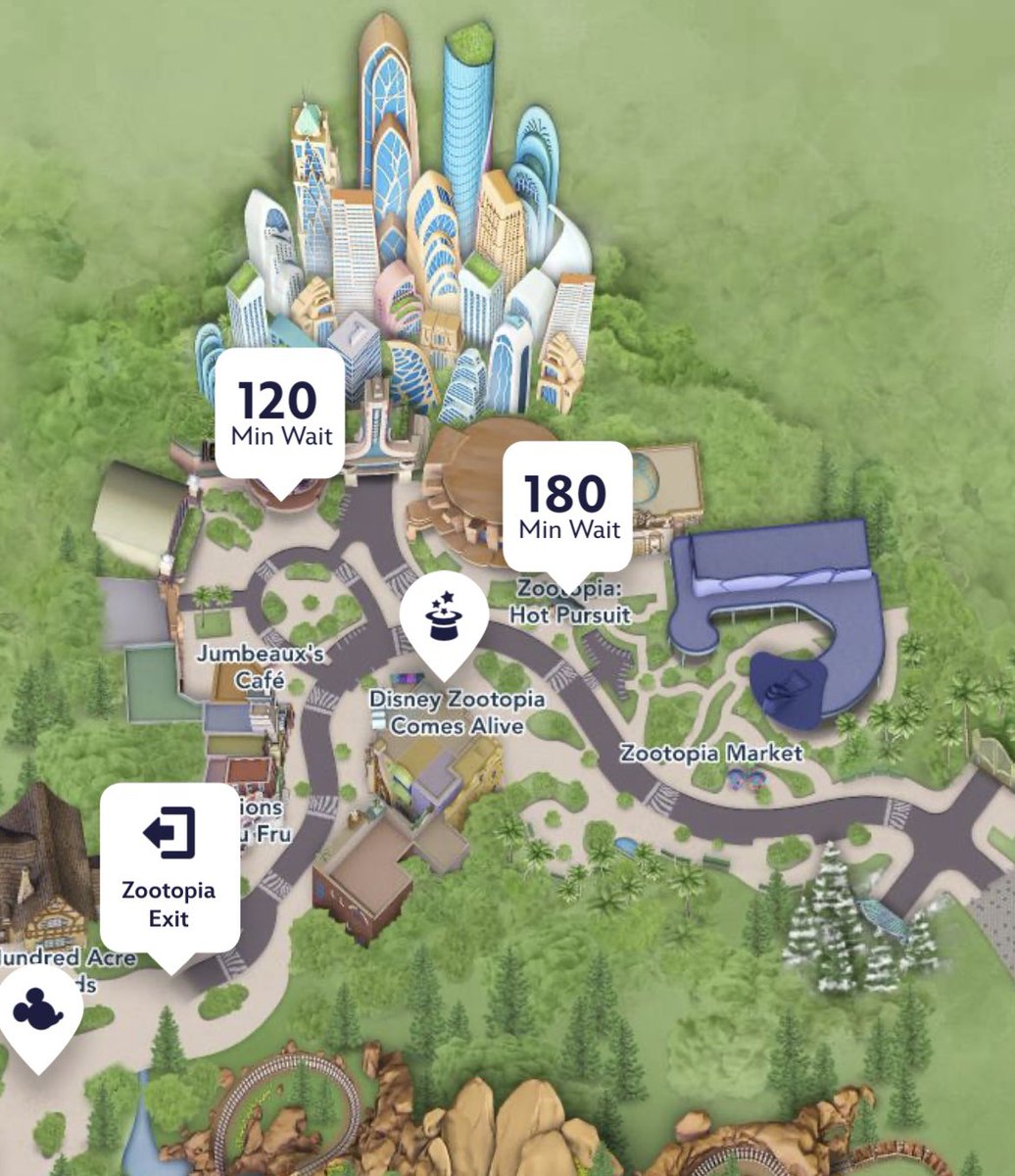
I’ve taken my kids to 3 Disneylands now (LA, Tokyo, Shanghai). Tips on how to survive the visit and avoid 3 hour lines:
1. Get early access by staying at the Disney hotel or purchasing early access separately. The first hour is key.
2. Go to the most popular ride right away. Run to it if you can.
3. Buy premier pass for the two other most popular rides and go on those.
4. If you’re staying at the park hotel, leave the park for a nice lunch and go back to the hotel to take a nap during peak hours.
5. Come back to the park at like 5 pm. Lines should be shorter then.
6. Save a spot to watch the fireworks 30-60 min before it starts depending on crowds.
7. When everyone’s leaving the park after fireworks that’s your chance to go on the popular rides again. Lines should be very short then.
8. Be prepared to walk like 20,000 steps during the day.
GLHF