Jet2

71.7K posts

Jet2 banner
Jet2

Jet2

@jet2

Originally from Mars somehow got down to Earth.

Fiji เข้าร่วม Temmuz 2008
259 กำลังติดตาม442 ผู้ติดตาม
Jet2 รีทวีตแล้ว
Daily Iran News
Daily Iran News@DailyIranNews·
When Hezbollah says they targeted an enemy soldier gathering, they mean it like this🔥🔥🔥🔥
English
120
1.7K
7.8K
138.4K
Jet2 รีทวีตแล้ว
🥇 Pragnya Gupta
🥇 Pragnya Gupta@GuptaPragnya·
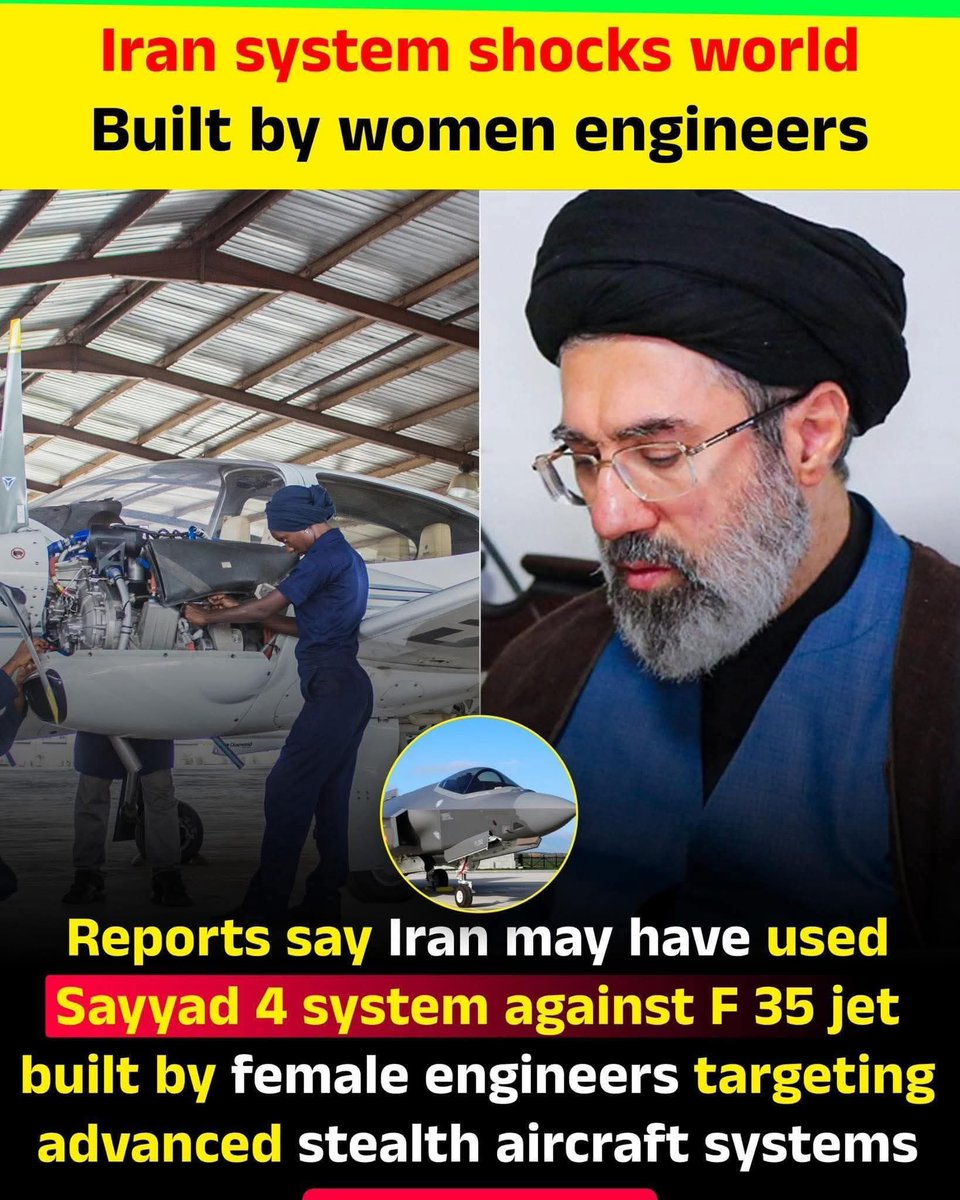
This one is for all those who said Iranian women were oppressed and need external help to liberate them. They are by far one of those nations which has the highest number of women in universities, research labs, Armed Services like Army, AirForce and Navy. It’s a preplanned sponsored western propaganda to malign and project Iranian Women as oppressed and suppressed in their own country. It’s a blatant lie. #Iran #IranianWomen
🥇 Pragnya Gupta tweet media
English
101
1.8K
4.3K
43.6K
Jet2 รีทวีตแล้ว
StarBoySAR 🇭🇰 🇨🇳 🥭
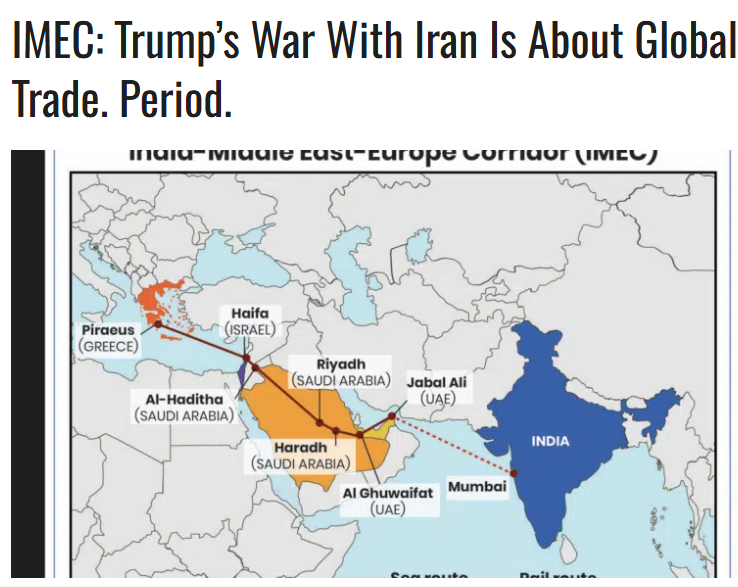
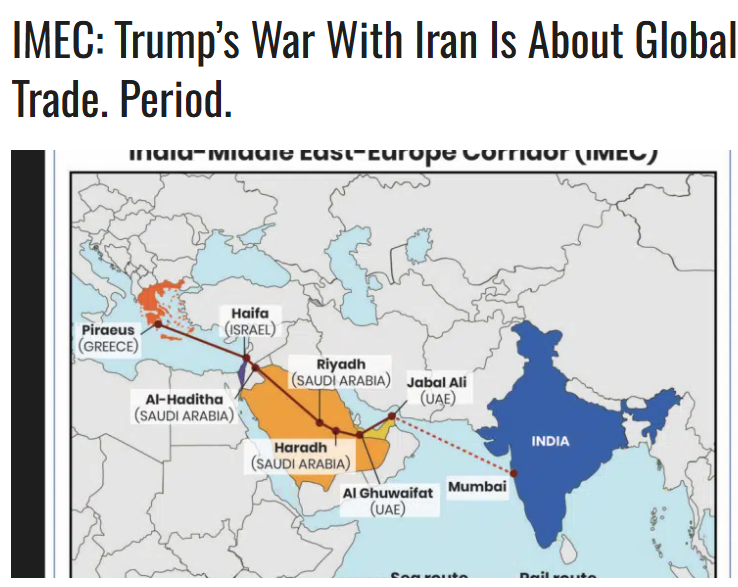
The Iran War Isn’t About Nuclear Weapons—It’s About Saving America’s Collapsing Empire 🐇The Rabbit Hole goes much deeper; the war with Iran isn’t about “terrorism” or “nukes.” It’s about securing a trade corridor — IMEC — that was designed to reroute global supply chains around China, choke China of energy, install India as the new workshop, and lock the Middle East into a US-Israel controlled infrastructure network The article archive.is/2026.03.20-191… exposes the geopolitical plumbing, mapping the "Big Picture" that most Western analysts miss because they’re too busy counting missiles, troop deployments or chasing news cycles👇 The bombs falling on Iran are not about nuclear weapons. They are about a trade corridor called IMEC—the India‑Middle East‑Europe Economic Corridor—and the infrastructure that will determine who controls global energy, data, and supply chains for the next generation IMEC as Imperial Infrastructure—and Why It Needs War The India-Middle East-Europe Economic Corridor is not merely an alternative to China's Belt and Road Initiative (BRI). It is a replacement architecture designed to intercept the natural geography of Eurasian trade and force flows through Western-controlled chokepoints Consider the geography: Iran sits at the intersection of the International North-South Transport Corridor (linking Russia to India), the Middle Corridor (China-Central Asia-Turkey-EU), and direct China-Iran rail and energy links. These routes threaten to bypass both the dollar system and American military oversight IMEC solves this by creating a parallel network running through Israeli ports, UAE logistics hubs, and Indian manufacturing—each node controlled by US allies or dependent on American security guarantees. Jared Kushner's $4.6 billion Affinity Partners fund exemplifies the financialization of this strategy: Gulf capital flows through Israeli tech and Indian labor into European markets, generating returns while cementing political alignment The "Abraham Accords" that enabled this were never peace deals; they were investment-grade risk instruments that transformed occupied territories into viable assets for international capital. The "technocratic reconstruction" of Gaza fits this model. A genocidal war creates the vacancy; "development" fills it with investor-controlled zones where Palestinian sovereignty is replaced by special economic areas governed by technocratic mandates. This is not reconstruction—it is real estate colonialism with ESG branding But IMEC has a fatal vulnerability: its eastern sea lane runs through the Strait of Hormuz, a 33‑km bottleneck that Iran can close at will. Without neutralizing Iran, the corridor cannot function The Sequence: Abraham Accords → Iran War → Hormuz crisis → Gaza Reconstruction Operation 'Epstein Fury', launched February 28, 2026, was not a spontaneous act of aggression. It was the military clearance phase of a pre‑designed infrastructure plan. The Abraham Accords (brokered by Jared Kushner in 2020) — between Israel and the Gulf states — created the political coalition. The war on Iran is an attempt to clear the military chokepoint. IMEC is the commercial payoff. These are not separate events. They are a sequenced strategy. Kushner has already planned the reconstruction through Trump's "Board of Peace": his “technocratic administration” for Gaza—a Dubai‑like enclave with a new port and airport—turns that territory into a Mediterranean extension of IMEC. He designed the diplomatic framework, raised $3.5 billion from Gulf sovereign wealth funds for his own firm, and now oversees the governance of the corridor’s key node. Policy, finance, and war in one seamless loop. India’s Role—and Its Trap Indian Prime Minister Narendra Modi's February 2026 address to the Israeli Knesset—where he termed Israel the "fatherland" and India the "motherland"—occurred mere days before coordinated strikes on Iran. The familial metaphor reveals the emerging hierarchy: Israel provides the security umbrella and Western-approved gateway; India provides the labor pool and low-cost manufacturing India is IMEC’s eastern anchor. Adani Ports owns Haifa (Israel) and is developing Vadhavan on India’s west coast. New Delhi is being positioned as the low‑cost manufacturing hub to replace China in Western supply chains. But the US has signaled it will not grant India the same trade and technology access it once gave China. Washington views its post‑Cold War engagement with Beijing as a mistake that created a rival. So India gets the geopolitical risk—alignment with Israel, proximity to a war zone—without the structural economic lift that built China’s middle class What if the Israeli-U.S. led coalition wins its war of aggression? From Washington’s viewpoint, “winning” the war against Iran and locking in IMEC would tick several boxes at once. It would weaken a key energy supplier to China, constrain a major BRICS‑aligned player, and reroute Gulf exports through U.S.-aligned infrastructure where financing, insurance, and standards are dollar‑denominated. That helps preserve the petrodollar, fragments rivals’ energy sovereignty, and deepens allied dependence by turning energy security into a corridor privilege the U.S. can price and police In that world, BRICS+ finds it harder to build a parallel, yuan‑ or local‑currency energy system because the key pipes and ports are wired into Western banks and rules. Europe, already cut off from cheap Russian gas, becomes even more locked into U.S.-approved Middle Eastern routes—paying monopoly rents in an environment of engineered scarcity and permanent “security risk.” China faces higher energy costs, rising production costs, and more fragile Gulf supply lines just as it battles domestic economic headwinds and tries to fund its own tech and industrial upgrades If that’s the “U.S. wins” scenario, the “U.S. loses” version looks very different The obvious consequences of a US loss are immediate and transformative: First, IMEC dies overnight. A resilient Iran that keeps enough military and political capacity to threaten shipping or strike regional infrastructure turns IMEC from an instrument of control into an instrument of risk. Investors see a corridor sitting inside a permanent war zone. Insurance premiums spike, ships reroute, and the picture of a clean, secure alternative to China‑linked routes starts to look like another over‑militarized promise that never delivers, rendering the project uninvestable and commercially irrelevant. Second, the petrodollar’s collapse will accelerate dramatically: a US military defeat will prove it can no longer guarantee security for Gulf states, which will double down on de-dollarization, trade oil in yuan and other non-dollar currencies, and deepen ties with BRICS+ For BRICS and the wider Global South, that outcome—costly in the short run—actually strengthens the long‑term case for multipolarity. It accelerates efforts to diversify away from U.S. chokepoints: more Russian pipelines and seaborne flows to Asia, deeper China–Iran and China–Gulf energy deals, more experimentation with non‑dollar settlements and payment systems. IMEC’s failure to become a stable empire‑corridor becomes exhibit A in why over‑reliance on U.S.-controlled infrastructure is a strategic risk, not an insurance policy Europe, meanwhile, gets squeezed either way A decisive U.S. victory binds it deeper into a U.S.-centric system where energy and sanctions policy are made in Washington—Europe pays the bill. A messy stalemate or visible U.S. failure forces European capitals to confront an awkward question: keep doubling down on U.S. corridor bets that can’t be secured, or cautiously reopen the door to diversified connectivity—including selective engagement with BRI and BRICS energy diplomacy For China, a failed U.S. attempt to use Iran and IMEC as twin levers is painful but survivable. Beijing’s diversification—Russian oil and gas, African and Latin American supplies, strategic reserves, domestic renewables—was built precisely for this kind of shock. It would still face higher prices and tighter margins, but it would not be structurally cut off. And every barrel that ends up traded outside the dollar, every workaround built under pressure, chips away at the very monetary power Washington is trying to defend Put simply: if Washington wins big, IMEC becomes the hardware of a renewed, harder U.S. empire—petrodollar cemented, BRICS fragmented, China squeezed. If it doesn’t, the war over Iran and the corridor won’t just expose U.S. limits; it will push the Global South faster toward a world where no single power can redraw the energy map alone For the rest of us, the immediate question is whose infrastructure will survive it and whether Israel or the U.S. will escalate to the use of nuclear weapons
StarBoySAR 🇭🇰 🇨🇳 🥭 tweet media
English
67
431
1K
53.1K
Jet2 รีทวีตแล้ว
Ibrahim Majed
Ibrahim Majed@IbrahimMajed·
𝗛𝗘𝗭𝗕𝗢𝗟𝗟𝗔𝗛 𝗜𝗡𝗙𝗟𝗜𝗖𝗧𝗦 𝗛𝗘𝗔𝗩𝗬 𝗟𝗢𝗦𝗦𝗘𝗦 𝗢𝗡 𝗜𝗦𝗥𝗔𝗘𝗟𝗜 𝗙𝗢𝗥𝗖𝗘𝗦 As of 9:00 PM (Lebanon time), Hezbollah has destroyed today alone: - 18 Israeli tanks - 2 Israeli Humvees - 2 Israeli military bulldozers Amid ongoing clashes on the front. These developments come as Hezbollah continues to engage Israeli forces along the southern Lebanese border, particularly in frontline villages that have been subjected to sustained bombardment since October 8, 2023.
Ibrahim Majed tweet media
English
167
2.1K
5.8K
106.8K
Jet2 รีทวีตแล้ว
Iran Observer
Iran Observer@IranObserver0·
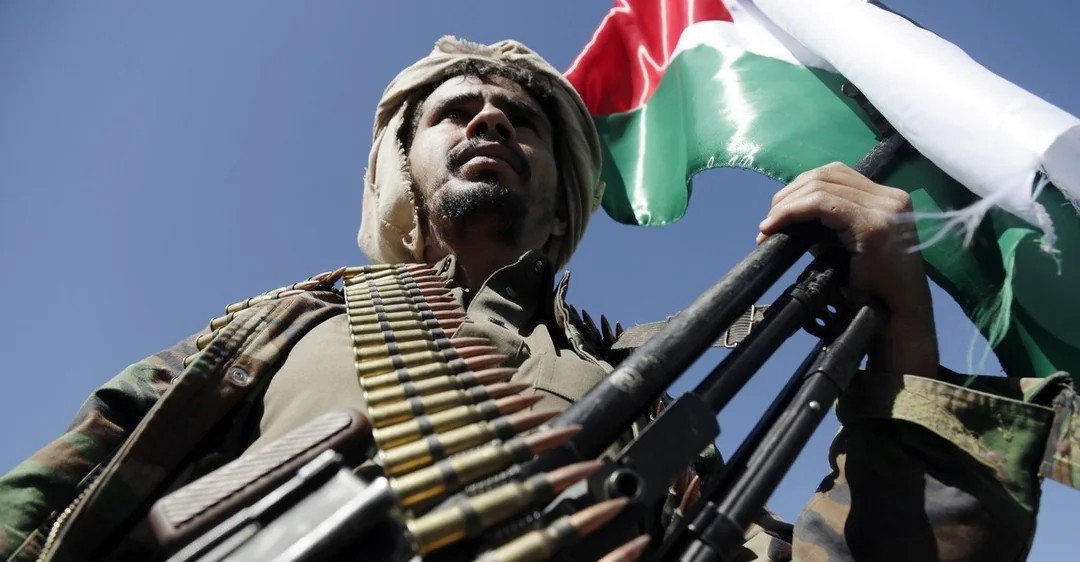
⚡️BREAKING HOUTHI OFFICIAL TO IRANIAN MEDIA: Trump should first deploy his Ground Forces to Yemen If they prove themselves here, they can then move on to Iran (Houthis have 400,000 fighters)
Iran Observer tweet media
English
248
3.2K
15.7K
216.5K
Jet2 รีทวีตแล้ว
Arnaud Bertrand
Arnaud Bertrand@RnaudBertrand·
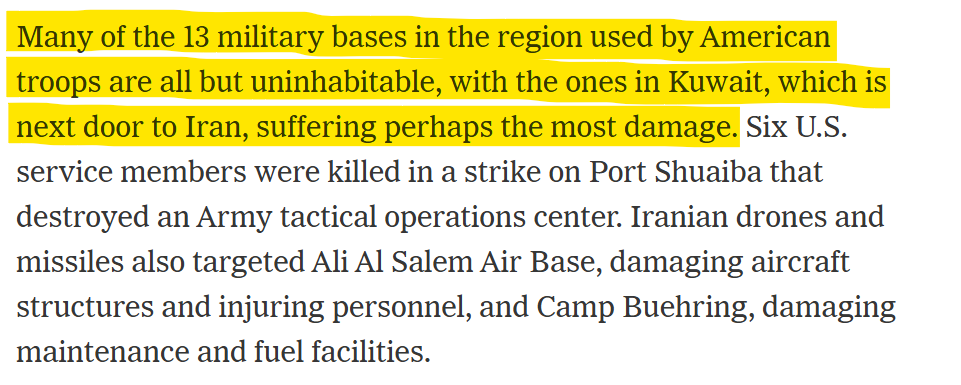
This is stunning: it looks like Iran degraded American military bases into unusability across an entire theater, simultaneously. As far as I know, no other U.S. adversary has achieved that, ever. This is directly reported in the NYT (nytimes.com/2026/03/25/us/…): they write that Iran has rendered "many of the 13 military bases in the region used by American troops [...] all but uninhabitable." As the article describes, "there were close to 40,000 U.S. troops in the region when the war started, and Central Command has dispersed thousands of them, some to as far away as Europe." Those troops that do remain are "not on their original bases" but have been "relocated to hotels and office spaces throughout the region." Genuinely incredible.
Arnaud Bertrand tweet media
Arnaud Bertrand@RnaudBertrand

I don't think people realize just how extraordinary what we're witnessing with Iran is. I was arguing with a dear journalist friend of mine yesterday who was telling me that Iran was winning, yes, but only on the strategic level, not tactically. The type of thing a skinny kid getting stuffed in lockers in highschool tells himself to make himself feel better: "These people will BEG to work for me in ten years. Everyone knows jocks peak in highschool. They'll literally beg." 😏 I think that's precisely wrong, and that's what makes the Iran war different. As of now, Iran is in fact holding its own tactically too. Think about other U.S. wars of aggression these past few decades. Take Vietnam, Afghanistan, Libya, Iraq, Serbia, etc. (the list is unfortunately very long). The pattern was roughly always the same with an immense power differential between aggressor and victim. These wars were, by and large, imperial: the empire attempting to crush a much weaker people whose only realistic recourse was guerrilla resistance. And that is when they actually had the will to resist: some - like Libya - barely even bothered, just resigning themselves to their fate (despite being, at the time, the richest country in Africa). As spectators of these wars, if you had any moral sense, the dominant emotion was a kind of helpless disgust: you were watching a giant stomp through someone else's house. Sure, the U.S. actually lost many - if not most - of these wars, famously replacing the Taliban with the Taliban or being expelled with their tail between their legs from Vietnam, but the power differential was no less real for it. It's just that power doesn't always guarantee victory: sometimes the giant can't kill everyone, and eventually tires of trying. But the “victories” won this way were always pyrrhic at best: the people endured, yes, but what they were left with was a country in ashes that takes decades to rebuild. Meanwhile, in the grand scheme of things, the giant walked away with little more than a bruised ego. Iran is - remarkably - proving to be an entirely different beast: when others were merely surviving a giant, Iran appears to be able to compete with one. What just happened over the past 48 hours is the best illustration of this. You had the President of the United States issue a formal ultimatum: reopen the Strait of Hormuz within 48 hours or we "obliterate" your power grid. Iran's response was essentially: we dare you, if you do this we'll make all your Gulf allies uninhabitable within a week. And, as we saw, Trump backed down: pretexting non-existent "VERY GOOD AND PRODUCTIVE CONVERSATIONS" with Iran, he said his ultimatum no-longer applied (or, rather, became 5 days). Adding he now envisaged the Strait of Hormuz being “jointly controlled by me and the Ayatollah.” To the amusement of Iran’s diplomacy (x.com/IraninSA/statu…). That, folks, is a textbook tactical victory. It is, remarkably, Iran demonstrating in this instance that it had escalation dominance over the United States of America. That is, the ability to credibly threaten consequences so severe that the US - for perhaps the first time since the Cold War - found it preferable to stand down. That's no skinny kid being locked in a locker dreaming of revenge fantasies. That's the kid grabbing the bully's wrist mid-shove and watching his face change. And it's not the only tactical victory in this war so far. Take the episode over the Israeli attack on Iran's South Pars gas facility. Iran had warned that if that happened U.S. allies in the region - including Israel - would face a symmetrical response. And they delivered: famously devastating Qatar's Ras Laffan facility - which produced roughly 20% of global LNG supply - and leading, according to Qatar themselves, to a $20 billion loss of annual revenue for the next 5 years (oilprice.com/Latest-Energy-…). Not only that but they also managed to hit Israel's Haifa refinery (aljazeera.com/news/2026/3/19…), one of the country's most strategic and protected sites. The result was Trump distancing himself from the South Pars attack, saying that Israel had "violently lashed out" unilaterally and that "NO MORE ATTACKS WILL BE MADE BY ISRAEL pertaining to this extremely important and valuable South Pars Field." Israel then said it wouldn't strike Iran energy sites anymore (bloomberg.com/news/articles/…). From where I stand, that's another tactical victory. It is, at least, Iran demonstrating that is can fight back **symmetrically** against the U.S. and its allies. Not through asymmetric resistance with IEDs hidden in the roadside or traps hidden in the jungle, but eye for eye, and against some of the most heavily protected sites on the U.S.'s side. That's qualitatively different from any other adversaries the U.S. has directly fought in recent wars. There's plenty more, such as the pretty relevant fact that Iran has gained control of the single most strategic energy chokepoint on earth and the U.S. is finding it impossible to break that control. To the point where Trump has been reduced to publicly begging China - of all countries - for help, which given Trump's ego mustn't have been easy to do. Only to be told no. By China. And by everyone else he asked. This is the topic of my latest article: how this is, in fact, the first genuine "multipolar war." First, in the narrow sense: because Iran is revealing itself to be a genuine pole of power - not a superpower, but an actor that cannot be submitted, which is all multipolarity is. And second, because the war itself is accelerating multipolarity everywhere else: the U.S. has never been more isolated, never looked weaker and its security guarantees have never been more hollow. In my article I lay out the full scoreboard - military, economic, political - and explain why this war has already changed the world, regardless of how it ends. Enjoy the read here: open.substack.com/pub/arnaudbert…

English
67
553
1.6K
52.9K
Jet2 รีทวีตแล้ว
Sprinter Press
Sprinter Press@SprinterPress·
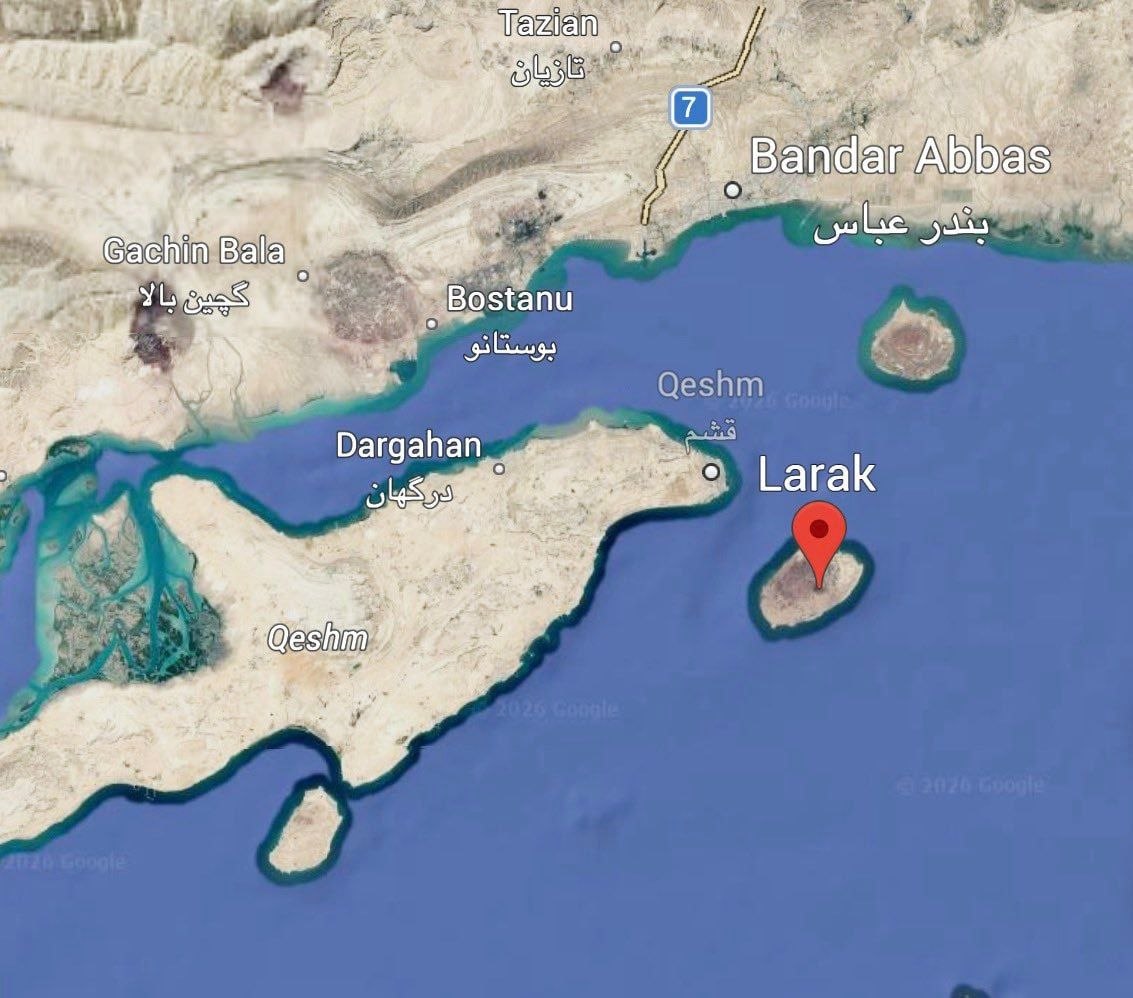
While many are expecting a US military operation to seize the Iranian island of Harg, a number of experts are confident that this is a diversionary tactic, and in reality, the US military will attempt to capture the islands of Larak and Qeshm, where the IRGC's naval bases, port infrastructure, and ship inspection control are concentrated The islands function as a narrow passage, effectively a toll collection point and the only guaranteed mine-free area of the Strait of Hormuz that can be "opened" for maritime traffic. It is noted that if Donald Trump's goal is to reopen the Strait of Hormuz, seizing the island of Harg does not make much sense, but seizing Larak and Qeshm does.
Sprinter Press tweet media
English
119
411
1.2K
103.3K
رضوانا رضا
رضوانا رضا@Rizvana_Raza·
BREAKING 🚨 Iran has officially fired missiles at the USS Abraham Lincoln, marking the second American aircraft carrier targeted after an alleged strike sidelined the USS Gerald R Ford. 🇮🇷🇺🇸⚔️ Actively hunting the ultimate symbols of US naval dominance shifts this from a regional standoff into a direct, red-line confrontation. 🌍🔥 #Iran #Israël
رضوانا رضا tweet media
English
6
41
158
7.4K
Jet2
Jet2@jet2·
What is this?
English
0
0
0
16
Jet2 รีทวีตแล้ว
Sprinter Press
Sprinter Press@SprinterPress·
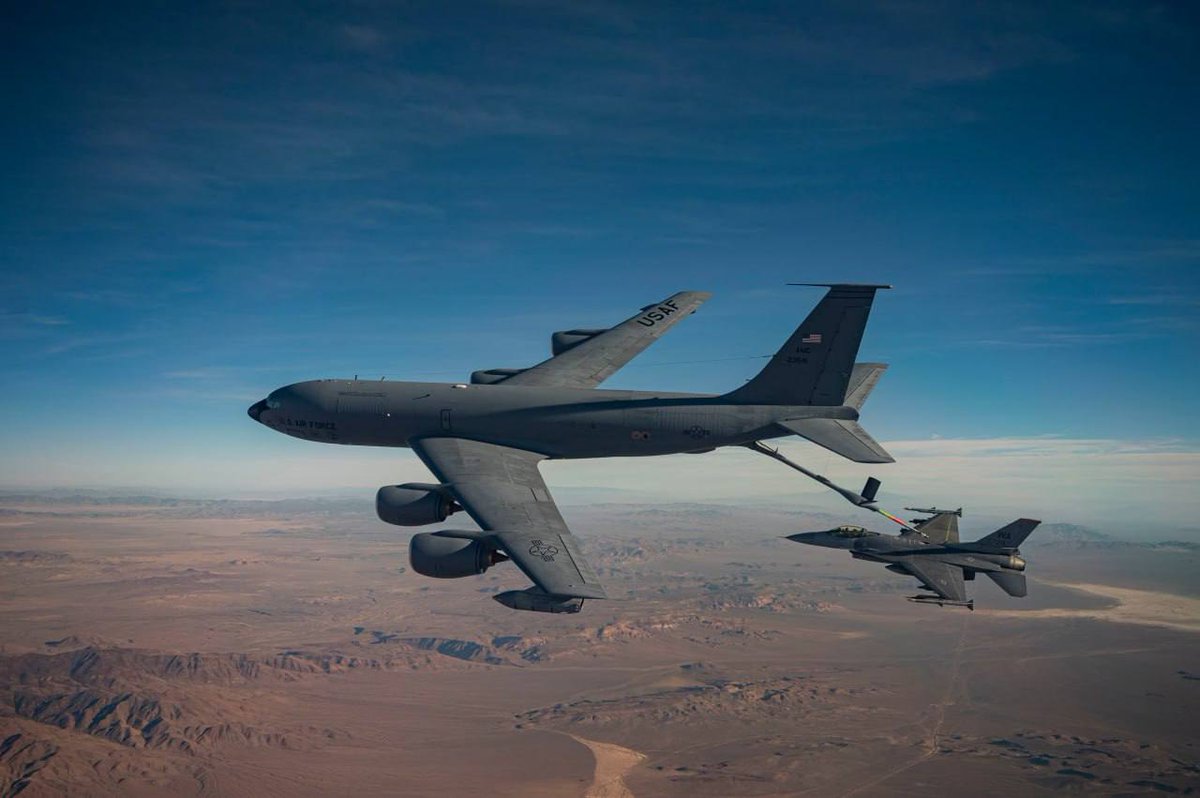
American refueling plane hit by Iran 🔹 The media outlet "Sabereen News" wrote: "Reports indicate that a Boeing KC-135 Stratotanker plane was hit by Iran."
Sprinter Press tweet media
English
15
225
964
21.1K