SEN Labs

5.9K posts

SEN Labs banner
SEN Labs

SEN Labs

@labs_sen

building a local-first, open source, datacentric, filesystem native, personal environment for linked data and knowledge management #FOSS #PKM #Haiku #localfirst

Vienna, Austria เข้าร่วม Nisan 2021
1.3K กำลังติดตาม260 ผู้ติดตาม
ทวีตที่ปักหมุด
SEN Labs
SEN Labs@labs_sen·
please take a moment to appreciate the new logo designs for the SEN sub projects I just did, using @grok AI image generation and my own thoughts and initial logo. They all resemble the knot but adapt to the topic of the sub project... (there was also quite some progress in code:)
English
1
0
1
403
SEN Labs รีทวีตแล้ว
blue
blue@bluewmist·
A real sign of healing is when you stop taking everything personally. You begin to see that people act from their own patterns, their own wounds, their own stories. Their behavior is about them, not you. And the moment you understand that, life feels lighter.
English
44
1.1K
5.4K
87.6K
SEN Labs รีทวีตแล้ว
Google
Google@Google·
The new Google Finance is coming out of beta this week with new capabilities and a new @Android app. Explore three ways it can help you better track and understand financial investments 🧵
Google tweet media
English
88
188
2.2K
229.8K
SEN Labs รีทวีตแล้ว
Saganism
Saganism@Saganismm·
“An individual has not started living until he can rise above the narrow confines of his individualistic concerns to the broader concerns of all humanity.” — Martin Luther King Jr.
Saganism tweet media
English
1
33
90
2.2K
SEN Labs รีทวีตแล้ว
Saganism
Saganism@Saganismm·
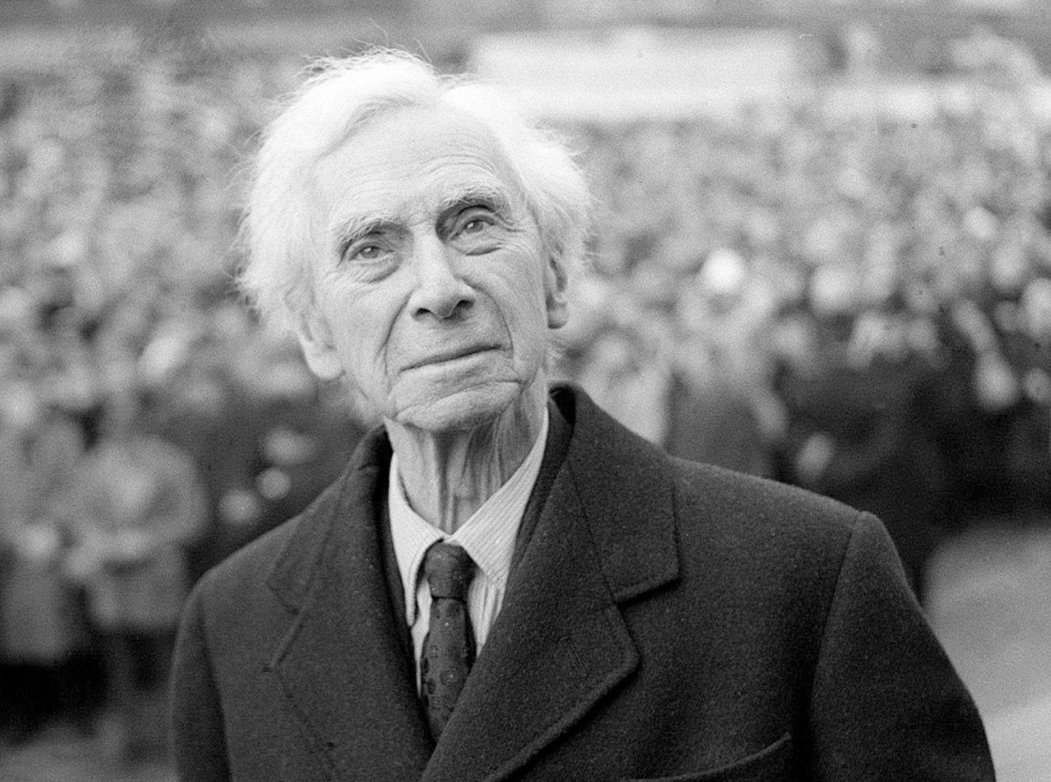
“Advocates of capitalism are very apt to appeal to the sacred principles of liberty, which are embodied in one maxim: The fortunate must not be restrained in the exercise of tyranny over the unfortunate.” — Bertrand Russell
Saganism tweet media
English
9
79
183
4.5K
SEN Labs รีทวีตแล้ว
Saganism
Saganism@Saganismm·
“I had found my religion: nothing seemed more important to me than a book. I saw the library as a temple.” — Jean-Paul Sartre
Saganism tweet media
English
12
58
302
6.6K
SEN Labs รีทวีตแล้ว
BridgeMind
BridgeMind@bridgemindai·
The US government is going to destroy the American AI industry. OpenAI just confirmed that GPT 5.6 will release in a limited preview to a small group of partners. The government is approving access customer by customer. Anthropic got hit harder. Fable 5 and Mythos were suspended entirely two weeks ago. Two government interventions in the same month. Meanwhile China ships GLM 5.2, Kimi K2.7, and Qwen 3.7 as open weights to anyone with a download link. The US is gating its best AI. China is giving it away. We are losing this race in slow motion. This needs to change.
BridgeMind tweet media
English
212
173
1.9K
123.9K
SEN Labs รีทวีตแล้ว
Saganism
Saganism@Saganismm·
“There is no absolute knowledge. And those who claim it, whether they are scientists or dogmatists, open the door to tragedy.” — Jacob Bronowski
Saganism tweet media
English
6
47
190
6.1K
SEN Labs รีทวีตแล้ว
Dylan O'Sullivan
Dylan O'Sullivan@DylanoA4·
André Gide, go all in
Dylan O'Sullivan tweet media
Español
9
569
4.1K
93.9K
SEN Labs รีทวีตแล้ว
Josh Bongard
Josh Bongard@DoctorJosh·
Excited to debut the concept of "Morphological pre-training" in the just-released Embodied Intelligence anthology: Organisms — and potentially robots — can practice risky actions safely inside their own bodies. Paper: bit.ly/4oLfuYP Anthology: bit.ly/4oRaKku
Josh Bongard tweet media
English
5
20
85
5.8K
SEN Labs รีทวีตแล้ว
Doctor Who and the Midjourney
Coming Soon.. 'Dreadnought' An adaptation of the Radio Times Eighth Doctor Comic. written by Gary Russell Art and design by Lee Sullivan (but not endorsed by either)
English
13
16
143
9.3K
SEN Labs รีทวีตแล้ว
Nav Toor
Nav Toor@heynavtoor·
A lawyer in Manhattan gets a 500-page contract. Every clause needs to be searchable. By hand: one week. An accountant in Chicago gets 200 scanned invoices. Every number needs to land in a spreadsheet. By hand: four days. A researcher at Stanford has 50 academic papers. Tables, formulas, charts locked inside PDFs. By hand: two weeks. Every one of them is losing days of their life to copy-paste. Now meet MinerU. A free and open source tool that reads any PDF, Word doc, PowerPoint, Excel sheet, or scanned image. It pulls out the text in reading order. Tables become clean HTML. Equations become LaTeX. Handwriting handled. 109 languages. You give it a 200-page PDF. You get clean Markdown back in 90 seconds. What makes it different from every other PDF tool: - Multi-column layouts. It reads top to bottom within each column. Not left to right across the page. Like a human reads. - Scanned documents. OCR built in. Point it at a photo of a printed page from 1995. Get clean text back. - Math formulas. LaTeX-quality recognition. Every equation renders correctly. - Tables. Merged cells, multi-row headers, tables that span three pages. All preserved. - Ten-thousand-page documents. Sliding window processing. No manual splitting. - Batch mode. Point it at a folder of 500 documents. Walk away. Three ways to use it: - CLI. One command per document. - Python SDK. Five lines of code. - Web app at mineru.net. Upload, click, download. No install. Plugs into Claude Desktop, Cursor, Windsurf, LangChain, LlamaIndex, RAGFlow, Dify, and FastGPT. Feed extracted documents straight to your AI agent. The story: The OpenDataLab team at Shanghai AI Laboratory needed to extract clean text from millions of scientific documents to train a language model. Existing tools failed. They built their own. Then they open sourced it. 68,551 stars. MinerU Open Source License, built on Apache 2.0. Free for personal and commercial use. Three technical reports on arXiv. Adobe Acrobat Pro charges $239.88 a year. It still loses your tables. ABBYY FineReader Corporate charges $165 a year. It still cannot do equations. Mistral OCR charges $2 per 1,000 pages. Your bill never stops. MinerU costs $0. Runs on your laptop. Your documents never leave your machine. Here is the wild part. The lawyer got her contract back in 4 minutes. Every clause searchable. The accountant fed 200 invoices in. Every number landed in a spreadsheet in 12 minutes. The researcher fed his 50 papers in. He wrote his literature review on a Sunday afternoon. The document your company has been processing by hand for years takes MinerU minutes. Your documents become text. Your text becomes data. Your data becomes answers. The week you used to lose to paperwork is back in your hands.
Nav Toor tweet media
English
40
326
2.1K
114.7K
SEN Labs รีทวีตแล้ว
Dr. M.F. Khan
Dr. M.F. Khan@Dr_TheHistories·
In 1988, a man named Mehran Karimi Nasseri arrived at Charles de Gaulle Airport in Paris and found himself in a situation with no clear way out.... He had been a refugee for years, having left Iran and spent time in several European countries attempting to gain the legal right to live somewhere. When he arrived in Paris, his refugee papers and travel documents were missing, lost somewhere in transit. Without them, French authorities would not allow him to enter the country. Without proper documentation, no other country would accept him either. He could not go forward. He could not go back. The terminal was the only place where he legally existed. So he stayed. Days passed. Then weeks. Then months. Officials engaged in bureaucratic processes that moved at a pace entirely unmatched by the urgency of his situation. Legal efforts were made. Paperwork was filed. And in the meantime, Mehran Karimi Nasseri continued living in Terminal 1 at Charles de Gaulle Airport. He slept on a red bench near a fast food restaurant. Airport staff brought him food. He read books and newspapers. He wrote in journals. He watched thousands of people move through the terminal each day, all of them going somewhere, none of them staying. He stayed for 18 years. By the time he finally left the airport in 2006, when he was admitted to a hospital due to illness, he had spent nearly two decades in a space designed for transition, a place where everyone else was always on their way to somewhere else. His story became known around the world. The filmmaker Steven Spielberg adapted it, very loosely, into the 2004 film The Terminal, with Tom Hanks playing a character inspired by Nasseri's situation. Nasseri returned to the airport in 2022, reportedly living there again briefly before his death later that year. What his story captures, more than anything, is a very modern kind of absurdity, the gap that can open between a person and the systems designed to place them somewhere in the world. Those systems failed Mehran Karimi Nasseri completely. And in the space where they failed, he built something that looked, in its own strange way, like a life. Not the life anyone would have chosen. But the one that was available. He read his books. He wrote in his journals. He watched the world pass through. For 18 years.... After returning to the airport in 2022, he died there of a heart attack in November of that year. © Vintage Facts #drthehistories
Dr. M.F. Khan tweet media
English
5
20
41
5.5K
SEN Labs รีทวีตแล้ว
exQUIZitely 🕹️
exQUIZitely 🕹️@exQUIZitely·
This was rated 18+ in 1987. No joke. I was 12 when I first played it. Any Larry fans from the early days who played this before turning 18? Leisure Suit Larry in the Land of the Lounge Lizards (Sierra On-Line, 1987)
English
35
6
177
4.7K
SEN Labs รีทวีตแล้ว
Ihtesham Ali
Ihtesham Ali@ihtesham2005·
Demis Hassabis said neuroscientists are already using his AI models to decode the images people see in their dreams and recreate them on a screen. He thinks these devices ship in a few years. Read that again slowly. A person lies in an fMRI scanner. They picture an image in their mind. Researchers decode the brain signal, feed it into one of Google's video models, and the model reconstructs the actual visual. Then they ask the person if that was what they were imagining. It is. Hassabis described this like a normal update. His neuroscience professor friends are running these experiments right now. This is not theory. In 2025, a team at Fudan University trained a model called Neuropictor on brain scans, then pulled snapshots out of sleeping participants' dreams and stitched them into video using a language model. The science fiction version and the published paper are now the same thing. It connects to work Hassabis did twenty years ago. His PhD found that patients who lost their memory also couldn't picture the future. Memory and imagination run on the same machinery. That insight is now feeding the models that read your mind. His words: "we're going to have these sort of amazing kind of sci-fi devices I think in the next few years." The technology to reconstruct a thought from outside your skull already exists in a lab. He thinks it reaches the rest of us before the decade is out. (Watch the full interview at @semafor on YouTube)
English
20
44
167
12.9K
SEN Labs รีทวีตแล้ว
Saganism
Saganism@Saganismm·
“Never doubt that a small group of thoughtful, committed, citizens can change the world. Indeed, it is the only thing that ever has.” ― Margaret Mead
Saganism tweet media
English
8
216
485
10.1K
SEN Labs รีทวีตแล้ว
Saganism
Saganism@Saganismm·
“Destroying rainforest for economic gain is like burning a Renaissance painting to cook a meal.” — E.O. Wilson
Saganism tweet media
English
27
355
1.1K
23K
SEN Labs รีทวีตแล้ว
Apple TV
Apple TV@AppleTV·
There was a world before the Silo. Catch up on #Silo — New Season July 3
English
29
228
2.1K
196.4K
SEN Labs รีทวีตแล้ว
Saganism
Saganism@Saganismm·
“Thoughts, feelings, hopes and dreams exist on Earth because of electrical activity inside a 1.5-kilogram blob of stuff, which hasn’t changed much since the earliest modern humans began the long journey out of Africa.” — Brian Cox
Saganism tweet media
English
14
59
243
5.6K
SEN Labs รีทวีตแล้ว
cinesthetic.
cinesthetic.@TheCinesthetic·
Just for this scene alone, FLOW (2024) deserved every award it won. A moment of breathtaking beauty, told entirely through images, emotion, and movement. Pure cinema.
English
23
380
2.5K
81.3K
SEN Labs รีทวีตแล้ว
Nav Toor
Nav Toor@heynavtoor·
A student submitted an essay she wrote by hand. Her university ran it through an AI detector. The detector said she cheated. She is autistic. Her name is Moira Olmsted. Adelphi University. February 2026. Turnitin flagged her essay as 100% AI-generated. She was disciplined. Two other AI detectors classified the same essay as human-written. She sued. She won. The court called the school's decision "arbitrary and capricious." She is not the only one. In May 2026, a high school student in Palo Alto was expelled after an AI detector flagged his work. He faced visa revocation. He filed a federal civil rights lawsuit. A researcher at Griffith University just proved mathematically why this keeps happening. The paper is on arXiv. The finding is one sentence. AI text detectors have a structural flaw that no amount of better engineering can fix. Here is what the math says. If a university wants its detector to catch 80% of cheaters, at least 750 out of every 10,000 innocent students will be wrongly accused. That is not a software problem. It is a theorem. If the university tries to limit false accusations to 1%, detection power collapses to 6%. It catches 6 out of every 100 AI-written papers. The other 94 get through. There is no setting where the detector is both fair and effective. The reason is diversity. Every student writes differently. Non-native English speakers use simpler vocabulary. Shorter sentences. Clearer structures. So does AI. A Stanford study found that 61.3% of TOEFL essays written by non-native English speakers were misclassified as AI-generated. A separate analysis tested 14 commercial detection tools. Zero out of 14 reached 80% accuracy. The students most likely to be wrongly accused are non-native English speakers, neurodivergent students, and anyone who writes with clarity and precision. The qualities that make their writing effective are the same qualities the detector mistakes for a machine. Vanderbilt University understood this. They disabled Turnitin's AI detection in 2023 after calculating that even a 1% error rate across 75,000 submissions would produce 750 wrongful accusations per year. 750 students accused of cheating for writing like themselves. The paper's conclusion is not that we need better detectors. It is that the diversity of human writing itself makes accurate detection mathematically impossible. The same thing that makes your writing yours is the thing that gets you accused. arxiv.org/abs/2603.20254
Nav Toor tweet media
English
220
2.7K
6K
553.6K