
Libby Patterson

11.6K posts

Libby Patterson banner
Libby Patterson

Libby Patterson

@libbypatterson

Entrepreneur, Perfumer, Product Developer, Photographer, Business Consultant, Brand Manager, Marketing, Business Accounting, Strategy, Garden Steward

California, USA เข้าร่วม Aralık 2008
3.5K กำลังติดตาม659 ผู้ติดตาม
Libby Patterson รีทวีตแล้ว

Wall Street Apes
Wall Street Apes@WallStreetApes·
California is deploying AI-powered, high-resolution cameras to detect drivers holding or using cell phones This new pilot program has already recording hundreds of violations This is warrantless surveillance The systems use artificial intelligence to take high-resolution images of the front seat to identify if a driver is holding a phone or texting First-time offenses can cost around $136, with second offenses resulting in higher fines and points on the DMV record They are being installed at intersections so even if your car is stopped, they can capture and and ticket you “Changing musics or looking up a quick address could also fall under that violation. So if you're sitting at a red light or just scrolling through your phone, just know that those cameras may be watching you.”
English

187
595
1.2K
61.9K
Libby Patterson รีทวีตแล้ว
Breaking911
Breaking911@Breaking911·
BREAKING: Air taxi company Joby Aviation just completed demo flights across the San Francisco Bay Area, flying from Oakland to the Marin Headlands in roughly 10 minutes. The flights kick off Joby’s 2026 Electric Skies Tour, a nationwide showcase tied to America's 250th birthday.
English
161
491
2.6K
1.1M
Libby Patterson รีทวีตแล้ว
Massimo
Massimo@Rainmaker1973·
Point Lobos State Natural Reserve, located just south of Carmel-by-the-Sea, is often called the "crown jewel" of the California State Park system. It is a world-renowned destination for its rugged coastline, rare trees, and abundant marine life.
English
61
548
5.3K
188.3K
Libby Patterson
Libby Patterson@libbypatterson·
Hot weather incoming! Wow!
Libby Patterson tweet media
English
0
0
0
2
Libby Patterson รีทวีตแล้ว
Sakshi
Sakshi@Sakshi50038·
12 RARE LIFE LESSONS BY JAPANESE MONK: 1. The quieter you become, the more you hear what truly matters. 2. Chase nothing - what's meant for you moves toward stillness. 3. A clear mind is stronger than a busy one. 4. Happiness is found in discipline, not desire. 5. The one who masters patience, masters life. 7. You suffer because you argue with what is. 8. The less you own, the lighter your heart becomes. 9. Anger is like hot coal it burns only the hand that holds it. 10. Routine done with awareness becomes meditation. 11. True strength is being kind when it's hardest. 12. The ego shouts, but wisdom whispers. When you stop rushing, life starts revealing itsel
English
61
816
3K
107.8K
Libby Patterson รีทวีตแล้ว
Life Science
Life Science@LifeScience_X·
Healthy Homemade Chocolate Bar 😋
English
47
618
2.4K
147.8K
Libby Patterson รีทวีตแล้ว
Camus
Camus@newstart_2024·
Dr. Zach Bush shares a mind-blowing nature insight: Birdsongs in each region have evolved to interact with tree pores (stomata), helping them open to breathe more oxygen and CO₂—kickstarting the life cycle. Historical / science nugget: Studies on plant bioacoustics (e.g., from Yeungnam University and others) show sound vibrations—like birdsong or "green music"—can influence stomata opening, boost nutrient/water uptake, and enhance growth by triggering molecular changes in plants. While not every regional birdsong is proven to "perfectly match" local trees, vibrations from natural sounds act as a gentle signal for better respiration and vitality. Bush extends it to us: Nature's sounds and beauty do the same for the human body—up-leveling metabolism, energy, and resilience no matter diet or toxins around you. Get outside aggressively—listen to the birds, feel the shift. Nature is the ultimate viral healer. What's your favorite way nature "turns you back on"—birdsong, ocean waves, forest walks?
English
49
736
2.3K
42.3K
Libby Patterson รีทวีตแล้ว
Decoding Infection and Transmission
Review of mosquito host-seeking and why some people attract more bites, highlighting sensory cues, host traits, and pathogen-driven odor changes.
English
0
8
127
356.7K
Libby Patterson รีทวีตแล้ว
Dr. C
Dr. C@OG_DrC·
🚨The food additive you don't know about that is killing us all: Natural citric acid comes from citrus fruits like lemons and limes. It gives them their tart flavor. Manufactured citric acid (MCA) is the version found in nearly all processed foods, drinks, and many household products. Chemically identical (C₆H₈O₇), it is produced industrially rather than extracted from fruit. What Is Manufactured Citric Acid? MCA is a food additive used as a flavor enhancer (sour taste), preservative, acidulant (to lower pH), and chelating agent. It appears on labels simply as “citric acid,” with no distinction from the natural form. Approximately 99% of the world’s citric acid supply is manufactured this way. What Creates It and Who Makes It? The Pfizer Connection MCA is created by Pfizer through microbial fermentation using radioactive mutant strains of the black mold Aspergillus niger. Pfizer pioneered the entire modern industrial process in 1919. Chemists James Currie and Jasper Kane at Pfizer developed the large-scale fermentation method that converts sugar into citric acid using A. niger, freeing production from scarce citrus fruit imports (disrupted by World War I). By 1929, Pfizer had become the world’s largest producer of citric acid, making millions of pounds annually and dominating the market. This breakthrough also built Pfizer’s expertise in fermentation technology, which later helped them mass-produce penicillin during World War II. Pfizer sold its citric acid business to Archer-Daniels-Midland (ADM) in 1990. Today the method Pfizer invented is used globally, with ~70% of production in China and other major producers including Cargill, Jungbunzlauer, and ADM. Global output exceeds 2.3 million tons annually; most of the 70% used in food and beverages comes from these large industrial facilities. The process remains essentially unchanged since Pfizer’s 1919 innovation. From What Is It Made? The GMO Components Raw materials are typically highly processed glucose from corn syrup (often GMO corn in the U.S. and elsewhere). The A. niger strains themselves are heavily modified: Gamma radiation-induced mutagenesis exposes the mold to radiation to create high-yielding mutants (a technique refined after Pfizer’s original strains). Laboratory genetic engineering tweaks metabolic pathways to boost citric acid output and reduce unwanted byproducts. These “mutant strains” are not labeled as GMO because the final purified acid contains no detectable modified DNA — only the chemical end product. Pure white manufactured citric acid crystals look identical to food-grade versions sold for home use. The Toxins Within MCA Because MCA is fermented with A. niger, trace impurities or protein fragments from the mold can remain even after purification. Key concerns include: >Ochratoxin A (OTA) — a potent mycotoxin produced by some Aspergillus species. >Malformin C and other fungal metabolites. >Residual mold proteins or cell wall fragments. Industry sources claim rigorous purification removes these, but the 2018 paper in Toxicology Reports (the article this summary is based on) notes that heat-killed A. niger fragments can still trigger immune responses in sensitive people. The paper specifically credits Pfizer’s 1919 process as the origin of today’s widespread MCA production. What Those Toxins Do to the Body OTA is classified as a human carcinogen. In animal studies it forms DNA adducts (chemical attachments to DNA) that interfere with DNA repair mechanisms and cell-cycle control, potentially initiating cancer. It is also nephrotoxic (kidney-damaging) and immunotoxic (immune-damaging). In humans, even tiny residual amounts may provoke allergic or inflammatory cascades in mold-sensitive individuals, raising pro-inflammatory cytokines (IL-6, IL-1β, TNF-α). Case reports link MCA ingestion to: >Joint pain and swelling >Respiratory Difficulties >Muscle pain >IBS-like gastrointestinal issues >Fatigue Symptoms typically begin 2–12 hours after consumption and resolve in 8–72 hours once exposure stops making it difficult to determine what caused the symptoms. How Dangerous Are These Toxins? For the general population, regulatory bodies consider purified MCA safe at typical levels. However, for people with mold allergies, chronic inflammatory conditions, or genetic sensitivities, even low-level repeated exposure may contribute to ongoing low-grade inflammation. No large-scale long-term human studies have specifically examined chronic MCA consumption versus natural citric acid. GRAS Status Without Long-Term Studies The FDA lists citric acid as GRAS (Generally Recognized as Safe) under 21 CFR 184.1033. It received this status automatically because it was already in widespread use (thanks in large part to Pfizer’s early commercialization) before the 1958 Food Additives Amendment. No dedicated safety testing or chronic-exposure studies were required at the time. As the 2018 paper states: “The safety of manufactured citric acid has never been studied since it was granted GRAS status.” Ubiquitous — A List of Where It Hides MCA appears in roughly 80%-90% of all processed foods and beverages. You will find it in virtually all: Foods & Drinks: >Sodas, energy drinks, flavored waters, tonic water >Potato chips, tortilla chips, snack foods >Candy, jelly beans, gummies >Baked goods, cookies, bread, tortillas >Canned soups, sauces, tomato products, hummus >Instant oatmeal, cereal bars, energy bars >Ice cream, frozen desserts, fruit juices >Preserved vegetables, salad dressings, ranch seasoning Non-Food Products: >Dish detergents, laundry detergents, all-purpose cleaners >Shampoos, conditioners, body washes, lotions, skincare >Toothpaste and mouthwash >Effervescent vitamins, supplements, pharmaceuticals >Cosmetics and personal care items Ingredients labels often list “citric acid” without revealing its manufactured origin or its roots in Pfizer’s 1919 black-mold fermentation process. Daily Bombardment and Why It’s Nearly Impossible to Avoid: Most people ingest small amounts from dozens of sources every day — a sip of soda, a handful of chips, salad dressing, toothpaste, even the detergent residue on dishes. Because it is so cheap and effective (thanks to the scalable process Pfizer perfected), manufacturers add it everywhere. Even many “organic” or “natural” products use MCA. Complete avoidance requires reading every label, preparing all food from scratch, and using only homemade cleaners/personal care — extremely difficult in modern life. Delayed Symptoms Make Cause Hard to Identify: Acute reactions appear hours after eating, not immediately, so people rarely connect a headache, joint flare, or stomach upset to the “citric acid” in their lunch. Chronic low-level exposure produces vague, accumulating symptoms (fatigue, inflammation) that can take weeks or months to notice. Many undergo extensive medical testing before suspecting a common additive whose production method traces directly back to Pfizer’s innovation over a century ago. Summary: Manufactured citric acid is chemically the same as the acid in a lemon, but its production method — invented and commercialized by Pfizer in 1919 using Aspergillus niger fermentation — introduces potential trace fungal residues that some individuals react to. While considered safe by regulators and widely used for decades, the lack of long-term studies on chronic exposure leaves room for ongoing debate — especially among those with mold sensitivities or inflammatory conditions. If you experience unexplained symptoms after eating processed foods, checking for “citric acid” on labels and experimenting with elimination may be worthwhile. Read this NCBI PubMed Article on it: LINK in next post
English
58
577
1.2K
45.8K
Libby Patterson รีทวีตแล้ว
Next Science
Next Science@NextScience·
🧠 New research shows the smartest age in life is 55 to 60 – not in your 20s. While youth is often seen as the peak of brainpower, science now suggests the smartest age in life may actually be between 55 and 60. Although raw cognitive abilities like memory and processing speed tend to peak earlier—typically in a person’s 20s or 30s—new research shows that overall psychological functioning continues to improve well into later adulthood. A comprehensive study analyzing 16 traits across the lifespan found that key dimensions like emotional intelligence, conscientiousness, and resistance to cognitive biases don’t just hold steady—they often get better with age. For example, conscientiousness, which affects reliability and focus, tends to peak around age 65. Emotional stability continues to rise into the mid-70s. Even moral reasoning and the ability to sidestep mental traps like confirmation bias improve as people get older. When all of these traits were combined into a single performance index, late middle age stood out as the brain’s all-around high point—decades after society typically labels us as past our prime. This may explain why leaders and thinkers often hit their stride later in life: experience, emotional regulation, and wisdom create a kind of intelligence that can’t be rushed. Source: "Worried about turning 60? Science says that’s when many of us actually peak." The Conversation, 14 Oct 2025.
Next Science tweet media
English
51
342
1.1K
66.3K
Libby Patterson รีทวีตแล้ว
Mr Pool
Mr Pool@pooL_rM311_7221·
John McAfee: "The mainstream media has been using a technology called neuro-linguistic programming for more than fifteen years. And that neuro-linguistic programming makes you think and believe things which are not true."
English
237
3.9K
11.6K
359.6K
Libby Patterson รีทวีตแล้ว
Electroverse
Electroverse@Electroversenet·
California's $2.2 billion solar plant is shutting down. Once hailed as a breakthrough, the Ivanpah Solar Facility in the Mojave Desert is now a case study in failed technology and environmental risk. Built with $1.6 billion in federal loans in 2014, the plant was hailed as a symbol of America's clean energy future. It used 173,000 mirrors to focus sunlight onto three massive towers, heating fluid to drive steam turbines. Complicated. Expensive. And it never delivered on its promise. After just 11 years, the technology is now obsolete. On top of that, the facility became notorious for its environmental toll, with estimates of at least 6,000 birds incinerated each year by the concentrated beams. The promise was affordable, reliable, green power. The reality was high costs, technical failures and ecological damage.
English
812
5.1K
9.1K
255.3K
Libby Patterson รีทวีตแล้ว
Next Science
Next Science@NextScience·
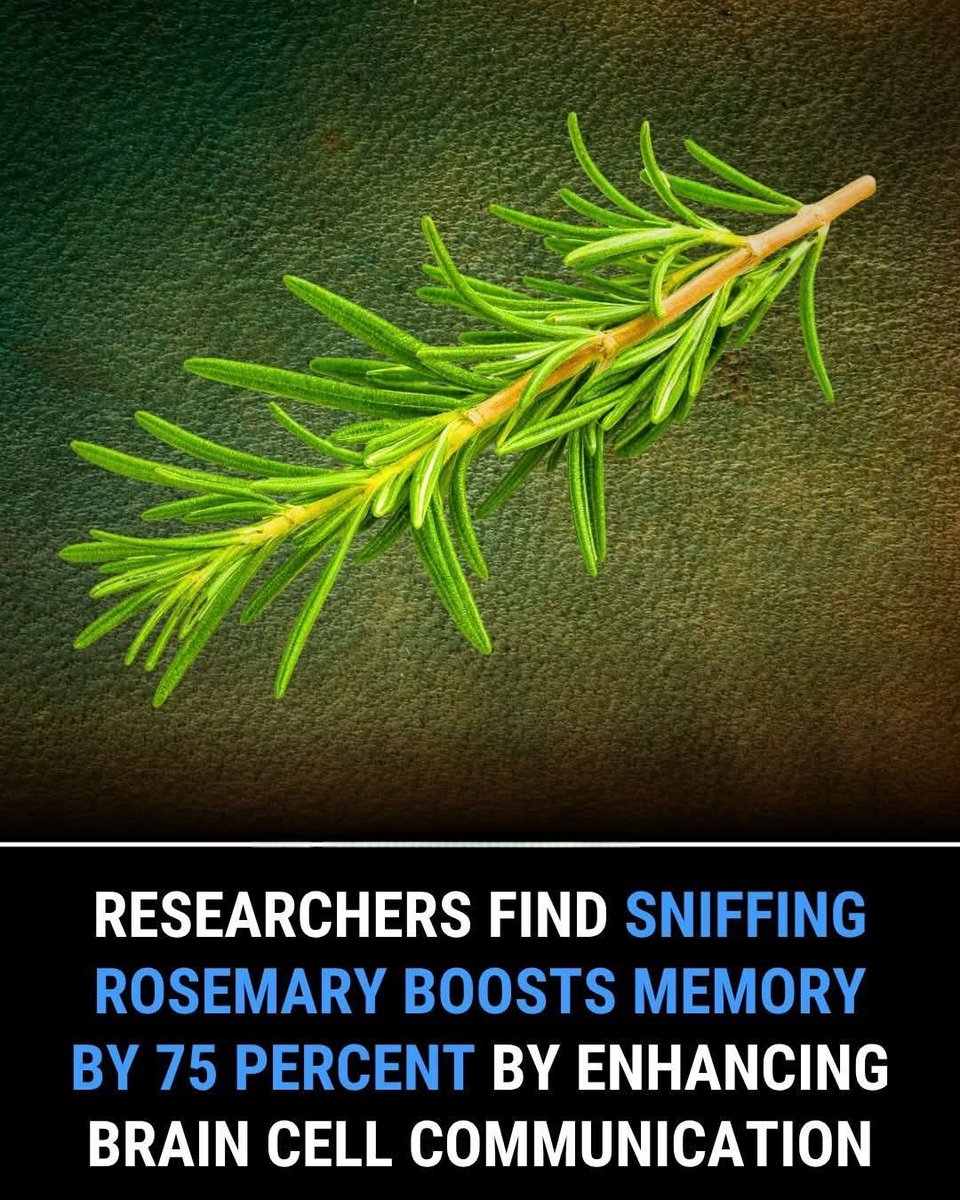
A remarkable new study has found that simply sniffing rosemary could boost your memory by an astonishing 75 percent. Scientists discovered that the scent of this common herb helps the brain break down a compound called acetylcholine — a key chemical that supports learning, focus, and memory retention. Acetylcholine acts like a messenger in the brain, allowing nerve cells to communicate quickly and clearly. As we age or experience stress, levels of this chemical drop, often leading to forgetfulness or mental fog. But rosemary’s natural compounds — particularly cineole — have been shown to slow this breakdown, keeping brain signals sharp and steady. In controlled tests, participants exposed to rosemary aroma performed significantly better on memory tasks than those in unscented rooms. They remembered to complete tasks, followed instructions more accurately, and showed improved reaction times. The best part? This powerful brain boost doesn’t require pills, supplements, or hours of training. Just a few minutes of breathing in rosemary’s earthy scent — through essential oils, fresh herbs, or even rosemary-infused air sprays — could help your brain stay alert and focused. Researchers believe rosemary may offer a safe, natural way to enhance cognitive performance in students, professionals, and even older adults facing memory decline. One small sniff. One massive impact. Rosemary is no longer just a kitchen herb — it may be one of nature’s most effective tools for keeping the mind sharp.
Next Science tweet media
English
213
2.3K
9.7K
679.4K
Libby Patterson รีทวีตแล้ว
The Surfer's Journal
The Surfer's Journal@SurfersJournal·
Among John E.O. Larronde’s records of pre- and post-war Southern California coastal life is his 16-minute film of 1940s surfing in Malibu and beyond. We’re screening “Sweet 16” for now through March 8, courtesy of the Museum of Ventura County. Watch here: surfersjournal.com/editorial/watc…
English
22
118
679
40.7K
Libby Patterson รีทวีตแล้ว
Next Science
Next Science@NextScience·
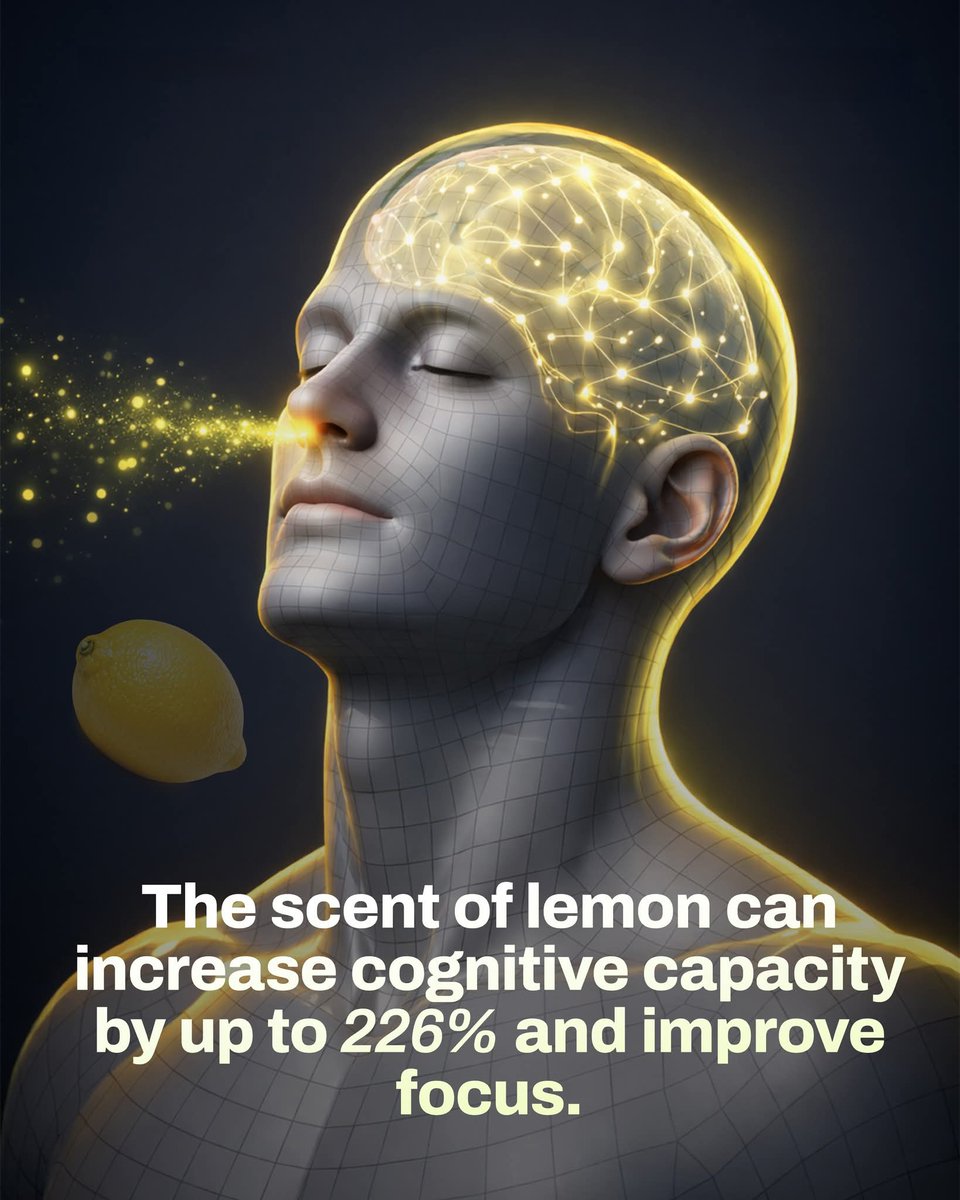
According to researchers at the University of California, the scent of lemon has been shown to significantly boost cognitive performance. In their studies, participants who were exposed to the scent demonstrated a remarkable 226% increase in cognitive capacity. This effect was particularly noticeable in tasks requiring concentration and mental clarity. The researchers suggest that the lemon scent activates certain brain areas, enhancing focus and memory retention. As a result, this simple, natural aroma may offer an effective, non-invasive way to improve mental performance in various settings.
Next Science tweet media
English
34
234
1.1K
39.4K
Libby Patterson รีทวีตแล้ว
Next Science
Next Science@NextScience·
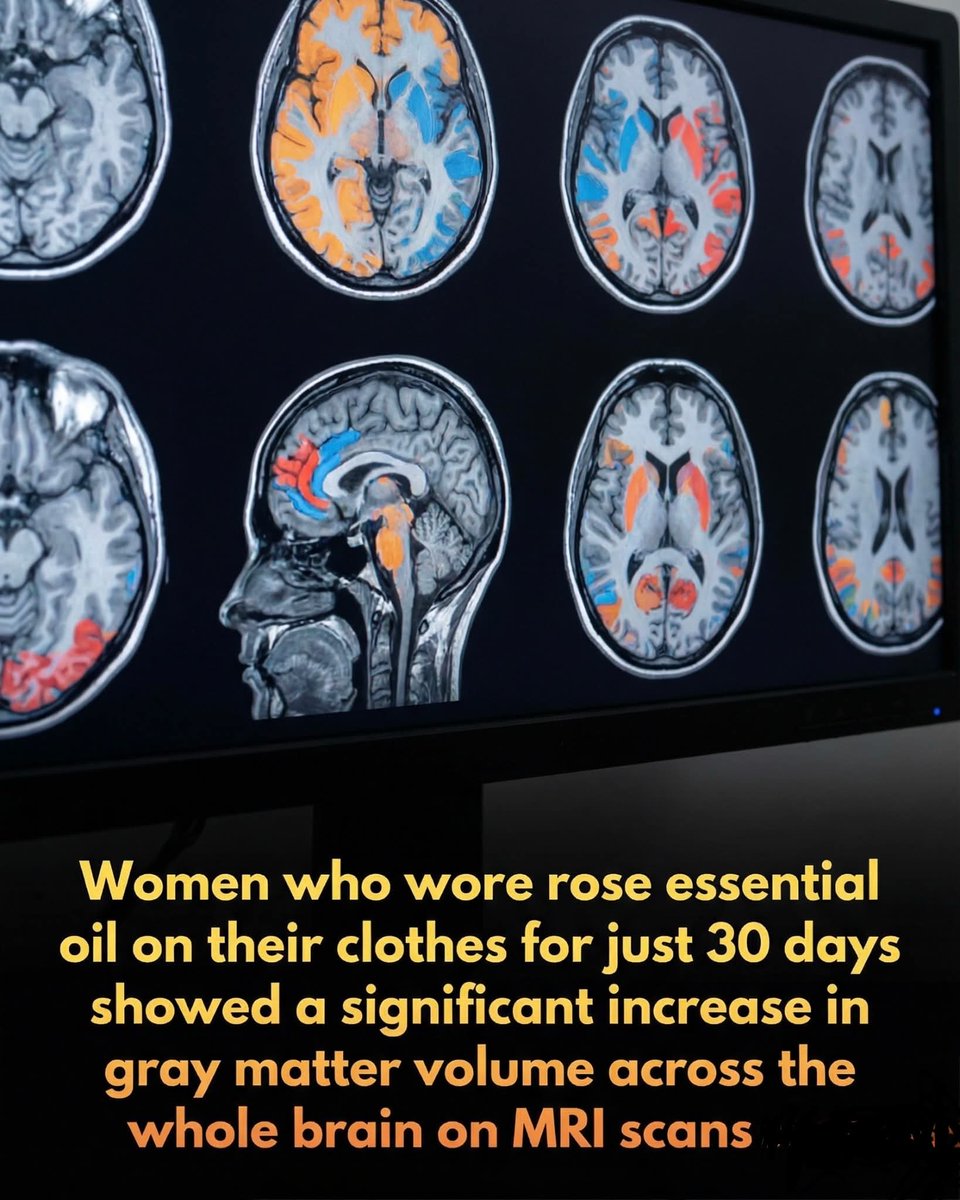
🚨 New research reveals that smelling rose essential oil for just 30 days can physically expand your brain’s gray matter. A groundbreaking study has discovered that the simple act of wearing rose essential oil can lead to visible structural changes in the human brain. Over a 30-day period, participants who wore the scent on their clothing showed a significant increase in gray matter volume across the entire brain, as confirmed by MRI scans. This transformation is driven by aromatic molecules traveling through the olfactory system directly to the limbic system—the brain’s emotional and memory hub. Researchers highlighted the posterior cingulate cortex (PCC) as a primary responder, suggesting that consistent scent exposure keeps this region active in processing memories and fostering neural growth. Beyond structural expansion, this continuous stimulation activates vital neural pathways and encourages neuroplasticity, the brain's ability to reorganize itself. The implications for mental wellness are profound, as increased gray matter is consistently linked to sharper memory, enhanced learning capabilities, and better emotional regulation. By simply incorporating rose oil into a daily routine, individuals may reduce stress and improve overall cognitive health. This study underscores the powerful connection between our sense of smell and the physical architecture of the mind, offering a natural and accessible way to support brain longevity. source: Al-Harthi, L., Al-Harthi, S., & Al-Amri, S. (2024). Olfactory stimulation with rose oil increases gray matter volume in the brain: A longitudinal MRI study. Scientific Reports.
Next Science tweet media
English
24
215
1K
31.6K
Libby Patterson รีทวีตแล้ว
Shining Science
Shining Science@ShiningScience·
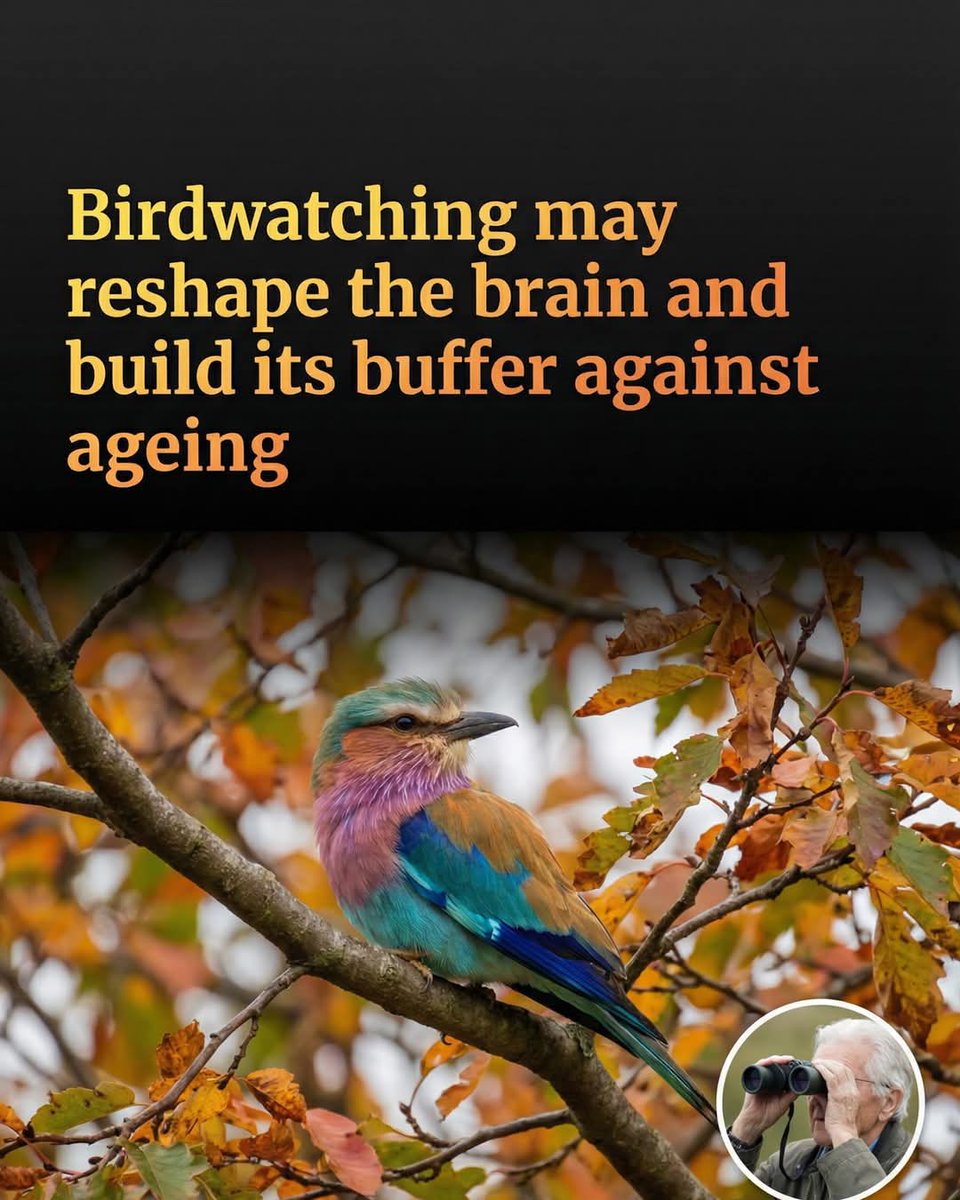
🚨 New research reveals that birdwatching can literally rewire the human brain. For years, enthusiasts have touted the peaceful nature of birdwatching, but new neuroscientific evidence suggests the hobby offers far more than just relaxation. Researchers have discovered that expert birders possess significant structural differences in their brains compared to novices. These specialized neural pathways allow them to identify even unfamiliar species with remarkable speed and accuracy. Much like the cognitive shifts seen in polyglots or professional pianists, the act of birding appears to fine-tune the brain's visual and auditory processing centers, turning a casual interest into a powerful exercise in neuroplasticity. This discovery highlights the brain's incredible ability to adapt and specialize based on our environment and interests. By consistently distinguishing subtle variations in plumage, song, and flight patterns, birdwatchers effectively rewire their minds to perceive details that others might miss. The study suggests that such expertise is not an innate talent but rather a result of prolonged practice that reshapes the cortex. Whether you are a seasoned field guide or a backyard enthusiast, this research reinforces the idea that engaging deeply with the natural world is not just a pastime—it is a cognitive investment that sharpens the mind for a lifetime. source: University of Zurich. Birdwatching reshapes the brain in a similar way to learning a language or instrument. ScienceDaily.
Shining Science tweet media
English
58
641
2.7K
106.7K
Libby Patterson รีทวีตแล้ว
Kekius Maximus
Kekius Maximus@Kekius_Sage·
You’ve smelled this your entire life and it was never the rain. The smell of rain isn’t rain. It’s a molecule called geosmin, produced by soil bacteria. Humans can detect it at just 5 parts per trillion, thousands of times more sensitive than most smells. When raindrops hit dry soil, they launch microscopic aerosols carrying geosmin into the air, like invisible champagne bubbles. Scientists think this sensitivity helped early humans find water. Even camels use it to navigate deserts from miles away. That “earth after rain” smell is survival, written in chemistry.
English
455
2.6K
15.1K
491K